







 Publish to Newswire
 Add an Event
From the Open-Publishing Calendar
From the Open-Publishing Newswire
Indybay Feature
Economics for a Crowded Planet
With an increasingly crowded planet, how can we achieve sustainable development? Professor Jeffrey Sachs, director of the Earth Institute at Columbia University, explores the many challenges we face including poverty and globalization.
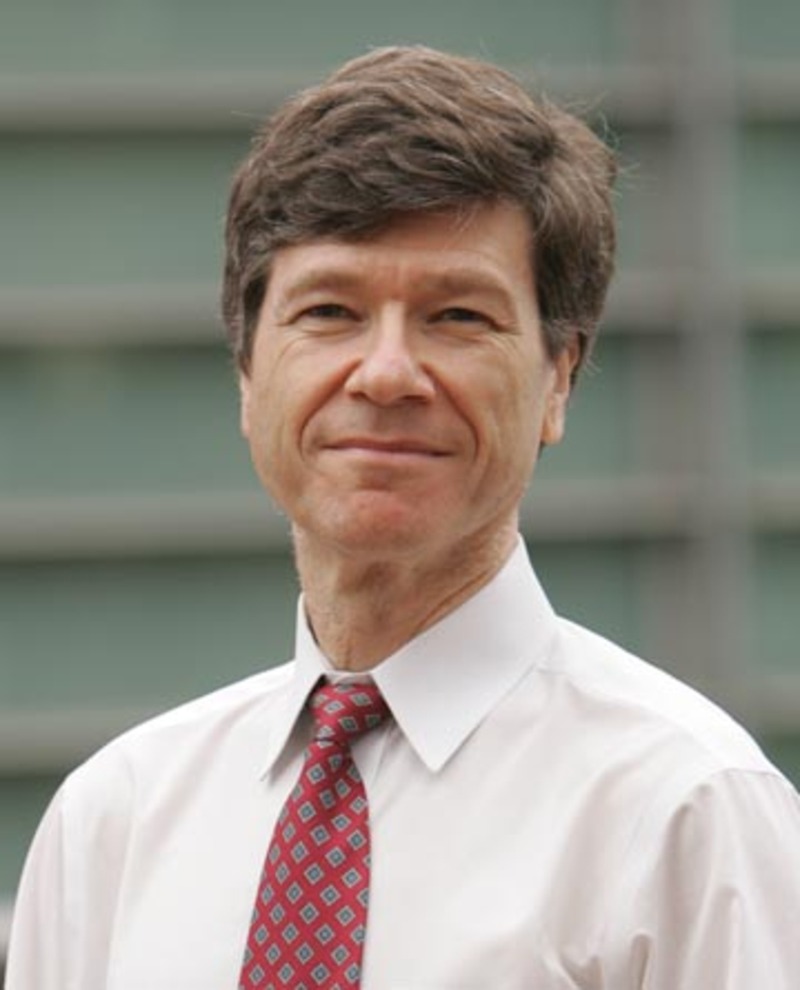
He has been named one of Time Magazine's "100 Most Influential People in the World" several times. This talk is about 55 minutes.
Click here to download or listen to mp3 Total Duration 1:46:39.
Also an excerpt from Dana Milbank's book "Homo Politicus: The Strange and Scary Tribes that Run Our Government". Duration about 44 min.
Great Speeches and Interviews' Past Programs
Click here to download or listen to mp3 Total Duration 1:46:39.
Also an excerpt from Dana Milbank's book "Homo Politicus: The Strange and Scary Tribes that Run Our Government". Duration about 44 min.
Great Speeches and Interviews' Past Programs
For more information:
http://greatspeechesandinterviews.blogspot...
Add Your Comments
Comments
(Hide Comments)
I hate to have to break the news to you, but we can't. There are no sustainable solutions possible for >6 billion humans.
Look, people often try to place the blame on capitalism/global trade/production for trade instead of local consumption. They point out that just a relatively short time ago, pick your date, 1900, 1850, etc. most people most parts of the world survived on what was produced locally and on a reasonably sustainable basis. There were of course local famines when weather conditions were bad this place or that, but nothing on a scale of global collapse of the ecosphere.
Blame doesn't help. If a bully has been going around smashing people's kneecaps, yes of course you have to identify and eliminate the bully. But while that is necessary, it is not sufficient. Won't help a single one of those lamed people to walk again.
What we need to realize is that people who are saying "we have to eliminate the system we now have and go back to the ways we managed to be sustainable in 1900 or 1850 or whatever" on the basis of what we did before surely possible for us to do again are not actually saying anything different than those who say "we have to get the human population down to one half or one quarter of what we have now". That's the sad reality. That's how recently the human population was one half or one quarter of what it is now.
Look, people often try to place the blame on capitalism/global trade/production for trade instead of local consumption. They point out that just a relatively short time ago, pick your date, 1900, 1850, etc. most people most parts of the world survived on what was produced locally and on a reasonably sustainable basis. There were of course local famines when weather conditions were bad this place or that, but nothing on a scale of global collapse of the ecosphere.
Blame doesn't help. If a bully has been going around smashing people's kneecaps, yes of course you have to identify and eliminate the bully. But while that is necessary, it is not sufficient. Won't help a single one of those lamed people to walk again.
What we need to realize is that people who are saying "we have to eliminate the system we now have and go back to the ways we managed to be sustainable in 1900 or 1850 or whatever" on the basis of what we did before surely possible for us to do again are not actually saying anything different than those who say "we have to get the human population down to one half or one quarter of what we have now". That's the sad reality. That's how recently the human population was one half or one quarter of what it is now.
We are 100% volunteer and depend on your participation to sustain our efforts!
Donate

$140.00 donated
in the past month
Get Involved
If you'd like to help with maintaining or developing the website, contact us.
Publish
Publish your stories and upcoming events on Indybay.
Topics
More
Search Indybay's Archives
Advanced Search
►
▼
IMC Network