







 Publish to Newswire
 Add an Event
From the Open-Publishing Calendar
From the Open-Publishing Newswire
Indybay Feature
11/1 SFSU 40th Commemoration Panel:The Strike, the War In Vietnam and the Present War in
A panel will be held on the wars in 1968 and today as part of the 40th anniversary of the San Francisco State Strike which will be held on Nov 1, 2008 at SFSU.
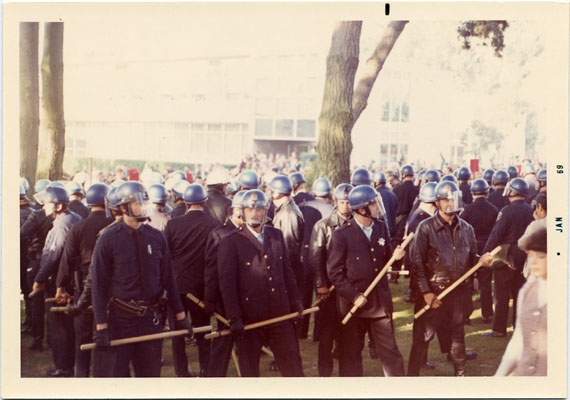
San Francisco State Strike 40th Commemoration Event Panel
11/1/2008 Saturday 10:00 AM -11:30 AM Jack Adams Hall, California State University San Francisco
The Strike, the War In Vietnam and the Present War in Iraq/Afghanistan
A major impetus for protest and activism during the 1960's was the war in Vietnam and the rest of South East Asia. San Francisco State College was a center of bay area activism against the war and it mobilized for protests and actions against the Vietnam war. Forty years later another imperial war is being fought by the United States not against "communists" but against "terrorists". This panel will discuss the role of the strike and activism at San Francisco State between 1967 and 1969, the world wide movement against the war and the nature of the US adventures in the Middle East today.
Clarence Thomas SF Strike BSU and ILWU Local 10 Executive Board, Cindy Sheehan-Gold Star Mother , Ralph Schoenman, formerly with the Bertram Russell Foundation and now co-producer of "Taking Aim" on WBAI
http://www.sfsu.edu/~ethnicst/fortieth.html
Consciousness, Community, Liberation: Fulfilling the Promise of ‘68
A 40th Anniversary Commemoration of the 1968 Student-led Strike
San Francisco State University
Oct. 29 - Nov. 1, 2008
The College of Ethnic Studies and the Educational Opportunity Program at San Francisco State University extend a warm invitation for you to attend activities commemorating the 1968 Student Strike. The commemoration includes a conference and cultural festival titled,Consciousness, Community, Liberation: Fulfilling the Promise of ’68.
In keeping with the spirit of activism of 1968, we have accepted academic presentations, teach ins, artistic displays, media workshops, and panels and cultural presentations from the full range of elements of The Movement (e.g. civil rights; ethnic or cultural empowerment; gender or sexuality empowerment; disability rights; environmental justice and sustainable societies; legal/political/economic equity; peace; liberation philosophy, theology and pedagogy; and social liberation movements) as well as special topics including, student leadership and activism, community organizing, educational access and achievement, alternatives to incarceration and news media. This engaging program will offer participants a broad range of discussion driven forums to experience.
The goals of the commemoration intend to (1) restate and examine the history of the past forty years of civic, social and cultural struggles; (2) assess the progress and current status of these movements, and (3) propose new models for community-university, interdisciplinary, intergenerational and multiethnic thought and action focused on local, national and global justice. It is our sincere hope that these goals will reinvigorate dynamic conversation and action to promote social justice, strengthen university and community collaboration, and improve the conditions of all people in ways that affirm and empower them.
Current Working Schedule –in brief - for the Conference:
(Note: This schedule is currently being updated and will change frequently. Please visit regularly for updates!).
Date Topics
October 29, 2008 (Wednesday): Context for the Strike and Opening Ceremonies
October 30, 2008 (Thursday): Fundamental constructs of the Strike and what it produced.
October 31, 2008 (Friday): Where are we now?
November 1, 2008 (Saturday): Where are we going? What should a socially just university look like? How should it contribute locally to strengthen our communities? How should it produce responsible and responsive leaders to change our private and public institutions?
Saturday Afternoon: Cultural Festival, Music, and Performances!
Send mail to webmaster with questions or comments about this web site.
http://www.sfsu.edu/news/2008/fall/8.html
Campus commemorates 1968 student-led strike
September 22, 2008 -- This fall SF State commemorates the 40th anniversary of the 1968 student-led strike, the longest campus strike in United States history. The five-month event defined the University's core values of equity and social justice, laid the groundwork for establishment of the College of Ethnic Studies, and inspired the establishment of ethnic studies classes and programs at other universities throughout the country.
1968 SF State student strike.
The Black Student Union and a coalition of other student groups known as the Third World Liberation Front (TWLF) led the strike, which began Nov. 6, 1968 and ended March 20, 1969. Clashes between the strikers and San Francisco Police tactical squads made national news. Students, faculty and community activists demanded equal access to public higher education, more senior faculty of color and a new curriculum that would embrace the history and culture of all people including ethnic minorities.
As a result, the College of Ethnic Studies was instituted in 1969 and hundreds of other higher education institutions across the country followed SF State's lead. According to a 1981 report issued by the Education Resource Information Center, 439 colleges in the country offered a total of 8,805 ethnic studies courses by 1978. "For the United States to adequately prepare citizens for responsible participation in a complex culturally pluralistic society and a multicultural world, ethnic studies should be represented in general education," the report concluded.
"The idea of changing universities to be more inclusive and using academia to improve society remains relevant," College of Ethnic Studies Dean Kenneth Monteiro said. "Even today in a globally focused world, many institutions of higher education have not expanded their curricula to include the histories, philosophies, sciences and arts of a greater range of the world's intellectual traditions."
This semester more than 6,000 students in 300 classes are studying the historical, philosophical and political foundations of African Americans, American Indians, Arab and Muslim Americans, Asian Americans and Latinos. The College, which awards baccalaureate and masters degrees, has awarded a total of 1,261 since the early 1970s. Part of the College of Ethnic Studies, the Cesar Chavez Institute is home to research and initiatives devoted to educational and health equity. The College works with other institutions on initiatives that continue to strengthen and redefine the field of ethnic studies.
The campus community will commemorate the 40th anniversary of the strike Oct. 29 through Nov. 1. Led by the College of Ethnic Studies and the University's Educational Opportunity Program, "Consciousness, Community, Liberation: Fulfilling the Promise of '68" will include an academic conference, panel discussions, cultural performances and other events that focus on civil rights, social justice, legal, political and economic equity, student leadership and activism, and equal access to public education.
Faculty, students and alumni, including some of the 1968 strikers, developed event programming. SF State ethnic studies, journalism and broadcasting faculty and students are working with alumni to create oral and video histories of the strike for future open source archives that will be available online.
Many SF State strike alumni rose to prominence in the fields of social justice, law, public health, education and public service. They include actor and activist Danny Glover, who was a member of the Black Student Union, and Superior Court Judge Ronald Quidachay, who worked on the strike as a member of the Philippine American College Endeavor (PACE) and was a TWLF spokesperson. Alumnus and statesman Willie Brown, then a young lawyer and legislator, worked to free striking students who were jailed, as did, former U.S. Congressman, Oakland Mayor and alumnus Ron Dellums.
Of the strikers who chose public education as a career, several returned to SF State and are currently on the faculty including Associate Dean of the College of Ethnic Studies and Professor of Asian American Studies Laureen Chew, Professor of Asian American Studies Danilo Begonia, Associate Professor of Asian American Studies Dan Gonzales, Professor of Raza Studies Roberto Rivera.
For more information including a full schedule of events, visithttp://www.sfsu.edu/~ethnicst/fortieth.html
-- Denize Springer
11/1/2008 Saturday 10:00 AM -11:30 AM Jack Adams Hall, California State University San Francisco
The Strike, the War In Vietnam and the Present War in Iraq/Afghanistan
A major impetus for protest and activism during the 1960's was the war in Vietnam and the rest of South East Asia. San Francisco State College was a center of bay area activism against the war and it mobilized for protests and actions against the Vietnam war. Forty years later another imperial war is being fought by the United States not against "communists" but against "terrorists". This panel will discuss the role of the strike and activism at San Francisco State between 1967 and 1969, the world wide movement against the war and the nature of the US adventures in the Middle East today.
Clarence Thomas SF Strike BSU and ILWU Local 10 Executive Board, Cindy Sheehan-Gold Star Mother , Ralph Schoenman, formerly with the Bertram Russell Foundation and now co-producer of "Taking Aim" on WBAI
http://www.sfsu.edu/~ethnicst/fortieth.html
Consciousness, Community, Liberation: Fulfilling the Promise of ‘68
A 40th Anniversary Commemoration of the 1968 Student-led Strike
San Francisco State University
Oct. 29 - Nov. 1, 2008
The College of Ethnic Studies and the Educational Opportunity Program at San Francisco State University extend a warm invitation for you to attend activities commemorating the 1968 Student Strike. The commemoration includes a conference and cultural festival titled,Consciousness, Community, Liberation: Fulfilling the Promise of ’68.
In keeping with the spirit of activism of 1968, we have accepted academic presentations, teach ins, artistic displays, media workshops, and panels and cultural presentations from the full range of elements of The Movement (e.g. civil rights; ethnic or cultural empowerment; gender or sexuality empowerment; disability rights; environmental justice and sustainable societies; legal/political/economic equity; peace; liberation philosophy, theology and pedagogy; and social liberation movements) as well as special topics including, student leadership and activism, community organizing, educational access and achievement, alternatives to incarceration and news media. This engaging program will offer participants a broad range of discussion driven forums to experience.
The goals of the commemoration intend to (1) restate and examine the history of the past forty years of civic, social and cultural struggles; (2) assess the progress and current status of these movements, and (3) propose new models for community-university, interdisciplinary, intergenerational and multiethnic thought and action focused on local, national and global justice. It is our sincere hope that these goals will reinvigorate dynamic conversation and action to promote social justice, strengthen university and community collaboration, and improve the conditions of all people in ways that affirm and empower them.
Current Working Schedule –in brief - for the Conference:
(Note: This schedule is currently being updated and will change frequently. Please visit regularly for updates!).
Date Topics
October 29, 2008 (Wednesday): Context for the Strike and Opening Ceremonies
October 30, 2008 (Thursday): Fundamental constructs of the Strike and what it produced.
October 31, 2008 (Friday): Where are we now?
November 1, 2008 (Saturday): Where are we going? What should a socially just university look like? How should it contribute locally to strengthen our communities? How should it produce responsible and responsive leaders to change our private and public institutions?
Saturday Afternoon: Cultural Festival, Music, and Performances!
Send mail to webmaster with questions or comments about this web site.
http://www.sfsu.edu/news/2008/fall/8.html
Campus commemorates 1968 student-led strike
September 22, 2008 -- This fall SF State commemorates the 40th anniversary of the 1968 student-led strike, the longest campus strike in United States history. The five-month event defined the University's core values of equity and social justice, laid the groundwork for establishment of the College of Ethnic Studies, and inspired the establishment of ethnic studies classes and programs at other universities throughout the country.
1968 SF State student strike.
The Black Student Union and a coalition of other student groups known as the Third World Liberation Front (TWLF) led the strike, which began Nov. 6, 1968 and ended March 20, 1969. Clashes between the strikers and San Francisco Police tactical squads made national news. Students, faculty and community activists demanded equal access to public higher education, more senior faculty of color and a new curriculum that would embrace the history and culture of all people including ethnic minorities.
As a result, the College of Ethnic Studies was instituted in 1969 and hundreds of other higher education institutions across the country followed SF State's lead. According to a 1981 report issued by the Education Resource Information Center, 439 colleges in the country offered a total of 8,805 ethnic studies courses by 1978. "For the United States to adequately prepare citizens for responsible participation in a complex culturally pluralistic society and a multicultural world, ethnic studies should be represented in general education," the report concluded.
"The idea of changing universities to be more inclusive and using academia to improve society remains relevant," College of Ethnic Studies Dean Kenneth Monteiro said. "Even today in a globally focused world, many institutions of higher education have not expanded their curricula to include the histories, philosophies, sciences and arts of a greater range of the world's intellectual traditions."
This semester more than 6,000 students in 300 classes are studying the historical, philosophical and political foundations of African Americans, American Indians, Arab and Muslim Americans, Asian Americans and Latinos. The College, which awards baccalaureate and masters degrees, has awarded a total of 1,261 since the early 1970s. Part of the College of Ethnic Studies, the Cesar Chavez Institute is home to research and initiatives devoted to educational and health equity. The College works with other institutions on initiatives that continue to strengthen and redefine the field of ethnic studies.
The campus community will commemorate the 40th anniversary of the strike Oct. 29 through Nov. 1. Led by the College of Ethnic Studies and the University's Educational Opportunity Program, "Consciousness, Community, Liberation: Fulfilling the Promise of '68" will include an academic conference, panel discussions, cultural performances and other events that focus on civil rights, social justice, legal, political and economic equity, student leadership and activism, and equal access to public education.
Faculty, students and alumni, including some of the 1968 strikers, developed event programming. SF State ethnic studies, journalism and broadcasting faculty and students are working with alumni to create oral and video histories of the strike for future open source archives that will be available online.
Many SF State strike alumni rose to prominence in the fields of social justice, law, public health, education and public service. They include actor and activist Danny Glover, who was a member of the Black Student Union, and Superior Court Judge Ronald Quidachay, who worked on the strike as a member of the Philippine American College Endeavor (PACE) and was a TWLF spokesperson. Alumnus and statesman Willie Brown, then a young lawyer and legislator, worked to free striking students who were jailed, as did, former U.S. Congressman, Oakland Mayor and alumnus Ron Dellums.
Of the strikers who chose public education as a career, several returned to SF State and are currently on the faculty including Associate Dean of the College of Ethnic Studies and Professor of Asian American Studies Laureen Chew, Professor of Asian American Studies Danilo Begonia, Associate Professor of Asian American Studies Dan Gonzales, Professor of Raza Studies Roberto Rivera.
For more information including a full schedule of events, visithttp://www.sfsu.edu/~ethnicst/fortieth.html
-- Denize Springer
For more information:
http://www.sfsu.edu/~ethnicst/fortieth.html
Add Your Comments
We are 100% volunteer and depend on your participation to sustain our efforts!
Donate

$110.00 donated
in the past month
Get Involved
If you'd like to help with maintaining or developing the website, contact us.
Publish
Publish your stories and upcoming events on Indybay.
Topics
More
Search Indybay's Archives
Advanced Search
►
▼
IMC Network