







 Publish to Newswire
 Add an Event
From the Open-Publishing Calendar
From the Open-Publishing Newswire
Indybay Feature
Haiti: Peter Hallward Responds to Michael Deibert’s Review of Damming the Flood
In 2005 the journalist Michael Deibert published a book applauding the overthrow, the previous year, of Haiti’s elected president Jean-Bertrand Aristide. More recently he wrote a long and critical review of my own book about this 2004 coup, Damming the Flood, and posted it on his blog. Since we have both already written substantial books on more or less the same topic I will keep my response to this review as short as possible and leave it to readers to make up their own minds.
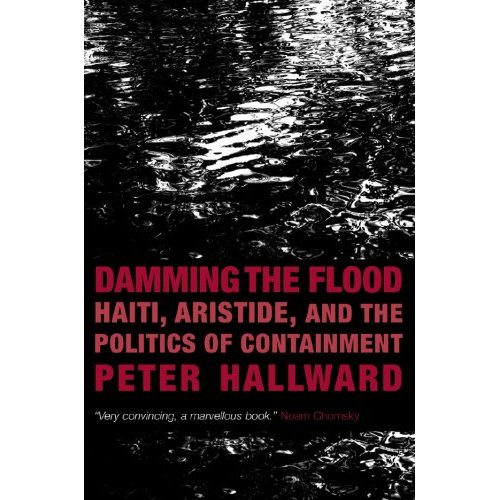
The main argument of Damming the Flood is pretty straightforward, and it runs roughly like this:
(a) The Lavalas popular movement that took shape in the late 1980s posed a significant and unprecedented threat to the power and privileges of the US-backed Haitian elite, which responded in 1991 with a military coup d’état that left around 5,000 people dead.
(b) After disbanding the murderous army and forming a more disciplined political organisation, in some ways the Lavalas movement became more rather than less threatening to the Haitian establishment when in 2000 its leader Jean-Bertrand Aristide was elected president for the second time, with a massive parliamentary majority.
(c) Since the Haitian army was no longer available to do the job in the usual way, and realising they stood no chance of beating Lavalas in an election, in order to prepare the ground for a further coup d’état Aristide’s enemies in Haiti and their supporters in the US, France and Canada waged an elaborate disinformation and destabilisation campaign to weaken his government. Among other things this campaign involved: starving the Lavalas government of funds, challenging its legitimacy internationally, entangling it in futile negotiations with an unpopular ‘democratic opposition’, misrepresenting it as exceptionally violent and corrupt, and provoking its supporters via sustained ‘Contra’-style paramilitary assault.
(d) Once this destabilisation campaign had succeeded in bankrupting the government and in undermining its international standing and domestic popularity, Aristide’s political enemies then helped to engineer a full-on military insurgency which led directly to his involuntary expulsion from Haiti by the US on the night of 28-29 February 2004.
(e) From 2004 to 2006, and with extraordinary forms and levels of international support, the illegitimate and unconstitutional administration that the US and its allies rigged up to replace the Lavalas government adopted repression of its supporters as one of its main priorities, at a cost of several thousand more lives.
Rather than systematically consider the pros and cons of its argument, the basic strategy of Deibert’s review is to discredit the book by suggesting that it was written by an ignorant outsider who is indifferent to the plight of Haiti’s ‘hugely decent, gentle, honest, hardworking and always-struggling populace.’
It’s true that Damming the Flood is based more on research than on personal experience. It’s true that I’m an academic, not a journalist, and I have never pretended to write about Haiti (or anything else) as any sort of ‘insider’. The book is an attempt to make sense of a broad range of published material and recorded testimony in order to explain how and why Aristide’s second government was overthrown − and in particular, how and why the government of my own country, and its allies, contributed to this overthrow. To research it I read as widely as possible and spoke to people from as many perspectives as I could; some shared the view of Lavalas expressed in the review, most did not. I believe that the argument presented in Damming is a fair and reasonable interpretation of the way the Lavalas movement was undermined and discredited by its adversaries. People from different political perspectives are entitled to argue with this interpretation, of course, but in my opinion this is more a political argument, precisely, than it is an argument between knowledge and ignorance, or between insiders and outsiders.
There are perhaps four points in the review that merit some brief discussion.
READ THE ENTIRE RESPONSE:
(a) The Lavalas popular movement that took shape in the late 1980s posed a significant and unprecedented threat to the power and privileges of the US-backed Haitian elite, which responded in 1991 with a military coup d’état that left around 5,000 people dead.
(b) After disbanding the murderous army and forming a more disciplined political organisation, in some ways the Lavalas movement became more rather than less threatening to the Haitian establishment when in 2000 its leader Jean-Bertrand Aristide was elected president for the second time, with a massive parliamentary majority.
(c) Since the Haitian army was no longer available to do the job in the usual way, and realising they stood no chance of beating Lavalas in an election, in order to prepare the ground for a further coup d’état Aristide’s enemies in Haiti and their supporters in the US, France and Canada waged an elaborate disinformation and destabilisation campaign to weaken his government. Among other things this campaign involved: starving the Lavalas government of funds, challenging its legitimacy internationally, entangling it in futile negotiations with an unpopular ‘democratic opposition’, misrepresenting it as exceptionally violent and corrupt, and provoking its supporters via sustained ‘Contra’-style paramilitary assault.
(d) Once this destabilisation campaign had succeeded in bankrupting the government and in undermining its international standing and domestic popularity, Aristide’s political enemies then helped to engineer a full-on military insurgency which led directly to his involuntary expulsion from Haiti by the US on the night of 28-29 February 2004.
(e) From 2004 to 2006, and with extraordinary forms and levels of international support, the illegitimate and unconstitutional administration that the US and its allies rigged up to replace the Lavalas government adopted repression of its supporters as one of its main priorities, at a cost of several thousand more lives.
Rather than systematically consider the pros and cons of its argument, the basic strategy of Deibert’s review is to discredit the book by suggesting that it was written by an ignorant outsider who is indifferent to the plight of Haiti’s ‘hugely decent, gentle, honest, hardworking and always-struggling populace.’
It’s true that Damming the Flood is based more on research than on personal experience. It’s true that I’m an academic, not a journalist, and I have never pretended to write about Haiti (or anything else) as any sort of ‘insider’. The book is an attempt to make sense of a broad range of published material and recorded testimony in order to explain how and why Aristide’s second government was overthrown − and in particular, how and why the government of my own country, and its allies, contributed to this overthrow. To research it I read as widely as possible and spoke to people from as many perspectives as I could; some shared the view of Lavalas expressed in the review, most did not. I believe that the argument presented in Damming is a fair and reasonable interpretation of the way the Lavalas movement was undermined and discredited by its adversaries. People from different political perspectives are entitled to argue with this interpretation, of course, but in my opinion this is more a political argument, precisely, than it is an argument between knowledge and ignorance, or between insiders and outsiders.
There are perhaps four points in the review that merit some brief discussion.
READ THE ENTIRE RESPONSE:
For more information:
http://www.haitianalysis.com/2008/4/6/pete...
Add Your Comments
Comments
(Hide Comments)
Michael Deibert responds to Peter Hallward
http://michaeldeibert.blogspot.com/2008/04/michael-deibert-responds-to-peter.html
http://michaeldeibert.blogspot.com/2008/04/michael-deibert-responds-to-peter.html
For more information:
http://www.deiberthaiti.blogspot.com
Monthly Review published the PETER HALLWARD response to tha slanderous comments by agent Deibert.
For more information:
http://mrzine.monthlyreview.org/hallward17...
Here are some excellent critiques of Michael Deibert's trashy work:
http://annpale.com/phpbb/viewtopic.php?p=14870&sid=c93459706296605b33cb43d8000fc1be A Few Notes About Notes from the Last Testament by Patrick Elie 2006
http://www.zmag.org/znet/viewArticle/4398 A Dishonest Case for a Coup: A Dishonest Case for a Coup by Justin Podur 2006
http://www.newleftreview.org/?view=2604 Kofi Annan's Haiti: A Review of Michael Deibert's Book New Left Review, 2006
http://www.counterpunch.org/barahona02032007.html U.S. Reporting on the Coup in Haiti: How to Turn a Priest into a Cannibal by Dana Barahona Counterpunch, 2007
http://www.monthlyreview.org/mrzine/hallward170408.html Peter Hallward Response to Michael Deibert] Monthly Review, 2008
http://www.haitianalysis.com/human-rights/the-proxy-war-in-martissant-and-gran-ravine The Proxy War in Martissant and Gran Ravine by Tom Luce HaitiAnalysis, 2007
http://medialens.org/forum/viewtopic.php?t=2668 Medialens on Deibert 2008
http://lecolonelchabert.blogspot.com/2008/05/j-peterman-in-haiti.html Le Colonel Chabert 2008
http://annpale.com/phpbb/viewtopic.php?p=14870&sid=c93459706296605b33cb43d8000fc1be A Few Notes About Notes from the Last Testament by Patrick Elie 2006
http://www.zmag.org/znet/viewArticle/4398 A Dishonest Case for a Coup: A Dishonest Case for a Coup by Justin Podur 2006
http://www.newleftreview.org/?view=2604 Kofi Annan's Haiti: A Review of Michael Deibert's Book New Left Review, 2006
http://www.counterpunch.org/barahona02032007.html U.S. Reporting on the Coup in Haiti: How to Turn a Priest into a Cannibal by Dana Barahona Counterpunch, 2007
http://www.monthlyreview.org/mrzine/hallward170408.html Peter Hallward Response to Michael Deibert] Monthly Review, 2008
http://www.haitianalysis.com/human-rights/the-proxy-war-in-martissant-and-gran-ravine The Proxy War in Martissant and Gran Ravine by Tom Luce HaitiAnalysis, 2007
http://medialens.org/forum/viewtopic.php?t=2668 Medialens on Deibert 2008
http://lecolonelchabert.blogspot.com/2008/05/j-peterman-in-haiti.html Le Colonel Chabert 2008
Here are a few more reviews of Deibert's excellent work:
The rise and fall of Haiti's "savior"
http://notesfromthelasttestament.blogspot.com/2008/11/rise-and-fall-of-haitis-savior.html
Author gives insight into Haitian politics
http://www.mysanantonio.com/entertainment/MYSA021906_0P_book_haiti_1a572532_html.html
Some of the authors of attacks against Deibert appear to have their own credibility problems, such as Patrick Elie and Justin Podur:
"Justin Podur, who speaks no Kreyol and the sum of whose personal experience in Haiti consisted of one month-long trip in the fall of 2005, penned a pair of juvenile personal attacks on myself and the book..."
http://www.reliefweb.int/rw/RWB.NSF/db900SID/KHII-6P88EE?OpenDocument
Deibert then goes on to expose Patrick Elie's well-documented history as a perjurer and violent individual:
"A former junior cabinet minister and confidante of Mr. Aristide who has thus far wisely been excluded from involvement in Préval’s re-emergence on the political scene, Mr. Elie was heretofore perhaps best known for being arrested outside of Washington, DC in April 1996 and jailed for nearly two years in the United States for, among other offences, apparently threatening the life of Prëval’s ambassador to the United States at the time."
The rise and fall of Haiti's "savior"
http://notesfromthelasttestament.blogspot.com/2008/11/rise-and-fall-of-haitis-savior.html
Author gives insight into Haitian politics
http://www.mysanantonio.com/entertainment/MYSA021906_0P_book_haiti_1a572532_html.html
Some of the authors of attacks against Deibert appear to have their own credibility problems, such as Patrick Elie and Justin Podur:
"Justin Podur, who speaks no Kreyol and the sum of whose personal experience in Haiti consisted of one month-long trip in the fall of 2005, penned a pair of juvenile personal attacks on myself and the book..."
http://www.reliefweb.int/rw/RWB.NSF/db900SID/KHII-6P88EE?OpenDocument
Deibert then goes on to expose Patrick Elie's well-documented history as a perjurer and violent individual:
"A former junior cabinet minister and confidante of Mr. Aristide who has thus far wisely been excluded from involvement in Préval’s re-emergence on the political scene, Mr. Elie was heretofore perhaps best known for being arrested outside of Washington, DC in April 1996 and jailed for nearly two years in the United States for, among other offences, apparently threatening the life of Prëval’s ambassador to the United States at the time."
We are 100% volunteer and depend on your participation to sustain our efforts!
Donate

$115.00 donated
in the past month
Get Involved
If you'd like to help with maintaining or developing the website, contact us.
Publish
Publish your stories and upcoming events on Indybay.
Topics
More
Search Indybay's Archives
Advanced Search
►
▼
IMC Network