







 Publish to Newswire
 Add an Event
From the Open-Publishing Calendar
From the Open-Publishing Newswire
Indybay Feature
Global Warming and Commuter Options
A five year pilot program to test Zero and low emission commuter vehicles is in the planning
stage for Seattle and Vancouver. All other communities that are within a 100 miles of a marine coastline can participate in this full cycle renewable energy to tailpipe project.
stage for Seattle and Vancouver. All other communities that are within a 100 miles of a marine coastline can participate in this full cycle renewable energy to tailpipe project.
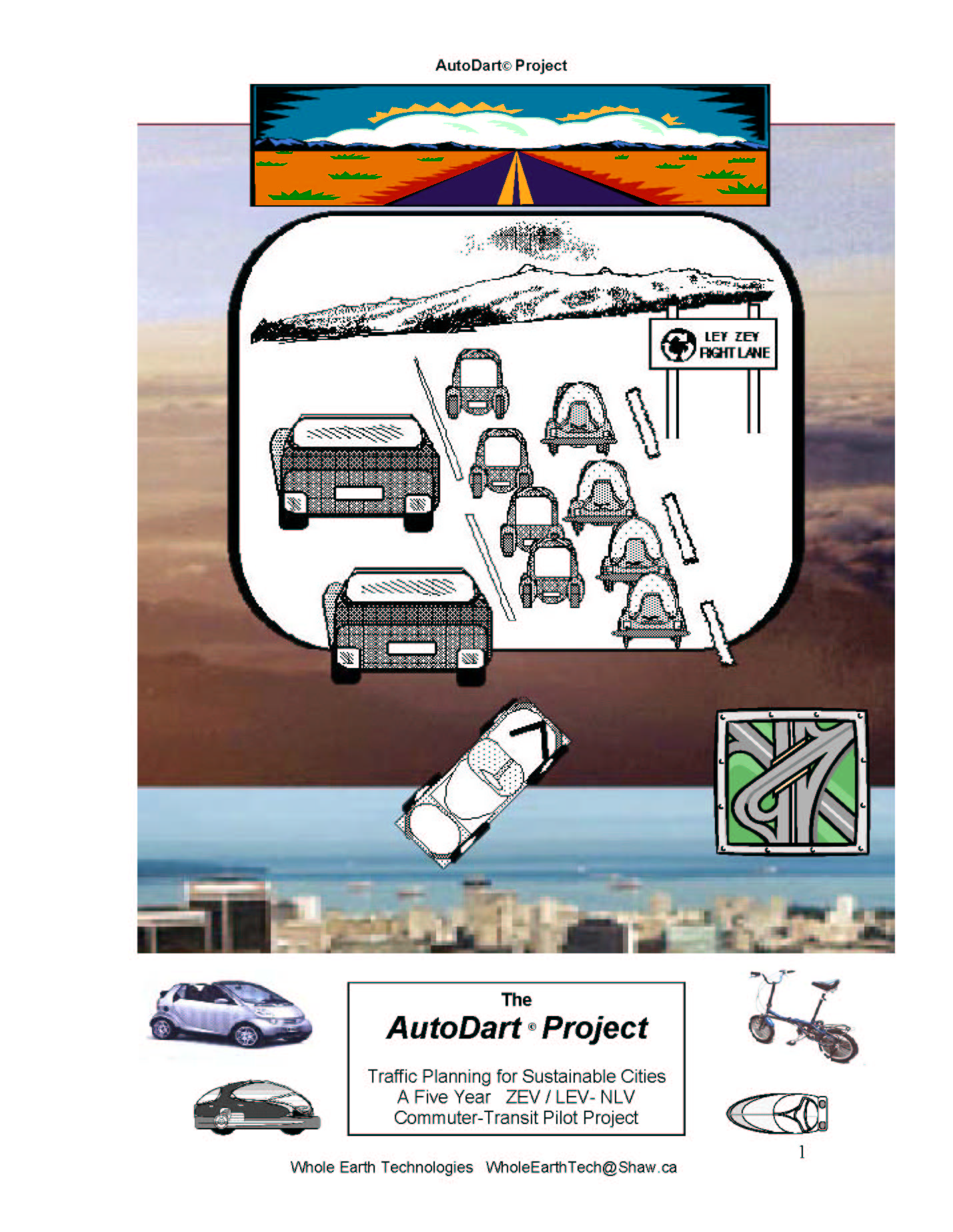
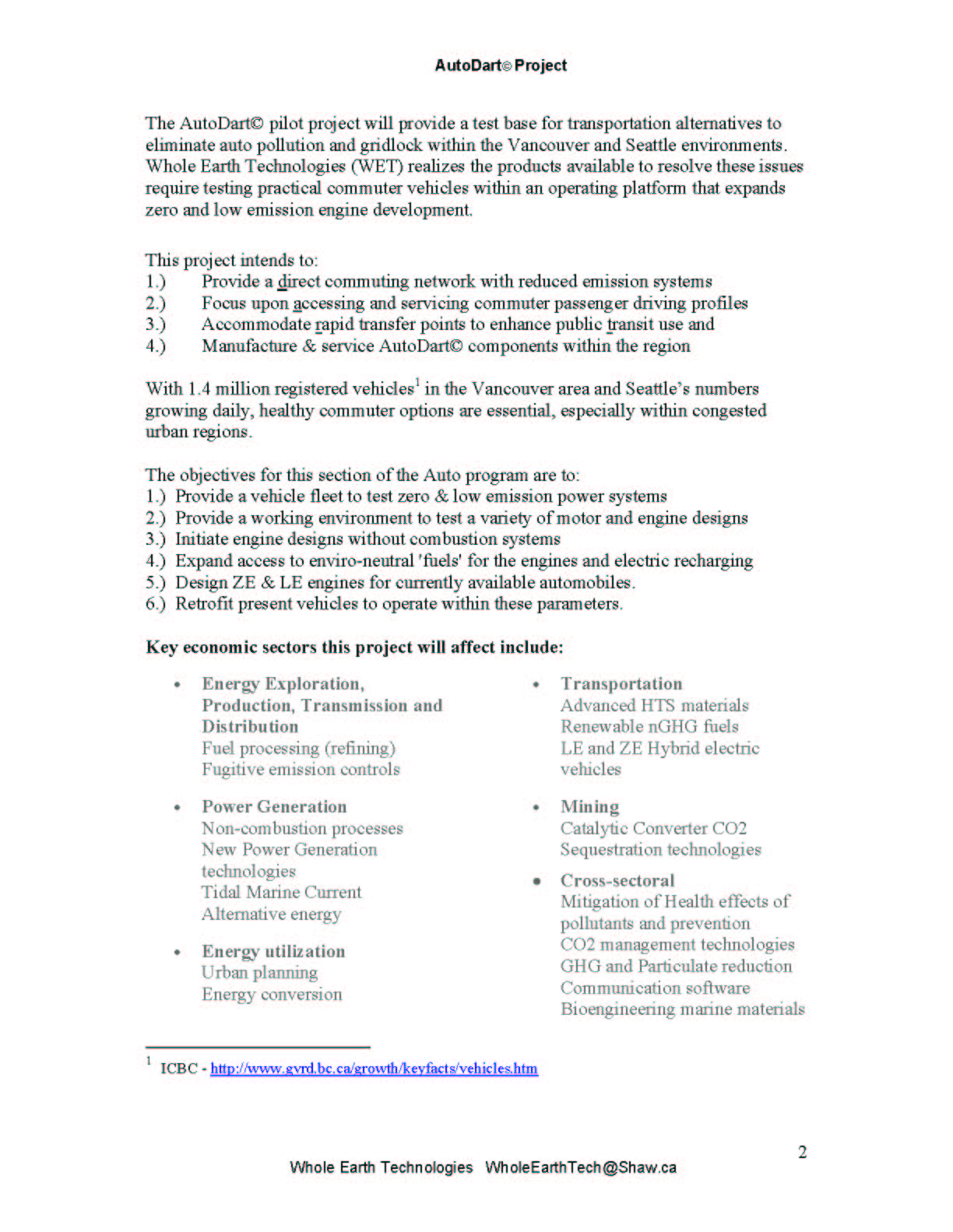
The AutoDart© pilot project will provide a test base for transportation alternatives to eliminate auto pollution and gridlock within the Vancouver environments. We realize to resolve these issues, practical commuter vehicles available today require testing, within an operating platform that expands zero and low emission engine development.
This project intends to:
1.) Provide a direct commuting network with reduced emission systems
2.) Focus upon accessing and servicing commuter passenger driving profiles
3.) Accommodate rapid transfer points to enhance public transit use and
4.) Manufacture & service AutoDart© components within the region
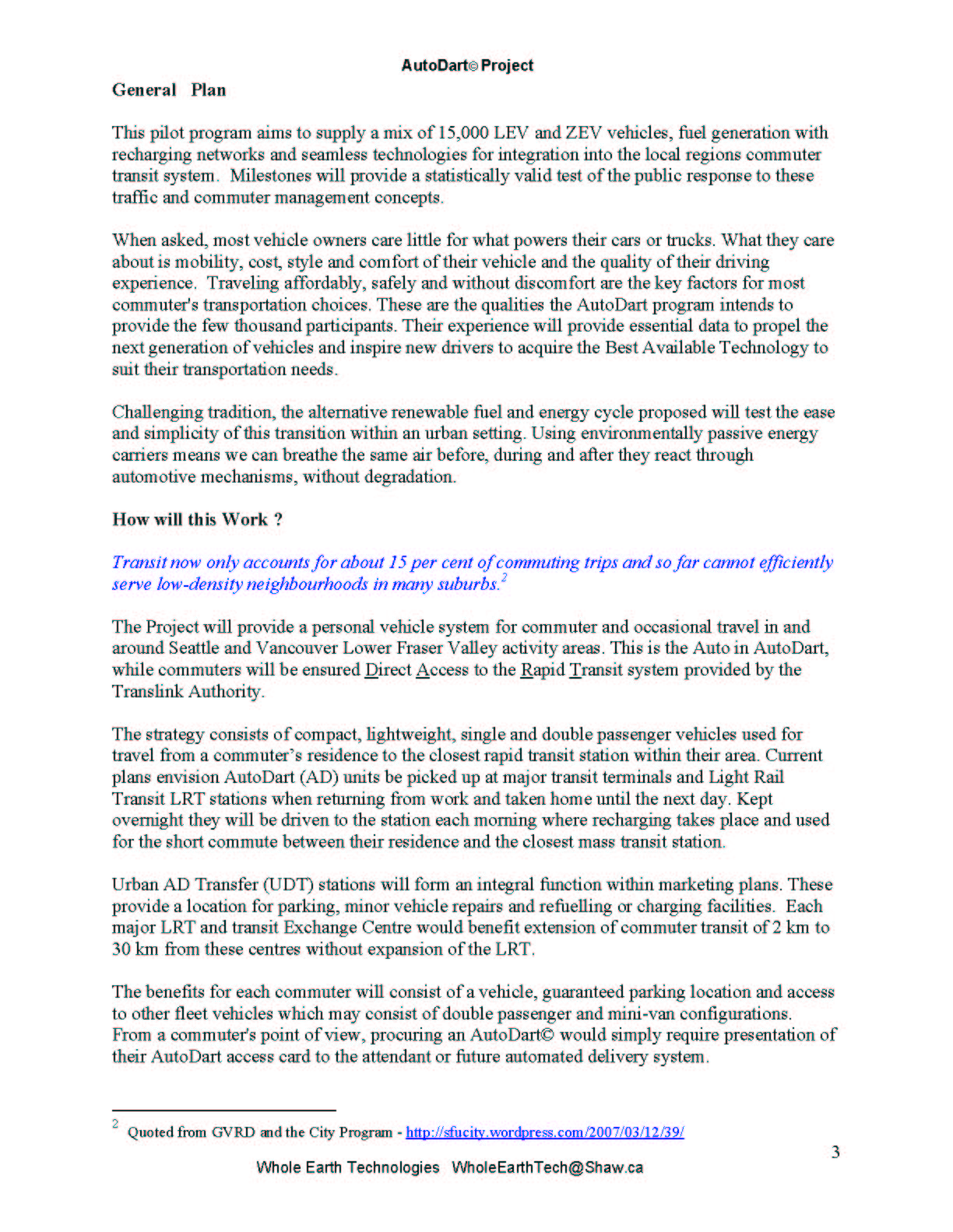
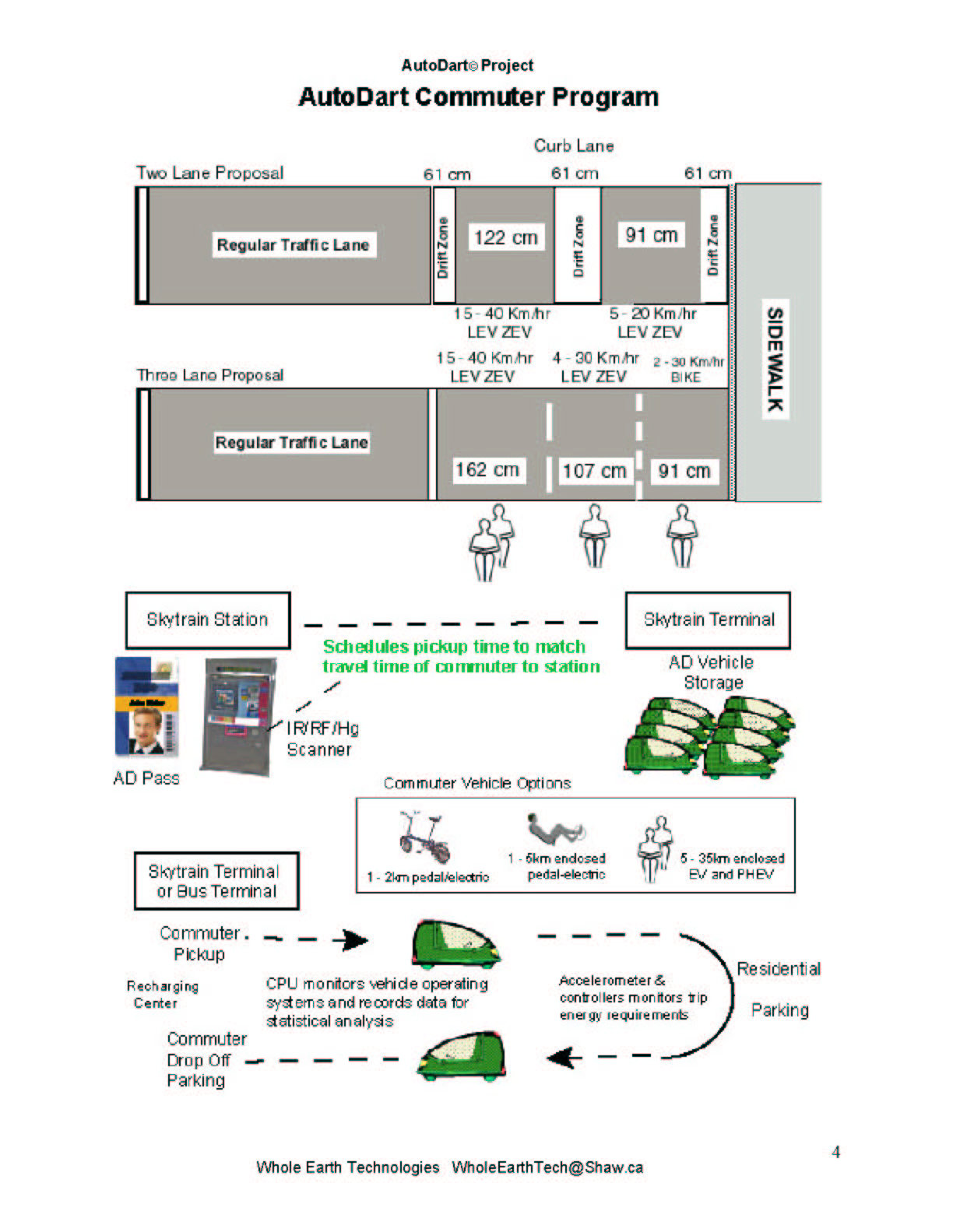
This pilot program aims to supply a mix of 15,000 LEV and ZEV vehicles, fuel generation with recharging networks and seamless technologies for integration into the local regions commuter transit system. Milestones will provide a statistically valid test of the public response to these traffic and commuter management concepts.
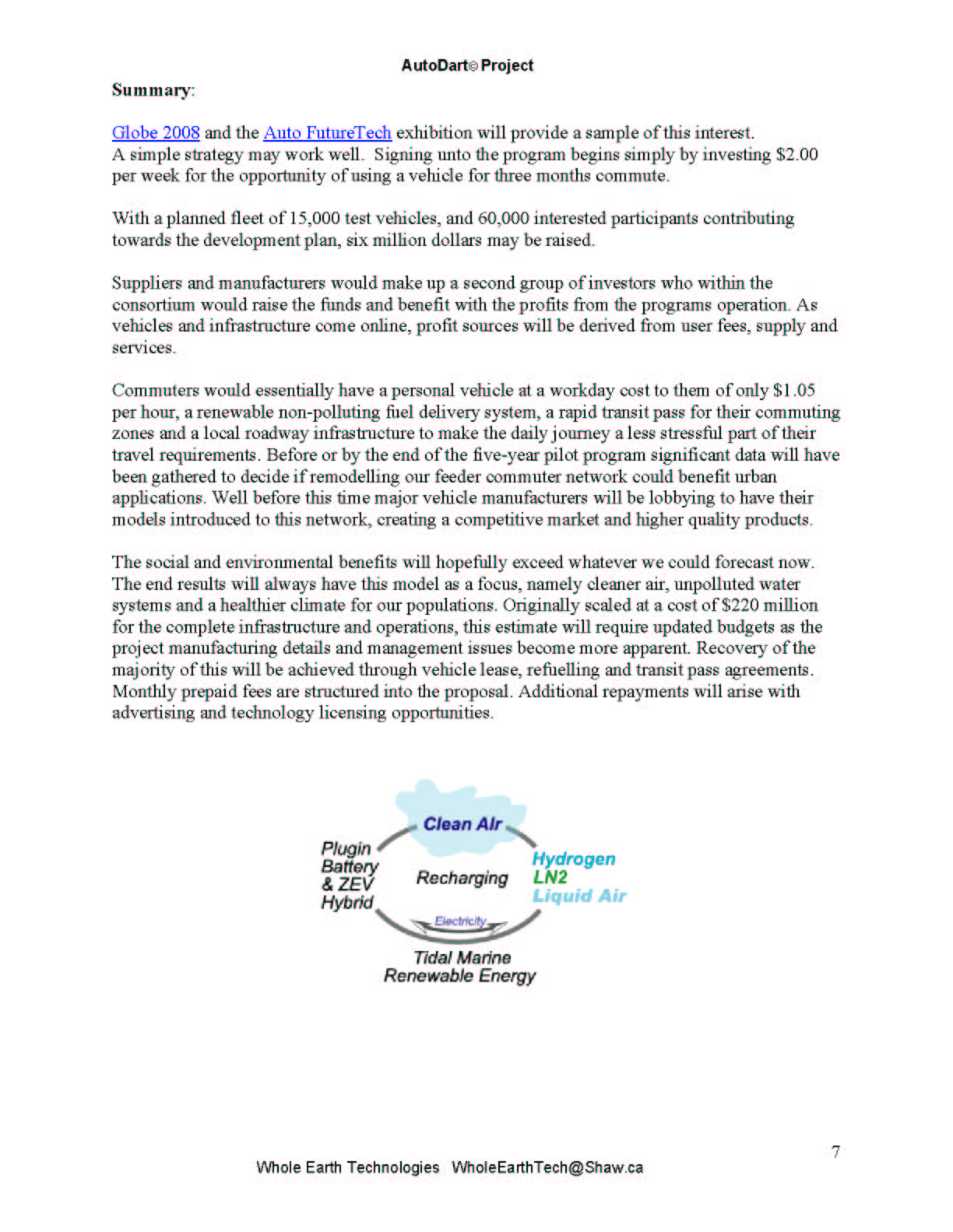
Challenging tradition, the alternative renewable fuel and energy cycle proposed will test the ease and simplicity of this transition within an urban setting. Using environmentally passive energy carriers means we can breathe the same air before, during and after they react through automotive mechanisms, without degradation.
This project is looking for a wedge that can gently leverage an immovable object, being our reliance on fossil fuels and gridlocked transportation.
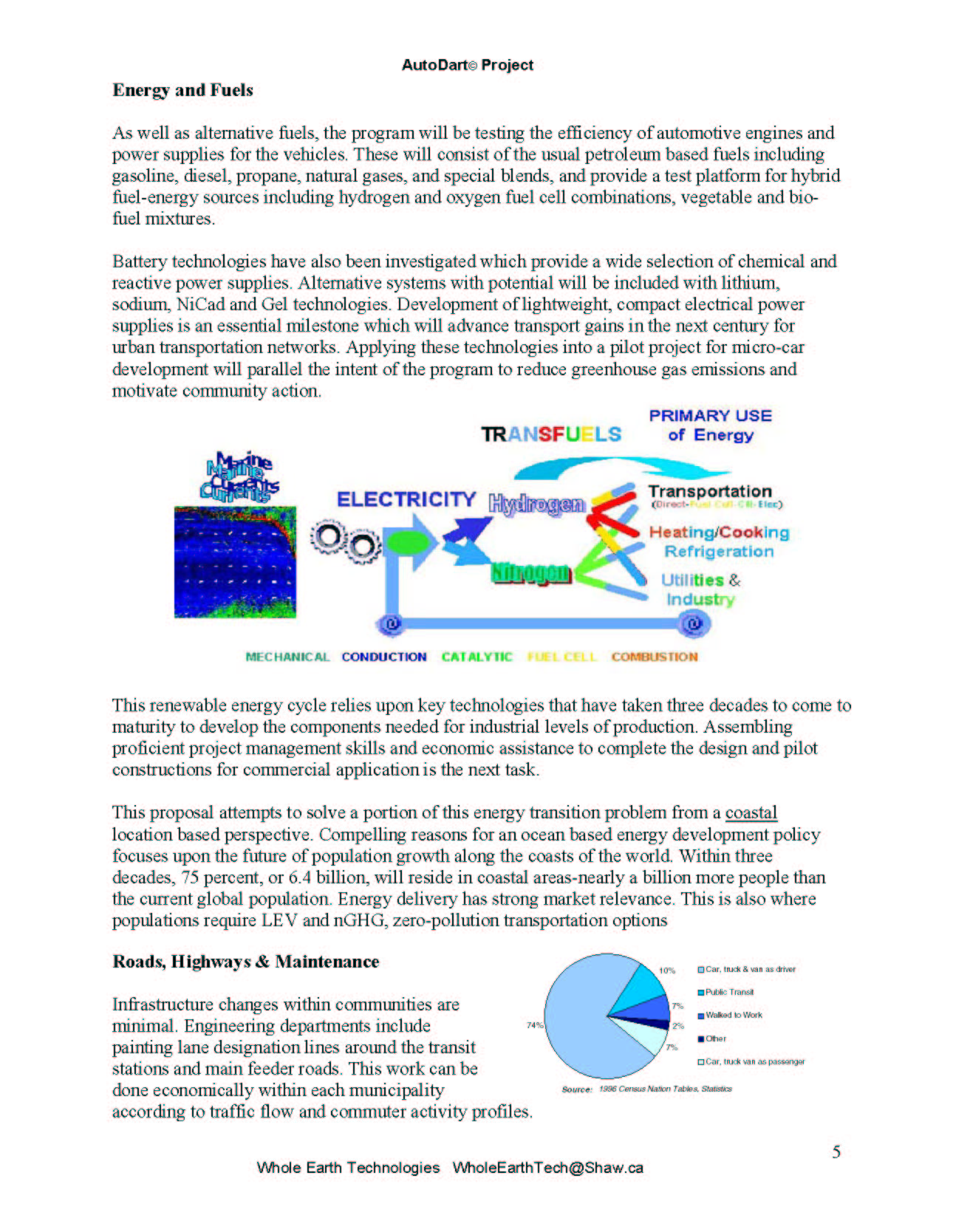
This proposal attempts to solve a portion of this energy transition problem from a coastal location based perspective. Compelling reasons for an ocean based energy development policy focuses upon the future of population growth along the coasts of the world.
This project intends to:
1.) Provide a direct commuting network with reduced emission systems
2.) Focus upon accessing and servicing commuter passenger driving profiles
3.) Accommodate rapid transfer points to enhance public transit use and
4.) Manufacture & service AutoDart© components within the region
This pilot program aims to supply a mix of 15,000 LEV and ZEV vehicles, fuel generation with recharging networks and seamless technologies for integration into the local regions commuter transit system. Milestones will provide a statistically valid test of the public response to these traffic and commuter management concepts.
Challenging tradition, the alternative renewable fuel and energy cycle proposed will test the ease and simplicity of this transition within an urban setting. Using environmentally passive energy carriers means we can breathe the same air before, during and after they react through automotive mechanisms, without degradation.
This project is looking for a wedge that can gently leverage an immovable object, being our reliance on fossil fuels and gridlocked transportation.
This proposal attempts to solve a portion of this energy transition problem from a coastal location based perspective. Compelling reasons for an ocean based energy development policy focuses upon the future of population growth along the coasts of the world.
Add Your Comments
We are 100% volunteer and depend on your participation to sustain our efforts!
Donate

$110.00 donated
in the past month
Get Involved
If you'd like to help with maintaining or developing the website, contact us.
Publish
Publish your stories and upcoming events on Indybay.
Topics
More
Search Indybay's Archives
Advanced Search
►
▼
IMC Network