







 Publish to Newswire
 Add an Event
Hot and Smoggy
Hot and Smoggy
By Mike Rhodes
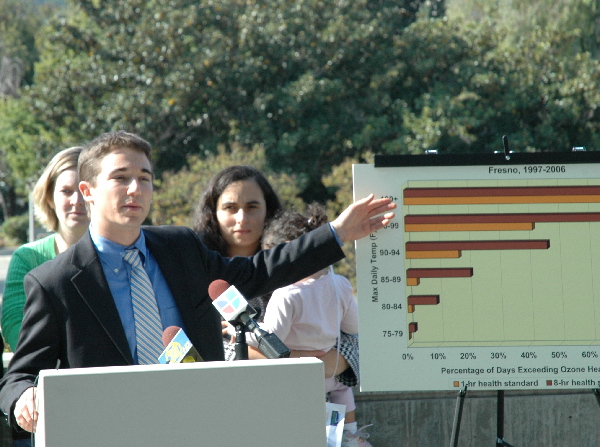
Air Quality activists released a report today linking global warming and dirty air. Jason Barbose, author of the Environment California, Research & Policy Center report, said "global warming adds up to more than melting glaciers and rising sea levels, it is also about the quality of our air and the quality of our lives. At a press conference held at Fresno City Hall today, Barbose pointed to a chart showing how air quality decreases as the temperatures rise. Key findings in the report show:
* In Fresno, ozone levels exceeded the state 8-hr health standard for ozone 84% of the days that the daily high was at least 100°F.
* In Fresno, ozone levels exceed the state 1-hr health standard for ozone 75% of the days that the daily high was at least 100°F.
* In Fresno, ozone levels exceeded 1-hr health standard for ozone 43% of the days that the daily high was between 95 and 99°F, and 18% of the days that the daily high was between 90 and 94°F.
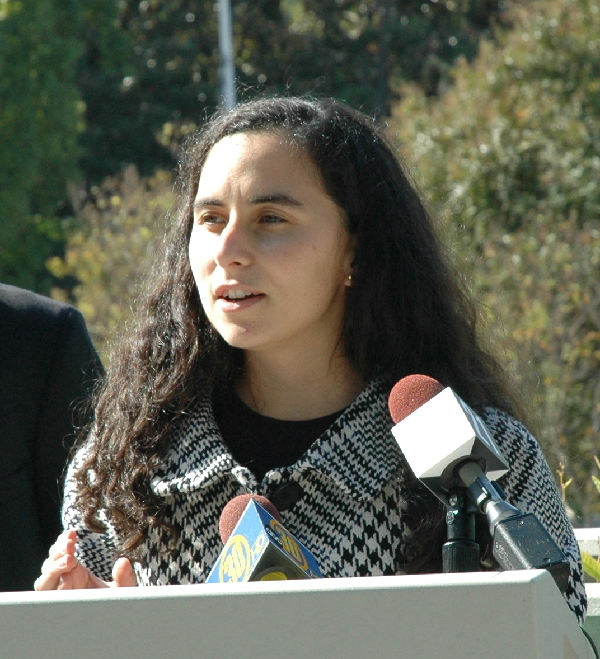
Carolina Simunovic, with Fresno Metro Ministries, said "the link between global warming and air pollution is clear. Hotter days make for dirtier air." Simunovic, who also spoke at the press conference, said this link "makes achieving clean air in the Valley especially difficult, and those with health problems will face the double burden of heat and air pollution related illnesses if we don’t do something to stop it."
The report, Hot and Smoggy, The Ozone - Hot Weather Connection in Eight California Cities is available on line at the Environment California, Research & Policy Center website. In addition to warning readers about the effect of global warming and the adverse affect it will have on air quality in the Central Valley, the report does say there is something we can do to improve air quality. The report concludes:
Given California’s existing air pollution problems and the expectation that global warming will increase ozone formation that leads to smog, state policy-makers and environmental agencies should work to significantly reduce ozone-forming pollutants while simultaneously reducing global warming emissions to levels that scientists have concluded are necessary to prevent a dramatic increase in temperature.
To reduce smog pollution state policy-makers and agencies should prioritize a variety of policy measures, including measures outlined in California’s State Implementation Plan for federal ambient air quality standards. Measures to prioritize include:
§ Passenger vehicles – Increase the sale and use of zero-emission and low-polluting passenger cars and light-duty trucks, accelerate vehicle retirement, and strengthen the state smog check program;
§ trucks and off-road equipment – Reduce emissions from medium- and heavy-duty diesel trucks and off-road equipment by strengthening emissions standards, increasing retrofits, and accelerating replacement with cleaner technologies;
§ Ports & goods movement – Require cleaner marine engines and fuels, increase the number of ships with the ability to use shore-side power ("cold ironing"), increase retrofits, and accelerate the introduction of cleaner port trucks, harbor craft and locomotives;
§ Agriculture – Accelerate the replacement of agricultural equipment through regulation and incentives; and
§ Strong enforcement of existing pollution control rules– Enforce tough standards for cleaner construction equipment, airport ground support, and other off-road vehicles.
To reduce global warming emissions state policy-makers and agencies should prioritize successful implementation of the Global Warming Solutions Act of 2006 (Assembly Bill 32), which commits California to reducing global warming emissions to 1990 levels by 2020.
Donate

$95.00 donated
in the past month
Get Involved
If you'd like to help with maintaining or developing the website, contact us.
Publish
Publish your stories and upcoming events on Indybay.