







 Publish to Newswire
 Add an Event
From the Open-Publishing Calendar
From the Open-Publishing Newswire
Indybay Feature
Five Alameda Creek Steelhead and Salmon Restoration Projects Move Forward
Five Alameda Creek Restoration projects are moving foward, due to years of pressure by the Alameda Creek Alliance and other conservation groups. At a time when four species of California Delta fish - delta smelt, longfin smelt, juvenile striped bass and threadfin shad - are in collapse because of increasing water exports by the state and federal governments, everything that we can do to restore local fish populations is crucial. The Alliance hopes to bring steelhead and salmon back to the creek in good numbers by removing dams and doing other habitat improvements.
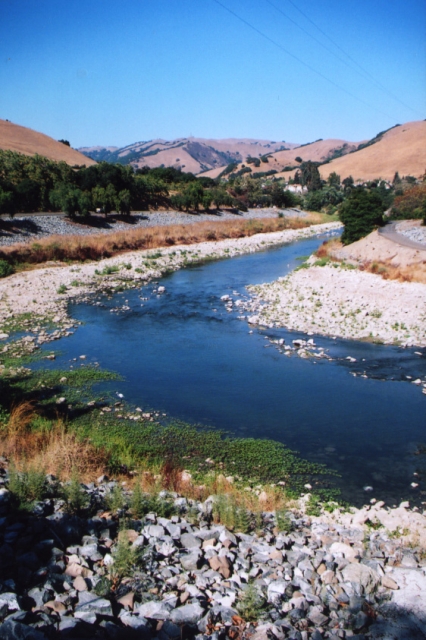
As the Alameda Creek Alliance celebrates its tenth anniversary, four public agencies are moving forward quickly with five stream restoration projects that will help restore native fish to Alameda Creek, the largest tributary to southern San Francisco Bay.
"These projects will help improve migration of the federally threatened steelhead trout, salmon and other migratory fish into the Alameda Creek watershed," said Jeff Miller, Director of the Alameda Creek Alliance. "These and other planned restoration projects will make up to 20 miles of Alameda Creek and its tributaries accessible to ocean-run fish for the first time in over half a century."
The Alameda Creek watershed covers an area of 633 square miles and once supported populations of steelhead trout and salmon. Construction of dams, modifications to the Alameda Creek streambed, and urbanization made it impossible for steelhead to migrate upstream and eliminated access to suitable spawning areas. As a result, steelhead have been absent from Alameda Creek and its tributaries for several decades.
The Alameda County Flood Control District and Alameda County Water District (ACWD) this summer signed an agreement to design a fish ladder that will allow steelhead to bypass a cement barrier known as the BART weir and an adjacent inflatable water supply dam in the lower Alameda Creek flood control channel, the main barriers to fish migration into Alameda Creek. The agencies signed an agreement to fund preliminary design for the fish ladder on July 31 and announced their goal to have the fish ladder constructed by 2010, according to Miller.
“We commend the Water District and the Flood Control District for prioritizing this fish passage project at the BART weir and rubber dam,” said Miller. “Fish passage at these barriers is the key to restoring steelhead trout to the entire Alameda Creek watershed.”
The ACWD is moving forward with three other fish passage projects in the flood control channel. Installation is almost complete for a state of the art fish screen facility on the ACWD water supply diversion below Mission Boulevard. The National Fish and Wildlife Foundation (NFWF) awarded $500,000 to the District as financial support for this project. It is anticipated that this fish screen will be completed in December 2007.
The ACWD recently announced that it anticipates receiving a $600,000 grant from state Proposition 50 funds for installing an additional fish screen downstream on their diversion at the Bunting Pond. This fish screen is planned to be installed in 2009. These screens will reduce the potential for out-migrating juvenile steelhead or other fish to be trapped in the diversion pipelines and adjacent groundwater recharge ponds at Quarry Lakes Regional Recreation Area.
Earlier this month, Zone 7 Water Agency and the Livermore Valley School District completed removal of a concrete crossing that was a potential fish passage barrier from Arroyo Mocho behind Granada High School in Livermore. The project is intended to improve campus safety and security, enhance the creek’s environment by restoring a more natural stream channel, reduce the amount of trash thrown in the arroyo, and help potential steelhead migration through the Arroyo Mocho tributary. Removal of the stream crossing was supported by the Friends of The Arroyos and the Alameda Creek Alliance.
In 2008, the ACWD will remove their lowermost rubber inflatable dam from Alameda Creek to help facilitate fish migration in the lower section of Alameda Creek, and will discontinue use of an unscreened water diversion at this location. The project, which will consist of removal of the fabric portion of the rubber dam and removal of a section or all of the dam's foundation, also was awarded $500,000 from the NFWF.
The non-profit Alameda Creek Alliance in August celebrated ten years of working to restore Alameda Creek and its native fish populations. The Alliance formed in August 1997 after steelhead trout in the Central California Coast were listed as a threatened species. The Alliance has grown to an organization of 1,450 members and has organized over 70 local and regional conservation and fly-fishing groups in support of the Alameda Creek restoration.
The Alliance continues to work with a consortium of a dozen local, state and federal water supply and land management agencies on projects to restore native fish habitat in Alameda Creek. The efforts of the Alliance have resulted in the removal of four obsolete dams and two cement stream crossings from Alameda Creek and the construction of two fish ladders to allow fish to migrate to suitable habitat upstream. One more dam removal and construction of four additional fish ladders are in the planning stages.
Seventeen public agencies and nonprofit organizations signed a formal agreement in October 2006 to collaborate on a study of the stream flows and fish habitat needed for Alameda Creek steelhead trout restoration. The San Francisco Public Utilities Commission (SFPUC) recently began environmental review for capital improvement projects to the San Francisco water supply system, including nine projects in the Sunol Valley. The largest of these is the SFPUC’s Calaveras Dam Replacement Project.
The Alameda Creek Alliance is pushing for the project to include instream flow releases from Calaveras Reservoir to help spawning, rearing and migration of steelhead in Alameda Creek below the dam, and the removal of the Alameda Diversion Dam from upper Alameda Creek.
For more information, contact: Jeff Miller, Director, Alameda Creek Alliance. P.O. Box 192
Canyon, CA 94516. (510) 499-9185, Fax (415) 436-9683. Web site http://www.alamedacreek.org
"These projects will help improve migration of the federally threatened steelhead trout, salmon and other migratory fish into the Alameda Creek watershed," said Jeff Miller, Director of the Alameda Creek Alliance. "These and other planned restoration projects will make up to 20 miles of Alameda Creek and its tributaries accessible to ocean-run fish for the first time in over half a century."
The Alameda Creek watershed covers an area of 633 square miles and once supported populations of steelhead trout and salmon. Construction of dams, modifications to the Alameda Creek streambed, and urbanization made it impossible for steelhead to migrate upstream and eliminated access to suitable spawning areas. As a result, steelhead have been absent from Alameda Creek and its tributaries for several decades.
The Alameda County Flood Control District and Alameda County Water District (ACWD) this summer signed an agreement to design a fish ladder that will allow steelhead to bypass a cement barrier known as the BART weir and an adjacent inflatable water supply dam in the lower Alameda Creek flood control channel, the main barriers to fish migration into Alameda Creek. The agencies signed an agreement to fund preliminary design for the fish ladder on July 31 and announced their goal to have the fish ladder constructed by 2010, according to Miller.
“We commend the Water District and the Flood Control District for prioritizing this fish passage project at the BART weir and rubber dam,” said Miller. “Fish passage at these barriers is the key to restoring steelhead trout to the entire Alameda Creek watershed.”
The ACWD is moving forward with three other fish passage projects in the flood control channel. Installation is almost complete for a state of the art fish screen facility on the ACWD water supply diversion below Mission Boulevard. The National Fish and Wildlife Foundation (NFWF) awarded $500,000 to the District as financial support for this project. It is anticipated that this fish screen will be completed in December 2007.
The ACWD recently announced that it anticipates receiving a $600,000 grant from state Proposition 50 funds for installing an additional fish screen downstream on their diversion at the Bunting Pond. This fish screen is planned to be installed in 2009. These screens will reduce the potential for out-migrating juvenile steelhead or other fish to be trapped in the diversion pipelines and adjacent groundwater recharge ponds at Quarry Lakes Regional Recreation Area.
Earlier this month, Zone 7 Water Agency and the Livermore Valley School District completed removal of a concrete crossing that was a potential fish passage barrier from Arroyo Mocho behind Granada High School in Livermore. The project is intended to improve campus safety and security, enhance the creek’s environment by restoring a more natural stream channel, reduce the amount of trash thrown in the arroyo, and help potential steelhead migration through the Arroyo Mocho tributary. Removal of the stream crossing was supported by the Friends of The Arroyos and the Alameda Creek Alliance.
In 2008, the ACWD will remove their lowermost rubber inflatable dam from Alameda Creek to help facilitate fish migration in the lower section of Alameda Creek, and will discontinue use of an unscreened water diversion at this location. The project, which will consist of removal of the fabric portion of the rubber dam and removal of a section or all of the dam's foundation, also was awarded $500,000 from the NFWF.
The non-profit Alameda Creek Alliance in August celebrated ten years of working to restore Alameda Creek and its native fish populations. The Alliance formed in August 1997 after steelhead trout in the Central California Coast were listed as a threatened species. The Alliance has grown to an organization of 1,450 members and has organized over 70 local and regional conservation and fly-fishing groups in support of the Alameda Creek restoration.
The Alliance continues to work with a consortium of a dozen local, state and federal water supply and land management agencies on projects to restore native fish habitat in Alameda Creek. The efforts of the Alliance have resulted in the removal of four obsolete dams and two cement stream crossings from Alameda Creek and the construction of two fish ladders to allow fish to migrate to suitable habitat upstream. One more dam removal and construction of four additional fish ladders are in the planning stages.
Seventeen public agencies and nonprofit organizations signed a formal agreement in October 2006 to collaborate on a study of the stream flows and fish habitat needed for Alameda Creek steelhead trout restoration. The San Francisco Public Utilities Commission (SFPUC) recently began environmental review for capital improvement projects to the San Francisco water supply system, including nine projects in the Sunol Valley. The largest of these is the SFPUC’s Calaveras Dam Replacement Project.
The Alameda Creek Alliance is pushing for the project to include instream flow releases from Calaveras Reservoir to help spawning, rearing and migration of steelhead in Alameda Creek below the dam, and the removal of the Alameda Diversion Dam from upper Alameda Creek.
For more information, contact: Jeff Miller, Director, Alameda Creek Alliance. P.O. Box 192
Canyon, CA 94516. (510) 499-9185, Fax (415) 436-9683. Web site http://www.alamedacreek.org
Add Your Comments
We are 100% volunteer and depend on your participation to sustain our efforts!
Donate

$110.00 donated
in the past month
Get Involved
If you'd like to help with maintaining or developing the website, contact us.
Publish
Publish your stories and upcoming events on Indybay.
Topics
More
Search Indybay's Archives
Advanced Search
►
▼
IMC Network