







 Publish to Newswire
 Add an Event
From the Open-Publishing Calendar
From the Open-Publishing Newswire
Indybay Feature
Celebrating the Day of the Dead
The Day of the Dead season (Oct. 31- Nov. 2) is dedicated to souls that have passed onto the “other side.” The Day of the Dead has Mexican origins and families throughout Mexico gather, throwing parties with loud music and food, around relatives’ and loved ones’ graves, sometimes all night long. Pagans also say the souls of the Dead are closest to the world of the living during this period and pagans have similar celebrations this time of year. Indeed, this is the time of year where we go from harvest in fall to dead plants in winter, from life to death...Candles in windows light the way for souls to visit, as altars set out with pictures and favorite foods of the deceased attract loved ones’ souls into the home.
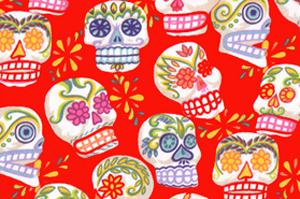
Celebrating The Day of the Dead
By Kirsten Anderberg (http://www.kirstenanderberg.com)
Written October 3, 2007
The Day of the Dead season (Oct. 31- Nov. 2) is dedicated to souls that have passed onto the “other side.” The celebrations begin the last days of October, with ritual cleaning of gravesites and the building of altars to the Dead. Bright yellow and orange calendula flowers decorate cemetery plots and altars, special foods with death themes are made, and a general celebration ensues *with* the Dead from Oct. 31 to Nov. 2. The Day of the Dead has Mexican origins and families throughout Mexico gather, throwing parties with loud music and food, around relatives’ and loved ones’ graves, sometimes all night long, between Oct. 31 and Nov. 2. Pagans also say the souls of the Dead are closest to the world of the living during this period and pagans have similar celebrations this time of year. I think some of the associations of death with this time of year come from the fact that this is the end of the harvest season, and many plants begin to die during this period, culminating in a serious lack of plants, and animals, for food during the heart of winter. It is the time period when the abundance of summer must be tempered with the coming winter or else death can be threatening. Candles in windows light the way for souls to visit, as altars set out with pictures and favorite foods of the deceased attract loved ones’ souls into the home.
Traditional foods for the Day of the Dead season include sugar skulls and bread of the Dead. Sugar skulls are primarily made of sugar and meringue in skull molds. The skulls are then dried and painted brightly with food coloring and set on altars. You can find sugar skull recipes online that use meringue (http://www.mexicansugarskull.com/mexicansugarskull/recipe.htm) and those that don’t.(http://www.inside-mexico.com/calaveras.htm). You can also buy a variety of sugar skull molds online (http://www.mexicansugarskull.com/mexicansugarskull/sugarskullmolds.htm). Another traditional food is bread of the dead (or pan de muertos). These breads are shaped into skeletons, bones, skulls, etc. and are often decorated with red food coloring to simulate blood. Day of the Dead cookies are likewise often decorated with red colored sugar and icing. You can find many pan de muertos recipes online (http://www.mexconnect.com/mex_/recipes/puebla/kgpandemuertos.html), as well as Bones of the Dead cookie recipes (http://italianfood.about.com/od/biscottietc/r/blr0610.htm).
The Day of the Dead is a nice way to commune with those you love who have passed on. I collect pictures of people I love who have passed on, and put their pictures up on an altar to the Dead in my home every year. I also place some sugar skulls, pan de muertos, and some of the favorite foods of my deceased friends, along with trinkets they gave me, or things that remind me of them on the altar. I decorate the altar with bright yellow and orange marigold (calendula) flowers that I picked and dried the spring prior, but you can also make paper marigolds (http://www.azcentral.com/ent/dead/crafts/paperflowers.html) out of brightly colored paper. There are instructions on the internet to help you make your own home altar (http://dia-de-los-muertos.123holiday.net/dia_de_los_muertos_alter.html). You can learn how to make a cigar box altar at http://www.diynetwork.com/diy/cr_boxes/article/0,2025,DIY_13747_5075414,00.html. On the eve of the Day of the Dead, Oct. 31, I light candles on the altar and also in my windows to help guide the spirits to my altar and home. During this time, I also do things to honor the Dead, such as performing their favorite song, or donating time to their favorite political cause, or even write an article about their life and legacy, posting it to the web and sending it to their friends and family (http://users.resist.ca/~kirstena/pageroguemidwifery.html). For more Day of the Dead ideas and folklore, visit http://resist.ca/~kirstena/pagedayofdead.html.
Death is a part of life and this celebration is a good time to familiarize children with the concept of death. It is also a good time to demystify death, and to educate children about such things in a positive, even celebratory, setting. Many resources are available online to guide teachers and parents during this time, including a free skeleton puppet template (http://www.washington.edu/burkemuseum/celebration/skeleton.pdf), free Day of the Dead Flash Cards (http://www.azcentral.com/ent/dead/history/flashcards.html), free postcards (http://www.azcentral.com/postcards/ViewPostcards.php?categoryID=9) and altered book ideas (http://karenswhimsy.com/altered-books/dia-de-los-muertos/). Teachers can download educational Day of the Dead activity packets at http://www.azcentral.com/ent/dead/teachers/ and also http://www.enchantedlearning.com/crafts/dayofthedead. In many regions of Mexico, November 1st honors deceased children and infants, whereas deceased adults are honored on November 2nd.
The issue of death is embedded in classic literature, art, and music since time unknown. Shakespeare’s graveyard scene in Hamlet is a classic multi-layered examination of death. Not only does that scene discuss how noblemen and beggar all end the same in the earth in death, but the scene also ponders serious philosophical dilemmas around the meaning of life, while reflecting upon death, that have haunted man forever, it seems. The classic “Ring around the rosy” song, with pockets full of posies which were supposed to keep the plague away, ends with “ashes, ashes, we all fall down,” referring to death of children in nursery rhyme form. In “Cat’s Cradle,” Kurt Vonnegut writes “"God made mud. God got lonesome. So God said to some of the mud, "Sit up!" "See all I've made," said God, "the hills, the sea, the sky, the stars." And I was some of the mud that got to sit up and look around. Lucky me, lucky mud. I, mud, sat up and saw what a nice job God had done. Nice going, God. Nobody but you could have done it, God! I certainly couldn't have. I feel very unimportant compared to You. The only way I can feel the least bit important is to think of all the mud that didn't even get to sit up and look around. I got so much, and most mud got so little. Thank you for the honor! Now mud lies down again and goes to sleep. What memories for mud to have! What interesting other kinds of sitting-up mud I met! I loved everything I saw! Good night." (The Last Rites of the Bokononist faith). The topic of death need not be frightening nor taboo. One can incorporate the thoughts of great thinkers and the arts and traditions of the past into the discussion. As it is with much of nature, death can be seen as a power to be in awe of, rather than a force to fear. The Day of the Dead is a good way to change your relationship with death.
Jose Guadalupe Posada (http://www.inside-mexico.com/posada.htm) is the most well-known artist associated with Day of the Dead art. He has drawn classic skeletons doing all kinds of things in his work. Small handmade skeleton dolls (papier mache calaveras) in diorama scenes portraying the Dead in their professions, doing hobbies or sports they enjoyed, or just doing daily activities are common too. Arts and crafts are used for decorations in the home, cemetery and public spaces and are ways for people to come together communally to honor the Dead.
As the Day of the Dead approaches, you may want to pull out some pictures of loved ones who have died and to post them for all to see in your home, telling their stories to your children and family, keeping their legacies alive. You may want to make some Day of the Dead arts and crafts and/or foods to celebrate with your deceased and living friends. Or you may just want to set some quiet alone time aside to communicate with someone you have loved and lost touch with after they left their body.
“If I don’t meet you no more in this world,
I’ll meet you in the next one,
So don’t be late!” – Jimi Hendrix
By Kirsten Anderberg (http://www.kirstenanderberg.com)
Written October 3, 2007
The Day of the Dead season (Oct. 31- Nov. 2) is dedicated to souls that have passed onto the “other side.” The celebrations begin the last days of October, with ritual cleaning of gravesites and the building of altars to the Dead. Bright yellow and orange calendula flowers decorate cemetery plots and altars, special foods with death themes are made, and a general celebration ensues *with* the Dead from Oct. 31 to Nov. 2. The Day of the Dead has Mexican origins and families throughout Mexico gather, throwing parties with loud music and food, around relatives’ and loved ones’ graves, sometimes all night long, between Oct. 31 and Nov. 2. Pagans also say the souls of the Dead are closest to the world of the living during this period and pagans have similar celebrations this time of year. I think some of the associations of death with this time of year come from the fact that this is the end of the harvest season, and many plants begin to die during this period, culminating in a serious lack of plants, and animals, for food during the heart of winter. It is the time period when the abundance of summer must be tempered with the coming winter or else death can be threatening. Candles in windows light the way for souls to visit, as altars set out with pictures and favorite foods of the deceased attract loved ones’ souls into the home.
Traditional foods for the Day of the Dead season include sugar skulls and bread of the Dead. Sugar skulls are primarily made of sugar and meringue in skull molds. The skulls are then dried and painted brightly with food coloring and set on altars. You can find sugar skull recipes online that use meringue (http://www.mexicansugarskull.com/mexicansugarskull/recipe.htm) and those that don’t.(http://www.inside-mexico.com/calaveras.htm). You can also buy a variety of sugar skull molds online (http://www.mexicansugarskull.com/mexicansugarskull/sugarskullmolds.htm). Another traditional food is bread of the dead (or pan de muertos). These breads are shaped into skeletons, bones, skulls, etc. and are often decorated with red food coloring to simulate blood. Day of the Dead cookies are likewise often decorated with red colored sugar and icing. You can find many pan de muertos recipes online (http://www.mexconnect.com/mex_/recipes/puebla/kgpandemuertos.html), as well as Bones of the Dead cookie recipes (http://italianfood.about.com/od/biscottietc/r/blr0610.htm).
The Day of the Dead is a nice way to commune with those you love who have passed on. I collect pictures of people I love who have passed on, and put their pictures up on an altar to the Dead in my home every year. I also place some sugar skulls, pan de muertos, and some of the favorite foods of my deceased friends, along with trinkets they gave me, or things that remind me of them on the altar. I decorate the altar with bright yellow and orange marigold (calendula) flowers that I picked and dried the spring prior, but you can also make paper marigolds (http://www.azcentral.com/ent/dead/crafts/paperflowers.html) out of brightly colored paper. There are instructions on the internet to help you make your own home altar (http://dia-de-los-muertos.123holiday.net/dia_de_los_muertos_alter.html). You can learn how to make a cigar box altar at http://www.diynetwork.com/diy/cr_boxes/article/0,2025,DIY_13747_5075414,00.html. On the eve of the Day of the Dead, Oct. 31, I light candles on the altar and also in my windows to help guide the spirits to my altar and home. During this time, I also do things to honor the Dead, such as performing their favorite song, or donating time to their favorite political cause, or even write an article about their life and legacy, posting it to the web and sending it to their friends and family (http://users.resist.ca/~kirstena/pageroguemidwifery.html). For more Day of the Dead ideas and folklore, visit http://resist.ca/~kirstena/pagedayofdead.html.
Death is a part of life and this celebration is a good time to familiarize children with the concept of death. It is also a good time to demystify death, and to educate children about such things in a positive, even celebratory, setting. Many resources are available online to guide teachers and parents during this time, including a free skeleton puppet template (http://www.washington.edu/burkemuseum/celebration/skeleton.pdf), free Day of the Dead Flash Cards (http://www.azcentral.com/ent/dead/history/flashcards.html), free postcards (http://www.azcentral.com/postcards/ViewPostcards.php?categoryID=9) and altered book ideas (http://karenswhimsy.com/altered-books/dia-de-los-muertos/). Teachers can download educational Day of the Dead activity packets at http://www.azcentral.com/ent/dead/teachers/ and also http://www.enchantedlearning.com/crafts/dayofthedead. In many regions of Mexico, November 1st honors deceased children and infants, whereas deceased adults are honored on November 2nd.
The issue of death is embedded in classic literature, art, and music since time unknown. Shakespeare’s graveyard scene in Hamlet is a classic multi-layered examination of death. Not only does that scene discuss how noblemen and beggar all end the same in the earth in death, but the scene also ponders serious philosophical dilemmas around the meaning of life, while reflecting upon death, that have haunted man forever, it seems. The classic “Ring around the rosy” song, with pockets full of posies which were supposed to keep the plague away, ends with “ashes, ashes, we all fall down,” referring to death of children in nursery rhyme form. In “Cat’s Cradle,” Kurt Vonnegut writes “"God made mud. God got lonesome. So God said to some of the mud, "Sit up!" "See all I've made," said God, "the hills, the sea, the sky, the stars." And I was some of the mud that got to sit up and look around. Lucky me, lucky mud. I, mud, sat up and saw what a nice job God had done. Nice going, God. Nobody but you could have done it, God! I certainly couldn't have. I feel very unimportant compared to You. The only way I can feel the least bit important is to think of all the mud that didn't even get to sit up and look around. I got so much, and most mud got so little. Thank you for the honor! Now mud lies down again and goes to sleep. What memories for mud to have! What interesting other kinds of sitting-up mud I met! I loved everything I saw! Good night." (The Last Rites of the Bokononist faith). The topic of death need not be frightening nor taboo. One can incorporate the thoughts of great thinkers and the arts and traditions of the past into the discussion. As it is with much of nature, death can be seen as a power to be in awe of, rather than a force to fear. The Day of the Dead is a good way to change your relationship with death.
Jose Guadalupe Posada (http://www.inside-mexico.com/posada.htm) is the most well-known artist associated with Day of the Dead art. He has drawn classic skeletons doing all kinds of things in his work. Small handmade skeleton dolls (papier mache calaveras) in diorama scenes portraying the Dead in their professions, doing hobbies or sports they enjoyed, or just doing daily activities are common too. Arts and crafts are used for decorations in the home, cemetery and public spaces and are ways for people to come together communally to honor the Dead.
As the Day of the Dead approaches, you may want to pull out some pictures of loved ones who have died and to post them for all to see in your home, telling their stories to your children and family, keeping their legacies alive. You may want to make some Day of the Dead arts and crafts and/or foods to celebrate with your deceased and living friends. Or you may just want to set some quiet alone time aside to communicate with someone you have loved and lost touch with after they left their body.
“If I don’t meet you no more in this world,
I’ll meet you in the next one,
So don’t be late!” – Jimi Hendrix
For more information:
http://www.kirstenanderberg.com
Add Your Comments
We are 100% volunteer and depend on your participation to sustain our efforts!
Donate

$110.00 donated
in the past month
Get Involved
If you'd like to help with maintaining or developing the website, contact us.
Publish
Publish your stories and upcoming events on Indybay.
Topics
More
Search Indybay's Archives
Advanced Search
►
▼
IMC Network