







 Publish to Newswire
 Add an Event
From the Open-Publishing Calendar
From the Open-Publishing Newswire
Indybay Feature
Community groups protest agricultural contamination of Central Valley water
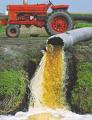
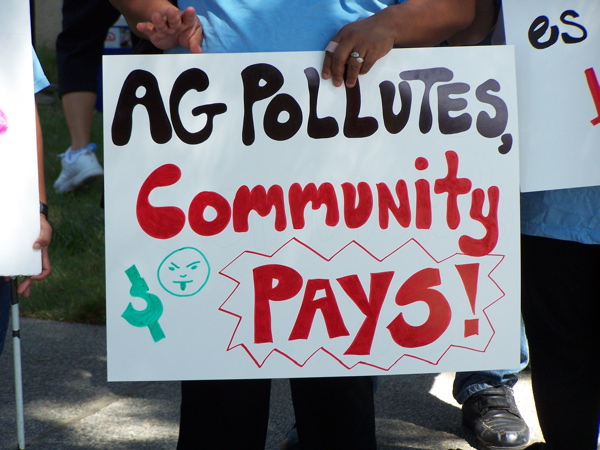
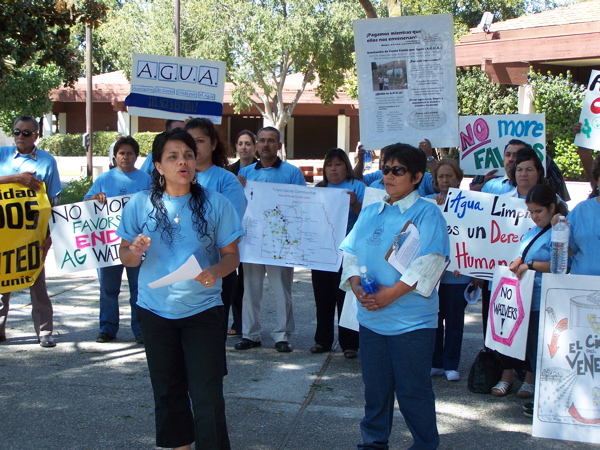
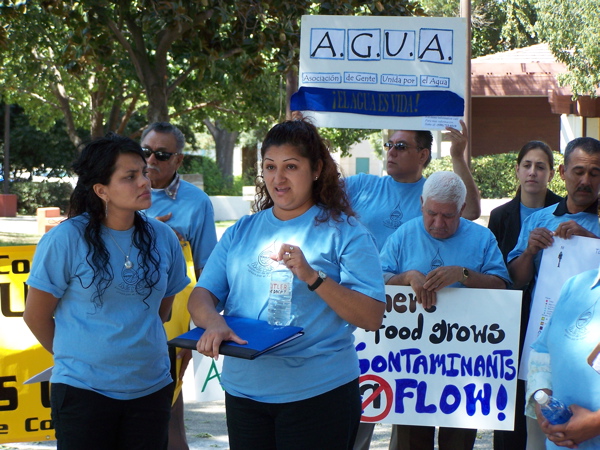
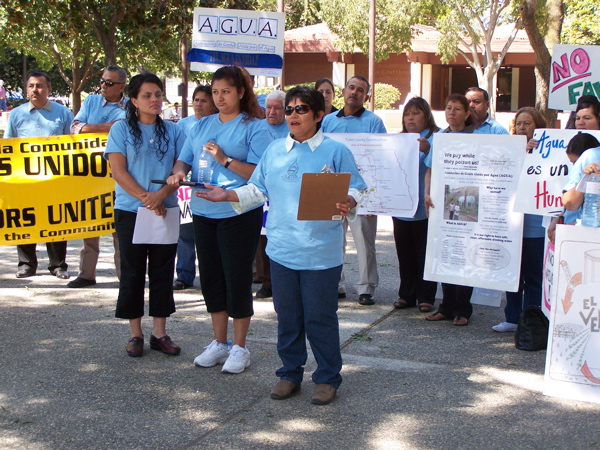
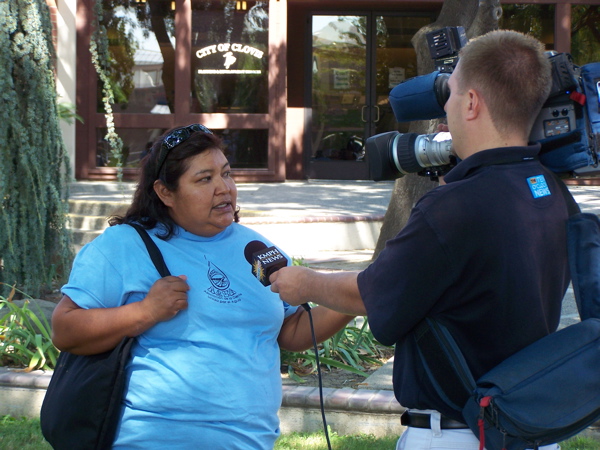
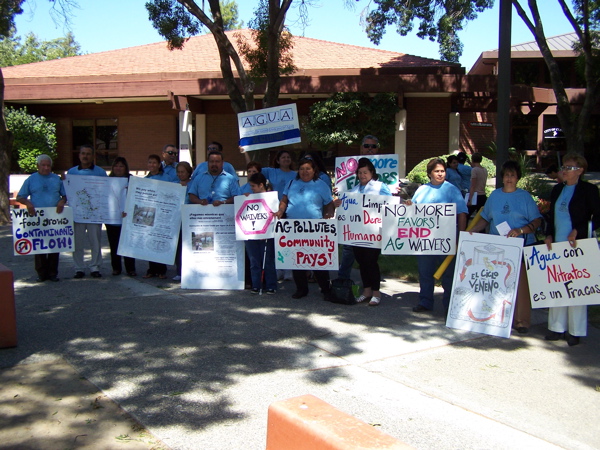
Community residents from throughout the Central Valley gathered today to protest the Central Valley Regional Water Quality Control Board’s continued failure to regulate agricultural pollution. Representatives of a broad coalition, including the Californians for Pesticide Reform, Center for Clean Water Action, Community Water Center, Environmental Justice Coalition for Water and Latino Issues Forum, demanded an end to the board's Irrigated Lands Program that allows toxic discharges into the Central Valley streams, the Delta and drinking water supplies in complete violation of Clean Water Act standards.
Bill Jennings of the California Sportfishing Protection Alliance (CSPA) also made blistering comments at the board's workshop, challenging the very validity of the workshop. The CSPA and Baykeeper filed a lawsuit in June against the Regional Board for renewing waivers that excuse polluted discharges from 25,000 farms from meeting statewide water quality objectives. The lawsuit alleges that the Regional Board’s adoption of the waivers violates the California Environmental Quality Act (CEQA), state and federal endangered species acts and Porter-Cologne, California’s water quality law.
"CSPA/Baykeeper is puzzled as to the purpose of the 13 September joint workshop," said Jennings. "The Regional and State Boards already have in their possession an administrative record that answers most of the questions posed by the State Board in its Notice of Public Workshop. The State Board also has draft technical reports prepared by its regulatory compliance, nonpoint source and groundwater units that evaluated the record and the merits of CSPA/Baykeeper’s petition. The denial of the CSPA/Baykeeper petition and the rejection of staff’s assessment and recommendations clearly indicate that the State Board has predetermined its course of action. The joint public workshop seems to be little more than a smokescreen to mask the massive, illegal procedural irregularities surrounding this debacle.
Jennings concluded by saying, "The bottom line is that the State and Regional Boards have exempted irrigated agriculture from routine regulations applicable to virtually every other segment of society: from municipalities, industry, construction to mom-and-pop businesses. In doing so, the Boards have condemned our waterways to increasing degradation. We can only wish that Board Members would somehow find as much sympathy for the victims of agricultural pollution as they do for the polluters."
The deplorable decision of the Board to continue allowing agriculture to pollute Central Valley waters and Sacramento-San Joaquin Delta occurs in the context of a dramatic collapse of delta smelt, longfin smelt, juvenile smelt and threadfin shad. Toxic pollution is one of the three factors that state and federal scientists have poinpointed as the chief causes of the California Delta ecoystem crash. The other two factors are the dramatic increase in Delta exports in recent years and the spread of invasive species.
Bill Jennings of the California Sportfishing Protection Alliance (CSPA) also made blistering comments at the board's workshop, challenging the very validity of the workshop. The CSPA and Baykeeper filed a lawsuit in June against the Regional Board for renewing waivers that excuse polluted discharges from 25,000 farms from meeting statewide water quality objectives. The lawsuit alleges that the Regional Board’s adoption of the waivers violates the California Environmental Quality Act (CEQA), state and federal endangered species acts and Porter-Cologne, California’s water quality law.
"CSPA/Baykeeper is puzzled as to the purpose of the 13 September joint workshop," said Jennings. "The Regional and State Boards already have in their possession an administrative record that answers most of the questions posed by the State Board in its Notice of Public Workshop. The State Board also has draft technical reports prepared by its regulatory compliance, nonpoint source and groundwater units that evaluated the record and the merits of CSPA/Baykeeper’s petition. The denial of the CSPA/Baykeeper petition and the rejection of staff’s assessment and recommendations clearly indicate that the State Board has predetermined its course of action. The joint public workshop seems to be little more than a smokescreen to mask the massive, illegal procedural irregularities surrounding this debacle.
Jennings concluded by saying, "The bottom line is that the State and Regional Boards have exempted irrigated agriculture from routine regulations applicable to virtually every other segment of society: from municipalities, industry, construction to mom-and-pop businesses. In doing so, the Boards have condemned our waterways to increasing degradation. We can only wish that Board Members would somehow find as much sympathy for the victims of agricultural pollution as they do for the polluters."
The deplorable decision of the Board to continue allowing agriculture to pollute Central Valley waters and Sacramento-San Joaquin Delta occurs in the context of a dramatic collapse of delta smelt, longfin smelt, juvenile smelt and threadfin shad. Toxic pollution is one of the three factors that state and federal scientists have poinpointed as the chief causes of the California Delta ecoystem crash. The other two factors are the dramatic increase in Delta exports in recent years and the spread of invasive species.
SPONSORED BY: Californians for Pesticide Reform; Center for Clean Water Action; Community Water Center; Environmental Justice Coalition for Water; Latino Issues Forum
PRESS RELEASE
September 13th, 2007
Susana De Anda, AGUA, 559-202-6658
Laurel Firestone, Community Water Center, 559-789-7245
Stephanie Camoroda, Latino Issues Forum, 559-905-1608
Community groups protest agricultural contamination
Regional Board faces scrutiny as residents call for more drinking water protections
Clovis – Community residents from throughout the Central Valley gathered today to protest the Central Valley Regional Water Quality Control Board’s (Regional Board) continued failure to regulate agricultural pollution. The Regional Board is holding a workshop to examine the impacts of its’ controversial Irrigated Lands Program, which allows farms to discharge irrigation wastewater without meeting Clean Water Act standards. Community activists are demanding an end to the program because it directly contaminates their source of drinking water.
The Regional Board, the agency in charge of protecting Central Valley groundwater, has been ordered by the State Water Resource Control Board to answer a series of hard questions on the program. The program allows farmers to discharge irrigation water without applying any meaningful water protection or treatment measures. As a result, toxic drainage laden with pesticide components, nitrates from fertilizers, and salts seep into the Central Valley’s waterways and groundwater aquifers – the drinking water supply for over 90 percent of communities throughout the Central Valley.
“Agriculture is passing the costs of pollution onto residents throughout the Valley,” said Susana De Anda, coordinator of AGUA (Asociación de Gente Unida por el Agua), a grassroots coalition of Central Valley residents who are impacted by agricultural pollution. “Small, rural communities face poisoned drinking water on a daily basis. They are paying for industry’s free pass to pollute.”
The Central Valley is home to the most contaminated drinking water sources in California. Each year, approximately 40,000 people in the Southern San Joaquin Valley alone are affected by illegal levels of contaminants in their drinking water. The most common contaminant is nitrates from fertilizer use. Tulare County has the highest number of closure of drinking water wells due to nitrate contamination in the state, and 20 percent of community water systems in Tulare County cannot meet basic safe drinking water laws. Nitrates are an acute contaminant that can cause death in infants and have been linked to cancer.
“I can’t fill a glass of tap water for my kids to drink,” explains Maria Elena Orozco, a community activist in East Orosi. East Orosi’s water regularly exceeds state health standards for nitrates. “I am paying for water I can’t even drink, and then have to pay even more to buy bottled water.” Many of the towns in the Central Valley that are hit hard by groundwater contamination, like East Orosi, are those that can least afford, with high poverty rates and few municipal resources.
The Regional Board has granted agriculture a “conditional waiver” from water quality regulations since 2003. Advocates have been pressuring the Board for several years to enact basic changes within the program to protect groundwater, such as requiring best management practices for irrigation discharges and reports identifying individual discharges.
“This program is perhaps the most egregious case of the Regional Board’s failure to protect our drinking water from major sources of contamination. We have come before the Board numerous times asking them to include groundwater protections in this program, and we get the same vague promise to address this crisis through a long-term program,” said Laurel Firestone, an attorney with the Visalia-based Community Water Center. “The families who are here today deserve to see concrete commitments for how this Board will do its job – they are failing to fulfill their mandate to protect the public interest.”
AGUA, Community Water Center and other groups will be pushing the Regional Board to issue standard Waste Discharge Requirements, regulations virtually every other industry must comply with. They are also calling for reports on individual farm discharges and a Groundwater Monitoring and Protection Program.
“It is time for the Regional Board to take action. We want to see clear, enforceable water quality objectives and action plans to get there,” states Stephanie Camoroda, of Latino Issues Forum, a state-wide public policy and advocacy institute. “The Regional Board must revise and expand the current Irrigated Lands Conditional Waiver program to include groundwater dischargers so that communities are protected from the health-threatening pollution in agricultural run-off.”
###
654 13th Street
Oakland CA 94612
510-286-8400
PRESS RELEASE
September 13th, 2007
Susana De Anda, AGUA, 559-202-6658
Laurel Firestone, Community Water Center, 559-789-7245
Stephanie Camoroda, Latino Issues Forum, 559-905-1608
Community groups protest agricultural contamination
Regional Board faces scrutiny as residents call for more drinking water protections
Clovis – Community residents from throughout the Central Valley gathered today to protest the Central Valley Regional Water Quality Control Board’s (Regional Board) continued failure to regulate agricultural pollution. The Regional Board is holding a workshop to examine the impacts of its’ controversial Irrigated Lands Program, which allows farms to discharge irrigation wastewater without meeting Clean Water Act standards. Community activists are demanding an end to the program because it directly contaminates their source of drinking water.
The Regional Board, the agency in charge of protecting Central Valley groundwater, has been ordered by the State Water Resource Control Board to answer a series of hard questions on the program. The program allows farmers to discharge irrigation water without applying any meaningful water protection or treatment measures. As a result, toxic drainage laden with pesticide components, nitrates from fertilizers, and salts seep into the Central Valley’s waterways and groundwater aquifers – the drinking water supply for over 90 percent of communities throughout the Central Valley.
“Agriculture is passing the costs of pollution onto residents throughout the Valley,” said Susana De Anda, coordinator of AGUA (Asociación de Gente Unida por el Agua), a grassroots coalition of Central Valley residents who are impacted by agricultural pollution. “Small, rural communities face poisoned drinking water on a daily basis. They are paying for industry’s free pass to pollute.”
The Central Valley is home to the most contaminated drinking water sources in California. Each year, approximately 40,000 people in the Southern San Joaquin Valley alone are affected by illegal levels of contaminants in their drinking water. The most common contaminant is nitrates from fertilizer use. Tulare County has the highest number of closure of drinking water wells due to nitrate contamination in the state, and 20 percent of community water systems in Tulare County cannot meet basic safe drinking water laws. Nitrates are an acute contaminant that can cause death in infants and have been linked to cancer.
“I can’t fill a glass of tap water for my kids to drink,” explains Maria Elena Orozco, a community activist in East Orosi. East Orosi’s water regularly exceeds state health standards for nitrates. “I am paying for water I can’t even drink, and then have to pay even more to buy bottled water.” Many of the towns in the Central Valley that are hit hard by groundwater contamination, like East Orosi, are those that can least afford, with high poverty rates and few municipal resources.
The Regional Board has granted agriculture a “conditional waiver” from water quality regulations since 2003. Advocates have been pressuring the Board for several years to enact basic changes within the program to protect groundwater, such as requiring best management practices for irrigation discharges and reports identifying individual discharges.
“This program is perhaps the most egregious case of the Regional Board’s failure to protect our drinking water from major sources of contamination. We have come before the Board numerous times asking them to include groundwater protections in this program, and we get the same vague promise to address this crisis through a long-term program,” said Laurel Firestone, an attorney with the Visalia-based Community Water Center. “The families who are here today deserve to see concrete commitments for how this Board will do its job – they are failing to fulfill their mandate to protect the public interest.”
AGUA, Community Water Center and other groups will be pushing the Regional Board to issue standard Waste Discharge Requirements, regulations virtually every other industry must comply with. They are also calling for reports on individual farm discharges and a Groundwater Monitoring and Protection Program.
“It is time for the Regional Board to take action. We want to see clear, enforceable water quality objectives and action plans to get there,” states Stephanie Camoroda, of Latino Issues Forum, a state-wide public policy and advocacy institute. “The Regional Board must revise and expand the current Irrigated Lands Conditional Waiver program to include groundwater dischargers so that communities are protected from the health-threatening pollution in agricultural run-off.”
###
654 13th Street
Oakland CA 94612
510-286-8400
Add Your Comments
Latest Comments
Listed below are the latest comments about this post.
These comments are submitted anonymously by website visitors.
TITLE
AUTHOR
DATE
Misss
Mon, Sep 24, 2007 8:39PM
Picture from Community Water Press Conference
Fri, Sep 14, 2007 6:06AM
We are 100% volunteer and depend on your participation to sustain our efforts!
Donate

$110.00 donated
in the past month
Get Involved
If you'd like to help with maintaining or developing the website, contact us.
Publish
Publish your stories and upcoming events on Indybay.
Topics
More
Search Indybay's Archives
Advanced Search
►
▼
IMC Network