







 Publish to Newswire
 Add an Event
From the Open-Publishing Calendar
From the Open-Publishing Newswire
Indybay Feature
California Junteenth and 2007 U.S. Farm and Food Policy
Juneteenth has a special relationship with the evolution of U.S. Farm and Food Policy, June 19th is a special day in our nation's history. Take time to learn from history and provide a higher standard living for your tomorrow.
2007 U.S. Farm and Food Policy and the Origin of Juneteenth
A runaway enslaved African named Crispus Attucks became the first casualty in a social movement toward equal opportunity in the Americas. The agricultural product forming the central focus of 1770 Farm and Food Policy was ‘cheap tea’ and unfair tariff taxes.
Boston Harbor became a catalyst where the notion of ‘fair trade’ reached a boiling point that has facilitated ongoing fierce battles for the establishment of equitable terms of trade and commerce of agriculture commodities and perishable food products. Value added agricultural products imported to and/or exported from the United States of America has forever changed “equal opportunity” to “give us this day our daily bread,” in our global marketplace.
Our ‘ole’ U.S. slave marketplace, Boston Harbor, honors many whom paid the ultimate sacrifice, Crispus Attucks, Philis Wheatley, David Walker and many, many other people of African ancestry. Today, Boston Harbor can proudly claim the only sitting African American State Governor in the entire United States of America, Honorable Governor Deval Patrick.
Juneteenth has a special relationship with the evolution of U.S. Farm and Food Policy
In 1862, ‘cheap cotton’ was the transition crop and free African labor was the issue that dominated the nation. Today, 2007 ‘cheap corn’ is transition crop and undocumented Mexican labor is the issue that dominates the nation.
The legacy of the original Juneteenth celebration has poignant lessons to share in moving toward a paradigm shift within our 2007 U.S. Farm and Food Policy debate.
The first African American holiday in the United States, Juneteenth was first observed June 19, 1865, while another Agricultural holiday, Kwanzaa began one hundred years later in 1966. Will it be another 100 years before equity and equality?
President Lincoln issued the Emancipation Proclamation as a strategic war measure that sought to bring a timely end to the Civil War by “granting freedom” to those enslaved human beings in states that had seceded from the Union. Millions of enslaved ancestors in Union states, including California remained enslaved in some cased long after Juneteenth and the ratification of the 13th amendment to the U.S. Constitution.
On June 19th, General Gordon Granger rode into Galveston, Texas and spoke to those enslaved Black Farmers and Agriculturalists choppin’ cotton on a southern plantation.
General Order No. 3
The people of Texas are informed that, in accordance with a proclamation from the Executive of the United States, all slaves are free. This involves an absolute equality of personal rights and rights of property, between former masters and slaves and the connection heretofore existing between them, becomes that between employer and hired labor. The Freedmen are advised to remain at their present homes and work for wages. They are informed that they will not be allowed to collect at military posts; and they will not be supported in idleness either there or elsewhere.
Since the founding of the U.S. Department of Agriculture in 1862, the people’s department, has never operated with equal opportunity by providing equity in services toward Black Farmers and Agriculturalists, thus we serve on a USDA/Community Based Organization Solution team to help facilitate and expedite a window of opportunity for change.
Our 2007 U.S. Farm and Food Bill conversation in the House of Representatives may be headed for a bitter and fierce political floor debate that recalls the days of the U.S. Civil War. 35 million U.S. citizens and many more residents cannot go hungry without a serious conversation about, “forming a more perfect union.” President George Bush may actually facilitate an immigration bill that does not really address Agriculture Farm labor law and thus we cannot rest well.
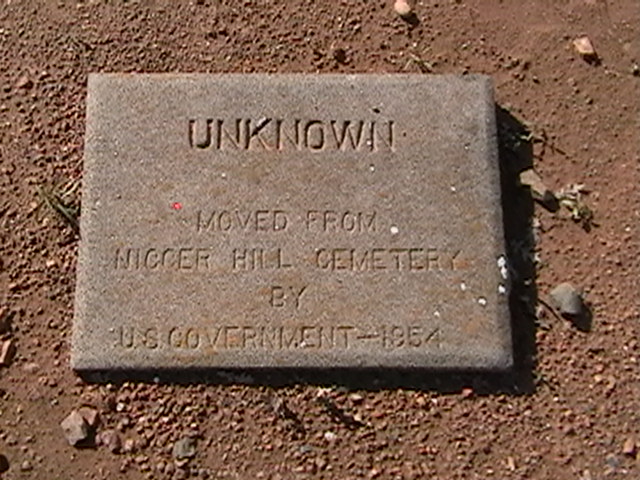
The State of California may honor those enslaved California Pioneers of the Great State of California at some point in the distant future. One day we will acknowledge the sacrifice of the “Unknown Niggers” buried with the most foul and degrading epitaph upon their tombstone, not far from our California State Capitol.
We must celebrate progress, thus you are invited to join a historic Juneteenth Reception, Tuesday, June 19, 2007, 2:00 - 4:00 pm at the California State Pubic Library, 914 Capitol Mall Drive, Sacramento, CA, the event is free and open to the public.
A runaway enslaved African named Crispus Attucks became the first casualty in a social movement toward equal opportunity in the Americas. The agricultural product forming the central focus of 1770 Farm and Food Policy was ‘cheap tea’ and unfair tariff taxes.
Boston Harbor became a catalyst where the notion of ‘fair trade’ reached a boiling point that has facilitated ongoing fierce battles for the establishment of equitable terms of trade and commerce of agriculture commodities and perishable food products. Value added agricultural products imported to and/or exported from the United States of America has forever changed “equal opportunity” to “give us this day our daily bread,” in our global marketplace.
Our ‘ole’ U.S. slave marketplace, Boston Harbor, honors many whom paid the ultimate sacrifice, Crispus Attucks, Philis Wheatley, David Walker and many, many other people of African ancestry. Today, Boston Harbor can proudly claim the only sitting African American State Governor in the entire United States of America, Honorable Governor Deval Patrick.
Juneteenth has a special relationship with the evolution of U.S. Farm and Food Policy
In 1862, ‘cheap cotton’ was the transition crop and free African labor was the issue that dominated the nation. Today, 2007 ‘cheap corn’ is transition crop and undocumented Mexican labor is the issue that dominates the nation.
The legacy of the original Juneteenth celebration has poignant lessons to share in moving toward a paradigm shift within our 2007 U.S. Farm and Food Policy debate.
The first African American holiday in the United States, Juneteenth was first observed June 19, 1865, while another Agricultural holiday, Kwanzaa began one hundred years later in 1966. Will it be another 100 years before equity and equality?
President Lincoln issued the Emancipation Proclamation as a strategic war measure that sought to bring a timely end to the Civil War by “granting freedom” to those enslaved human beings in states that had seceded from the Union. Millions of enslaved ancestors in Union states, including California remained enslaved in some cased long after Juneteenth and the ratification of the 13th amendment to the U.S. Constitution.
On June 19th, General Gordon Granger rode into Galveston, Texas and spoke to those enslaved Black Farmers and Agriculturalists choppin’ cotton on a southern plantation.
General Order No. 3
The people of Texas are informed that, in accordance with a proclamation from the Executive of the United States, all slaves are free. This involves an absolute equality of personal rights and rights of property, between former masters and slaves and the connection heretofore existing between them, becomes that between employer and hired labor. The Freedmen are advised to remain at their present homes and work for wages. They are informed that they will not be allowed to collect at military posts; and they will not be supported in idleness either there or elsewhere.
Since the founding of the U.S. Department of Agriculture in 1862, the people’s department, has never operated with equal opportunity by providing equity in services toward Black Farmers and Agriculturalists, thus we serve on a USDA/Community Based Organization Solution team to help facilitate and expedite a window of opportunity for change.
Our 2007 U.S. Farm and Food Bill conversation in the House of Representatives may be headed for a bitter and fierce political floor debate that recalls the days of the U.S. Civil War. 35 million U.S. citizens and many more residents cannot go hungry without a serious conversation about, “forming a more perfect union.” President George Bush may actually facilitate an immigration bill that does not really address Agriculture Farm labor law and thus we cannot rest well.
The State of California may honor those enslaved California Pioneers of the Great State of California at some point in the distant future. One day we will acknowledge the sacrifice of the “Unknown Niggers” buried with the most foul and degrading epitaph upon their tombstone, not far from our California State Capitol.
We must celebrate progress, thus you are invited to join a historic Juneteenth Reception, Tuesday, June 19, 2007, 2:00 - 4:00 pm at the California State Pubic Library, 914 Capitol Mall Drive, Sacramento, CA, the event is free and open to the public.
For more information:
http://www.juneteenth.com/history.htm
Add Your Comments
Latest Comments
Listed below are the latest comments about this post.
These comments are submitted anonymously by website visitors.
TITLE
AUTHOR
DATE
U.S. Farm and Food Policy
Thu, Jun 14, 2007 12:32AM
We are 100% volunteer and depend on your participation to sustain our efforts!
Donate

$110.00 donated
in the past month
Get Involved
If you'd like to help with maintaining or developing the website, contact us.
Publish
Publish your stories and upcoming events on Indybay.
Topics
More
Search Indybay's Archives
Advanced Search
►
▼
IMC Network