







 Publish to Newswire
 Add an Event
From the Open-Publishing Calendar
From the Open-Publishing Newswire
Indybay Feature
Immigrant Family Day at SF City Hall
Members of the San Francisco Immigrant Legal and Education Network (SFILEN)* entered San Francisco’s City Hall on Thursday, May 24 hoping to influence the 2007-2008 city budget.
SFILEN’s request, entitled the Immigrant Rights Budget Proposal and also known as the “People’s Budget”, asks for city money to go towards Workforce Development and Employment, Housing assistance, and Family Support, all of which they contend will strengthen the city’s communities and add to economic growth.
SFILEN’s request, entitled the Immigrant Rights Budget Proposal and also known as the “People’s Budget”, asks for city money to go towards Workforce Development and Employment, Housing assistance, and Family Support, all of which they contend will strengthen the city’s communities and add to economic growth.
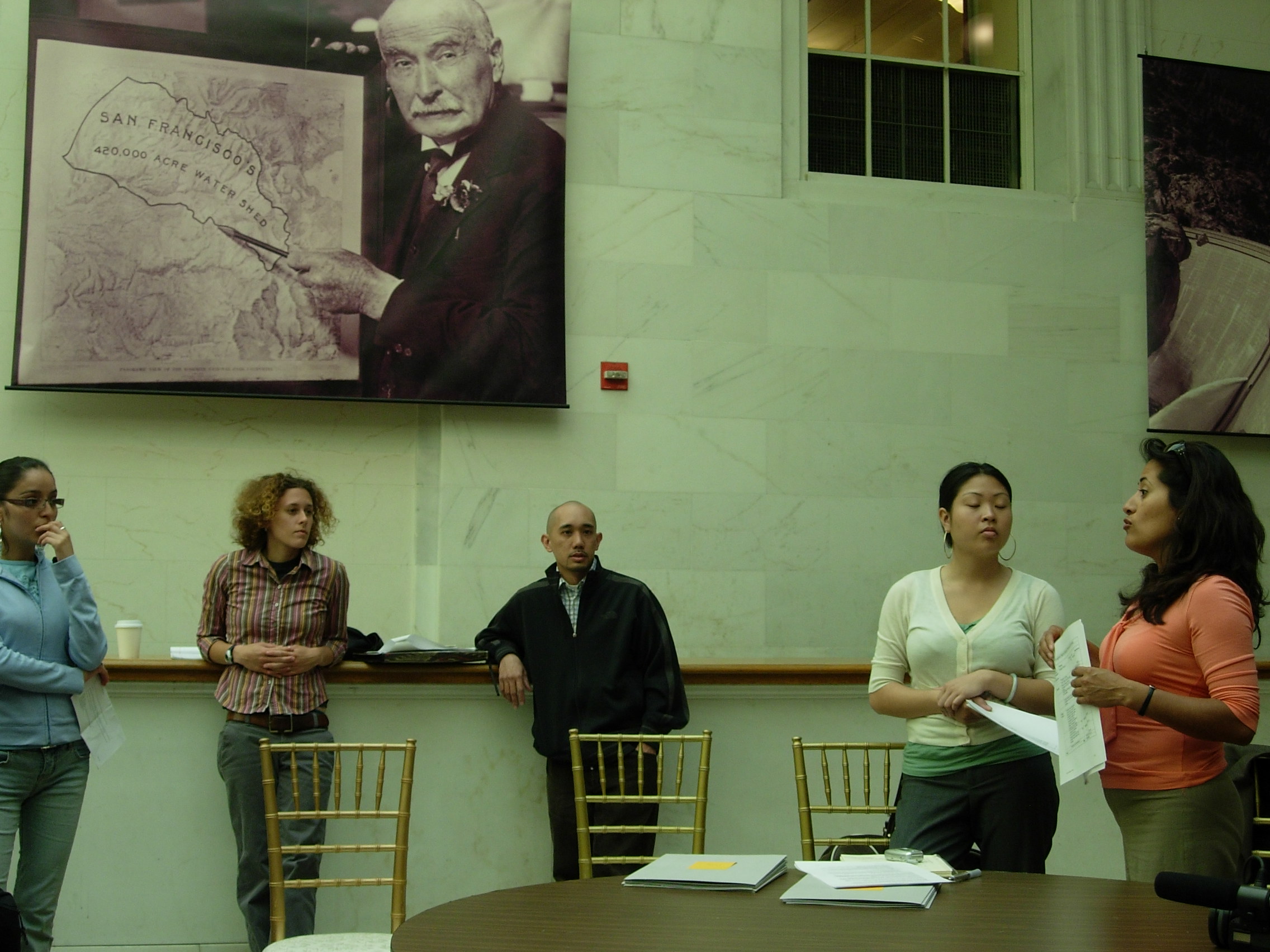
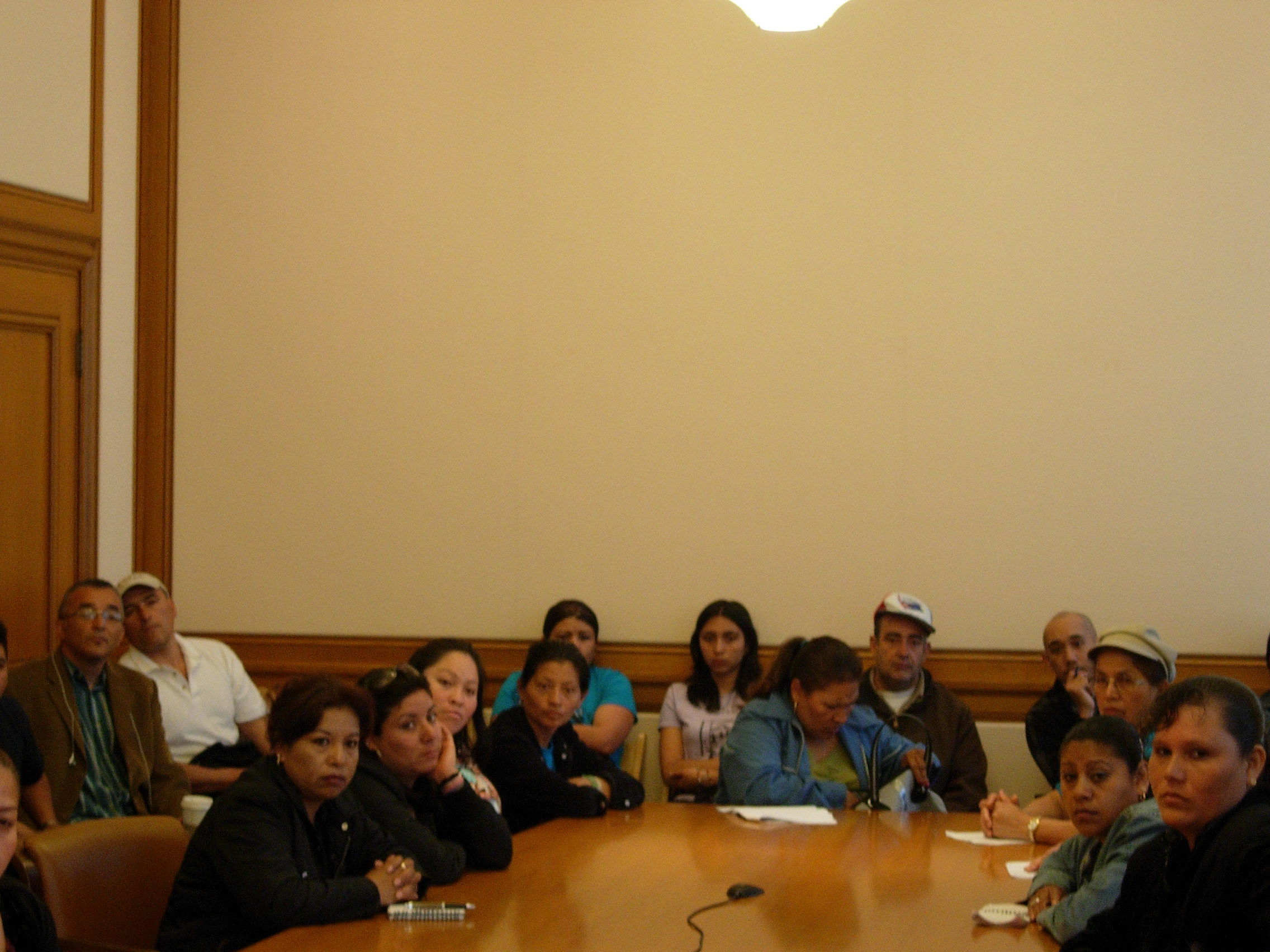
Members of the San Francisco Immigrant Legal and Education Network (SFILEN)* entered San Francisco’s City Hall on Thursday, May 24 hoping to influence the 2007-2008 city budget. The network of fourteen diverse immigrant rights groups, ranging from Mujeres Unidas y Activas to Chinese for Affirmative Action, met with members of the Board of Supervisors and their aids to demand that immigrants get their fair share of the budget for the upcoming fiscal year. Ana Perez, from the Central American Resources Center (CARECEN), led the contingent by explaining their budget proposals during a round-table meeting between the network’s members and the aids to Supervisors Chris Daly, Tom Amiano, Bevan Dufty, Aaron Peskin, and Sean Elsbernd.
SFILEN’s request, entitled the Immigrant Rights Budget Proposal and also known as the “People’s Budget”, asks for city money to go towards Workforce Development and Employment, Housing assistance, and Family Support, all of which they contend will strengthen the city’s communities and add to economic growth. The total budget would amount to $5,700,000 out of the estimated overall 2007-2008 city budget of $5.7 billion. This amounts to 0.1% of the entire San Francisco budget to go towards immigrant services, being distributed into city offices like the Mayors Office of Community Development and the Department of Children, Youth and Families. According to SFILEN, these offices would then allocate the funds to immigrant services organizations who can appropriately utilize the city’s funds to the fullest extent through culturally based services and events.
The city’s budget has benefited SFILEN during the 2006-2007 fiscal year since the organization’s founding in 2006. Funds get distributed to SFILEN’s fourteen member organizations roughly every month through the Mayor’s Office of Community Development for legal services, education, and outreach. Proposed funding would extend to essential services that are currently under funded or nonexistent like rental subsidies and urban migrant worker housing, as well as anti-predatory lending services to combat the high cost loans targeted to low income households, especially in San Francisco’s southeast neighborhoods.
The City Hall action coincided with a heated week back in Washington D.C. as Senators and Congress members debated over new legislation competing to be crowned “comprehensive immigration reform”. The Senate’s new plan would severely limit the family-based system in which U.S. citizens and green card holders can petition for green cards for their nuclear and extended family members abroad. Foreigners would be considered first for temporary entry into the US based on a point system based on work skills and competency in English instead of the already restrictive and tight family reunification programs. The current family based system allows single citizens to rapidly bring spouses and unmarried children under 21 to the U.S. for reunification after intense background checks, while green card holders must wait at least five years to bring immediate family. Extended relatives of citizens and residents currently can wait up to ten or twenty years in backlog systems before being considered for a green card. The irony of this new proposal and its dismantling of existent family favored visas was not lost on the immigrant rights activists who perceive many of its legislators as hypocritical with their catch phrase claim to “family values”.
The largest chunk of the city budget request would go to Family Support through services like classes and support groups on financial literacy, parenting, and family planning, as well as case management and mental health consultation. The program would also include translation and interpretation services along with rental assistance, food and clothing, books and school supplies for children, and drop-in childcare. These services are particularly essential for immigrant communities, many of whom struggle with integration in the midst of economic hardship, new language barriers, and maintaining cultural practices and transnational identities.
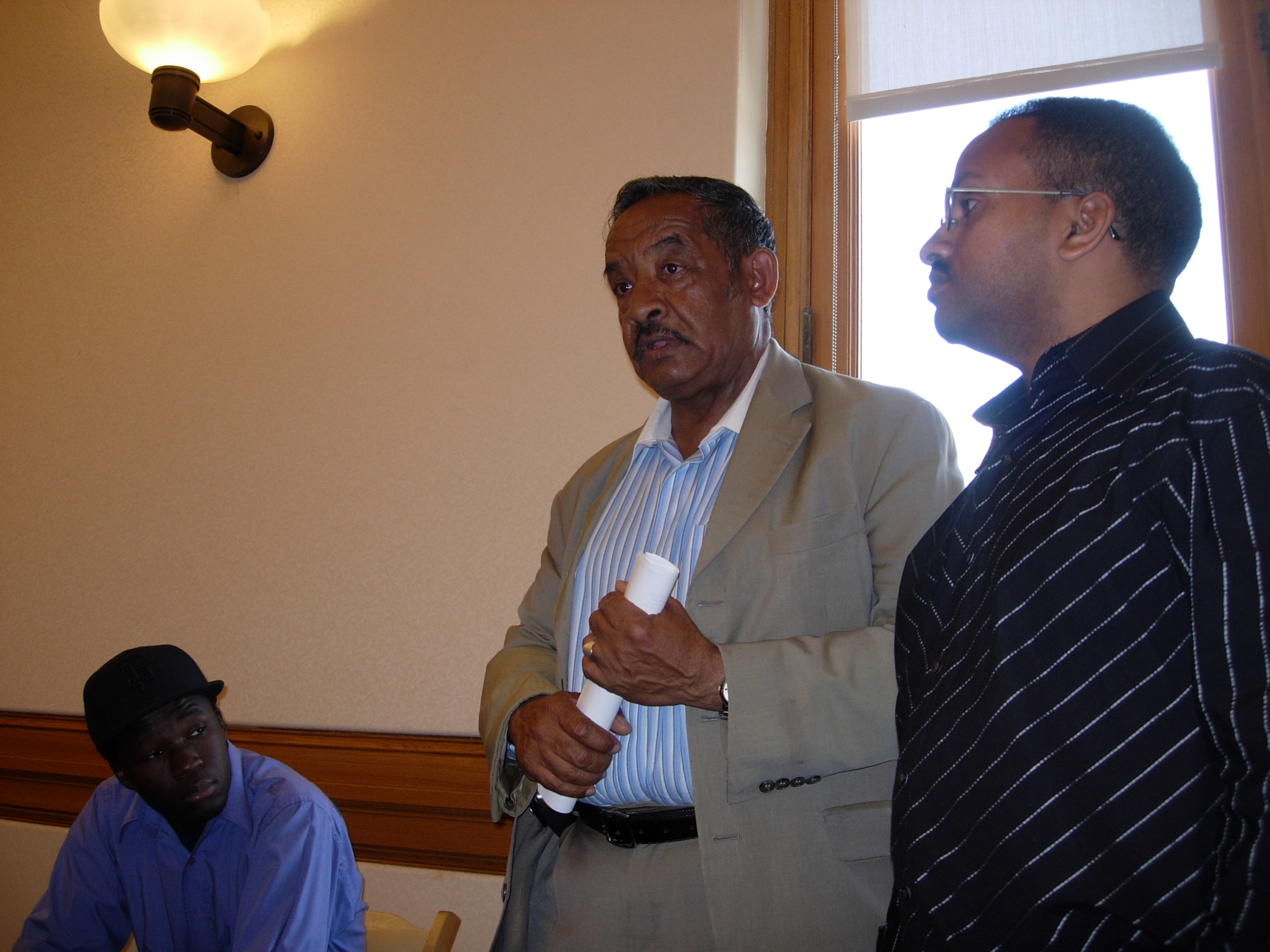
An Eritrean immigrant and green card holder, spoke through a translator from the African Immigrant and Refugee Resource Center about his struggles paying rent in San Francisco, struggling with health care, and adjusting to life in America. “I hope they (the Board) can support our immigrant services”, he remarked with a sigh of relief after his African colleagues had asked him to give an impromptu public testimony. He is currently making ends meet as a part-time security officer and is filing forms to bring his wife and children over from their home in Eritrea as he fears that his young sons may be swept up in the East African country’s military recruitment.
The momentum behind the immigrant rights’ movement in the Bay Area is still in full force, especially after Immigration and Customs Enforcement (ICE) raids during the past few months. Larisa Casillas, director of the Bay Area Immigrant Rights Coalition and a member of the contingent visiting City Hall has noted, “ICE agents left hundreds of families traumatized and living in fear after trampling through our neighborhoods and homes randomly arresting and deporting loved ones.”
SFILEN’s members aim to continue holding Mayor Gavin Newsom and the Board of Supervisors to their recent statements and photo-ops in favor of the city’s Sanctuary Ordinance, ensuring that no city agency will provide information or comply with federal immigration enforcement. The mayor can talk the talk, but activists want to see a budget behind his sanctuary rhetoric.
One of the biggest barriers for families to access services, according to SFILEN’s proposal, is that they are not aware that they exist or that they qualify. Studies, such as the National Immigration Law Center’s 2006 report “Facts About Immigrants’ Low Use of Health Services and Public Benefits”, point to the fact that immigrant use of public services is much lower than that of U.S.-born residents. In other words, immigrants tend to benefit much less from government-funded social services than what they pay into them through taxes.
Still, community-based organizations, like those belonging to the San Francisco Immigrant Legal and Education Network (SFILEN) are in high demand and are hoping for increased cooperation with the city’s resources to address the ever-mounting emergency needs of San Francisco’s documented and undocumented immigrant residents. The finalized 2007-2008 budget will only tell how serious the mayor and Board of Supervisors are in making the city safe and welcoming to its vibrant and hard-working immigrant communities. Regardless of the outcome, the rights movement is still swelling up and pushing through.
* SFILEN consists of the following fourteen organizations: Bay Area Immigrant Rights Coalition, Chinese for Affirmative Action, Dolores Street Community Services, Filipino Community Center, Mujeres Unidas y Activas, People Organized to Demand Environmental & Economic Rights (PODER), St. Peter's Housing Committee, African Immigrant & Refugee Resource Center (AIRRC), Arab American Legal Services, Asian Law Caucus, Asian Pacific Islander Legal Outreach, Central American Resource Center, La Raza Centro Legal, La Raza Community Resource Center.
SFILEN’s request, entitled the Immigrant Rights Budget Proposal and also known as the “People’s Budget”, asks for city money to go towards Workforce Development and Employment, Housing assistance, and Family Support, all of which they contend will strengthen the city’s communities and add to economic growth. The total budget would amount to $5,700,000 out of the estimated overall 2007-2008 city budget of $5.7 billion. This amounts to 0.1% of the entire San Francisco budget to go towards immigrant services, being distributed into city offices like the Mayors Office of Community Development and the Department of Children, Youth and Families. According to SFILEN, these offices would then allocate the funds to immigrant services organizations who can appropriately utilize the city’s funds to the fullest extent through culturally based services and events.
The city’s budget has benefited SFILEN during the 2006-2007 fiscal year since the organization’s founding in 2006. Funds get distributed to SFILEN’s fourteen member organizations roughly every month through the Mayor’s Office of Community Development for legal services, education, and outreach. Proposed funding would extend to essential services that are currently under funded or nonexistent like rental subsidies and urban migrant worker housing, as well as anti-predatory lending services to combat the high cost loans targeted to low income households, especially in San Francisco’s southeast neighborhoods.
The City Hall action coincided with a heated week back in Washington D.C. as Senators and Congress members debated over new legislation competing to be crowned “comprehensive immigration reform”. The Senate’s new plan would severely limit the family-based system in which U.S. citizens and green card holders can petition for green cards for their nuclear and extended family members abroad. Foreigners would be considered first for temporary entry into the US based on a point system based on work skills and competency in English instead of the already restrictive and tight family reunification programs. The current family based system allows single citizens to rapidly bring spouses and unmarried children under 21 to the U.S. for reunification after intense background checks, while green card holders must wait at least five years to bring immediate family. Extended relatives of citizens and residents currently can wait up to ten or twenty years in backlog systems before being considered for a green card. The irony of this new proposal and its dismantling of existent family favored visas was not lost on the immigrant rights activists who perceive many of its legislators as hypocritical with their catch phrase claim to “family values”.
The largest chunk of the city budget request would go to Family Support through services like classes and support groups on financial literacy, parenting, and family planning, as well as case management and mental health consultation. The program would also include translation and interpretation services along with rental assistance, food and clothing, books and school supplies for children, and drop-in childcare. These services are particularly essential for immigrant communities, many of whom struggle with integration in the midst of economic hardship, new language barriers, and maintaining cultural practices and transnational identities.
An Eritrean immigrant and green card holder, spoke through a translator from the African Immigrant and Refugee Resource Center about his struggles paying rent in San Francisco, struggling with health care, and adjusting to life in America. “I hope they (the Board) can support our immigrant services”, he remarked with a sigh of relief after his African colleagues had asked him to give an impromptu public testimony. He is currently making ends meet as a part-time security officer and is filing forms to bring his wife and children over from their home in Eritrea as he fears that his young sons may be swept up in the East African country’s military recruitment.
The momentum behind the immigrant rights’ movement in the Bay Area is still in full force, especially after Immigration and Customs Enforcement (ICE) raids during the past few months. Larisa Casillas, director of the Bay Area Immigrant Rights Coalition and a member of the contingent visiting City Hall has noted, “ICE agents left hundreds of families traumatized and living in fear after trampling through our neighborhoods and homes randomly arresting and deporting loved ones.”
SFILEN’s members aim to continue holding Mayor Gavin Newsom and the Board of Supervisors to their recent statements and photo-ops in favor of the city’s Sanctuary Ordinance, ensuring that no city agency will provide information or comply with federal immigration enforcement. The mayor can talk the talk, but activists want to see a budget behind his sanctuary rhetoric.
One of the biggest barriers for families to access services, according to SFILEN’s proposal, is that they are not aware that they exist or that they qualify. Studies, such as the National Immigration Law Center’s 2006 report “Facts About Immigrants’ Low Use of Health Services and Public Benefits”, point to the fact that immigrant use of public services is much lower than that of U.S.-born residents. In other words, immigrants tend to benefit much less from government-funded social services than what they pay into them through taxes.
Still, community-based organizations, like those belonging to the San Francisco Immigrant Legal and Education Network (SFILEN) are in high demand and are hoping for increased cooperation with the city’s resources to address the ever-mounting emergency needs of San Francisco’s documented and undocumented immigrant residents. The finalized 2007-2008 budget will only tell how serious the mayor and Board of Supervisors are in making the city safe and welcoming to its vibrant and hard-working immigrant communities. Regardless of the outcome, the rights movement is still swelling up and pushing through.
* SFILEN consists of the following fourteen organizations: Bay Area Immigrant Rights Coalition, Chinese for Affirmative Action, Dolores Street Community Services, Filipino Community Center, Mujeres Unidas y Activas, People Organized to Demand Environmental & Economic Rights (PODER), St. Peter's Housing Committee, African Immigrant & Refugee Resource Center (AIRRC), Arab American Legal Services, Asian Law Caucus, Asian Pacific Islander Legal Outreach, Central American Resource Center, La Raza Centro Legal, La Raza Community Resource Center.


Add Your Comments
We are 100% volunteer and depend on your participation to sustain our efforts!
Donate

$110.00 donated
in the past month
Get Involved
If you'd like to help with maintaining or developing the website, contact us.
Publish
Publish your stories and upcoming events on Indybay.
Topics
More
Search Indybay's Archives
Advanced Search
►
▼
IMC Network