







 Publish to Newswire
 Add an Event
From the Open-Publishing Calendar
From the Open-Publishing Newswire
Indybay Feature
Information on Delta Smelt From Save The Bay
This article is a general summary on the Delta Smelt species and their current status as an endangered species. Source of the article is Save The Bay
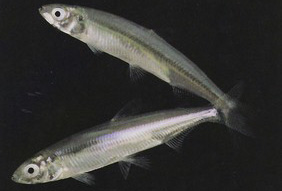
Delta Smelt
B. Moose Peterson/USFWS
The Delta smelt is a small fish endemic to the Sacramento-San Joaquin Estuary. Typically 2 to 3 inches long, Delta smelt need fresh water and brackish habitat in order to survive and reproduce. The Delta smelt has a steely blue sheen on its sides and an adipose fin, which is a small fleshy fin on the back between its dorsal fin and tail, and seems almost translucent. Smelts live together in schools and feed on zooplankton.
Smelt adults live for just one year. The fish begin as larvae in the fresh water of the lower San Joaquin and Sacramento rivers. When the cold rushing waters pour down from the Sierra Nevada Mountains, the larvae break free from their shallow nursery. They float downstream towards Suisun Bay until they reach saltier water. The majority of growth for the smelt is within the first seven to nine months of its life. Adult smelt live in Suisun Bay until the following year when they make their return journey upstream to lay their eggs.
The smelt’s short life span and need for both brackish and fresh water habitat make it an environmentally-sensitive species. When few fish reproduce successfully during a year, or consecutively over several years, the population plummets. The smelt’s numbers have remained extremely low for the past 20 years due to several factors, including low fresh water flows, the increase in non-native species in the Delta and the increase in toxins.
This fish was listed as a threatened species on both the state and Federal endangered species lists in 1993 and, in the following year, the population trend survey indicated that the population was at its lowest point in the 26 years of the survey. Over the past three years, Delta Smelt populations have continued to fall to dramatic lows.
In January 2005, state and federal authorities, including the state and federal Fish and Game departments, the Environmental Protection Agency and the federal Bureau of Reclamation, set aside $2 million to analyze existing data and gather new information on the decline of the Delta Smelt. The hope is to find a solution for keeping this small but mighty fish alive and well in its native home.
Photo: from the website of the U.S. Fish and Wildlife Service
B. Moose Peterson/USFWS
The Delta smelt is a small fish endemic to the Sacramento-San Joaquin Estuary. Typically 2 to 3 inches long, Delta smelt need fresh water and brackish habitat in order to survive and reproduce. The Delta smelt has a steely blue sheen on its sides and an adipose fin, which is a small fleshy fin on the back between its dorsal fin and tail, and seems almost translucent. Smelts live together in schools and feed on zooplankton.
Smelt adults live for just one year. The fish begin as larvae in the fresh water of the lower San Joaquin and Sacramento rivers. When the cold rushing waters pour down from the Sierra Nevada Mountains, the larvae break free from their shallow nursery. They float downstream towards Suisun Bay until they reach saltier water. The majority of growth for the smelt is within the first seven to nine months of its life. Adult smelt live in Suisun Bay until the following year when they make their return journey upstream to lay their eggs.
The smelt’s short life span and need for both brackish and fresh water habitat make it an environmentally-sensitive species. When few fish reproduce successfully during a year, or consecutively over several years, the population plummets. The smelt’s numbers have remained extremely low for the past 20 years due to several factors, including low fresh water flows, the increase in non-native species in the Delta and the increase in toxins.
This fish was listed as a threatened species on both the state and Federal endangered species lists in 1993 and, in the following year, the population trend survey indicated that the population was at its lowest point in the 26 years of the survey. Over the past three years, Delta Smelt populations have continued to fall to dramatic lows.
In January 2005, state and federal authorities, including the state and federal Fish and Game departments, the Environmental Protection Agency and the federal Bureau of Reclamation, set aside $2 million to analyze existing data and gather new information on the decline of the Delta Smelt. The hope is to find a solution for keeping this small but mighty fish alive and well in its native home.
Photo: from the website of the U.S. Fish and Wildlife Service
For more information:
http://www.savesfbay.org/site/pp.asp?c=dgK...
Add Your Comments
We are 100% volunteer and depend on your participation to sustain our efforts!
Donate

$110.00 donated
in the past month
Get Involved
If you'd like to help with maintaining or developing the website, contact us.
Publish
Publish your stories and upcoming events on Indybay.
Topics
More
Search Indybay's Archives
Advanced Search
►
▼
IMC Network