







 Publish to Newswire
 Add an Event
From the Open-Publishing Calendar
From the Open-Publishing Newswire
Indybay Feature
ACLU Refutes FBI’s Claims of “Unintentional” Patriot Act Abuses
WASHINGTON - The American Civil Liberties Union today called on Congress to repeal a provision of the Patriot Act granting the FBI expanded powers to demand sensitive personal information without judicial supervision through the use of so-called National Security Letters.
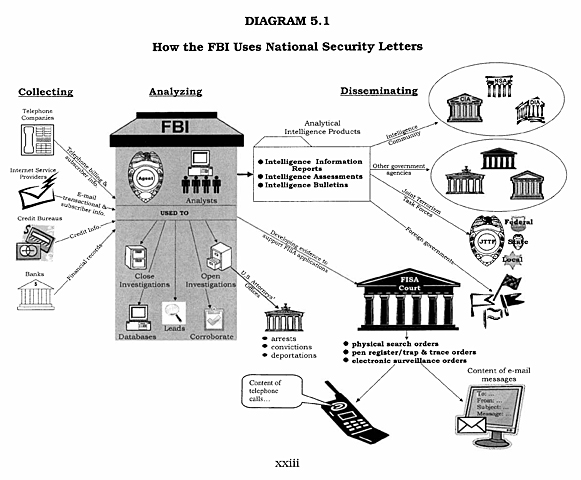
According to a report issued today by the Justice Department’s own Inspector General, the FBI has issued significantly more NSLs than previously disclosed. The report found serious breaches of department regulations and numerous potential violations of the law. It also criticized FBI for lax managerial controls that invited abuse, and found that agents had claimed "exigent circumstances" where none existed, and that some recipients had provided more information than authorized by law.
"The Inspector General’s report should come as no surprise," said ACLU Executive Director Anthony D. Romero. "And it should come as no surprise that Attorney General Gonzales is eager to blame the FBI, or that the FBI engaged in these abuses. The Attorney General and the FBI are part of the problem and they cannot be trusted to be part of the solution. Congress must act immediately to repeal these dangerous Patriot Act provisions."
The ACLU has successfully challenged the procedures for issuing NSLs in two separate lawsuits. The lawsuits challenge the National Security Letter provision of the Patriot Act, which authorizes the FBI to demand a range of personal records without court approval, such as the identity of a person who has visited a particular Web site on a library computer, or who has engaged in anonymous speech on the Internet. Under the expanded Patriot Act power, anyone who receives an NSL is forbidden, or "gagged" from telling anyone about the record demand.
In response to the court rulings, Congress made some minor changes to the law when it reauthorized the Patriot Act in 2005. As today’s report demonstrates, the ACLU, said, those changes are not enough.
"Alberto Gonzales continues to employ evasive tactics by dumping this latest problem into the FBI's lap," said Caroline Fredrickson, Director of the ACLU Washington Legislative Office. "As the overseer of the FBI, the buck stops on his desk. It's the Attorney General's job to oversee the FBI and he clearly lacks the independence or credibility to offer effective oversight. How much more proof does Congress need before it conducts real investigations, performs true oversight and fixes the significant problems with these Patriot Act powers?"
In a September 2004 ruling striking down the draconian gag provision of the NSL power, Federal District Court Judge Victor Marrero said: "As our sunshine laws and judicial doctrine attest, democracy abhors undue secrecy. An unlimited government warrant to conceal, effectively a form of secrecy per se, has no place in our open society. Such a claim is especially inimical to democratic values for reasons borne out by painful experience."
Next month Judge Marrero is expected to hear arguments in the ACLU’s challenge to the gag and secrecy provisions of the NSL law as amended by Congress in 2006.
More information about the ACLU’s challenges to the NSL power is online at http://www.aclu.org/nsl
http://aclu.org/safefree/general/28954prs20070309.html
"The Inspector General’s report should come as no surprise," said ACLU Executive Director Anthony D. Romero. "And it should come as no surprise that Attorney General Gonzales is eager to blame the FBI, or that the FBI engaged in these abuses. The Attorney General and the FBI are part of the problem and they cannot be trusted to be part of the solution. Congress must act immediately to repeal these dangerous Patriot Act provisions."
The ACLU has successfully challenged the procedures for issuing NSLs in two separate lawsuits. The lawsuits challenge the National Security Letter provision of the Patriot Act, which authorizes the FBI to demand a range of personal records without court approval, such as the identity of a person who has visited a particular Web site on a library computer, or who has engaged in anonymous speech on the Internet. Under the expanded Patriot Act power, anyone who receives an NSL is forbidden, or "gagged" from telling anyone about the record demand.
In response to the court rulings, Congress made some minor changes to the law when it reauthorized the Patriot Act in 2005. As today’s report demonstrates, the ACLU, said, those changes are not enough.
"Alberto Gonzales continues to employ evasive tactics by dumping this latest problem into the FBI's lap," said Caroline Fredrickson, Director of the ACLU Washington Legislative Office. "As the overseer of the FBI, the buck stops on his desk. It's the Attorney General's job to oversee the FBI and he clearly lacks the independence or credibility to offer effective oversight. How much more proof does Congress need before it conducts real investigations, performs true oversight and fixes the significant problems with these Patriot Act powers?"
In a September 2004 ruling striking down the draconian gag provision of the NSL power, Federal District Court Judge Victor Marrero said: "As our sunshine laws and judicial doctrine attest, democracy abhors undue secrecy. An unlimited government warrant to conceal, effectively a form of secrecy per se, has no place in our open society. Such a claim is especially inimical to democratic values for reasons borne out by painful experience."
Next month Judge Marrero is expected to hear arguments in the ACLU’s challenge to the gag and secrecy provisions of the NSL law as amended by Congress in 2006.
More information about the ACLU’s challenges to the NSL power is online at http://www.aclu.org/nsl
http://aclu.org/safefree/general/28954prs20070309.html
Add Your Comments
Comments
(Hide Comments)
WASHINGTON — The Federal Bureau of Investigation (FBI) has admitted breaching US privacy rules to access individuals' telephone, e-mail and financial records, drawing fire from civil rights groups and US lawmakers.
"We — and I speak for the FBI as an institution — accept the report's findings and its recommendations," FBI director Robert Mueller told a press conference, reported Agence France-Presse (AFP) Saturday, March 10.
A report by the Justice Department's inspector general said that it identified "serious deficiencies" in procedures used by the FBI to supervise requests for sensitive private information."
It said that the FBI used "national security letters" to justify requests for certain types of information on private citizens such as long-distance phone records or subscriptions to publications.
Passed after the 9/11 attacks, the USA Patriot Act made it easier for the FBI to obtain national security letters by dropping a requirement to show specific links between the records sought and terrorism.
National security letters allow the FBI to compel the release of private information without getting authority from a judge or grand jury.
But Justice Department officials say the FBI can get the records but not the content of communications.
The report said FBI agents continued to use the letters without citing an authorized investigation or providing the required documentation.
"I am the person responsible, I am the person accountable and I am committed to ensuring that we correct these deficiencies and live up to these responsibilities," Mueller said.
The FBI issued more than 19,000 such letters in 2005, amounting to 47,000 separate requests for information, according to The Washington Post.
The tens of thousands of data-collection requests, however, have produced few criminal charges directly related to terrorism or espionage.
Mueller said that the FBI had bolstered internal checks on data collection and beefed up training for agents.
"We've already taken steps to correct these deficiencies," he added.
In the wake of the 9/11 attacks, US President George W. Bush authorized spying on the country's main communications systems without court-approved warrants.
But a federal judge on August 17 halted Bush's "unconstitutional" domestic spying program.
The administration has also been taping into the comprehensive Passenger Name Record database, created by global travel reservation services.
The New York Timeshad reported that the Pentagon and the Central Intelligence Agency (CIA) have been spying on the financial records of American military personnel and civilians for years in an aggressive expansion by both agencies into domestic intelligence gathering, using their own reading of laws.
Fresh Abuses
The FBI's admission has immediately prompted angry reaction from civil rights groups and lawmakers.
"It seems that every time the American people entrust the Bush administration with some new power, it not only abuses that power but also seizes additional powers without our knowledge," said Anthony D. Romero, the Executive Director of the American Civil Liberties Union (ACLU), in statements carried by AFP.
The civil rights group called for the repeal of the FBI's expanded powers under the Patriot Act to demand sensitive personal information.
More
http://www.islamonline.net/servlet/Satellite?c=Article_C&cid=1173364137213&pagename=Zone-English-News/NWELayout
"We — and I speak for the FBI as an institution — accept the report's findings and its recommendations," FBI director Robert Mueller told a press conference, reported Agence France-Presse (AFP) Saturday, March 10.
A report by the Justice Department's inspector general said that it identified "serious deficiencies" in procedures used by the FBI to supervise requests for sensitive private information."
It said that the FBI used "national security letters" to justify requests for certain types of information on private citizens such as long-distance phone records or subscriptions to publications.
Passed after the 9/11 attacks, the USA Patriot Act made it easier for the FBI to obtain national security letters by dropping a requirement to show specific links between the records sought and terrorism.
National security letters allow the FBI to compel the release of private information without getting authority from a judge or grand jury.
But Justice Department officials say the FBI can get the records but not the content of communications.
The report said FBI agents continued to use the letters without citing an authorized investigation or providing the required documentation.
"I am the person responsible, I am the person accountable and I am committed to ensuring that we correct these deficiencies and live up to these responsibilities," Mueller said.
The FBI issued more than 19,000 such letters in 2005, amounting to 47,000 separate requests for information, according to The Washington Post.
The tens of thousands of data-collection requests, however, have produced few criminal charges directly related to terrorism or espionage.
Mueller said that the FBI had bolstered internal checks on data collection and beefed up training for agents.
"We've already taken steps to correct these deficiencies," he added.
In the wake of the 9/11 attacks, US President George W. Bush authorized spying on the country's main communications systems without court-approved warrants.
But a federal judge on August 17 halted Bush's "unconstitutional" domestic spying program.
The administration has also been taping into the comprehensive Passenger Name Record database, created by global travel reservation services.
The New York Timeshad reported that the Pentagon and the Central Intelligence Agency (CIA) have been spying on the financial records of American military personnel and civilians for years in an aggressive expansion by both agencies into domestic intelligence gathering, using their own reading of laws.
Fresh Abuses
The FBI's admission has immediately prompted angry reaction from civil rights groups and lawmakers.
"It seems that every time the American people entrust the Bush administration with some new power, it not only abuses that power but also seizes additional powers without our knowledge," said Anthony D. Romero, the Executive Director of the American Civil Liberties Union (ACLU), in statements carried by AFP.
The civil rights group called for the repeal of the FBI's expanded powers under the Patriot Act to demand sensitive personal information.
More
http://www.islamonline.net/servlet/Satellite?c=Article_C&cid=1173364137213&pagename=Zone-English-News/NWELayout
We are 100% volunteer and depend on your participation to sustain our efforts!
Donate

$110.00 donated
in the past month
Get Involved
If you'd like to help with maintaining or developing the website, contact us.
Publish
Publish your stories and upcoming events on Indybay.
Topics
More
Search Indybay's Archives
Advanced Search
►
▼
IMC Network