







 Publish to Newswire
 Add an Event
From the Open-Publishing Calendar
From the Open-Publishing Newswire
Indybay Feature
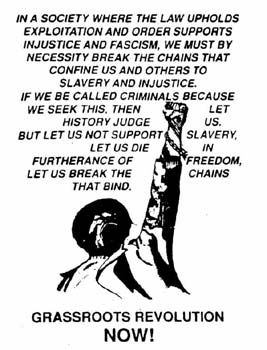
Loan Revolt: the Revolution Starts with Student Loans (Sallie Mae)
Did the American Revolution first start off as a tax and fee revolt? Did they not revolt against debtor's prison and greed of the companies?
PLEASE FORWARD THESE ARTICLES TO EVERYONE!!!
PLEASE FORWARD THESE ARTICLES TO EVERYONE!!!

Sallie Mae student loan policies unfair
By Nancy Fay
STUDENTS from all over Southern California got more than they bargained for when they attended a Sallie Mae seminar in Los Angeles on how to pay for college. They got the truth.
"Fortune Magazine says Sallie Mae is a predatory lender," said Jennifer Cassidy, "and they get away with it because they do not have competition. In fact, competition for many of their loans is illegal. But not many students or parents know that. And it is costing them a lot of money."
Sallie Mae is America's largest student loan lender - and the second most profitable company in the country. But they do not operate in a free market, instead holding an almost monopoly on the more than $120 billion of student loans in its portfolio.
Critics say this lack of competition stops borrowers from getting a better deal.
So Cassidy and about a dozen other students stood outside the seminar with signs that read: "What do Sallie Mae and Tanya Harding have in common? They both want to eliminate competition." Another read: "Sallie Mae is number one because she got rid of everyone." And another read: "Less Sallie Mae and more competition."
And, as cameras from the ABC Nightly News and other stations captured it on video, they passed out articles from Fortune, the New York Times, and nationally syndicated columns from Dick Morris, Froma Harrop and Ken Moser all talking about what students and parents should know about abuses in the student loan program.
"Some people were amazed when we told them about what they were getting into," said another member of the protest. "But others knew about it because they had already read some of the articles."
Sallie Mae is by far the largest student loan company in America, about four times bigger than its next largest rival. What Cassidy and a growing number of people know is that student loans are a lot different today than they were 10years ago.
And students have a lot less control over them.
Student loans, for example, are the only consumer loans in America where it is almost impossible to refinance more than once. "They call that the single- holder rule," Cassidy said. "And it is the single most anti-competitive, anti-consumer law in the country. It says that once you have all your student loans from one company, such as Sallie Mae, you cannot change. No matter if a different company offers you a better deal or better terms."
As a result, lots of students cannot take advantage of lower interest loans because they are not allowed to change lenders.
Suzanne Cox recently made such a discovery. "I have $50,000 in student loans at 8 percent from Sallie Mae," said Cox, a special education teacher from San Diego. "But other folks with the same kind of loans are paying interest as low as 3 percent - all because we are only allowed to refinance once. That is not fair."
It's the only loan in America where refinancing is restricted so severely.
"If your bank tried that with your mortgage or your car loan, they would either go out of business or go to jail for breaking the law," Cassidy says. "But our largest student loan companies do it, and they end up on Fortune Magazine's list of the most profitable companies in America. And not because they are better, but because their business is protected from competition."
Columnist Dick Morris calls the anti-refinancing scheme an "obnoxious rip-off." Terry Savage, financial columnist for TheStreet.com, says there is "no way" borrowers should support this plan. The New York Times calls it "robbing Joe College to pay Sallie Mae." The Times Union of New York calls plans to outlaw refinancing a "student loan shame."
The Chronicle of Higher Education said the single holder rule legislation is designed to "force \ out of the market."
Southern California has become the epicenter of efforts to reform student loans and make them more competitive, because Los Angeles Congressman Buck McKeon was recently appointed head of the House Committee on Education and the Workforce.
McKeon says he is against the single holder rule, but, so far, it is still the law of the land.
Nancy Fay is a freelance writer and is a resident of San Diego.
http://www.whittierdailynews.com/opinions/ci_3844487
''''''''
CHARLIE MITCHELL: Students, beware of owing Sallie Mae
5/16/2006 7:28:09 AM
Daily Journal
My record is intact: I still haven't been asked to impart advice at any high school graduations. But if so, my counsel, at least to the college-bound, would be this: Do whatever it takes to avoid borrowing.
I've written before about what I see as a crisis: People, usually in their early 20s, saddled with $25,000, $40,000 or more in installment debt, usually to Sallie Mae, now a private corporation whose profits put Exxon to shame.
Guaranteed Student Loans - so-called because taxpayers pay them if borrowers default - were created by Congress in 1972. The modest goal to make two- and four-year degrees more attainable by students from middle-income families. The loans have been helpful to millions. They've also become a nightmare to tens of thousands.
Payback usually starts six months after graduation on a 10-year schedule. At a flat rate of 5 percent, it would take 120 monthly payments of $265 to pay off $25,000.
That might not seem exorbitant, but consider all the other expenses a young person faces from the ages of, say, 22 to 32.
In rough terms, it's a dime of every dollar a Mississippi teacher would make for a decade.
And that's just if everything goes well.
If a borrower can't get a job or becomes ill or injured, Sallie Mae will put the loan into abatement, at least for a while - but interest will continue to accrue. As for young borrowers not savvy enough to ask for an abatement when needed (and this would be most), late fees and penalties start kicking in for missed payments. It's not unheard of for a student who has borrowed $25,000 to be facing double that much in arrearages - even after making sporadic payments for four or five years.
Bankruptcy not a option
Bankruptcy is not an option for two reasons.
First is that if a person files bankruptcy, the odds of getting most better-paying jobs flies out the window. Most employers run credit checks on applicants. People shown "unable to manage money" are usually deemed poor risks.
Second is even more overpowering. Since Sallie Mae was deemed by President Bill Clinton in 1996 to be a fully private business, it has created a tremendous lobbying presence for itself on Capitol Hill. And guess what? By federal law, bankruptcy does not excuse or diminish in any way a person's student loan debt.
Things get even more insidious, so much so that "60 Minutes" aired an investigative report on Sallie Mae's holdings.
If a borrower absolutely resists all attempts by Sallie Mae to force repayment, the corporation can declare the borrower in default and, in turn, collect what's owed from taxpayers. (That's the "guarantee" part. Sallie Mae faces no risk in granting loans.) But that's not all. Sallie Mae then turns the defaulted loan over to a collection agency. And, wouldn't you know it, Sallie Mae just happens to wholly own several collection agencies. So Sallie Mae gets paid - and gets paid again.
(Recouped principal must be repaid to the government, but not interest, costs or fees).
The last and sneakiest factor is that many colleges earn fees from processing Sallie Mae loans they don't make from other lenders (including other government lenders), so, naturally, students are steered into signing up for Sallie Mae's seeming generosity.
A lot going
In Mississippi, high school graduates attending public community colleges and universities this fall have a lot going for them. There are more scholarships and aid programs than ever. The amount of money available in Pell grants (which do not have to be repaid) is higher than ever.
But tuition is also up again - some 45 percent or more in the past 10 years. And so are the costs of everything from books to housing, fuel, insurance - you name it.
Tuition is actually a small part of the expense of attending college in Mississippi. Many students on scholarships and grants still borrow, and often for "extras" such as a better car or apartment. Sallie Mae will gladly provide the cash for a pretty good lifestyle.
It's unrealistic to think any 18-year-old lining up for a diploma today will fret about the prospect of turning 30, having a spouse, two children, a house and two car notes - and years of student loan payments still remaining.
It should be a happy day. No problem with that.
The next graduation will be happy, too, if student loan debt is kept to an absolute minimum.
Charlie Mitchell is executive editor of The Vicksburg Post. Write to him
at P.O. Box 821668, Vicksburg, MS 39182, or e-mail post [at] vicksburg.com.
http://www.djournal.com/pages/story.asp?ID=219430&pub=1&div=Opinion
''''''''''''''
WHAT AL LORD, CHAIRMAN OF SALLIE MAE, REFUSED TO TELL 60 MINUTES
Monday, May 08, 2006
by Ken Moser, Chairman of the Adam Smith Society
If the beginning of wisdom is the definition of terms, as Aristotle said, then the head of America’s largest student loan lender is quite the philosopher.
As I recently found out.
As head of the Adam Smith Society of California, I wrote an article for a couple of dozen newspapers talking about how Sallie Mae is the chief beneficiary of a whole host of laws that outlaw competition for student loans. And how that costs student loan borrowers billions of dollars a year.
Not good.
Worse, Republicans were the ones behind many of these anti-competitive arrangements. As a result, Sallie Mae had become what Fortune Magazine calls the second most profitable company in America -- complete with CEO Al Lord making more than $200 million over the previous 5 years.
Not because Sallie Mae was better, faster or less expensive; but only because it was largely protected from competition. That is not what Mr. Lord wanted to hear.
Soon after, I received several puzzling missives from the mysterious and elusive Mr. Lord where he redefined all the terms and pretty much said everything I thought I knew about student loans was wrong.
Let’s see.
The so-called Single Holder Rule is the best – or worst – example. It says that if all of your student loans are with one company, you cannot refinance with another company.
Congress was set to outlaw Single Holder in December. But in the wee, dark hours of a cold December morning a few days before Christmas, that provision mysteriously disappeared from the budget deficit reduction bill.
And along with it, any hope of more competition, better rates, and better service for the 30 million student loan holders.
Then Congress went two steps step further.
Led by Congressman John Boehner, then head of the House Education Committee, now House Majority Leader, Congress effectively banned students from locking in low rates for longer terms while still in school and took the Single Holder Rule, single most anti-competitive provision in all of American law since the enactment of wage and price controls in the earl 70's, and made it worse.
They said that one you refinance your student loans, you cannot do it again. No matter if a different company offers better rates, longer terms or better service. All at no extra cost to the government.
Imagine if someone tried to get away with that in the home mortgage market. They would either go out of business, or go to jail for price fixing. Or both.
Sallie Mae celebrated. Spokesman Tom Joyce told reporters the new laws would make smaller companies "think twice" about getting into the student loan business, and that student loans were never meant to be refinanced in the first place.
It may be the Single Holder Rule to us, but to Sallie Mae, it is the Golden Rule.
So that is what I wrote. I have to confess: I was not the one who figured this all out. Everything I wrote had been reported in lots of other places.
Fortune Magazine called Sallie Mae "predatory" and documented how Sallie Mae is the largest contributor to Boehner and other key members of Congress and depends on them to protect them from competition.
Dick Morris, yes that Dick Morris, wrote in his column that the lack of competition for student loans was an "obnoxious rip-off."
Terry Savage, the financial columnist of TheStreet.com, says there is "no way" borrowers should support Single Holder.
The New York Times calls it "Robbing Joe College to Pay Sallie Mae."
The Times Union of New York called it a "student loan shame."
And on and on and on. Then my own humble contribution: Where I wondered how Republicans could be part of this anti-market scheme.
Then Lord spoke: Everything I knew was wrong! Starting with his salary:
"In the 8 years I was SLM's CEO my best salary and bonus year aggregated $3.75 million and averaged less than $3.0 million annually," he told me in an email.
"This was very generous compensation paid by SLM's shareholders, but less than 10% of the 'more than $200 million salary and bonuses you cited I had received over the last 5 years. Even a "big picture" economist can get closer than that!"
Lord the philosopher redefined his compensation. The remaining 90 percent, of course, was paid in stock options that are listed in all sorts of public records and web sites. I felt embarrassed to point that out to Lord in a later email, since he already knew. Heck, he was even using the money to try and buy a professional baseball team, the Washington Nationals.
Perhaps I could get Lord to do my tax returns.
We at the Adam Smith Society do not begrudge profits. Far from it, we love them. As long as they come from free competition in free markets. Which in this case, they do not. Another point of contention between Lord and me.
So, in reply, I asked him all the questions: What about competition? What about Single Holder? What about refinancing? What about all the sweetheart deals with schools to buy their student loans? What about all the students who cannot repay their loans because they cannot refinance them?
He wasn’t buying any of it:
"You asked many questions in your recent E mail premised principally on the notion that borrowers should be able to refinance their taxpayer guaranteed, taxpayer subsidized, below market rate loans in the open market without limitation and presumably without regard to the government's ongoing economic interest in that loan."
In college rhetoric classes, we call that the "straw man" argument. I said no such thing. But that did not stop Lord from setting his straw man on fire.
"I disagree with your premise. So long as the government retains that economic interest it rightfully sets loan terms. The student signed loan documents to acknowledge and agree to those terms that you find so objectionable. Those contractual terms formed the basic economic understanding between borrower and lender when the loan was made. Now you want to change the fundamental terms of the deal! Do you also endorse retroactive changes in tax law?"
No, it’s more like we caught you and your buddies in Congress using federal law to give you and unfair advantage. Now we would like you to stop.
Lord continued:
"The terms of that loan allow the borrower to refinance the loan at any time without a government guarantee, just like the refinancing opportunities you cite in your article that are available on their car loan and their mortgage loan."
In other words, new graduates can pay off their $100,000 student loans all at once any time they like. They might as well buy a professional baseball team while they are at it.
"I must say you seem to have a remarkably low anguish threshold for economic inequality, (worst government policy since Nixon's wage and price controls?!!!). Please help me understand who is the victim of this dastardly government policy?"
That’s easy: The 30 million parents and students who are paying more for student loans than they should. How students not only have record levels of student loan debt, today they are less able to manage it because you and your allies have outlawed competition, largely for the benefit of the large student loan lenders, of which Sallie Mae is the largest by a factor of four.
"I volunteered to answer your questions yet they all stem from the faulty premise upon which you based your entire article so there is little else for me tosay. Ironically, though I support the government's right to regulate the transferability of its guarantee, we have not lobbied to retain the single holder rule, of course you asserted otherwise."
This is quickly going from disagreement to disingenuousness. Then what are your 70 lobbyists doing back in D.C. when they play golf with Boehner and others?
In an earlier email, Lord chided me for not trying to contact him when I wrote my article. So I apologized.
"While I thank you for your apology, it is not lost on me that you had so prejudged the character you seek to defame, that you never tried to contact me or my colleagues. And you probably wonder why the public distrusts the media."
Defame? As the good book says, "speak the truth and fear not." Telling unpleasant truths is not defamation. As to the public distrusting the media, the only thing keeping this weird arrangement intact is the fact that most reporters do not understand that competition for student loans is illegal and costly.
As soon as they figure it out, Sallie Mae is going to have to compete for business just like any other company. Get smarter, faster, better, less expensive. Or go out of business.
We were getting nowhere. Even so, I tried again, asking about the lack of competition, his monopoly power over his borrowers, and the like.
He was having none of it.
"I tried," Lord responded. "Obviously you do not want facts to cloud the brilliance of your fiction. Please tell me you don't consider repeating the diatribes of other equally uninformed writers of journalism. Yet that was the extent of your research. Your search for truth ended with your source, a source with economics dependent on retroactive legislative change. Perhaps it was folly to hope a member of the Adam Smith Society would actually attempt to examine the basic economics of the student loan business before writing so transparent a political piece. "
"I did not appreciate your interpretation of my words. You might consider the words of a great coach and sportsman, John Wooden, "We can disagree without being disagreeable."
Or how about the words of that little know political philosopher: Me: "We can disagree without being disingenuous."
As long as we do it in a free market.
http://www.freemarketnews.com/Analysis/182/4802/2006-05-08.asp?wid=182&nid=4802
'''''''''
SALLIE MAE SHOULD CHANGE ITS NAME TO BULLIE MAE
Thursday, May 11, 2006
by C. Victoria Patrick
Can you imagine the uproar if homeowners were suddenly told that if they want to re-finance their home, with a different lender, they can't; -- or even worse, if they were informed that they cannot re-finance at all?
Sallie Mae pretends to have the best interests of their customers at heart, while they covertly work behind the scenes to pass anti-competitive legislation that will end up costing students and parents billions of dollars.
Specifically, I'm talking about Sallie Mae's recently successful effort to add to and solidify the restriction-of-trade laws that have dogged the federal student loan program for decades. This collection of laws make it difficult, if not impossible, for student loan borrowers to shop around for the lowest available rates when they wish to consolidate their education debt.
Put another way, Sallie Mae and a few other big lenders don't want the lure of lower rates tempting their customers to switch to competitors. That's why they ve lobbied so hard for these restrictions. And as of now, they are winning the battle -- and perhaps, even the war.
For years participants in the federal student loan program have converted their variable-rate federally guaranteed college loans into fixed-rate federal consolidation loans, to lock in favorable interest rates, in much the same way that homeowners do with their mortgages. And for the same reasons.
But under the new laws, the vast majority who have consolidated will be legally barred from ever re-financing again, no matter what other lender later might have offered them a better deal. And no matter how many times you read this paragraph, its meaning will remain the same.
Some would argue that because the government is subsidizing student loans, open market re-financing is not appropriate. But the fact is that under the just repealed laws that heretofore allowed reconsolidation, lenders -- and not the taxpayers, absorbed the cost of lower rates offered to borrowers.
Also, you should know that borrowers whose loans are owned by a single lender have always been prohibited from shopping around for the best of rates and terms when it came time to consolidate. Congress had been promising to repeal that anti-competitive law, known as the Single Holder Rule, but the proposal was mysteriously dropped from the Budget Deficit Act at the very last minute.
The dollars lost to higher interest rates resulting from this collection of restriction-of-trade legislation will never show up in the Congressional Budget Office cost estimates that everyone in Washington is forever quoting. And if you are wondering where those dollars will end up, you need look only so far as the bottom line of Sallie Mae's income statement.
And to add insult to injury, Sallie Mae, like a football player spiking a ball after a game-winning touchdown, has begun celebrating. Their VP, Tom Joyce, was quoted in USA TODAY as saying, "The consolidation loan program was never meant to be a re-financing bonanza for students." And later, his crowing grew even louder when he told the Orlando Sentinel, "Smaller corporations will now think twice about getting into the student loan business."
Those ugly statements by Sallie Mae's chief media spokesperson graphically emphasize the immediate necessity of Republicans and Democrats joining forces to restore open competition in this very important marketplace. The cost of college is just too high to protect Sallie Mae's profits any longer.
http://www.freemarketnews.com/Analysis/182/4862/2006-05-11.asp?wid=182&nid=4862
By Nancy Fay
STUDENTS from all over Southern California got more than they bargained for when they attended a Sallie Mae seminar in Los Angeles on how to pay for college. They got the truth.
"Fortune Magazine says Sallie Mae is a predatory lender," said Jennifer Cassidy, "and they get away with it because they do not have competition. In fact, competition for many of their loans is illegal. But not many students or parents know that. And it is costing them a lot of money."
Sallie Mae is America's largest student loan lender - and the second most profitable company in the country. But they do not operate in a free market, instead holding an almost monopoly on the more than $120 billion of student loans in its portfolio.
Critics say this lack of competition stops borrowers from getting a better deal.
So Cassidy and about a dozen other students stood outside the seminar with signs that read: "What do Sallie Mae and Tanya Harding have in common? They both want to eliminate competition." Another read: "Sallie Mae is number one because she got rid of everyone." And another read: "Less Sallie Mae and more competition."
And, as cameras from the ABC Nightly News and other stations captured it on video, they passed out articles from Fortune, the New York Times, and nationally syndicated columns from Dick Morris, Froma Harrop and Ken Moser all talking about what students and parents should know about abuses in the student loan program.
"Some people were amazed when we told them about what they were getting into," said another member of the protest. "But others knew about it because they had already read some of the articles."
Sallie Mae is by far the largest student loan company in America, about four times bigger than its next largest rival. What Cassidy and a growing number of people know is that student loans are a lot different today than they were 10years ago.
And students have a lot less control over them.
Student loans, for example, are the only consumer loans in America where it is almost impossible to refinance more than once. "They call that the single- holder rule," Cassidy said. "And it is the single most anti-competitive, anti-consumer law in the country. It says that once you have all your student loans from one company, such as Sallie Mae, you cannot change. No matter if a different company offers you a better deal or better terms."
As a result, lots of students cannot take advantage of lower interest loans because they are not allowed to change lenders.
Suzanne Cox recently made such a discovery. "I have $50,000 in student loans at 8 percent from Sallie Mae," said Cox, a special education teacher from San Diego. "But other folks with the same kind of loans are paying interest as low as 3 percent - all because we are only allowed to refinance once. That is not fair."
It's the only loan in America where refinancing is restricted so severely.
"If your bank tried that with your mortgage or your car loan, they would either go out of business or go to jail for breaking the law," Cassidy says. "But our largest student loan companies do it, and they end up on Fortune Magazine's list of the most profitable companies in America. And not because they are better, but because their business is protected from competition."
Columnist Dick Morris calls the anti-refinancing scheme an "obnoxious rip-off." Terry Savage, financial columnist for TheStreet.com, says there is "no way" borrowers should support this plan. The New York Times calls it "robbing Joe College to pay Sallie Mae." The Times Union of New York calls plans to outlaw refinancing a "student loan shame."
The Chronicle of Higher Education said the single holder rule legislation is designed to "force \ out of the market."
Southern California has become the epicenter of efforts to reform student loans and make them more competitive, because Los Angeles Congressman Buck McKeon was recently appointed head of the House Committee on Education and the Workforce.
McKeon says he is against the single holder rule, but, so far, it is still the law of the land.
Nancy Fay is a freelance writer and is a resident of San Diego.
http://www.whittierdailynews.com/opinions/ci_3844487
''''''''
CHARLIE MITCHELL: Students, beware of owing Sallie Mae
5/16/2006 7:28:09 AM
Daily Journal
My record is intact: I still haven't been asked to impart advice at any high school graduations. But if so, my counsel, at least to the college-bound, would be this: Do whatever it takes to avoid borrowing.
I've written before about what I see as a crisis: People, usually in their early 20s, saddled with $25,000, $40,000 or more in installment debt, usually to Sallie Mae, now a private corporation whose profits put Exxon to shame.
Guaranteed Student Loans - so-called because taxpayers pay them if borrowers default - were created by Congress in 1972. The modest goal to make two- and four-year degrees more attainable by students from middle-income families. The loans have been helpful to millions. They've also become a nightmare to tens of thousands.
Payback usually starts six months after graduation on a 10-year schedule. At a flat rate of 5 percent, it would take 120 monthly payments of $265 to pay off $25,000.
That might not seem exorbitant, but consider all the other expenses a young person faces from the ages of, say, 22 to 32.
In rough terms, it's a dime of every dollar a Mississippi teacher would make for a decade.
And that's just if everything goes well.
If a borrower can't get a job or becomes ill or injured, Sallie Mae will put the loan into abatement, at least for a while - but interest will continue to accrue. As for young borrowers not savvy enough to ask for an abatement when needed (and this would be most), late fees and penalties start kicking in for missed payments. It's not unheard of for a student who has borrowed $25,000 to be facing double that much in arrearages - even after making sporadic payments for four or five years.
Bankruptcy not a option
Bankruptcy is not an option for two reasons.
First is that if a person files bankruptcy, the odds of getting most better-paying jobs flies out the window. Most employers run credit checks on applicants. People shown "unable to manage money" are usually deemed poor risks.
Second is even more overpowering. Since Sallie Mae was deemed by President Bill Clinton in 1996 to be a fully private business, it has created a tremendous lobbying presence for itself on Capitol Hill. And guess what? By federal law, bankruptcy does not excuse or diminish in any way a person's student loan debt.
Things get even more insidious, so much so that "60 Minutes" aired an investigative report on Sallie Mae's holdings.
If a borrower absolutely resists all attempts by Sallie Mae to force repayment, the corporation can declare the borrower in default and, in turn, collect what's owed from taxpayers. (That's the "guarantee" part. Sallie Mae faces no risk in granting loans.) But that's not all. Sallie Mae then turns the defaulted loan over to a collection agency. And, wouldn't you know it, Sallie Mae just happens to wholly own several collection agencies. So Sallie Mae gets paid - and gets paid again.
(Recouped principal must be repaid to the government, but not interest, costs or fees).
The last and sneakiest factor is that many colleges earn fees from processing Sallie Mae loans they don't make from other lenders (including other government lenders), so, naturally, students are steered into signing up for Sallie Mae's seeming generosity.
A lot going
In Mississippi, high school graduates attending public community colleges and universities this fall have a lot going for them. There are more scholarships and aid programs than ever. The amount of money available in Pell grants (which do not have to be repaid) is higher than ever.
But tuition is also up again - some 45 percent or more in the past 10 years. And so are the costs of everything from books to housing, fuel, insurance - you name it.
Tuition is actually a small part of the expense of attending college in Mississippi. Many students on scholarships and grants still borrow, and often for "extras" such as a better car or apartment. Sallie Mae will gladly provide the cash for a pretty good lifestyle.
It's unrealistic to think any 18-year-old lining up for a diploma today will fret about the prospect of turning 30, having a spouse, two children, a house and two car notes - and years of student loan payments still remaining.
It should be a happy day. No problem with that.
The next graduation will be happy, too, if student loan debt is kept to an absolute minimum.
Charlie Mitchell is executive editor of The Vicksburg Post. Write to him
at P.O. Box 821668, Vicksburg, MS 39182, or e-mail post [at] vicksburg.com.
http://www.djournal.com/pages/story.asp?ID=219430&pub=1&div=Opinion
''''''''''''''
WHAT AL LORD, CHAIRMAN OF SALLIE MAE, REFUSED TO TELL 60 MINUTES
Monday, May 08, 2006
by Ken Moser, Chairman of the Adam Smith Society
If the beginning of wisdom is the definition of terms, as Aristotle said, then the head of America’s largest student loan lender is quite the philosopher.
As I recently found out.
As head of the Adam Smith Society of California, I wrote an article for a couple of dozen newspapers talking about how Sallie Mae is the chief beneficiary of a whole host of laws that outlaw competition for student loans. And how that costs student loan borrowers billions of dollars a year.
Not good.
Worse, Republicans were the ones behind many of these anti-competitive arrangements. As a result, Sallie Mae had become what Fortune Magazine calls the second most profitable company in America -- complete with CEO Al Lord making more than $200 million over the previous 5 years.
Not because Sallie Mae was better, faster or less expensive; but only because it was largely protected from competition. That is not what Mr. Lord wanted to hear.
Soon after, I received several puzzling missives from the mysterious and elusive Mr. Lord where he redefined all the terms and pretty much said everything I thought I knew about student loans was wrong.
Let’s see.
The so-called Single Holder Rule is the best – or worst – example. It says that if all of your student loans are with one company, you cannot refinance with another company.
Congress was set to outlaw Single Holder in December. But in the wee, dark hours of a cold December morning a few days before Christmas, that provision mysteriously disappeared from the budget deficit reduction bill.
And along with it, any hope of more competition, better rates, and better service for the 30 million student loan holders.
Then Congress went two steps step further.
Led by Congressman John Boehner, then head of the House Education Committee, now House Majority Leader, Congress effectively banned students from locking in low rates for longer terms while still in school and took the Single Holder Rule, single most anti-competitive provision in all of American law since the enactment of wage and price controls in the earl 70's, and made it worse.
They said that one you refinance your student loans, you cannot do it again. No matter if a different company offers better rates, longer terms or better service. All at no extra cost to the government.
Imagine if someone tried to get away with that in the home mortgage market. They would either go out of business, or go to jail for price fixing. Or both.
Sallie Mae celebrated. Spokesman Tom Joyce told reporters the new laws would make smaller companies "think twice" about getting into the student loan business, and that student loans were never meant to be refinanced in the first place.
It may be the Single Holder Rule to us, but to Sallie Mae, it is the Golden Rule.
So that is what I wrote. I have to confess: I was not the one who figured this all out. Everything I wrote had been reported in lots of other places.
Fortune Magazine called Sallie Mae "predatory" and documented how Sallie Mae is the largest contributor to Boehner and other key members of Congress and depends on them to protect them from competition.
Dick Morris, yes that Dick Morris, wrote in his column that the lack of competition for student loans was an "obnoxious rip-off."
Terry Savage, the financial columnist of TheStreet.com, says there is "no way" borrowers should support Single Holder.
The New York Times calls it "Robbing Joe College to Pay Sallie Mae."
The Times Union of New York called it a "student loan shame."
And on and on and on. Then my own humble contribution: Where I wondered how Republicans could be part of this anti-market scheme.
Then Lord spoke: Everything I knew was wrong! Starting with his salary:
"In the 8 years I was SLM's CEO my best salary and bonus year aggregated $3.75 million and averaged less than $3.0 million annually," he told me in an email.
"This was very generous compensation paid by SLM's shareholders, but less than 10% of the 'more than $200 million salary and bonuses you cited I had received over the last 5 years. Even a "big picture" economist can get closer than that!"
Lord the philosopher redefined his compensation. The remaining 90 percent, of course, was paid in stock options that are listed in all sorts of public records and web sites. I felt embarrassed to point that out to Lord in a later email, since he already knew. Heck, he was even using the money to try and buy a professional baseball team, the Washington Nationals.
Perhaps I could get Lord to do my tax returns.
We at the Adam Smith Society do not begrudge profits. Far from it, we love them. As long as they come from free competition in free markets. Which in this case, they do not. Another point of contention between Lord and me.
So, in reply, I asked him all the questions: What about competition? What about Single Holder? What about refinancing? What about all the sweetheart deals with schools to buy their student loans? What about all the students who cannot repay their loans because they cannot refinance them?
He wasn’t buying any of it:
"You asked many questions in your recent E mail premised principally on the notion that borrowers should be able to refinance their taxpayer guaranteed, taxpayer subsidized, below market rate loans in the open market without limitation and presumably without regard to the government's ongoing economic interest in that loan."
In college rhetoric classes, we call that the "straw man" argument. I said no such thing. But that did not stop Lord from setting his straw man on fire.
"I disagree with your premise. So long as the government retains that economic interest it rightfully sets loan terms. The student signed loan documents to acknowledge and agree to those terms that you find so objectionable. Those contractual terms formed the basic economic understanding between borrower and lender when the loan was made. Now you want to change the fundamental terms of the deal! Do you also endorse retroactive changes in tax law?"
No, it’s more like we caught you and your buddies in Congress using federal law to give you and unfair advantage. Now we would like you to stop.
Lord continued:
"The terms of that loan allow the borrower to refinance the loan at any time without a government guarantee, just like the refinancing opportunities you cite in your article that are available on their car loan and their mortgage loan."
In other words, new graduates can pay off their $100,000 student loans all at once any time they like. They might as well buy a professional baseball team while they are at it.
"I must say you seem to have a remarkably low anguish threshold for economic inequality, (worst government policy since Nixon's wage and price controls?!!!). Please help me understand who is the victim of this dastardly government policy?"
That’s easy: The 30 million parents and students who are paying more for student loans than they should. How students not only have record levels of student loan debt, today they are less able to manage it because you and your allies have outlawed competition, largely for the benefit of the large student loan lenders, of which Sallie Mae is the largest by a factor of four.
"I volunteered to answer your questions yet they all stem from the faulty premise upon which you based your entire article so there is little else for me tosay. Ironically, though I support the government's right to regulate the transferability of its guarantee, we have not lobbied to retain the single holder rule, of course you asserted otherwise."
This is quickly going from disagreement to disingenuousness. Then what are your 70 lobbyists doing back in D.C. when they play golf with Boehner and others?
In an earlier email, Lord chided me for not trying to contact him when I wrote my article. So I apologized.
"While I thank you for your apology, it is not lost on me that you had so prejudged the character you seek to defame, that you never tried to contact me or my colleagues. And you probably wonder why the public distrusts the media."
Defame? As the good book says, "speak the truth and fear not." Telling unpleasant truths is not defamation. As to the public distrusting the media, the only thing keeping this weird arrangement intact is the fact that most reporters do not understand that competition for student loans is illegal and costly.
As soon as they figure it out, Sallie Mae is going to have to compete for business just like any other company. Get smarter, faster, better, less expensive. Or go out of business.
We were getting nowhere. Even so, I tried again, asking about the lack of competition, his monopoly power over his borrowers, and the like.
He was having none of it.
"I tried," Lord responded. "Obviously you do not want facts to cloud the brilliance of your fiction. Please tell me you don't consider repeating the diatribes of other equally uninformed writers of journalism. Yet that was the extent of your research. Your search for truth ended with your source, a source with economics dependent on retroactive legislative change. Perhaps it was folly to hope a member of the Adam Smith Society would actually attempt to examine the basic economics of the student loan business before writing so transparent a political piece. "
"I did not appreciate your interpretation of my words. You might consider the words of a great coach and sportsman, John Wooden, "We can disagree without being disagreeable."
Or how about the words of that little know political philosopher: Me: "We can disagree without being disingenuous."
As long as we do it in a free market.
http://www.freemarketnews.com/Analysis/182/4802/2006-05-08.asp?wid=182&nid=4802
'''''''''
SALLIE MAE SHOULD CHANGE ITS NAME TO BULLIE MAE
Thursday, May 11, 2006
by C. Victoria Patrick
Can you imagine the uproar if homeowners were suddenly told that if they want to re-finance their home, with a different lender, they can't; -- or even worse, if they were informed that they cannot re-finance at all?
Sallie Mae pretends to have the best interests of their customers at heart, while they covertly work behind the scenes to pass anti-competitive legislation that will end up costing students and parents billions of dollars.
Specifically, I'm talking about Sallie Mae's recently successful effort to add to and solidify the restriction-of-trade laws that have dogged the federal student loan program for decades. This collection of laws make it difficult, if not impossible, for student loan borrowers to shop around for the lowest available rates when they wish to consolidate their education debt.
Put another way, Sallie Mae and a few other big lenders don't want the lure of lower rates tempting their customers to switch to competitors. That's why they ve lobbied so hard for these restrictions. And as of now, they are winning the battle -- and perhaps, even the war.
For years participants in the federal student loan program have converted their variable-rate federally guaranteed college loans into fixed-rate federal consolidation loans, to lock in favorable interest rates, in much the same way that homeowners do with their mortgages. And for the same reasons.
But under the new laws, the vast majority who have consolidated will be legally barred from ever re-financing again, no matter what other lender later might have offered them a better deal. And no matter how many times you read this paragraph, its meaning will remain the same.
Some would argue that because the government is subsidizing student loans, open market re-financing is not appropriate. But the fact is that under the just repealed laws that heretofore allowed reconsolidation, lenders -- and not the taxpayers, absorbed the cost of lower rates offered to borrowers.
Also, you should know that borrowers whose loans are owned by a single lender have always been prohibited from shopping around for the best of rates and terms when it came time to consolidate. Congress had been promising to repeal that anti-competitive law, known as the Single Holder Rule, but the proposal was mysteriously dropped from the Budget Deficit Act at the very last minute.
The dollars lost to higher interest rates resulting from this collection of restriction-of-trade legislation will never show up in the Congressional Budget Office cost estimates that everyone in Washington is forever quoting. And if you are wondering where those dollars will end up, you need look only so far as the bottom line of Sallie Mae's income statement.
And to add insult to injury, Sallie Mae, like a football player spiking a ball after a game-winning touchdown, has begun celebrating. Their VP, Tom Joyce, was quoted in USA TODAY as saying, "The consolidation loan program was never meant to be a re-financing bonanza for students." And later, his crowing grew even louder when he told the Orlando Sentinel, "Smaller corporations will now think twice about getting into the student loan business."
Those ugly statements by Sallie Mae's chief media spokesperson graphically emphasize the immediate necessity of Republicans and Democrats joining forces to restore open competition in this very important marketplace. The cost of college is just too high to protect Sallie Mae's profits any longer.
http://www.freemarketnews.com/Analysis/182/4862/2006-05-11.asp?wid=182&nid=4862

Add Your Comments
We are 100% volunteer and depend on your participation to sustain our efforts!
Donate

$95.00 donated
in the past month
Get Involved
If you'd like to help with maintaining or developing the website, contact us.
Publish
Publish your stories and upcoming events on Indybay.
Topics
More
Search Indybay's Archives
Advanced Search
►
▼
IMC Network