







 Publish to Newswire
 Add an Event
From the Open-Publishing Calendar
From the Open-Publishing Newswire
Indybay Feature
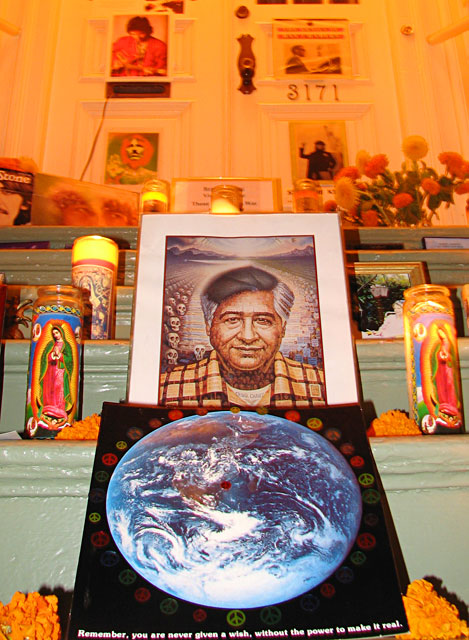
Dia de los Muertos Against War Photos
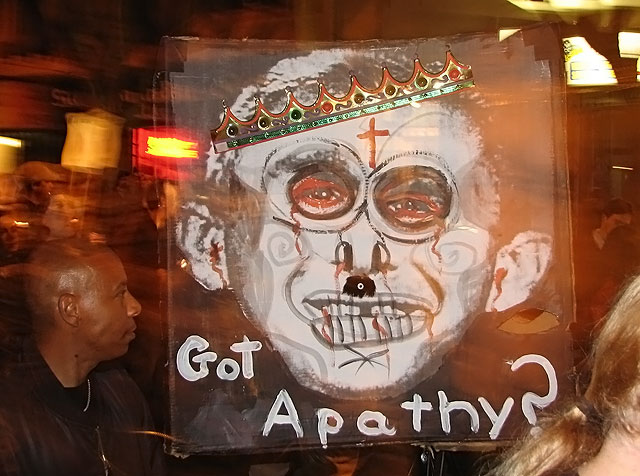
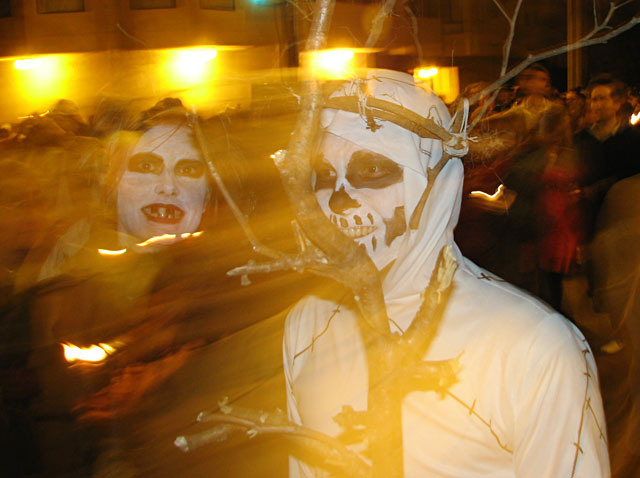
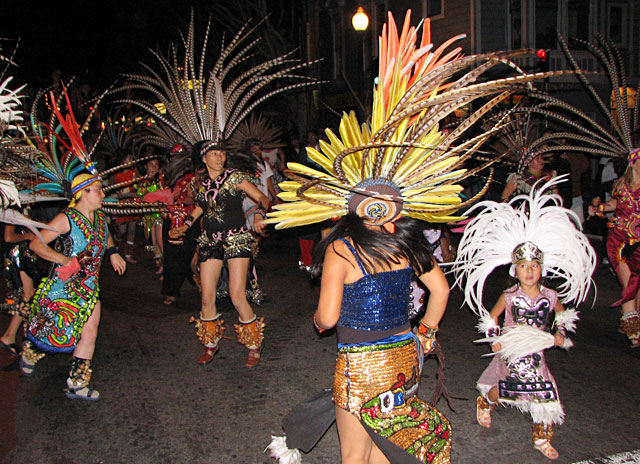
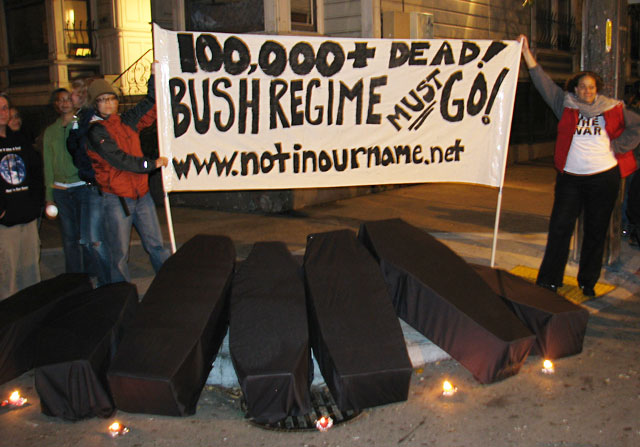
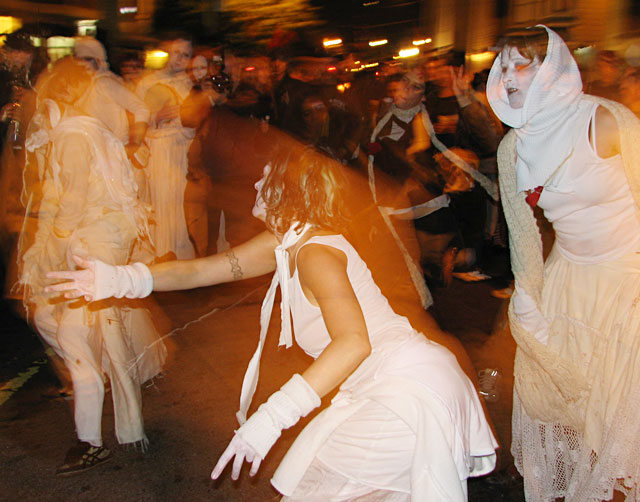
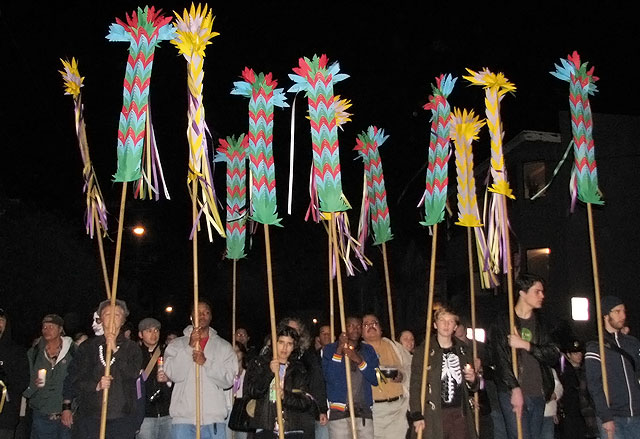
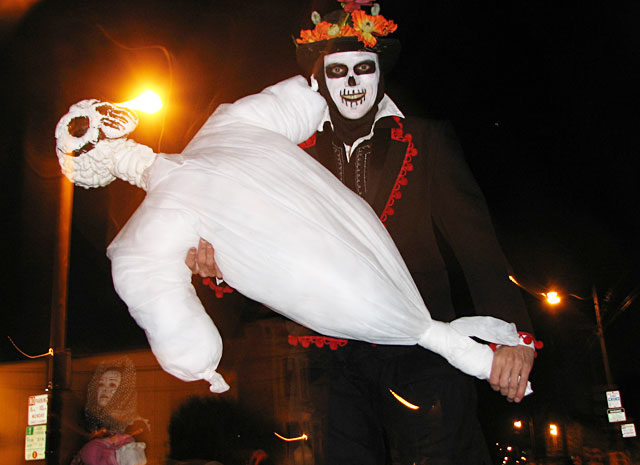
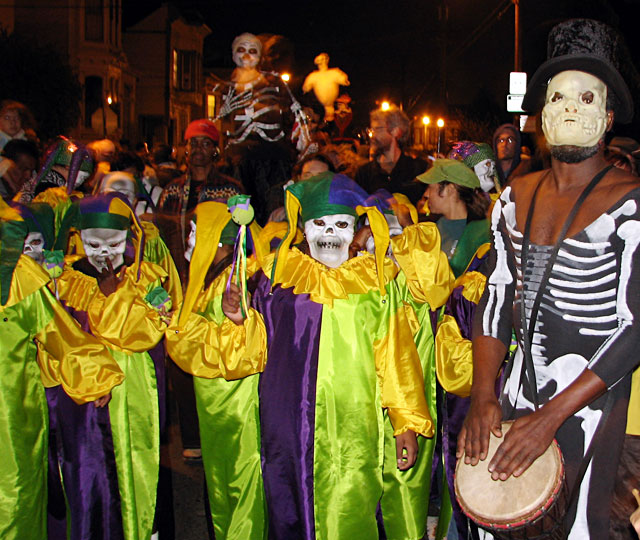
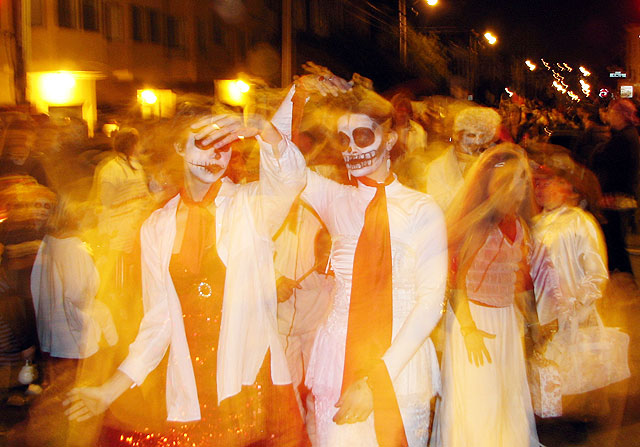
Over a thousand people joined the Dia de los Meurtos (Day of the Dead) procession through San Francisco’s mission district last night.
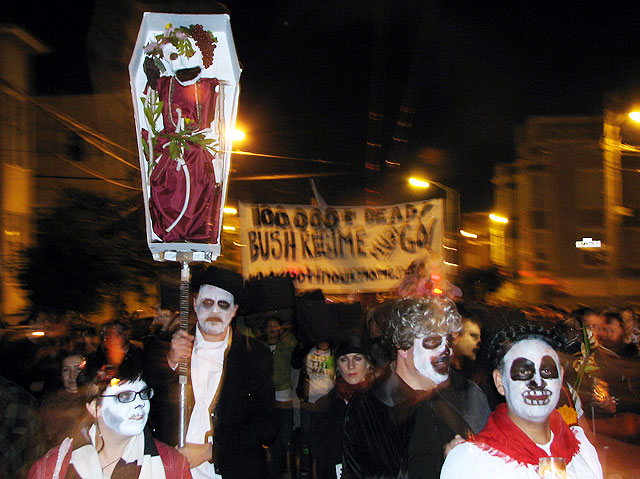
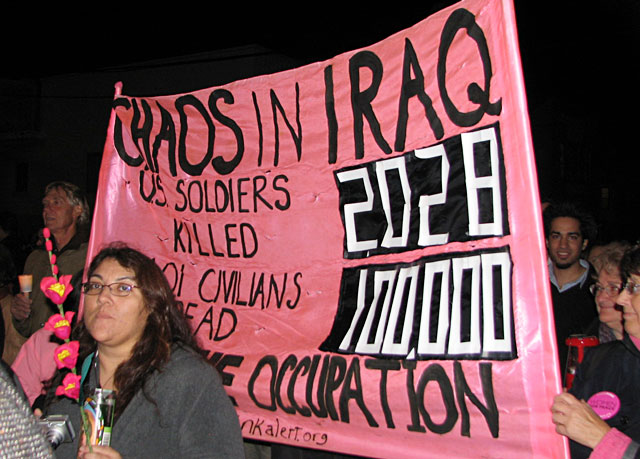
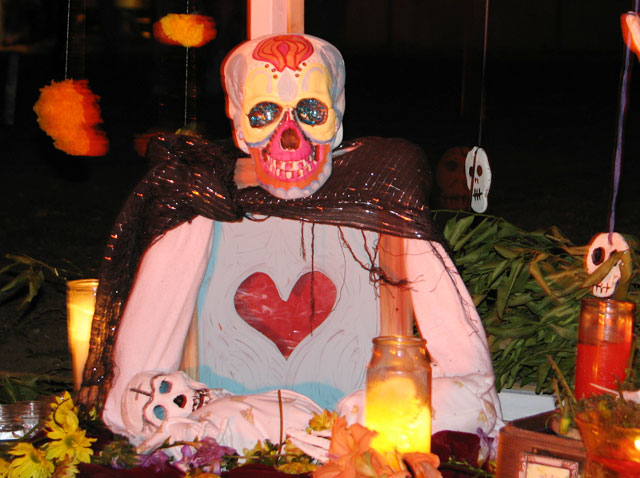
Over a thousand people joined the Dia de los Meurtos (Day of the Dead) procession through San Francisco’s mission district last night. Dia de los Muertos is an annual Meso-American holiday dedicated to ancestors and loved ones now gone. The procession was lead by the Rescue Culture Collective and ended at the Festival of Altars in Garfield Park at 25th Street and Harrison. Not in Our Name joined others, including CODEPINK, in remembering the over 100,000 Iraqis and 2,000 US troops killed due to our government’s current war without end on that country.
For more information:
http://bayarea.notinourname.net
Add Your Comments
Comments
(Hide Comments)
The more details Yvette adds to her sugar skull, the more memories come to her mind. She remembers her dead grandmother; and the memory of her two miscarriages makes her teary-eyed.
“It’s a form of healing in a way,” said Yvette, who, together with her husband, Michael, spent a recent Saturday afternoon decorating sugar skulls in honor of Día de los Muertos (Day of the Dead). “I’ve wanted to do this for a long time. I wanted to show my husband a little more of our traditions. Plus, I thought it would be something fun for us to do together.”
For the past four years, Maribel Siman-DeLucca and her husband, Claudio, have been organizing sugar skull and paper mache decorating workshops at Back from Tomboctou, their San Diego retail and wholesale warehouse where they sell Latin American folk art.
“People come to the workshops for different reasons,” said Siman-DeLucca, as she taught 18 adults, teenagers, and children how to make and decorate the traditional sugar skulls. “It’s a fun ritual and some people use it as an opportunity to share our traditions with other people.”
Día de los Muertos began as an Aztec celebration and originally took place in August. Skeletons and skulls were used as symbols for death and rebirth. Instead of fearing death, the Aztecs embraced it and considered it a passage to a higher level of consciousness. When the Spaniards came and Christianized the Aztecs, they incorporated the symbols of the crucifix and devil into the celebration, which the Spaniards moved to Nov. 1 and 2 to coincide with the Dia de Todos los Santos (All Saints Day).
Today, Dia de los Muertos is celebrated throughout Latin America and also in many regions of the United States. It’s a time for people to remember those who have passed away. Nov. 1, or Día de los Angelitos (Day of the Little Angels) is the day to remember children and is followed by the traditional Dia de los Muertos (Day of the Dead).
For both occasions, altars are built with the deceased’s favorite food and drink and candles are lit to light their way home. While the tradition varies from country to country, trinkets or items the deceased were fond of are also placed on the altars. Families often spend time at the cemetery with loved ones, bringing their loved one’s favorite food and drink, along with all the other necessities for a picnic, where the deceased is the guest of honor.
On the altar in honor of her father, Gina Gonzalez places his photo, a pack of his favorite cigarettes, candy, and, of course, he’s beloved racing forms.
“He loved going to the races,” said Gonzalez, who brought her teenage daughter Mia and two friends to the workshop, to pass on the tradition.
Gonzalez used to build the altar on his father’s birthday, but after researching Día de los Muertos for a diversity fair at her job, she learned that November is the correct date.
“We shouldn’t lose our traditions and it’s important that we teach them to our kids,” said Gonzalez, adding that from now on she and her daughter will build an altar on both dates.
Irene Marquez’s granddaughter, Sierra Kriss, loves art, so she brought the six year-old for an afternoon full of glitter, glue, foil, and colorful paints.
“She loves art so I am using this opportunity to teach her about our culture and our traditions,” said Marquez, who every year builds an altar in her daughter’s classroom at Allen Elementary in Bonita. Her granddaughter, who is of Mexican and Caucasian descent, will be helping this year and the two skulls that Sierra decorated will likely be part of the décor.
More
“It’s a form of healing in a way,” said Yvette, who, together with her husband, Michael, spent a recent Saturday afternoon decorating sugar skulls in honor of Día de los Muertos (Day of the Dead). “I’ve wanted to do this for a long time. I wanted to show my husband a little more of our traditions. Plus, I thought it would be something fun for us to do together.”
For the past four years, Maribel Siman-DeLucca and her husband, Claudio, have been organizing sugar skull and paper mache decorating workshops at Back from Tomboctou, their San Diego retail and wholesale warehouse where they sell Latin American folk art.
“People come to the workshops for different reasons,” said Siman-DeLucca, as she taught 18 adults, teenagers, and children how to make and decorate the traditional sugar skulls. “It’s a fun ritual and some people use it as an opportunity to share our traditions with other people.”
Día de los Muertos began as an Aztec celebration and originally took place in August. Skeletons and skulls were used as symbols for death and rebirth. Instead of fearing death, the Aztecs embraced it and considered it a passage to a higher level of consciousness. When the Spaniards came and Christianized the Aztecs, they incorporated the symbols of the crucifix and devil into the celebration, which the Spaniards moved to Nov. 1 and 2 to coincide with the Dia de Todos los Santos (All Saints Day).
Today, Dia de los Muertos is celebrated throughout Latin America and also in many regions of the United States. It’s a time for people to remember those who have passed away. Nov. 1, or Día de los Angelitos (Day of the Little Angels) is the day to remember children and is followed by the traditional Dia de los Muertos (Day of the Dead).
For both occasions, altars are built with the deceased’s favorite food and drink and candles are lit to light their way home. While the tradition varies from country to country, trinkets or items the deceased were fond of are also placed on the altars. Families often spend time at the cemetery with loved ones, bringing their loved one’s favorite food and drink, along with all the other necessities for a picnic, where the deceased is the guest of honor.
On the altar in honor of her father, Gina Gonzalez places his photo, a pack of his favorite cigarettes, candy, and, of course, he’s beloved racing forms.
“He loved going to the races,” said Gonzalez, who brought her teenage daughter Mia and two friends to the workshop, to pass on the tradition.
Gonzalez used to build the altar on his father’s birthday, but after researching Día de los Muertos for a diversity fair at her job, she learned that November is the correct date.
“We shouldn’t lose our traditions and it’s important that we teach them to our kids,” said Gonzalez, adding that from now on she and her daughter will build an altar on both dates.
Irene Marquez’s granddaughter, Sierra Kriss, loves art, so she brought the six year-old for an afternoon full of glitter, glue, foil, and colorful paints.
“She loves art so I am using this opportunity to teach her about our culture and our traditions,” said Marquez, who every year builds an altar in her daughter’s classroom at Allen Elementary in Bonita. Her granddaughter, who is of Mexican and Caucasian descent, will be helping this year and the two skulls that Sierra decorated will likely be part of the décor.
More
For more information:
http://news.newamericamedia.org/news/view_...
We are 100% volunteer and depend on your participation to sustain our efforts!
Donate

$115.00 donated
in the past month
Get Involved
If you'd like to help with maintaining or developing the website, contact us.
Publish
Publish your stories and upcoming events on Indybay.
Topics
More
Search Indybay's Archives
Advanced Search
►
▼
IMC Network