







 Publish to Newswire
 Add an Event
From the Open-Publishing Calendar
From the Open-Publishing Newswire
Indybay Feature
Thirteen die in Yemen riots over fuel price rises
Yemenis were protesting against a government announcement on Tuesday to cut fuel subsidies as part of a 1995 reform program backed by the International Monetary Fund and World Bank. The government says the economy could collapse without reforms.
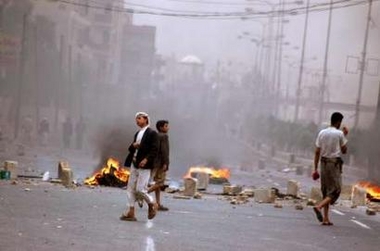
Thirteen die in Yemen riots over fuel price rises
By Mohammed Sudam
Reuters
Wednesday, July 20, 2005; 11:25 AM
SANAA (Reuters) - At least 13 people were killed in clashes with police in Yemen on Wednesday after rioters smashed government offices and set fires in response to a sharp rise in fuel prices.
The clashes were the heaviest death toll in Yemen protests since 1998 when 34 people died in two weeks of demonstrations and violent clashes over price hikes.
Thousands of protesters in the capital, Sanaa, smashed furniture in government offices, blocked roads with flaming tires, and knocked out electricity transformers in some areas.
Rioters also wrecked stores, cars and restaurants before anti-riot police, backed by security forces, deployed in large numbers to stop the violence.
Police fired shots in the air and used tear gas to disperse protesters hurling stones at the offices of Prime Minister Abdul-Qader Bagammal and ambulances rushed injured to hospital.
But it was not clear if the casualties were caused by police who opened fire at the protesters or by armed demonstrators in a country where civilians often carry arms.
Witnesses and medics reported similar protests in three other towns, including the town of Dhala in south Yemen where seven of the 13 dead were killed, including one policeman.
Yemenis were protesting against a government announcement on Tuesday to cut fuel subsidies as part of a 1995 reform program backed by the International Monetary Fund and World Bank. The government says the economy could collapse without reforms.
"This is a natural reaction because the government's reforms are a lie and we can't take it any more...This government is making the rich richer and the poor poorer," said one man.
AILING ECONOMY
Analysts said the riots posed a challenge to the government of President Ali Abdullah Saleh which is struggling to prevent an economic collapse in a country ridden by staggering debt, acute poverty and high unemployment.
"What happened today was a spontaneous reaction by the people who feel targeted in their livelihood. Such riots will hurt the country's stability," political analyst Saeed Thabet told Reuters.
Demonstrators shouted slogans attacking Bagammal and Saleh's ruling party. Police, using tear gas and water cannon to control the crowds, blocked off the house of Vice President Abd-Rabbu Hadi where protesters converged.
Bagammal has said the government wants to cut $500 million a year of diesel subsidies as part of an economic reform program in the poor country of 20 million people.
A liter of diesel rose to 45 rials (24 U.S. cents) from 17 rials; a liter of petrol was priced at 65 rials, up from 35 rials, and a liter of kerosene rose to 45 rials from 16 rials. Gas cylinders rose to 400 rials from 250 rials.
The government said this week's hikes were in line with surging global oil prices.
Opposition parties say such measures will increase pressure on the poor and demand instead a crackdown on corruption, which they blame for Yemen's economic problems.
According to World Bank figures, more than 42 percent of its 19 million people live below the poverty line, illiteracy is estimated at 50 percent and unemployment is over 20 percent.
By Mohammed Sudam
Reuters
Wednesday, July 20, 2005; 11:25 AM
SANAA (Reuters) - At least 13 people were killed in clashes with police in Yemen on Wednesday after rioters smashed government offices and set fires in response to a sharp rise in fuel prices.
The clashes were the heaviest death toll in Yemen protests since 1998 when 34 people died in two weeks of demonstrations and violent clashes over price hikes.
Thousands of protesters in the capital, Sanaa, smashed furniture in government offices, blocked roads with flaming tires, and knocked out electricity transformers in some areas.
Rioters also wrecked stores, cars and restaurants before anti-riot police, backed by security forces, deployed in large numbers to stop the violence.
Police fired shots in the air and used tear gas to disperse protesters hurling stones at the offices of Prime Minister Abdul-Qader Bagammal and ambulances rushed injured to hospital.
But it was not clear if the casualties were caused by police who opened fire at the protesters or by armed demonstrators in a country where civilians often carry arms.
Witnesses and medics reported similar protests in three other towns, including the town of Dhala in south Yemen where seven of the 13 dead were killed, including one policeman.
Yemenis were protesting against a government announcement on Tuesday to cut fuel subsidies as part of a 1995 reform program backed by the International Monetary Fund and World Bank. The government says the economy could collapse without reforms.
"This is a natural reaction because the government's reforms are a lie and we can't take it any more...This government is making the rich richer and the poor poorer," said one man.
AILING ECONOMY
Analysts said the riots posed a challenge to the government of President Ali Abdullah Saleh which is struggling to prevent an economic collapse in a country ridden by staggering debt, acute poverty and high unemployment.
"What happened today was a spontaneous reaction by the people who feel targeted in their livelihood. Such riots will hurt the country's stability," political analyst Saeed Thabet told Reuters.
Demonstrators shouted slogans attacking Bagammal and Saleh's ruling party. Police, using tear gas and water cannon to control the crowds, blocked off the house of Vice President Abd-Rabbu Hadi where protesters converged.
Bagammal has said the government wants to cut $500 million a year of diesel subsidies as part of an economic reform program in the poor country of 20 million people.
A liter of diesel rose to 45 rials (24 U.S. cents) from 17 rials; a liter of petrol was priced at 65 rials, up from 35 rials, and a liter of kerosene rose to 45 rials from 16 rials. Gas cylinders rose to 400 rials from 250 rials.
The government said this week's hikes were in line with surging global oil prices.
Opposition parties say such measures will increase pressure on the poor and demand instead a crackdown on corruption, which they blame for Yemen's economic problems.
According to World Bank figures, more than 42 percent of its 19 million people live below the poverty line, illiteracy is estimated at 50 percent and unemployment is over 20 percent.
We are 100% volunteer and depend on your participation to sustain our efforts!
Donate

$260.00 donated
in the past month
Get Involved
If you'd like to help with maintaining or developing the website, contact us.
Publish
Publish your stories and upcoming events on Indybay.
Topics
More
Search Indybay's Archives
Advanced Search
►
▼
IMC Network
Four protestors have been killed Thursday and ten others wounded when an exchange of fire broke out between security forces and armed demonstrators in the town of Al-Dali, 250 kilometers ( 155miles) south of the capital Sanaa, Agence France Presse (AFP) reported.
The protestors damaged vehicles and shops in the town of Loder, in the southern province of Abyan, witnesses told AFP.
The clashes were also reported in at least three towns in the south and north of the impoverished country, with government forces, backed by army tanks and armored vehicles, deployed along main roads, they said.
Similar clashes also raged in the northwestern city of Saada.
The bloody confrontations erupted Wednesday after a Cabinet decision Tuesday to put into effect new fuel prices and lift subsidies to fuel products.
Petrol prices in the impoverished republic nearly doubled from 35 riyals (32 cents) per liter to 65 riyals ( 60cents). Diesel jumped from 17 riyals ( 16cents) to 45 riyals ( 42cents).
Heavily Deployed
Yemeni army and security forces have been heavily deployed in the capital Sanaa and other major towns in the south where similar clashes broke out Wednesday, leaving at least 10 dead and scores wounded.
Tanks and armored vehicles took up positions on main crossroads in the capital and other towns as patrols roamed main streets, according to witnesses.
In Sanaa, loudspeakers mounted on police cars called on residents not to take part in "destructive acts and riots" as "the security and stability of the country is the responsibility of all citizens."
Earlier Wednesday, armed demonstrators, angered by the government's decision, opened fire on the headquarters of the ruling General People's Congress (GPC) party, as thousands took to the streets, a party source told AFP.
The source, who was inside the headquarters of the party, said a hail of bullets was fired in the direction of the party offices.
Demonstrators also reportedly attempted to storm the house of Yemeni Vice President Abdrabo Mansur Hadi, but were met by machine-gun fire and tear-gas bombs.
The clashes were the heaviest death toll in Yemen protests since1998 , when 34 people died in two weeks of demonstrations and violent clashes over price hikes.
"This is a natural reaction because the government's reforms are a lie and we can't take it any more ... This government is making the rich richer and the poor poorer," one man told AFP.
Analysts said the riots posed a challenge to the government of President Ali Abdullah Saleh struggling to prevent a collapse of a debt-ridden economy with high unemployment and poverty, Reuters reported.
"What happened today was a spontaneous reaction by the people who feel targeted in their livelihood. Such riots will hurt the country's stability," said analyst Saeed Thabet.
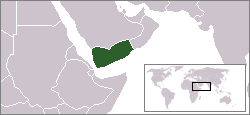
Yemen, situated at the southeastern tip of the Arabian Peninsula, has a population of19 . 7million, and Gross National Product (GDP) per capita does not exceed 800 dollars.
World Bank figures show more than 42 percent of Yemeni people live below the poverty line, with illiteracy estimated at 50 percent and unemployment at over 20 percent.
http://islamonline.net/English/News/2005-07/21/article02.shtml