







 Publish to Newswire
 Add an Event
From the Open-Publishing Calendar
From the Open-Publishing Newswire
Indybay Feature
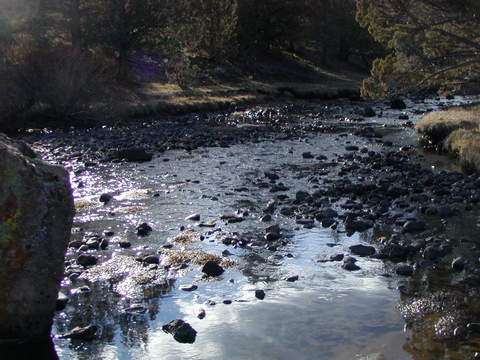
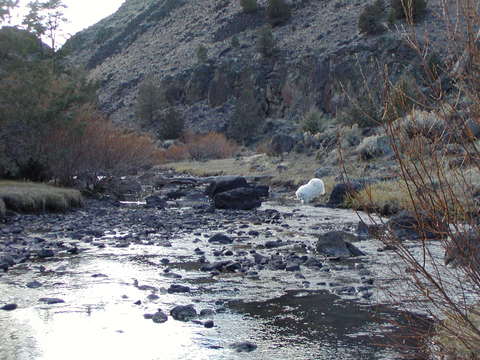
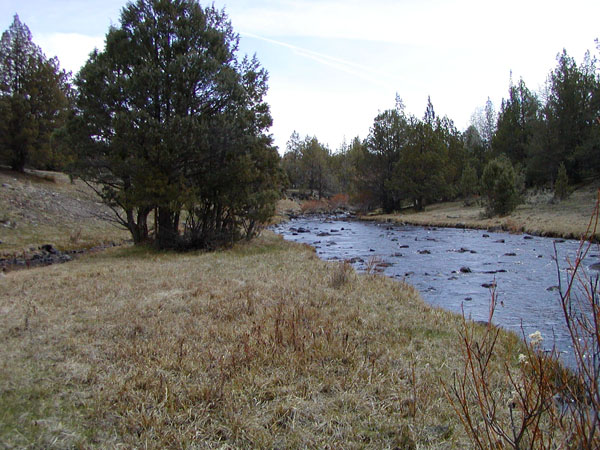
Please Help Save This River
Multi-Millionaire Silicon Valley Land Developer Barry Swenson Holds An Almost Sixty Percent Stakehold in the Irrigation District That Drained This River
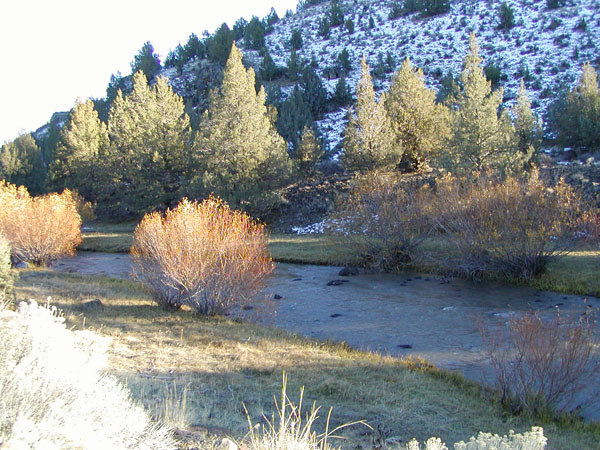
Multi millionaire land developer Barry Swenson, an almost sixty percent stakeholder in the Modoc County South Fork Irrigation District is proposing a hydroelectric plant upon this small streambed, the South Fork of the Pit River.
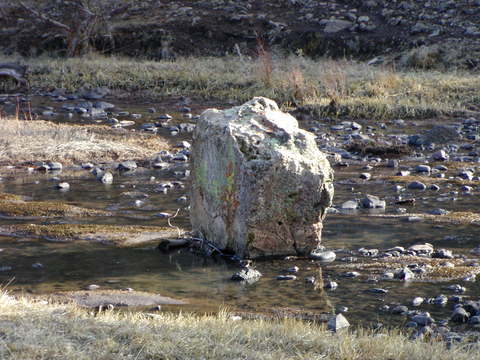
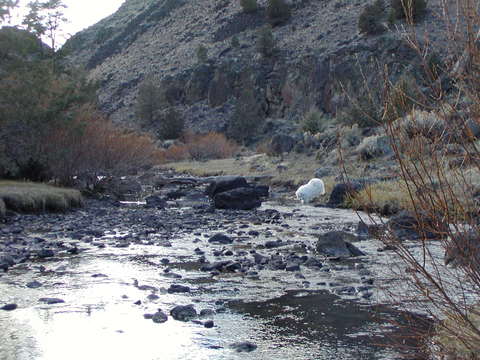
Once where the Hammawi Indian Band roamed, the river is habitat to endangered and threated aquatic life including the redband trout, the endangered Modoc Sucker, the endangered Shasta Crayfish and other endangered and threatened species.
Following the burst of the illy maintained irrigation diversion canal in November of 2004, sediment spilled into the river and the aquatic life disappeared, their skeletons recently discovered amongst the silt, as a result of large spring rains which began to flush the silt down the river.
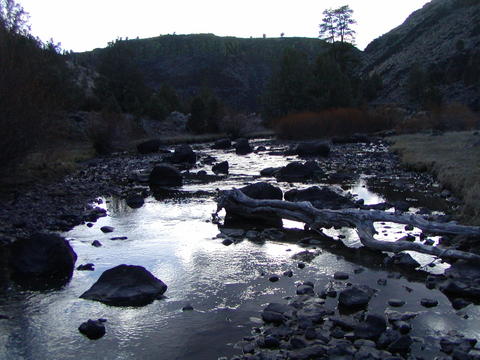
In February, they drained the river, down to levels proposed for their hydroelectric plant. Their experts claimed fish could live in this environment.
Please join us in opposing this project. Call your local assembly representatives, your local state senator, your local Congessional representative and your U.S. Senators. Don't let this happen again.
Write letters and encourage your friends to write letters in a letter writing campaign in opposition to:
Modoc National Forest
800 12th Street
Alturas, California 96116
Please help us save this river.
Once where the Hammawi Indian Band roamed, the river is habitat to endangered and threated aquatic life including the redband trout, the endangered Modoc Sucker, the endangered Shasta Crayfish and other endangered and threatened species.
Following the burst of the illy maintained irrigation diversion canal in November of 2004, sediment spilled into the river and the aquatic life disappeared, their skeletons recently discovered amongst the silt, as a result of large spring rains which began to flush the silt down the river.
In February, they drained the river, down to levels proposed for their hydroelectric plant. Their experts claimed fish could live in this environment.
Please join us in opposing this project. Call your local assembly representatives, your local state senator, your local Congessional representative and your U.S. Senators. Don't let this happen again.
Write letters and encourage your friends to write letters in a letter writing campaign in opposition to:
Modoc National Forest
800 12th Street
Alturas, California 96116
Please help us save this river.
For more information:
http://www.ebold.com/~savesouthfork/
Add Your Comments
Comments
(Hide Comments)
From the Modoc County Record - 7/21, 2005
West Valley hydro plan creates problems
Distraught residents and landowners made emotional statements and fired critical questions during two intense scoping meetings held at the Likely fire hall last week, voicing their opposition to the proposed hydroelectric power project in West Valley, east of Likely on the South Fork of the Pit River
Federal Energy Resource Commission (FERC) staff members conducted the meetings to gather public opinion regarding the future project.
As proposed, the project would consist of two small hydroelectric turbine generators, one located near the West Valley Reservoir dam and the other near the Jess Valley highway at the bottom of the canyon where Short Creek spills into the South Fork. Both plants, with a combined output of about 2600 kilowatts-enough to power about 2,000 average homes-would use water diverted from the South Fork River by an existing canal owned and operated by the South Fork Irrigation District (SFID)
Nick Josten, the engineer who filed an application for the power plant with FERC in 2003, was on hand for both meetings to present a slide presentation about the project and to field questions. "I think hydropower is a wonderful source of energy. It's not without impacts, but it's a perfectly clean source of energy," he declares. The outspoken opponents are approximately six families who live along the river or own land in the canyon and the Hammawi Tribe of Native Americans, which has joined them in their opposition. These critics decry the lack of information they have been given about the project and the proposed water diversion.
"There's clearly some information that has to be supplied," Josten acknowledges. "It's a lot of things gone over many times in many different words, but the number of actual issues isn't that big. The answer to those issues is information.
"And so the first step after this meeting is to try and collect that information-that's going to be my responsibility-and to give that information to the people that are asking for it and to make sure they understand it and believe it."
The opponents' primary concern is the diversion of 100 cubic feet of water per second from the river, leaving about three miles of South Fork with dramatically reduced stream flows. That water would then be returned to the river at its confluence with Short Creek. Gail Griffith, one of the affected residents, is adamant in her opposition to diverting water from the river. "I don't like it. I know from being on that river that there isn't enough water to sustain (a power plant)."
After speaking with Josten, she was not dissuaded. "He assured me that he did a feasibility study," Griffith reports. "I asked him to please re-look at it again, to come out in July and August and examine the river with me. He said É those were the months they would not produce electricity."
Clearly frustrated, Griffith reiterates, "I see the river every day, I live on the river (and) I walk the river. They believe it's feasible. I'm trying to tell them it's not."
Objections also focused on the project's potential impact on property values, stream flows, fish and wildlife habitat, water turbidity and noise. "If it happens, the river will dry up pretty well. I don't like it because the habitat would be destroyed," emphasizes Griffith, citing a litany of dire environmental impacts if the project is realized. Linda Bruzzone, another landowner along the impacted portion of the river, is equally distraught at the prospect of losing water in the river. She spells out a detailed analysis of water flows to demonstrate that the river will virtually cease to exist if the proposed project goes through. "We are totally opposed to the project because we believe that that preserved area É is deeply in jeopardy."
Emotionally distraught, Bruzzone tearfully relates that she and her husband feel that their dream will be shattered if the power plant becomes a reality. "We love our property. It was our dream. It was our future. We feel awful; we feel terrible. Everything we've ever worked for is at risk. We put our entire retirement investment into Modoc County."
An engineer and owner of GeoSense, an Idaho-based consulting firm for small power projects, Josten is not surprised by the reaction. "This is normal for any project that proposes to divert additional water."
In spite of the objections, Josten is upbeat. "I think that it can be done in a responsible way. I'm a fisherman, a backpacker and a member of Trout Unlimited. I know what these folks are thinking about. And I think that I'm inclined to do it in a more responsible way than some people who might develop this resource
"The real question is: What will change? How can any negative impacts associated with (this project) be minimized so that this is acceptable-and it can be-as a compromise between groups of people that want to use the resource?"
Patricia Cantrall, county supervisor for the district, candidly says, "I'm for the project." She hopes that the "few who live on the river that are against it will come around to the right way of thinking." Cantrall believes that opponents' charges of hidden agendas and backroom deals to benefit the owners of Alturas Ranches, the county's largest agricultural enterprise, and the owners of South Fork Irrigation District, which controls all the water rights in this project, are misplaced, misleading and shortsighted
"Yes, you may have six families along the river," she explains. "But (consider) also, Alturas Ranches-no matter who it's owned by or where they live-and all the people that work for them from here to Alturas, which are all in my district. The county of Modoc benefits from Alturas Ranches and anything it does like this to enhance the river
"You need to look beyond," Cantrall continues, "and you need to look down the road for the next 20 years. Who's going to feed America?" Only after a number of required reviews, analysis and an environmental assessment are completed will FERC be ready to decide whether or not to allow the project to move forward. The earliest the decision can be expected is June of 2006.
West Valley hydro plan creates problems
Distraught residents and landowners made emotional statements and fired critical questions during two intense scoping meetings held at the Likely fire hall last week, voicing their opposition to the proposed hydroelectric power project in West Valley, east of Likely on the South Fork of the Pit River
Federal Energy Resource Commission (FERC) staff members conducted the meetings to gather public opinion regarding the future project.
As proposed, the project would consist of two small hydroelectric turbine generators, one located near the West Valley Reservoir dam and the other near the Jess Valley highway at the bottom of the canyon where Short Creek spills into the South Fork. Both plants, with a combined output of about 2600 kilowatts-enough to power about 2,000 average homes-would use water diverted from the South Fork River by an existing canal owned and operated by the South Fork Irrigation District (SFID)
Nick Josten, the engineer who filed an application for the power plant with FERC in 2003, was on hand for both meetings to present a slide presentation about the project and to field questions. "I think hydropower is a wonderful source of energy. It's not without impacts, but it's a perfectly clean source of energy," he declares. The outspoken opponents are approximately six families who live along the river or own land in the canyon and the Hammawi Tribe of Native Americans, which has joined them in their opposition. These critics decry the lack of information they have been given about the project and the proposed water diversion.
"There's clearly some information that has to be supplied," Josten acknowledges. "It's a lot of things gone over many times in many different words, but the number of actual issues isn't that big. The answer to those issues is information.
"And so the first step after this meeting is to try and collect that information-that's going to be my responsibility-and to give that information to the people that are asking for it and to make sure they understand it and believe it."
The opponents' primary concern is the diversion of 100 cubic feet of water per second from the river, leaving about three miles of South Fork with dramatically reduced stream flows. That water would then be returned to the river at its confluence with Short Creek. Gail Griffith, one of the affected residents, is adamant in her opposition to diverting water from the river. "I don't like it. I know from being on that river that there isn't enough water to sustain (a power plant)."
After speaking with Josten, she was not dissuaded. "He assured me that he did a feasibility study," Griffith reports. "I asked him to please re-look at it again, to come out in July and August and examine the river with me. He said É those were the months they would not produce electricity."
Clearly frustrated, Griffith reiterates, "I see the river every day, I live on the river (and) I walk the river. They believe it's feasible. I'm trying to tell them it's not."
Objections also focused on the project's potential impact on property values, stream flows, fish and wildlife habitat, water turbidity and noise. "If it happens, the river will dry up pretty well. I don't like it because the habitat would be destroyed," emphasizes Griffith, citing a litany of dire environmental impacts if the project is realized. Linda Bruzzone, another landowner along the impacted portion of the river, is equally distraught at the prospect of losing water in the river. She spells out a detailed analysis of water flows to demonstrate that the river will virtually cease to exist if the proposed project goes through. "We are totally opposed to the project because we believe that that preserved area É is deeply in jeopardy."
Emotionally distraught, Bruzzone tearfully relates that she and her husband feel that their dream will be shattered if the power plant becomes a reality. "We love our property. It was our dream. It was our future. We feel awful; we feel terrible. Everything we've ever worked for is at risk. We put our entire retirement investment into Modoc County."
An engineer and owner of GeoSense, an Idaho-based consulting firm for small power projects, Josten is not surprised by the reaction. "This is normal for any project that proposes to divert additional water."
In spite of the objections, Josten is upbeat. "I think that it can be done in a responsible way. I'm a fisherman, a backpacker and a member of Trout Unlimited. I know what these folks are thinking about. And I think that I'm inclined to do it in a more responsible way than some people who might develop this resource
"The real question is: What will change? How can any negative impacts associated with (this project) be minimized so that this is acceptable-and it can be-as a compromise between groups of people that want to use the resource?"
Patricia Cantrall, county supervisor for the district, candidly says, "I'm for the project." She hopes that the "few who live on the river that are against it will come around to the right way of thinking." Cantrall believes that opponents' charges of hidden agendas and backroom deals to benefit the owners of Alturas Ranches, the county's largest agricultural enterprise, and the owners of South Fork Irrigation District, which controls all the water rights in this project, are misplaced, misleading and shortsighted
"Yes, you may have six families along the river," she explains. "But (consider) also, Alturas Ranches-no matter who it's owned by or where they live-and all the people that work for them from here to Alturas, which are all in my district. The county of Modoc benefits from Alturas Ranches and anything it does like this to enhance the river
"You need to look beyond," Cantrall continues, "and you need to look down the road for the next 20 years. Who's going to feed America?" Only after a number of required reviews, analysis and an environmental assessment are completed will FERC be ready to decide whether or not to allow the project to move forward. The earliest the decision can be expected is June of 2006.
We are 100% volunteer and depend on your participation to sustain our efforts!
Donate

$100.00 donated
in the past month
Get Involved
If you'd like to help with maintaining or developing the website, contact us.
Publish
Publish your stories and upcoming events on Indybay.
Topics
More
Search Indybay's Archives
Advanced Search
►
▼
IMC Network