







 Publish to Newswire
 Add an Event
From the Open-Publishing Calendar
From the Open-Publishing Newswire
Indybay Feature
Al-Aqsa Brigades endorse al-Barghuthi
The Palestinian resistance group Al-Aqsa Martyrs Brigades says it is opposed to Mahmud Abbas as Yasir Arafat's successor and would instead back jailed West Bank Fatah leader Marwan al-Barghuthi.
A spokesman said: "We do not support Abu Mazin [Abbas] for the election and we have decided to vote for Marwan Barghuthi to be our candidate for president."
A spokesman said: "We do not support Abu Mazin [Abbas] for the election and we have decided to vote for Marwan Barghuthi to be our candidate for president."
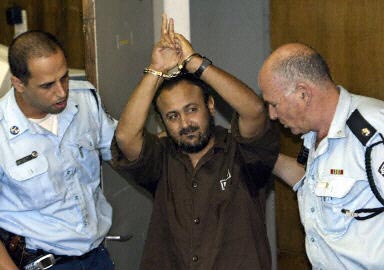
Abbas, the new Palestinian Liberation Organisation (PLO) leader, is expected to be formally named as the candidate for the 9 January election for the mainstream Fatah party that he co-founded with Arafat, of which the Al-Aqsa Martyrs Brigades is an armed offshoot.
A poll conducted last month said al-Barghuthi was the second most popular choice for Palestinian Authority president trailing Arafat, who died on 11 November in a Paris hospital.
Fadwa al-Barghuthi said her husband - widely regarded as the inspiration behind the second Palestinian intifada - was the strongest candidate for the presidency, but that his bid would depend on Fatah.
But on Monday, Palestinian Foreign Minister Nabil Shaath said Fatah had reached a consensus that Abbas should be its candidate in the election to replace Arafat.
In June, al-Barghuthi was sentenced in a controversial verdict by an Israeli court to five life terms. He has denied all charges.
AFP
http://english.aljazeera.net/NR/exeres/E9897FD7-6CE5-4A78-99C9-C537F27F3309.htm
Al-Aqsa opposes Abbas as Palestinian leader
Militant Palestinian group prefers jailed Barghuti to be their candidate for Palestinian leadership.
http://www.middle-east-online.com/english/?id=11900
Fatah's military wing, Al-Aqsa Martyrs Brigades, on Tuesday said it would not support Mahmud Abbas (Abu Mazen) as the next president of the Palestinian Authority, but would instead back jailed West Bank Fatah leader, Marwan Barghuti.
"We do not support Abu Mazen for the election and we have decided to vote for Marwan Barghuti to be our candidate for president," a spokesman told AFP.
Abbas, the new PLO leader, is expected to be formally named as the candidate for the January 9 election for Fatah.
Abbas has reportedly asked Palestinian groups to halt attacks against Israel during the campaign for the elections. Ziad Abu Amr, a lawmaker participating in the talks, told The AP Hamas and Islamic Jihad have asked Abbas to establish a "unified leadership." Abu Amr said Abbas told these groups that "the best way to achieve a political partnership is elections." (albawaba.com)
http://www.albawaba.com/news/index.php3?sid=288990&lang=e&dir=news
A poll conducted last month said al-Barghuthi was the second most popular choice for Palestinian Authority president trailing Arafat, who died on 11 November in a Paris hospital.
Fadwa al-Barghuthi said her husband - widely regarded as the inspiration behind the second Palestinian intifada - was the strongest candidate for the presidency, but that his bid would depend on Fatah.
But on Monday, Palestinian Foreign Minister Nabil Shaath said Fatah had reached a consensus that Abbas should be its candidate in the election to replace Arafat.
In June, al-Barghuthi was sentenced in a controversial verdict by an Israeli court to five life terms. He has denied all charges.
AFP
http://english.aljazeera.net/NR/exeres/E9897FD7-6CE5-4A78-99C9-C537F27F3309.htm
Al-Aqsa opposes Abbas as Palestinian leader
Militant Palestinian group prefers jailed Barghuti to be their candidate for Palestinian leadership.
http://www.middle-east-online.com/english/?id=11900
Fatah's military wing, Al-Aqsa Martyrs Brigades, on Tuesday said it would not support Mahmud Abbas (Abu Mazen) as the next president of the Palestinian Authority, but would instead back jailed West Bank Fatah leader, Marwan Barghuti.
"We do not support Abu Mazen for the election and we have decided to vote for Marwan Barghuti to be our candidate for president," a spokesman told AFP.
Abbas, the new PLO leader, is expected to be formally named as the candidate for the January 9 election for Fatah.
Abbas has reportedly asked Palestinian groups to halt attacks against Israel during the campaign for the elections. Ziad Abu Amr, a lawmaker participating in the talks, told The AP Hamas and Islamic Jihad have asked Abbas to establish a "unified leadership." Abu Amr said Abbas told these groups that "the best way to achieve a political partnership is elections." (albawaba.com)
http://www.albawaba.com/news/index.php3?sid=288990&lang=e&dir=news
Add Your Comments
Comments
(Hide Comments)
With Marwan Barghouti allowing himself to be nominated as a candidate in the Palestinian elections slated for Jan.9 ,2005 , Israel and the US are placed in a politically interesting position.
Keen to see Western-style democracy take root in the Arab region — to the extent of invading Iraq and tolerating the huge “collateral damage” among the civilian population during the drive for liberation — it promises to be an interesting test of America’s commitment to the principle of democracy should Barghouti win.
Having ousted a president they determined as evil and threatening in Iraq, how will the US deal with a freely and democratically elected president — described as a terrorist — in jail in Israel?
To argue that Barghouti should not be recognized because he has a history of terrorism would be disingenuous in the extreme. The US has accommodated ex-terrorists quite comfortably before in the Middle East, as several generations of Israeli prime ministers evidence. Their terrorism though was not directed against the US or its current chums.
Indeed, the world and the US have rightly acclaimed the jailed Rolihlahla (Nelson) Mandela as a statesman. Ironically Rolihlahla can easily and somewhat prophetically be interpreted as “troublemaker.” The Nelson was added by a schoolteacher.
Mandela’s time in jail did nothing to damage his standing. He was there as a result of what the state he lived in perceived as terrorism. The policy of Umkhonto we Sizwe (MK) — armed wing of the ANC of which Mandela was a prominent figure — was not to target civilians or white people. However, a report from the Truth and Reconciliation Commission says that whatever the intent, it happened. Between 1961 and1963 , before Mandela was jailed, about 190 attacks were recorded, undertaken mainly by regional operatives.
Barghouti is the leader of the Fatah movement in the West Bank, and has been closely identified with one of its militant offshoots, the Al-Aqsa Martyrs Brigade. Israel issued an arrest warrant for him in September 2001, accusing him of organizing paramilitaries and conspiring to murder. Eventually he was only convicted for causing the deaths of five people, as there was insufficient evidence connecting him to the other 21.
He first appeared in court August 2002 — charged with the killing of 26 Israelis and belonging to a terrorist organization. He denied the legitimacy of the Israeli court, insisting he was not a criminal but an elected politician; he was a member of the Palestinian Legislative Council. He has denied founding Al-Aqsa but has hailed some operations by the group, which has also attacked Israeli military targets. The group claimed him as their leader, not helping his denials.
Barghouti and Mandela are products of their native lands. Barghouti has never been exiled or been compromised by questionable links with political figures outside the state. Amin Al-Husseini — a mulla and friend of Hitler and Ahmed Shuquairi who worked for the Egyptian Ministry of the Interior could not claim that. Arafat was born in Cairo — though he frequently claimed Jerusalem as his birthplace — and cannot claim a Palestinian birthright. Barghouti is fluent in the language of the people he has to deal with. Mandela as a lawyer understood the language and culture of the powers he opposed. Barghouti speaks Hebrew and has dealt at many levels with Israeli society. Barghouti’s targets, like Mandela’s, were essentially military and his organization was entirely home grown.
One of the strongest points in Barghouti’s favor is that, born in the post-partition generation, he has always called for a two-state system. Arafat for 30 years of his career called for the elimination of Israel; in the last ten he became at best equivocal.
“If you want to make peace with your enemy, you have to work with your enemy. Then he becomes your partner,” said Mandela; but it could just as easily be Barghouti.
http://arabnews.com/?page=7§ion=0&article=54592&d=16&m=11&y=2004
Keen to see Western-style democracy take root in the Arab region — to the extent of invading Iraq and tolerating the huge “collateral damage” among the civilian population during the drive for liberation — it promises to be an interesting test of America’s commitment to the principle of democracy should Barghouti win.
Having ousted a president they determined as evil and threatening in Iraq, how will the US deal with a freely and democratically elected president — described as a terrorist — in jail in Israel?
To argue that Barghouti should not be recognized because he has a history of terrorism would be disingenuous in the extreme. The US has accommodated ex-terrorists quite comfortably before in the Middle East, as several generations of Israeli prime ministers evidence. Their terrorism though was not directed against the US or its current chums.
Indeed, the world and the US have rightly acclaimed the jailed Rolihlahla (Nelson) Mandela as a statesman. Ironically Rolihlahla can easily and somewhat prophetically be interpreted as “troublemaker.” The Nelson was added by a schoolteacher.
Mandela’s time in jail did nothing to damage his standing. He was there as a result of what the state he lived in perceived as terrorism. The policy of Umkhonto we Sizwe (MK) — armed wing of the ANC of which Mandela was a prominent figure — was not to target civilians or white people. However, a report from the Truth and Reconciliation Commission says that whatever the intent, it happened. Between 1961 and1963 , before Mandela was jailed, about 190 attacks were recorded, undertaken mainly by regional operatives.
Barghouti is the leader of the Fatah movement in the West Bank, and has been closely identified with one of its militant offshoots, the Al-Aqsa Martyrs Brigade. Israel issued an arrest warrant for him in September 2001, accusing him of organizing paramilitaries and conspiring to murder. Eventually he was only convicted for causing the deaths of five people, as there was insufficient evidence connecting him to the other 21.
He first appeared in court August 2002 — charged with the killing of 26 Israelis and belonging to a terrorist organization. He denied the legitimacy of the Israeli court, insisting he was not a criminal but an elected politician; he was a member of the Palestinian Legislative Council. He has denied founding Al-Aqsa but has hailed some operations by the group, which has also attacked Israeli military targets. The group claimed him as their leader, not helping his denials.
Barghouti and Mandela are products of their native lands. Barghouti has never been exiled or been compromised by questionable links with political figures outside the state. Amin Al-Husseini — a mulla and friend of Hitler and Ahmed Shuquairi who worked for the Egyptian Ministry of the Interior could not claim that. Arafat was born in Cairo — though he frequently claimed Jerusalem as his birthplace — and cannot claim a Palestinian birthright. Barghouti is fluent in the language of the people he has to deal with. Mandela as a lawyer understood the language and culture of the powers he opposed. Barghouti speaks Hebrew and has dealt at many levels with Israeli society. Barghouti’s targets, like Mandela’s, were essentially military and his organization was entirely home grown.
One of the strongest points in Barghouti’s favor is that, born in the post-partition generation, he has always called for a two-state system. Arafat for 30 years of his career called for the elimination of Israel; in the last ten he became at best equivocal.
“If you want to make peace with your enemy, you have to work with your enemy. Then he becomes your partner,” said Mandela; but it could just as easily be Barghouti.
http://arabnews.com/?page=7§ion=0&article=54592&d=16&m=11&y=2004
The al-Aqsa brigades are responsible for dozens of suicide bombings and many more shooting attacks against Israeli vehicles in the West Bank. Some notable suicide bombings committed by the group were:
March 2, 2002: Beit Yisrael, Jerusalem - 11 killed.
January 5, 2003: Southern Tel Aviv central bus station - 22 killed.
January 29, 2004: Rehavia, Jerusalem, bus line 19 - 11 killed.
March 14, 2004: Port of Ashdod - 10 killed. (together with Hamas)
Some of the al-Aqsa brigades' attacks were committed by minors. On March 24, 2004, a Palestinian teenager named Hussam Abdo was caught in an IDF checkpoint carrying an explosive belt. Following his arrest, an al-Aqsa Martyrs' Brigade teenagers' militant cell was exposed and arrested in Nablus. However, the Brigades still exploiting children as suicide bombers, as on September 23, 2004 a 15-years-old suicide bomber was arrested by Israeli security forces.
The Al-Aqsa Martyrs' Brigades have attacked Palestinians as well as Israelis. Their Palestinian targets range from opponents of Arafat's rule to journalists to moderates and suspected collaborators. In November and December, 2003 they killed the brother of Ghassan Shaqawa (the mayor of Nablus) and have tried to assassinate him several times. On February 2004 Shaqawa filed his resignation from office in protest of the Palestinian Authority's lack of action against the armed militias rampaging the city. Through the first three months of 2004, a number of attacks on journalists in the West Bank and Gaza Strip have been blamed on the Brigades as well, including the attack on the Arab television station Al-Arabiya's West Bank offices by masked men self-identifying as members of the Brigades. Palestinian journalists in Gaza called a general strike on February 9 to protest this rising violence against journalists.
http://en.wikipedia.org/wiki/Al-Aqsa_Martyrs%27_Brigades
March 2, 2002: Beit Yisrael, Jerusalem - 11 killed.
January 5, 2003: Southern Tel Aviv central bus station - 22 killed.
January 29, 2004: Rehavia, Jerusalem, bus line 19 - 11 killed.
March 14, 2004: Port of Ashdod - 10 killed. (together with Hamas)
Some of the al-Aqsa brigades' attacks were committed by minors. On March 24, 2004, a Palestinian teenager named Hussam Abdo was caught in an IDF checkpoint carrying an explosive belt. Following his arrest, an al-Aqsa Martyrs' Brigade teenagers' militant cell was exposed and arrested in Nablus. However, the Brigades still exploiting children as suicide bombers, as on September 23, 2004 a 15-years-old suicide bomber was arrested by Israeli security forces.
The Al-Aqsa Martyrs' Brigades have attacked Palestinians as well as Israelis. Their Palestinian targets range from opponents of Arafat's rule to journalists to moderates and suspected collaborators. In November and December, 2003 they killed the brother of Ghassan Shaqawa (the mayor of Nablus) and have tried to assassinate him several times. On February 2004 Shaqawa filed his resignation from office in protest of the Palestinian Authority's lack of action against the armed militias rampaging the city. Through the first three months of 2004, a number of attacks on journalists in the West Bank and Gaza Strip have been blamed on the Brigades as well, including the attack on the Arab television station Al-Arabiya's West Bank offices by masked men self-identifying as members of the Brigades. Palestinian journalists in Gaza called a general strike on February 9 to protest this rising violence against journalists.
http://en.wikipedia.org/wiki/Al-Aqsa_Martyrs%27_Brigades
We are 100% volunteer and depend on your participation to sustain our efforts!
Donate

$110.00 donated
in the past month
Get Involved
If you'd like to help with maintaining or developing the website, contact us.
Publish
Publish your stories and upcoming events on Indybay.
Topics
More
Search Indybay's Archives
Advanced Search
►
▼
IMC Network