







 Publish to Newswire
 Add an Event
From the Open-Publishing Calendar
From the Open-Publishing Newswire
Indybay Feature
SAN FRANCISCO Housing agency 'troubled' again Finances land S.F. authority on federal list
The federal government has placed San Francisco's Housing Authority on its list of "troubled'' agencies, a designation that could result in the loss of millions of dollars in grant money to rebuild public housing developments and aid residents, local and federal housing officials said Tuesday.
Newsom; Do You Think Everone is Blind?
Newsom; Do You Think Everone is Blind?
SAN FRANCISCO
Housing agency 'troubled' again
Finances land S.F. authority on federal list
Rachel Gordon, Chronicle Staff Writer
Wednesday, August 25, 2004
--------------------------------------------------------------------------------
The federal government has placed San Francisco's Housing Authority on its list of "troubled'' agencies, a designation that could result in the loss of millions of dollars in grant money to rebuild public housing developments and aid residents, local and federal housing officials said Tuesday.
Another potential ramification: The U.S. Department of Housing and Urban Development, which funds local housing authorities, could take the rare step of seizing control of San Francisco's troubled agency. But San Francisco's problems don't appear that severe -- HUD found serious fault in just one of four areas reviewed, making the prospect for placing the agency in federal receivership unlikely.
In 1996, at the request of then-Mayor Willie Brown, HUD temporarily took over the Housing Authority to turn around years of mismanagement, property neglect and financial problems. A so-called federal recovery team ran the agency for 18 months before determining that the operation was stable enough for the city to regain control.
In the latest case, HUD authorities alerted San Francisco officials of the "troubled'' designation on Aug. 12. The San Francisco Housing Authority has been given a month to appeal the decision, and it will, said agency executive director Gregg Fortner.
"We will fight the 'troubled' designation as far as we have to because of the dramatic improvements we have made to turn this agency around,'' Fortner said Tuesday.
HUD faulted the Housing Authority for its financial shortcomings, said Larry Bush, spokesman for HUD's regional office in San Francisco.
Specifically, HUD found the San Francisco agency lacking in two areas: the amount of its cash reserves and the size of its outstanding legal bills, which total nearly $9 million and stem from court-ordered judgments from lawsuits against the Housing Authority.
Fortner said the Housing Authority is appealing the judgments, one involving a fatal fire and two involving sexual harassment cases.
The Housing Authority maintains two reserve funds, one for operation of its authority-owned housing units and one for the Section 8 program, through which low-income residents get help paying their rent in private-sector housing. The reserve fund for public housing is $3.8 million in the red, Fortner said.
However, Fortner said, the Section 8 reserves are $7.8 million. And when the two pots are combined, he noted, the Housing Authority has a $4 million cushion, a point he said he will make in the authority's appeal of HUD's decision.
Almost 200 of the 3,200 housing authorities in the United States are on the list of troubled agencies, according to Donna White, a HUD spokeswoman in Washington, D.C.
The San Francisco Housing Authority, with a $225 million annual budget, operates 6,400 units in public housing developments throughout the city and administers 10,300 vouchers in the Section 8 and related programs. Thousands of poor residents rely on the agency in a city where rents are among the highest in the nation.
"We have turned the agency around, and we are paying our bills as far as the operational component,'' said Fortner, who came to the agency more than three years ago and says the worst of the problems are over.
HUD, in fact, gave San Francisco passing marks in three of the four areas assessed to determine whether a troubled designation is warranted: management, condition of the properties and resident satisfaction. It failed on the financial component.
HUD has designated the Housing Authority's finances "substandard'' since 2000, Fortner said. The troubled designation is more serious.
Being on the troubled list does not automatically disqualify an agency from competing for HUD grants, but it could put the money in jeopardy, said White, the HUD spokeswoman. Among the grants in jeopardy are those for the HOPE VI program for reconstruction of public housing projects and a program to help residents improve their lives.
If San Francisco loses its appeal regarding the troubled designation, HUD will enter into a formal agreement with the Housing Authority that maps out an action plan to resolve the problems. If that fails, HUD could put the agency in receivership, taking away local control.
E-mail Rachel Gordon at rgordon [at] sfchronicle.com.
Housing agency 'troubled' again
Finances land S.F. authority on federal list
Rachel Gordon, Chronicle Staff Writer
Wednesday, August 25, 2004
--------------------------------------------------------------------------------
The federal government has placed San Francisco's Housing Authority on its list of "troubled'' agencies, a designation that could result in the loss of millions of dollars in grant money to rebuild public housing developments and aid residents, local and federal housing officials said Tuesday.
Another potential ramification: The U.S. Department of Housing and Urban Development, which funds local housing authorities, could take the rare step of seizing control of San Francisco's troubled agency. But San Francisco's problems don't appear that severe -- HUD found serious fault in just one of four areas reviewed, making the prospect for placing the agency in federal receivership unlikely.
In 1996, at the request of then-Mayor Willie Brown, HUD temporarily took over the Housing Authority to turn around years of mismanagement, property neglect and financial problems. A so-called federal recovery team ran the agency for 18 months before determining that the operation was stable enough for the city to regain control.
In the latest case, HUD authorities alerted San Francisco officials of the "troubled'' designation on Aug. 12. The San Francisco Housing Authority has been given a month to appeal the decision, and it will, said agency executive director Gregg Fortner.
"We will fight the 'troubled' designation as far as we have to because of the dramatic improvements we have made to turn this agency around,'' Fortner said Tuesday.
HUD faulted the Housing Authority for its financial shortcomings, said Larry Bush, spokesman for HUD's regional office in San Francisco.
Specifically, HUD found the San Francisco agency lacking in two areas: the amount of its cash reserves and the size of its outstanding legal bills, which total nearly $9 million and stem from court-ordered judgments from lawsuits against the Housing Authority.
Fortner said the Housing Authority is appealing the judgments, one involving a fatal fire and two involving sexual harassment cases.
The Housing Authority maintains two reserve funds, one for operation of its authority-owned housing units and one for the Section 8 program, through which low-income residents get help paying their rent in private-sector housing. The reserve fund for public housing is $3.8 million in the red, Fortner said.
However, Fortner said, the Section 8 reserves are $7.8 million. And when the two pots are combined, he noted, the Housing Authority has a $4 million cushion, a point he said he will make in the authority's appeal of HUD's decision.
Almost 200 of the 3,200 housing authorities in the United States are on the list of troubled agencies, according to Donna White, a HUD spokeswoman in Washington, D.C.
The San Francisco Housing Authority, with a $225 million annual budget, operates 6,400 units in public housing developments throughout the city and administers 10,300 vouchers in the Section 8 and related programs. Thousands of poor residents rely on the agency in a city where rents are among the highest in the nation.
"We have turned the agency around, and we are paying our bills as far as the operational component,'' said Fortner, who came to the agency more than three years ago and says the worst of the problems are over.
HUD, in fact, gave San Francisco passing marks in three of the four areas assessed to determine whether a troubled designation is warranted: management, condition of the properties and resident satisfaction. It failed on the financial component.
HUD has designated the Housing Authority's finances "substandard'' since 2000, Fortner said. The troubled designation is more serious.
Being on the troubled list does not automatically disqualify an agency from competing for HUD grants, but it could put the money in jeopardy, said White, the HUD spokeswoman. Among the grants in jeopardy are those for the HOPE VI program for reconstruction of public housing projects and a program to help residents improve their lives.
If San Francisco loses its appeal regarding the troubled designation, HUD will enter into a formal agreement with the Housing Authority that maps out an action plan to resolve the problems. If that fails, HUD could put the agency in receivership, taking away local control.
E-mail Rachel Gordon at rgordon [at] sfchronicle.com.
For more information:
http://sfgate.com/cgi-bin/article.cgi?f=/c...
Add Your Comments
Comments
(Hide Comments)
Hall complains Conroy left him a dusty mess at Treasure Island
Phillip Matier, Andrew Ross
Wednesday, August 25, 2004
--------------------------------------------------------------------------------
Former San Francisco Supervisor Tony Hall reported for duty as the new $160,000-a-year development director of Treasure Island this week, and promptly declared the office in a state of disaster.
No voice mail -- not even a working phone -- no working computer, no working fax. Just a few pieces of beat-up old furniture.
"The dust in here was an inch thick,'' Hall said.
All in all, it was hardly the ship-shape operation one would expect of an agency in charge of making over one of the biggest chunks of underdeveloped real estate in San Francisco.
Hall -- who has never been shy about pointing the finger -- promptly blamed his predecessor, Annemarie Conroy, for the mess, saying she "left the place high and dry," when Mayor Gavin Newsom named her recently to head the Office of Emergency Services.
"People should know that nothing has been going on out here,'' Hall said. "I feel like I'm back starting from square one."
In fact, Hall added, "I'm going to be calling for a management audit of this place to find out where we are.''
It ought to be an interesting read.
Both Conroy, herself a onetime supervisor, and Hall are big fish in the heavily Irish pond of Westside politics -- a pond that over the years has proved at times too small for both to share.
And from what we hear, the fight has continued in their new slots.
"They both need a time out," said one City Hall type who has been in the middle of the mayhem. "Hopefully, within a couple of weeks they will be done with all of this.''
Conroy didn't return repeated calls Tuesday to her office and her cell phone, and her staff said they didn't know where she was.
The mayor's press secretary, Peter Ragone, would say only that his boss "is looking forward to both Annemarie and Tony moving forward and doing a good job for the city.''
For the past decade, San Francisco has been working to convert Treasure Island and adjoining Yerba Buena Island from military to civilian use -- but it has proved costly and painstakingly difficult.
The island has been a controversial place practically from the day the Navy handed over the management to the city. Under former Mayor Willie Brown, it earned the nickname "Willigan's Island" in honor of all the shenanigans that were going on.
The most noteworthy of those was the saga of the mayor's ex-girlfriend and fund-raiser Wendy Linka, who was shipped to Treasure Island as its $72,000- a-year events manager and promptly fell into the habit of booking two events at the same place and time.
Conroy -- who was sent to the island to shape things up -- tried to fire her, but Brown said "no."
Linka, however, finally exited on workers' comp after a wayward squad of armed Navy SEALS on a training exercise came tearing through the yard of her caretaker's cottage one night, leaving her too terrified to stay on the job.
Since then -- aside from Conroy's and Brown's drawn-out fight to keep the new Bay Bridge from messing with their development plans -- the island has pretty much remained out of the news.
But that may change with the arrival of Hall, who says he wants to push for an early Navy exit "so we can start moving ahead with development plans.''
It won't be easy, he said.
"I feel like I'm out here in the middle of nowhere with a paddle,'' said Hall.
Where's the rent?: For more than three months last year, Gavin Newsom's mayoral campaign used a West of Twin Peaks office owned by the fund-raiser in the middle of the mess over contributions to Secretary of State Kevin Shelley -- and apparently didn't pay a dime in rent.
It turns out, however, that fund-raiser Julie Lee isn't the only landlord who failed to collect rent from the campaign. Newsom's managers said Tuesday they can't find any record of paying rent at two other satellite campaign offices, one in Hunters Point and the other on Fillmore Street.
Lee, a real estate executive who is the subject of an FBI investigation into possible laundered contributions to Shelley, made the office space at 1400 Taraval St. available to the Newsom campaign in September 2003.
The candidate hosted a campaign kickoff event there, and his campaign used the office mainly as a staging ground for weekend get-out-the-vote drives through the Dec. 6 runoff.
A Chronicle search of campaign records this week failed to turn up any record of the campaign paying rent to either Lee or her real estate businesses.
Newsom campaign manager Eric Jaye said Tuesday that staffers had been able to locate evidence only of a $628 insurance payment for all three satellite offices -- the Lee property, an office at 5190 Third St. owned by supporter Essie Collins and another at 1309 Fillmore St. owned by Fillmore Properties.
But no rent receipts for any of the spaces turned up.
"Everyone remembers a conversation in which we got together and said, 'Let's pay fair market value for the three offices,' '' Jaye said. He said the lack of documentation suggested there had been an error in processing the payments.
"If we can't find the payments, we will pay them and will amend the (campaign) files,'' he said.
Under San Francisco law, individual contributors such as Lee are limited to $500 contributions in local primary races and another $250 in the runoff.
According to the San Francisco Ethics Commission staff, that includes lending office space. But even then, any donation must be reported as an in- kind contribution, and the campaign is required to pay for any "real market'' value the space might have beyond the $500 limit.
Failure to report such gifts, say officials, can result in a fine of up to $5,000 per violation or triple the amount of the unreported gift -- whichever is greater.
Jaye said he didn't think any of the three offices had a market value of more than $250 a month.
Chronicle columnists Phillip Matier and Andrew Ross appear Sundays, Mondays and Wednesdays. They can also be heard on KGO Radio on Mondays, Wednesdays and Thursdays. Phil Matier can be seen regularly on KRON 4 News, and also on Sunday night at 9:30 on his own show, "4 the Record." Got a tip? Call them at (415) 777-8815 or drop them an e-mail at matierandross [at] sfchronicle.com
Phillip Matier, Andrew Ross
Wednesday, August 25, 2004
--------------------------------------------------------------------------------
Former San Francisco Supervisor Tony Hall reported for duty as the new $160,000-a-year development director of Treasure Island this week, and promptly declared the office in a state of disaster.
No voice mail -- not even a working phone -- no working computer, no working fax. Just a few pieces of beat-up old furniture.
"The dust in here was an inch thick,'' Hall said.
All in all, it was hardly the ship-shape operation one would expect of an agency in charge of making over one of the biggest chunks of underdeveloped real estate in San Francisco.
Hall -- who has never been shy about pointing the finger -- promptly blamed his predecessor, Annemarie Conroy, for the mess, saying she "left the place high and dry," when Mayor Gavin Newsom named her recently to head the Office of Emergency Services.
"People should know that nothing has been going on out here,'' Hall said. "I feel like I'm back starting from square one."
In fact, Hall added, "I'm going to be calling for a management audit of this place to find out where we are.''
It ought to be an interesting read.
Both Conroy, herself a onetime supervisor, and Hall are big fish in the heavily Irish pond of Westside politics -- a pond that over the years has proved at times too small for both to share.
And from what we hear, the fight has continued in their new slots.
"They both need a time out," said one City Hall type who has been in the middle of the mayhem. "Hopefully, within a couple of weeks they will be done with all of this.''
Conroy didn't return repeated calls Tuesday to her office and her cell phone, and her staff said they didn't know where she was.
The mayor's press secretary, Peter Ragone, would say only that his boss "is looking forward to both Annemarie and Tony moving forward and doing a good job for the city.''
For the past decade, San Francisco has been working to convert Treasure Island and adjoining Yerba Buena Island from military to civilian use -- but it has proved costly and painstakingly difficult.
The island has been a controversial place practically from the day the Navy handed over the management to the city. Under former Mayor Willie Brown, it earned the nickname "Willigan's Island" in honor of all the shenanigans that were going on.
The most noteworthy of those was the saga of the mayor's ex-girlfriend and fund-raiser Wendy Linka, who was shipped to Treasure Island as its $72,000- a-year events manager and promptly fell into the habit of booking two events at the same place and time.
Conroy -- who was sent to the island to shape things up -- tried to fire her, but Brown said "no."
Linka, however, finally exited on workers' comp after a wayward squad of armed Navy SEALS on a training exercise came tearing through the yard of her caretaker's cottage one night, leaving her too terrified to stay on the job.
Since then -- aside from Conroy's and Brown's drawn-out fight to keep the new Bay Bridge from messing with their development plans -- the island has pretty much remained out of the news.
But that may change with the arrival of Hall, who says he wants to push for an early Navy exit "so we can start moving ahead with development plans.''
It won't be easy, he said.
"I feel like I'm out here in the middle of nowhere with a paddle,'' said Hall.
Where's the rent?: For more than three months last year, Gavin Newsom's mayoral campaign used a West of Twin Peaks office owned by the fund-raiser in the middle of the mess over contributions to Secretary of State Kevin Shelley -- and apparently didn't pay a dime in rent.
It turns out, however, that fund-raiser Julie Lee isn't the only landlord who failed to collect rent from the campaign. Newsom's managers said Tuesday they can't find any record of paying rent at two other satellite campaign offices, one in Hunters Point and the other on Fillmore Street.
Lee, a real estate executive who is the subject of an FBI investigation into possible laundered contributions to Shelley, made the office space at 1400 Taraval St. available to the Newsom campaign in September 2003.
The candidate hosted a campaign kickoff event there, and his campaign used the office mainly as a staging ground for weekend get-out-the-vote drives through the Dec. 6 runoff.
A Chronicle search of campaign records this week failed to turn up any record of the campaign paying rent to either Lee or her real estate businesses.
Newsom campaign manager Eric Jaye said Tuesday that staffers had been able to locate evidence only of a $628 insurance payment for all three satellite offices -- the Lee property, an office at 5190 Third St. owned by supporter Essie Collins and another at 1309 Fillmore St. owned by Fillmore Properties.
But no rent receipts for any of the spaces turned up.
"Everyone remembers a conversation in which we got together and said, 'Let's pay fair market value for the three offices,' '' Jaye said. He said the lack of documentation suggested there had been an error in processing the payments.
"If we can't find the payments, we will pay them and will amend the (campaign) files,'' he said.
Under San Francisco law, individual contributors such as Lee are limited to $500 contributions in local primary races and another $250 in the runoff.
According to the San Francisco Ethics Commission staff, that includes lending office space. But even then, any donation must be reported as an in- kind contribution, and the campaign is required to pay for any "real market'' value the space might have beyond the $500 limit.
Failure to report such gifts, say officials, can result in a fine of up to $5,000 per violation or triple the amount of the unreported gift -- whichever is greater.
Jaye said he didn't think any of the three offices had a market value of more than $250 a month.
Chronicle columnists Phillip Matier and Andrew Ross appear Sundays, Mondays and Wednesdays. They can also be heard on KGO Radio on Mondays, Wednesdays and Thursdays. Phil Matier can be seen regularly on KRON 4 News, and also on Sunday night at 9:30 on his own show, "4 the Record." Got a tip? Call them at (415) 777-8815 or drop them an e-mail at matierandross [at] sfchronicle.com
For more information:
http://Screw the Residents at all cost
Newsom creates Bayview task force
City departments, state agency join to combat violence
Jaxon Van Derbeken, Chronicle Staff Writer
Wednesday, August 25, 2004
--------------------------------------------------------------------------------
Officials in a dozen branches of San Francisco government will work together to tackle blight and quality-of-life concerns in Bayview-Hunters Point in hopes of making a dent in the neighborhood's crime rate.
"The city is committed to doing things differently in Bayview-Hunters Point,'' Mayor Gavin Newsom said Tuesday at a press conference announcing creation of the Bayview Neighborhood Rescue Team.
He called it a "unique collaborative'' effort to focus on public safety concerns in the southeast corner of the city.
Officials said the team, composed of representatives of city agencies and the state bureau of Alcoholic Beverage Control, would begin by targeting as many as 200 blighted properties for enforcement action, including drug houses, problem liquor stores and illegal dumping sites. Authorities also will aggressively pursue scofflaw parolees.
City Attorney Dennis Herrera said previous enforcement efforts of his office and the actions of other agencies had not been well coordinated.
"We realized we had to take a new approach,'' he said.
Under the new plan, he said, the city attorney and district attorney will cooperate on quality-of-life cases.
District Attorney Kamala Harris said her office would enforce orders that felons stay away from parks and other areas as part of their parole and probation.
Supervisor Sophie Maxwell, who represents the Bayview on the board, said the team's creation shows that the city is listening to residents of the neighborhood.
"Finally, we see what success looks like when everybody is on the same page,'' she said.
The team will start meeting Sept. 1 and will conduct inspections of nuisance properties every two weeks, said Deputy City Attorney Yvonne Mere.
"Whatever needs to be addressed will be addressed,'' she said. "The city attorney's office will take the lead in assuring compliance.''
Also Tuesday, a group formed to help families of homicide victims issued a call for donations and other assistance.
"The good citizens of San Francisco have watched this in terror and have been paralyzed because they don't know what to do,'' said Sharen Hewitt, an organizer with the San Francisco Supporting Families Fund. "We have to do something about this.''
The group is already helping 200 members of 31 families hit by violence in the Bayview and elsewhere, she said.
Bloodshed in the Bayview has slowed over the summer, but there have been two shootings in recent days, leaving one man dead and another on life support.
Darnell Norman, 22, was shot to death on Latona Street early Friday. His family said he had planned to go to the mayor's office later that day to ask for a job.
Cloteal Norman said at the press conference that Darnell was the third brother she had lost to violence in 15 years. Police need to do a better job, but the community needs to do better as well, she said.
"It takes both of them," Norman said. "Everybody plays a part.''
E-mail Jaxon Van Derbeken at jvanderbeken [at] sfchronicle.com.
City departments, state agency join to combat violence
Jaxon Van Derbeken, Chronicle Staff Writer
Wednesday, August 25, 2004
--------------------------------------------------------------------------------
Officials in a dozen branches of San Francisco government will work together to tackle blight and quality-of-life concerns in Bayview-Hunters Point in hopes of making a dent in the neighborhood's crime rate.
"The city is committed to doing things differently in Bayview-Hunters Point,'' Mayor Gavin Newsom said Tuesday at a press conference announcing creation of the Bayview Neighborhood Rescue Team.
He called it a "unique collaborative'' effort to focus on public safety concerns in the southeast corner of the city.
Officials said the team, composed of representatives of city agencies and the state bureau of Alcoholic Beverage Control, would begin by targeting as many as 200 blighted properties for enforcement action, including drug houses, problem liquor stores and illegal dumping sites. Authorities also will aggressively pursue scofflaw parolees.
City Attorney Dennis Herrera said previous enforcement efforts of his office and the actions of other agencies had not been well coordinated.
"We realized we had to take a new approach,'' he said.
Under the new plan, he said, the city attorney and district attorney will cooperate on quality-of-life cases.
District Attorney Kamala Harris said her office would enforce orders that felons stay away from parks and other areas as part of their parole and probation.
Supervisor Sophie Maxwell, who represents the Bayview on the board, said the team's creation shows that the city is listening to residents of the neighborhood.
"Finally, we see what success looks like when everybody is on the same page,'' she said.
The team will start meeting Sept. 1 and will conduct inspections of nuisance properties every two weeks, said Deputy City Attorney Yvonne Mere.
"Whatever needs to be addressed will be addressed,'' she said. "The city attorney's office will take the lead in assuring compliance.''
Also Tuesday, a group formed to help families of homicide victims issued a call for donations and other assistance.
"The good citizens of San Francisco have watched this in terror and have been paralyzed because they don't know what to do,'' said Sharen Hewitt, an organizer with the San Francisco Supporting Families Fund. "We have to do something about this.''
The group is already helping 200 members of 31 families hit by violence in the Bayview and elsewhere, she said.
Bloodshed in the Bayview has slowed over the summer, but there have been two shootings in recent days, leaving one man dead and another on life support.
Darnell Norman, 22, was shot to death on Latona Street early Friday. His family said he had planned to go to the mayor's office later that day to ask for a job.
Cloteal Norman said at the press conference that Darnell was the third brother she had lost to violence in 15 years. Police need to do a better job, but the community needs to do better as well, she said.
"It takes both of them," Norman said. "Everybody plays a part.''
E-mail Jaxon Van Derbeken at jvanderbeken [at] sfchronicle.com.
For more information:
http://Screw the Spin
SAN FRANCISCO
Candidate asks court to put name on ballot
Harriet Chiang
Wednesday, August 25, 2004
--------------------------------------------------------------------------------
Green Party congressional candidate Terry Baum asked the California Supreme Court on Tuesday to place her name on the November ballot as a candidate for the Eighth District, a seat now occupied by House Democratic leader Nancy Pelosi.
Baum, 57, failed to qualify for the ballot after San Francisco election officials tossed out 229 write-in votes for her in the March primary.
They did so after determining that the voters in question had failed to connect an arrow next to her name as instructed on the ballot.
Baum is asking that the state's highest court overturn a ruling last month by San Francisco Superior Court Judge Ronald Quidachay backing the election officials' decision. Earlier this month, a state appeals court refused Baum's request to review Quidachay's ruling.
In her appeal, Baum argues that city elections Director John Arntz ignored voters' clear intent and thus violated state law.
His decision left her with 1,430 votes, 175 fewer than she needed to qualify for the November ballot.
Candidate asks court to put name on ballot
Harriet Chiang
Wednesday, August 25, 2004
--------------------------------------------------------------------------------
Green Party congressional candidate Terry Baum asked the California Supreme Court on Tuesday to place her name on the November ballot as a candidate for the Eighth District, a seat now occupied by House Democratic leader Nancy Pelosi.
Baum, 57, failed to qualify for the ballot after San Francisco election officials tossed out 229 write-in votes for her in the March primary.
They did so after determining that the voters in question had failed to connect an arrow next to her name as instructed on the ballot.
Baum is asking that the state's highest court overturn a ruling last month by San Francisco Superior Court Judge Ronald Quidachay backing the election officials' decision. Earlier this month, a state appeals court refused Baum's request to review Quidachay's ruling.
In her appeal, Baum argues that city elections Director John Arntz ignored voters' clear intent and thus violated state law.
His decision left her with 1,430 votes, 175 fewer than she needed to qualify for the November ballot.
For more information:
http://This is Brown, Newsom San Francisco
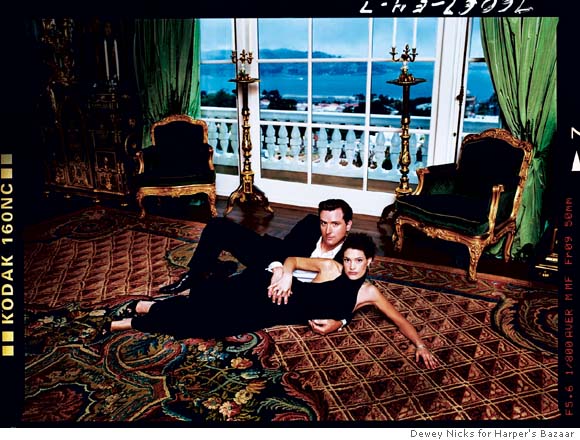
Remember Julie Lee? The one whose son, Andrew, was the Rapper formerly anaged by Supervisor Fiona Ma, "Drew Nasty." The one who used her real estate brokerage to funnel down payment checks to secretary of state Kevin Shelly's campaign accounts?
Well, she's president of the Housing Authority Commission...Bwaaa
This shit stinks six ways from sunday. But at least we have AnnMarie Conroy, she who turned on her own godfather to endorse scum like willie brown, running the office of emergency services.
Won't you feel fucking safe in the next earthquake!
Well, she's president of the Housing Authority Commission...Bwaaa
This shit stinks six ways from sunday. But at least we have AnnMarie Conroy, she who turned on her own godfather to endorse scum like willie brown, running the office of emergency services.
Won't you feel fucking safe in the next earthquake!
Published 2:15 am PDT Wednesday, August 25, 2004
Secretary of State Kevin Shelley on Tuesday acknowledged that he has "sometimes been demanding and hard driving" on his staff and that he has "frequently expressed regret to people" for his behavior.
In a written statement released by his office, Shelley for the first time addressed complaints from former and current employees that he is verbally abusive and that his behavior is undermining the morale and productivity of his office.
In interviews and written incident reports obtained by The Bee, employees alleged Shelley frequently flew into rages, directed condescending and profane words at them and created an unhealthy work environment.
Shelley's statement did not dispute those accounts. But the first-term Democrat denied allegations that he made crude gestures and sexually related comments to an employee last year, adding that his office can find no record of the complaint the former aide said she filed.
Shelley, who has refused interview requests, said in the statement "had such a record existed, an investigation and appropriate action would have resulted."
However, the former employee, Marisol Garcia, insisted she did file the "security/safety incident report" Nov. 10.
"All I would like to say is, I filed three claims per instruction of the secretary of state's human resources office. I just don't have any further comment," Garcia said Tuesday.
One of the incidents that Garcia alleges in the report - that Shelley made hand gestures mimicking masturbation - was again confirmed Tuesday by Linda Robertson, Shelley's executive assistant for three months last year. Robertson said she witnessed Shelley using the gesture on two occasions.
A former high-ranking official in Shelley's office who did not want to be identified said he also saw the secretary make the gesture. When read Shelley's statement Tuesday, the former top aide became irritated.
"Those acts did occur," he said. "And not only did they occur with Marisol, but they occurred on a regular basis."
"I am 100 percent sure and positive," the former official added, "that such a complaint was filed with the appropriate person within the secretary of state's office. And further, I can confirm that no policy was established to handle such a complaint. And further, the secretary took retaliatory action against the individual who filed the complaint."
Garcia was transferred from Shelley's San Francisco executive office to the business programs division at another San Francisco location in November. She is no longer a state employee.
Several ex-Shelley aides also said that while they could not confirm the specific complaints in Garcia's incident report, they knew Shelley had made comments or gestures along the lines of what Garcia described.
Among the other incidents Garcia alleged in the report was that Shelley asked about her sexual orientation and made references to her ex-husband's genitalia.
In his statement, Shelley said he has "always supported protections for women - and all employees - in the workplace and ... always believed that allegations of misbehavior by supervisors in the workplace must be taken seriously."
While he has apologized in the past, the secretary stated, "I have never engaged in behavior intended to humiliate or embarrass anyone. Nor would I ever condone that kind of behavior.
"Having acknowledged that I can be a tough boss, I wish to emphasize: I did not engage in the behaviors described," Shelley added, concluding that "I am legally constrained from discussing it in any further detail because it is a personnel matter."
Shelley's statement did not directly refer to other incident reports filed against him by Garcia and other former aides.
One of those reports, by Debbie O'Donoghue in October, said Shelley had become "antagonistic and aggressive" during a phone call with her last year.
"His irrational behavior escalated and he started to use profanity," wrote O'Donoghue, who worked in Shelley's press office. "After the conversation, I felt humiliated, embarrassed, upset, abused, demeaned and berated. I had done my job to the best of my ability and the secretary harassed me."
Doug Stone, the supervisor who signed O'Donoghue's complaint, said he forwarded it to the office's legal counsel. Stone, who recently was named the head of the state archives, said he doesn't know what happened after that or whether her complaint was investigated.
Shelley's office has declined to provide its copies of the complaints to The Bee, citing the confidentiality of personnel matters.
Carol Dahmen, Shelley's spokeswoman, said, "All complaints are investigated and actions are taken where appropriate," but she declined to say whether any specific complaints against the secretary of state were investigated or whether any action was taken as a result.
Shelley has a long history of difficulty controlling his temper, dating to his days as a member of the San Francisco Board of Supervisors a decade ago.
In 1998, while Assembly majority leader, Shelley fired a female worker, pursued her to an elevator on the third floor of the Capitol and blocked her three times from entering the elevator.
The incident, which was captured by security cameras, led then-Assembly Speaker Antonio Villaraigosa to speak to Shelley and, according to several sources, Shelley's participation in an anger-management course.
Shelley, in an interview with the San Francisco Chronicle at the time, was remorseful. "That's the kind of behavior that's clearly unacceptable," he said. "I have to take full responsibility for it."
------------------------------------------------------------------------
About the Writer
---------------------------
The Bee's Herbert A. Sample can be reached at (510) 382-1978 or hsample [at] sacbee.com
Secretary of State Kevin Shelley on Tuesday acknowledged that he has "sometimes been demanding and hard driving" on his staff and that he has "frequently expressed regret to people" for his behavior.
In a written statement released by his office, Shelley for the first time addressed complaints from former and current employees that he is verbally abusive and that his behavior is undermining the morale and productivity of his office.
In interviews and written incident reports obtained by The Bee, employees alleged Shelley frequently flew into rages, directed condescending and profane words at them and created an unhealthy work environment.
Shelley's statement did not dispute those accounts. But the first-term Democrat denied allegations that he made crude gestures and sexually related comments to an employee last year, adding that his office can find no record of the complaint the former aide said she filed.
Shelley, who has refused interview requests, said in the statement "had such a record existed, an investigation and appropriate action would have resulted."
However, the former employee, Marisol Garcia, insisted she did file the "security/safety incident report" Nov. 10.
"All I would like to say is, I filed three claims per instruction of the secretary of state's human resources office. I just don't have any further comment," Garcia said Tuesday.
One of the incidents that Garcia alleges in the report - that Shelley made hand gestures mimicking masturbation - was again confirmed Tuesday by Linda Robertson, Shelley's executive assistant for three months last year. Robertson said she witnessed Shelley using the gesture on two occasions.
A former high-ranking official in Shelley's office who did not want to be identified said he also saw the secretary make the gesture. When read Shelley's statement Tuesday, the former top aide became irritated.
"Those acts did occur," he said. "And not only did they occur with Marisol, but they occurred on a regular basis."
"I am 100 percent sure and positive," the former official added, "that such a complaint was filed with the appropriate person within the secretary of state's office. And further, I can confirm that no policy was established to handle such a complaint. And further, the secretary took retaliatory action against the individual who filed the complaint."
Garcia was transferred from Shelley's San Francisco executive office to the business programs division at another San Francisco location in November. She is no longer a state employee.
Several ex-Shelley aides also said that while they could not confirm the specific complaints in Garcia's incident report, they knew Shelley had made comments or gestures along the lines of what Garcia described.
Among the other incidents Garcia alleged in the report was that Shelley asked about her sexual orientation and made references to her ex-husband's genitalia.
In his statement, Shelley said he has "always supported protections for women - and all employees - in the workplace and ... always believed that allegations of misbehavior by supervisors in the workplace must be taken seriously."
While he has apologized in the past, the secretary stated, "I have never engaged in behavior intended to humiliate or embarrass anyone. Nor would I ever condone that kind of behavior.
"Having acknowledged that I can be a tough boss, I wish to emphasize: I did not engage in the behaviors described," Shelley added, concluding that "I am legally constrained from discussing it in any further detail because it is a personnel matter."
Shelley's statement did not directly refer to other incident reports filed against him by Garcia and other former aides.
One of those reports, by Debbie O'Donoghue in October, said Shelley had become "antagonistic and aggressive" during a phone call with her last year.
"His irrational behavior escalated and he started to use profanity," wrote O'Donoghue, who worked in Shelley's press office. "After the conversation, I felt humiliated, embarrassed, upset, abused, demeaned and berated. I had done my job to the best of my ability and the secretary harassed me."
Doug Stone, the supervisor who signed O'Donoghue's complaint, said he forwarded it to the office's legal counsel. Stone, who recently was named the head of the state archives, said he doesn't know what happened after that or whether her complaint was investigated.
Shelley's office has declined to provide its copies of the complaints to The Bee, citing the confidentiality of personnel matters.
Carol Dahmen, Shelley's spokeswoman, said, "All complaints are investigated and actions are taken where appropriate," but she declined to say whether any specific complaints against the secretary of state were investigated or whether any action was taken as a result.
Shelley has a long history of difficulty controlling his temper, dating to his days as a member of the San Francisco Board of Supervisors a decade ago.
In 1998, while Assembly majority leader, Shelley fired a female worker, pursued her to an elevator on the third floor of the Capitol and blocked her three times from entering the elevator.
The incident, which was captured by security cameras, led then-Assembly Speaker Antonio Villaraigosa to speak to Shelley and, according to several sources, Shelley's participation in an anger-management course.
Shelley, in an interview with the San Francisco Chronicle at the time, was remorseful. "That's the kind of behavior that's clearly unacceptable," he said. "I have to take full responsibility for it."
------------------------------------------------------------------------
About the Writer
---------------------------
The Bee's Herbert A. Sample can be reached at (510) 382-1978 or hsample [at] sacbee.com
For more information:
http://www.consultant need money?
Angie;I bear Uri Avory's love child!
A combative Secretary of State Kevin Shelley said Wednesday he was "shocked and mystified" by revelations that $205,000 in contributions to his 2002 campaign may have violated state or federal laws.
Shelley said he had no reason to be suspicious of the contributions -- even though he had never heard of the donors before -- because they were raised by his friend, Julie Lee, a San Francisco real estate broker and a leader in the city's Chinese American community.
"I didn't ask, because I trusted Julie Lee," Shelley said, flanked by his lawyer, campaign spokesman and top aides in an interview with reporters and editors at The Chronicle. "It is not uncommon for donors in the Asian American community to be successful with friends and associates to raise significant dollars."
The interview was Shelley's first with The Chronicle since the newspaper reported the suspect contributions Aug. 8. Five donors gave $25,000 contributions each to Shelley's campaign at about the same time they received payments of nearly identical amounts from a nonprofit group run by Lee that had received a $500,000 state grant. The grant, arranged by then-Assemblyman Shelley, was supposed to pay for development of a community center in the Sunset District, but the center was never built. Shortly after taking office, Shelley hired Lee's son, Andrew, as a communication outreach worker for the secretary of state's office.
Shelley has since returned the $125,000 to the state. In addition, he put another $80,000 in donations in escrow after The Chronicle found that they appeared to be linked to real estate deals involving Lee. In both cases, San Francisco homebuyers made major contributions to Shelley's campaign about the same time they bought homes from Lee. When contacted later, they denied making the contributions.
Shelley also has faced renewed allegations in recent days by former employees that he is an abusive boss with a short temper. The allegations appeared in stories in the Sacramento Bee.
"Except for the stories over the last couple of weeks about me being an - - hole, all the rest of it is bull -- ,'' Shelley said in an opening comment at the meeting with The Chronicle.
The FBI, the state Fair Political Practices Commission, the state attorney general and the state controller have launched investigations into Shelley's campaign contributions. It is illegal to use taxpayer funds for political campaigns and to hide the true source of a political contribution. Nonprofit organizations with tax-exempt status, like Lee's, also are barred from giving to political campaigns.
Cristina Arguedas, a lawyer who has been retained by Lee, declined to respond to Shelley's comments on Wednesday.
Shelley took umbrage at suggestions that he should have spotted potential problems with the donations earlier.
"Do you think I like being on the front page of this newspaper every day?" he asked. "Every day since this has first come to light, I have asked myself the question of what we could have done differently. And I don't know."
Shelley also said the Franchise Tax Board audited the campaign earlier this year and gave it a clean bill of health.
"I had no reason to believe that there was anything improper about any of these checks," Shelley said.
Shelley said he first learned of possible problems with one donation last October, when his office discovered that a $30,000 contribution from San Francisco resident Eliana Maldonado originated from a real estate deal with Julie Lee. When the secretary of state's office contacted Maldonado, she denied making a political contribution. In a signed statement dated Oct. 20, 2003, she said she had "made the checks out to the Realtor" and only realized later that "they donated part of that money to Kevin Shelley."
Shelley said he decided not to conduct his own investigation of the donation -- his office referred the matter to the state Fair Political Practices Commission as a possible money-laundering situation -- because he wanted to avoid any appearance of a conflict of interest.
"I didn't want to know," Shelley said. "It didn't seem appropriate in my capacity as secretary of state to find out."
Shelley said his office never heard back from the Fair Political Practices Commission, which has told The Chronicle that the donation is still under investigation.
Shelley acknowledged that he was aware of the largest of the suspect contributions to his campaign, $50,000 from Patrick K. Hsu, who identified himself on campaign reports as a retiree and had never donated to Shelley before.
He recalled being delighted about receiving the contribution and said a campaign fund-raiser contacted Hsu to process the donation. The campaign's law firm prepared paperwork on Hsu's behalf -- including a letter signed by Shelley. Still, Shelley said he did not know who on the campaign dealt with Hsu directly and could not recall how the check reached his campaign. He also said he did not discuss the donor or the amount with Lee.
"I never talked to Patrick Hsu," he said. "There was contact with Mr. Hsu and my campaign. He gave our office authorization" to file campaign finance reports.
Shelley also rejected any suggestion that his hiring of Andrew Lee was a reward for Julie Lee's fund-raising. "It's not who I am," Shelley said. "I am very proud to have conducted my public life in an ethical manner."
Starting in January 2002, Andrew Lee served first as a communications outreach worker and then as an international small business officer for $57, 756 per year. Andrew Lee asked for the job, Shelley said, and he was happy to oblige. "He was young and energetic, and I liked him," Shelley said.
Andrew Lee went on leave in April and is receiving workers' compensation. Colleagues say he told them he hurt his back moving things. Shelley said he did not know how the injury occurred.
Shelley also said he never talked about progress on the community center construction with Julie Lee, even though they were good friends. He said he hasn't talked to her for months and didn't realize the center was never built. Shelley said it never occurred to him to call Lee after questions surfaced about the contributions she helped raise.
"Why would I pick up the phone, when I've been informed of all kinds of potential nefarious dealings with donations?" he asked. "It doesn't seem appropriate to call Julie Lee."
Shelley said he had "no knowledge whatsoever of any improprieties that may have been engaged in."
While acknowledging that Lee handed contribution checks directly to him in face-to-face meetings on a couple of occasions, Shelley said he did not recall specifically which checks Lee handed to him. He said he did not discuss the donors with Lee -- even though the checks, from contributors who never donated to him before, were among the largest received by his campaign.
"Some, if not all, of the donations were associated with Julie Lee," he said. "And we knew Julie Lee. It wasn't a focus of whether we knew or did not know the donors, because we knew Julie Lee."
Shelley said he did not understand why $80,000 in donations was allegedly funneled through real estate transactions. With no limits on contributions, any donor could simply have written a check to the campaign.
"Why on earth would I want any part of any money laundering scheme when someone could write a check?" he said.
--------------------------------------------------------------------------------
CHART:
DONATED TO SHELLEY CAMPAIGN
$50,000
Sept. 30, 2001
Patrick Hsu donates to Shelley's campaign for secretary of state. The money was a down-payment for a house at 2447 25th Ave. in San Francisco, Hsu said, but Julie Lee told him to make he check out to Shelley. On Oct. 25, Lee and her husband Shing-Kit sold the house to Hsu.
.
$25,000
Dec. 28, 2001
Eric Zhu contributes to Shelley's campaign. Zhu, a real estate agent and former outreach worker for the San Francisco Neighborhood Resource Center, received two payments from the nonprofit, on Sept. 1 for $15,000 and on Dec. 1 for $12,000. Steve Chen* donates to Shelley's campaign. Chen was paid $25, 000 from the center on Dec. 1.
.
$25,000
March 5, 2002
Gemini Advisors donates to Shelley's election campaign. On Feb. 8, the center paid $26,000 to Gemini Advisors, a business incorporated by Jeffrey Chen*, former chief financial officer for the nonprofit.
.
$25,000
June 30, 2002
James Li donates to Shelley's campaign. On July 2, the center paid Li $60, 750. A San Francisco engineer, Li provided the estimate that the center submitted as an invoice to receive its state grant money.
.
$30,000
Sept. 27, 2002
Eliana Maldonado makes two contributions to Shelley's campaign totaling $30,000. That day, Maldonado purchased a property on Bacon Street from Yui Hei Chan for $600,000. And that same day, Chan, a construction worker, had purchased the home from Lee and her husband for $550,000.
.
$25,000
Nov. 1, 2002
Cabrillo Construction donates to Shelley's campaign. On Oct. 30, the center paid $30,000 to Cabrillo, a company led by Ruo Wu "Joseph" Chen*, who is the brother-in-law of engineer Li..
* The three Chens are not related.
--------------------------------------------------------------------------------
Kevin Shelley's responses
Secretary of State Kevin Shelley has been under fire since The Chronicle first raised questions about $205,000 in donations to his 2002 campaign, including $125,000 from donors who received portions of a state grant awarded to a nonprofit run by San Francisco's Julie Lee. Another $80,000 came from real estate deals involving Lee. In his first face-to-face interview with the paper on the topic, Shelley said:.
On the relationship with Julie Lee
"I put a lot of trust into Julie."She is a friend." (explaining why he did not question the origins of donations that Lee brought into his campaign).
On why he didn't know
"We knew in a number of instances that a number of contributions were related to Julie Lee. I didn't know the individuals, but I knew Julie Lee. But I knew nothing about any alleged scheme or connection, be it real estate, property. I knew nothing about that. I would never have any part of that." .
On the hiring of Andrew Lee
"He's got enormous enthusiasm. I thought he was very good with people. I thought he would do a good job with voter outreach. It was a relatively entry- level position."
E-mail the writers at cberthelsen [at] sfchronicle.com, vahua [at] sfchronicle.com and twallack [at] sfchronicle.com
Shelley said he had no reason to be suspicious of the contributions -- even though he had never heard of the donors before -- because they were raised by his friend, Julie Lee, a San Francisco real estate broker and a leader in the city's Chinese American community.
"I didn't ask, because I trusted Julie Lee," Shelley said, flanked by his lawyer, campaign spokesman and top aides in an interview with reporters and editors at The Chronicle. "It is not uncommon for donors in the Asian American community to be successful with friends and associates to raise significant dollars."
The interview was Shelley's first with The Chronicle since the newspaper reported the suspect contributions Aug. 8. Five donors gave $25,000 contributions each to Shelley's campaign at about the same time they received payments of nearly identical amounts from a nonprofit group run by Lee that had received a $500,000 state grant. The grant, arranged by then-Assemblyman Shelley, was supposed to pay for development of a community center in the Sunset District, but the center was never built. Shortly after taking office, Shelley hired Lee's son, Andrew, as a communication outreach worker for the secretary of state's office.
Shelley has since returned the $125,000 to the state. In addition, he put another $80,000 in donations in escrow after The Chronicle found that they appeared to be linked to real estate deals involving Lee. In both cases, San Francisco homebuyers made major contributions to Shelley's campaign about the same time they bought homes from Lee. When contacted later, they denied making the contributions.
Shelley also has faced renewed allegations in recent days by former employees that he is an abusive boss with a short temper. The allegations appeared in stories in the Sacramento Bee.
"Except for the stories over the last couple of weeks about me being an - - hole, all the rest of it is bull -- ,'' Shelley said in an opening comment at the meeting with The Chronicle.
The FBI, the state Fair Political Practices Commission, the state attorney general and the state controller have launched investigations into Shelley's campaign contributions. It is illegal to use taxpayer funds for political campaigns and to hide the true source of a political contribution. Nonprofit organizations with tax-exempt status, like Lee's, also are barred from giving to political campaigns.
Cristina Arguedas, a lawyer who has been retained by Lee, declined to respond to Shelley's comments on Wednesday.
Shelley took umbrage at suggestions that he should have spotted potential problems with the donations earlier.
"Do you think I like being on the front page of this newspaper every day?" he asked. "Every day since this has first come to light, I have asked myself the question of what we could have done differently. And I don't know."
Shelley also said the Franchise Tax Board audited the campaign earlier this year and gave it a clean bill of health.
"I had no reason to believe that there was anything improper about any of these checks," Shelley said.
Shelley said he first learned of possible problems with one donation last October, when his office discovered that a $30,000 contribution from San Francisco resident Eliana Maldonado originated from a real estate deal with Julie Lee. When the secretary of state's office contacted Maldonado, she denied making a political contribution. In a signed statement dated Oct. 20, 2003, she said she had "made the checks out to the Realtor" and only realized later that "they donated part of that money to Kevin Shelley."
Shelley said he decided not to conduct his own investigation of the donation -- his office referred the matter to the state Fair Political Practices Commission as a possible money-laundering situation -- because he wanted to avoid any appearance of a conflict of interest.
"I didn't want to know," Shelley said. "It didn't seem appropriate in my capacity as secretary of state to find out."
Shelley said his office never heard back from the Fair Political Practices Commission, which has told The Chronicle that the donation is still under investigation.
Shelley acknowledged that he was aware of the largest of the suspect contributions to his campaign, $50,000 from Patrick K. Hsu, who identified himself on campaign reports as a retiree and had never donated to Shelley before.
He recalled being delighted about receiving the contribution and said a campaign fund-raiser contacted Hsu to process the donation. The campaign's law firm prepared paperwork on Hsu's behalf -- including a letter signed by Shelley. Still, Shelley said he did not know who on the campaign dealt with Hsu directly and could not recall how the check reached his campaign. He also said he did not discuss the donor or the amount with Lee.
"I never talked to Patrick Hsu," he said. "There was contact with Mr. Hsu and my campaign. He gave our office authorization" to file campaign finance reports.
Shelley also rejected any suggestion that his hiring of Andrew Lee was a reward for Julie Lee's fund-raising. "It's not who I am," Shelley said. "I am very proud to have conducted my public life in an ethical manner."
Starting in January 2002, Andrew Lee served first as a communications outreach worker and then as an international small business officer for $57, 756 per year. Andrew Lee asked for the job, Shelley said, and he was happy to oblige. "He was young and energetic, and I liked him," Shelley said.
Andrew Lee went on leave in April and is receiving workers' compensation. Colleagues say he told them he hurt his back moving things. Shelley said he did not know how the injury occurred.
Shelley also said he never talked about progress on the community center construction with Julie Lee, even though they were good friends. He said he hasn't talked to her for months and didn't realize the center was never built. Shelley said it never occurred to him to call Lee after questions surfaced about the contributions she helped raise.
"Why would I pick up the phone, when I've been informed of all kinds of potential nefarious dealings with donations?" he asked. "It doesn't seem appropriate to call Julie Lee."
Shelley said he had "no knowledge whatsoever of any improprieties that may have been engaged in."
While acknowledging that Lee handed contribution checks directly to him in face-to-face meetings on a couple of occasions, Shelley said he did not recall specifically which checks Lee handed to him. He said he did not discuss the donors with Lee -- even though the checks, from contributors who never donated to him before, were among the largest received by his campaign.
"Some, if not all, of the donations were associated with Julie Lee," he said. "And we knew Julie Lee. It wasn't a focus of whether we knew or did not know the donors, because we knew Julie Lee."
Shelley said he did not understand why $80,000 in donations was allegedly funneled through real estate transactions. With no limits on contributions, any donor could simply have written a check to the campaign.
"Why on earth would I want any part of any money laundering scheme when someone could write a check?" he said.
--------------------------------------------------------------------------------
CHART:
DONATED TO SHELLEY CAMPAIGN
$50,000
Sept. 30, 2001
Patrick Hsu donates to Shelley's campaign for secretary of state. The money was a down-payment for a house at 2447 25th Ave. in San Francisco, Hsu said, but Julie Lee told him to make he check out to Shelley. On Oct. 25, Lee and her husband Shing-Kit sold the house to Hsu.
.
$25,000
Dec. 28, 2001
Eric Zhu contributes to Shelley's campaign. Zhu, a real estate agent and former outreach worker for the San Francisco Neighborhood Resource Center, received two payments from the nonprofit, on Sept. 1 for $15,000 and on Dec. 1 for $12,000. Steve Chen* donates to Shelley's campaign. Chen was paid $25, 000 from the center on Dec. 1.
.
$25,000
March 5, 2002
Gemini Advisors donates to Shelley's election campaign. On Feb. 8, the center paid $26,000 to Gemini Advisors, a business incorporated by Jeffrey Chen*, former chief financial officer for the nonprofit.
.
$25,000
June 30, 2002
James Li donates to Shelley's campaign. On July 2, the center paid Li $60, 750. A San Francisco engineer, Li provided the estimate that the center submitted as an invoice to receive its state grant money.
.
$30,000
Sept. 27, 2002
Eliana Maldonado makes two contributions to Shelley's campaign totaling $30,000. That day, Maldonado purchased a property on Bacon Street from Yui Hei Chan for $600,000. And that same day, Chan, a construction worker, had purchased the home from Lee and her husband for $550,000.
.
$25,000
Nov. 1, 2002
Cabrillo Construction donates to Shelley's campaign. On Oct. 30, the center paid $30,000 to Cabrillo, a company led by Ruo Wu "Joseph" Chen*, who is the brother-in-law of engineer Li..
* The three Chens are not related.
--------------------------------------------------------------------------------
Kevin Shelley's responses
Secretary of State Kevin Shelley has been under fire since The Chronicle first raised questions about $205,000 in donations to his 2002 campaign, including $125,000 from donors who received portions of a state grant awarded to a nonprofit run by San Francisco's Julie Lee. Another $80,000 came from real estate deals involving Lee. In his first face-to-face interview with the paper on the topic, Shelley said:.
On the relationship with Julie Lee
"I put a lot of trust into Julie."She is a friend." (explaining why he did not question the origins of donations that Lee brought into his campaign).
On why he didn't know
"We knew in a number of instances that a number of contributions were related to Julie Lee. I didn't know the individuals, but I knew Julie Lee. But I knew nothing about any alleged scheme or connection, be it real estate, property. I knew nothing about that. I would never have any part of that." .
On the hiring of Andrew Lee
"He's got enormous enthusiasm. I thought he was very good with people. I thought he would do a good job with voter outreach. It was a relatively entry- level position."
E-mail the writers at cberthelsen [at] sfchronicle.com, vahua [at] sfchronicle.com and twallack [at] sfchronicle.com
For more information:
http://Keep the Donations Rolling IN!
Tempers flare at housing meeting
Room cleared when Lee critics begin shouting.
By Jo Stanley | Staff Writer
Published on Friday, August 27, 2004
URL: http://www.examiner.com/article/index.cfm/i/082704n_housing
E-mail this story | Print this page
She ran away from reporters and hid behind closed doors, but Julie Lee, the embattled politico, could not silence critics at the Housing Authority Commission meeting Thursday evening.
Critics of Lee shut down the meeting, repeatedly shouting that her eviction of a disabled tenant means she should step down as president of the agency sworn to help The City's poorest and most vulnerable.
"Hey hey, ho ho, Julie Lee has got to go," shouted San Francisco Tenants Association President Ted Gullicksen through a bullhorn during the disruption, which lasted about 10 minutes. Lee, who had turned over the gavel to commission Vice President George Brown to avoid a confrontation, retreated with the other five commissioners to a back room recess until the protesters had left.
After the 10-minute break was over and the meeting room emptied, Lee made no mention of the ruckus or the controversy during the public session. She has also been beset by questions about political fund-raising activities, and investigations have been launched at the state, federal and local levels into alleged improprieties.
Thursday's demonstration sprang up around plans to take a Richmond District building Lee owns with her husband off the rental market under state Ellis Act provisions, which allow a property owner to evict any remaining tenants. Lee breezed past the gathering of a couple dozen advocates and refused to answer reporters' questions. She skipped the last Housing Authority meeting on Aug. 12.
Mayor Gavin Newsom, who was pegged in a San Francisco Chronicle report for using Lee real estate during his mayoral campaign without documentation of rent payments, said Thursday he was in no rush to judge anyone. But he said he was "exceedingly concerned" about the allegations against Lee, who was appointed to the Housing Authority by his predecessor Mayor Willie Brown. He also noted that he would be watching all commissioners' attendance at public meetings.
"Attendance is indicative of commitment," the mayor said.
Newsom also said he had confidence in Housing Authority Director Gregg Fortner despite the fact that his agency was just placed on a "troubled" list by the U.S. Housing and Urban Development Department because of its inadequate ratio of cash reserves to its debts. That federal designation, if not reversed, can lead to being shut out of possible bonuses and grants or a government takeover.
"We're going to get though this," Newsom said.
After the meeting adjourned, Fortner said he planned to appeal the "troubled" designation before a Sept. 12 deadline, and maintained that the agency's overall finances have brightened considerably in the last three years since he took over.
The Housing Authority is responsible for more than 6,000 public housing units. A $6 million budget shortfall has been cut to $3 million, Fortner said.
But Fortner could not explain how the biggest liabilities -- $10 million to $12 million owed for the settlement of lawsuits, including one from a fatal 1997 fire that killed five people -- would be resolved, since federal funds cannot be used for such payments and only $100,000 or so of the yearly budget comes from other sources.
"It would take a hundred years to pay it off," he said.
Room cleared when Lee critics begin shouting.
By Jo Stanley | Staff Writer
Published on Friday, August 27, 2004
URL: http://www.examiner.com/article/index.cfm/i/082704n_housing
E-mail this story | Print this page
She ran away from reporters and hid behind closed doors, but Julie Lee, the embattled politico, could not silence critics at the Housing Authority Commission meeting Thursday evening.
Critics of Lee shut down the meeting, repeatedly shouting that her eviction of a disabled tenant means she should step down as president of the agency sworn to help The City's poorest and most vulnerable.
"Hey hey, ho ho, Julie Lee has got to go," shouted San Francisco Tenants Association President Ted Gullicksen through a bullhorn during the disruption, which lasted about 10 minutes. Lee, who had turned over the gavel to commission Vice President George Brown to avoid a confrontation, retreated with the other five commissioners to a back room recess until the protesters had left.
After the 10-minute break was over and the meeting room emptied, Lee made no mention of the ruckus or the controversy during the public session. She has also been beset by questions about political fund-raising activities, and investigations have been launched at the state, federal and local levels into alleged improprieties.
Thursday's demonstration sprang up around plans to take a Richmond District building Lee owns with her husband off the rental market under state Ellis Act provisions, which allow a property owner to evict any remaining tenants. Lee breezed past the gathering of a couple dozen advocates and refused to answer reporters' questions. She skipped the last Housing Authority meeting on Aug. 12.
Mayor Gavin Newsom, who was pegged in a San Francisco Chronicle report for using Lee real estate during his mayoral campaign without documentation of rent payments, said Thursday he was in no rush to judge anyone. But he said he was "exceedingly concerned" about the allegations against Lee, who was appointed to the Housing Authority by his predecessor Mayor Willie Brown. He also noted that he would be watching all commissioners' attendance at public meetings.
"Attendance is indicative of commitment," the mayor said.
Newsom also said he had confidence in Housing Authority Director Gregg Fortner despite the fact that his agency was just placed on a "troubled" list by the U.S. Housing and Urban Development Department because of its inadequate ratio of cash reserves to its debts. That federal designation, if not reversed, can lead to being shut out of possible bonuses and grants or a government takeover.
"We're going to get though this," Newsom said.
After the meeting adjourned, Fortner said he planned to appeal the "troubled" designation before a Sept. 12 deadline, and maintained that the agency's overall finances have brightened considerably in the last three years since he took over.
The Housing Authority is responsible for more than 6,000 public housing units. A $6 million budget shortfall has been cut to $3 million, Fortner said.
But Fortner could not explain how the biggest liabilities -- $10 million to $12 million owed for the settlement of lawsuits, including one from a fatal 1997 fire that killed five people -- would be resolved, since federal funds cannot be used for such payments and only $100,000 or so of the yearly budget comes from other sources.
"It would take a hundred years to pay it off," he said.
For more information:
http://Newsome you're doing a good jo...
We are 100% volunteer and depend on your participation to sustain our efforts!
Donate

$95.00 donated
in the past month
Get Involved
If you'd like to help with maintaining or developing the website, contact us.
Publish
Publish your stories and upcoming events on Indybay.
Topics
More
Search Indybay's Archives
Advanced Search
►
▼
IMC Network