







 Publish to Newswire
 Add an Event
Think Twice Before Shopping At Berkeley Bowl: Glen Yasuda Uses Union Busters To Crush Vote
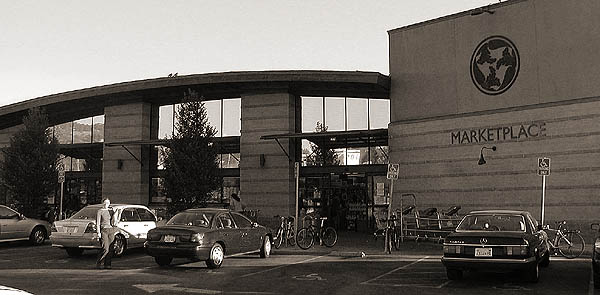
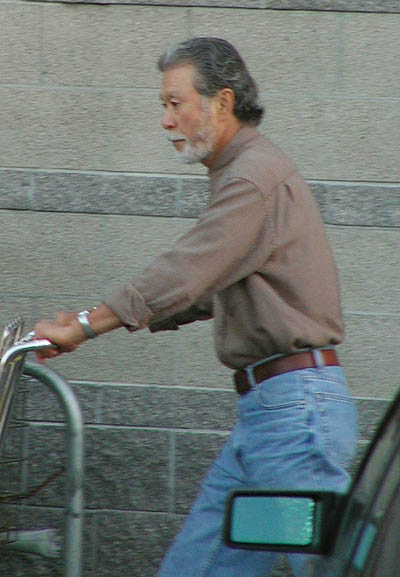
Berkeley residents may want to think twice about frequenting a business that preferred to fire union organizers and spend thousands on one of the nations worst union busting law firms (Jackson and Lewis) rather than provide benefits and deal with worker complaints.
----
Jackson Lewis: They (Literally) Wrote the Book On Union Busting
Jackson, Lewis, Schnitzler & Krupman, founded in 1958 and headquartered on Park Avenue in New York, is a national "labor and employment law firm" which represents management exclusively. With 20 offices in 11 states, more than 300 lawyers and annual revenues of nearly $40 million, they are formidable indeed.
One of the first outfits to refine the techniques of "coaching" management on preventing unionization, Jackson Lewis is also one of the few bold enough to write a book on the subject. But don't look for "Winning NLRB Elections: Avoiding Unionization Through Preventative Employee Relations Programs" on the shelves at Barnes & Noble. Jackson Lewis won't even sell the book, now in its fourth edition, to individuals, let alone to unions.
The 253-page volume, billed on its back cover as "the best and most comprehensive publications on how to establish and maintain a union-free workplace," actually doesn't reveal more than the broad outlines of what a capable consultant's "bag of tricks" contains. Still, it illustrates much of the basic posture union busters recommend when confronting unions.
http://www.corporatecampaign.org/bust1.htm
Everyone:
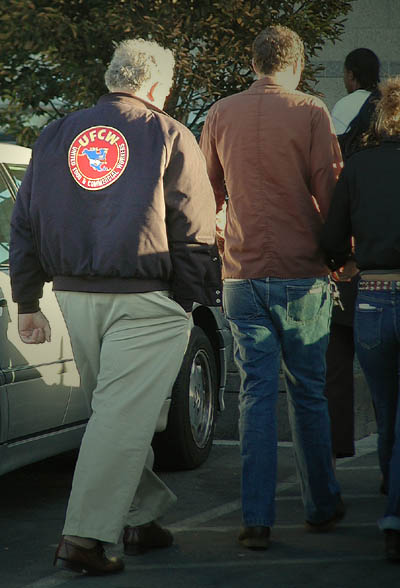
The loss at the Berkeley Bowl is yet another example of a failed AFL-CIO organizing drive that started as an IWW organizing drive.
In 1996, workers at Real Food Company in Noe Valley approached the IWW about organizing. Ultimately the majority of the workers chose to go with the UFCW. They lost their organizing drive.
In 1998, workers at the front counter of the Berkeley YMCA approached the IWW about organizing their bargaining unit, but a majority of workers in the bargaining unit chose to unionize with SEIU Local 1877 (which ultimately didn't back up the workers who were later fired for retaliatory action--the IWW and the workers themselves did all the work in retaining a settlement for unfair labor practice charges). That drive was lost.
This time, a handful of Berkeley Bowl Workers had been meeting with the IWW before a former IWW member (who had let their dues lapse) unilaterally approached the UFCW without even first talking to the workers that had been meeting with the IWW apparently because he believed that the IWW could not win the organizing drive for the Berkeley Bowl Workers.
Perhaps that assessment is true, but we'll never know now will we?
Sure the Bay Area IWW hasn't been 100% successful in its organizing attempts over the years either, but in the past three years, each organizing drive that has gone to an election has resulted in uncontested victories (Community Conservation Centers, East Bay Depot for Creative Reuse, and Stone Mountain & Daughter Fabrics).
Understand that I am not suggesting that the drive was lost because the workers would rather have chosen to organize with the IWW instead of the UFCW. I doubt that any of the workers in the shop would suggest that.
What I do want to ask is why is there somehow a perception that the IWW cannot deliver the goods, when it has demonstrated that despite its shoestring budget, it can, whereas that unions such as the UFCW can when sometimes it's clear they cannot.
I am also curious why radical activists think that a big, bureaucratic, mostly conservative, and fairly undemocratic union such as the UFCW would better server the interestes of workers than a democratic, rank & file controlled union, such as the IWW?
Is it that the UFCW has money and the IWW does not? Is it because the UFCW has connections that the community thinks the IWW lacks? Is it because certain activists who are "cool" don't think the IWW is "cool"? Is it because they don't know the IWW exists? Is it because they think the IWW isn't serious, committed to winning, or is somehow a historical relic? What's the deal everyone?
I am curious to also discuss the organizing strategy of the UFCW. Was it the best strategy that could have been used? Was it the best set of tactics that could have been employed? For example, is a 15 minute walkout in protest of a fired organizer really anything more than a symbolic act? Wouldn't a longer walkout have been more effective, hitting the bosses at the Bowl in their bank accounts?
Again, I'm not saying that I have all the answers, but I really think we need to discuss this within the activist community and assess strategy and be self critical.
And yes, I am somewhat bitter. I'm tired of the IWW being dismissed as "an historical society" or a "Joe Hill club", when our record shows that we're much more than that.
There is one example of an organizing drive where the Bay Area IWW actually suggested that the workers organize with an AFL-CIO union where that suggestion succeeded, and that was at the Lusty Lady (which organized with SEIU 790 in 1996, and it should be pointed out that in that case, SEIU let the workers pretty much run their own campaign, and provided resources when the workers asked for them). The original organizers at the Lusty Lady never forgot the IWW (some of them even later joined).
I raise this last example only to point out that the IWW isn't in this for its own glory. The IWW believes in working class solidarity and rspects the righst of workers to democratically determine their best course.
For now we must move on and support those workers at the Bowl who organized and chose to vote "yes" for the union, because just because an election was lost does not mean that the drive has been lost. ALthough the workers must now wait a year efore they can hold another election, they can still organize for better working conditions. Management knows this and will probably try to drive the union supporters out. The IWW is ready and able to support them in their fight. I sincerely hope that the UFCW is willing to do the same and help them win one year from now.
An Injury to One is an Injury to All!
"Which stores in Berkeley are more labor friendly? I've heard that Whole Foods worked to stop their employees from unionizing a few years back."?
Yes they did. in 1995.
Is Safeway better? Where should one go to buy organic foods?
Safeway is union and they do have a limited organic section. If you want to spend the extra money, Andronicos is also union and probably has a bigger organic section (both are UFCW)
This rasies an important topic of discussion. The sad fact is that organic food groceries have been getting away with busting unions and thwarting union drives because a lot of so-called radical activists insist on organic food (a noble goal) but don't give a fuck about workers rights.
One supposed activist and former neighbor of mine who shall remain nameless evasively rationalized her shopping at Whole Foods because of its organic food section (despit e the fact that Whole Foods once told Communities for A Better Enviornment to "go fuck themselves" because they had aligned themselves with the UFW in their 5-cents for fairness campaign in 1999, or that they're part of a conglommerate whose parent company is a defense contractor, or despite the fact that Whole Foods is like the Microsoft of organic food stores (they've driven hundreds of independents out of business).
What bothers me about this is the fcat that we don't live in a perfect world, but to me it would be far easier to create a near perfect world if people who want organic foods still sacrfice that choice in order to support unionizing workers, rather than vice cersa, because there is no evidence whatsoever that eating organic foods by itself will result in a more democratic world (corporate farmers can still grow organic foods). On the other hand, if workers have more power and day to day control over their workplace, it would be far easier to demand using organic methods to grow foods and reign in corporations. If activists cannot see that, I have to question their commitment and the depth of their analysis.
That's not to belittle the concerns of those who make organic foods their primary issue of concern. I think that challenging corporate agrobusiness, petrochemical industries, and bioengineered Frankenfoods is of vital concern, but you cannot win that fight simply by making consumer choices at the store (99% of all decisions get made long before food makes it to market). Workers are in a position to make choices and affect decisions much earlier in the chain of decisions.
An Injury to One is an Injury to All!
Well, this means that I will be shopping more often at farmers markets - and at Rainbow in san francisco -
All these liberal dribbles in berekely who wanna shop for organics with little concern about workers' rights are gonna find that this lack of concern is going to bite them hard in their fancy little behinds - if they dont' shape up soon... indeed an injury to one is an injury to all...
Years ago, the employees of a Berkeley health care company I worked for voted to unionize. The vote was successful, but was overturned by a Reagon-appointed Federal judge on grounds that the Tagalog translation of the ballot was unclear to the judge. (It was however clear to the four, English speaking-reading--required for the job--Filppino employees, who had been active proponants of the union.) In the interim before the second vote, the company, at the behest of their LA-based union-busting lawyers, promoted all organizers into union-exempt, supervisory positions, gave a raise and made other promises, called employees one by one into Human Resources for a "one-on-one" of thinly disguised threats, and started an "employee club." The revote failed. Because of the legal costs and expensive, new computer system (to raise morale among managers), the company went under and was bought out by its rival. All non-union employees were summarily fired and subsequently rehired by the new company, at lower wages. Union employees (the lab techs) maintained their contract and wages. I remember both unionization campaigns as pretty milque-toast re the organizers--I hardly remember a second campaign.
BTW, your book is readily available on amazon.com, half.com, and through the publisher: http://www.jacksonlewis.com/publications/guidebooks/NLRB/
The only thing these unions are after are power and money, they don't give a fuck about the people's live they're messing with.
Whole foods has to be the worst deal for grocery stores. the produce is really expensive and they're very antiunion.
There are quite a lot of small family owned (or they would appear to be) stores around, which provide a great alternative.
Does anyone know anything about Grocery Outlet? You can get great stuff there that looks like it would be thrown out otherwise.
Anyway, making $14,000/year, cost is a concern, and that is why I like the lowest priced Berkeley bowl vegetables. However, between 16th and 20th street in the Mission, there are a number of very decently priced grocery stores that look like they are owned by the people working there. Chinatown is the same - both in Oakland, Fruitvale and SF. Vik's in Berkeley down the street from Grocery Outlet has great meals plus a grocery store. On San Pablo in Berkeley, there are several middle eastern and Indian and mexican stores that sell food without oppressed workers as far as I can tell by looking.
The idiot grocery clerks' union is still on strike even after a week of devastating fires in Southern California, depriving people of plentiful food because of secondary boycotts. The MTA is on strike, keeping low income working people from getting to their jobs. The unions are about power, not people; about profit from your compulsory union dues. REJECT them. They do NOT have your interest at heart.
I doubt that has ever happened, the owner of Berkeley Bowl probably only negotiates with workers through his lawyers. If you confront your boss as an individual, they have all the power, but if you do it as a group (as a union) you can actually achieve things. Minimum wage laws, 40 hour work week laws, health and safety laws and many other aspects of work everyone now takes for granted came when workers acted in unity. When workers work together through collective action even the business itself can do better; having formal rules for promotions and wages can make it so workers are rewarded for their work rather than for merely sucking up to their superiors.
I have been debating whether or not to respond to the attack on me. I am not a "supposed" activist. I have worked with a bunch of groups and on a bunch of causes over the years. I try to live my politics as much as I can- I try to live in cooperative housing whenever I can find it, I compost my food waste and lots of other people's food waste, I used to get jars for my bulk food out of the abovementioned former neighbor's recycling, I ride my bike or take public transit just about everywhere, and I am always engaged in dialogue with a variety of people about what we can do to change the horrible state of this world. Including calling people on their shit. But here I am not addressing my personal or political issues with Steve.
I try to not shop at UnSafeway for a variety of reasons. Starbucks bought out or competed out a lot of small coffeeshops all over the country, to the point where when you think of coffee, you think of Starbucks. Similarly, when you think of grocery shopping, you think of the ubiquitous Safeway. I don't like their food- it's not as fresh, it's not as good quality, and they don't have a lot of items that I want.
For my health and the environment, I eat as much organic food as possible. I shop at Whole Foods because they have good organic food, they are cheaper than Andronico's, something at Andronico's makes me sick whenever I go in their stores, and I often can't afford the BART, the time, or the energy to get to Rainbow Grocery (which is an excellent worker-owned store that noone has been mentioning). There are a lot of organic items that WF has that BB does not. That is a fact. BB also carries a lot of toxic products that make me and other people who have environmental illness have a hard time being in the store. Whole Foods is open two hours later than Berkeley Bowl, except for on Sunday, when they are open four hours later.
In accordance with my politics, I would like to see my neighborhood grocery stores be union shops, if they can't become worker-owned. I think it's a bit short-sighted to try to get people into a big corporate union and think that everything will be all better.
I saw the UFCW make a lot of mistakes in their organizing campaign. (For example, we can't organize a boycott because 1. it's not the correct tactic if you don't have the workers' support (if they wanted the union, one would think they would have voted yes) and 2. it would be ineffective because I think that more and different kinds of outreach needed to be done to the "community." Whatever community means.
But whatever. What's done is done. It sucks that Chuck and Arturo lost their jobs, and the people at the store didn't trust the organizers, their fellow workers, or the union enough to think that things would be better if there was a union. And that some people are so frustrated that the workers chose to vote no that they are blaming it on other people.
It's difficult to end here...and who knows were things will go...but the struggle at Berkeley Bowl is not over and the UFCW is not quite done either. So don't go writing a eulogy quite yet. If you can't shop at Berkeley Bowl for a while, that's understandable. But, just know that none of the workers have urged a community boycott, although one of our organizers seems to be essentially calling for one. Who can blame him? He worked at the Whole Foods in Madison before helping us out, and he is a little tired of union busting companies and doesn't think we should support him. As for myself, I am still not allowed in Berkeley Bowl anyway, so even if i did want to give my money to Glenn and Diane Yasuda to support their union busting and plush lifestyle in the hills of Orinda...I can't so....
My parting words...try the farmers market if ya can and steer clear of glossy public relations ploys like Whole Foods and Berkeley Bowl cause they don't seem to give a shit about the workers...But that is just my opinion, since I wouldn't be able to hand money to them too easily
former dues paying member to the IWW and hopefully a union member someday - upton
<p><i>Ok, in SteveO's 2 posts in this thread he has attacked two people: one was the lapsed IWW member (by the way, most members don't pay their dues), and the other is me.</i></p>
<p>I have attacked NOBODY. I have not named any names (unlike my former neighbor); what I have done is questioned the commitment of her and other activists and maybe suggested that their values aren't as high and mighty as they think. By the way, how the hell does she know how many IWW members pay their dues? For the record, all of the IWW embers we have in organized shops in the Bay Area pay their dues gladly. Folks should really not spout off about things they know nothing about.</p>
<p>Former neighbor then writes: <i>I have been debating whether or not to respond to the attack on me. I am not a "supposed" activist. I have worked with a bunch of groups and on a bunch of causes over the years. I try to live my politics as much as I can- I try to live in cooperative housing whenever I can find it, I compost my food waste and lots of other people's food waste, I used to get jars for my bulk food out of the abovementioned former neighbor's recycling, I ride my bike or take public transit just about everywhere, and I am always engaged in dialogue with a variety of people about what we can do to change the horrible state of this world. Including calling people on their shit. But here I am not addressing my personal or political issues with Steve.</i></p>
<p>Actually this is EXACTLY what is being discussed (and I have no problem with that). I think my former neighbor's commitment to these goals is laudible. I was out of line to call her a "supposed" activist and I publically apologize for that. (That comment was based on bitterness from a personal dispute which I will not mention here, because it is water under the bridge and not releveant to this discussion.)</p>
<p>I do need to point out, however, that all of the things mentioned here are <u>lifestyle choices</u>. They are relatively easy decisions to make and they are all done on an individual level, without making many personal sacrifices. In the long run their effect is negligable without a greater organizational effrort behind them, e.g. encouraging the majority of the people of the world to make them. I question the feasibility of doing that as opposed to promoting labor organizing first.</p>
<p>Again my former neighbor writes: <i>I try to not shop at UnSafeway for a variety of reasons. Starbucks bought out or competed out a lot of small coffeeshops all over the country, to the point where when you think of coffee, you think of Starbucks. Similarly, when you think of grocery shopping, you think of the ubiquitous Safeway. I don't like their food- it's not as fresh, it's not as good quality, and they don't have a lot of items that I want.</i></p>
<p>Now wait just a damn minute here, Safeway is like Starbucks, but Whole Foods isn't? HOW IN THE HELL DO YOU FIGURE THAT?!? I just pointed out how Whole Foods treats its workers, how their parent company is a defense contractor, how they put small independents out of business just like Starbucks.</p>
<p>My former neighbor then lists a litany of reasons why she shops at Whole Foods, and if you look carefully at them they all happen to be to meet her personal convenience! They don't sound like activist reasons at all. To be an activist is to be willing to make <u> personal sacrifices to support what we believe in</u>. This is why I question her commitment.</p>
<p>My neighbor says;</i> In accordance with my politics, I would like to see my neighborhood grocery stores be union shops, if they can't become worker-owned. I think it's a bit short-sighted to try to get people into a big corporate union and think that everything will be all better.</i></p>
<p>What makes you think that's what I suggested we do? I am arguing in favor of organizing workers into one big DEMOCRATIC UNION (the IWW), not a bunch of big COPORATE UNIONS (like the UFCW). My former neighbor misses the point here.</p>
<p>My former neighbor concludes: <i>I saw the UFCW make a lot of mistakes in their organizing campaign. (For example, we can't organize a boycott because 1. it's not the correct tactic if you don't have the workers' support (if they wanted the union, one would think they would have voted yes) and 2. it would be ineffective because I think that more and different kinds of outreach needed to be done to the "community." Whatever community means.</i>
<p>I mostly agree with this assessment (although my former neighbor is extremely naive if she attributes the majority of "no" votes to a simple lack of support for the union; she ignores the historical and political contexts in which we currently live, the sheer amount of intimidation that management and their union busting lawyers used to withstand unionization, and the differences between an ideal union and the UFCW), and this is precisely why I rasied this issue.</p>
<P>I want to conclude by expressing another frustration. The current left / radical / anarchist scene, including, especially my former neighbor in this case, have gotten into the bad habit of diffusing criticism by responding with the shriek of "personal attack!" when in reality what I am offering is <u>constructive criticism</u>. If you are going to be a dedicated activist, you have to be willing to subject yourself to accountability to others, discussion, and debate. I'm sure many of the things that I do myself are not 100% perfect either, and my excuses may not be good ones, but that's why we have debates like this: to learn. If we shrink from personal criticsm, we're not a movement, we're a cult.</p>
I appreciate "Upton's" candor about his involvement in the campaign, and he lists what hebelieves are honest reasons to choose the UFCW over the IWW, but he is not being completely honest about what happened.
First of all, the IWW is perfectly capable of organizing Spanish Speaking workers, and the proof is in the fact that at least two of our organized Bay Area shops are majority Spanish speaking and have been so for a cumalitive total of almost twenty years.
As for the chain of events which lead to the choosing of the UFCW over the IWW, "Upton" says: "In fact, the people who were originally meeting with the wobblies in Berkeley had already fallen off before I came around and started pushing people to take the union talk to another level. When I contacted the UFCW I was weary at first, but in hindsight there is not that much that could be done differently.."
That's not entirely accurate. "Upton" talked to the UFCW unilaterally, WITHOUT first talking to the workers in the shop who were interested in the IWW, and WITHOUT first contacting the IWW! I have been over this with him several times. What he did is essentially raiding, something that no union should ever tolerate. If he had come to us FIRST and the workers in the shop and expressed his concerns about the IWW, and if the workers in ths shop had democratically decided to choose the UFCW over the IWW, that would have been one thing, but that's not what happened.
Throughout the campaign there were workers who had approached the IWW who had expressed some frustrations with "Upton" because of that and other strategic blunders. Is it entirely possible that the campaign was botched very early on and the results were a failed drive? Is it possible that some of the workers who genuinely wanted a union were confused or demoralized because the "organizers" were not 100% accountable to the rank & file? I suppose we'll never know, because if people like me raise that question we're just engaging in "personal attacks".
Once again, I am bitter that the IWW isn't getting the respect it deserves. There is no way of knowing whether or not the IWW would have done any better; as an IWW organizer I am not aying we would have. But it is not fair to dismiss the IWW without giving it a fair test.
And furthermore "Upton" is refusing to examine his own strategic mistakes in this campaign. There are others which I will not mention here.
all of the evidence.Safeway's expansion in existing urban areas has more or less reached a point of saturation long ago (their only new expansion occurrs in new suburban tracts). Many small, independently owned grocery stores coexist with Safeway supermarkets in their neighborhood, and almost all Safeways are union.
Wholefoods, on the other hand, has been expanding very rapidly in the past decade. It has driven many small independent organic markets and general purpose independent grocery stores out of business. Wholefoods is non union, and boasts about being "union free". They have have publicly rejected any cooperation with Communities for a Better Environment on reducing the use of Methyl Bromide in strawberries, because CBE is aligned with the UFW.
Which of these two chains is REALLY more like Starbucks? You tell me.
(By the way, this is not an endorsement for Safeway. They are no doubt guilty of many of the corporate evils that Whole Foods is also guilty of (except that Safeway is union and most Whole Foods are not--with a few exceptions, though NONE currently in the Bay Area).
Guilt tripping people sometimes works and sometimes doesnt. The unoffical boycott by leftists of Starbucks has had no real effect (Berkeley has more Starbucks than any other city its size that I have visited) One has to ask oneself the point of a boycott; is it to help the workers, promote unionization even if it may hurt workers in the short term, or is it just a matter of being selfrightous (not wanting to feel guilty even if there is no real effect). If you want to make a point about Berkeley Bowl's policies towards unions, put up signs around town telling people not to shop there and have people stand near the entraceways with signs and you could shut the place down. if you want to help the employees unionize down the road, keep shopping there but talk to workers and encourage them to unionize and express your disappointment about their decision not to unionize (I think a short term boycott will make a point but a long term boycott culd be counterproductive since it will basically just take away all prounion people from the store probably hurting long term unionization prospects). If you want to feel selfrighteous, have little effect on unionization efforts and be able to get jabs in at other activists, then just not shopping there and condemning other activists who do is your best option.
I am pretty sick of activists criticizing other activists for shopping at this or that store outside of actual boycott campaigns. If Whole Foods has antiunion policies shouldnt people go there and talk to workers and/or get jobs there and start organizing? If a few dozen anarchists or communists boycott their store do you really think that has an effect? Likewise If one's issue with Starbucks is labor related one should go there and try to organize workers. If one's issue with Starbucks is homogenization of culture perhaps an offical boycott of specific stores could have an effect (since the unofficial boycott seems to not have any noticable effect). Activists seem to have lost sight of the effects of their actions and only really care about the abstract morality of them. You may hate rich liberals who shop at bougie stores that sell organic products but if you go around saying that you wont be able to influence the very people who need to be part of a boycott (effective boycotts of middle class oriented stores have to include the middle class).
There is a lot of negativism on the radical left and it has very few productive effects. Activist A hates activist B since they shop at a bougie store. Activist B hates activist A since they shop at a large corporate chain. Activist C hates actists A and B since they buy products that are produced ina way that hurts workers or the environment. Activist D hates activists A B and C since their analysis of boycotts isnt based off of the correct communist or anarchist analysis.
What one gets out of all this hatred is a small activist community that few people want to join and fewer want to work with. Its ok for people to be socially councious in their consumption habits and encourage others to do the same, but things can easilly start to look like any other exclusive social scene ("that *** is so two months ago, didnt you know everyone these days has to buy their *** at ***")
Most people who grew up poor dont sit around worrying that someone might think they have money.
While the average income of those who shop at Walmart, Mc Donalds and Starbucks may be bellow the anarchist average, most people do so for economic reasons not political ones (and after payday most normal people may even splurge at stores activists would regard as bougie).
There are always hard choices for people to make in a bourgeois (capitalist) society. I have shopped in Berkeley Bowl (my neighborhood store), Safeway, Canned Foods, Whole Foods, Andronicos at the Farmers Market, the Flea Market, and small stores. In the past i have scavenged, dumpstered, stolen, and eaten food from food banks and Food Not Bombs. None of these is right or wrong. Each has its good points. Each has its consequences. Moralizing about this will get us nowhere. We need a society where people don't exploit and stigmatize people. Until we get there, we will always make hard choices. And for those people who say we should ALWAYS shop UNION,
show me that everything you wear, use and eat is union-made from beginning to end, and i'll take your list and start doing it.
Organized boycotts are different. I like grapes, but during the UFCW-ORGANIZED grape boycotts, i and millions of other people did not eat any non-union grapes. And they won.
Now for one of the other alternatives that seems to be beginning to be talked about in conjunction with the Berkeley Bowl loss. People are talking about a worker-RUN collective store in Berkeley or North Oakland. (Like Rainbow, but with hopefully lower prices.) Right now, this is talk, and that's all i'm doing by throwing the idea up here, but i think it's a good one. And people should consider the perameters of doing it. It should be noted as i did above, that this will not be the end-all of making the world or even Berkeley a better place, but it might help a little.
One direct question to internal exile: What defense work is Whole Foods related to?
Upton Wrote: "It might be easier to think that we loss at Berkeley Bowl because of the union, but the bottom line is that the workers made the decisions."
I think we all see these kinds of quotes about workers making bottom line decisions to explain union losses all the time. If we really think that workers are making decisions to disempower themselves because the don't want power or that the union really isn't the way to achieve it then what the hell are we doing? I understand that accountability questions are hard and that the answers to failure on the part of organizations and organizers are uncomfortable and that we might have to admit that we don't know how we failed, but that working people either don't want power or simply made bad decisions is just not adaquate. These answers are wrong and they disempower us. They represent a form of escape of our central mission.
It is just point blank obvious that we cannot and do not want to control people's strategic decisions, but we are working to build a union that people want - when working people don't want it, then we have either lost because we have been beaten or somehow failed and the only question that remains is how do we do better.
For the One Big Union, Kenneth
I have to say, for the same reasons Steve O. laid out, I was a bit mad and really disapointed that you took the campaign to the UFCW. WTF?? We would have respected this if the workers made the call that this was what they wanted, but it didn't go down like that.
As far as the campaign goes (I might be off on this), but I think you/UFCW rushed into things. The folks who had been meeting with the IWW for many months prior to UFCW coming onto the scene were having trouble taking their efforts to the next step and bringing in folks from the different social groupings (the store is divided up by race, department and other things). Sometimes folks are just not ready and you have to give them time. This brings up a major difference between the IWW organizing model and AFL-CIO/UFCW's, is that rather than rushing in getting cards signed and moving right towards an election, we believe it is more strategic to take your time, build up a base, win small victories and act union on the job long before you move for recognition (either with the NLRB or outside of it). That's why one of the major focus's of the IWW is our organizer training program that we give to members and groups of workers who want to organize. Instead of relying on the 'organizer superstar', we want to teach everyday folks on the job organizing skills and push them to be leaders on the job. People call this 'minority unionism' or 'direct unionism,' read about it on our webpage under organizing discusions- http://www.iww.org
Also, I think the campaign followed a standard UFCW model of inside the store focusing on card signing and outside the store putting on publicity oriented rallies. While these tactics can be useful in certain instances, all the time I see them used in a totally formula type way, without a lot of strategic thininking. I'm just glad UFCW didn't use the worst 'typical UFCW tactic' of calling a boycott and hiring paid picketers to stand in front of the store. I worked on a campaign like this for UFCW in San Jose where they have been picketing for 2 years at Mi Pueblo. They did this at Whole Food in Berk too. It just goes no where.
But very similar to the Mi Pueblo campaign I worked on for UFCW, as many of their campaigns, and I think the Bowl, is that the focus is narrowly on card signing and building towards the election. Then as soon as management busts out their anti-union campaign, everything falls apart. And it's always because there was no sound foundation to begin with. This was my gut feeling about the situation at the Bowl.
Now the whole UFCW vs. IWW topic: One thing that I really wanted to publicly point out as bunk is the arguement that UFCW has resources to win and IWW doesn't. First off, resources can help, but don't deciede winning and losing (American revolution, Vietnam War, etc all the way back to David and Goliath). I have seen the most broke ass organizations and underfunded campaigns do the most amazing things and win. Not by magic, but because they are real, and the people in the organizing really feel it and believe in what they are doing because they own the organzing and call the shots. This is something that can't be bought. And unions like the UFCW even if they could be convinced to use their resources for actual organizing, they won't even know how to do it. Their whole plan and approach is whack.
Secondly, the IWW does have the resources and a track record. In Berkeley we have two spanish speaking majority shops with good contracts and a spanish speaking organizer. We had a stack of research on the owners and the local branch has a strike fund and an organizing fund too. And when the Bowl campaign was raised to the IWW national leadership, they were willing to hire a staff person specificly for the Bowl. If we needed more money, we would have raised it. If we needed a Chinese, Tagalog or Farsi translation, we would go out and find someone to do it. This is our approach, we don't have grips of money to throw at campaigns, but if the potential is there we will do everything we can, put our heads together and do our best. I'm not saying IWW (or any union) positivly would have won at the Bowl, but that we are honest, democratic, dedicated and we would give them a hell of a fight.
Further there is the big question of even if UFCW was able to get a contract, what would that really mean? Do they even have the capacity to fight for a decent workplace? UFCW has a long record of negotiating contracts that don't even keep up with the standard of living. They are totally undemocratic, the national leadership has to approve any workplace action before it happens (I'd give the link to the constitution so folks could read it, but UFCW sued the member who put it up on the internet). Most members only know UFCW as something they pay dues to, cause they've never seen anything else.
But honestly I think the detractors of the IWW, who may have swayed you to go with UFCW, really are motivated by an ideological axe to grind. They have a different approach to organizing, they want to reform the AFL-CIO and the existing unions- that's what their thinking comes down to. They are entitled to think that, but everything in my experience and heart tells this will never happen. That's why we need unions and organizations that will create alternatives (the IWW being one of them). These reformer folks are hanging onto a sinking boat and want to criticize us for saying, 'let's make our own boat and take it in a different direction.'
I'd like to hear folks thoughts.
peace,
Adam Welch
IWW member (in personal capacity)
also a former UFCW member, shop steward and paid organizer
PS- Steve O. and Former Nieghboor... I know both of you and I also know that you tend to get on each others bad sides, but please chill on the hating. Honestly, as another poster said- we live in capitalism and it's fucked up, so whatever we buy is gonna be fucked up. I used to work at safeway and I know a few of the checkers over at whole foods and trader joes made more money cuz UFCW had such a crappy contract. So what should you do?? I'm a always pro-union, but I admit it, I eat McDs fries and buy socks at Kmart when I'm broke-ass. I think they are whack corporations and try to avoid them, but I also have to try to avoid being naked and starving.
If the UFCW had a contract at the Bowl the 15 minute walkout that happened would not have been allowed. The UFCW's policy is basiclly to not allow any form of direct action while they have a contract, they even give up their 1st amendment right to flyer in front of a store (which supreme court said you can't give up in contract negotiation). Their belief is to simply limit themselves to filing paper grievences. Here's a section from their Santa Clara Master Contract that is standard for most UFCW contracts:
Section 17 Strike or Lockout
"17.1 During the life of the Agreeement, the Union agrees not to engage in any stoppage of work. Futhermore, the Union and its representatives, including store representatives, agree to not to boycott, handbill publicly disparage or engage in any adverse economic action against the Employer's store covered by this Agreement. ..."
There you go. And if folks don't believe that this will wind up in the Bowl's contract, should they ever have gotten one, read the UFCW International Constitution, page 16, Article 22, Collective Bargaining Contracts (too long to reprint here), that requires all proposed contracts be submitted for approved by the International President (a guy who make well over $200,000 year) before the members even vote on it.
I hope this shows why labor organizers like myself have such a passion and see such an urgent need to create alternative labor unions like the IWW. Muah!!
We could have conversation after conversation on line..
Folks can say what they want about myself or try and talk shit on the UFCW for one thing or another, but the bottom line is unless you were involved through the process of this stuff, unless you came to meetings or came to help out, or even came and suggested things to berkeley bowl workers...Well i just don't think that there is much to say...Union efforts like this need a lot more effort and energy from various sectors of the community, the problem becomes when everyone starts talking shit and doesn't help out in one way or another. The problem is somewhere in the divisions between our organizations and our people. The problem is that we can't have One Big Union with all the antaganisms going on, and we can't achieve much as long as we rely upon the current laws or ways of organizing. I agree with most of the wobb's more often than not, but i also agree with tim hamann and various other ufcw & afl-cio folks....If we can find some higher ground to go to where we could inflict a little "pain and agony" on the bosses, as tim would say, and a little more of the old time feeling that still comes out of some wobblies and used to come out of a lot of the tendencies in the afl-CIO...well then we might be getting things done
maybe i am a reformist as adam says though, or maybe i should be put on the IWW traitor list...I don't care so much as I would like to figure out how to get folks taking a stand and fighting for their rights, and at least our efforts were in that direction. Even if they weren't perfect or able to withstand Berkeley Bowl's anti-union campaign
i don't know if that helps...but i will say i don't hate the wobb's or discount them entirely...and i don't hate or discount the UFCW entirely...i just know that the struggle continues and we should be able to figure out something better soon...one way or another
solidarity forever - upton
The radio ads, which were to debut Friday, ask Sacramento and San Francisco Bay area residents to boycott Safeway Inc., United Food and Commercial Workers spokeswoman Ellen Anreder said.
http://www.kron.com/Global/story.asp?S=1516662
"What I do want to ask is why is there somehow a perception that the IWW cannot deliver the goods, when it has demonstrated that despite its shoestring budget, it can, whereas that unions such as the UFCW can when sometimes it's clear they cannot."
This perception is directly related to the IWW's politics. When someone sees the preamble to your organization it reads like a typical Marxist tract and your membership is largely middle-class and white. You think providing healthcare and other benefits for workers is "bourgouise" and are generally perceived as being very out of touch by the average Joe. Do I need to continue?
Y'all should do some research before you make broad generalizations about things you know little or nothing about.
I think the IWW preamble is really simple, easily understood, and just plain right on check it out yourself if you have questions...
As for the IWW today...I think that they are trying and there ideas are right. It is just so difficult to organize these days, that regardless of ultimate goals, it is extremely rare to even get recognized much less a contract.
So until the day when we can all organize and take control of the means of production....Don't Mourn, Organize!!!
First the 8 hr day, then the world...a little bit more formally mis-educated than the average joe, but nonetheless - upton
Perhaps nobody in your "organized shops" has a problem with it but did you ever pause to think that this preamble may prevent you from organizing *more* shops?
Steve, I have some faimilarity with the IWW as I used to be a dues-paying member. When did the IWW start giving workers healthcare? When I was involved with the union in the 1990s ya'all felt that was way too reformist for big-time revolutionaries like yourselves...
Donate

$110.00 donated
in the past month
Get Involved
If you'd like to help with maintaining or developing the website, contact us.
Publish
Publish your stories and upcoming events on Indybay.