







 Publish to Newswire
 Add an Event
From the Open-Publishing Calendar
From the Open-Publishing Newswire
Indybay Feature
Farmers Dump GMO Corn at Sac Protest - 6/23
Farmers Dump GMO Corn to Protest U.S. Promotion of Biotechnology
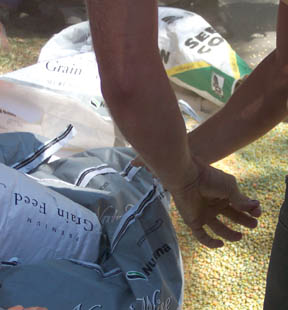
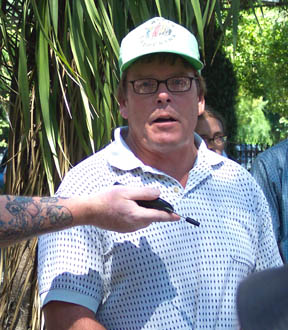
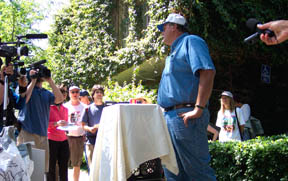
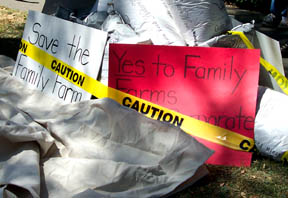
SACRAMENTO - On June 23, Family Farmers from throughout the United States dumped GMO corn at the World Conference on Agricultural Science and Technology to bring attention to the distortions and lies being perpetuated by the Bush Administration and the biotechnology industry in the promotion of genetically engineered (GE) seeds and foods.
"Family farmers have suffered significant economic losses form the use of GE products," said Walter Kessler, California dairy farmer and Vice-President of the Family Farm Defenders, "but the truth about GE crops and their impacts on family farmers is being buried in the slick multi-million dollar public relations campaign being waged by the biotechnology industry and promoted by the USDA, primary sponsors of this conference."
The biotechnology industry andcUSDA officials continually tout the economic benefits to farmers that result from using GE products despite independent scientific research that these crops are more expensive to produce, and, in the case of herbicide tolerant seed varieties (ie Monsanto's RoundupReady brands) result in significantly lower yields than comparable non GE varieties. Scientific evidence based on USDA statistics also runs counter to biotechnology industry claims that pesticide use in herbicide tolerant varieties is lower than in non-GE systems.
"We are here to stand in solidarity with farmers, consumers and governments throughout the world who do not want to raise, eat or import food that has been contaminated trough genetic engineering," said George Naylor, Iowa corn and soybean farmer and President of the National Family Farm Coalition. "There are legitimate concerns relating to the impact of genetic engineering on food and the environment. Every nation should have the right to adopt a food production system that is in the best interests of their farmers, their citizen and their country."
The united States has recently filed a complaint with the World Trade Organization (WTO) to force the European Union (EU) to accept GE crops and food products. The EU has a regulatory system based on the "precautionary principle." Bioengineered products must be proven safe before being allowed into commercial production and the EU has taken the position that GE crops and food products have not met that standard. As a result the EU has imposed a defacto moratorium on the approval of new GE crops until a comprehensive regulatory system can be put into place. The U.S. challenge is based on the proposition that no scientific evidence exists that GE foods are harmful despite the fact that the regulatory system in this country does not require independent research on the environmental and health impact of GE crops. U.S. patent law also provides loopholes to biotechnology companies to avoid disclosure of negative environmental and public health impacts by claiming violation of intellectual property rights and confidential business information. "The filing of the WTO complaint just before this conference being attended by the agricultural ministers of 120 countires is no coincidence," says S'ra DeSantis, Vermont organic farmer. "The U.S. is sending a clear message to the agricultural ministers around the world that you either come along with us on biotechnology or we will use our economic might to jam GE crops and products down your throats," adds DeSantis. "That use of economic blackmail is absolutely despicable."
More on Genetic Engineering:
Genetic Engineering And Its Dangers
Organice Consumers Association
What's Wrong with GMOs?
Family Farmer Defenders
Farmer to Farmer Campaign on GE
"Family farmers have suffered significant economic losses form the use of GE products," said Walter Kessler, California dairy farmer and Vice-President of the Family Farm Defenders, "but the truth about GE crops and their impacts on family farmers is being buried in the slick multi-million dollar public relations campaign being waged by the biotechnology industry and promoted by the USDA, primary sponsors of this conference."
The biotechnology industry andcUSDA officials continually tout the economic benefits to farmers that result from using GE products despite independent scientific research that these crops are more expensive to produce, and, in the case of herbicide tolerant seed varieties (ie Monsanto's RoundupReady brands) result in significantly lower yields than comparable non GE varieties. Scientific evidence based on USDA statistics also runs counter to biotechnology industry claims that pesticide use in herbicide tolerant varieties is lower than in non-GE systems.
"We are here to stand in solidarity with farmers, consumers and governments throughout the world who do not want to raise, eat or import food that has been contaminated trough genetic engineering," said George Naylor, Iowa corn and soybean farmer and President of the National Family Farm Coalition. "There are legitimate concerns relating to the impact of genetic engineering on food and the environment. Every nation should have the right to adopt a food production system that is in the best interests of their farmers, their citizen and their country."
The united States has recently filed a complaint with the World Trade Organization (WTO) to force the European Union (EU) to accept GE crops and food products. The EU has a regulatory system based on the "precautionary principle." Bioengineered products must be proven safe before being allowed into commercial production and the EU has taken the position that GE crops and food products have not met that standard. As a result the EU has imposed a defacto moratorium on the approval of new GE crops until a comprehensive regulatory system can be put into place. The U.S. challenge is based on the proposition that no scientific evidence exists that GE foods are harmful despite the fact that the regulatory system in this country does not require independent research on the environmental and health impact of GE crops. U.S. patent law also provides loopholes to biotechnology companies to avoid disclosure of negative environmental and public health impacts by claiming violation of intellectual property rights and confidential business information. "The filing of the WTO complaint just before this conference being attended by the agricultural ministers of 120 countires is no coincidence," says S'ra DeSantis, Vermont organic farmer. "The U.S. is sending a clear message to the agricultural ministers around the world that you either come along with us on biotechnology or we will use our economic might to jam GE crops and products down your throats," adds DeSantis. "That use of economic blackmail is absolutely despicable."
More on Genetic Engineering:
Genetic Engineering And Its Dangers
Organice Consumers Association
What's Wrong with GMOs?
Family Farmer Defenders
Farmer to Farmer Campaign on GE
Add Your Comments
Comments
(Hide Comments)
I wonder if the Bush administration ever met and listened to these farmers before they came up with their policy.
We saw how Michael Powell came about the recent FCC ruling on Media Ownership. His commission met with the corporate interest groups over 30 times, and I believe met with the citizen group once. Reason, FCC doesn't have enough funding to meet with the citizen groups.
I bet it's the same that our government under Bush administration has no funding to meet with the farmers. It's sickening to see how irresponsible and reckless these corporate executives and Bush administration about the welfare and well being of the American public. And obviously they don't give a sh*t about anyone else in the world.
We saw how Michael Powell came about the recent FCC ruling on Media Ownership. His commission met with the corporate interest groups over 30 times, and I believe met with the citizen group once. Reason, FCC doesn't have enough funding to meet with the citizen groups.
I bet it's the same that our government under Bush administration has no funding to meet with the farmers. It's sickening to see how irresponsible and reckless these corporate executives and Bush administration about the welfare and well being of the American public. And obviously they don't give a sh*t about anyone else in the world.
Abraham,
You probably eat GMO food every day. It has no effect on your health. If you are ill, it is for other reasons.
Farmers like GMO crops. If it wasn't economically advantageous for them (bigger yields, less herbicide, nicer looking produce, etc) they wouldn't buy the seeds. That's right. Nobody is forcing the farmers (in the US or EU) to purchase GE seeds. If they want to buy them, they can (in the US, anyway). If they don't want to, they don't have to.
What more do you want? If 99% of the scientists agree that it is safe and studies support these opinions, what more do you want? How much research is enough? And as long as alternate seeds are available, why do you insinuate that farmers have no choice and are not being listened to? Nobody needs to "listen" to them. They are heard by their purchasing actions. And the farmers are yelling "Yes to GMO!"
You probably eat GMO food every day. It has no effect on your health. If you are ill, it is for other reasons.
Farmers like GMO crops. If it wasn't economically advantageous for them (bigger yields, less herbicide, nicer looking produce, etc) they wouldn't buy the seeds. That's right. Nobody is forcing the farmers (in the US or EU) to purchase GE seeds. If they want to buy them, they can (in the US, anyway). If they don't want to, they don't have to.
What more do you want? If 99% of the scientists agree that it is safe and studies support these opinions, what more do you want? How much research is enough? And as long as alternate seeds are available, why do you insinuate that farmers have no choice and are not being listened to? Nobody needs to "listen" to them. They are heard by their purchasing actions. And the farmers are yelling "Yes to GMO!"
I ask only because your writing suggest you're a male, I think. In any case, you can call yourself whatever.
I think most of us are NOT against progress, like social progress, techno progress, etc. I believe the farmers who spoke out against GMO showed they were progressive in general believing what the agribusiness had told them. What I gathered is that the farmers have concluded that they'd been deceived and lied to by the agribusiness.
It is also my understanding that the scientific community also express concerns and even negative opinions toward the GE products as a whole. There're many issues and questions unanswered. There're data shows negative impact on the environment and the food chain. The agribusiness appears to me that they have failed to present convincing data and evidence that GE is really safe.
I, too, believe that the push for corporate profits rises above all in the eyes of the corporate executive and the Bush adminstration.
I think most of us are NOT against progress, like social progress, techno progress, etc. I believe the farmers who spoke out against GMO showed they were progressive in general believing what the agribusiness had told them. What I gathered is that the farmers have concluded that they'd been deceived and lied to by the agribusiness.
It is also my understanding that the scientific community also express concerns and even negative opinions toward the GE products as a whole. There're many issues and questions unanswered. There're data shows negative impact on the environment and the food chain. The agribusiness appears to me that they have failed to present convincing data and evidence that GE is really safe.
I, too, believe that the push for corporate profits rises above all in the eyes of the corporate executive and the Bush adminstration.
Oh please, would you stand aside and let people be awake?
GMOs are no different from natural organisms except for a few minor technological improvements. GMOs are no more a leap in technology with NO ethical consideration whatsoever than getting rid of your push lawnmower for a riding mower.
Would you save that shit for MSGOP already? You know as well as I do that if you keep doing that neophyte resistors might abandoning their questioning the newspeak line of the Status Fucking Quo and its pet-on-a-short-leash mainstream media and head back to the sheep trough. Fuck off and go watch some more television. At least they won't say anything you disagree with there.
Oh, but then your critique wouldn't be so original and innovative, would it? There's nothing fun about criticizing minds who develop no critique of their own and bend over backwards to serve the miniscule chance they might just be struck by lightning as holder of the winning ticket: to become a successful capitalist instead of one of the billions of cancer-patient losers in a game won by the fortune 1,000.
Altering the gene sequence of organisms that cannot be isolated from ecosystems that ARE the sum of their parts is a STUPID idea that deserves a fair and equitable ethics review. Talks to scientists and ask them how many ethics courses they've experienced at the undergraduate or graduate level. Go ahead. Ask them how many ethics commissions or ethics panels they've contributed to. Biologist, chemical engineer, nuclear physicist, botanist, biochemist ... just choose a scientist and ask them about ethics. Better yet, choose ten and see what kind of answers you get. "I could have taken a course covering myriad current issues in environmental ethics in a few short weeks, but it wasn't required by my program." That might be the most positive answer you get, but don't take my word for it.
This is class war, fucker, so wake up and smell the profiteering. Poor people who can't afford to live in gated communities are not going to have the opportunity to eat the quality of food the wealthy with assuredly enjoy. How many of these executives are eating this shit? Go and find out what they eat and where the food comes from. I assure you it is not a source similar to the one every poor sucker who has no choice but what's available at the supermarket is subject to.
The executive class is going to survive this living hell while the rest of us will have no choice but to purchase pharmaceuticals by the vanload at exorbitant prices just to be able to get out of bed, breathe and walk upright each day. That sounds a little apocalyptic to you, doesn't it? Better get out there and tell that to the biotechnology industry, the exact opposite of an ethics commission or citizens review board on genetic modification, who have made all the decisions any citizens or commission would have had a say in thus far. They're profiteers, and they don't care about your health, my health or that of people who don't have $20,000+ a year to spend on food beyond MORE profits they might be able to squeeze.
Let's not forget industrial agriculture--factory farming that relies almost entirely on chemicals and is actively reducing the number of acres of arable soil on the planet with each passing season. So don't tell me about technology that will help us feed the world because a production shortage is not in the five highest ranking causes of the world food shortage--profit driven production planning--there's your culprit.
Refute all you like. I'm really more interested in natural agriculture that doesn't leach and poison the soil and the removal of agribusiness from global food production than providing a fair atmosphere for debating your ridiculous capitalist's sycophant ass right now.
GMOs are no different from natural organisms except for a few minor technological improvements. GMOs are no more a leap in technology with NO ethical consideration whatsoever than getting rid of your push lawnmower for a riding mower.
Would you save that shit for MSGOP already? You know as well as I do that if you keep doing that neophyte resistors might abandoning their questioning the newspeak line of the Status Fucking Quo and its pet-on-a-short-leash mainstream media and head back to the sheep trough. Fuck off and go watch some more television. At least they won't say anything you disagree with there.
Oh, but then your critique wouldn't be so original and innovative, would it? There's nothing fun about criticizing minds who develop no critique of their own and bend over backwards to serve the miniscule chance they might just be struck by lightning as holder of the winning ticket: to become a successful capitalist instead of one of the billions of cancer-patient losers in a game won by the fortune 1,000.
Altering the gene sequence of organisms that cannot be isolated from ecosystems that ARE the sum of their parts is a STUPID idea that deserves a fair and equitable ethics review. Talks to scientists and ask them how many ethics courses they've experienced at the undergraduate or graduate level. Go ahead. Ask them how many ethics commissions or ethics panels they've contributed to. Biologist, chemical engineer, nuclear physicist, botanist, biochemist ... just choose a scientist and ask them about ethics. Better yet, choose ten and see what kind of answers you get. "I could have taken a course covering myriad current issues in environmental ethics in a few short weeks, but it wasn't required by my program." That might be the most positive answer you get, but don't take my word for it.
This is class war, fucker, so wake up and smell the profiteering. Poor people who can't afford to live in gated communities are not going to have the opportunity to eat the quality of food the wealthy with assuredly enjoy. How many of these executives are eating this shit? Go and find out what they eat and where the food comes from. I assure you it is not a source similar to the one every poor sucker who has no choice but what's available at the supermarket is subject to.
The executive class is going to survive this living hell while the rest of us will have no choice but to purchase pharmaceuticals by the vanload at exorbitant prices just to be able to get out of bed, breathe and walk upright each day. That sounds a little apocalyptic to you, doesn't it? Better get out there and tell that to the biotechnology industry, the exact opposite of an ethics commission or citizens review board on genetic modification, who have made all the decisions any citizens or commission would have had a say in thus far. They're profiteers, and they don't care about your health, my health or that of people who don't have $20,000+ a year to spend on food beyond MORE profits they might be able to squeeze.
Let's not forget industrial agriculture--factory farming that relies almost entirely on chemicals and is actively reducing the number of acres of arable soil on the planet with each passing season. So don't tell me about technology that will help us feed the world because a production shortage is not in the five highest ranking causes of the world food shortage--profit driven production planning--there's your culprit.
Refute all you like. I'm really more interested in natural agriculture that doesn't leach and poison the soil and the removal of agribusiness from global food production than providing a fair atmosphere for debating your ridiculous capitalist's sycophant ass right now.
"99% of the scientists agree that it is safe "
First of all thats not true and secondly it doesnt even make sense...
Whats safe? Saying GMOs are safe or not safe makes us much sense as saying chemicals are safe or unsafe as a whole.
Genetic modifications could cause food alergies not present in unmodified versions or produce unpredicted proteins. One would assume companies do some testing on the safety of what they produce but the required safety levels on genetically modified foods are a lot less than that for synthetic chemicals and while synthetic chemicals can be included on labelling the US is now pushing to ban the EU from labelling genetically modified food products. So if one has a severe allergy to a certain protein in one plant and genetic modifications result in this protein being in another type of plant, how would one know to avoid the modified produce? Breeding is genetic modification too, but the chance of large changes in a small amount of time are a lot less so there is more testing just by the slowness of the introduction of the new product.
Of course the companies producing these things dont want to be sued so the chance of there being danger in any individual product is small. But, one of these days a carcinogen or something that causes birth defects will accidently enter the food supply and without labelling the results could be disasterous since the choice worldwide would be mass destruction of food (causing famine in areas dependent on imports) or risking the mistake to effect a huge number of people.
Personally the main problems I have with genetically modified food relate to the patent issues and how this can result in short term gains to farmers while tying them into a vendor. I also think that most food thats even modified too much through standard breading tastes pretty bad since appearance and cost are whats bread for rather than taste (wild blueberries and strawberries are extreme examples where whats in teh grocery store have almost no taste compared to the smaller wild berries).
First of all thats not true and secondly it doesnt even make sense...
Whats safe? Saying GMOs are safe or not safe makes us much sense as saying chemicals are safe or unsafe as a whole.
Genetic modifications could cause food alergies not present in unmodified versions or produce unpredicted proteins. One would assume companies do some testing on the safety of what they produce but the required safety levels on genetically modified foods are a lot less than that for synthetic chemicals and while synthetic chemicals can be included on labelling the US is now pushing to ban the EU from labelling genetically modified food products. So if one has a severe allergy to a certain protein in one plant and genetic modifications result in this protein being in another type of plant, how would one know to avoid the modified produce? Breeding is genetic modification too, but the chance of large changes in a small amount of time are a lot less so there is more testing just by the slowness of the introduction of the new product.
Of course the companies producing these things dont want to be sued so the chance of there being danger in any individual product is small. But, one of these days a carcinogen or something that causes birth defects will accidently enter the food supply and without labelling the results could be disasterous since the choice worldwide would be mass destruction of food (causing famine in areas dependent on imports) or risking the mistake to effect a huge number of people.
Personally the main problems I have with genetically modified food relate to the patent issues and how this can result in short term gains to farmers while tying them into a vendor. I also think that most food thats even modified too much through standard breading tastes pretty bad since appearance and cost are whats bread for rather than taste (wild blueberries and strawberries are extreme examples where whats in teh grocery store have almost no taste compared to the smaller wild berries).
Companies working on new pesticides and genetic modifications to plants are designing the new products mainly for large agribusiness. Often the products have extereme econonomies of scale so they make more sense for a large company than a small farm. The result is that small farms are put out of business and much of the world relies more and mroe off agribusiness that frequently isnt even local. Since a majority of third world countires are still primarilly agricultural, the cheap food may be popular due to price but the long term effect is that jobs disappear and the ability to buy even the cheaper new products actually goes down (cheap food->fewer jobs on farms->less income->less ability to buy food->increase in hunger) In most of SubSaharan Africa the drop in GDP and the increase in hunger over the past twenty years is very real.
You do sound apocalyptic. And very paranoid.
I am both a biologist and an economist. In graduate school, I was required to take bioethics coursework. That is why I am so confident about this topic. The so-called experts (never scientists, always social scientists) on the anti-GMO side convinced me that their arguments had no merit.
And you don't have to take pharmaceuticals when you are old and sick (by the way, it's the food and pharmaceuticals that doubled the human life expectancy in the 20th century). You can die early if you want. Just be sure to put that in your will -- to prevent your loved ones from trying to save your life.
And the thought that Fortune 1000 executives don't shop at Safeway is ridiculous. Yea, they all shop at organic food stands. I'm sure they also do aerobic exercise three times a week and only drink alcohol in moderation. Did you watch too much 'Lifestyles of the Rich and Famous' when you were a kid?
Do yourself a favor and go to UCSF's medical library and do some research about GMO. You'll find that your position is not supported by the science.
I am both a biologist and an economist. In graduate school, I was required to take bioethics coursework. That is why I am so confident about this topic. The so-called experts (never scientists, always social scientists) on the anti-GMO side convinced me that their arguments had no merit.
And you don't have to take pharmaceuticals when you are old and sick (by the way, it's the food and pharmaceuticals that doubled the human life expectancy in the 20th century). You can die early if you want. Just be sure to put that in your will -- to prevent your loved ones from trying to save your life.
And the thought that Fortune 1000 executives don't shop at Safeway is ridiculous. Yea, they all shop at organic food stands. I'm sure they also do aerobic exercise three times a week and only drink alcohol in moderation. Did you watch too much 'Lifestyles of the Rich and Famous' when you were a kid?
Do yourself a favor and go to UCSF's medical library and do some research about GMO. You'll find that your position is not supported by the science.
""Whats safe? Saying GMOs are safe or not safe makes us much sense as saying chemicals are safe or unsafe as a whole."
Yes lets not ban chemicals
chemicals can also cause food alergies not present in unmodified versions.
"Breeding is genetic modification too, but the chance of large changes in a small amount of time are a lot less so there is more testing just by the slowness of the introduction of the new product."
products are going to get introduced quicker and quicker ...So it seems like you are saying this should be stoped by legislation and encumbant companies and products should have big advantages over new ones?
"But, one of these days a carcinogen or something that causes birth defects will accidently enter the food supply and without labelling the results could be disasterous since the choice worldwide would be mass destruction of food (causing famine in areas dependent on imports) or risking the mistake to effect a huge number of people."
There are carcinogens in tons of things that you eat now infact htere are carcinogens in your health food etc etc. You are quoting an omnipresent threat as a specific one.
You are talking about not GE specific problems as if they are GE specific. basically if the anti GE movement wins their same arguments carried to their logical conclusion take us back to hunter gatherers.
"Personally the main problems I have with genetically modified food relate to the patent issues"
- again this is an independant issue. bring on the pirates eh?
" I also think that most food thats even modified too much through standard breading tastes pretty bad "
- some consumers choose presentation over taste.. oh well.. thats the free market for oyu. maybe some government intervention on the behalf of tastey strawberries is needed
"Since a majority of third world countires are still primarilly agricultural, the cheap food may be popular due to price but the long term effect is that jobs disappear and the ability to buy even the cheaper new products actually goes down (cheap food->fewer jobs on farms->less income->less ability to buy food->increase in hunger)"
- hmm so all the first world has to do is stop donating (or selling) food to africa in order to make their food become scarcer and therefore more expensive? hmmm..
Yes lets not ban chemicals
chemicals can also cause food alergies not present in unmodified versions.
"Breeding is genetic modification too, but the chance of large changes in a small amount of time are a lot less so there is more testing just by the slowness of the introduction of the new product."
products are going to get introduced quicker and quicker ...So it seems like you are saying this should be stoped by legislation and encumbant companies and products should have big advantages over new ones?
"But, one of these days a carcinogen or something that causes birth defects will accidently enter the food supply and without labelling the results could be disasterous since the choice worldwide would be mass destruction of food (causing famine in areas dependent on imports) or risking the mistake to effect a huge number of people."
There are carcinogens in tons of things that you eat now infact htere are carcinogens in your health food etc etc. You are quoting an omnipresent threat as a specific one.
You are talking about not GE specific problems as if they are GE specific. basically if the anti GE movement wins their same arguments carried to their logical conclusion take us back to hunter gatherers.
"Personally the main problems I have with genetically modified food relate to the patent issues"
- again this is an independant issue. bring on the pirates eh?
" I also think that most food thats even modified too much through standard breading tastes pretty bad "
- some consumers choose presentation over taste.. oh well.. thats the free market for oyu. maybe some government intervention on the behalf of tastey strawberries is needed
"Since a majority of third world countires are still primarilly agricultural, the cheap food may be popular due to price but the long term effect is that jobs disappear and the ability to buy even the cheaper new products actually goes down (cheap food->fewer jobs on farms->less income->less ability to buy food->increase in hunger)"
- hmm so all the first world has to do is stop donating (or selling) food to africa in order to make their food become scarcer and therefore more expensive? hmmm..
"Do yourself a favor and go to UCSF's medical library and do some research about GMO"
Again you are talking about GMOs as if they are all the same thing. By stating thagt GMOs are safe you are making yourself 100% uncredible...
If I wanted to add the chemical from hemlock to corn I probably could and it would be dangerous (and there wouldnt be an easy way to do that through cross breeding) GMOs can be dangerous or safe... One would assume that companies making GMOs want them to be safe and if they do enough testing one would guess that GMOs would be as safe as any synthetic chemical similarly tested. But the PR people from biotech companies are now trying to sell people on "GMOs being safe" rather than that they are doing enough testing to guarantee that the products they are producing are safe; there is a big difference.
Arguing that GMOs as a whole are safe is like arguing that pesticides as a whole are safe. Its completely nonsensical.
The proGMO crowd create a straw man out of the arguments for labelling of GMO products, issues with patents that prevent use of seeds etc.. and then attack that straw man. Some on the left who are new to the conflict pick up on the straw man arguments and the pitch is sold since the legitimate arguments are swept under the rug.
Again you are talking about GMOs as if they are all the same thing. By stating thagt GMOs are safe you are making yourself 100% uncredible...
If I wanted to add the chemical from hemlock to corn I probably could and it would be dangerous (and there wouldnt be an easy way to do that through cross breeding) GMOs can be dangerous or safe... One would assume that companies making GMOs want them to be safe and if they do enough testing one would guess that GMOs would be as safe as any synthetic chemical similarly tested. But the PR people from biotech companies are now trying to sell people on "GMOs being safe" rather than that they are doing enough testing to guarantee that the products they are producing are safe; there is a big difference.
Arguing that GMOs as a whole are safe is like arguing that pesticides as a whole are safe. Its completely nonsensical.
The proGMO crowd create a straw man out of the arguments for labelling of GMO products, issues with patents that prevent use of seeds etc.. and then attack that straw man. Some on the left who are new to the conflict pick up on the straw man arguments and the pitch is sold since the legitimate arguments are swept under the rug.
" hmm so all the first world has to do is stop donating (or selling) food to africa in order to make their food become scarcer and therefore more expensive? hmmm.. "
Thats simplifying it, but US agricultural aid to starving countries has in many cases undercut local suppliers and created long term dependencies.
"There are carcinogens in tons of things that you eat now infact htere are carcinogens in your health food etc etc. You are quoting an omnipresent threat as a specific one. "
The difference is that if a new breed of apple is introduced through standrad breeding, the chance of an unknown carcinogen being in the new breed is a lot smaller than the chance if a sudden genetic change is made.
"products are going to get introduced quicker and quicker ..."
Perhaps until something goes wrong. The sudden burst in pesticides in teh early 1900s resulted in a huge number of new chemicals being intriduced into the human diet. Some of these proced to be dangerous and regulations needed to be introduced to protect consumers, the environment and workers in fields.
"some consumers choose presentation over taste.. oh well.. thats the free market for oyu. maybe some government intervention on the behalf of tastey strawberries is needed "
I wouldnt propose regulation due to taste but that would be an issue in a country that wants to protect its culture (ie France) so it does figure into the debate. One could call it irrational or protectionism but its not that different from the US banning a recreational drug to protect "US family values" or a MIddle Eastern country banning liquor.
While you seem to like to generalize about why people dont like GMOs, the largest conflict right now on this issue is between the EU and the US. The US claims that labelling would be a non-tariff barrier to trade while the EU is responding mainly to pressure from consumers( if consumers are always right at the store according to those whole love the free market why dont you also think that what they choose when they push for legislation is also somehow always correct???) Regardless of the safety of current GMOs on the market I cant really think of a good argument why labelling wouldnt be a good idea in case something ever goes wrong (and it can since genetic modification is more similar to adding a synthetic chemical to a food than it is to simple breeding).
Thats simplifying it, but US agricultural aid to starving countries has in many cases undercut local suppliers and created long term dependencies.
"There are carcinogens in tons of things that you eat now infact htere are carcinogens in your health food etc etc. You are quoting an omnipresent threat as a specific one. "
The difference is that if a new breed of apple is introduced through standrad breeding, the chance of an unknown carcinogen being in the new breed is a lot smaller than the chance if a sudden genetic change is made.
"products are going to get introduced quicker and quicker ..."
Perhaps until something goes wrong. The sudden burst in pesticides in teh early 1900s resulted in a huge number of new chemicals being intriduced into the human diet. Some of these proced to be dangerous and regulations needed to be introduced to protect consumers, the environment and workers in fields.
"some consumers choose presentation over taste.. oh well.. thats the free market for oyu. maybe some government intervention on the behalf of tastey strawberries is needed "
I wouldnt propose regulation due to taste but that would be an issue in a country that wants to protect its culture (ie France) so it does figure into the debate. One could call it irrational or protectionism but its not that different from the US banning a recreational drug to protect "US family values" or a MIddle Eastern country banning liquor.
While you seem to like to generalize about why people dont like GMOs, the largest conflict right now on this issue is between the EU and the US. The US claims that labelling would be a non-tariff barrier to trade while the EU is responding mainly to pressure from consumers( if consumers are always right at the store according to those whole love the free market why dont you also think that what they choose when they push for legislation is also somehow always correct???) Regardless of the safety of current GMOs on the market I cant really think of a good argument why labelling wouldnt be a good idea in case something ever goes wrong (and it can since genetic modification is more similar to adding a synthetic chemical to a food than it is to simple breeding).
President Bush told a biotechnology conference in Washington that a European Union (EU) moratorium on genetically modified (GM) crops was discouraging African countries from trying new, high-yielding seeds for fear of losing their export markets.
But Ethiopia's chief environmental advisor said that the US and EU could do more for Ethiopian and African farmers by removing agricultural subsidies.
That would enable farmers here to earn a higher income from their output and then invest more in the land.
Farmers 'need support'
Tewolde Berhane, director general of the government's environmental protection authority, said that lack of investment and other structural problems created food shortages, not simply the wrong kind of seed.
http://news.bbc.co.uk/2/hi/business/3016390.stm
But Ethiopia's chief environmental advisor said that the US and EU could do more for Ethiopian and African farmers by removing agricultural subsidies.
That would enable farmers here to earn a higher income from their output and then invest more in the land.
Farmers 'need support'
Tewolde Berhane, director general of the government's environmental protection authority, said that lack of investment and other structural problems created food shortages, not simply the wrong kind of seed.
http://news.bbc.co.uk/2/hi/business/3016390.stm
Michael Meacher: Are GM crops safe? Who can say? Not Blair
22 June 2003
At Prime Minister's Questions in the Commons last Wednesday Tony Blair stated that "it is important for the whole debate [on genetic modification] to be conducted on the basis of scientific evidence, not on the basis of prejudice".
Exactly so. But what does the science actually indicate? Not, I think, what he appears to believe.
A public debate is now taking place before the Government decides later this year whether to allow food from GM crops to go on sale commercially. Tony Blair's contribution has been to emphasise the importance of the biotech industry to the UK.
Contrary to the assurances of the biotech companies that genetic engineering is precise and simply extends traditional breeding techniques, it is actually quite different. When genetic crops are engineered, the gene is inserted randomly, out of a sequence that has evolved over hundreds of millions of years.
But genes don't operate in isolation; they interact with each other. Genetic engineers have assumed that each gene has one function, but the recent discovery that human beings have only some 30,000 genes to produce the quarter of a million proteins in the human body shows that this premise was wrong. Most genes are multi-functional. It is not known how to determine artificially a single function of a gene without triggering other unpredicted and undesired effects.
The random position and lack of control of the gene's functions could change any character of the plant and might not be evident immediately. One example is the increased lignin in GM soya which only became apparent in hot weather when the stems began to split. In the United States there are already many examples of undesired effects only being identified after approval had been given - again one example is GM cotton where the cotton boils became deformed.
Another problem is that genetic engineers usually introduce other material - viruses or bacteria - into the plant which have the role of inserting the gene, activating it, and identifying where transfers have been successful. Viruses in particular are good at inserting their genetic material into other organisms. But that opens up the risk of "horizontal gene transfer" whereby genes transfer out of the genetically modified organism (GMO) and into other organisms. But we don't know how frequently or intensively this might occur, or what the safety implications might be.
GM technology also often involves producing novel substances which may cause allergic reactions. If such substances are used in food, consumers may quite often be exposed to this risk. It was recently found, for example, that a GM soya with a brazil nut gene could cause allergic reactions.
A further health risk is that creating herbicide (weedkiller) resistant plants allows the application of much more toxic herbicides to the growing plants. People therefore become exposed to more toxic residues than previously. In the recent case of the GM forage maize, Chardon LL, the herbicide used was glufosinate, a neurotoxin and a teratogen (ie it damages embryos). What is particularly worrying is that there seems to be a 10 per cent reconversion rate of the degraded herbicide back to the original toxic form in the gut.
Given that there is so much uncertainty, it might be expected that there would be routine testing of GMOs for healthy effects as a legal requirement. This applies to new pharmaceutical drugs which are subjected to lengthy trials so that all side-effects can be uncovered. However, whilst it is often claimed that all GMOs have been "rigorously tested", all that this testing amounts to is deciding whether a GM crop is similar in terms of its composition to the non-GM plant. This is justified under the rubric of "substantial equivalence", which was originally a marketing term, and is scientifically vacuous. It wholly misses the point that health concerns are focused, not on known compounds, but on the effects of the GM technology which are unpredictable.
It is really extraordinary that there have so far been virtually no independent studies of the health effects of GM. What there is has mostly been done by the companies themselves. We are constantly told that there is no evidence of any greater health risk from a GM crop than from its non-GM counterpart. What is not added is that there have been no health checks to find out. Indeed, the only Government-sponsored work ever carried on the health impacts of GMOs was Dr Pusztai's work on rats and GM potatoes, and then, when it found negative effects, it was widely rubbished in government circles, even though his paper had been peer-reviewed six times before publication.
These uncertainties have been acknowledged by some of the leading UK institutions. The Royal Society, in its reports last year, said that the potential health effects of GM foods should be rigorously investigated before allowing them into baby food or to be marketed to pregnant or breast-feeding women, elderly people, and those with chronic disease. This was because GM "could lead to unpredicted harmful changes in the nutritional state of foods".
Any baby food containing GM products could lead to a dramatic rise in allergies, and unexpected shifts in oestrogen levels in GM soya-based infant feed might affect sexual development in children. Infants, the report said, are very vulnerable because they have such a narrow diet. If there were any nutritional deficiencies in their food, such as fewer fatty acids, their health would suffer, especially the infant bowel function since even small nutritional changes could cause bowel obstruction.
Similarly, the only human GM trial, commissioned ironically by the Food Standards Agency, found that GM DNA did in fact transfer to bacteria in the human gut. Previously many scientists had denied that this was possible. But instead of this finding being regarded as a serious discovery which should be checked and re-checked, the spin was that this was nothing new and did not involve any health risk - a Nelsonian putting the telescope to the blind eye if ever there was one.
A recent BMA report noted that "any conclusion upon the safety of introducing GM materials into the UK is premature as there is insufficient evidence to inform the decision-making process at the moment". In their report to the Scottish Parliament six months ago, the BMA stated that "there has not yet been a robust and thorough search into the potentially harmful effects of GM foodstuffs on human health... In the UK not enough is known to enable us to give an accurate risk of assessment of the health impact of GM crops on the health of local communities".
Equally, a recent report from the General Medical Council stated that GM could switch on "silent" genes whose effects we know little about or know to be toxic. They also noted that GM elements in food might be taken up by bacteria in the gut, and this could alter the balance of bacteria in the gut, leading to possible instability or further modification of GM food in later generations. Their conclusion was that more knowledge was needed of the effects of GM on metabolism, organ development, immune and endocrine systems, and gut flora.
Finally, it is often claimed by the biotech companies that there have been millions of people consuming GM foods over several years in the US, but without any ill-effects. However, there have actually been no epidemiological studies to support this claim. What is known is that coinciding with the introduction of GMOs in food in the US, food-derived illnesses are believed by the official US Centres for Disease Control to have doubled over the past seven years. And there are many reports of a rise in allergies - indeed a 50 per cent increase in soya allergies has been reported in the UK since imports of GM soya began. None of this of course proves the connection with GM, but it certainly suggests an urgent need for further investigation of this possible link. Typically, however, this has not been forthcoming.
As the Prime Minister said, we should act on the basis of science, not prejudice. Quite so. But since the science is still clouded with such deep uncertainty, that means deferring decisions till the science is clear and reliable, not rushing to desired conclusions which cannot be scientifically supported.
Michael Meacher MP was, until the recent government reshuffle, Minister for the Environment
http://argument.independent.co.uk/commentators/story.jsp?story=417687
22 June 2003
At Prime Minister's Questions in the Commons last Wednesday Tony Blair stated that "it is important for the whole debate [on genetic modification] to be conducted on the basis of scientific evidence, not on the basis of prejudice".
Exactly so. But what does the science actually indicate? Not, I think, what he appears to believe.
A public debate is now taking place before the Government decides later this year whether to allow food from GM crops to go on sale commercially. Tony Blair's contribution has been to emphasise the importance of the biotech industry to the UK.
Contrary to the assurances of the biotech companies that genetic engineering is precise and simply extends traditional breeding techniques, it is actually quite different. When genetic crops are engineered, the gene is inserted randomly, out of a sequence that has evolved over hundreds of millions of years.
But genes don't operate in isolation; they interact with each other. Genetic engineers have assumed that each gene has one function, but the recent discovery that human beings have only some 30,000 genes to produce the quarter of a million proteins in the human body shows that this premise was wrong. Most genes are multi-functional. It is not known how to determine artificially a single function of a gene without triggering other unpredicted and undesired effects.
The random position and lack of control of the gene's functions could change any character of the plant and might not be evident immediately. One example is the increased lignin in GM soya which only became apparent in hot weather when the stems began to split. In the United States there are already many examples of undesired effects only being identified after approval had been given - again one example is GM cotton where the cotton boils became deformed.
Another problem is that genetic engineers usually introduce other material - viruses or bacteria - into the plant which have the role of inserting the gene, activating it, and identifying where transfers have been successful. Viruses in particular are good at inserting their genetic material into other organisms. But that opens up the risk of "horizontal gene transfer" whereby genes transfer out of the genetically modified organism (GMO) and into other organisms. But we don't know how frequently or intensively this might occur, or what the safety implications might be.
GM technology also often involves producing novel substances which may cause allergic reactions. If such substances are used in food, consumers may quite often be exposed to this risk. It was recently found, for example, that a GM soya with a brazil nut gene could cause allergic reactions.
A further health risk is that creating herbicide (weedkiller) resistant plants allows the application of much more toxic herbicides to the growing plants. People therefore become exposed to more toxic residues than previously. In the recent case of the GM forage maize, Chardon LL, the herbicide used was glufosinate, a neurotoxin and a teratogen (ie it damages embryos). What is particularly worrying is that there seems to be a 10 per cent reconversion rate of the degraded herbicide back to the original toxic form in the gut.
Given that there is so much uncertainty, it might be expected that there would be routine testing of GMOs for healthy effects as a legal requirement. This applies to new pharmaceutical drugs which are subjected to lengthy trials so that all side-effects can be uncovered. However, whilst it is often claimed that all GMOs have been "rigorously tested", all that this testing amounts to is deciding whether a GM crop is similar in terms of its composition to the non-GM plant. This is justified under the rubric of "substantial equivalence", which was originally a marketing term, and is scientifically vacuous. It wholly misses the point that health concerns are focused, not on known compounds, but on the effects of the GM technology which are unpredictable.
It is really extraordinary that there have so far been virtually no independent studies of the health effects of GM. What there is has mostly been done by the companies themselves. We are constantly told that there is no evidence of any greater health risk from a GM crop than from its non-GM counterpart. What is not added is that there have been no health checks to find out. Indeed, the only Government-sponsored work ever carried on the health impacts of GMOs was Dr Pusztai's work on rats and GM potatoes, and then, when it found negative effects, it was widely rubbished in government circles, even though his paper had been peer-reviewed six times before publication.
These uncertainties have been acknowledged by some of the leading UK institutions. The Royal Society, in its reports last year, said that the potential health effects of GM foods should be rigorously investigated before allowing them into baby food or to be marketed to pregnant or breast-feeding women, elderly people, and those with chronic disease. This was because GM "could lead to unpredicted harmful changes in the nutritional state of foods".
Any baby food containing GM products could lead to a dramatic rise in allergies, and unexpected shifts in oestrogen levels in GM soya-based infant feed might affect sexual development in children. Infants, the report said, are very vulnerable because they have such a narrow diet. If there were any nutritional deficiencies in their food, such as fewer fatty acids, their health would suffer, especially the infant bowel function since even small nutritional changes could cause bowel obstruction.
Similarly, the only human GM trial, commissioned ironically by the Food Standards Agency, found that GM DNA did in fact transfer to bacteria in the human gut. Previously many scientists had denied that this was possible. But instead of this finding being regarded as a serious discovery which should be checked and re-checked, the spin was that this was nothing new and did not involve any health risk - a Nelsonian putting the telescope to the blind eye if ever there was one.
A recent BMA report noted that "any conclusion upon the safety of introducing GM materials into the UK is premature as there is insufficient evidence to inform the decision-making process at the moment". In their report to the Scottish Parliament six months ago, the BMA stated that "there has not yet been a robust and thorough search into the potentially harmful effects of GM foodstuffs on human health... In the UK not enough is known to enable us to give an accurate risk of assessment of the health impact of GM crops on the health of local communities".
Equally, a recent report from the General Medical Council stated that GM could switch on "silent" genes whose effects we know little about or know to be toxic. They also noted that GM elements in food might be taken up by bacteria in the gut, and this could alter the balance of bacteria in the gut, leading to possible instability or further modification of GM food in later generations. Their conclusion was that more knowledge was needed of the effects of GM on metabolism, organ development, immune and endocrine systems, and gut flora.
Finally, it is often claimed by the biotech companies that there have been millions of people consuming GM foods over several years in the US, but without any ill-effects. However, there have actually been no epidemiological studies to support this claim. What is known is that coinciding with the introduction of GMOs in food in the US, food-derived illnesses are believed by the official US Centres for Disease Control to have doubled over the past seven years. And there are many reports of a rise in allergies - indeed a 50 per cent increase in soya allergies has been reported in the UK since imports of GM soya began. None of this of course proves the connection with GM, but it certainly suggests an urgent need for further investigation of this possible link. Typically, however, this has not been forthcoming.
As the Prime Minister said, we should act on the basis of science, not prejudice. Quite so. But since the science is still clouded with such deep uncertainty, that means deferring decisions till the science is clear and reliable, not rushing to desired conclusions which cannot be scientifically supported.
Michael Meacher MP was, until the recent government reshuffle, Minister for the Environment
http://argument.independent.co.uk/commentators/story.jsp?story=417687
By stating thagt GMOs are safe you are making yourself 100% uncredible...
- nothing is "safe" but you arent going to regulate that everyone wear cotton wool around their bodies are you? Besides the benifits hugely outweigh the disadvantages.
"Arguing that GMOs as a whole are safe is like arguing that pesticides as a whole are safe. Its completely nonsensical."
- again you would have to ban pestacides etc etc to be consistant.
- nothing is "safe" but you arent going to regulate that everyone wear cotton wool around their bodies are you? Besides the benifits hugely outweigh the disadvantages.
"Arguing that GMOs as a whole are safe is like arguing that pesticides as a whole are safe. Its completely nonsensical."
- again you would have to ban pestacides etc etc to be consistant.
It's refreshing to run into someone who's confident and yet ignorant . You said so much but so little. Other than "what the f*ck you know about anything", you said nothing substantial.
As long as we have a democracy nation, people will strive for what's best for them. It'll always be a continous conflict between the different interests. The key is how to balance and minimize avoidable disasters. GMO could bring us disasters if we as a nation and a world community do not proceed with caution making sound and knowledgeable decisions.
Besides, GMO does NOT solve the world hunger. Prez Bush is full of it just like he said about Iraqi possesses WMD. Listen to what some of African delegates are saying. U.S. hurt them by subsidizing our farm products. They have irrigation and drought problems. They have wars that devastate the entire landscapes.
Does Bush have a special strain of crops of require no watering, no nutrients, and resistant to all insects and pests that damage crops? Are these super GM crops really perform like the U.S. agribusiness claim they would with full money back guarantee and more? Some of our U.S. farmers think otherwise. Will U.S. agribusiness allow them to harvest and own the crop seeds? And without the terminator gene to the crops? There're studies show the modified gene in the plant crops somehow could change/transfer to the bacteria in various animals' gastrointestinal tracts.... and on and on.
The other comments by Well, BBC, Indep... are good and sound genuinely sincere. They're real concerns that the global community especially the biotech corporations will need to address.
As long as we have a democracy nation, people will strive for what's best for them. It'll always be a continous conflict between the different interests. The key is how to balance and minimize avoidable disasters. GMO could bring us disasters if we as a nation and a world community do not proceed with caution making sound and knowledgeable decisions.
Besides, GMO does NOT solve the world hunger. Prez Bush is full of it just like he said about Iraqi possesses WMD. Listen to what some of African delegates are saying. U.S. hurt them by subsidizing our farm products. They have irrigation and drought problems. They have wars that devastate the entire landscapes.
Does Bush have a special strain of crops of require no watering, no nutrients, and resistant to all insects and pests that damage crops? Are these super GM crops really perform like the U.S. agribusiness claim they would with full money back guarantee and more? Some of our U.S. farmers think otherwise. Will U.S. agribusiness allow them to harvest and own the crop seeds? And without the terminator gene to the crops? There're studies show the modified gene in the plant crops somehow could change/transfer to the bacteria in various animals' gastrointestinal tracts.... and on and on.
The other comments by Well, BBC, Indep... are good and sound genuinely sincere. They're real concerns that the global community especially the biotech corporations will need to address.
We may have an agreement here? I have read a few people claim that the US and EU would do the developing a world a favor by ceasing the farm aid.
Hallelujah! Aside from the irresponsible steel subsidy, Bush's other megaerror has been the outrageous farm bill. That guy is a socialist wrapped in 'compassionate conservative' rhetoric. He was elected to dismantle the welfare state -- not grow it.
Hallelujah! Aside from the irresponsible steel subsidy, Bush's other megaerror has been the outrageous farm bill. That guy is a socialist wrapped in 'compassionate conservative' rhetoric. He was elected to dismantle the welfare state -- not grow it.
"again you would have to ban pestacides etc etc to be consistant."
No, but I would argue that new pesticides should be studied long enough to conclude if they are carcinogenic or could have secondary effects (like DDT did) before they are allowed onto the market. Also I think that if consumers want to know if food they buy could contains pesticides they should have a right to know what the chemical in the food is (due to allergies etc..) With GMOs, the process for studying new crops is much less than that for new pesticides and the Bush administration is arguing that the WTO should enforce a ban on the labelling of GMOs for European consumers (the idea being that if they knew a certain product contained genetically modified food they would be less likely to buy it so this is somehow a trade sanction) A law preventing consumers from having their food labelled due to health concerns seems pretty sick if you really think about; even the industry insiders try to argue that there is no room on the packaging etc.. since they usually take the neoliberal line that market forces should result in an optimal outcome as long as consumers are given perfect information.
Labelling food that contains GMOs is VERY different from banning them. If a large majority of European dont want GMOs in their food the result could easilly be the same (since every baker would not want to make two kinds of bread etc...) US consumers have prevented irradiated food from entering the US market (and that is trhough regulation rather than mere labelling) yet the EU is not pressing the US to change those laws through the WTO.
No, but I would argue that new pesticides should be studied long enough to conclude if they are carcinogenic or could have secondary effects (like DDT did) before they are allowed onto the market. Also I think that if consumers want to know if food they buy could contains pesticides they should have a right to know what the chemical in the food is (due to allergies etc..) With GMOs, the process for studying new crops is much less than that for new pesticides and the Bush administration is arguing that the WTO should enforce a ban on the labelling of GMOs for European consumers (the idea being that if they knew a certain product contained genetically modified food they would be less likely to buy it so this is somehow a trade sanction) A law preventing consumers from having their food labelled due to health concerns seems pretty sick if you really think about; even the industry insiders try to argue that there is no room on the packaging etc.. since they usually take the neoliberal line that market forces should result in an optimal outcome as long as consumers are given perfect information.
Labelling food that contains GMOs is VERY different from banning them. If a large majority of European dont want GMOs in their food the result could easilly be the same (since every baker would not want to make two kinds of bread etc...) US consumers have prevented irradiated food from entering the US market (and that is trhough regulation rather than mere labelling) yet the EU is not pressing the US to change those laws through the WTO.
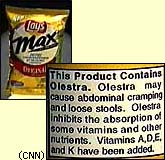
Businesses that produce new techy food products wouldn't lie to us would they? I mean all the new advances they sell to us make our lives better and dont need to be labelled? Hey all the people I know at biotech firms say they are run just like dot-com and we all trusted and loved those..
Olestra isn't a genetically modified food product but its similar in how they promoted and released it before all effects were known. Now they REQUIRE labels (something the US is trying to make illegal for GMOs). Imagine if a genetically modified safflower oil happened to have similar effects and got released into the international food supply and included in thousands of food products without labelling... (Cant happen? Starlink corn was classified as potentially having similar effects and accidently got released to millions of Americans. It didnt have as severe effects as people worried it could have but the next accident might not prove as benign )
Olestra isn't a genetically modified food product but its similar in how they promoted and released it before all effects were known. Now they REQUIRE labels (something the US is trying to make illegal for GMOs). Imagine if a genetically modified safflower oil happened to have similar effects and got released into the international food supply and included in thousands of food products without labelling... (Cant happen? Starlink corn was classified as potentially having similar effects and accidently got released to millions of Americans. It didnt have as severe effects as people worried it could have but the next accident might not prove as benign )
For more information:
http://www.cnn.com/EVENTS/1996/year.in.rev...
" The key is how to balance and minimize avoidable disasters. "
- we face lost of much more significant dangers than GMO including cars cigarettes and quite possibly cellphones tight jeans and microwaves.
To start a panic over it is inappropriate.
"Besides, GMO does NOT solve the world hunger."
-maybe it doesnt now.. but it will. maybe corporations will never design a useful GMO for hungry in africa but the UN or someone else will if you let them.
The first aplication of oil may have been quite flippant and probably not much use to the poor but nowadays even some of the the poorest benifit from its ability to help us transport goods and food etc
"U.S. hurt them by subsidizing our farm products. "
Certainly annoys me. Hurry up and get rid of the darn things.
"No, but I would argue that new pesticides should be studied long enough to conclude if they are carcinogenic"
the Bush administration is arguing that the WTO should enforce a ban on the labelling of GMOs for European consumers
"the problem is what do they learn by knowing it is GMO? "
1 GMO product may have more of 1 protein and another one may have none of it. Knowing it is GMO tells you nothing.
Now if the label had information on exactly where each ingredient came from at its origin then you might have somthing. but that would need a REALLY big label for some products.
"Olestra isn't a genetically modified food product"
Exactly. GE is hardly nessercary to cause a problem infact it is much easier to accidentily cause a problem through normal chemistry than through GE because at least GE organism has to function.
- we face lost of much more significant dangers than GMO including cars cigarettes and quite possibly cellphones tight jeans and microwaves.
To start a panic over it is inappropriate.
"Besides, GMO does NOT solve the world hunger."
-maybe it doesnt now.. but it will. maybe corporations will never design a useful GMO for hungry in africa but the UN or someone else will if you let them.
The first aplication of oil may have been quite flippant and probably not much use to the poor but nowadays even some of the the poorest benifit from its ability to help us transport goods and food etc
"U.S. hurt them by subsidizing our farm products. "
Certainly annoys me. Hurry up and get rid of the darn things.
"No, but I would argue that new pesticides should be studied long enough to conclude if they are carcinogenic"
the Bush administration is arguing that the WTO should enforce a ban on the labelling of GMOs for European consumers
"the problem is what do they learn by knowing it is GMO? "
1 GMO product may have more of 1 protein and another one may have none of it. Knowing it is GMO tells you nothing.
Now if the label had information on exactly where each ingredient came from at its origin then you might have somthing. but that would need a REALLY big label for some products.
"Olestra isn't a genetically modified food product"
Exactly. GE is hardly nessercary to cause a problem infact it is much easier to accidentily cause a problem through normal chemistry than through GE because at least GE organism has to function.
"we face lost of much more significant dangers than GMO including cars cigarettes and quite possibly cellphones tight jeans and microwaves... "
Hell, let's all live like the meteorites are going to hit Earth tomorrow.
...
This one is for free:
"There're plenty of poisons out there, why not add some more. No one will know or feel the difference!"
Hell, let's all live like the meteorites are going to hit Earth tomorrow.
...
This one is for free:
"There're plenty of poisons out there, why not add some more. No one will know or feel the difference!"
"Exactly. GE is hardly nessercary to cause a problem infact it is much easier to accidentily cause a problem through normal chemistry than through GE because at least GE organism has to function."
EXCEPT, genetically modified food are NOT regulated the same way as synthetic products. The amount of testing on a new biotech oil would be much much less than for olestra and while all food containing olestra has to be labelled, Bush is trying to make it illegal for European countries to even LABEL that a food product may contain the new ingredients.
The number of people who will die each year from cigarettes and cars are a lot greater than will probably ever die from a mistake in the release of a GMO (its also greater than the number of people who die from gun shots, terrorist attacks and even wars). BUT, thats not a reason not to regulate. Driving a car and smoking are at least known risks (and cigarettes are labelled as being dangerous). An unlabelled mistake on a GM product like a commonly used oil, flour or other basic cooking product could effect millions and tracking down where the ingredient was used could be very difficult.
The scary part with GM food crops is that pollen can travel long distances so there are already many cases of farmers growing GM crops without knowing it (and some farmers have even been sued for doing this since its copywrite infringement) There are many current GM crops that are being used for nonfood purposes and would not be safe to ingest. But, the pollen from such crops could result in those new plants entering the food supply anyways.
Pollen could also contain pesticides that could effect people and animals who have no intention of ingesting the product. Yes, there are many natural pollens that cause alergies etc.. but unless one travels its not like one is going to be suddenly exposed to something that one could not predict. Pesticides in a pollen could wreck havoc with an ecosystem since the exposure to a large area with pollen could easily exceed the area effected by a normal spray pesticide (and many of those like DDT have caused extinctions)
The introduction of more and more new synthetic products (GMO or otherwise) into the air, water and human food supply will have many unpredicted effects.
Some of this may seem inevitable in the same sense that every nation eventually being able to build nuclear weapons and engineer vacine resistant smallpox is inevitable. Knowledge about technology can't be held back easilly, but thats not what people opposed to GM food are talking about. There was a time when people didnt think that radioactivity could be dangerous (afterall C14 is radioactive and we are always being hit by cosmic rays) But the craze in the use radioactive material resulted in quite a few deaths(Madame Curie being one). The danger from x-rays was also unknown and the craze over x-ray machines resulted in x-rays being installed in thousands of shoe stores in the early 1900s (so people could measure their feet in a way that wasnt outdated). New technologies are always promoted as the saviour of humanity and overused until reason starts to prevail (part of the reason is that companies need to oversell products that take huge amounts of R&D) X-rays turned out to be too dangerous for casual use on humans, but not dangerous enough for the risk of braincancer to outweigh the benefits of dental x-rays. Nuclear power turned out to not be very cost effective and has had horrible secondary effects in that nuclear power plants are now always used as a cover for countries trying to develop nuclear bombs. Just because a technology is new and advanced does not mean its unversal adoption is inevitable or desirable.
GM crops will not help at all when it comes to world hunger. The world produces plenty of food as it is and countries with high starvation rates usually need more local small scale agriculture not more imports.Most modern cases (like Ethiopia in the 1980s) of mass starvation are really due to wars and there are not that many cases actually due to draught. GM products will probably be pushed on the third world since even poor people need to buy food, but the results could easilly be the cause of problems. Nestle pushed baby formula on countries with unsafe water supplies. Companies usually develop products for the US or European market and then just view poorer countries and dumping grounds for failed or waste products. The result can be bad directly (as in the case of Nestle) or indirectly in the effects on the economies where the new products are dumped. Chicken farms dump chicken parts that wont sell in the US on the Caribbean for WAY bellow cost (afterall in the US it would be a waste product or turned into animal food). The end result is that while people can get more protein, local agriculture is devistated resulting in fewer jobs etc...
GM crops really have no great societal benefit but they are a new technology so they must be good in the eyes of those always buying into the latest trend. "You just dont undertand the new economy" was the response one always heard when one asked about the valuation of dot coms or how companies that had no plan for making a profit could survive. Those who questioned dot coms were quickly dismissed as nabobs of negativism since the stock prices kept going up even years after one complained about overvaluation. Now GE is supposed to be the new craze (with Willie Brown talking about how it will save the SF economy). But, just like x-rays, nuclear power, and dot-coms, the initial hype is way overblown. Most food the world eats will probably stay free from genetic manipulation (aside from breeding of course) and GE will find its place as manufactoring technology for mainly nonfood products (and of course bioweapons programs in third world countries)
EXCEPT, genetically modified food are NOT regulated the same way as synthetic products. The amount of testing on a new biotech oil would be much much less than for olestra and while all food containing olestra has to be labelled, Bush is trying to make it illegal for European countries to even LABEL that a food product may contain the new ingredients.
The number of people who will die each year from cigarettes and cars are a lot greater than will probably ever die from a mistake in the release of a GMO (its also greater than the number of people who die from gun shots, terrorist attacks and even wars). BUT, thats not a reason not to regulate. Driving a car and smoking are at least known risks (and cigarettes are labelled as being dangerous). An unlabelled mistake on a GM product like a commonly used oil, flour or other basic cooking product could effect millions and tracking down where the ingredient was used could be very difficult.
The scary part with GM food crops is that pollen can travel long distances so there are already many cases of farmers growing GM crops without knowing it (and some farmers have even been sued for doing this since its copywrite infringement) There are many current GM crops that are being used for nonfood purposes and would not be safe to ingest. But, the pollen from such crops could result in those new plants entering the food supply anyways.
Pollen could also contain pesticides that could effect people and animals who have no intention of ingesting the product. Yes, there are many natural pollens that cause alergies etc.. but unless one travels its not like one is going to be suddenly exposed to something that one could not predict. Pesticides in a pollen could wreck havoc with an ecosystem since the exposure to a large area with pollen could easily exceed the area effected by a normal spray pesticide (and many of those like DDT have caused extinctions)
The introduction of more and more new synthetic products (GMO or otherwise) into the air, water and human food supply will have many unpredicted effects.
Some of this may seem inevitable in the same sense that every nation eventually being able to build nuclear weapons and engineer vacine resistant smallpox is inevitable. Knowledge about technology can't be held back easilly, but thats not what people opposed to GM food are talking about. There was a time when people didnt think that radioactivity could be dangerous (afterall C14 is radioactive and we are always being hit by cosmic rays) But the craze in the use radioactive material resulted in quite a few deaths(Madame Curie being one). The danger from x-rays was also unknown and the craze over x-ray machines resulted in x-rays being installed in thousands of shoe stores in the early 1900s (so people could measure their feet in a way that wasnt outdated). New technologies are always promoted as the saviour of humanity and overused until reason starts to prevail (part of the reason is that companies need to oversell products that take huge amounts of R&D) X-rays turned out to be too dangerous for casual use on humans, but not dangerous enough for the risk of braincancer to outweigh the benefits of dental x-rays. Nuclear power turned out to not be very cost effective and has had horrible secondary effects in that nuclear power plants are now always used as a cover for countries trying to develop nuclear bombs. Just because a technology is new and advanced does not mean its unversal adoption is inevitable or desirable.
GM crops will not help at all when it comes to world hunger. The world produces plenty of food as it is and countries with high starvation rates usually need more local small scale agriculture not more imports.Most modern cases (like Ethiopia in the 1980s) of mass starvation are really due to wars and there are not that many cases actually due to draught. GM products will probably be pushed on the third world since even poor people need to buy food, but the results could easilly be the cause of problems. Nestle pushed baby formula on countries with unsafe water supplies. Companies usually develop products for the US or European market and then just view poorer countries and dumping grounds for failed or waste products. The result can be bad directly (as in the case of Nestle) or indirectly in the effects on the economies where the new products are dumped. Chicken farms dump chicken parts that wont sell in the US on the Caribbean for WAY bellow cost (afterall in the US it would be a waste product or turned into animal food). The end result is that while people can get more protein, local agriculture is devistated resulting in fewer jobs etc...
GM crops really have no great societal benefit but they are a new technology so they must be good in the eyes of those always buying into the latest trend. "You just dont undertand the new economy" was the response one always heard when one asked about the valuation of dot coms or how companies that had no plan for making a profit could survive. Those who questioned dot coms were quickly dismissed as nabobs of negativism since the stock prices kept going up even years after one complained about overvaluation. Now GE is supposed to be the new craze (with Willie Brown talking about how it will save the SF economy). But, just like x-rays, nuclear power, and dot-coms, the initial hype is way overblown. Most food the world eats will probably stay free from genetic manipulation (aside from breeding of course) and GE will find its place as manufactoring technology for mainly nonfood products (and of course bioweapons programs in third world countries)
"GM crops will not help at all when it comes to world hunger. "
That's a bold statement. How do you figure?
Why not add additional nutrients to staple crops? This wouldn't help world hunger?
That's a bold statement. How do you figure?
Why not add additional nutrients to staple crops? This wouldn't help world hunger?
World hunger is not caused by lack of nutrients. Neither is it caused by low yields. World hunger is caused by one thing and one thing only, capitalism. The poor go hungry because they lack money, and under capitalism, only those with money can eat.
There is already far more than enough food on earth to feed everyone. It is simply not being distributed equitably.
There is already far more than enough food on earth to feed everyone. It is simply not being distributed equitably.
"Why not add additional nutrients to staple crops? This wouldn't help world hunger?"
So far I havnt seen any evidence that this would work. People are slow to adopt new crops and most traditional diets are ballanced (just due to the evolution of cultures) Iodine in salt does work but its not noticable whereas most of the attempts to modify saple srops to include vitamins change the appearance and test enough that adoption would be unlikely. If a country's population isnt getting enough beta-carotein I would think one would have a lot easier time encouraging people to eat more of a traditional food that is rich in beta-carotein than genetically manipulating a staple crop and expecting the population to eat the new food.
Most of those looking to new technologies to solve hunger are ignoring the causes of hunger. The Ethioian famine in the 80s was due to distribution problems during a war. N Korea is having issues with hunger but I doubt techonoly would solve that either.
To say that GE will NEVER help solve hunger may sound a little too general but I would actually extend that to say that new techonologies on their own will never help hunger since the causes of hunger are tied more to demographics, economics and politics than to food technologies.
US culture is pretty open to new fast food type foods, but even here trying to improve nutrition through bioengineering seems almost silly. You could just as easilly try to add vitamin supplements to processed food.
So far I havnt seen any evidence that this would work. People are slow to adopt new crops and most traditional diets are ballanced (just due to the evolution of cultures) Iodine in salt does work but its not noticable whereas most of the attempts to modify saple srops to include vitamins change the appearance and test enough that adoption would be unlikely. If a country's population isnt getting enough beta-carotein I would think one would have a lot easier time encouraging people to eat more of a traditional food that is rich in beta-carotein than genetically manipulating a staple crop and expecting the population to eat the new food.
Most of those looking to new technologies to solve hunger are ignoring the causes of hunger. The Ethioian famine in the 80s was due to distribution problems during a war. N Korea is having issues with hunger but I doubt techonoly would solve that either.
To say that GE will NEVER help solve hunger may sound a little too general but I would actually extend that to say that new techonologies on their own will never help hunger since the causes of hunger are tied more to demographics, economics and politics than to food technologies.
US culture is pretty open to new fast food type foods, but even here trying to improve nutrition through bioengineering seems almost silly. You could just as easilly try to add vitamin supplements to processed food.
In general, environmentalists are strongly opposed to science and any application of technology. They always deny this, but actions speak louder than words. Next, people who oppose GMOs know that it is safe, and that it could feed billions, but this does not concern them. To the environmentalist, the earth is already overpopulated and a good famine would be the answer to their prayers.
Most of all, GMOs increase the gross margin for farming, making it a much more profitable enterprise. The protesters despise commerce and nutrition because it is achieved through science.
Welcome to the Dark Ages
Most of all, GMOs increase the gross margin for farming, making it a much more profitable enterprise. The protesters despise commerce and nutrition because it is achieved through science.
Welcome to the Dark Ages
>> World hunger is caused by one thing and one thing only, capitalism. The poor go hungry because they lack money, and under capitalism, only those with money can eat.
WRONG.
Explain why capitalist nations enjoy the HIGHEST standard of living, and eat exceedingly well?
Explain why there is PROFOUND STARVATION in anti-capitalist nations such as: Angola, Togo, Rwanda, Zimbabwe, Pakistan, North Korea, Cuba, Cambodia, Bangledesh, Ivory Coast, and others?
The answer is simple, capitalism is the ONLY social system that regards man's right to exist. When nations begin to adopt free market policies, the nation INVARIABLY improves.
WRONG.
Explain why capitalist nations enjoy the HIGHEST standard of living, and eat exceedingly well?
Explain why there is PROFOUND STARVATION in anti-capitalist nations such as: Angola, Togo, Rwanda, Zimbabwe, Pakistan, North Korea, Cuba, Cambodia, Bangledesh, Ivory Coast, and others?
The answer is simple, capitalism is the ONLY social system that regards man's right to exist. When nations begin to adopt free market policies, the nation INVARIABLY improves.
They suck their wealth from the neck of the world.
"Nuclear power turned out to not be very cost effective and has had horrible secondary effects in that nuclear power plants are now always used as a cover for countries trying to develop nuclear bombs. Just because a technology is new and advanced does not mean its unversal adoption is inevitable or desirable."
There are lots of benifits of nulcear technology besides nuclear plants and nuclear bombs. many of them medical. would have been a shame if luddites had prevented them.
GM crops will not help at all when it comes to world hunger. The world produces plenty of food as it is and countries with high starvation rates usually need more local small scale agriculture not more imports.
A) the world population is growing. even if you dont have an issue now you will have it in a few decades.
B) your not going to convince rich people to eat less food and not all those rich people are in USA many of them are in the poor countries themselves storing up food or preventing even distribution.
But what we can do is provide them with a plant that grows easier and cheeper with more food output OR just produce mroe food. more food pushes world prices down. lower world prices makes it easier for them to import it in bad times. Or for us to donate it for free.
Most modern cases (like Ethiopia in the 1980s) of mass starvation are really due to wars and there are not that many cases actually due to draught.
- you are falling into the trap of allocating a single cause to an event. They are a problem of distribution and management but also bad environmental conditions.
GM crops really have no great societal benefit
- you dont seem to have much of an imagination. they can solve jsut about any problem you can think of in time.
"and GE will find its place as manufactoring technology for mainly nonfood products (and of course bioweapons programs in third world countries)"
And you are going to save us from a third world bio threat by discouraging research into GE? ahah That is like stopping the muslims from taking contantinople by refusing to use gunpowder yourself.
World hunger is not caused by lack of nutrients. Neither is it caused by low yields. World hunger is caused by one thing and one thing only, capitalism.
- so there was no world hunger before capitalism was there?
hmm back in the good old days when almost everyone died of starvation disease or murder.
The poor go hungry because they lack money, and under capitalism, only those with money can eat.
- you can still kill your neighbour like back in the old days. it is just that money is usuallly more convenient.
There is already far more than enough food on earth to feed everyone. It is simply not being distributed equitably.
What sort of super administration do oyu think you cna organize that can distribute world food perfectly evenly? besides that it is lots of different types of food. and you are Im guessing counting calories to give them a balanced diet would be ridiculously difficult.
"and most traditional diets are ballanced (just due to the evolution of cultures)"
-thats a bit of a myth. sure they tend not to be unbelivably bad (otherwise they would have become extinct) but it depends on what has beeen traditionaly available to them.
since the causes of hunger are tied more to demographics, economics and politics than to food technologies.
- I can give you that one. But dealing with one problem is no excuse for not dealing with the other.
anti capitalist
- Rubbish, the rest of the world has no wealth to suck.
There are lots of benifits of nulcear technology besides nuclear plants and nuclear bombs. many of them medical. would have been a shame if luddites had prevented them.
GM crops will not help at all when it comes to world hunger. The world produces plenty of food as it is and countries with high starvation rates usually need more local small scale agriculture not more imports.
A) the world population is growing. even if you dont have an issue now you will have it in a few decades.
B) your not going to convince rich people to eat less food and not all those rich people are in USA many of them are in the poor countries themselves storing up food or preventing even distribution.
But what we can do is provide them with a plant that grows easier and cheeper with more food output OR just produce mroe food. more food pushes world prices down. lower world prices makes it easier for them to import it in bad times. Or for us to donate it for free.
Most modern cases (like Ethiopia in the 1980s) of mass starvation are really due to wars and there are not that many cases actually due to draught.
- you are falling into the trap of allocating a single cause to an event. They are a problem of distribution and management but also bad environmental conditions.
GM crops really have no great societal benefit
- you dont seem to have much of an imagination. they can solve jsut about any problem you can think of in time.
"and GE will find its place as manufactoring technology for mainly nonfood products (and of course bioweapons programs in third world countries)"
And you are going to save us from a third world bio threat by discouraging research into GE? ahah That is like stopping the muslims from taking contantinople by refusing to use gunpowder yourself.
World hunger is not caused by lack of nutrients. Neither is it caused by low yields. World hunger is caused by one thing and one thing only, capitalism.
- so there was no world hunger before capitalism was there?
hmm back in the good old days when almost everyone died of starvation disease or murder.
The poor go hungry because they lack money, and under capitalism, only those with money can eat.
- you can still kill your neighbour like back in the old days. it is just that money is usuallly more convenient.
There is already far more than enough food on earth to feed everyone. It is simply not being distributed equitably.
What sort of super administration do oyu think you cna organize that can distribute world food perfectly evenly? besides that it is lots of different types of food. and you are Im guessing counting calories to give them a balanced diet would be ridiculously difficult.
"and most traditional diets are ballanced (just due to the evolution of cultures)"
-thats a bit of a myth. sure they tend not to be unbelivably bad (otherwise they would have become extinct) but it depends on what has beeen traditionaly available to them.
since the causes of hunger are tied more to demographics, economics and politics than to food technologies.
- I can give you that one. But dealing with one problem is no excuse for not dealing with the other.
anti capitalist
- Rubbish, the rest of the world has no wealth to suck.
Just Because
"The commercials says the newest CureAll Homeopathic Brand cures all unhappiness and sickness, all consumers must try it. Haven't you read Green Eggs and Ham by Dr Suezz?"
"Because Bush and the US agribusiness say the GE crops will solve world hunger and make everyone full and happy, all other nations must comply and do what U.S. government say. If you don't try, how would you know you don't like it? How would you know how big the disasters GE crops would bring you."
BTW, the world has no wealth to suck. Why are we trading with them. BTW, the foreigners own ~45% of all U.S. debts.
"The commercials says the newest CureAll Homeopathic Brand cures all unhappiness and sickness, all consumers must try it. Haven't you read Green Eggs and Ham by Dr Suezz?"
"Because Bush and the US agribusiness say the GE crops will solve world hunger and make everyone full and happy, all other nations must comply and do what U.S. government say. If you don't try, how would you know you don't like it? How would you know how big the disasters GE crops would bring you."
BTW, the world has no wealth to suck. Why are we trading with them. BTW, the foreigners own ~45% of all U.S. debts.
OK TO MAKE ITCLEAR
" Explain why capitalist nations enjoy the HIGHEST standard of living, and eat exceedingly well?"
anti-capitalist
"They suck their wealth from the neck of the world. "
ME:
Your small group of non capitalist nations dont have enough ewealth to be propping up the rest of the world therefore capitalism must be self sustaining
" Explain why capitalist nations enjoy the HIGHEST standard of living, and eat exceedingly well?"
anti-capitalist
"They suck their wealth from the neck of the world. "
ME:
Your small group of non capitalist nations dont have enough ewealth to be propping up the rest of the world therefore capitalism must be self sustaining
I grew up in a capitalist society. I see good and bad about the system.
And about why other systems have failed and capitalism thrives in the last 50 years or so. I don't know for sure if that's a proof that capitalism is the best and that stuff. Capitalism had failed in the past.
My personal philosophy tells me that in a competitive system with some sort of limitation to its boundary, Something gains and the rest loses. It doesn't seem to be a Win-Win type world. I think it's important to keep in mind that the reality we see may not be all that real. Do we want a Win-Win global society? Is it possible? What will be the motivational forces to drive such agenda? Who'll oppose to such and why? Etc.
And about why other systems have failed and capitalism thrives in the last 50 years or so. I don't know for sure if that's a proof that capitalism is the best and that stuff. Capitalism had failed in the past.
My personal philosophy tells me that in a competitive system with some sort of limitation to its boundary, Something gains and the rest loses. It doesn't seem to be a Win-Win type world. I think it's important to keep in mind that the reality we see may not be all that real. Do we want a Win-Win global society? Is it possible? What will be the motivational forces to drive such agenda? Who'll oppose to such and why? Etc.
OK Abraham,
that is not unreasonable. the problem is that capitalism has done ok so far the particular brand used in places like singapore has done VERY well. Until we actually have a system that can beat capitailism then mindlessly attacking it is not achieving alot.
Admittedly capitalism has its flaws in the distribution of power and the way big companies interact. or even the way they miht deal with their work forces. But we just dont have a better system at the moment.
The world is in a competitive environment anyway. If you take on an inferior system you will soon find your power reducing and your system becoming less relevant to the world (and your people wanting to change it).
that is not unreasonable. the problem is that capitalism has done ok so far the particular brand used in places like singapore has done VERY well. Until we actually have a system that can beat capitailism then mindlessly attacking it is not achieving alot.
Admittedly capitalism has its flaws in the distribution of power and the way big companies interact. or even the way they miht deal with their work forces. But we just dont have a better system at the moment.
The world is in a competitive environment anyway. If you take on an inferior system you will soon find your power reducing and your system becoming less relevant to the world (and your people wanting to change it).
Let's take Cuba as an example. U.S. have done virtually everything possible to ruin them, and yet they survive and still show some fairly decent outcomes in terms of education, health care for all. What if the sanctions against Cuba go away, there's no reason their econ wouldn't improve.
One of my points is about food distribution. Capitalism has 2 faces - one that promotes growth and spending and the other is to suppress and restrict those who are not in the social club.
Other issues include drugs and health cares....
When it comes to jobs, I find it interesting how capitalism works differently in different cultures. Japanese somehow put a much tighter limits for the executives on their pays and bonuses unlike the American. Capitalism doesn't say the executives should be reward 5000x or more in pays and bonuses than the rest, does it?
One of my points is about food distribution. Capitalism has 2 faces - one that promotes growth and spending and the other is to suppress and restrict those who are not in the social club.
Other issues include drugs and health cares....
When it comes to jobs, I find it interesting how capitalism works differently in different cultures. Japanese somehow put a much tighter limits for the executives on their pays and bonuses unlike the American. Capitalism doesn't say the executives should be reward 5000x or more in pays and bonuses than the rest, does it?
That's absurd. You live in unspeakable luxury because you exploit the labor and resources of the Third World. You dress in clothes made in sweatshops by people who can't afford to buy them. Your SUV runs on Arab blood. And you have the gall to say you don't suck!?!
You suck. You're a cancer on the world's body politic. The time has come for surgery.
You suck. You're a cancer on the world's body politic. The time has come for surgery.
Abraham
Generally speaking Im a supporter of asian style capitalism..
Anti-capitalist
"That's absurd. You live in unspeakable luxury because you exploit the labor and resourses of the Third World. "
-Their labour resources are worth less if their is no demand for them. Besides that how badly has taiwan japan and singapore suffered from providing us with electronics etc.. And how has Iraq done over the last decade when we decided not to exploit their labour?
"You dress in clothes made in sweatshops by people who can't afford to buy them."
Hey I have always worked in jobs where I can't afford the products that I sell.. I see no problem with that. Infact the more expensive they are the BETTER! what a specious argument..
" Your SUV runs on Arab blood. And you have the gall to say you don't suck!?!"
- I dont have a SUV and if i did it runs on oil not blood. The same oil that we STOPPED buying (well "reduced" buying) from iraq. So it would be more correct to say that solar power runs on arab blood because then you would buy tless oil and pay the arab countries less and htey wouldnt be able to afford as much health care.
"You suck. You're a cancer on the world's body politic. The time has come for surgery."
I feel the same way about you. I jsut happen to be right
Generally speaking Im a supporter of asian style capitalism..
Anti-capitalist
"That's absurd. You live in unspeakable luxury because you exploit the labor and resourses of the Third World. "
-Their labour resources are worth less if their is no demand for them. Besides that how badly has taiwan japan and singapore suffered from providing us with electronics etc.. And how has Iraq done over the last decade when we decided not to exploit their labour?
"You dress in clothes made in sweatshops by people who can't afford to buy them."
Hey I have always worked in jobs where I can't afford the products that I sell.. I see no problem with that. Infact the more expensive they are the BETTER! what a specious argument..
" Your SUV runs on Arab blood. And you have the gall to say you don't suck!?!"
- I dont have a SUV and if i did it runs on oil not blood. The same oil that we STOPPED buying (well "reduced" buying) from iraq. So it would be more correct to say that solar power runs on arab blood because then you would buy tless oil and pay the arab countries less and htey wouldnt be able to afford as much health care.
"You suck. You're a cancer on the world's body politic. The time has come for surgery."
I feel the same way about you. I jsut happen to be right
>I jsut happen to be right<
please, explain.
please, explain.
anarchists are about as close to a "cancer" as you can get.
they will try to kill the thing that they are a part of no matter what it is.
they will try to kill the thing that they are a part of no matter what it is.
We're the anti-bodies.
You must have a creative imagination...
-anti bodies fight to maintain status quo by stopping invaders etc.
-anarchists fight to kill the status quo because they have decided it is unworthy of living. - cancer.
-anti bodies fight to maintain status quo by stopping invaders etc.
-anarchists fight to kill the status quo because they have decided it is unworthy of living. - cancer.
hey, isn't it from june 3RD to the 9th, not june 6TH to the ninth? thats what it says on http://www.reclaimthecommons.net
-j
-j
We are 100% volunteer and depend on your participation to sustain our efforts!
Donate

$110.00 donated
in the past month
Get Involved
If you'd like to help with maintaining or developing the website, contact us.
Publish
Publish your stories and upcoming events on Indybay.
Topics
More
Search Indybay's Archives
Advanced Search
►
▼
IMC Network