







 Publish to Newswire
 Add an Event
From the Open-Publishing Calendar
From the Open-Publishing Newswire
Indybay Feature
US War leaders may face war crimes charges
The majority of international law experts say that the US, Britain and Australia are acting in breach of global legal instruments in attacking Iraq without a United Nations resolution, and risk facing serious criminal charges.
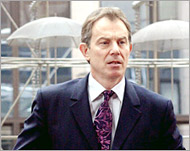
The Geneva-based International Commission of Jurists (ICJ) has said that any US-led attack on Iraq was illegal without UN Security Council backing. "In the absence of such Security Council authorisation, no country may use force against another country, except in self-defence against armed attack…This rule was enshrined in the United Nations Charter in 1946 for a good reason: to prevent states from using force as they felt so inclined," said ICJ Secretary-General Louise Doswald-Beck.
Others like Richard Falk, Professor of International Law and Practice at the prestigious Princeton University in the United States, believe that in order to avoid a Security Council veto by France and possibly Russia, the United States and United Kingdom have confused the disarmament issue as a political and legal justification for removing Saddam Hussein.
“There is no pretence that international law supports such a war and little claim that the brutality of the Iraqi regime creates a foundation for humanitarian intervention”, writes Professor Falk.
British scholar, James Crawford, Whewell Professor of International Law at Cambridge University, says that while “international law has been used as a means of securing regime change in the past, for example Haiti under Cedras … it is a separate question whether the contemplated action has been authorized by the Security Council in Resolution 1441 and earlier resolutions."
War not justified under UN
The countries taking part in the war against Iraq are in breach of international law because they are acting without a further Security Council Resolution, argues British lawyer, Rabinder Singh.
To start with, all resolutions to date that have authorised force have used such phrases as “authorised to use all necessary means” and “take all necessary measures”. These phrases are missing from 1441 because all 15 states who unanimously passed the resolution did not believe they were voting for war.
Ramsey Clark, the former US Attorney General, is also on record as saying that “a military attack on Iraq is obviously criminal; completely inconsistent with urgent needs of the peoples of the United Nations; unjustifiable on any legal or moral ground; irrational in light of the known facts; out of proportion to other existing threats of war and violence; and a dangerous adventure risking continuing conflict throughout the region and far beyond for years to come.”
While most international lawyers reject the claim that the UN resolution 1441 authorises the invasion of Iraq, there are a few that do not dismiss the idea completely.
Christopher Greenwood, professor of international law at the London School of Economics in Britain, believes “the authority to use force in Security Council Resolution 678 is revived by Security Council Resolution 1441. Resolution 678 authorizes the use of force for the restoration of international peace and security in the area. The Council has repeatedly held that Iraq's non-compliance with its legal obligations regarding disarmament poses a threat to international peace. The use of force is therefore lawful to achieve disarmament after 12 years of unsuccessfully attempting to achieve it by other means. Removing the present government of Iraq would be lawful if that were necessary to achieve disarmament.”
Greenwood draws attention to the phrase ‘for the restoration of international peace’ in Resolution 678. Few agree that Iraq poses such a threat or is disrupting international peace. While the UN charter, articles 41 and 42 for instance, make it clear war is a matter of last resort and allows for pre-emptive strikes in the event of an imminent threat, it is not clear that war is a last resort in this case or that an attack is imminent.
“Before the US government can claim to be acting in self-defence, it must present compelling evidence that terrorist groups linked to Hussein, or Hussein himself, are both willing and able to launch an imminent attack on the American homeland ” Professor Bruce Ackerman, Sterling Professor of Law and Political Science at Yale.
War crimes charges
This is not just a theoretical legal debate. The legality, or lack of it, may have very serious consequences for political and military leaders in the US, UK, and Australia. A group of US law professors opposed to a possible war on Iraq warned US President George W. Bush in February that he and senior government officials could be prosecuted for war crimes.
Government officials in Britain and Canada could theoretically be investigated by the new International Criminal Court (ICC) in The Hague if it was determined that international laws had been broken.
British Prime Minister Tony Blair received a letter from the Public Interest Lawyers group earlier this year saying: "We, and others, will take steps to ensure that you, and other leaders of the U.K. government are held accountable."
Canada-based Lawyers Against the War said in its letter dated 20 January 2003 that they "will pursue all responsible government officials on charges of murder and crimes against humanity in both the Canadian and the international criminal courts."
The United States has refused to cooperate with the Court and has withdrawn its signature from the treaty establishing it.
But Michael Ratner, president of the Centre for Constitutional Rights, one of the leading signatories to the letter to Bush said although Washington was not a party to the ICC, United States' officials could still be prosecuted under the Geneva Convention. "War crimes under that convention can be prosecuted wherever the perpetrators are found.”
Al Jazeera
Others like Richard Falk, Professor of International Law and Practice at the prestigious Princeton University in the United States, believe that in order to avoid a Security Council veto by France and possibly Russia, the United States and United Kingdom have confused the disarmament issue as a political and legal justification for removing Saddam Hussein.
“There is no pretence that international law supports such a war and little claim that the brutality of the Iraqi regime creates a foundation for humanitarian intervention”, writes Professor Falk.
British scholar, James Crawford, Whewell Professor of International Law at Cambridge University, says that while “international law has been used as a means of securing regime change in the past, for example Haiti under Cedras … it is a separate question whether the contemplated action has been authorized by the Security Council in Resolution 1441 and earlier resolutions."
War not justified under UN
The countries taking part in the war against Iraq are in breach of international law because they are acting without a further Security Council Resolution, argues British lawyer, Rabinder Singh.
To start with, all resolutions to date that have authorised force have used such phrases as “authorised to use all necessary means” and “take all necessary measures”. These phrases are missing from 1441 because all 15 states who unanimously passed the resolution did not believe they were voting for war.
Ramsey Clark, the former US Attorney General, is also on record as saying that “a military attack on Iraq is obviously criminal; completely inconsistent with urgent needs of the peoples of the United Nations; unjustifiable on any legal or moral ground; irrational in light of the known facts; out of proportion to other existing threats of war and violence; and a dangerous adventure risking continuing conflict throughout the region and far beyond for years to come.”
While most international lawyers reject the claim that the UN resolution 1441 authorises the invasion of Iraq, there are a few that do not dismiss the idea completely.
Christopher Greenwood, professor of international law at the London School of Economics in Britain, believes “the authority to use force in Security Council Resolution 678 is revived by Security Council Resolution 1441. Resolution 678 authorizes the use of force for the restoration of international peace and security in the area. The Council has repeatedly held that Iraq's non-compliance with its legal obligations regarding disarmament poses a threat to international peace. The use of force is therefore lawful to achieve disarmament after 12 years of unsuccessfully attempting to achieve it by other means. Removing the present government of Iraq would be lawful if that were necessary to achieve disarmament.”
Greenwood draws attention to the phrase ‘for the restoration of international peace’ in Resolution 678. Few agree that Iraq poses such a threat or is disrupting international peace. While the UN charter, articles 41 and 42 for instance, make it clear war is a matter of last resort and allows for pre-emptive strikes in the event of an imminent threat, it is not clear that war is a last resort in this case or that an attack is imminent.
“Before the US government can claim to be acting in self-defence, it must present compelling evidence that terrorist groups linked to Hussein, or Hussein himself, are both willing and able to launch an imminent attack on the American homeland ” Professor Bruce Ackerman, Sterling Professor of Law and Political Science at Yale.
War crimes charges
This is not just a theoretical legal debate. The legality, or lack of it, may have very serious consequences for political and military leaders in the US, UK, and Australia. A group of US law professors opposed to a possible war on Iraq warned US President George W. Bush in February that he and senior government officials could be prosecuted for war crimes.
Government officials in Britain and Canada could theoretically be investigated by the new International Criminal Court (ICC) in The Hague if it was determined that international laws had been broken.
British Prime Minister Tony Blair received a letter from the Public Interest Lawyers group earlier this year saying: "We, and others, will take steps to ensure that you, and other leaders of the U.K. government are held accountable."
Canada-based Lawyers Against the War said in its letter dated 20 January 2003 that they "will pursue all responsible government officials on charges of murder and crimes against humanity in both the Canadian and the international criminal courts."
The United States has refused to cooperate with the Court and has withdrawn its signature from the treaty establishing it.
But Michael Ratner, president of the Centre for Constitutional Rights, one of the leading signatories to the letter to Bush said although Washington was not a party to the ICC, United States' officials could still be prosecuted under the Geneva Convention. "War crimes under that convention can be prosecuted wherever the perpetrators are found.”
Al Jazeera
For more information:
http://english.aljazeera.net/topics/articl...
Add Your Comments
Comments
(Hide Comments)
Expecting Iraqi civilians to file suit asking for damages?
Why not? For example, this Basra girl's family would seem
to have a strong case, assuming the war is illegal:
http://news.lycos.com/news/photo.asp?section=BreakingPhotos&photoId=293509&captions=off
Sue in Belgium, then sieze US overseas assets?
Why not? For example, this Basra girl's family would seem
to have a strong case, assuming the war is illegal:
http://news.lycos.com/news/photo.asp?section=BreakingPhotos&photoId=293509&captions=off
Sue in Belgium, then sieze US overseas assets?
Deliberately firing at civilians, with artillery!? This obscenity must be stopped.
http://www.telegraph.co.uk/news/main.jhtml;?xml=/news/2003/03/26/war26.xml&sSheet=/portal/2003/03/26/ixportaltop.html
http://www.telegraph.co.uk/news/main.jhtml;?xml=/news/2003/03/26/war26.xml&sSheet=/portal/2003/03/26/ixportaltop.html
Deliberately firing at civilians, with artillery!? This obscenity must be stopped.
http://www.telegraph.co.uk/news/main.jhtml;?xml=/news/2003/03/26/war26.xml&sSheet=/portal/2003/03/26/ixportaltop.html
------------
Perhaps the Iraqis you refer to in this link will face a swifter form of justice in the next few days at the hands of the citizens they have been repressing and murdering...
http://www.telegraph.co.uk/news/main.jhtml;?xml=/news/2003/03/26/war26.xml&sSheet=/portal/2003/03/26/ixportaltop.html
------------
Perhaps the Iraqis you refer to in this link will face a swifter form of justice in the next few days at the hands of the citizens they have been repressing and murdering...
... I thought the reason we are going to war is that Iraq violated UN resolutions. How come Israel gets away with violating resolutions by having weapons of mass distruction?
I guess this is what is meant by an Orwellian regime telling lies that make no sense?
I guess this is what is meant by an Orwellian regime telling lies that make no sense?
To answer the question immediately above, learn the difference between Chapter Six and Chapter Seven UN resolutions.
War crimes tribunals are only useful against those who loose. It is basically the equivalent of trying people in their own country exept that it adds that little bit less of "trial by your peers".
The politics behind it mean it is the equivalent of just going in as a more powerful country and taking someone and pretending to have a court case.
The politics behind it mean it is the equivalent of just going in as a more powerful country and taking someone and pretending to have a court case.
When I use a word , said Scottie in a rather scornful tone, it means what just what *I* choose it to mean, neither more nor less"
'The question is,' said Alice, 'whether you *can* make words mean so many different things....'
============
entries found for crime.
crime ( P ) Pronunciation Key (krm)
n.
1) An act committed or omitted IN VIOLATION OF A LAW forbidding or commanding it and for which punishment is imposed upon conviction.
2) UNLAWFUL ACTIVITY: statistics relating to violent crime.
3) A SERIOUS OFFENCE, especially one in violation of morality.
4) AN UNJUST, SENSELESS, OR DISCGRACEFUL ACT or condition: It's a crime to squander our country's natural resources.
=======================================
http://dictionary.reference.com/search?q=crime
'The question is,' said Alice, 'whether you *can* make words mean so many different things....'
============
entries found for crime.
crime ( P ) Pronunciation Key (krm)
n.
1) An act committed or omitted IN VIOLATION OF A LAW forbidding or commanding it and for which punishment is imposed upon conviction.
2) UNLAWFUL ACTIVITY: statistics relating to violent crime.
3) A SERIOUS OFFENCE, especially one in violation of morality.
4) AN UNJUST, SENSELESS, OR DISCGRACEFUL ACT or condition: It's a crime to squander our country's natural resources.
=======================================
http://dictionary.reference.com/search?q=crime
War is Peace (70k audio - press to retrieve)
We are 100% volunteer and depend on your participation to sustain our efforts!
Donate

$110.00 donated
in the past month
Get Involved
If you'd like to help with maintaining or developing the website, contact us.
Publish
Publish your stories and upcoming events on Indybay.
Topics
More
Search Indybay's Archives
Advanced Search
►
▼
IMC Network