







 Publish to Newswire
 Add an Event
From the Open-Publishing Calendar
From the Open-Publishing Newswire
Indybay Feature
Treesiters Stay Strong, PALCO Devastation Continues
HUMBOLDT COUNTY, California, January 29, 2003 (ENS) - Accelerated logging
has polluted some 85 percent of the waters in California's North Coast
region, uprooted protected redwoods and damaged private property, but state
officials continue to permit logging companies to avoid complying with
environmental regulations.
has polluted some 85 percent of the waters in California's North Coast
region, uprooted protected redwoods and damaged private property, but state
officials continue to permit logging companies to avoid complying with
environmental regulations.
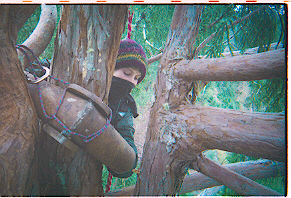
Logging Pollution Damages North Coast Watersheds
HUMBOLDT COUNTY, California, January 29, 2003 (ENS) - Accelerated logging has polluted some 85 percent of the waters in California's North Coast region, uprooted protected redwoods and damaged private property, but state officials continue to permit logging companies to avoid complying with environmental regulations.
California environmentalists are fighting back with lawsuits, and activists continue to take to the trees in a desperate attempt to save ancient redwoods and their surrounding ecosystems.
They blame inadequate state oversight and the intensive logging practices of Pacific Lumber Company for the region's poor water quality, as well as for recent landslides and flooding within the region's watersheds.
"People in Humboldt County are really suffering from the effects of this logging," said Cynthia Elkins, a spokeswoman for the Environmental Protection Information Center (EPIC). "The water quality problems are very profound and severe."
A new independent study found that excessive logging by the company within five Humboldt County watersheds has caused severe water quality problems and flooding downstream. The independent scientific study was issued by a panel of scientists chosen by community members, the North Coast Regional Water Quality Board and Pacific Lumber Company.
The panel unanimously concluded that the company's rate of logging must be dramatically reduced due to water quality concerns, and the water board is investigating whether Pacific Lumber Company has logged in some areas without the appropriate permits.
"Pacific Lumber is going through these watersheds, clearcutting, burning and then spraying herbicides on vast areas of land in a very short timeframe," Elkins said. "We have a very unique geology in this area where it is even more unstable than most areas, and it is naturally susceptible to erosion. When you couple that with the intensive style of management that Pacific Lumber is carrying out through the terms of the Headwaters Deal, it really spells disaster."
Pacific Lumber Company says it has done nothing wrong and believes that some environmentalists "will never be satisfied," according to company spokeswoman Mary Bullwinkle.
Heavy December rains caused some of the erosion and mudslides, she said, and the panel's report did not include relevant information about the company's environmental protections.
"We disagree with the complaint that water quality is not in good shape in those watersheds," she told ENS. "We believe the study is incomplete and is too narrowly focused."
The company's environmental protections go well beyond what is required by California law, she added, and some of the efforts undocumented by the report include a planned $1 million to be spent on road improvements, set aside areas, forested buffers along streams and wet weather restrictions.
But it is clear that the state is not holding the company to the requirements of California's Clean Water Act. The logging industry in the North Coast region of California has operated under a waiver since 1987 that eliminates the requirement that they comply with the law.
This waiver was up for review over the past three years, but the North Coast Regional Water Quality Board adopted a categorical waiver on December 10, 2002, just prior to the deadline. The new waiver relies on the implementation of the California Forest Practice Rules by the California Department of Forestry for logging operations to protect water quality on nonfederal land.
But these rules, said Earthjustice attorney Mike Lozeau, don't work, and the water quality and watershed problems simply confirm this.
"It is painfully demonstrated in the North Coast that the rules that we are relying on are not sufficient to protect water quality," Lozeau said, adding that the U.S. Environmental Protection Agency, the U.S. National Marine Fisheries Service and the Regional Water Board have each criticized the effectiveness of this rule.
Earthjustice, on behalf of EPIC and the Humboldt Watershed Council, filed a petition in mid-January in California Superior Court to reverse the renewal of the waiver. The board, according to Earthjustice, did not analyze the potential adverse environmental impact of the waiver, something that is required by state law.
Earthjustice has also filed an administrative appeal with the State Water Resources Control Board challenging this decision to grant the waiver.
"The waiver is basically paying for overseeing discharges by very large logging companies like Pacific Lumber and that is bad public policy," he said. "It is not what the public expects."
With some 96 percent of the original redwood ecosystem gone, many activists are willing to go to extreme measures to try and force protection of what is remaining. A dozen or more tree sitters from the environmental group EarthFirst! are currently protesting within Pacific Lumber's Demonstration Forest as well as on the company's lands near in Grizzley Creek, within the Mattole watershed and on Gypsy Mountain.
The mountain was named after activist David "Gypsy" Chain, who in 1998 was killed by an angry logger who felled a tree that crushed Chain, who was in the forest with a group of anti-logging protesters.
Bullwinkle confirmed that the company had removed one of the 12 tree sitters on January 16. "This is a very difficult issue," she said. "We would wish they would not take the law into their own hands. These are illegal activities and very dangerous as well. We approach it on a case by case basis."
The controversy over the management of the North Coast forests has deep roots. In 1985, Maxxam, a Texas based corporation, succeeded in a $900 million hostile takeover of Pacific Lumber, a company with local ties stretching back to the 1850s.
Maxsam kept the Pacific Lumber name, but tripled the rate of its logging operations. A chorus of protests soon followed, as activists took to the streets and to the trees, appealing to the public and the logging industry to protect many of the world's last redwood forests.
The result of these protests came 10 years later, with the Headwaters Forest deal between the federal government and Pacific Lumber. At the heart of the deal was the exchange of $480 million in public money for some 7,500 acres of ancient redwoods, which is called the Headwaters Forest.
Although it included a 50 year ban on logging within some additional 7,000 acres, it allowed Pacific Lumber to bypass many logging restrictions on much of its land, including protections for endangered species and limits on the rate of logging. The company owns some 210,000 acres in Humboldt County.
It is nearly four years later and many local activists are clearly not happy with the consequences. Conservationists worry that Pacific Lumber has rapidly increased its logging, with negative impacts to the watersheds and to endangered species such as the marbled murrelet and the coho salmon.
Although the company must submit plans to the California Department of Forestry to commence logging operations, many activists fear the company has effectively neutralized any political opposition to its efforts.
"It is extremely political," Elkins said. "Every time it seems like we are getting movement … nothing happens. It is very frustrating."
HUMBOLDT COUNTY, California, January 29, 2003 (ENS) - Accelerated logging has polluted some 85 percent of the waters in California's North Coast region, uprooted protected redwoods and damaged private property, but state officials continue to permit logging companies to avoid complying with environmental regulations.
California environmentalists are fighting back with lawsuits, and activists continue to take to the trees in a desperate attempt to save ancient redwoods and their surrounding ecosystems.
They blame inadequate state oversight and the intensive logging practices of Pacific Lumber Company for the region's poor water quality, as well as for recent landslides and flooding within the region's watersheds.
"People in Humboldt County are really suffering from the effects of this logging," said Cynthia Elkins, a spokeswoman for the Environmental Protection Information Center (EPIC). "The water quality problems are very profound and severe."
A new independent study found that excessive logging by the company within five Humboldt County watersheds has caused severe water quality problems and flooding downstream. The independent scientific study was issued by a panel of scientists chosen by community members, the North Coast Regional Water Quality Board and Pacific Lumber Company.
The panel unanimously concluded that the company's rate of logging must be dramatically reduced due to water quality concerns, and the water board is investigating whether Pacific Lumber Company has logged in some areas without the appropriate permits.
"Pacific Lumber is going through these watersheds, clearcutting, burning and then spraying herbicides on vast areas of land in a very short timeframe," Elkins said. "We have a very unique geology in this area where it is even more unstable than most areas, and it is naturally susceptible to erosion. When you couple that with the intensive style of management that Pacific Lumber is carrying out through the terms of the Headwaters Deal, it really spells disaster."
Pacific Lumber Company says it has done nothing wrong and believes that some environmentalists "will never be satisfied," according to company spokeswoman Mary Bullwinkle.
Heavy December rains caused some of the erosion and mudslides, she said, and the panel's report did not include relevant information about the company's environmental protections.
"We disagree with the complaint that water quality is not in good shape in those watersheds," she told ENS. "We believe the study is incomplete and is too narrowly focused."
The company's environmental protections go well beyond what is required by California law, she added, and some of the efforts undocumented by the report include a planned $1 million to be spent on road improvements, set aside areas, forested buffers along streams and wet weather restrictions.
But it is clear that the state is not holding the company to the requirements of California's Clean Water Act. The logging industry in the North Coast region of California has operated under a waiver since 1987 that eliminates the requirement that they comply with the law.
This waiver was up for review over the past three years, but the North Coast Regional Water Quality Board adopted a categorical waiver on December 10, 2002, just prior to the deadline. The new waiver relies on the implementation of the California Forest Practice Rules by the California Department of Forestry for logging operations to protect water quality on nonfederal land.
But these rules, said Earthjustice attorney Mike Lozeau, don't work, and the water quality and watershed problems simply confirm this.
"It is painfully demonstrated in the North Coast that the rules that we are relying on are not sufficient to protect water quality," Lozeau said, adding that the U.S. Environmental Protection Agency, the U.S. National Marine Fisheries Service and the Regional Water Board have each criticized the effectiveness of this rule.
Earthjustice, on behalf of EPIC and the Humboldt Watershed Council, filed a petition in mid-January in California Superior Court to reverse the renewal of the waiver. The board, according to Earthjustice, did not analyze the potential adverse environmental impact of the waiver, something that is required by state law.
Earthjustice has also filed an administrative appeal with the State Water Resources Control Board challenging this decision to grant the waiver.
"The waiver is basically paying for overseeing discharges by very large logging companies like Pacific Lumber and that is bad public policy," he said. "It is not what the public expects."
With some 96 percent of the original redwood ecosystem gone, many activists are willing to go to extreme measures to try and force protection of what is remaining. A dozen or more tree sitters from the environmental group EarthFirst! are currently protesting within Pacific Lumber's Demonstration Forest as well as on the company's lands near in Grizzley Creek, within the Mattole watershed and on Gypsy Mountain.
The mountain was named after activist David "Gypsy" Chain, who in 1998 was killed by an angry logger who felled a tree that crushed Chain, who was in the forest with a group of anti-logging protesters.
Bullwinkle confirmed that the company had removed one of the 12 tree sitters on January 16. "This is a very difficult issue," she said. "We would wish they would not take the law into their own hands. These are illegal activities and very dangerous as well. We approach it on a case by case basis."
The controversy over the management of the North Coast forests has deep roots. In 1985, Maxxam, a Texas based corporation, succeeded in a $900 million hostile takeover of Pacific Lumber, a company with local ties stretching back to the 1850s.
Maxsam kept the Pacific Lumber name, but tripled the rate of its logging operations. A chorus of protests soon followed, as activists took to the streets and to the trees, appealing to the public and the logging industry to protect many of the world's last redwood forests.
The result of these protests came 10 years later, with the Headwaters Forest deal between the federal government and Pacific Lumber. At the heart of the deal was the exchange of $480 million in public money for some 7,500 acres of ancient redwoods, which is called the Headwaters Forest.
Although it included a 50 year ban on logging within some additional 7,000 acres, it allowed Pacific Lumber to bypass many logging restrictions on much of its land, including protections for endangered species and limits on the rate of logging. The company owns some 210,000 acres in Humboldt County.
It is nearly four years later and many local activists are clearly not happy with the consequences. Conservationists worry that Pacific Lumber has rapidly increased its logging, with negative impacts to the watersheds and to endangered species such as the marbled murrelet and the coho salmon.
Although the company must submit plans to the California Department of Forestry to commence logging operations, many activists fear the company has effectively neutralized any political opposition to its efforts.
"It is extremely political," Elkins said. "Every time it seems like we are getting movement … nothing happens. It is very frustrating."
For more information:
http://ens-news.com/ens/jan2003/2003-01-29...

Add Your Comments
Comments
(Hide Comments)
It is misleading to claim that an Earth First! group is responsible for all the tree-sits in Humboldt county.
The different tree-sit areas are independant from one another. Anyone who claims that an Earth First! group is responsible for all these tree-sits is most likely mis-informed or lacks a historical perspective on the movement.
The different tree-sit areas are independant from one another. Anyone who claims that an Earth First! group is responsible for all these tree-sits is most likely mis-informed or lacks a historical perspective on the movement.
What do you see when you look at the loggers picture? I see a weapon of mass destruction. The man and the chainsaw. The mass destruction begins with the deaths of ancient trees, then the herbicides take care of all other things that live in the forest. Then the mudslides caused by the clearcut pour down on the humans who happen to be in the way and their lives are threatened and their ground water poisoned. Of course the salmon and other residents of the silt filled rivers shall also perish. All the while the Axis of Evil (PL and contract loggers) deny and deny any wrongdoing inspite of eyewitness accounts and convincing video. The Law should deal with them swiftly and harshly, but instead turn the tables and accuse the non-violent forest defenders of being the
"terrorists". What a sick system.
"terrorists". What a sick system.
The reason you see things that way is that your perspective lacks insight and longterm vision. You see gaps in the forest as static and inconguous with its surroundings. Logging requires generations to fully understand the effects on ecosystems. While in a quick look, things may befuddle one ignorant to nature's processes, a more astute individual would understand the capability of nature to recover and improve.
Perhaps if you spent time informing yourself about logging, your diatribes may someday have merit.
meow
Perhaps if you spent time informing yourself about logging, your diatribes may someday have merit.
meow
wildcat,
So if your dumbasses have improved the natural world, why so many species listed as threatened or endangered? why has the fishing industry in humboldt county become an extinct industry? if your improving the watersheds, why so much flooding and siltation? those are just a few examples of why your analysis is flawed. PL before the cut rate was set based on financial obligations, cut the forest to improve it, but since the cutting quotas became based on a finacial taget to meet the debt, nothing but mass destruction has occurred.
So if your dumbasses have improved the natural world, why so many species listed as threatened or endangered? why has the fishing industry in humboldt county become an extinct industry? if your improving the watersheds, why so much flooding and siltation? those are just a few examples of why your analysis is flawed. PL before the cut rate was set based on financial obligations, cut the forest to improve it, but since the cutting quotas became based on a finacial taget to meet the debt, nothing but mass destruction has occurred.
I am afriad I have only one dumbass(not plural). Your arguements are somewhat tiresome in their repetition, but not irrelevent. The endangered species act is a political entitity. Species are divided and subdivided into populations that are then deemed threatened. Often the species most threatened are at the end of their habitat range, which would mean their population would be marginal without man's help. While these species need a place to live, and the habitat set aside by every lumber company in this country follows the guidelines of the ESA, the titles of threatened or endangered may be a bit severe.
These are semantics. If there was a real problem with logging and species extinction, wouldn't you think that there would have been a larger number of species that have gone extinct due to loss of forest habitat in California. The facts seem to spell out that species extinction is due more to hunting, poisoning, or all out loss of habitat due to conversion of ecosystems. This conversion does no occur on land designated for timber production. The endangered species argument is a poor one.
As for watersheds, talk to past generations. As they skidded down creeks and forever altered the landscape, I am sure they did some damage that hasn't, and may never repair itself. The world does not just exist in the now. Nearly all the standing forests in this country are second or third generation. That means they have been logged before, and the trees grew back well enough to log again, and again.
I am not trying to portray past or modern day logging as infallable. But to not admit that improvements have been made is being just plain ignorant.
meow
These are semantics. If there was a real problem with logging and species extinction, wouldn't you think that there would have been a larger number of species that have gone extinct due to loss of forest habitat in California. The facts seem to spell out that species extinction is due more to hunting, poisoning, or all out loss of habitat due to conversion of ecosystems. This conversion does no occur on land designated for timber production. The endangered species argument is a poor one.
As for watersheds, talk to past generations. As they skidded down creeks and forever altered the landscape, I am sure they did some damage that hasn't, and may never repair itself. The world does not just exist in the now. Nearly all the standing forests in this country are second or third generation. That means they have been logged before, and the trees grew back well enough to log again, and again.
I am not trying to portray past or modern day logging as infallable. But to not admit that improvements have been made is being just plain ignorant.
meow
We will never forget what MAXXUM and Horowitz did to Stafford.
wildcat,
since you've bought hook line and sinker the timber company lines, i'm blending you in as a pr hack for the industry. cause you all spew the same ol bullshit. your all a bunch of dumbasses. yes, your fragmenting of the whole ecosystem is what is causing loss of habitat. you make no mention of historically the river and streams used to provide a million dollar fishing industry. what makes the greedy timber industry so much more worthy than the fishing industry? what makes the agricultural business more worthy than the fishing industry in the klamath basin? it seems who has the bigger stick in sacramento or washington dc gets what they want. we know about jared carter's temper tantrum's in sacramento and that hurwitz has his penthouse adjacent to the bush family in texas. we know PL's certification is as good as the company Enron. yes you two companies share the same big business white collar crooks to do your accounting. on paper, maybe some of the laws are better than what is written about with the logs jams and the ol ways, but i'm not impressed by the least with setting cut rates based on finances and not what the land can allow. until you set your cut rates by what the land can give, just go back to sticking your head in the sand and claim whatever you want.
since you've bought hook line and sinker the timber company lines, i'm blending you in as a pr hack for the industry. cause you all spew the same ol bullshit. your all a bunch of dumbasses. yes, your fragmenting of the whole ecosystem is what is causing loss of habitat. you make no mention of historically the river and streams used to provide a million dollar fishing industry. what makes the greedy timber industry so much more worthy than the fishing industry? what makes the agricultural business more worthy than the fishing industry in the klamath basin? it seems who has the bigger stick in sacramento or washington dc gets what they want. we know about jared carter's temper tantrum's in sacramento and that hurwitz has his penthouse adjacent to the bush family in texas. we know PL's certification is as good as the company Enron. yes you two companies share the same big business white collar crooks to do your accounting. on paper, maybe some of the laws are better than what is written about with the logs jams and the ol ways, but i'm not impressed by the least with setting cut rates based on finances and not what the land can allow. until you set your cut rates by what the land can give, just go back to sticking your head in the sand and claim whatever you want.
While disappointed at the suprising finding that you still disagree, I suppose I will have to get used to it.
I would like to illustrate however, how unfair the catagorical denial of my perspective was. It seems that you possess identical ideas to many folks that tirelessly repeat the same inane drivel, yet I don't find that reason to discount your beleifs. But I suppose if you listen to long to another perspective, you may end up changing your mind, and you can't have that can you?
Simply stating that a person is of less stature because of the side they sit on is called dehumanization. You are not alone in this arguement technique. Many dicators and war-mongers through-out time have resorted to the same tactics. Enjoy your company.
Meow
I would like to illustrate however, how unfair the catagorical denial of my perspective was. It seems that you possess identical ideas to many folks that tirelessly repeat the same inane drivel, yet I don't find that reason to discount your beleifs. But I suppose if you listen to long to another perspective, you may end up changing your mind, and you can't have that can you?
Simply stating that a person is of less stature because of the side they sit on is called dehumanization. You are not alone in this arguement technique. Many dicators and war-mongers through-out time have resorted to the same tactics. Enjoy your company.
Meow
You are a fool if you feel that deforestation is good for the environment in any way. Sorry, But thats ridiculous.
To Geesh: we can't just respect the people that agree with us. your knowledge and passion for the forest are like a nice gravel spawning bed. your hateful words are like the mud and muck of a landslide on top of it. did u really think you were helping by using terms like "dumbass", "pr hack", "spewing bullshit"? What does "blending you into a pr hack mean" anyways? sounds painful. your little flame out serves only to polarize. did u enjoy it?
in reponse to wildcat: the majority of people interested in preserving old growth, if i may presume to speak for them this once, do not think you are a dumbass (or plural). you send like you know about logging. i'm glad we agree that "...these species need a place to live..." mostly because of, as you say, "...all out loss of habitat due to conversion of ecosystems." i can't argue with you when you say "I am not trying to portray past or modern day logging as infallable. But to not admit that improvements have been made is being just plain ignorant." hooray for hundred foot riparian areas. But the flip side of that coin is that they've improved the technology to the point where they can log on slopes too steep to build roads on. (helicopters), spray broad range defoliants (sound familiar?) on deciduos trees, and use feller-bunchers to clearcut monoculture tree farms of substandard wood (7 growth rings per inch). None of these things benefit anyone but the corporations (or just the ceos selling the stock therof) who are taking the equity (standing trees of prime lumber 22 rings per inch) and running. i'm sure they're making a higher rate of return with that money jimmying their stock values and defrauding their pensioner's 401(k)'s. "Congruity" of forestland is their last concern, right behind the economy of tomorrow's logging communities. we need the last stands of old growth to shade some high qaulity sawlogs. the only way to have a viable forest products economy (which would inherently prevent the conversion of these ecosystems) is to have (sorry to use an "inane" word) "sustainable" logging. high qaulity sawlogs selectively harvested. one guy with a feller buncher and a toothpick mill does not an economy make. i would be interested to hear if we agree that biodiversity has value. do you agree that pristine old growth is necessary for biodiversity? (i have the studies, i'll email em to you). In conclusion, let me compliment you on your choice of words "Simply stating that a person is of less stature because of the side they sit on is called dehumanization. You are not alone in this arguement technique. Many dicators and war-mongers through-out time have resorted to the same tactics. Enjoy your company. "
well said.
if you want those studies...jjw215 [at] yahoo.com
but we do see altogether too many "gaps in the forest" that are static. and what could be more incongruous than a monoculture tree farm next to a stand of old growth?(less and less of that though, these days) clearcutting, garlon, feller-bunchers, landslides, high-grading,
in reponse to wildcat: the majority of people interested in preserving old growth, if i may presume to speak for them this once, do not think you are a dumbass (or plural). you send like you know about logging. i'm glad we agree that "...these species need a place to live..." mostly because of, as you say, "...all out loss of habitat due to conversion of ecosystems." i can't argue with you when you say "I am not trying to portray past or modern day logging as infallable. But to not admit that improvements have been made is being just plain ignorant." hooray for hundred foot riparian areas. But the flip side of that coin is that they've improved the technology to the point where they can log on slopes too steep to build roads on. (helicopters), spray broad range defoliants (sound familiar?) on deciduos trees, and use feller-bunchers to clearcut monoculture tree farms of substandard wood (7 growth rings per inch). None of these things benefit anyone but the corporations (or just the ceos selling the stock therof) who are taking the equity (standing trees of prime lumber 22 rings per inch) and running. i'm sure they're making a higher rate of return with that money jimmying their stock values and defrauding their pensioner's 401(k)'s. "Congruity" of forestland is their last concern, right behind the economy of tomorrow's logging communities. we need the last stands of old growth to shade some high qaulity sawlogs. the only way to have a viable forest products economy (which would inherently prevent the conversion of these ecosystems) is to have (sorry to use an "inane" word) "sustainable" logging. high qaulity sawlogs selectively harvested. one guy with a feller buncher and a toothpick mill does not an economy make. i would be interested to hear if we agree that biodiversity has value. do you agree that pristine old growth is necessary for biodiversity? (i have the studies, i'll email em to you). In conclusion, let me compliment you on your choice of words "Simply stating that a person is of less stature because of the side they sit on is called dehumanization. You are not alone in this arguement technique. Many dicators and war-mongers through-out time have resorted to the same tactics. Enjoy your company. "
well said.
if you want those studies...jjw215 [at] yahoo.com
but we do see altogether too many "gaps in the forest" that are static. and what could be more incongruous than a monoculture tree farm next to a stand of old growth?(less and less of that though, these days) clearcutting, garlon, feller-bunchers, landslides, high-grading,
Did anyone notice the licence plate in that logger pic? Might he be in N. CA because Oregon's protections are more stringent? I am not truly Cal-centric but should we be opening our forests for Oregonians?
Well, really it's not his fault (the logger in the pic). He is a hard working stiff and isn't really interested in cutting all the old growth down. In fact he probably loves the forest. The person(s) to blame are not in frame, they are back at HQ, in suits (aren't they always in suits?), demanding more logging faster than everyone knows (even them which I find strange) is sustainable.
Why? Because in order to fit in a "growth" economy you have to grow. And how do you grow if, as Wildcat says, all the forests have already been cut down? You don't. But you can fake it for awhile by laying off all your lumberjacks and trying to weasel all the state/federal subsidized forest you can get your crews to cut for you. I say the only thing you can fault that Oregonian in the pic for is not noticing that his company is using him to ruin his lifestyle. And when its over, the suits will retire to Florida and sip mudslides. And laugh.
I think we should chain ourselves to the suits.
Well, really it's not his fault (the logger in the pic). He is a hard working stiff and isn't really interested in cutting all the old growth down. In fact he probably loves the forest. The person(s) to blame are not in frame, they are back at HQ, in suits (aren't they always in suits?), demanding more logging faster than everyone knows (even them which I find strange) is sustainable.
Why? Because in order to fit in a "growth" economy you have to grow. And how do you grow if, as Wildcat says, all the forests have already been cut down? You don't. But you can fake it for awhile by laying off all your lumberjacks and trying to weasel all the state/federal subsidized forest you can get your crews to cut for you. I say the only thing you can fault that Oregonian in the pic for is not noticing that his company is using him to ruin his lifestyle. And when its over, the suits will retire to Florida and sip mudslides. And laugh.
I think we should chain ourselves to the suits.
Thank you treetop, for the dialogue.
I would say that the retention and sustainablility of all species (wildlife and plant) is essential to forest management. However, I feel that the term species diversity is weighted. Semantics again. Don't need the studies thanks, I've read them.
Mr. T.(presumebly lacking the mohawk),
I don't recall stating that all the trees have been cut down already. If I did post that somewhere, it was unintentional. If I didn't post that, I will thank you to no longer take the liberty of paraphasing my comments in a false light. Either way, what I DID say was that most forests have been harvested once, and even twice by now and trees keep on coming.
meow
I would say that the retention and sustainablility of all species (wildlife and plant) is essential to forest management. However, I feel that the term species diversity is weighted. Semantics again. Don't need the studies thanks, I've read them.
Mr. T.(presumebly lacking the mohawk),
I don't recall stating that all the trees have been cut down already. If I did post that somewhere, it was unintentional. If I didn't post that, I will thank you to no longer take the liberty of paraphasing my comments in a false light. Either way, what I DID say was that most forests have been harvested once, and even twice by now and trees keep on coming.
meow
I dont think that logging is a good industry, but I do think that its necessary. Aside from hemp, what would we use for paper and many other applications of logging. Also people have talked about what they see in the picture. I see a guy working far harder than I do. I see a guy trying to provide for his family and children. I see a guy who looks life in the face and has no illusions about what he is. He is a blue collar worker and is the strength of the US. Hate the corporation, not the worker. You may say he is guilty because he works for them. However, that is the same argument that many terrorists use when the kill innocent people.
Just trying to get people to think
Just trying to get people to think
We are 100% volunteer and depend on your participation to sustain our efforts!
Donate

$110.00 donated
in the past month
Get Involved
If you'd like to help with maintaining or developing the website, contact us.
Publish
Publish your stories and upcoming events on Indybay.
Topics
More
Search Indybay's Archives
Advanced Search
►
▼
IMC Network