







 Publish to Newswire
 Add an Event
From the Open-Publishing Calendar
From the Open-Publishing Newswire
Indybay Feature
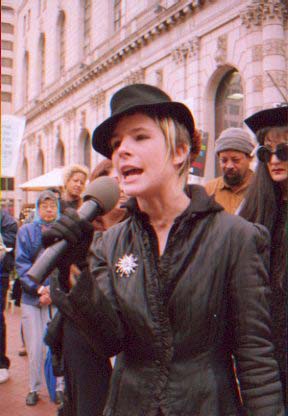
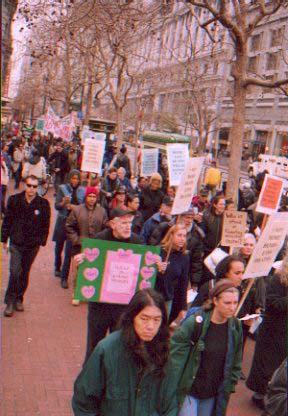
Homeless Death Action
The SFDPH thinks dead homeless people don't count, it is not a "priority" to prevent these deaths and has stopped doing a homeless death study in 1999. For two years they were unable to respond as to why. At this time they are claiming staff shortages and change of priority. The community and several organizations need this information to pressure for change.
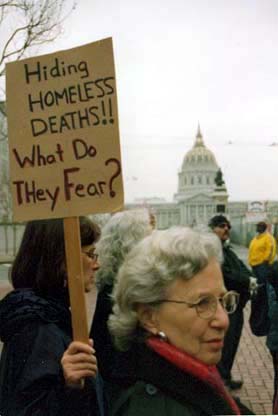
WE ARE DEMANDING the FOLLOWING:
*PREVENT HOMELESS DEATH
*COUNT AND STUDY HOMELESS DEATHS IN HEALTH DEPARTMENT
*RE-INSTITUTE HOMELESS PEOPLE'S OVERSIGHT COMMITTEE TO MAKE RECOMMENDATIONS FOR CHANGE
*ADHERE TO EXISTING SAN FRANCISCO DEFINITION OF HOMELESSNESS IN THE STUDY
Call DR. MITCH KATZ , Director, SFDPH 415-554-2888 and tell him to STOP being derelict in his duties-STUDY & PREVENT HOMELESS DEATHS NOW!
******
Downtown San Francisco has long been the living heart of the city. It is where city government decides and rules, where corporate skyscrapers sketch the city's physical and fiscal profile, where more dollars are made, spent, taxed, and budgeted than anywhere else in the city.
It beats with the lifeblood of tourists, corporate and city workers, and shoppers crowding its sidewalks and streets on their way to the sights, jobs, and sales they seek in San Francisco.
Ironically, they sometimes must also sidestep the still and tragic bodies of homeless people whose public deaths are the grim conclusion to their private lives of desperate poverty in a city of plenty.
City Hall, until 1996, had also been sidestepping these sidewalk deaths--just as its residents, commuters, and tourists had been--by an unspoken policy of benign neglect over the lost lives, the giving of grave promises that became buried in bureaucracy, and the offering of skeleton programs for the living survivors among the poorest of the poor.
As a result, since 1985 there was an annual media event the week before Christmas when The Tenderloin Times, a small community newspaper, published its investigative report on the number of homeless deaths during the past year in San Francisco. The city, until after Christmas, collectively bowed its head in sad memory and shared shame over these deaths in concerned editorials and city leaders' solemn words.
Downtown San Francisco, where most of the homeless deaths occurred, had eerily become a concrete dying ground for homeless San Franciscans for all but one week of each year for over a decade.
There seemed to be a cold hardness within the heart of this celebrated cool, grey city that was condemning more homeless San Franciscans to unnecessarily die an early death.
But, beginning in early 1996, San Francisco, The City That Can, found the heart to at least try.
At that time, the San Francisco Department of Public Health, responding to a recommendation from the SF Coalition on Homelessness to reassemble and rename the outreach component of a former mayor's effort to use the police to enforce "quality of life" nuisance laws, convened a homeless death prevention planning group to develop a public health project to reduce the annual number of preventable homeless deaths. After much planning, extensive consultation with homeless advocates and health professionals, and hiring of key staff, an interim annual report on the homeless deaths that occurred in San Francisco in the 1996 study period was released.
San Francisco became the first and only American city whose Department of Public Health determined the annual number of homeless deaths that occurred within its jurisdiction and descriptively analyzed these deaths to develop and implement effective and efficient intervention strategies to reduce homeless mortality.
By June, 1997, with the completion of the funding, hiring, and training of all the needed staff, this city-funded preventive public health program began to operate at full capacity.
There has been at least 1,343 confirmed and documented deaths of homeless San Franciscans found in Medical Examiner Office's records of death since 1985. The first 1,085 homeless deaths were determined and analyzed over an eleven-year period through a collaborative effort by investigative journalists from The Tenderloin Times, homeless people, and homeless advocates, with some informal help by shelter and service providers and public health researchers. The methodology used then to find and analyze official death records of homeless San Franciscans was largely developed by this community effort.
Both components of this program, although funded by the city, are largely guided in their efforts by a Homeless Deaths Prevention Community Advisory Board, a collaborative body of homeless advocates, community-based organizations, city representatives, and staff from the Homeless Deaths Prevention Project.There are two parts to the Homeless Deaths Prevention Project. The Homeless Deaths Research Team systematically reviews ME records of death according to a selection criteria based upon a specific operational definition of homelessness and descriptively analyzes that data for an annual report. In addition, weekly, monthly, and quarterly interim reports are compiled during the course of the year to help further guide the Homeless Death Prevention Team's prevention and intervention efforts.
The crucial work of actually preventing homeless deaths occurs with the Homeless Deaths Prevention Team. It is believed that some homeless deaths could have been prevented if the appropriate systems of care and approach to service delivery were available. As a result, a multidisciplinary team offers medical and psychosocial services, housing and shelter referrals, assistance with basic daily living needs, substance abuse harm reduction, and referrals to other programs, as needed, to those homeless people most at risk of death.
Team members monitor their clients' outcomes and troubleshoot access and systems issues their clients encounter. The Prevention Team is deployed to certain geographic areas identified through periodic review of homeless death data as most in need of their resources.
Through intervention strategies, their goal is to alleviate some of the conditions which may lead to a premature death and help to provide those endangered and at-risk individuals with the means to obtain more stable living situations and lives.The 1997 San Francisco Homeless Deaths Report is the second annual count and descriptive analysis of homeless mortality in San Francisco by the Homeless Program of the SF Department of Public Health. The first report in 1996 primarily focused on research concerning long-term patterns of homeless mortality in San Francisco since 1990. This year's report emphasizes more recent and current patterns of homeless mortality and provides a more in-depth descriptive analysis of these patterns.
******************
THE COMMUNITY EXPECTS FROM DPH REGARDING THE HOMELESS DEATH PREVENTION PROGRAM
A city-funded homeless death prevention program has been sought by the community of homeless people and their advocates since the first annual homeless death count and analysis was done by journalists and the community in 1985. This count and analysis is now the nation's longest continuing study of urban homeless deaths.
Over the dozen years since then, after years of meetings with organized homeless people, formerly homeless people, and homeless advocacy groups, a community consensus has been reached concerning the basic elements of an effective and efficient system to reduce the number of preventable homeless deaths. These basic elements are listed below, as follows, and constitutes the community's expectations from DPH in adapting this community-developed process into a city-funded program:
1. To institutionalize within DPH an accurate, comprehensive, and detailed annual count and analysis of homeless deaths based upon the methodology and practice developed by the community since 1985, including the following improvements:
ÿ the development of a system to identify and access death data of homeless people who died in public and private hospitals;
ÿ the development of a system to identify and access the 4,000 annual records of death reviewed by the Medical Examiner but not accepted by them as an ME case; and,
ÿ the development of any other sources of information on homeless deaths that makes the analysis more comprehensive and representative of the homeless population at risk of death;
2. To create and institutionalize a multidisciplinary outreach team who will design and implement prevention and intervention strategies to reduce the number of preventable homeless deaths that occur each year. This homeless death prevention team shall contain, as a minimum, the following key components:
ÿ appropriate staffing to implement prevention strategies at the most effective places and times;
ÿ appropriate priority to timely get whatever resources, as deemed needed, to successfully intervene in individual situations and cases;sustained and reliable administrative support that maximizes the field time of its outreach workers;
ÿ relevant, accurate, and current data on homeless deaths, as deemed needed, to most effectively and efficiently help the homeless population most at risk of death; and,
ÿ data, on a regular basis, that identifies relevant and useful baseline trends and detects new emerging trends in the patterns of homeless deaths;
3. To analyze this homeless death data to provide the homeless death prevention team with the following information:
* the names, location, time, causes of death, and any other factors needed by them, of homeless people who died during the past year;
* monthly updates of the names, location, time, causes of death, and any other factors needed by them, of homeless people who died during the current year; and,* quarterly summaries of these homeless death factors of those homeless people who died during the current year;
4. To gather relevant and timely data from city databases identifying and analyzing the contacts with the health system made by homeless people who died. This information should be made available to the homeless death prevention team and the homeless death review advisory committee on a regular basis, and summarized in the annual report of homeless deaths;
5. To compile selected case histories of preventable homeless deaths to be reviewed and analyzed by a group similar to the Child Death Review Committee to determine what systematic factors blocked access to services that could have prevented death. This information should also be made available to the homeless death prevention team and the homeless death review advisory committee on a regular basis, and summarized in the annual report of homeless deaths;
6. To produce a homeless deaths research manual for future researchers describing how this research has been done elsewhere, how this count and analysis has been done in San Francisco, and what should be done in the future to make this research more comprehensive, accurate, and representative of the homeless population at risk of death;
7. To establish an ongoing evaluation system that measures the effectiveness and efficiency of the homeless death prevention program. This evaluation should be made public and available during the budget process and updated in the annual report of homeless deaths, or twice a year;
8. To promote, advocate, and distribute information about this homeless death prevention program to other cities in cooperation with the community who originally developed its methodology and helped plan its creation;
9. To sufficiently fund, through either city, state, federal, foundation, or grant sources, the success of the homeless death prevention program;
10. To make available to the community a comprehensive list of the names of those homeless people who died in the past year to be read at the traditional annual memorial service usually held near or on the first day of winter;
11. To fully implement the homeless death prevention plan outlined in the attached June 19,1996 memo from Barry Zevin, the chair of the Homeless Death Prevention Planning Committee. This memo summarizes the overall agreements developed over several planning meetings hosted by DPH, in which the community participated, to design the overall objectives and goals of the homeless death prevention program; and,
12. To consistently consult and cooperate with the community regarding any issues concerning the homeless death prevention program, especially any changes to the above expectations the community has of DPH and any new initiatives that may be proposed by DPH to reduce the number of preventable homeless deaths.
Add Your Comments
We are 100% volunteer and depend on your participation to sustain our efforts!
Donate

$120.00 donated
in the past month
Get Involved
If you'd like to help with maintaining or developing the website, contact us.
Publish
Publish your stories and upcoming events on Indybay.
Topics
More
Search Indybay's Archives
Advanced Search
►
▼
IMC Network