







 Publish to Newswire
 Add an Event
From the Open-Publishing Calendar
From the Open-Publishing Newswire
Indybay Feature
No On War in the Name of The Poor!
Homeless Coalition Director, Paul Boden delivered this vigorous address to a an estimated 75,000* strong, enthusiastic, and colorful crowd this sunny Saturday San Francisco afternoon on the green lawns of Civic Center Plaza stretching behind City Hall.
No On War in the Name of The Poor!
Address to ‘No On War in Iraq’ Protest, Saturday, October 26, 2002, at Civic Center Plaza
Paul Boden, Director, Coalition on Homelessness
Sandwiched between a recorded address by Mumia Abu-Jamal announcing, “War is not inevitable. No to ‘Blood For Oil’,” and ‘Pentagon Papers’ Daniel Ellsberg, urging “If the bombing starts, the marching should not stop,” Homeless Coalition Director, Paul Boden delivered this vigorous address to a an estimated 75,000* strong, enthusiastic, and colorful crowd this sunny Saturday San Francisco afternoon on the green lawns of Civic Center Plaza stretching out behind City Hall.
“I want to welcome you all to my home. Fifteen years ago I was part of the group of people who have been sleeping out here on our streets across this country. We are the people that are funding this war that we are all here today to denounce.
Over the past 20 years, $14 billion dollars a year has been cut from the development of affordable housing for poor people in this country. It has been transferred over to a hundred billion dollars last year in mortgage interest tax credit deductions for households making $135,000 dollars a year, on average, that is being subsidized by our tax dollars.
That $355 billion dollar a year military budget you were all so disgusted about yesterday --- that is money that is coming directly from the fact that poor and homeless people are dying in our streets, that poor and homeless people are being cut off of welfare, denied education, denied treatment, denied mental health / substance abuse treatment, disability treatment. That is being cut.
Seven hundred families in San Francisco alone in December are going to lose either a portion or all of their welfare benefits because the United States Government wants to put that shit into military spending to kill people in other countries.
Every time we allow the San Francisco Police Department to shoot and kill mentally ill young men in our movie theaters in this town, * we are promoting George Bush’s agenda to shoot and kill poor people in South American, and Iraq, and throughout the world.
We have to build a connection!
How do you fund a military industrial complex? You fuck over poor people, and you take money from poor people to put it into military spending run by corporations that are run by filthy rich white dogs.
If we can’t make the connection between Prop N and George Bush, we are living in a delusional world. The only reason that the City and Country of San Francisco thinks that taking away money from poor people is good for poor people in an initiative being run by a millionaire is because they have seen the Federal Government get away with it; they have seen the State Government get away with it. They have watched us not have 80,000 and 100,000 people like we need to have every time they screw any of us.
We should all be here for each other. We should all be here, and we should be strong, and we should tell them, “An Injury to One Is An Injury to All!” We are going to stop this shit. We are going to fight back, and we are going to win! “
*Crowd estimates vary from SFIndymedia's 100,000 to CNN 75,000.
**Reference to Idress Stelly, 23, fatally shot 27 times by SFPD during a psychiatric crisis at the Metreon Theater complex.
Add Your Comments
Comments
(Hide Comments)
I wonder about the commitment these homeless advocacy groups really have. Are they willing, for example, to exclude all the dope fiends and lazy bums from their rosters to secure funding and fairer treatment for their constituency (or not?)
True, Boden himself was once without a home (or purportedly, anyway), and if his story is accurate, 'twas by no fault of his own (and he certainly appears to be a die-hard ideologue). However...a substantial number of these so-called "oppressed" peoples are merely dope-smoking good-for-nothings seeking a free ride, and these mar an otherwise beautiful city's landscape.
Empowering lazy, indulgent individuals helps no one. Rather, much like Affirmative Action programs, such efforts merely weaken the target population (and encourage them and subsequent generations of them to hitch that ride). From Boden's viewpoint, perhaps, it might seem like the wealthy are waging war against the poor. The fact is, however, it appears to be the reverse (and garden-variety class war shrouded in humanitarianism).
Maybe to folks who've never actually encountered squats or similar constructs, the whole story engenders unadulterated sympathies. But many of us who - for whatever reason - had cause to come in contact with that element [in SF] see things differently. Some folks, sheerly by ill-luck, are (in this life) counted amongst the wretched. But what of those who are wretched by choice? (And let's not have any name-calling about privildge...it takes non-stop work, often 80 hours a week, especially in this shit economy, to work your way up from shopping at 7-11 to Draegers. Anyone who climbed that ladder tooth-and-nail deserves what they reaped).
True, Boden himself was once without a home (or purportedly, anyway), and if his story is accurate, 'twas by no fault of his own (and he certainly appears to be a die-hard ideologue). However...a substantial number of these so-called "oppressed" peoples are merely dope-smoking good-for-nothings seeking a free ride, and these mar an otherwise beautiful city's landscape.
Empowering lazy, indulgent individuals helps no one. Rather, much like Affirmative Action programs, such efforts merely weaken the target population (and encourage them and subsequent generations of them to hitch that ride). From Boden's viewpoint, perhaps, it might seem like the wealthy are waging war against the poor. The fact is, however, it appears to be the reverse (and garden-variety class war shrouded in humanitarianism).
Maybe to folks who've never actually encountered squats or similar constructs, the whole story engenders unadulterated sympathies. But many of us who - for whatever reason - had cause to come in contact with that element [in SF] see things differently. Some folks, sheerly by ill-luck, are (in this life) counted amongst the wretched. But what of those who are wretched by choice? (And let's not have any name-calling about privildge...it takes non-stop work, often 80 hours a week, especially in this shit economy, to work your way up from shopping at 7-11 to Draegers. Anyone who climbed that ladder tooth-and-nail deserves what they reaped).

" Are they willing, for example, to exclude all the dope fiends and lazy bums"
let's exclude them from the office of President, first
let's exclude them from the office of President, first
why did you put 'fuck war' on a banner
The idle rich get "a free ride." How come you don't complain about them, William Randolph? Could it be you're a hypocrite? If not, then what are you?
Who are the idle rich, and how exactly do they get "a free ride"?
you've never heard of inheiritance, then, I presume
There's a difference between getting a free ride on your own money and expecting others to support you. Watch KPIX--they followed the homeless after they got their monthly checks, the money that all the NO on N advocates insist is critical for their survival. You know what, the majority went and bought drugs almost immediately. Why does the extreme left keep insisting that we are obligated to keep the homeless high?
Since there seem to be several thousand homeless advocates, why not start some type of matching system where each advocate is matched with a homeless person. They can give that person $400 a month, or even more if they want, or take them in and give them housing and food. People who don't want to help the homeless wouldn't have to. It would be very democratic.
keep the rich in caviar while thirty to forty thousand human beings, most of them children, die of starvation every single day?
Why don't we take all the right wingers, and each one can adopt a corporation. When that corporation wants a grant, the right winger can sell his home and all his assets and give them all the money and move out onto the street, that way no taxes would have to go for corporate grants. It would be very democratic.
Found this online. It's very apropos to the "homeless" and "poor" issue:
The ant works hard in the withering heat all summer long, building his house and laying up supplies for the winter. The grasshopper thinks he's a fool and laughs and dances and plays the summer away.
Come winter, the shivering grasshopper calls a press conference and asks how the ants are warm and well fed while others are cold and starving. CBS, CNN, NBCand ABC show up to provide pictures of the shivering grasshopper next to video of the ant in his comfortable home with a table filled with food.
America and the world is stunned by the sharp contrast. How can it be that, in a country of such wealth, this poor grasshopper is allowed to suffer so?
Then a representative of the NAAGB (National Association of Green Bugs) shows up on Nightline and charges the ant with "green bias", and makes the case that the grasshopper is the victim of 30 million years of greenism.
Kermit the Frog appears on Oprah with the grasshopper, and everybody cries when
he sings "It's Not Easy Being Green." Bill and Hillary Clinton make a special guest appearance on the CBS Evening News to tell a concerned Dan Rather that
they will do everything they can for the grasshopper who has been denied the prosperity he deserves by those who benefited unfairly during the Reagan
summers, or as Bill refers to it, the "Temperatures of the 80's."
Richard Gephardt and Jesse Jackson exclaim in an interview with Peter Jennings that the ant has gotten rich off the back of the grasshopper, and they call for
an immediate tax hike on the ant to make him pay his "fair share."
Finally, the EEOC drafts the "Economic Equity and Anti-Greenism Act".
Retroactive to the beginning of the summer, the ant was fined for failing to hire a proportionate number of green bugs and, having nothing left to pay his retroactive taxes, his home is confiscated by the government.
The story ends as we see the grasshopper finishing up the last bits of the ant's food while the government house he's in, which just happens to be the ant's old house, crumbles around him since he doesn't know how to maintain it. The ant has disappeared in the snow. And on the TV, which the grasshopper bought by selling most of the ant's food, Jesse Jackson stands before a wildly applauding group of
compatriots announcing that a new era of "fairness" has dawned in America.
The ant works hard in the withering heat all summer long, building his house and laying up supplies for the winter. The grasshopper thinks he's a fool and laughs and dances and plays the summer away.
Come winter, the shivering grasshopper calls a press conference and asks how the ants are warm and well fed while others are cold and starving. CBS, CNN, NBCand ABC show up to provide pictures of the shivering grasshopper next to video of the ant in his comfortable home with a table filled with food.
America and the world is stunned by the sharp contrast. How can it be that, in a country of such wealth, this poor grasshopper is allowed to suffer so?
Then a representative of the NAAGB (National Association of Green Bugs) shows up on Nightline and charges the ant with "green bias", and makes the case that the grasshopper is the victim of 30 million years of greenism.
Kermit the Frog appears on Oprah with the grasshopper, and everybody cries when
he sings "It's Not Easy Being Green." Bill and Hillary Clinton make a special guest appearance on the CBS Evening News to tell a concerned Dan Rather that
they will do everything they can for the grasshopper who has been denied the prosperity he deserves by those who benefited unfairly during the Reagan
summers, or as Bill refers to it, the "Temperatures of the 80's."
Richard Gephardt and Jesse Jackson exclaim in an interview with Peter Jennings that the ant has gotten rich off the back of the grasshopper, and they call for
an immediate tax hike on the ant to make him pay his "fair share."
Finally, the EEOC drafts the "Economic Equity and Anti-Greenism Act".
Retroactive to the beginning of the summer, the ant was fined for failing to hire a proportionate number of green bugs and, having nothing left to pay his retroactive taxes, his home is confiscated by the government.
The story ends as we see the grasshopper finishing up the last bits of the ant's food while the government house he's in, which just happens to be the ant's old house, crumbles around him since he doesn't know how to maintain it. The ant has disappeared in the snow. And on the TV, which the grasshopper bought by selling most of the ant's food, Jesse Jackson stands before a wildly applauding group of
compatriots announcing that a new era of "fairness" has dawned in America.
>>> keep the rich in caviar while thirty to forty thousand human beings, most of them children, die of starvation every single day? <<<
Get real. I don't think there has ever been a single homeless person in S.F. who has died of starvation, but HUNDREDS have died from self-induced drug overdoses.
Most homeowners in S.F. are not "eating caviar". We're working our asses off and want to have a decent place to raise our kids, trying not to become part of the suburban sprawl. If the majority of the homeless showed even a basic level of civility, public opinion wouldn't be so against them.
What is the ultimate goal? To have S.F. become a total s**thole like most other American cities where everyone with a few $$ packs up and moves to the suburbs and there's no one left but drug addicts and gang bangers?
Will the homeless advocates "win" when the whole city becomes like 6th Street?
Get real. I don't think there has ever been a single homeless person in S.F. who has died of starvation, but HUNDREDS have died from self-induced drug overdoses.
Most homeowners in S.F. are not "eating caviar". We're working our asses off and want to have a decent place to raise our kids, trying not to become part of the suburban sprawl. If the majority of the homeless showed even a basic level of civility, public opinion wouldn't be so against them.
What is the ultimate goal? To have S.F. become a total s**thole like most other American cities where everyone with a few $$ packs up and moves to the suburbs and there's no one left but drug addicts and gang bangers?
Will the homeless advocates "win" when the whole city becomes like 6th Street?
Yep, being fair is bad. Nobody should be given a free ride....
The worst offenders arent the homeless or mentally disabled but babies! Thats right, how dare a child literally leach off the fluids of their parent without having to work.
In the name of tough love, all newborns will now be thrown out onto the street.
And whats up with elderly? Have you ever seen a 90 year old out doing heavy labour to pay their rent? I think not. They just get their social security checks and splurge. Have you seen the amount of alcohol these people buy at the grocery store when their checks come in? Maybe KPIX will do an undercover story on drug addiction and alcohol abuse that results from this handout (and the drug abuse among elderly people is actually very high and consists mainly of pharmaceuticals)
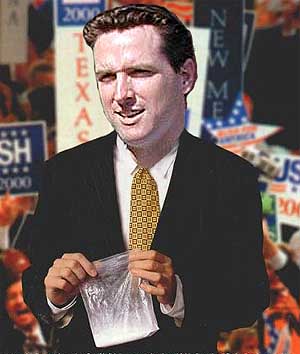
But we cant forget another group that leachs off society, rich kids. Gavin Newsom may have had a job but he never HAD to work. How can we let a whole class of people be raised without any incentives. They just take their parents money and start random businesses usually not caring too much if they do well or go broke (I mean doesnt plumpJack sound like a name a frat guy would come up with). And unlike kids, the elderly and people with mental problems, rich kids have no real excuse for their leachyness. Drug abuse seems to be the worst among this group too but rich kids run to daddy and get sent to expensive rehab clinics. When a big inheritance check comes in, where do rich kids run? Right to the store to buy a bottle of champaign or to one of Gavin's buddys to buy coke and heroin (that they probably fly into the city to make money AND kill homeless people).
The worst offenders arent the homeless or mentally disabled but babies! Thats right, how dare a child literally leach off the fluids of their parent without having to work.
In the name of tough love, all newborns will now be thrown out onto the street.
And whats up with elderly? Have you ever seen a 90 year old out doing heavy labour to pay their rent? I think not. They just get their social security checks and splurge. Have you seen the amount of alcohol these people buy at the grocery store when their checks come in? Maybe KPIX will do an undercover story on drug addiction and alcohol abuse that results from this handout (and the drug abuse among elderly people is actually very high and consists mainly of pharmaceuticals)
But we cant forget another group that leachs off society, rich kids. Gavin Newsom may have had a job but he never HAD to work. How can we let a whole class of people be raised without any incentives. They just take their parents money and start random businesses usually not caring too much if they do well or go broke (I mean doesnt plumpJack sound like a name a frat guy would come up with). And unlike kids, the elderly and people with mental problems, rich kids have no real excuse for their leachyness. Drug abuse seems to be the worst among this group too but rich kids run to daddy and get sent to expensive rehab clinics. When a big inheritance check comes in, where do rich kids run? Right to the store to buy a bottle of champaign or to one of Gavin's buddys to buy coke and heroin (that they probably fly into the city to make money AND kill homeless people).
>>> Have you ever seen a 90 year old out doing heavy labour to pay their rent? I think not. They just get their social security checks and splurge. <<<
In general, those receiving Social Security paid into during their working lives. It's not a freebie by any means (ask those of self-employed who pay 15% of our income into Social Security each year).
In general, those receiving Social Security paid into during their working lives. It's not a freebie by any means (ask those of self-employed who pay 15% of our income into Social Security each year).
How much a month DOES Newsom give his dealer?
"What is the ultimate goal? To have S.F. become a total s**thole like most other American cities"
hmm, "like most other American cities"
I thought the accusation was that SF was drawing in homeless peopel and was ALOT worse than all other cities?
Now you are admitting that SF is actually pretty clean and that all the complaints are just to keep the gentrication from the dot com boom intact?
hmm, "like most other American cities"
I thought the accusation was that SF was drawing in homeless peopel and was ALOT worse than all other cities?
Now you are admitting that SF is actually pretty clean and that all the complaints are just to keep the gentrication from the dot com boom intact?
GROWTH OF THE HOMELESS SERVICE SYSTEM
Largely because of federal leadership and funding—through the Stewart B. McKinney Homeless Assistance Act of 1987 and its annual modifications—the homeless service system in the United States grew tremendously in the 1990s. Available beds more than doubled, from about 275,000 in 1988 to about 607,000 in 1996. Emergency shelter capacity increased about 20 percent during that period. The availability of transitional housing and permanent housing with supportive services for disabled formerly homeless people also grew. Such programs were virtually non-existent in the 1980s. By 1996, at an estimated 274,000 beds (160,000 transitional and 114,000 permanent), capacity at these sophisticated programs equaled that of emergency shelters a decade earlier.
With the growth of shelter capacity, the homeless service network was able to serve more people, and more people in desperate circumstances came forward seeking services. Rather than being a self-fulfilling development, the availability of services and the demand among the poor indicate a profound level of need. Changes in emergency food services confirm this interpretation. Emergency food services receive far less government support than do shelter and housing programs. Yet they too grew during the 1990s in response to the greater demand. In 1996, central-city soup kitchens and mobile food programs served almost four times as many meals per day than they did in 1987. No similar evidence is available for food pantries, which mostly serve poor housed families rather than homeless people, but they too likely saw demand swell. These statistics show that temporary assistance, which has increased over the past decade, cannot prevent many individuals from becoming homeless.
WHAT SHOULD COMMUNITIES AND LEGISLATORS BE DOING?
Virtually all federal programs related to homelessness focus on serving people who are already homeless. When assistance is restricted to those who are homeless tonight, not much can be done to prevent homelessness tomorrow. Developing capacity to serve those who are already homeless while ignoring prevention does little to change the underlying problems among the very poor. Only policies that expand the availability of affordable housing to people with below-poverty incomes will ensure stable homes for these individuals. However, policies during the past decade have moved in the opposite direction.
The results of a decade and a half of research to determine what works to end homelessness are fairly conclusive about the most effective approaches. Providing housing helps currently homeless people leave homelessness. It also prevents people from losing their homes. In fact, without housing, virtually nothing else works.3 Housing often needs to be accompanied by supportive services, at least temporarily, but such services without a housing component cannot end homelessness.
Evaluations of demonstration projects, and the experiences of providers in many communities around the country, also have shown that even the most chronic, most severely mentally ill people can be brought off the streets and can live stable lives, if they are supplied with housing. The same is true for families headed by a mother struggling with mental illness. With the appropriate help, even people with extensive histories of substance abuse have left the streets and obtained stable housing. Furthermore, the evidence shows not only that making these services available works to end homelessness, but also that, for long-term homeless people with substance abuse and mental health histories, these service provisions are virtually cost-neutral.4
With adequate housing resources, homelessness can also be averted for the many people who approach the homeless service system because they do not know where else to turn. Communities throughout the country that have committed such resources have developed a variety of effective programs to prevent homelessness, including
Programs that negotiate with landlords and help with bad credit histories;
Housing trust funds, rental assistance programs, and access to funds that can solve a household’s short-term problems, such as paying back rent, security deposits, and other moving expenses;
Programs that encourage developers to build or renovate attractive, accessible properties; and help managers ensure good maintainence and repair; and
Programs that help people develop personal and family financial management skills, establish or reestablish good credit and rental histories, and retain housing.
When a community ensures that housing within reasonable price ranges exists, offers its members living-wage jobs, provides quality schooling to develop individuals’ capacity to hold good jobs, and offers other supports for families and individuals, people can maintain stable housing. But far too few communities have these resources or are positioned to provide them. The answer? Put simply:
Rebuild communities, especially the most troubled ones;
Build more housing and subsidize the costs to make it affordable to people with incomes below the poverty level;
Help more people afford housing, by providing them with better schools, better training, and better jobs; and
Prevent the next generation of children from experiencing homelessness.
Without these basic building blocks of a civil society, we are creating an underclass of persistently poor people vulnerable to homelessness. The costs of this neglect are too high in terms of both individual lives and public dollars for health, mental health, and correctional institutions. It is more effective, more humane, and ultimately more fiscally prudent to invest in prevention and support that leads to self-sufficiency and independence among all residents.
-------------------------------------------------------
This brief is based on a new Urban Institute Press book, Helping America’s Homeless: Emergency Shelter or Affordable Housing? by Urban Institute researchers Martha Burt, Laudan Y. Aron, and Edgar Lee, with Jesse Valente. Both publications were funded mainly by the Melville Charitable Trust and the Fannie Mae Foundation.
Largely because of federal leadership and funding—through the Stewart B. McKinney Homeless Assistance Act of 1987 and its annual modifications—the homeless service system in the United States grew tremendously in the 1990s. Available beds more than doubled, from about 275,000 in 1988 to about 607,000 in 1996. Emergency shelter capacity increased about 20 percent during that period. The availability of transitional housing and permanent housing with supportive services for disabled formerly homeless people also grew. Such programs were virtually non-existent in the 1980s. By 1996, at an estimated 274,000 beds (160,000 transitional and 114,000 permanent), capacity at these sophisticated programs equaled that of emergency shelters a decade earlier.
With the growth of shelter capacity, the homeless service network was able to serve more people, and more people in desperate circumstances came forward seeking services. Rather than being a self-fulfilling development, the availability of services and the demand among the poor indicate a profound level of need. Changes in emergency food services confirm this interpretation. Emergency food services receive far less government support than do shelter and housing programs. Yet they too grew during the 1990s in response to the greater demand. In 1996, central-city soup kitchens and mobile food programs served almost four times as many meals per day than they did in 1987. No similar evidence is available for food pantries, which mostly serve poor housed families rather than homeless people, but they too likely saw demand swell. These statistics show that temporary assistance, which has increased over the past decade, cannot prevent many individuals from becoming homeless.
WHAT SHOULD COMMUNITIES AND LEGISLATORS BE DOING?
Virtually all federal programs related to homelessness focus on serving people who are already homeless. When assistance is restricted to those who are homeless tonight, not much can be done to prevent homelessness tomorrow. Developing capacity to serve those who are already homeless while ignoring prevention does little to change the underlying problems among the very poor. Only policies that expand the availability of affordable housing to people with below-poverty incomes will ensure stable homes for these individuals. However, policies during the past decade have moved in the opposite direction.
The results of a decade and a half of research to determine what works to end homelessness are fairly conclusive about the most effective approaches. Providing housing helps currently homeless people leave homelessness. It also prevents people from losing their homes. In fact, without housing, virtually nothing else works.3 Housing often needs to be accompanied by supportive services, at least temporarily, but such services without a housing component cannot end homelessness.
Evaluations of demonstration projects, and the experiences of providers in many communities around the country, also have shown that even the most chronic, most severely mentally ill people can be brought off the streets and can live stable lives, if they are supplied with housing. The same is true for families headed by a mother struggling with mental illness. With the appropriate help, even people with extensive histories of substance abuse have left the streets and obtained stable housing. Furthermore, the evidence shows not only that making these services available works to end homelessness, but also that, for long-term homeless people with substance abuse and mental health histories, these service provisions are virtually cost-neutral.4
With adequate housing resources, homelessness can also be averted for the many people who approach the homeless service system because they do not know where else to turn. Communities throughout the country that have committed such resources have developed a variety of effective programs to prevent homelessness, including
Programs that negotiate with landlords and help with bad credit histories;
Housing trust funds, rental assistance programs, and access to funds that can solve a household’s short-term problems, such as paying back rent, security deposits, and other moving expenses;
Programs that encourage developers to build or renovate attractive, accessible properties; and help managers ensure good maintainence and repair; and
Programs that help people develop personal and family financial management skills, establish or reestablish good credit and rental histories, and retain housing.
When a community ensures that housing within reasonable price ranges exists, offers its members living-wage jobs, provides quality schooling to develop individuals’ capacity to hold good jobs, and offers other supports for families and individuals, people can maintain stable housing. But far too few communities have these resources or are positioned to provide them. The answer? Put simply:
Rebuild communities, especially the most troubled ones;
Build more housing and subsidize the costs to make it affordable to people with incomes below the poverty level;
Help more people afford housing, by providing them with better schools, better training, and better jobs; and
Prevent the next generation of children from experiencing homelessness.
Without these basic building blocks of a civil society, we are creating an underclass of persistently poor people vulnerable to homelessness. The costs of this neglect are too high in terms of both individual lives and public dollars for health, mental health, and correctional institutions. It is more effective, more humane, and ultimately more fiscally prudent to invest in prevention and support that leads to self-sufficiency and independence among all residents.
-------------------------------------------------------
This brief is based on a new Urban Institute Press book, Helping America’s Homeless: Emergency Shelter or Affordable Housing? by Urban Institute researchers Martha Burt, Laudan Y. Aron, and Edgar Lee, with Jesse Valente. Both publications were funded mainly by the Melville Charitable Trust and the Fannie Mae Foundation.
For more information:
http://www.urban.org/housing/homeless/end_...
>>>Who are the idle rich, and how exactly do they get "a free ride"?
I originally posted that question. Here's what I got.
>>you've never heard of inheiritance, then, I presume
So what do they do with this inheritance? Do they simply live off the principal, or do they invest it and assume risk? If they idly live off the principal, then when the golden goose is spent they will have none. If they invest the money (take a risk) then they are not idle. You said nothing worth considering.
Can someone else answer this?
I originally posted that question. Here's what I got.
>>you've never heard of inheiritance, then, I presume
So what do they do with this inheritance? Do they simply live off the principal, or do they invest it and assume risk? If they idly live off the principal, then when the golden goose is spent they will have none. If they invest the money (take a risk) then they are not idle. You said nothing worth considering.
Can someone else answer this?
Investing money isn't work, unless you were to spend all day doing it. Such people as we are discussing don't do the investing themselves, they hire brokers to do even that for them, therefore, they *are* completely totally and absolutely idle.
Truly, they are no different from landed aristocracy of the late middle ages. If you can find a difference that is not merely outward, I would much appreciate to hear it.
Keep in mind we are not discussing the self-made rich here.
Truly, they are no different from landed aristocracy of the late middle ages. If you can find a difference that is not merely outward, I would much appreciate to hear it.
Keep in mind we are not discussing the self-made rich here.
Investing money IS work, especially if you do so with the expectations of keeping it.
Really, I'd rather hear from others. This troll that keeps answering can't put two sentences together without slobbering.
Really, I'd rather hear from others. This troll that keeps answering can't put two sentences together without slobbering.
The Corporation for Supportive Housing strongly endorses State Proposition 46 (Housing and Emergency Shelter Trust Fund Act of 2002).
What Will Proposition 46 Do? Proposition 46 will provide housing with services for the mentally ill and long-term homeless, shelters for battered women and homeless families, and affordable housing for working people, low-income individuals and families. Proposition 46 authorizes a $2.1 billion affordable housing bond.
Do We Need Proposition 46? Yes. On any given day, over 360,000 Californians are homeless. The lack of affordable housing in California contributes to an increase in the number of homeless residents. Proposition 46 helps correct this. Without adequate housing, many homeless individuals and families have no choice but to sleep in cars, parks and hospitals, or on the streets. The problem is particularly severe for homeless persons with health problems.
Will Proposition 46 Really Help the Homeless? Yes. Proposition 46 provides homeless residents with mental health and other chronic health disabilities with affordable, clean, safe supportive housing. Supportive housing works. The State's current supportive housing programs show that 96% of the formerly homeless residents remain in supportive housing. With Proposition 46, more homeless persons will have access to supportive housing and will not resort to living on the streets. Proposition 46 allocates $195 million to supportive housing through bond funds.
Any Other Benefits from Proposition 46? Yes. Proposition 46 provides accessibility improvements to apartments for disabled Californians and loan assistance for military veterans, teachers, police and firefighters. Proposition 46 also creates 276,000 jobs and brings in more than $13 billion in private investment and federal funds into California.
CSH urges you to vote Yes on Proposition 46 on November 5th!
What Will Proposition 46 Do? Proposition 46 will provide housing with services for the mentally ill and long-term homeless, shelters for battered women and homeless families, and affordable housing for working people, low-income individuals and families. Proposition 46 authorizes a $2.1 billion affordable housing bond.
Do We Need Proposition 46? Yes. On any given day, over 360,000 Californians are homeless. The lack of affordable housing in California contributes to an increase in the number of homeless residents. Proposition 46 helps correct this. Without adequate housing, many homeless individuals and families have no choice but to sleep in cars, parks and hospitals, or on the streets. The problem is particularly severe for homeless persons with health problems.
Will Proposition 46 Really Help the Homeless? Yes. Proposition 46 provides homeless residents with mental health and other chronic health disabilities with affordable, clean, safe supportive housing. Supportive housing works. The State's current supportive housing programs show that 96% of the formerly homeless residents remain in supportive housing. With Proposition 46, more homeless persons will have access to supportive housing and will not resort to living on the streets. Proposition 46 allocates $195 million to supportive housing through bond funds.
Any Other Benefits from Proposition 46? Yes. Proposition 46 provides accessibility improvements to apartments for disabled Californians and loan assistance for military veterans, teachers, police and firefighters. Proposition 46 also creates 276,000 jobs and brings in more than $13 billion in private investment and federal funds into California.
CSH urges you to vote Yes on Proposition 46 on November 5th!
For more information:
http://www.csh.org/loca.html
Think "economic natural selection." 3 of 5 times, the folks panhandling are dope fiends or professional beggars. Another is merely too fucking lazy to get a job. And one is "legitimately" in need. What we *ought* to do is sort out who's who, hire that fifth fellah, and give him the authority to expel the other four from our streets, parks, malls, and so on (and pay him well to do it). Not only would he have a job, but he would likely know where all the bogus "needy" sleep at night, so he could likely lead us right to them.
We are 100% volunteer and depend on your participation to sustain our efforts!
Donate

$140.00 donated
in the past month
Get Involved
If you'd like to help with maintaining or developing the website, contact us.
Publish
Publish your stories and upcoming events on Indybay.
Topics
More
Search Indybay's Archives
Advanced Search
►
▼
IMC Network