







 Publish to Newswire
 Add an Event
Feature Archives
Mon Jan 17 2005
United Iraqi Alliance Likely To Win Election As Violence Keeps Sunnis Away From Polls
1/31/2005:
I remember the "elections" that used to happen in the time of the Iraqi national dictator government, people were going in millions at those times too. ....They used to tell us that anyone who doesn't go to vote will be punished, and that the voting ballots have secret numbers that the governmnet can read and discover who said NO....
If anyone thinks that the current elections are fundamentally different from the ones used to happen before the war, you are wrong. Maybe at that time Iraqis had one fake option, and now they have 100 fake options.
The current elections will open the doors of hell. They'll open the doors for internal conflicts, and they'll increase the attacks on the occupation forces during the next year, when everyone sees how bush administration has no intention in pulling out from Iraq and paying compensation for the illegal war they started. I really wish that Iraq will have the chance to hold real and sovereign elections one day.
- Raed Jarrar "Raed In The Middle" read more
Democracy Now Reports: 1 2 3 4 5 | Mixed Reaction in Saudi Arabia | Votes are counted by lamp light | Some Just Voted for Food | Iraq elections set stage for deeper crisis of US occupation regime
1/30/2005: bombs and mortar attacks faced many Iraqis who went to the polls Sunday. Baghdad bore the brunt and 13 people were killed in eight suicide attacks launched in rapid succession at voter queues. The US embassy came under rocket fire with several casualties reported and a British military transport plane was shot down by a surface to air missile killing up to 15 British troops. Voter turnout was high in the Kurdish north and the Shiite south but turnout was much lower in Sunni areas with some reports that that few if any Iraqis were able to vote in Samarra (a city of over 200,000). The Shi'ite-led slate #169 supported by Ayatollah Ali al-Sistani "is expected to dominate the poll." There are claims of a 60% turnout (of the relatively small small percentage of Iraqis registered to vote) but "with international monitors mostly staying away for fear of kidnapping, it was impossible to assess the fairness of the election or accuracy of the turnout estimates."
Eyewitness: Baghdad | Hollow Election Held on Bloody Day | Summary of attacks on election day | Beyond the bullets, a new constitution | Vote For Food | Voter Turnout Won't Be Enough to Legitimise Election
1/28/2005: US troops have sealed Iraq's frontiers and imposed other draconian security measures in preparation for Sunday's election. Many Iraqis in Iraq will not be allowed to vote whereas by voting by expatriates in the US and other countries has already started. When Iraqis go into polling places they will not be given a choice of candidates, instead they will be choosing numbers from a list with no name listed next to them. Each number will correspond to a slate put together by a political party but in most cases the parties have not released the names of their candidates to prevent assassinations. The United Iraqi Alliance's slate #169 looks likely to be the winner of the election due to backing by Sistani and other Shiite clerics.
Washington's Ballots (and Bullets) | The Iraq Elections: A repeat performance | Some See Hope, Others Civil War | Editorials From Al-Ahram | Chaos, Frustration and Extreme Violence | Early Elections, Sham Elections | Iranian and Saudi cash weighs against local parties
1/24/2005 "The senior leaders of the United Iraqi Alliance, the coalition of mostly Shiite groups that is expected to capture the most votes in the election Sunday, have agreed that the Iraqi whom they nominate to be the country's next prime minister would be a layperson and not an Islamic cleric....The decision to exclude clerics from the government appears to mean that Abdul Aziz al-Hakim, a cleric who is the chief of the Supreme Council for the Islamic Revolution in Iraq, the scion of a prominent religious family and an oft-mentioned candidate for prime minister, would be relegated to the background." Read More
Bombs, Zarqawi, and Sistani's Constitution | Arab candidates pull out in Kirkuk protest | Dahr Jamail: Election Divides a Nation
1/23/2005: "The Shi'ite Muslim cleric tipped to become prime minister of Iraq after this Sunday's elections declared yesterday it would be the duty of the new government to demand the withdrawal of US forces 'as soon as possible' ... 'No people in the world accepts occupation and nor do we accept the continuation of American troops in Iraq,' said Mr al-Hakim" Read More
Iraq exile vote runs into trouble | Rift in Iraq electoral commission | Iraq: The power to resist
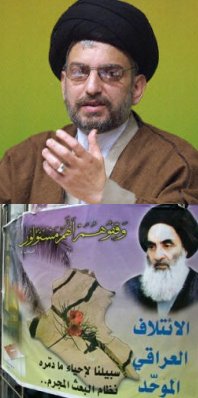
1/17/2005: There are reports that Grand Ayatullah Sistani has endorsed the United Iraqi Alliance's slate #169 which is headed by Abdul Aziz al-Hakim. Abdul al-Hakim is the party head of the Supreme Council for Islamic Revolution in Iraq (SCIRI). SCIRI is a moderate Shiite political party that is thought to have close ties with Iran. SCIRI used to be known under Saddam as the The Supreme Council for the Islamic Resistance in Iraq and controls a militia called the Badr Brigade. SCIRI was headed by Baqir al-Hakim until he was assassinated in 2003 at which point his brother Abdul Aziz al-Hakim took over. Abdul Hakim has done well for himself under the US occupation. He was a member of the American-appointed Iraq Interim Governing Council and served as its president in December 2003. He currently lives in the house that used to belong to Tariq Aziz before the US invasion.
While Hakim has emerged as the most likely next ruler of Iraq, the US backed Allawi (and his Iraqi National Accord party) has been outspending Hakim's United Iraqi Alliance and has even openly bribed members of the press. While many Sunni parties have always said they will boycott the election, in recent weeks 53 additional political parties and organizations as well as 30 individuals have asked their names to be dropped from the election lists in a bid to show their rejection of elections under US occupation.
Sadr urges Bush not interfere with Iraq elections | Iraq: Curfew Measures on Election Day | Coalition admits on eve of election: ‘the battle for Iraq may never be won’ | Aide to Sistani killed | Iraq: Eyeing the polls | Iraq's power supply sinks to record low
Previous Indybay Coverage Of The Iraqi Election
- Raed Jarrar "Raed In The Middle" read more
Democracy Now Reports: 1 2 3 4 5 | Mixed Reaction in Saudi Arabia | Votes are counted by lamp light | Some Just Voted for Food | Iraq elections set stage for deeper crisis of US occupation regime
1/30/2005: bombs and mortar attacks faced many Iraqis who went to the polls Sunday. Baghdad bore the brunt and 13 people were killed in eight suicide attacks launched in rapid succession at voter queues. The US embassy came under rocket fire with several casualties reported and a British military transport plane was shot down by a surface to air missile killing up to 15 British troops. Voter turnout was high in the Kurdish north and the Shiite south but turnout was much lower in Sunni areas with some reports that that few if any Iraqis were able to vote in Samarra (a city of over 200,000). The Shi'ite-led slate #169 supported by Ayatollah Ali al-Sistani "is expected to dominate the poll." There are claims of a 60% turnout (of the relatively small small percentage of Iraqis registered to vote) but "with international monitors mostly staying away for fear of kidnapping, it was impossible to assess the fairness of the election or accuracy of the turnout estimates."
Eyewitness: Baghdad | Hollow Election Held on Bloody Day | Summary of attacks on election day | Beyond the bullets, a new constitution | Vote For Food | Voter Turnout Won't Be Enough to Legitimise Election
1/28/2005: US troops have sealed Iraq's frontiers and imposed other draconian security measures in preparation for Sunday's election. Many Iraqis in Iraq will not be allowed to vote whereas by voting by expatriates in the US and other countries has already started. When Iraqis go into polling places they will not be given a choice of candidates, instead they will be choosing numbers from a list with no name listed next to them. Each number will correspond to a slate put together by a political party but in most cases the parties have not released the names of their candidates to prevent assassinations. The United Iraqi Alliance's slate #169 looks likely to be the winner of the election due to backing by Sistani and other Shiite clerics.
Washington's Ballots (and Bullets) | The Iraq Elections: A repeat performance | Some See Hope, Others Civil War | Editorials From Al-Ahram | Chaos, Frustration and Extreme Violence | Early Elections, Sham Elections | Iranian and Saudi cash weighs against local parties
1/24/2005 "The senior leaders of the United Iraqi Alliance, the coalition of mostly Shiite groups that is expected to capture the most votes in the election Sunday, have agreed that the Iraqi whom they nominate to be the country's next prime minister would be a layperson and not an Islamic cleric....The decision to exclude clerics from the government appears to mean that Abdul Aziz al-Hakim, a cleric who is the chief of the Supreme Council for the Islamic Revolution in Iraq, the scion of a prominent religious family and an oft-mentioned candidate for prime minister, would be relegated to the background." Read More
Bombs, Zarqawi, and Sistani's Constitution | Arab candidates pull out in Kirkuk protest | Dahr Jamail: Election Divides a Nation
1/23/2005: "The Shi'ite Muslim cleric tipped to become prime minister of Iraq after this Sunday's elections declared yesterday it would be the duty of the new government to demand the withdrawal of US forces 'as soon as possible' ... 'No people in the world accepts occupation and nor do we accept the continuation of American troops in Iraq,' said Mr al-Hakim" Read More
Iraq exile vote runs into trouble | Rift in Iraq electoral commission | Iraq: The power to resist
1/17/2005: There are reports that Grand Ayatullah Sistani has endorsed the United Iraqi Alliance's slate #169 which is headed by Abdul Aziz al-Hakim. Abdul al-Hakim is the party head of the Supreme Council for Islamic Revolution in Iraq (SCIRI). SCIRI is a moderate Shiite political party that is thought to have close ties with Iran. SCIRI used to be known under Saddam as the The Supreme Council for the Islamic Resistance in Iraq and controls a militia called the Badr Brigade. SCIRI was headed by Baqir al-Hakim until he was assassinated in 2003 at which point his brother Abdul Aziz al-Hakim took over. Abdul Hakim has done well for himself under the US occupation. He was a member of the American-appointed Iraq Interim Governing Council and served as its president in December 2003. He currently lives in the house that used to belong to Tariq Aziz before the US invasion.
While Hakim has emerged as the most likely next ruler of Iraq, the US backed Allawi (and his Iraqi National Accord party) has been outspending Hakim's United Iraqi Alliance and has even openly bribed members of the press. While many Sunni parties have always said they will boycott the election, in recent weeks 53 additional political parties and organizations as well as 30 individuals have asked their names to be dropped from the election lists in a bid to show their rejection of elections under US occupation.
Sadr urges Bush not interfere with Iraq elections | Iraq: Curfew Measures on Election Day | Coalition admits on eve of election: ‘the battle for Iraq may never be won’ | Aide to Sistani killed | Iraq: Eyeing the polls | Iraq's power supply sinks to record low
Previous Indybay Coverage Of The Iraqi Election
1/9/2005:
According to Newsweek magazine, the Pentagon is debating whether to set up Central American style death squads (using Kurdish militia members) to target leaders of the Iraq insurgency.
"The Pentagon’s latest approach is being called 'the Salvador option'" it is an "option that dates back to a still-secret strategy in the Reagan administration’s battle against the leftist guerrilla insurgency in El Salvador in the early 1980s. Then, faced with a losing war against Salvadoran rebels, the U.S. government funded or supported 'nationalist' forces that allegedly included so-called death squads directed to hunt down and kill rebel leaders and sympathizers. Eventually the insurgency was quelled, and many U.S. conservatives consider the policy to have been a success—despite the deaths of innocent civilians and the subsequent Iran-Contra arms-for-hostages scandal. (Among the current administration officials who dealt with Central America back then is John Negroponte, who is today the U.S. ambassador to Iraq. Under Reagan, he was ambassador to Honduras.)" Read More
12/7/2004 The
Center for Constitutional Rights
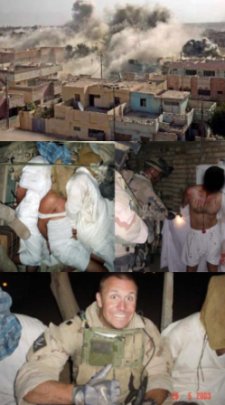
is preparing to launch a war crimes case in Germany against senior US administration officials for their role in the torture of Iraqi detainees at Abu Ghraib prison.
While the US claimed that the situation at Abu Ghraib was an isolated incident,
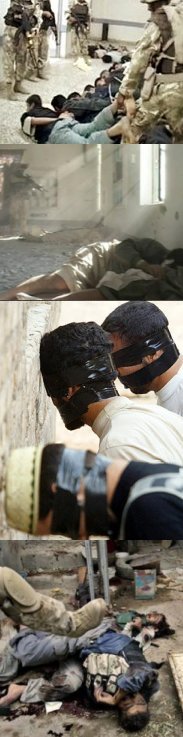
new pictures are now emerging showing Navy SEALs engaging in similar behavior.
Many consider the US leveling of the city of Falluja a war crime (a city largely free of unrest until the US shot peaceful protesters in April 2003). There were many reports of US killing of unarmed civilians during the November assault, but most of the mainstream media refused to cover the reports until embedded reporter Kevin Sites managed to capture on tape a US marine shooting an Iraqi prisoner lying on the floor of a Falluja Mosque. While the US assault on Falluja caused unrest to sweep across much of Northern Iraq, most of the US news media effectively encouraged the assault and the Wall Street Journal even made excuses for clear pictures of war crimes (one US newspaper even referred to Iraqi fighters as "poisonous vermin that have relinquished all rights as human beings".)
The devastating effects of the US invasion extend beyond torture and killings. Iraq's health system is in a far worse condition than before the war. Doctors from the group Medact conducted surveys with international aid groups and Iraqi health workers in September, exposing poor sanitation in many hospitals, shortages of drugs and qualified staff and huge gaps in services for mothers and children. The United Nations Children's Fund (UNICEF) says the number of children suffering from malnutrition has doubled since the March 2003 invasion. About 8 percent of Iraqi children below five suffer from chronic diarrhea and protein deficiency, it says. UNICEF says that diarrhoea caused mainly by unsafe water is responsible for 70 percent of child deaths in Iraq.
US probes Iraq abuse pictures | Baghdad Burning: Tired in Baghdad... | Dahr Jamail: So much loss… | Naomi Klein: "You asked for my evidence, Mr Ambassador. Here it is" | "There are bodies the Americans threw in the river" | ACLU: Torture FOIA
Many consider the US leveling of the city of Falluja a war crime (a city largely free of unrest until the US shot peaceful protesters in April 2003). There were many reports of US killing of unarmed civilians during the November assault, but most of the mainstream media refused to cover the reports until embedded reporter Kevin Sites managed to capture on tape a US marine shooting an Iraqi prisoner lying on the floor of a Falluja Mosque. While the US assault on Falluja caused unrest to sweep across much of Northern Iraq, most of the US news media effectively encouraged the assault and the Wall Street Journal even made excuses for clear pictures of war crimes (one US newspaper even referred to Iraqi fighters as "poisonous vermin that have relinquished all rights as human beings".)
The devastating effects of the US invasion extend beyond torture and killings. Iraq's health system is in a far worse condition than before the war. Doctors from the group Medact conducted surveys with international aid groups and Iraqi health workers in September, exposing poor sanitation in many hospitals, shortages of drugs and qualified staff and huge gaps in services for mothers and children. The United Nations Children's Fund (UNICEF) says the number of children suffering from malnutrition has doubled since the March 2003 invasion. About 8 percent of Iraqi children below five suffer from chronic diarrhea and protein deficiency, it says. UNICEF says that diarrhoea caused mainly by unsafe water is responsible for 70 percent of child deaths in Iraq.
US probes Iraq abuse pictures | Baghdad Burning: Tired in Baghdad... | Dahr Jamail: So much loss… | Naomi Klein: "You asked for my evidence, Mr Ambassador. Here it is" | "There are bodies the Americans threw in the river" | ACLU: Torture FOIA
Fri Nov 19 2004
Groups Call For Boycott Of Iraqi "Elections"
Elections in Iraq were never going to be peaceful, but they did not need to be an all-out war on voters either. Mr Allawi's Rocket the Vote campaign is the direct result of a disastrous decision made one year ago. On November 11 2003, Paul Bremer, then chief US envoy to Iraq, flew to Washington to meet George Bush. The two men were concerned that if they kept their promise to hold elections in Iraq within the coming months, the country would fall into the hands of insufficiently pro-American forces.
"Die, then vote. This is Falluja" - Naomi Klein
11/30/2004 The mood in Sunni communities makes its likely that they will be underrepresented if the Iraqi election occurs in January. Anger over the US attack on Falluja and threats to those engaged in voter registration have resulted in a low number of Sunnis registering to vote.
Iraq's US-backed Shiite parties have insisted that polls must go ahead on 30 January, rejecting calls by other parties and politicians to postpone them. But Shiite unity does not extend to the candidates. A group of 38 Shiite Muslim political parties broke off negotiations Tuesday with backers of Sistani, claiming a candidate list under discussion was dominated by religious extremists. Sistani had assigned a committee of six of his aides to try to put together a unified Shiite ticket for the Jan 30 national election.
Iraq: bayonets, bullets and votes | MIddle Eastern Press On The Iraqi Elections | Iraq poll tension mounting
11/26/2004: Leading Iraqi political parties, including the group led by former presidential candidate Adnan Pachachi and the two main Kurdish parties (the KDP and the PUK), have signed a petition calling for the planned 30 January elections to be delayed. Muqtada al-Sadr has accused the Iraqi government of violating terms of the deal that brought an end to fighting in Najaf. He also accuses the government of conspiring with two major Shiite parties, Dawa and the Supreme Council for the Islamic Revolution in Iraq (SCIRI), to marginalize al-Sadr's movement and prevent its clerics from speaking in mosques. The clash between Mr. Sadr and the two major Shiite establishment parties comes as Sistani is trying to bring all the Shiite political groups together to present a unified slate of candidates for the national elections.
11/21/2004:It has been announced that Iraq will hold national elections on Jan. 30th. "Those planning the transitional process appeared not to have taken the Muslim calendar into consideration" since the election campaign will coincide with the haj in mid-January, and "the transit of several million pilgrims from Muslim countries such as Iran, Afghanistan and Pakistan overland through Iraq to Mecca". American military officials have said that they plan to extend tours of duty in Iraq and to increase troop levels in Iraq through the elections.
11/19/2004: Iraq's deputy prime minister has indicated for the first time that the much-heralded elections due in January could be derailed by the country's violent insurgency. 47 Iraqi political parties and related bodies have decided to boycott the election saying the election results are a foregone conclusion, with rewards already lined up for the parties collaborating with the occupation. The parties that have said they will boycott the election include not just Sunni Islamist ones, but others like the National Arab Current, the Iraqi-Turkoman Front, the Democratic Christian Party and the communist People’s Union party, as well as Shi'a parties. The Association of Muslim Scholars (AMS) has warned that the situation in Falluja will directly affect the elections and even delay the process.
It is hard to see how any election can seen by Iraqis as "free and fair" when the media is now being heavily censored and leaders of even nonviolent opposition groups are being intimidated and arrested. On Tuesday November 16th, US forces arrested Naseer Ayaef, the deputy head of Iraq's interim parliament and a high-ranking member of the Iraqi Islamic Party despite the fact that as the deputy speaker of the national council (parliament) he was supposed to enjoy immunity. The arrest was linked to pressure exerted on the Iraqi Islamic Party because of its opposition to the military offensive against Falluja.
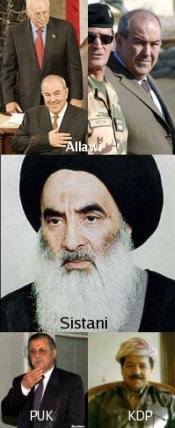
Not all groups in Iraq oppose the upcoming election. Deputies of Grand Ayatollah Ali Al-Sistani have warned Shia that they risk going to hell if they fail to participate in the January 2005 elections. His tacit approval of the US led onslaught on Falluja has been seen by some as being driven by his desire to gain ground against the Sunnis (and gain ground in the eyes of the US State Department) ahead of the January vote. Many Kurds also hope to gain since the two Kurdish political parties (the KDP and the PUK) are among the most organized parties in the country. Some of the Asyrian minority also seem to support the election. The US has made it so Iraqis living abroad will be allowed to vote and this could benefit Shiites, Kurds and other minorities that left Iraq under Sunni Arab rule. The $90mn allocated for overseas voting could also allow the US to rig the election by registering pro-US Kurds and Assyrians living in the US and Europe.
The US election strategy of pitting various ethnic groups against each other could lead the country towards civil war. Insurgents bent on undermining Iraq's American-backed interim government have carried out a campaign of assassinations against public officials they see as collaborating with the U.S. presence in the country. On November 13th, gunmen killed the Shi’ite Muslim mayor of a Baghdad suburb and on November 14th, a prominent official of the Iraqi Communist Party was gunned down with two of his bodyguards outside of Baghdad. US use of Kurdish fighters to attack cities like Mosul have lead to revenge attacks against Kurds. Attacks on Christians are also on the rise.
Did Fallujah Sink the Elections? | Iraq Elections "Pipe Dream of Deluded Politicians" | Iraq election threatens multinational force | Audio Interview With Juan Cole | Iraq Occupation Watch | Death threats and sectarian splits
11/30/2004 The mood in Sunni communities makes its likely that they will be underrepresented if the Iraqi election occurs in January. Anger over the US attack on Falluja and threats to those engaged in voter registration have resulted in a low number of Sunnis registering to vote.
Iraq's US-backed Shiite parties have insisted that polls must go ahead on 30 January, rejecting calls by other parties and politicians to postpone them. But Shiite unity does not extend to the candidates. A group of 38 Shiite Muslim political parties broke off negotiations Tuesday with backers of Sistani, claiming a candidate list under discussion was dominated by religious extremists. Sistani had assigned a committee of six of his aides to try to put together a unified Shiite ticket for the Jan 30 national election.
Iraq: bayonets, bullets and votes | MIddle Eastern Press On The Iraqi Elections | Iraq poll tension mounting
11/26/2004: Leading Iraqi political parties, including the group led by former presidential candidate Adnan Pachachi and the two main Kurdish parties (the KDP and the PUK), have signed a petition calling for the planned 30 January elections to be delayed. Muqtada al-Sadr has accused the Iraqi government of violating terms of the deal that brought an end to fighting in Najaf. He also accuses the government of conspiring with two major Shiite parties, Dawa and the Supreme Council for the Islamic Revolution in Iraq (SCIRI), to marginalize al-Sadr's movement and prevent its clerics from speaking in mosques. The clash between Mr. Sadr and the two major Shiite establishment parties comes as Sistani is trying to bring all the Shiite political groups together to present a unified slate of candidates for the national elections.
11/21/2004:It has been announced that Iraq will hold national elections on Jan. 30th. "Those planning the transitional process appeared not to have taken the Muslim calendar into consideration" since the election campaign will coincide with the haj in mid-January, and "the transit of several million pilgrims from Muslim countries such as Iran, Afghanistan and Pakistan overland through Iraq to Mecca". American military officials have said that they plan to extend tours of duty in Iraq and to increase troop levels in Iraq through the elections.
11/19/2004: Iraq's deputy prime minister has indicated for the first time that the much-heralded elections due in January could be derailed by the country's violent insurgency. 47 Iraqi political parties and related bodies have decided to boycott the election saying the election results are a foregone conclusion, with rewards already lined up for the parties collaborating with the occupation. The parties that have said they will boycott the election include not just Sunni Islamist ones, but others like the National Arab Current, the Iraqi-Turkoman Front, the Democratic Christian Party and the communist People’s Union party, as well as Shi'a parties. The Association of Muslim Scholars (AMS) has warned that the situation in Falluja will directly affect the elections and even delay the process.
It is hard to see how any election can seen by Iraqis as "free and fair" when the media is now being heavily censored and leaders of even nonviolent opposition groups are being intimidated and arrested. On Tuesday November 16th, US forces arrested Naseer Ayaef, the deputy head of Iraq's interim parliament and a high-ranking member of the Iraqi Islamic Party despite the fact that as the deputy speaker of the national council (parliament) he was supposed to enjoy immunity. The arrest was linked to pressure exerted on the Iraqi Islamic Party because of its opposition to the military offensive against Falluja.
Not all groups in Iraq oppose the upcoming election. Deputies of Grand Ayatollah Ali Al-Sistani have warned Shia that they risk going to hell if they fail to participate in the January 2005 elections. His tacit approval of the US led onslaught on Falluja has been seen by some as being driven by his desire to gain ground against the Sunnis (and gain ground in the eyes of the US State Department) ahead of the January vote. Many Kurds also hope to gain since the two Kurdish political parties (the KDP and the PUK) are among the most organized parties in the country. Some of the Asyrian minority also seem to support the election. The US has made it so Iraqis living abroad will be allowed to vote and this could benefit Shiites, Kurds and other minorities that left Iraq under Sunni Arab rule. The $90mn allocated for overseas voting could also allow the US to rig the election by registering pro-US Kurds and Assyrians living in the US and Europe.
The US election strategy of pitting various ethnic groups against each other could lead the country towards civil war. Insurgents bent on undermining Iraq's American-backed interim government have carried out a campaign of assassinations against public officials they see as collaborating with the U.S. presence in the country. On November 13th, gunmen killed the Shi’ite Muslim mayor of a Baghdad suburb and on November 14th, a prominent official of the Iraqi Communist Party was gunned down with two of his bodyguards outside of Baghdad. US use of Kurdish fighters to attack cities like Mosul have lead to revenge attacks against Kurds. Attacks on Christians are also on the rise.
Did Fallujah Sink the Elections? | Iraq Elections "Pipe Dream of Deluded Politicians" | Iraq election threatens multinational force | Audio Interview With Juan Cole | Iraq Occupation Watch | Death threats and sectarian splits
Wed Nov 17 2004
Unrest Spreads Across Iraq As Anger Grows Over Falluja Massacre
Lightly-armed insurgent forces are like grains of sand.
As combat power is deployed against them they tend to drift away, either going to ground or seeking another battlefield on which to fight "US fails to knock out rebels" BBC
It’s one case after another of people from Baghdad, Fallujah, Latifiya, Balad, Ramadi, Samarra, Baquba...from all over Iraq, who have been injured by the heavy-handed tactics of American soldiers fighting a no-win guerilla war spawned from an illegal invasion based on lies. Their barbaric acts of retaliation have become the daily reality for Iraqis, who continue to take the brunt of the frustration and rage of the soldiers. "Slash and Burn" by Dahr Jamail.
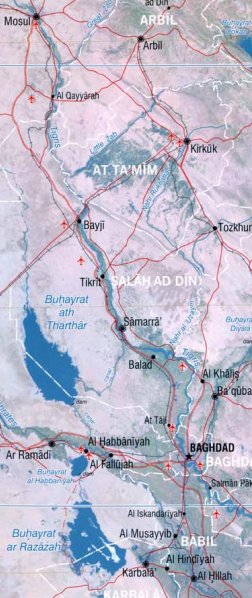
A Sampling Of Fighting In Iraq During November 2004 Following US Seige Of Falluja:
Baghdad:
11/30/2004 A suicide bomber detonated a car packed with explosives next to a U.S. convoy on Baghdad's airport road on Tuesday, and several casualties were seen lying next to a damaged vehicle.
11/29/2004 Two US soldiers were killed in a roadside bomb attack on their convoy in the Baghdad area. Thirteen US marines and two civilians were also wounded when mortar shells struck a military base south of Baghdad, a marine spokesman said.
11/28/2004 beside a US convoy on the notorious airport road in Baghdad Fadhil Jawad, who watched the attack from the roof of his home, said he saw a late-model luxury car overtake the six-vehicle convoy moments before exploding in a ball of fire, AP reported. Two of the Humvees were destroyed in the explosion and the rest veered off the road, he said.
11/25/2004 A group linked to Abu Musab al-Zarqawi claimed that it had killed in Baghdad a US State Department official who worked with the Iraqi ministers of education and higher education.
11/22/2004 A bomb has been found on a commercial flight in Iraq at Baghdad International Airport and insurgents attacked a U.S. convoy, setting fire to an armored vehicle.
11/20/2004 Baghdad exploded in violence Saturday, as insurgents attacked a U.S. patrol and a police station, assassinated four government employees and detonated several bombs. One American soldier was killed and nine were wounded during clashes that also left three Iraqi troops and a police officer dead.
11/19/2004 U.S. Backed Forces Raided the Abu Hanifa mosque in Baghdad shooting and killing at least four people who were praying. A suicide car bomber rammed into a police patrol in Baghdad Friday, killing one policeman, police and hospital officials said.
11/17/2004 A car bomb exploded outside an Iraqi police station in western Baghdad today, killing two Iraqis and wounding four others
11/11/2004 Many people were killed when a car bomb exploded in the middle of a traffic jam at the crossroads of a shopping street in Baghdad.
Baghdadi:
11/30/2004 A suicide car bomber attacked a police checkpoint in western Iraq on Monday, killing at least seven people and injuring nine. The attack in Baghdadi, located 120 miles northwest of the capital, was the latest strike in an insurgent campaign against Iraq’s fledgling security forces following the US-led assault on Fallujah earlier this month.
Balad:
11/16/2004 One American soldier was killed and another injured in an attack launched by gunmen against their vehicle in Balad to the north of Baghdad on Tuesday.
Baquba:
11/27/2004 Three people have been injured in clashes between fighters opposed to the US-backed interim Iraqi government and police in the city of Baquba.. Aljazeera has learned that the clashes erupted after the fighters, armed with rocket-propelled grenades (RPGs) and machine guns, attacked al-Wihda police station in the centre of the city, early on Sunday. Columns of smoke have been seen rising from the area as clashes continue across the city. 11/23/2004 Robbers in Iraq killed three people, wounded six and made off with half a million dollars in cash.
11/15/2004 US aircraft and ground forces on Monday attacked the city of Baquba following clashes between Iraqi resistance fighters and Iraqi security forces.
Basra
11/29/2004 British and Iraqi troops were deployed around the headquarters of the Iraqi National Guard southern regional headquarters after the chief staff, Brig Gen Diaa al-Kadhimi, refused to accept an order from Baghdad to remove himself from his post, Iraqi officials said. Al-Kadhimi was to have been replaced by the national guard chief in Amarah, Salah al-Maliki. The standoff was continuing Monday afternoon.
11/24/2004 Five Arab foreign fighters who had escaped from Fallujah were arrested near southern Basra, where they were planning to attack coalition bases and police stations, authorities said Thursday.
11/22/2004 In the southern city of Al-Basrah, police said a former Ba'ath Party official and a policeman were killed by unknown assailants.
11/17/2004 A Scottish father, working as a security guard in war-torn Iraq, has been killed in a booby trap bomb explosion near Basra, it was revealed yesterday.
Beiji:
11/30/2004 Four Iraqi civilians were killed and 19 people, including two American soldiers, were wounded when a car bomb exploded near a U.S. military convoy in the northern town of Baiji Tuesday.
11/18/2004 A booby trapped car targeted one American military convoy in the downtown of the city injuring several Americans who opened fire indiscriminately and resulted in damaging one American vehicle. Later in the day, violent clashes erupted between the American forces and gunmen in several quarters of the city which have been witnessing since days an intensive deployment of fighters.
11/17/2004 A car bomber rammed a U.S. convoy in Beiji Wednesday during clashes with militants that killed 10 people and wounded over 20.
11/11/2004 Insurgents have taken to the streets of the oil centre of Baiji in northern Iraq and clashes have broken out with Iraqi security forces, according to witnesses. The gunmen stopped cars in several streets, the witnesses said on Thursday. (Baiji is home to Iraq's biggest refinery.)
Hillah:
11/21/2004 A suicide car bomber attempted to kill the police chief of Hillah by ramming his car into General Qais Abdullah's vehicle
Jabella
11/23/2004 US marines and a so-called Iraqi SWAT team "swept through the south-central Iraqi town of Jabella, kicking off a fresh campaign in northern Babil province," the US military said in a statement.
Khalis
11/27/2004 Insurgents attacked and briefly occupied city hall in a town north of Baghdad early Saturday before being driven out by U.S. and Iraqi forces in a firefight that left several rebels dead and one policeman wounded, officials said. The incident in Al Khalis on Saturday involved about 100 attackers who raided the city hall and two police stations, said municipal official Saad Ahmed Abbas.
Kirkuk:
11/25/2004 An explosion hit a domestic pipeline Thursday that runs from northern Kirkuk to the Beiji refinery, oil officials said.
11/22/2004 Late on Tuesday, fighters opened fire on Iraqi national guard soldiers in the northern city of Kirkuk, killing one guardsman and a civilian, the US military said.
11/21/2004 Saboteurs blew up an oil well north- west of Kirkuk - 180 miles north of Baghdad. It was the sixth well to be bombed in 10 days.
11/18/2004 Two Iraqis are killed by an explosion in the rush hour near a recruitment centre in the northern city of Kirkuk
11/11/2004 Attempted assasination of the Kurdish governor of Iraq's northern province.
Latifiyah
11/22/2004 Iraqi security forces have recovered 12 bodies, including five decapitated ones, from an area south of Baghdad, police say. One family identified one of the corpses as belonging to an Iraqi National Guard member kidnapped from his home in Mahmoudiya nearly four weeks ago.
Mahaweel
11/23/2004 A gunbattle between police and Iraqi fighters south of Baghdad in the central Iraqi town of Mahaweel left one fighter dead, the Iraqi police said.
Miqdadiya
11/23/2004 A group of armed men have killed a Muslim cleric in the town of Miqdadiya, the second assassination of an Association of Muslim Scholars' member in Iraq in two days, witnesses and hospital officials say.
Mosul:
11/28/2004 Iraq's most feared terror group claimed responsibility Sunday for slaughtering members of the Iraqi security forces in Mosul, where dozens of bodies have been found.
11/26/2004 13 bodies were discovered in and around the northern city of Mosul, the U.S. military said Friday, bringing the total nuber of corpses found in the area in the past week to35 .
11/24/2004 Insurgents increased their efforts to take control of Mosul, ambushing a convoy of Kurdish peshmerga fighters and attacking the Kurdish deputy governor of Nineveh province.
11/22/2004 The former police chief of Mosul has been arrested for allegedly allowing insurgents to take over police stations during an uprising in the northern city, a senior official said Monday. A senior Sunni Muslim cleric was killed in a drive-by shooting in Mosul.
11/21/2004 The bodies of three men killed by insurgents have been found on a street in the Iraqi city of Mosul. Scraps of paper left on the three bodies said they were peshmerga, or Kurdish militiamen. Many of the region's recruits to the Iraqi National Guard, Iraq's newly formed civil defence force, are peshmerga. Tensions between Arabs and their Kurdish neighbours from the northern mountains have risen in Mosul recently with the arrival of ethnically Kurdish National Guards to replace police who fled their posts during the rebel offensive this month.
11/20/2004 The bodies of nine purported members of the Iraqi National Guard have been found in Mosul, where clashes between the troops, supported by US forces, and armed fighters continued for a third day. The city's fighters appear to be hitting back at soft targets with the US military saying it received unconfirmed reports that 12 members of the Iraq's paramilitary national guard had been kidnapped and possibly executed. The fighters also destroyed an interim government-owned warehouse on the west side of the city, where voter registration forms for the January elections were turned into smouldering ashes.
11/19/2004 Troops raided a Mosul hospital claiming insurgents were using it to treat their wounded.
11/18/2004 Rebels attacked the provincial governor's office killing one of his bodyguards and wounding four more as US troops "prepared to storm insurgent strongholds".
11/17/2004 U.S. and Iraqi forces secured more than three quarters of Mosul's police stations as the US uses Kurdish forces to attack the mostly Arab city.
11/15/2004 A suicide bomber detonated his car near a US military convoy.
11/11/2004 Iraqi government rushed reinforcements to the key city of Mosul after police fled and armed men brandishing automatic weapons seized control of the streets. Insurgents acquired thousands of police uniforms during the looting.
Najaf:
11/28/2004 The governor of Iraq’s Shia-dominated Najaf province said that police had arrested his own security chief after uncovering an alleged plot to assassinate top regional officials including the governor himself.
Ramadi:
11/29/2004 A suicide car bomber blew up his vehicle outside a police station west of the Iraqi city of Ramadi on Monday, killing at least 12 Iraqis.
11/21/2004 Insurgents launched a deadly ambush Sunday in the guerrilla stronghold of Ramadi, killing eight Iraqi National Guardsmen and injuring 18 others, police said. Seven people were also killed when a bus they were travelling in through the Iraqi city of Ramadi came under fire, police and witnesses said.
11/20/2004 U.S. forces and resistance fighters battled in the city of Ramadi. Nine Iraqis were killed and five injured in Saturday's fighting, hospital officials said. Also on Saturday, US marines have killed several Iraqi civilians when a bus drove through a checkpoint in the city of Ramadi; Police said seven died.
11/18/2004 US armoured units had entered parts of eastern and central Ramadi today to confront guerrillas who opened fire on them with mortars, rocket-propelled grenades and machineguns.
11/17/2004 Seven Iraqis were killed and 13 wounded when US forces confronted large groups of gunmen firing rockets and mortars.
11/15/2004 Heavy fighting erupted on Monday between anti-US fighters and American forces in Ramadi.
11/10/2004 Hundreds of armed men control al-Ramadi downtown
Rutba
11/17/2004 At least 31 Iraqi police were kidnapped in the town of Rutba near the Jordanian border by armed men who stormed a hotel where the men were staying.
Samarra
11/29/2004 Gunmen stormed a police station west of Samarra, 60 miles north of Baghdad, looted the armory, commandeered several police cars and fled after encountering no resistance, Iraqi officials said.
11/28/2004 A car bomb exploded as a US convoy was passing in Samarra north of Baghdad on Sunday, killing five civilians and wounding four.
11/25/2004 Two people have been killed and 14 wounded in bomb attacks, one of them involving a human bomber.
11/23/2004 A roadside bomb went off in the central Iraqi city of Samarra and mortar rounds landed near a U.S. military outpost in attacks that killed one and wounded three others, including two children, police said Tuesday.
11/20/2004 Two Iraqi national guardsmen have been wounded by a roadside bomb. Fighting then broke out between US troops and insurgents, and three large explosions were heard from the the direction of the US army's main base in the city.
11/5/2004: Car bombs and clashes killed at least 37 Iraqis in this restive town north of Baghdad as thousands of US and Iraqi troops prepared the assault on the Sunni Muslim rebel bastion of Fallujah.
Tikrit:
11/27/2004 A US military tank was destroyed when it was hit by an explosive device in al-Dhuluaiya district south of Tikrit.
Tal Afar
11/14/2004 Guerrilla attacks have flared in Tal Afar, about 50 kilometers west of Mosul. On Sunday, insurgents laid siege to several police stations in the area, partly demolishing one in a bomb attack, said Lieutenant Colonel Paul Hastings, a spokesman for Task Force Olympia. Frightened residents piled into cars and began fleeing the town.
Yusufiya:
11/29/2004 U.S. Marines said they killed several insurgents and took 32 suspects in a series of actions south of Baghdad on Sunday that included a high-speed riverborne raid on suspected weapons dumps on the Euphrates.
It’s one case after another of people from Baghdad, Fallujah, Latifiya, Balad, Ramadi, Samarra, Baquba...from all over Iraq, who have been injured by the heavy-handed tactics of American soldiers fighting a no-win guerilla war spawned from an illegal invasion based on lies. Their barbaric acts of retaliation have become the daily reality for Iraqis, who continue to take the brunt of the frustration and rage of the soldiers. "Slash and Burn" by Dahr Jamail.
Baghdad:
11/30/2004 A suicide bomber detonated a car packed with explosives next to a U.S. convoy on Baghdad's airport road on Tuesday, and several casualties were seen lying next to a damaged vehicle.
11/29/2004 Two US soldiers were killed in a roadside bomb attack on their convoy in the Baghdad area. Thirteen US marines and two civilians were also wounded when mortar shells struck a military base south of Baghdad, a marine spokesman said.
11/28/2004 beside a US convoy on the notorious airport road in Baghdad Fadhil Jawad, who watched the attack from the roof of his home, said he saw a late-model luxury car overtake the six-vehicle convoy moments before exploding in a ball of fire, AP reported. Two of the Humvees were destroyed in the explosion and the rest veered off the road, he said.
11/25/2004 A group linked to Abu Musab al-Zarqawi claimed that it had killed in Baghdad a US State Department official who worked with the Iraqi ministers of education and higher education.
11/22/2004 A bomb has been found on a commercial flight in Iraq at Baghdad International Airport and insurgents attacked a U.S. convoy, setting fire to an armored vehicle.
11/20/2004 Baghdad exploded in violence Saturday, as insurgents attacked a U.S. patrol and a police station, assassinated four government employees and detonated several bombs. One American soldier was killed and nine were wounded during clashes that also left three Iraqi troops and a police officer dead.
11/19/2004 U.S. Backed Forces Raided the Abu Hanifa mosque in Baghdad shooting and killing at least four people who were praying. A suicide car bomber rammed into a police patrol in Baghdad Friday, killing one policeman, police and hospital officials said.
11/17/2004 A car bomb exploded outside an Iraqi police station in western Baghdad today, killing two Iraqis and wounding four others
11/11/2004 Many people were killed when a car bomb exploded in the middle of a traffic jam at the crossroads of a shopping street in Baghdad.
Baghdadi:
11/30/2004 A suicide car bomber attacked a police checkpoint in western Iraq on Monday, killing at least seven people and injuring nine. The attack in Baghdadi, located 120 miles northwest of the capital, was the latest strike in an insurgent campaign against Iraq’s fledgling security forces following the US-led assault on Fallujah earlier this month.
Balad:
11/16/2004 One American soldier was killed and another injured in an attack launched by gunmen against their vehicle in Balad to the north of Baghdad on Tuesday.
Baquba:
11/27/2004 Three people have been injured in clashes between fighters opposed to the US-backed interim Iraqi government and police in the city of Baquba.. Aljazeera has learned that the clashes erupted after the fighters, armed with rocket-propelled grenades (RPGs) and machine guns, attacked al-Wihda police station in the centre of the city, early on Sunday. Columns of smoke have been seen rising from the area as clashes continue across the city. 11/23/2004 Robbers in Iraq killed three people, wounded six and made off with half a million dollars in cash.
11/15/2004 US aircraft and ground forces on Monday attacked the city of Baquba following clashes between Iraqi resistance fighters and Iraqi security forces.
Basra
11/29/2004 British and Iraqi troops were deployed around the headquarters of the Iraqi National Guard southern regional headquarters after the chief staff, Brig Gen Diaa al-Kadhimi, refused to accept an order from Baghdad to remove himself from his post, Iraqi officials said. Al-Kadhimi was to have been replaced by the national guard chief in Amarah, Salah al-Maliki. The standoff was continuing Monday afternoon.
11/24/2004 Five Arab foreign fighters who had escaped from Fallujah were arrested near southern Basra, where they were planning to attack coalition bases and police stations, authorities said Thursday.
11/22/2004 In the southern city of Al-Basrah, police said a former Ba'ath Party official and a policeman were killed by unknown assailants.
11/17/2004 A Scottish father, working as a security guard in war-torn Iraq, has been killed in a booby trap bomb explosion near Basra, it was revealed yesterday.
Beiji:
11/30/2004 Four Iraqi civilians were killed and 19 people, including two American soldiers, were wounded when a car bomb exploded near a U.S. military convoy in the northern town of Baiji Tuesday.
11/18/2004 A booby trapped car targeted one American military convoy in the downtown of the city injuring several Americans who opened fire indiscriminately and resulted in damaging one American vehicle. Later in the day, violent clashes erupted between the American forces and gunmen in several quarters of the city which have been witnessing since days an intensive deployment of fighters.
11/17/2004 A car bomber rammed a U.S. convoy in Beiji Wednesday during clashes with militants that killed 10 people and wounded over 20.
11/11/2004 Insurgents have taken to the streets of the oil centre of Baiji in northern Iraq and clashes have broken out with Iraqi security forces, according to witnesses. The gunmen stopped cars in several streets, the witnesses said on Thursday. (Baiji is home to Iraq's biggest refinery.)
Hillah:
11/21/2004 A suicide car bomber attempted to kill the police chief of Hillah by ramming his car into General Qais Abdullah's vehicle
Jabella
11/23/2004 US marines and a so-called Iraqi SWAT team "swept through the south-central Iraqi town of Jabella, kicking off a fresh campaign in northern Babil province," the US military said in a statement.
Khalis
11/27/2004 Insurgents attacked and briefly occupied city hall in a town north of Baghdad early Saturday before being driven out by U.S. and Iraqi forces in a firefight that left several rebels dead and one policeman wounded, officials said. The incident in Al Khalis on Saturday involved about 100 attackers who raided the city hall and two police stations, said municipal official Saad Ahmed Abbas.
Kirkuk:
11/25/2004 An explosion hit a domestic pipeline Thursday that runs from northern Kirkuk to the Beiji refinery, oil officials said.
11/22/2004 Late on Tuesday, fighters opened fire on Iraqi national guard soldiers in the northern city of Kirkuk, killing one guardsman and a civilian, the US military said.
11/21/2004 Saboteurs blew up an oil well north- west of Kirkuk - 180 miles north of Baghdad. It was the sixth well to be bombed in 10 days.
11/18/2004 Two Iraqis are killed by an explosion in the rush hour near a recruitment centre in the northern city of Kirkuk
11/11/2004 Attempted assasination of the Kurdish governor of Iraq's northern province.
Latifiyah
11/22/2004 Iraqi security forces have recovered 12 bodies, including five decapitated ones, from an area south of Baghdad, police say. One family identified one of the corpses as belonging to an Iraqi National Guard member kidnapped from his home in Mahmoudiya nearly four weeks ago.
Mahaweel
11/23/2004 A gunbattle between police and Iraqi fighters south of Baghdad in the central Iraqi town of Mahaweel left one fighter dead, the Iraqi police said.
Miqdadiya
11/23/2004 A group of armed men have killed a Muslim cleric in the town of Miqdadiya, the second assassination of an Association of Muslim Scholars' member in Iraq in two days, witnesses and hospital officials say.
Mosul:
11/28/2004 Iraq's most feared terror group claimed responsibility Sunday for slaughtering members of the Iraqi security forces in Mosul, where dozens of bodies have been found.
11/26/2004 13 bodies were discovered in and around the northern city of Mosul, the U.S. military said Friday, bringing the total nuber of corpses found in the area in the past week to35 .
11/24/2004 Insurgents increased their efforts to take control of Mosul, ambushing a convoy of Kurdish peshmerga fighters and attacking the Kurdish deputy governor of Nineveh province.
11/22/2004 The former police chief of Mosul has been arrested for allegedly allowing insurgents to take over police stations during an uprising in the northern city, a senior official said Monday. A senior Sunni Muslim cleric was killed in a drive-by shooting in Mosul.
11/21/2004 The bodies of three men killed by insurgents have been found on a street in the Iraqi city of Mosul. Scraps of paper left on the three bodies said they were peshmerga, or Kurdish militiamen. Many of the region's recruits to the Iraqi National Guard, Iraq's newly formed civil defence force, are peshmerga. Tensions between Arabs and their Kurdish neighbours from the northern mountains have risen in Mosul recently with the arrival of ethnically Kurdish National Guards to replace police who fled their posts during the rebel offensive this month.
11/20/2004 The bodies of nine purported members of the Iraqi National Guard have been found in Mosul, where clashes between the troops, supported by US forces, and armed fighters continued for a third day. The city's fighters appear to be hitting back at soft targets with the US military saying it received unconfirmed reports that 12 members of the Iraq's paramilitary national guard had been kidnapped and possibly executed. The fighters also destroyed an interim government-owned warehouse on the west side of the city, where voter registration forms for the January elections were turned into smouldering ashes.
11/19/2004 Troops raided a Mosul hospital claiming insurgents were using it to treat their wounded.
11/18/2004 Rebels attacked the provincial governor's office killing one of his bodyguards and wounding four more as US troops "prepared to storm insurgent strongholds".
11/17/2004 U.S. and Iraqi forces secured more than three quarters of Mosul's police stations as the US uses Kurdish forces to attack the mostly Arab city.
11/15/2004 A suicide bomber detonated his car near a US military convoy.
11/11/2004 Iraqi government rushed reinforcements to the key city of Mosul after police fled and armed men brandishing automatic weapons seized control of the streets. Insurgents acquired thousands of police uniforms during the looting.
Najaf:
11/28/2004 The governor of Iraq’s Shia-dominated Najaf province said that police had arrested his own security chief after uncovering an alleged plot to assassinate top regional officials including the governor himself.
Ramadi:
11/29/2004 A suicide car bomber blew up his vehicle outside a police station west of the Iraqi city of Ramadi on Monday, killing at least 12 Iraqis.
11/21/2004 Insurgents launched a deadly ambush Sunday in the guerrilla stronghold of Ramadi, killing eight Iraqi National Guardsmen and injuring 18 others, police said. Seven people were also killed when a bus they were travelling in through the Iraqi city of Ramadi came under fire, police and witnesses said.
11/20/2004 U.S. forces and resistance fighters battled in the city of Ramadi. Nine Iraqis were killed and five injured in Saturday's fighting, hospital officials said. Also on Saturday, US marines have killed several Iraqi civilians when a bus drove through a checkpoint in the city of Ramadi; Police said seven died.
11/18/2004 US armoured units had entered parts of eastern and central Ramadi today to confront guerrillas who opened fire on them with mortars, rocket-propelled grenades and machineguns.
11/17/2004 Seven Iraqis were killed and 13 wounded when US forces confronted large groups of gunmen firing rockets and mortars.
11/15/2004 Heavy fighting erupted on Monday between anti-US fighters and American forces in Ramadi.
11/10/2004 Hundreds of armed men control al-Ramadi downtown
Rutba
11/17/2004 At least 31 Iraqi police were kidnapped in the town of Rutba near the Jordanian border by armed men who stormed a hotel where the men were staying.
Samarra
11/29/2004 Gunmen stormed a police station west of Samarra, 60 miles north of Baghdad, looted the armory, commandeered several police cars and fled after encountering no resistance, Iraqi officials said.
11/28/2004 A car bomb exploded as a US convoy was passing in Samarra north of Baghdad on Sunday, killing five civilians and wounding four.
11/25/2004 Two people have been killed and 14 wounded in bomb attacks, one of them involving a human bomber.
11/23/2004 A roadside bomb went off in the central Iraqi city of Samarra and mortar rounds landed near a U.S. military outpost in attacks that killed one and wounded three others, including two children, police said Tuesday.
11/20/2004 Two Iraqi national guardsmen have been wounded by a roadside bomb. Fighting then broke out between US troops and insurgents, and three large explosions were heard from the the direction of the US army's main base in the city.
11/5/2004: Car bombs and clashes killed at least 37 Iraqis in this restive town north of Baghdad as thousands of US and Iraqi troops prepared the assault on the Sunni Muslim rebel bastion of Fallujah.
Tikrit:
11/27/2004 A US military tank was destroyed when it was hit by an explosive device in al-Dhuluaiya district south of Tikrit.
Tal Afar
11/14/2004 Guerrilla attacks have flared in Tal Afar, about 50 kilometers west of Mosul. On Sunday, insurgents laid siege to several police stations in the area, partly demolishing one in a bomb attack, said Lieutenant Colonel Paul Hastings, a spokesman for Task Force Olympia. Frightened residents piled into cars and began fleeing the town.
Yusufiya:
11/29/2004 U.S. Marines said they killed several insurgents and took 32 suspects in a series of actions south of Baghdad on Sunday that included a high-speed riverborne raid on suspected weapons dumps on the Euphrates.
Mon Nov 8 2004
US Kills Thousands In Falluja
11/30/2004
Falluja, is in ruins. Most Aid workers are still being prevented from entering the city so the death toll is still unknown.
A doctor told independent reporter Dahr Jamail,
“During the Najaf fighting, things were not like this...There were delegations, moveable operating theaters, and plenty of help for them there which was allowed, but for Fallujah, they have done next to nothing.”
There are at least 150 families trapped within the city, and the military refuses to let any of them out. While a few ambulances were allowed into one section of the city a few days ago, there are at least three main neighborhoods that the military is keeping a tight lid on. Refugees continue to report the use of napalm and phosphorous weapons-of seeing dead bodies with no bullet holes in them, just scorched patches of skin.
In addition, thousands of Fallujah families fled to Baghdad prior to November’s United States-led strike on the troubled city are set to spend several more weeks in temporary accommodation with only limited amounts of aid reaching them.
Eyewitness: Farewell to Falluja | Iraq: Our Very Own Dafur | Neglect Follows Siege of Fallujah | Falluja and the laws of war
11/20/2004 Fighting raged in the rubble of Falluja. Two Marines were killed and four wounded in a guerilla ambush, military officials said. Guerillas still roam the devastated streets, sniping at American troops and scaring away military engineers brought in to try to reconstruct the city.
11/18/2004 A US marine and an Iraqi soldier were killed in sporadic fighting in Falluja Thursday as senior U.S. Marine Corps intelligence officers now admit that the Resistance will quickly "rebound from their defeat" when US troops leave.Read More
Fears grow for Falluja citizens | Refugees from Fallujah struggle just to get by | Iran's leader denounces crimes in Fallujah
11/16/2004 The US military continues to say it has taken control of Falluja, but scattered resistance remains, particularly in southern parts of the city.
On Tuesday, US forces arrested the deputy head of Iraq's interim parliament and a high-ranking member of a Sunni political party after a dawn raid on his Baghdad home. ''This action is a kind of punishment to the (Iraqi) Islamic Party because we object to what is happening in Iraq, especially Fallujah and to the security policies adopted by the Americans and the Iraqi government,'' an Islamic Party official told the press.
A top United Nations human rights official has called for an investigation of alleged abuses in Falluja including disproportionate use of force and the targeting of civilians. A high-ranking official with the Red Cross in Baghdad estimates that ”at least 800 civilians” have been killed in Falluja over the past week. Anger and unrest is growing across Iraq as people hear the stories of those who managed to escape the US attack: "We were displaced by the American bombardment. They bombed families without mercy," she said. "We went to the mosque as refugees and they sent us to this camp...I want God to make the mujahidin victorious against the American occupiers who have spared no woman or child."
Dar Al Hayat: Concealing the Truth about Fallujah | Collective punishment is escalating in Iraq
11/15/2004 Fighting continues in Falluja and as well as many other cities in Iraq. Aid convoys are still barred from Falluja as Amnesty International and the Council on American-Islamic Relations warn that US actions constitute war crimes. Falluja had a pre-attack population of 350,000, most of whom are now either refugees, starving in the ruins of collapsed buildings or dead.
An NBC reporter embedded with the US troops in Falluja caught on tape an unfortunately common example of US disregard for human life in the city. In the footage, "NBC correspondent Kevin Sites said that the five wounded Iraqi fighters had been left in the mosque after Marines had fought their way into that part of the city on Friday and Saturday....Instead of being passed to the rear lines for treatment the wounded Iraqis were left in the mosque until a second group of Marines entered the building... Sites said that at this point one of the five Iraqis was dead and that three of the others appeared to be close to death." One of the Marines noticed that one of the severely wounded men was still breathing. He did not appear to be armed, Sites said. The Marine could be heard insisting: “He’s f---ing faking he’s dead — he’s faking he’s f---ing dead.” Sites then watched as the Marine raised his rifle and fired into the man’s head from point-blank range. "Well, he’s dead now,” another Marine said.
Fallujah: Murder Made Respectable | Dogs Eating Bodies in the Streets of Fallujah | Crimes in Iraq: Pray for Fallujah | Iraqi Doctor tells of hospital nightmare | Mosul revolt spreads to town near Syria
11/14/2004 The U.S. military now brags of killing over 1,200 people in Falluja since the the assault was launched late Monday. While the US has already claimed victory it is not clear what this means since rebels continue to resist in Falluja and many more have escaped and are fighting the US in other cities across Iraq. US military chiefs claim there are no civilians left alive in Falluja and continue to refuse to let the Iraqi Red Crescent deliver aid. Reporters and refugees describe a situation of utter devastation; Bodies lie in the streets, homes and mosques lie in ruins, and power and telephone lines are down. An AP Reporter who had wanted to stay in Falluja to cover the US attack describes dodging gunfire as he tried to reach the river to escape when it became apparent that nobody in Falluja was safe. ``I decided to swim ... but I changed my mind after seeing U.S. helicopters firing on and killing people who tried to cross the river.'' He watched horrified as a family of five was shot dead as they tried to cross. Then, he ``helped bury a man by the river bank, with my own hands.'' A Fallujan refugee interviewed by Dahr Jamail described horrific scenes in the city, houses that had been razed by countless US air strikes and the stench of decaying bodies;“So many people could not leave because they had nowhere to go, and no money.”
Iraqi Shia leaders condemn Falluja attack | Falluja and the Erosion of American Power | Pictures from Falluja | Iraq vote could be delayed
11/13/2004 The US has declared "mission accomplished" in Falluja, with over 1000 people killed and tens of thousands of residents trapped without food or water, still afraid to venture outside for fear of US snipers and continuing gunfire. The city smells of explosives and decaying flesh and the civilian cost of the US assault on Falluja is only beginning to emerge. While an Iraqi Red Crescent aid convoy was allowed to enter Falluja they were only allowed to visit the main hospital and were not allowed to distribute aid to those in the city or the refugee camps that have sprung up around the city's outskirts. "They are dying of starvation and a lack of water, especially the children," a Red Crescent spokeswoman said.
Resistance fighters claim to still control portions of Faluja, but much of the fighting has moved to Mosul. Mosul is a largely Sunni Arab city of one million people but is up north near the Kurdish areas. Most of the remaining Iraqi troops fighting with the US in Mosul are Kurds and there are signs that the Iraqi Resistance is engaging in revenge attacks against Kurdish targets in the city. Kurdish officals claim the "police in the city are co-operating with the Resistance"
Fallujah: ‘It’s Like Hell’ | Anger at Fallujah assault in Baghdad mosques | Eyewitness: Ghost city calls for help | When the smoke has cleared around Fallujah, what horrors will be revealed? | Dahr Jamail: “Iraq is burning with wrath, anger and sadness…”
11/12/2004 The mass killing of Iraqis by US troops continues in Falluja. Resistance attacks have spread across the war-torn country to alleviate the pressure on Falluja.
Aid agencies say they are increasingly concerned about Iraqi civilians trapped in the besieged rebel city of Falluja. "We call on the Iraqi government and US forces to allow us to do our humanitarian duty to the innocent people," said Firdoos al-Ubadi, Red Crescent spokeswoman. "There is no water, no food, no medicine, no electricity and no fuel and when we asked for permission, we were only allowed to approach the Fallujah outskirts but had no access to Fallujah itself," Ms al-Ubaidi said.
Naomi Klein: Die, then vote. This is Falluja | Seeking Salvation In City of Insurgents | Eyewitness: Smoke and corpses
11/11/2004: Two U.S. helicopters were shot down near Fallujah and the Iraqi Resitance took control of much of the Northern Iraqi city of Mosul. Clashes also broke out in the oil center of Baiji in northern Iraq. A Car bomb exploded near Kirkuk and a series of car bombs killed many in Baghdad. Fighting in Falluja has created a humanitarian disaster in which innocent people are dying because medical help cannot reach them.
As the US military brags about massacring over 600 people in Falluja little real news is able to make its way out of the city. Aside from embedded reporters whose coverage has been highly regulated by the US military, Fadhil Badrani is one of the only reporters in Falluja who has been able to get reports out to the Western press. Coverage could get even worse as Iraq's media regulator has warned news organisations to stick to the government line on the US-led attack in Falluja or face legal action.
Prayers for Vengeance, More Death... | Iraq press attacks Falluja assault | Rumsfeld: El Salvador Can Be Iraq Model
11/10/2004: U.S. artillery have been firing white phosphorous rounds into Fallujah neighborhoods, creating a screen of fire which melts skin and cannot be extinguished with water. Almost half of the mosques in Falluja have been destroyed so far in the US raid. As the US massacres civilians in Falluja, medicine and food is scarce for trapped civilians. The Red Cross fears for wounded in Falluja who have no way of being treated. Meanwhile, members of Iraqi Prime Minister Allawi's family have been abducted and hundreds of armed men control much of Ramadi and briefly took over over a major bridge in Baghdad.
Falluja Eyewitness: Defiance amid carnage | Mid-East press anger at Falluja assault | Hidden tragedies in helpless city | Hidden tragedies in helpless city
11/09/2004: Scores of civilians and over ten US troops have been killed in Falluja during the second day of fighting. Iraq's official Sunni Muslim political party has quit the US-backed government in protest.
In pictures: inside Falluja | Dahr Jamail: The Fire is Spreading…
11/08/2004: The US ground assault on Falluja has begun. At least 200 Iraqi troops had deserted their posts in the American-led offensive. Marine commanders have warned the new offensive could bring the heaviest urban fighting for US forces since the Vietnam War. An influential Iraqi Muslim group has urged Iraqi security forces not to fight with US troops "We call on the Iraqi forces, the National Guard and others ... to beware of making the grave mistake of invading Iraqi cities under the banner of forces who respect no religion or human right ... Beware of being deceived that you are fighting terrorists from outside the country, because by God you are fighting the townspeople and targeting its men, women and children and history will record every drop of blood you spill in oppressing the people of your nation".
Eyewitness: Taking cover in Falluja | Democracy Now | Residents speak of hostility to US action
11/07/2004 Iraq declares state of emergency amid rising violence. Prominent Saudi religious scholars have called on Iraqis to support fighters battling US-led forces, saying fighting the presence of foreign troops is a duty and a right.
Religious, Clannish Fallujah Symbol of Resistance | Bombs Rain on Fallujah Turn Samarra into a Blood Pool | Saudi Scholars Say Resistance in Iraq Is Jihad | Dahr Jamail: Carnage and Martial Law | Falluja: Screams will not be heard | Democracy irrigated with carnage! | Iraq Is an All-opportunity Meat Grinder | Revolutionary Worker | Rahul Mahajan: Fallujah and the Reality of War
11/06/2004: A hospital has been razed to the ground in one of the heaviest US air raids in the Iraqi city of Falluja.
11/5/2004: Falluja is now shut off from the outside world; the U.S. military has blocked roads and have warned they will "arrest any man under the age of 45 found trying to leave or enter the city". A ground assualt on Falluja and Ramadi is expected within days.
Resistance fighters in Ramadi have been reinforcing their positions and stockpiling food and water, but civilians in Falluja are worried that they could quickly run out of food due to the US blockade. While some Fallujans have abandoned their city expecting post-election destruction, over 100,000 residents remain. Kofi Annan has warned the US and Britian about the humanitarian disaster that could come with a military assault.
The assault on Falluja appears to have been timed to come after the US election, due to a fear by Bush that high US casualties could have hurt his re-election chances. While both political parties in the US spoke in support of an attack on Falluja, the Bush election victory has worried many Iraqis since it seems to provide a popular mandate for Bush's policies in the region.
One difference between the looming assualt on Falluja and the assault last April will be the participation of British troops. In October, it was announced that British troops would be moved to provide support for the US during a Falluja assault. There was immediate outrage in Britain as many saw it as a political move by Blair to help Bush in his re-election. Former Foreign Secretary Robin Cook criticized the move, saying that British troops would be tarred by association with US methods. Families of the troops also denounced the move but were silenced as soldiers were ordered to "tell their wives and relatives to stop criticising the Government".
The fears of military families were quickly confirmed as attacks on British troops increased as the redeployment started. On November 3rd, 3 British troops were killed in an ambush. The brother of one of the killed soldiers expressed anger over the regiment's redeployment saying that his brother "didn't think he should be there because the regiment has already done their time over there" Asked what his brother thought about George Bush and the war, he replied: "He just thought he was an arsehole for starting a war over nothing, trying to get money and oil."
Past Indybay Falluja Coverage 11/1/2004 | 8/5/2004 | 5/5/2005 | 4/25/2004 | 4/15/2004 | 4/11/2004
Rahul Mahajan | Prayers and tears in Falluja | MSF Withdraws Aid Workers From Iraq | Message From The People Of Fallujah | An Open Letter to British Troops Serving in Iraq
Eyewitness: Farewell to Falluja | Iraq: Our Very Own Dafur | Neglect Follows Siege of Fallujah | Falluja and the laws of war
11/20/2004 Fighting raged in the rubble of Falluja. Two Marines were killed and four wounded in a guerilla ambush, military officials said. Guerillas still roam the devastated streets, sniping at American troops and scaring away military engineers brought in to try to reconstruct the city.
11/18/2004 A US marine and an Iraqi soldier were killed in sporadic fighting in Falluja Thursday as senior U.S. Marine Corps intelligence officers now admit that the Resistance will quickly "rebound from their defeat" when US troops leave.Read More
Fears grow for Falluja citizens | Refugees from Fallujah struggle just to get by | Iran's leader denounces crimes in Fallujah
11/16/2004 The US military continues to say it has taken control of Falluja, but scattered resistance remains, particularly in southern parts of the city.
On Tuesday, US forces arrested the deputy head of Iraq's interim parliament and a high-ranking member of a Sunni political party after a dawn raid on his Baghdad home. ''This action is a kind of punishment to the (Iraqi) Islamic Party because we object to what is happening in Iraq, especially Fallujah and to the security policies adopted by the Americans and the Iraqi government,'' an Islamic Party official told the press.
A top United Nations human rights official has called for an investigation of alleged abuses in Falluja including disproportionate use of force and the targeting of civilians. A high-ranking official with the Red Cross in Baghdad estimates that ”at least 800 civilians” have been killed in Falluja over the past week. Anger and unrest is growing across Iraq as people hear the stories of those who managed to escape the US attack: "We were displaced by the American bombardment. They bombed families without mercy," she said. "We went to the mosque as refugees and they sent us to this camp...I want God to make the mujahidin victorious against the American occupiers who have spared no woman or child."
Dar Al Hayat: Concealing the Truth about Fallujah | Collective punishment is escalating in Iraq
11/15/2004 Fighting continues in Falluja and as well as many other cities in Iraq. Aid convoys are still barred from Falluja as Amnesty International and the Council on American-Islamic Relations warn that US actions constitute war crimes. Falluja had a pre-attack population of 350,000, most of whom are now either refugees, starving in the ruins of collapsed buildings or dead.
An NBC reporter embedded with the US troops in Falluja caught on tape an unfortunately common example of US disregard for human life in the city. In the footage, "NBC correspondent Kevin Sites said that the five wounded Iraqi fighters had been left in the mosque after Marines had fought their way into that part of the city on Friday and Saturday....Instead of being passed to the rear lines for treatment the wounded Iraqis were left in the mosque until a second group of Marines entered the building... Sites said that at this point one of the five Iraqis was dead and that three of the others appeared to be close to death." One of the Marines noticed that one of the severely wounded men was still breathing. He did not appear to be armed, Sites said. The Marine could be heard insisting: “He’s f---ing faking he’s dead — he’s faking he’s f---ing dead.” Sites then watched as the Marine raised his rifle and fired into the man’s head from point-blank range. "Well, he’s dead now,” another Marine said.
Fallujah: Murder Made Respectable | Dogs Eating Bodies in the Streets of Fallujah | Crimes in Iraq: Pray for Fallujah | Iraqi Doctor tells of hospital nightmare | Mosul revolt spreads to town near Syria
11/14/2004 The U.S. military now brags of killing over 1,200 people in Falluja since the the assault was launched late Monday. While the US has already claimed victory it is not clear what this means since rebels continue to resist in Falluja and many more have escaped and are fighting the US in other cities across Iraq. US military chiefs claim there are no civilians left alive in Falluja and continue to refuse to let the Iraqi Red Crescent deliver aid. Reporters and refugees describe a situation of utter devastation; Bodies lie in the streets, homes and mosques lie in ruins, and power and telephone lines are down. An AP Reporter who had wanted to stay in Falluja to cover the US attack describes dodging gunfire as he tried to reach the river to escape when it became apparent that nobody in Falluja was safe. ``I decided to swim ... but I changed my mind after seeing U.S. helicopters firing on and killing people who tried to cross the river.'' He watched horrified as a family of five was shot dead as they tried to cross. Then, he ``helped bury a man by the river bank, with my own hands.'' A Fallujan refugee interviewed by Dahr Jamail described horrific scenes in the city, houses that had been razed by countless US air strikes and the stench of decaying bodies;“So many people could not leave because they had nowhere to go, and no money.”
Iraqi Shia leaders condemn Falluja attack | Falluja and the Erosion of American Power | Pictures from Falluja | Iraq vote could be delayed
11/13/2004 The US has declared "mission accomplished" in Falluja, with over 1000 people killed and tens of thousands of residents trapped without food or water, still afraid to venture outside for fear of US snipers and continuing gunfire. The city smells of explosives and decaying flesh and the civilian cost of the US assault on Falluja is only beginning to emerge. While an Iraqi Red Crescent aid convoy was allowed to enter Falluja they were only allowed to visit the main hospital and were not allowed to distribute aid to those in the city or the refugee camps that have sprung up around the city's outskirts. "They are dying of starvation and a lack of water, especially the children," a Red Crescent spokeswoman said.
Resistance fighters claim to still control portions of Faluja, but much of the fighting has moved to Mosul. Mosul is a largely Sunni Arab city of one million people but is up north near the Kurdish areas. Most of the remaining Iraqi troops fighting with the US in Mosul are Kurds and there are signs that the Iraqi Resistance is engaging in revenge attacks against Kurdish targets in the city. Kurdish officals claim the "police in the city are co-operating with the Resistance"
Fallujah: ‘It’s Like Hell’ | Anger at Fallujah assault in Baghdad mosques | Eyewitness: Ghost city calls for help | When the smoke has cleared around Fallujah, what horrors will be revealed? | Dahr Jamail: “Iraq is burning with wrath, anger and sadness…”
11/12/2004 The mass killing of Iraqis by US troops continues in Falluja. Resistance attacks have spread across the war-torn country to alleviate the pressure on Falluja.
Aid agencies say they are increasingly concerned about Iraqi civilians trapped in the besieged rebel city of Falluja. "We call on the Iraqi government and US forces to allow us to do our humanitarian duty to the innocent people," said Firdoos al-Ubadi, Red Crescent spokeswoman. "There is no water, no food, no medicine, no electricity and no fuel and when we asked for permission, we were only allowed to approach the Fallujah outskirts but had no access to Fallujah itself," Ms al-Ubaidi said.
Naomi Klein: Die, then vote. This is Falluja | Seeking Salvation In City of Insurgents | Eyewitness: Smoke and corpses
11/11/2004: Two U.S. helicopters were shot down near Fallujah and the Iraqi Resitance took control of much of the Northern Iraqi city of Mosul. Clashes also broke out in the oil center of Baiji in northern Iraq. A Car bomb exploded near Kirkuk and a series of car bombs killed many in Baghdad. Fighting in Falluja has created a humanitarian disaster in which innocent people are dying because medical help cannot reach them.
As the US military brags about massacring over 600 people in Falluja little real news is able to make its way out of the city. Aside from embedded reporters whose coverage has been highly regulated by the US military, Fadhil Badrani is one of the only reporters in Falluja who has been able to get reports out to the Western press. Coverage could get even worse as Iraq's media regulator has warned news organisations to stick to the government line on the US-led attack in Falluja or face legal action.
Prayers for Vengeance, More Death... | Iraq press attacks Falluja assault | Rumsfeld: El Salvador Can Be Iraq Model
11/10/2004: U.S. artillery have been firing white phosphorous rounds into Fallujah neighborhoods, creating a screen of fire which melts skin and cannot be extinguished with water. Almost half of the mosques in Falluja have been destroyed so far in the US raid. As the US massacres civilians in Falluja, medicine and food is scarce for trapped civilians. The Red Cross fears for wounded in Falluja who have no way of being treated. Meanwhile, members of Iraqi Prime Minister Allawi's family have been abducted and hundreds of armed men control much of Ramadi and briefly took over over a major bridge in Baghdad.
Falluja Eyewitness: Defiance amid carnage | Mid-East press anger at Falluja assault | Hidden tragedies in helpless city | Hidden tragedies in helpless city
11/09/2004: Scores of civilians and over ten US troops have been killed in Falluja during the second day of fighting. Iraq's official Sunni Muslim political party has quit the US-backed government in protest.
In pictures: inside Falluja | Dahr Jamail: The Fire is Spreading…
11/08/2004: The US ground assault on Falluja has begun. At least 200 Iraqi troops had deserted their posts in the American-led offensive. Marine commanders have warned the new offensive could bring the heaviest urban fighting for US forces since the Vietnam War. An influential Iraqi Muslim group has urged Iraqi security forces not to fight with US troops "We call on the Iraqi forces, the National Guard and others ... to beware of making the grave mistake of invading Iraqi cities under the banner of forces who respect no religion or human right ... Beware of being deceived that you are fighting terrorists from outside the country, because by God you are fighting the townspeople and targeting its men, women and children and history will record every drop of blood you spill in oppressing the people of your nation".
Eyewitness: Taking cover in Falluja | Democracy Now | Residents speak of hostility to US action
11/07/2004 Iraq declares state of emergency amid rising violence. Prominent Saudi religious scholars have called on Iraqis to support fighters battling US-led forces, saying fighting the presence of foreign troops is a duty and a right.
Religious, Clannish Fallujah Symbol of Resistance | Bombs Rain on Fallujah Turn Samarra into a Blood Pool | Saudi Scholars Say Resistance in Iraq Is Jihad | Dahr Jamail: Carnage and Martial Law | Falluja: Screams will not be heard | Democracy irrigated with carnage! | Iraq Is an All-opportunity Meat Grinder | Revolutionary Worker | Rahul Mahajan: Fallujah and the Reality of War
11/06/2004: A hospital has been razed to the ground in one of the heaviest US air raids in the Iraqi city of Falluja.
11/5/2004: Falluja is now shut off from the outside world; the U.S. military has blocked roads and have warned they will "arrest any man under the age of 45 found trying to leave or enter the city". A ground assualt on Falluja and Ramadi is expected within days.
Resistance fighters in Ramadi have been reinforcing their positions and stockpiling food and water, but civilians in Falluja are worried that they could quickly run out of food due to the US blockade. While some Fallujans have abandoned their city expecting post-election destruction, over 100,000 residents remain. Kofi Annan has warned the US and Britian about the humanitarian disaster that could come with a military assault.
The assault on Falluja appears to have been timed to come after the US election, due to a fear by Bush that high US casualties could have hurt his re-election chances. While both political parties in the US spoke in support of an attack on Falluja, the Bush election victory has worried many Iraqis since it seems to provide a popular mandate for Bush's policies in the region.
One difference between the looming assualt on Falluja and the assault last April will be the participation of British troops. In October, it was announced that British troops would be moved to provide support for the US during a Falluja assault. There was immediate outrage in Britain as many saw it as a political move by Blair to help Bush in his re-election. Former Foreign Secretary Robin Cook criticized the move, saying that British troops would be tarred by association with US methods. Families of the troops also denounced the move but were silenced as soldiers were ordered to "tell their wives and relatives to stop criticising the Government".
The fears of military families were quickly confirmed as attacks on British troops increased as the redeployment started. On November 3rd, 3 British troops were killed in an ambush. The brother of one of the killed soldiers expressed anger over the regiment's redeployment saying that his brother "didn't think he should be there because the regiment has already done their time over there" Asked what his brother thought about George Bush and the war, he replied: "He just thought he was an arsehole for starting a war over nothing, trying to get money and oil."
Past Indybay Falluja Coverage 11/1/2004 | 8/5/2004 | 5/5/2005 | 4/25/2004 | 4/15/2004 | 4/11/2004
Rahul Mahajan | Prayers and tears in Falluja | MSF Withdraws Aid Workers From Iraq | Message From The People Of Fallujah | An Open Letter to British Troops Serving in Iraq
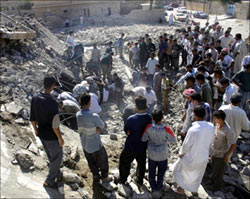
Sat Oct 16 2004
Falluja Braces For Assault When US Election Ends
11/1/2004
Allawi has warned of imminent military action against Fallujah. According to the The Lancet, civilian deaths in Iraq since the beginning of the US invasion have now reached 100,000 . The level of violence has been on the increase with daily deaths of civilians in US bombings (and other other actions) and daily attacks on US and British troops.
10/16/2004 Locals are fleeing Fallujah as the US steps up its offensive. US bombings have increased in recent days following a Resistance atack on Iraq's Green Zone on October 14th.
On October 13th, Allawi threatened a massive assault on Fallujah unless those in the city turned in militant Abu Mussab Al-Zarqawi. Representatives from Fallujah said they did not know where Al-Zarqawi was and accused the US of trying to "torpedo" the negotiations by continuing air bombing of residential areas. "The allegation that Zarqawi is here has been used to justify killing women and children" read a statement from a group of Fallujah scholars in an appeal to the international community. Negotiations between Falluja residents and the US went from bad to worse on October 15th, as the US was accused of kidnapping Fallujah’s chief negotiator, a charge the US denies.
The situation in Iraq is getting worse every day, but news coverage in the US is sparse as most of the country is now unsafe for Western journalists.
How US fuelled myth of Zarqawi the mastermind | Wikipedia: Fallujah | BBC: Inside besieged Falluja
10/16/2004 Locals are fleeing Fallujah as the US steps up its offensive. US bombings have increased in recent days following a Resistance atack on Iraq's Green Zone on October 14th.
On October 13th, Allawi threatened a massive assault on Fallujah unless those in the city turned in militant Abu Mussab Al-Zarqawi. Representatives from Fallujah said they did not know where Al-Zarqawi was and accused the US of trying to "torpedo" the negotiations by continuing air bombing of residential areas. "The allegation that Zarqawi is here has been used to justify killing women and children" read a statement from a group of Fallujah scholars in an appeal to the international community. Negotiations between Falluja residents and the US went from bad to worse on October 15th, as the US was accused of kidnapping Fallujah’s chief negotiator, a charge the US denies.
The situation in Iraq is getting worse every day, but news coverage in the US is sparse as most of the country is now unsafe for Western journalists.
How US fuelled myth of Zarqawi the mastermind | Wikipedia: Fallujah | BBC: Inside besieged Falluja
Iraq:
 10
10

10