







 Publish to Newswire
 Add an Event
Californian Journalist Wins $162,500 Settlement For Unlawful Arrest

A journalist who was jailed on several felony charges while documenting a protest at UC Berkeley won a $162,500 settlement last week.
UC Berkeley police also seized David Morse’s camera as evidence and held on to his memory card for more than six months before a judge ordered it returned to him.
And when they did, he discovered they had deleted a photo he took of them arriving on the scene, which contradicted their story that he was fleeing from the scene.
But because of their unlawful arrest, the university not only had to dish out all that money, its police department will now be required to undergo training in dealing with the media, specifically in regards to obtaining videos and photos for evidentiary purposes.
Morse, who goes by the pseudonym Dave Id on Indybay, was arrested in December 2009 as protesters stood outside the on-campus home of the university chancellor carrying lit torches.
Some of the protesters began vandalizing the home, running away as police pulled up to the scene.
Morse remained on the scene and was arrested, even though he quickly informed them he was there as a journalist. Here is his account of the arrest.
He was charged with attempted arson of an inhabited structure, vandalism, participation in a riot, attempted burglary, threatening a university official, and two counts of assault with a deadly weapon against a police officer.
All charges ended up dropped but police insisted on holding on to his photos as they tried to build a case against other suspects.
Morse had an impressive legal team made up of Photography is Not a Crime reader Geoff King as well as attorneys from the First Amendment Project.
Read the attorneys’ press release here that provides more details on the settlement.
Here is a question and answer interview I conducted with Morse through Facebook that I decided to cut-and-paste in its entirety.
http://www.pixiq.com/article/californian-journalist-wins-162500-settlementWhy do you think they deleted that one photo of them approaching the scene?
It's physical evidence that contradicts UC Berkeley's ongoing narrative that the protest was not one just where some people broke potted plants and light fixtures and cracked a couple of windows but rather some sort of lynch mob intent on murdering the Chancellor and UCPD officers. Some protesters had torches and so UC said that incendiary devices were thrown at the police car. I overheard one of my arresting officers telling other officers that night that she had to roll up the window of the squad car to prevent flames from entering the vehicle and burning her. I witnessed no such thing being right there as the first police arrived, and the final photo I shot showed the last few protesters running away as the police car actually reached the scene. But I was in general population of the Santa Rita jail when UC's PR machine went into overdrive the following morning, and then I had very serious felony charges hanging over my head for five days and a lengthy struggle to get my camera and photographs returned, so I was never able to tell the true story of what happened that night in a reasonably timely manner. My voice as a journalist was effectively silenced until the story no longer mattered to the corporate media which had fed on it non-stop for days. Now that news of the my settlement with the UC Regents has broken, UC Berkeley is saying that they believe "police acted responsibly and effectively to protect" Chancellor Birgeneau's mansion at the time, but I'd add that they acted quite effectively at maintaining exclusive control of the narrative.
How did you supposedly assault these cops to be charged with two counts of assault?
The police knew from the very beginning that this was not true, but it didn't matter to them. The first two officers saw me make a photograph of them as they rolled up. That's why they came after me saying they wanted my camera, because they believed it contained evidence of a crime, the vandalism at the Chancellor's house. But the charges were a twofer for UC Berkeley: one, they could grab my camera and get an illegal search warrant while my $132,000 bail kept me in jail unable to speak on my own behalf, and two, I was reduced to a crazed felon in the eyes of the media before my legal battles really began. Arnold Schwarzenegger, the governor at the time, was quoted as saying that the protest was a form of terrorism and, as my name and mugshot were a part of the saturation local news coverage at the time, I was therefore branded a terrorist in the eyes of the general public. After I was handcuffed and put in the patrol car that night, seven other people who were in the vicinity were also arrested and charged with the same five felonies and two misdemeanors. The DA filed no charges against any of us at our arraignment.
What was the deadly weapon?
The deadly weapon would have been a torch or torches thrown at police, I suppose. There were two officers in the first car that arrived.
How long did it take them to eventually return your memory card?
My camera until just a few months ago shot on mini-CDs. I think I bought it around 2004. Those CDs were cool when memory cards held less than 200mb, but as memory expanded exponentially and got much cheaper, that camera wasn't so cool any more. It was six months before I was able to get my CD back from UC. It was in June the following year when I prevailed in state court and was able to quash the ill-gotten search warrant with the amazing legal work of Geoff King and the First Amendment Project here in Oakland. Under state law, police are supposed to use a subpoena to seek unpublished photographic materials, which gives a photojournalist or anyone intent on publishing photographs a fair chance to argue in open court against handing them over to police. I was denied that opportunity. The affidavit UC police filed for the warrant was not only false and misleading, but I was in jail and had no opportunity to stand up for my rights as a journalist.
Did they ever make any arrests based on your photos?
No, there was nothing they could use against any of the other seven arrestees -- collectively, we were dubbed the UC8 at the time until the DA failed to file charges -- nor anyone else associated with the protest. UCPD did post blow-ups of my photos on their website, on a wanted-style web page seeking help identifying individuals who were in the march that night. I had never even seen my own photos until the warrant was quashed, so I wasn't sure if those were even my photographs on their wanted page until my photos were returned, because I had shot wide crowd shots and the photos posted online were close-ups of individuals in the march to the Chancellor's house. It was dark and things were moving fast when I made those photos. It was a matter of just 15 minutes between when I started shooting photos of a march and when I was in handcuffs in the police car. Unfortunately, though, UCPD also used one or two of my photographs to bring disciplinary charges against one or two students. One of them seemed to be holding a torch during the march and UC Berkeley said that was behavior unbecoming of a student and tried to deny housing and other benefits.
What kind of camera are you going to buy with your settlement?
Funny you ask. That was the one concrete thing I told myself from the very beginning that I would buy for myself if I prevailed with the civil suit. At some point in the next few months, I'll be looking to buy a decent HD videocamera, something I've never owned, always having shot in SD when I do video. I want the new one to be small enough that I can cover both speaking events and street demonstrations, something that will reasonably fit into a backpack along with a still camera. I've seen that JVC makes a series of cameras that record to MOV files, and that might be useful for me. I also intend to make a few charitable donations, including a healthy one to the NLG for all of the fine work they do. It was the NLG that originally represented the UC8 up until our arraignment.
Indybay coverage:
Henry K. Lee
Updated 09:56 p.m., Monday, July 2, 2012
A news photographer who said he was wrongfully arrested and his photos illegally seized during a raucous protest at UC Berkeley Chancellor Robert Birgeneau's campus residence will receive $162,500 to settle his lawsuit against the university.
As part of the settlement with David Morse, 43, of Oakland, UC Berkeley police will modify their procedures "regarding acceptable means of seeking materials from a journalist" and conduct training sessions for officers about media rights, Terry Gross, an attorney for Morse, said Monday.
"From now on, it's going to be clear to all of them that they can no longer engage in this type of activity where they target a journalist or anyone else who is taking pictures," Gross said.
UC Berkeley spokeswoman Janet Gilmore said Monday, "We are pleased to have reached a settlement that allows all parties to avoid the expense of trial. The university admits no liability in the settlement and continues to believe the police acted responsibly and effectively to protect" Birgeneau's mansion, called University House.
Morse was among eight people arrested on Dec. 11, 2009, after a crowd threw lit torches and used large flower pots to break windows outside University House while protesting fee increases and budget cuts.
At the time, Birgeneau was sleeping in the mansion off Hearst Avenue and was awakened by his wife, Mary Catherine.
Most of the protesters ran away when police arrived, while others threw torches at arriving officers, authorities said.
Morse, a member of the San Francisco Bay Area Independent Media Center, or Indybay, said he was a journalist taking photos of the protest, according to his suit filed in U.S. District Court in Oakland. It said an officer told Morse, "We want your camera. We believe your camera contains evidence of a crime."
The officers ignored his press pass and arrested him and seven others on suspicion of rioting, threatening an education official, attempted burglary, attempted arson of an occupied building, vandalism, and assault with a deadly weapon on a police officer, the suit said.
Morse spent the night in jail. Prosecutors declined to file charges.
But police obtained a search warrant and used several of his photos in brochures and online in hopes that the public could identify individuals, the suit said.
An Alameda County Superior Court judge granted Morse's motion to quash a search warrant and have his seized photos returned, the suit said. Morse sued in federal court after UC police declined to compensate him for infringement of his rights, Gross said.
In a separate case, another Indybay photographer, John Weston Osburn, filed a federal rights suit Friday against the city of Oakland, saying officers injured his wrist and wrongfully arrested him on suspicion of attempted arson as he covered a protest in downtown Oakland.
Osburn said police tampered with the video camera he used to film the 2010 protest after former BART police Officer Johannes Mehserle was convicted of involuntary manslaughter in the fatal shooting of unarmed rider Oscar Grant.
By Matt Krupnick
Posted: 07/02/2012 05:07:15 PM PDT
Updated: 07/02/2012 05:07:16 PM PDT
The University of California has settled a lawsuit filed by a photojournalist who was arrested as he covered a 2009 UC Berkeley protest.
UC paid independent journalist David Morse and his attorneys $162,500 last week, Morse's lawyers said Monday, and agreed to train police its officers bettet on how to deal with journalists.
Morse was arrested and his camera was confiscated as he covered a Dec. 11, 2009, march to the campus home of UC Berkeley Chancellor Robert Birgeneau. Police detained Morse after some demonstrators vandalized the house.
A state appeals court ruled in 2010 that Morse's camera had been improperly seized and ordered UC police to return all copies of his photos. One photograph, of a police car approaching the protest scene, had been deleted from a memory card, Morse said.
Although UC agreed to train its officers, the university admitted no wrongdoing, UC Berkeley spokeswoman Janet Gilmore said Monday. Police acted "responsibly and effectively" during the 2009 protest, she said.

UC Regents Give Local Photojournalist David Morse $162K in Settlement
By Albert Samaha Mon., Jul. 2 2012 at 5:04 PM
University of California Regents, in a civil rights lawsuit settlement agreement announced today, will pay $162,500 to David Morse, an independent photojournalist who was arrested by UC Berkeley police while covering a student demonstration more than two years ago.
In that demonstration, on Dec. 11, 2009, protesters had gathered in front of Chancellor Robert Birgeneau's house to speak out against state funding cuts and fee increases. Morse was snapping shots for for Indybay. The event eventually grew rowdy and some students began vandalizing the home, breaking lights, windows, and plant pots. Most of the students left when the police car approached, but Morse stayed to take more pictures.
He identified himself as a journalist and offered to show his credentials. Still, officers arrested him and took him to Santa Rita County Jail (eight other students were arrested). They seized his camera, in order to identify people in the protest.
Morse was charged with attempted arson of an inhabited structure, vandalism, participation in a riot, attempted burglary, threatening a university official, and two counts of assault with a deadly weapon against a police officer. He spent that night in jail.
However, those charges were dropped at his first court appearance. His legal team claimed, in a 2010 statement, that the police had slapped Morse with the charges "in order to buy themselves time to prepare a misleading search warrant affidavit" to access to the camera.
In June 2010, an Alameda County Superior Court judge ruled that the police department had illegally searched Morse's camera and had to return all copies of his photos. California law states that a subpoena, not a search warrant, is necessary to obtain unpublished journalistic material.
According to a statement by Morse's lawyers, "When UCBPD returned the photographs, one had been deleted from the memory disc: the last photograph showing the approaching police car."
Morse filed the civil rights lawsuit in December 2010. He charged that the department infringed upon his rights and violated a federal law prohibiting the use of search warrants to get unpublished journalistic material.
As part of today's settlement, the Regents agreed to revise its policies on journalist protections and require that all UC Berkeley officers attend training on these procedures.

UC Berkeley To Pay $162K Over Illegal Camera Search Outside Chancellor’s Home
July 3, 2012 11:42 AM
BERKELEY (CBS/AP) — The University of California, Berkeley will pay a photojournalist $162,500 to settle a lawsuit alleging campus police illegally searched his camera for photos of a student protest outside the chancellor’s home.
Attorneys for 43-year-old David Morse disclosed the settlement on Monday.
Morse was arrested on suspicion of rioting while covering the protest outside UC Berkeley Chancellor Robert Birgeneau’s residence in 2009 for the San Francisco Bay Area Independent Media Center. Police obtained a search warrant to review photographs he took.
In 2010, an Alameda County Superior Judge invalidated the search warrant and ordered the university to return all copies of Morse’s photos.
University spokeswoman Janet Gilmore said UC Berkeley did not admit any wrongdoing as part of the settlement.
By Alex Washburn
5:55 pm
July 3, 2012
UC Berkeley has agreed to pay $162,500 dollars to a local photographer who claims he was illegally arrested back in 2009 while photographing a protest on the UC Berkeley campus.
David Morse was present as a crowd of protestors threw lit torches and broke windows of UC Berkeley Chancellor Robert Birgeneau’s campus residence while the Chancellor and his wife Catherine were inside.
A majority of those causing the destruction fled when police arrived but Morse remained, presumably to continue photographing the scene.
Police ignored Morse’s press pass and arrested him along with eight other people on the night of Dec. 11, 2009. Although Morse was never charged with a crime, police obtained a search warrant to remove photographs from his camera and used them in handouts in an attempt to identify the vandals.
An Alameda County Superior Court judge granted Morse’s motion to void the warrant and have his photos returned. UC police did not compensate Morse for the infringement of his rights at the time.
After a $162,500 settlement was reached, Morse’s attorney Terry Gross told the Chron:
“From now on, it’s going to be clear to all of them that they can no longer engage in this type of activity where they target a journalist or anyone else who is taking pictures.”
Incidents of police officers infringing on freedom of the press seems to have become more common over the past several years. Jane Tyska of the Oakland Tribune was awarded $99,000 after being illegally detained by Oakland Schools Police Chief Art Michel in 2008. Tyska filmed the incident, which is available on YouTube.
San Francisco Chronicle reporter Vivian Ho was detained in 2011 while covering a No Justice No BART protest in downtown San Francisco. Ho was detained again in January of this year along with five other credentialed journalists while covering an Occupy Oakland event. One was taken to Santa Rita Jail.
More recently, local photographer John Weston Osburn filed a federal rights against the city of Oakland last week claiming officers injured his wrist and wrongfully arrested him on suspicion of attempted arson as he photographed a protest in downtown Oakland in 2010.
Source: SFGATE

UC Berkeley Settles Case with Photojournalist
July 3, 2012, 1:38 pm • Posted by KQED News Staff and Wires
BERKELEY, Calif (AP) -- The University of California, Berkeley will pay a photojournalist $162,500 to settle a lawsuit alleging campus police illegally searched his camera for photos of a student protest outside the chancellor's home.
Attorneys for 43-year-old David Morse disclosed the settlement on Monday.
Morse was arrested on suspicion of rioting while covering the protest outside UC Berkeley Chancellor Robert Birgeneau's residence in 2009 for the San Francisco Bay Area Independent Media Center. Police obtained a search warrant to review photographs he took.
In 2010, an Alameda County Superior Judge invalidated the search warrant and ordered the university to return all copies of Morse's photos.
University spokeswoman Janet Gilmore said UC Berkeley did not admit any wrongdoing as part of the settlement.

The Huffington Post | By Anna Susman
Posted: 07/05/2012 12:21 pm Updated: 07/06/2012 11:35 am
The University of California, Berkeley has settled a lawsuit with a photojournalist, paying him $162,500 after he claimed that campus police unlawfully arrested him and confiscated his camera during a student protest in 2009.
Though university spokeswoman Janet Gilmore said that police acted appropriately, the settlement states that UC Berkeley police will be trained to handle journalists differently in the future. Attorneys for the photojournalist, David Morse, 43, disclosed the settlement on Monday.
Morse is an independent photojournalist who volunteers for the San Francisco Bay Area Independent Media Center.
In 2009, he was photographing a protest outside of Chancellor Robert Birgeneau’s office where students were rioting against budget cuts and increases in tuition. According to The San Francisco Chronicle, the crowd grew incensed, throwing lit torches and flower pots through the windows at the chancellor’s house.
Campus police reportedly saw Morse taking a picture and demanded his camera. Morse was then arrested on six counts, including suspicion of rioting, attempted burglary, vandalism and assault with a deadly weapon on a police officer.
Morse spent the night at Santa Rita Jail in Dublin, and was released on $132,000 bail the next day.
Though police originally obtained a search warrant to use the confiscated photos, Alamenda County Superior Judge invalidated the warrant in 2010.
"From now on, it's going to be clear to all of them that they can no longer engage in this type of activity where they target a journalist or anyone else who is taking pictures," said Morse’s attorney Terry Gross.

Camera Shy But Responsible and Effective
The University of California has settled a lawsuit filed by a photojournalist who was arrested as he covered a 2009 UC Berkeley protest. UC paid independent journalist David Morse and his attorneys $162,500 last week, Morse's lawyers said Monday, and agreed to train police its officers better on how to deal with journalists.
Morse was arrested and his camera was confiscated as he covered a Dec. 11, 2009, march to the campus home of UC Berkeley Chancellor Robert Birgeneau. Police detained Morse after some demonstrators vandalized the house... Although UC agreed to train its officers, the university admitted no wrongdoing, UC Berkeley spokeswoman Janet Gilmore said Monday. Police acted "responsibly and effectively" during the 2009 protest, she said.
Full story at: http://www.mercurynews.com/education/ci_20993145/uc-settles-suit-by-arrested-photographer
UC settles lawsuit with photojournalist
BY KARREN MOORER | STAFFLAST UPDATED JUL. 7, 2012
The UC Board of Regents announced Monday that it settled with an independent journalist after he had filed a lawsuit against the university for what he claimed was an unlawful arrest during a 2009 protest on the UC Berkeley campus.
The university will pay $162,500 to David Morse, an independent photojournalist who volunteers for San Francisco Bay Area Independent Media Center — a non-commercial independent media center that provides information that does not show up in the corporate media to the Bay Area — after he filed a lawsuit against the university for being arrested while reporting on a protest that took place outside Chancellor Robert Birgeneau’s campus residence.
“We are pleased to have reached a settlement that allows all parties to avoid the expense of trial,” said campus spokesperson Janet Gilmore in an email. “The University admits no liability in the settlement, and continues to believe the police acted responsibly and effectively to protect University House.”
According to court documents, the $162,500 settlement from the university includes compensation for attorney fees, initial bail during Morse’s arrest and other out-of-pocket expenses. The settlement also states that there will be changes to UCPD police policies and procedures regarding journalist protection during protests on campus.
The day he was arrested, Morse was reporting on an indoor hall concert on Dec. 11, 2009 in Wheeler Hall, according to First Amendment Project Executive Director David Greene. After the concert, he followed a march that led him to the campus University House, where students were protesting budget cuts and increases in tuition, according to Greene.
UCPD then arrived within minutes after protesters began to vandalize the residence, Morse said.
According to Morse, when UCPD officers saw Morse taking a picture of their police car, they said, “We believe your camera has evidence of crime,” and proceeded to arrest him, confiscating his camera and other journalistic materials.
UCPD officers then took Morse to Santa Rita Jail in Dublin, after which he was released on $132,000 bail the next day, Morse said.
UCPD then filed a search warrant in 2009 in order to obtain Morse’s reporting material that he had used during the protest, which included his backpack and camera. Morse then filed an action against UCPD in 2010 to nullify the warrant and received all his personal belongings back within six months of making his original motion.
“They had filed a warrant that had false and misleading information,” Morse said.
According to Greene, Morse’s arrest also violated the Privacy Protection Act, which states that a police officer would have to retain a subpoena against an individual to obtain materials rather than a search warrant in this type of case.
Morse said he filed the lawsuit against the university, not only to get his bail money back but to get the UCPD to reform its policies and seek better training for situations involving protests.
“(It’s) not only to stick up for myself, but to draw a line in the sand for other independent journalists (in the same situation),” Morse said.
Raymond Baldino | Reporter's Privilege | News | July 5, 2012
The University of California Berkeley Police Department has settled with an independent photographer who sued the department after he was arrested and had his photographs confiscated while covering a protest in 2009. As part of the $162,500 settlement, the department has also agreed to change its policies towards the media and train officers about journalists' legal protections.
David Morse, a photographer for the San Francisco Bay Area Independent Media Center (Indybay), was arrested at a demonstration on the University of California campus where dozens of protestors angry at university fee increases gathered outside the chancellor's home. According to news reports, some protestors carried torches and damaged the chancellor's property.
Morse repeatedly stated that he was a journalist, but the university police argued that because he carried a dated press pass at the time of his arrest, they had reason to believe he was not a journalist.
The university sought to use Morse's photos in the investigation of the incident, but, in 2010, an Alameda County Superior Court judge ruled that the photographs were illegally obtained under a search warrant because Morse was protected by California's shield laws. The court ordered the photographs returned.
Morse then brought a civil lawsuit against the university police for "improper arrest, imprisonment, and seizure of journalistic materials" according to his attorneys' press release about the settlement. The release states that Morse was charged with arson, vandalism, participation in a riot, attempted burglary, and threatening a university official.
Under the federal Privacy Protection Act of 1980, officials must obtain a subpoena before searching journalists or newsrooms, which gives journalists an opportunity to oppose release of the materials.The university police had used a search warrant to demand immediate access to Morse's photographs.
The university acknowledged no wrongdoing in its settlement with Morse but has agreed to update its policies and procedures towards journalists in the future. According to the press release, the university has acknowledged that federal law requires a subpoena rather than a search warrant to obtain unpublished journalistic materials.
In addition, the department has agreed to train its officers under the new policies that acknowledge the protections afforded journalists. The settlement is similar to the 2011 agreement between both the Minneapolis Police Department and U.S. Secret Service with Democracy Now journalists for their arrests at the 2008 Republican National Convention. In that lawsuit, the St. Paul Police department also agreed to train its officers in media relations.
According to David Greene, Morse's attorney, the lawsuit challenged a systemic policy of the university police of unlawfully targeting journalists in investigations. As an example, he mentioned an ongoing case involving the seizure of two Bay Area activist publisher groups' computers - the Long Haul and East Bay Prisoner Support Group - handled by the Electronic Frontier Foundation and the American Civil Liberties Union of Northern California.
"[This case] was about the UC police hav[ing] a reputation and a history of ignoring journalists' rights," he said. "David Morse was clearly a journalist, and there for journalistic purposes ... they didn't care that he was a journalist."
Calls placed to the university police as well as the department's attorneys in the Morse case were not immediately returned.
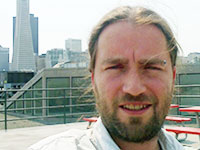 In December of 2010 journalist David Morse filed a federal civil rights lawsuit against the University of California police for his improper arrest, imprisonment and seizure of photographs. Last week Morse settled his suit for $162,500 (see scribd press release below).
Morse, a 42-year-old journalist who has covered hundreds of stories for Indybay and other outlets, was arrested a year ago at the scene of a UC Berkeley protest after police allowed a group of demonstrators, many of whom were wearing masks, to flee. Morse’s arresting officer pulled his car up to Morse and said, “I saw you take a picture of us. We want your camera.” Officers arrested Morse despite the fact that he informed them of his journalist status six times and denied all wrongdoing.
UCPD officers jailed Morse, then increased the charges against him in order to buy themselves time to prepare a misleading search warrant affidavit that omitted any mention of Morse’s newsgathering activities. The First Amendment Project successfully quashed that search warrant in June on the basis that it violated Section 1524(g) of the California Penal Code, which absolutely bars search warrants for unpublished journalistic materials. Federal law also bars such warrants.
Although Morse’s charges were dropped at his first court appearance, UCPD refused to return his images for more than six months and even made surveillance photographs of him when he attempted to retrieve them in person.
Journalist and police accountability advocate Carlos Miller shared the following on his site Pixiq from his interview with Morse recently:
Photography Is Not a Crime: Californian Journalist Wins $162,500 Settlement for Unlawful Arrest

UC Berkeley Police Harassment of Journalists Costs School Thousands 7/3/2012
The University of California agreed to pay $162,500 to photographer David Morse, who was arrested by UC Berkeley police and had his photographs seized during a 2009 campus protest. Morse works for Indybay, an online publication from the San Francisco Bay Area Independent Media Center.
Morse had been on campus December 11 to cover a concert, but followed about 70 torch-bearing students—who were protesting budget cuts and fee hikes—to Chancellor Robert Birgeneau’s house where they encountered the police. Morse snapped pictures as the protesters fled, but rather than pursuing the students the officers arrested Morse. They ignored his attempt to show his press identification, took his camera, handcuffed him and took him to the police station where he spent the night.
Initially Morse and seven others were arrested on suspicion of rioting, threatening an education official, attempted burglary, attempted arson of an occupied building, vandalism, and assault with a deadly weapon on a police officer, but all charges were eventually dropped. The police returned Morse’s camera to him, but not before obtaining a search warrant from a judge to search it for photographs. The police kept the photos and used them in an online brochure that they hoped would entice the public to help them identify protesters. Morse was given a blank memory disc.
But Alameda County Superior Court Judge Yolanda Northridge ruled the following June that the warrant was invalid and the search illegal because the police had not told a judge that the suspect was a journalist. She ordered that they return all photos to him. Morse said all but one of the pictures on the disc were returned; a photo of a police car approaching the protest scene was deleted.
The deal with Morse was the second recent settlement by UC Berkeley officers over complaints that the department illegally seized electronic material from a journalistic enterprise during an improper police action. In April, the FBI and UC Berkeley police agreed to pay $100,000 to East Bay Prisoner Support and Long Haul Inc. to compensate for a raid in 2008 in which they seized computers and digital storage media.
The search was conducted as part of an investigation into threatening emails sent to Berkeley animal researchers. Long Haul is an alternative library and community center and East Bay Prisoner Support writes about incarceration issues. As part of the settlement, UCPD acknowledged that “Long Haul was a publisher protected by the Privacy Protection Act.” The department had failed to mention that it was raiding a journalistic enterprise when it obtained a warrant for the raid. The department also had to return all seized data.
–Ken Broder
To Learn More:
UC Pays to Settle Photographer's Suit over Arrest (by Henry K. Lee, San Francisco Chronicle)
UC Settles Suit by Arrested Photographer (by Matt Krupnick, San Jose Mercury News)
Police Settle Suit over Radical Group Raid (by Chris Marshall, Courthouse News)
UC Berkeley Cops Don't Get it, Photog Says (by Maria Dinzeo, Courthouse News)
Judge's Ruling: UCPD Illegally Searched Journalist's Photos (by Katie Nelson, The Daily Californian)
July 5, 2012
by Nico Perrino
In another example of universities violating individual rights and leaving taxpayers with the bill, Californians are out $162,500 following the University of California, Berkeley's settlement with a photojournalist whose photographs of a protest on Berkeley's campus were wrongfully seized during the December 11, 2009, event.
David Morse, a journalist with Indybay, had been covering the protest against fee increases and budget cuts outside Berkeley Chancellor Robert Birgeneau's on-campus residence when things turned violent and protesters began breaking windows and throwing torches. As UC police started arresting people, Morse was approached by an officer who, according to a lawsuit filed in U.S. District Court in Oakland, ignored his press pass and told him "[W]e want your camera. We believe your camera contains evidence of a crime."
While Morse was initially arrested and his photos seized, the charges were later dropped and his photos returned after a court rescinded the search warrant that was issued to collect the photos, due to state and federal laws that prohibit such warrants for unpublished journalistic materials.
The fallout from the ordeal began when Morse asked the UC police for compensation for infringing his rights, including his First Amendment right as a member of the press to document the news, and his Fourth Amendment right protecting him against unreasonable searches and seizures. When the police declined, Morse filed suit, resulting in the recent settlement.
As readers of The Torch might be aware, the particulars of the case at Berkeley bring to mind a similar case at James Madison University (JMU) in 2010, where police officers served an improper warrant to JMU's student newspaper The Breeze in an attempt to seize evidence of illegal activity at a party near campus. The warrant resulted in the collection of about 1,000 photos, many irrelevant to the incident. Unlike at Berkeley, however, the prosecutor who told the officers to collect the photos almost immediately returned them and apologized. (She eventually made a more narrow request that netted her just 20 photos.)
As a general matter, police may only seize cameras in certain narrow circumstances. As detailed by the ACLU in this useful resource, "officers may not generally confiscate or demand to view your photographs or video without a warrant." Broadly speaking, then, it is illegal and repulsive in a free society for law enforcement to seize photos without a proper warrant or to bully journalists into turning over broad swaths of their unpublished work unrelated to a specific crime.
While Berkeley spokeswoman Janet Gilmore says the university "admits no liability in the settlement" stemming from their seizure of Morse's camera, California taxpayers are nevertheless liable for footing the bill for a public university action that was avoidable and clearly unconstitutional. In a free society, violating an individual's constitutionally protected rights must have consequences, and we hope this expensive settlement puts universities on notice.
UC settles suit by arrested photographer
The University of California is paying $162,500 to settle a lawsuit brought by an independent photojournalist, David Morse, who was arrested as he covered a 2009 Berkeley protest, according to the Bay Area News Group.
Morse was arrested and police confiscated his camera during a 2009 march to the campus home of UC Berkeley Chancellor Robert Birgeneau. One photograph, of a police car approaching the protest scene, was deleted from his camera.
The settlement on Monday follows a state appeals court ruling in Morse's favor.
A UC-Berkeley spokeswoman told the Chronicle, "We are pleased to have reached a settlement that allows all parties to avoid the expense of trial. The university admits no liability in the settlement and continues to believe the police acted responsibly and effectively to protect" Birgeneau's mansion."
But police are going to modify their procedures "regarding acceptable means of seeking materials from a journalist," said Morse's attorney, Terry Gross.
By PHILIP A. JANQUART
Tuesday, July 10, 2012 Last Update: 12:45 PM PT
OAKLAND, Calif. (CN) - A photojournalist will collect $162,000 to settle claims that police officers at University of California, Berkeley, wrongfully arrested him and illegally seized his camera after a student protest.
David Morse, 43, says he was covering an unrelated assignment at Berkely on Dec. 11, 2009, when he noticed students marching toward the residence of UC Berkeley Chancellor Robert Birgeneau. He allegedly began following the group and taking photographs, but was later arrested by UCPD officers.
"Rather than pursue the fleeing demonstrators, many of whom had their faces covered, the police car pulled up directly in front of Morse," his federal complaint said. "UCPD officers Manchester and Wyckoff exited the vehicle and briskly approached Morse. As they approached, Officer Wyckoff shouted, 'I saw you take a picture of us. We want your camera. We believe your camera contains evidence of a crime.'"
Morse says informed them several times that he was a journalist and showed them his press pass, adding that he did not think they had the right to seize his camera and cellphone. The officers responded by saying, "You're not a lawyer, so shut the fuck up," according to the complaint.
The officers obtained a search warrant to look at the photos Morse took, but an Alameda County Superior judge invalidated the search warrant in 2010. The university was ordered to return all the photographs to their rightful owner.
Last week's settlement requires the school to retrain its officers so illegal seizures do not happen again.
Morse was represented by Terry Gross, of Gross Belsky Alonzo, which specializes in public interest cases among other things.
"An integral part of the settlement is that all police officers must be retrained," Gross said. "They are retraining them to understand there is protection for anyone who has documents to disseminate to the public. We agreed what the procedures will be now: all of the officers will know that whenever they see anyone with documents, or taking photographs, they will know they can't seize those documents, get a search warrant or arrest them. They have to issue a subpoena, which gives the person an opportunity to object before the government can get hold of them. If they are a journalist, they can't be seized at all."
Gross said journalists are protected by the Privacy Protection Act, which was passed in 1977 after a Stanford journalist's photographs were seized during a police raid on the school's newspaper office.
"Some agencies want to pretend the law doesn't exist and train their officers to seize them by any means necessary," he said, referring to documents, cameras and cell phones. "This is a reminder that the law is there."
Morse's ordeal occurred around the same time that Berkeley police raided the school's Library and Community Center in the Long Haul building. The police allegedly entered with guns drawn, seizing 13 computers, according to the Berkeley Dailey Planet.
Gross said that case ended in a $100,000 settlement just a couple months ago.
Donate

$140.00 donated
in the past month
Get Involved
If you'd like to help with maintaining or developing the website, contact us.
Publish
Publish your stories and upcoming events on Indybay.