$97.00 donated in past month
|

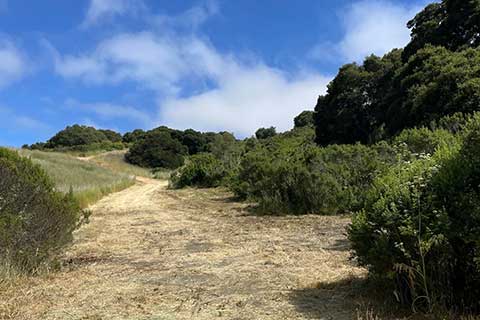
(Albany, Calif.), April 22, 2012 – Occupy the Farm, a coalition of local residents, farmers, students, researchers, and activists are planting over 15,000 seedlings at the Gill Tract, the last remaining 10 acres of Class I agricultural soil in the urbanized East Bay area. The Gill Tract is public land administered by the University of California, which plans to sell it to private developers.
For decades the UC has thwarted attempts by community members to transform the site for urban sustainable agriculture and hands-on education. With deliberate disregard for public interest, the University administrators plan to pave over this prime agricultural soil for commercial retail space, a Whole Foods Market, and a parking lot.
"For ten years people in Albany have tried to turn the Gill Tract into an Urban Farm and a more open space for the community. The people in the Bay Area deserve to use this treasure of land for an urban farm to help secure the future of our children," explains Jackie Hermes-Fletcher, an Albany resident and public school teacher for 38 years.
Read More |
Photos:
1 |
2 |
3 |
How to turn the “Occupy the UC Gill Tract” conflict into an opportunity for resolving key problems |
Occupy The Farm in Discussion with UC Researchers / Weekend Open House Planned (4/28 & 29) |
Occupy The Farm Updated Flyer and Upcoming Events (4/24 & 25) |
The UC's Gill Tract Doomed for Development, Just Not "Immediately" University Assures Us |
Hundreds of Farmers Occupy UC Berkeley's Gill Tract farm in Albany |
Event Announcement |
TakeBackTheTract.com

On April 22nd, Patricia Jackson wrote: "If you rambled down to Civic Center Sunday, you might have thought the crowd and the booths could just be another average day event. Then you saw a Whiskey Dome Cycle, a seal made out of all that garbage that gets thrown in the ocean, and the Luvevolution Bus. There was Green Peace and Earth Island Institute — and that was your clue. Earth Day San Francisco, 2012.
"Forty-two years ago, on the first earth day 20 million people participated in activities across the country. So many people came to Washington D.C. that both houses of Congress shut down in awe of the response. That people’s movement brought passage of the Clean Water Act, the Clean Air Act, and the Environmental Protection Agency.
"At exactly noon today we stood in the warm sun of San Francisco and connected to rainy-day New York City for a sync up singing of Woody Guthrie’s This Land Is Your Land. On stage to lead us in song – Country Joe MacDonald, Occupella, Freedom Song Network, Rockin’ Solidarity Chorus, La Pena Chorus, Jello Biafra, Liliana Herrera, ReSisters, Hali Hammer, and Christiana Johnson as our sign language interpreter, Will Scarlett with a harmonica solo, and you could feel the joy."
Photos

Monsanto closed its facility in Davis, California on March 16th after 150 occupiers from throughout the state blocked the entrances to their Davis facility at 1910 5th Street. The occupiers reported that they shut down operations at the corporate giant, which produces genetically modified organisms (GMOs) and is notorious for its inordinate influence over the U.S. Food and Drug Administration (FDA).
On March 16th in the Monterey Bay Area, approximately two dozen community members, many dressed as zombies, demonstrated at the office of Seminis, Inc., which is owned by Monsanto and located in the city of Salinas. The group was protesting Monsanto's efforts to "take total control of the world's seed supply by patenting genetically modified seed."
Demonstrators distributed a flier that listed numerous "things Monsanto does not want you to know," such as: Foods containing GMOs do not have to be labeled in the U.S.; Monsanto puts small farmers out of business; and through major retailers, consumers have rejected Monsanto's genetically engineered bovine growth hormone (rBGH).
Occupy, social justice groups blockade entrance to Monsanto in Davis | GMO Apocalypse Zombies "Occupy Monsanto" at Seminis Office in Salinas
On March 3rd, the Student Environmental Center at UC Santa Cruz hosted the 11th Annual Campus Earth Summit. This year's Campus Earth Summit included student-led workshops on a wide-variety of subjects, live performances, and keynote talks by Santa Cruz Mayor Don Lane and Eric Holt-Giménez of Food First.
One of the major issues now confronting the City of Santa Cruz, and residents outside the city limits, too, is whether or not the City should partner with the Soquel Creek Water District to construct a $100 million dollar desalination plant to meet the need for water during drought periods in the City of Santa Cruz water service area, and to help relieve the threat of groundwater overdraft in the Soquel Creek Water District. A kickoff party for the Right to Vote On Desalination initiative will be held on Sunday, February 12th in Santa Cruz.
In the pre-dawn hours of Monday, January 30th, a small group of activists hung a banner from the La Fonda HWY 1 overpass by Harbor High. The banner read "WIDENING WASTE$". The approximately one-mile widening project will cost almost $20 million, to be funded by the State Transportation Bond and State Transportation Improvement Program funds. There are a number of other projects competing for those millions of dollars that may now not be funded because of the high cost of the widening project.

The Save the Peaks Coalition is fighting the United States Forest Service in a legal battle to protect children from hazardous endocrine disruptors and to protect the San Francisco Peaks sacred site in Arizona from desecration. On Monday, January 9th, The Save the Peaks Coalition et al v. the United States Forest Service will be heard by the 9th Circuit Court of Appeals in San Francisco, CA. at 9:30am. The case argues that under the National Environmental Policy Act and the Administrative Procedure Act, the Forest Service failed to adequately consider the impacts associated with ingestion of snow made from reclaimed sewer water in its Environmental Impact Statement. Organizers are calling for a strong turn-out for a march and rally before the court hearing, and a welcoming reception will be held the previous day on Sunday, January 8th.
The Forest Service approved reclaimed sewer water for the use of snowmaking at a local Northern Arizona ski resort in 2004. The reclaimed sewer water in question is from Flagstaff's Rio de Flag Sewage Plant that has proven to contain harmful bacteria, and endocrine disruptors such as pharmaceuticals and hormones amongst other known toxins. Environmental justice groups are specifically asked to come aboard to educate their followers about the grave impacts of this situation.
Schedule of Events | Indigenous Caravan Travels to San Francisco from Arizona to Stop Snow Made with Reclaimed Sewer Water | See also: Solidarity Demonstration at Forest Service Office in Vallejo on August 25th, 2011

On December 8th, the California Coastal Commission voted 10-1 to approve the controversial $5 million Arana Gulch Master Plan. The vote was expected to resolve a fifteen year long battle between cycling advocacy groups and environmental groups that oppose a bike path through the Santa Cruz greenbelt. But in a move that has some long time Sierra Club members crying foul, cycling advocacy groups are running a slate of three candidates for the board of the Santa Cruz County Group of the Sierra Club in the December election. This would be the second cyclist-sponsored candidate slate in two years, and is expected to decide control of the Santa Cruz Group Executive Committee.
The candidates have no prior history of volunteering for the Sierra Club, but do have extensive ties to local cycling advocacy groups. Tawn Kennedy is coordinator of Green Ways to School, a K-12 education project that is funded by a grant through People Power and the Hub for Sustainable Transportation. Greg McPheeters is the immediate past Chair of the Silicon Valley Bicycle Coalition, and Mary Odegaard joined People Power in advocating for the King Street bike boulevard. The trio are attempting to unseat the current Santa Cruz Group Executive Committee Chair, Kevin Collins, a long time Sierra Club forestry activist, as well as the Forestry Committee Chair, Dennis Davie, and the Secretary / Treasurer, Mark Sullivan, a local environmental attorney.
A mailer to Sierra Club members touts the experience of Kennedy, McPheeters, and Odegaard in youth outreach, solar energy, and organic farming. But long time Sierra Club activists are concerned about the lack of experience in core Sierra Club conservation activities, which they feel are essential to the Sierra Club mission. The Sierra Club has been active for half a century in Santa Cruz County on forest and watershed conservation, native species protection, coastal advocacy, and zoning and land use, as well as evaluating public and private projects for conformance to local, state, and national environmental laws. The Executive Committee Chair, Kevin Collins, explains that the Sierra Club is one of the few local environmental organizations that does not receive money from City or County and so is free to take positions on politically charged land use and development issues.
Read more | Final Battle in 15 Year Long Arana Gulch Saga? | Friends of the Pogonip | Friends of Arana Gulch
A community park was established in downtown Santa Cruz on December 3rd when volunteer gardeners gathered at dawn to build raised concrete flower beds, plant shrubs and fruit trees, and build benches. By early afternoon they hung a sign to welcome people to the new community park. "This is an ongoing process of creation," said one of the gardeners, "We'll be planting through the winter. As these new sprouts take root it will be beautiful!"
Santa Cruz, Calif. — Just as PG&E enters the final phase of its deployment of wireless “smart” meters in California, the largest of the state’s Investor Owned Utilities (IOU’s) has reversed course, quietly beginning to replace the ‘smart’ meters of those reporting health impacts with the old analog version. Consumer rights and health groups immediately seized on the news, demanding that millions of Californians unhappy with their new wireless meters get their analogs returned immediately at no cost.
Alex Darocy writes: Public officials from the past and present filed into the Museum of Art and History Monday night [September 19] as Mike Rotkin and Cynthia Mathews, describing themselves as part of "the Sustainable Water Coalition," hosted a private, invite-only informational meeting in support of the proposed desalination plant project. The desal project, which so far has cost $6 million dollars to be studied, has been aggressively promoted by officials, and this private meeting has brought up issues of governmental transparency. This meeting punctuates a new era of suspicion concerning local politicians: during the planning of the desal project there have been conflicts of interest, including the selection of the URS Corporation to author the EIR [Environmental Impact Report], as well as recent ethics violations on the part of city officials.
It has been over a month since KB Home contractors unearthed the skeletal remains of a young Ohlone child at the Branciforte Creek construction site in Santa Cruz. On August 25th, 75 people marched in downtown Santa Cruz to the City Council meeting in an action organized by the Save the Knoll Coalition. One person maintained an indigenous chant throughout the march, many people carried signs and banners, and several distributed educational flyers.
Joshua Hart, Director of Stop Smart Meters! was arrested on June 21st after blocking the entrance to the Capitola PG&E payment center in protest of PG&E’s illegal “smart” meter installations in the County. The County of Santa Cruz, as well as the Cities of Capitola and Watsonville, have adopted urgency ordinances prohibiting the installation of wireless “smart” meters within their jurisdictions. Forty-three local governments throughout the state have formally demanded a halt to the program because of concerns about health, privacy, accuracy, and fire safety.

After six months of organizing rallies and actions behind the "redwood curtain" protesting CalTrans' plan to expand Highway 101 through Richardson Grove State Park, Richardson Grove Action Now (RGAN) took the fight to the state capital in Sacramento, where they carried out a flash mob action. The highway expansion plan threatens some of the last 2% remaining ancient redwoods on Earth.
RGAN activists rode on the White Rose bus to Oakland, Sacramento, and Glen Cove, Vallejo to mobilize resistance to the highway expansion, demonstrate at the Capitol, and connect with an ongoing spiritual encampment established to stave off development on a sacred indigenous burial shellmound site in Glen Cove. RGAN's Verbena Lea says, “Worldwide, people are opposed to harming or cutting ancient redwood forests, which CalTrans plans to do; ancient redwoods have all but been wiped off the face of the earth and, like the people at Glen Cove, we are saying to developers, government and corporations, 'You have already desecrated and taken too much — We're stopping you here.'”
The road widening would mutilate an ancient grove in order to facilitate trans-national corporations, nuclear materials, development, and military having greater access to the Humboldt Bay region, which has been relatively protected by forest bottlenecks and winding roads. Highways 199, 299, and 36, entering the region from the east, are next in line for highway expansion.
 Read More | previous coverage: Protest as Caltrans Prepares to Widen US-101 Thru Richardson Grove
UPDATE 6/7/11: Bay Trail and Association of Bay Area Governments Suspends $200,000 Grant to GVRD!
On the morning of May 31st, supporters of the Glen Cove native encampment converged outside the offices of the Bay Trail project in downtown Oakland to demand that Bay Trail divest from the Greater Vallejo Recreation District's (GVRD) desecration of the Sogorea Te sacred burial ground.
Over 65 people gathered in front of the Bay Trail offices and vowed to pursue further action if the $200,000 is not immediately pulled from GVRD's plans to bulldoze the burial grounds and build bathrooms, a parking lot, and paved trails on top of it.
Spirits at the demonstration were high despite the rain — protesters were determined to get the message across to Bay Trail. After an hour and a half of picketing, demonstrators entered the lobby of the office building en masse to deliver a demand letter to Bay Trail.
Within 30 minutes, the executive director of the Association of Bay Area Governments (ABAG), which oversees the Bay Trail Project, had requested a meeting with the Protect Glen Cove Committee for the following day. Members of local tribes and their supporters have been camping out at Glen Cove for a month and a half defending the site.
Read More with
Photos |
Fliers |
Video
See Also:
Short film: The Spiritual Encampment to Protect Glen Cove |
The Glen Cove saga
Previous Related Indybay Feature:
Sogorea Te (Glen Cove) Under Threat of Imminent Development
7:30PM Wednesday May 16
Earth Days
7:30PM Monday May 28
Imperiled Life
7:30PM Wednesday May 30
END:CIV Resist or Die
|
|