







 Publish to Newswire
 Add an Event
From the Open-Publishing Calendar
From the Open-Publishing Newswire
Indybay Feature
DFG seeks to join lawsuit challenging levee clear cutting
The Corps couldn't be pushing the new policy of levee vegetation removal at a worse time for Central Valley salmon populations. The Sacramento fall river chinook salmon population is just this year recovering from the unprecedented collapse of 2008 and 2009, while the ESA-listed winter and spring run salmon populations continue to decline. All three runs need riparian habitat to thrive in before migrating down to the ocean.
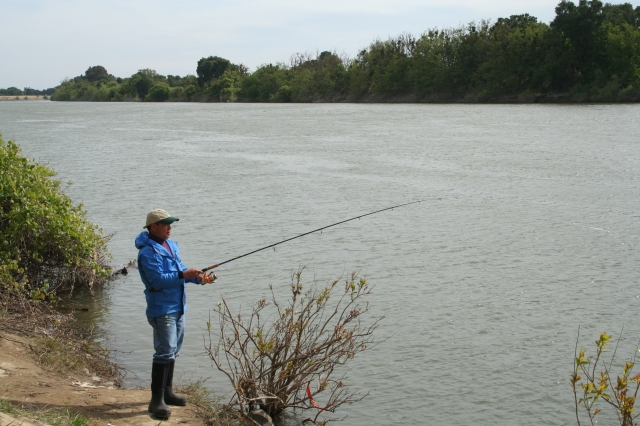
Photo of the Sacramento River below Freeport by Dan Bacher. The U.S. Army Corp of Engineers wants to "clear cut" California levees.
Photo of the Sacramento River below Freeport by Dan Bacher. The U.S. Army Corp of Engineers wants to "clear cut" California levees.
DFG seeks to join lawsuit challenging levee clear cutting
by Dan Bacher
In a move applauded by conservationists, the California Department of Fish and Game (DFG) on November 9 began the process to join federal litigation by three environmental groups challenging the controversial removal of vegetation on levees by the federal government.
The case, Friends of the River, et. al. v. United States Army Corps of Engineers, et. al. was filed in the U.S. District Court for the Eastern District of California. "It challenges the Army Corps of Engineers’ (Corps) adoption of a national policy that requires removing virtually all trees and shrubs on federal levees," according to a DFG news release.
“DFG, along with many other local, state and federal agencies, has been in discussion with the Corps about this policy for several years,” said DFG Director Charlton H. Bonham. “It’s unfortunate that the discussions haven’t led to a more agreeable outcome, but if adhered to, the policy will do incredible damage to California’s remaining riparian and adjacent riverine ecosystem, especially in the Central Valley.”
Bonham said "roundtable discussions" on the vegetation removal policy have included the California Department of Water Resources (DWR), Central Valley Flood Protection Board, National Marine Fisheries Service and U.S. Fish and Wildlife Service. DWR and DFG have repeatedly expressed concerns about the policy in letters to the Corps. Farmers and other water users have also questioned the policy.
DFG seeks to join the Friends of the River, Defenders of Wildlife and the Center for Biological Diversity in their case against the Corps' "clear cutting" of levees along the Sacramento, San Joaquin and other Central Valley rivers.
"I'm very happy that the DFG, the state agency responsible for preserving habitat and vegetation essential to fish and wildlife, is seeking to join our lawsuit," said Bob Wright, senior counsel at Friends of the River. "As a Californian, I'm very proud that the state of California has joined our effort to protect the scenic beauty and fish and wildlife habitat of our state."
Jeff Miller with the Center for Biological Diversity explained the reason for the lawsuit. "The Corps adopted a new standard requiring removal of all vegetation from levees without environmental review, consideration of regional differences or scientific support," Miller stated. "Not only is there little proof trees or well-managed vegetation threaten levees in California, the Corps’ own research shows trees stabilize and strengthen levees. The Corps must incorporate ongoing scientific research before proceeding.”
My late father, Alfred, who worked for decades as a civil engineer for CalTrans, used to complain to me about the stupidity of past efforts by the US Army Corps of Engineers to remove trees from levees along the Sacramento River and Delta waterways.
Not only was this unsightly and bad for fish and wildlife, but he told me, as we were driving around the California Delta to fish for catfish and stripers, how removing the trees actually weakened the levees! He passed away in 2005, but if he was still alive, he would be very happy to hear that the state of California had joined a lawsuit to stop yet another hare-brained scheme by the Corps to remove trees from levees.
The Central Valley is home to the Sacramento-San Joaquin River Flood Management System that includes approximately 1,600 miles of federal project levees along the Sacramento and San Joaquin rivers and tributaries. This policy would require removing most of the remaining five percent of riparian forest there, according to the DFG.
Riparian habitat is essential for several endangered species including Sacramento River winter and spring run Chinook salmon, Central Valley steelhead, Valley elderberry longhorn beetle, riparian brush rabbit, Western yellow-billed cuckoo and Swainson’s hawk. The riparian habitat also provides scenic beauty and recreational enjoyment for fishermen, birders, kayakers, recreational boaters, runners, cyclists, hikers and others.
"The policy adopted by the Corps fails to comply with either the National Environmental Policy Act or the federal Endangered Species Act," the DFG stated.
"Historically, the Corps has allowed and even encouraged the planting of trees and other vegetation on California levees. They have even collaborated with state and federal agencies in developing levee design approaches intended to benefit federal- and state-listed threatened and endangered species. The new policy directly conflicts with their past actions," the DFG noted.
The Corps couldn't be pushing the policy at a worse time for Central Valley salmon populations. The Sacramento fall river chinook salmon population is just this year recovering from the unprecedented collapse of 2008 and 2009, while the ESA-listed winter and spring run salmon populations continue to decline. All three runs need riparian habitat to thrive in before migrating down to the ocean.
Not only is the policy environmentally destructive, but it is enormously expensive at a time when the state is in its biggest economic crisis since the Great Depression. DFG and DWR estimate that complying with the Corps’ policy could cost up to $7.5 billion and divert funds away from more significant levee deficiencies like seepage and erosion.
The DFG's joining with environmental groups to protect fish and wildlife on levees is admirable. While this is a promising move by the Department, I hope that the DFG leadership will develop the back bone to oppose the Bay Delta Conservation Plan (Plan) to build the peripheral canal and to speak up against the horrific slaughter of Sacramento splittail, striped bass, Central Valley salmon and dozens of other fish species in the state and federal pumps. This year saw an unprecedented 9,000,000 Sacramento splittail "salvaged" in the Delta pumps - and the highest level of export pumping ever recorded.
I also urge the DFG to join the lawsuit that fishing and conservation groups filed on November 9 to make the federal government do its job of protecting California's water supply and fish populations. The California Sportfishing Protection Alliance, Pacific Coast Federation of Fishermen's Associations, Friends of the River and the Crab Boat Owners Association filed suit in federal court under the Clean Water Act to stop the continuing unlawful discharges of agricultural wastewater into the San Joaquin River and San Francisco Bay-Delta.
by Dan Bacher
In a move applauded by conservationists, the California Department of Fish and Game (DFG) on November 9 began the process to join federal litigation by three environmental groups challenging the controversial removal of vegetation on levees by the federal government.
The case, Friends of the River, et. al. v. United States Army Corps of Engineers, et. al. was filed in the U.S. District Court for the Eastern District of California. "It challenges the Army Corps of Engineers’ (Corps) adoption of a national policy that requires removing virtually all trees and shrubs on federal levees," according to a DFG news release.
“DFG, along with many other local, state and federal agencies, has been in discussion with the Corps about this policy for several years,” said DFG Director Charlton H. Bonham. “It’s unfortunate that the discussions haven’t led to a more agreeable outcome, but if adhered to, the policy will do incredible damage to California’s remaining riparian and adjacent riverine ecosystem, especially in the Central Valley.”
Bonham said "roundtable discussions" on the vegetation removal policy have included the California Department of Water Resources (DWR), Central Valley Flood Protection Board, National Marine Fisheries Service and U.S. Fish and Wildlife Service. DWR and DFG have repeatedly expressed concerns about the policy in letters to the Corps. Farmers and other water users have also questioned the policy.
DFG seeks to join the Friends of the River, Defenders of Wildlife and the Center for Biological Diversity in their case against the Corps' "clear cutting" of levees along the Sacramento, San Joaquin and other Central Valley rivers.
"I'm very happy that the DFG, the state agency responsible for preserving habitat and vegetation essential to fish and wildlife, is seeking to join our lawsuit," said Bob Wright, senior counsel at Friends of the River. "As a Californian, I'm very proud that the state of California has joined our effort to protect the scenic beauty and fish and wildlife habitat of our state."
Jeff Miller with the Center for Biological Diversity explained the reason for the lawsuit. "The Corps adopted a new standard requiring removal of all vegetation from levees without environmental review, consideration of regional differences or scientific support," Miller stated. "Not only is there little proof trees or well-managed vegetation threaten levees in California, the Corps’ own research shows trees stabilize and strengthen levees. The Corps must incorporate ongoing scientific research before proceeding.”
My late father, Alfred, who worked for decades as a civil engineer for CalTrans, used to complain to me about the stupidity of past efforts by the US Army Corps of Engineers to remove trees from levees along the Sacramento River and Delta waterways.
Not only was this unsightly and bad for fish and wildlife, but he told me, as we were driving around the California Delta to fish for catfish and stripers, how removing the trees actually weakened the levees! He passed away in 2005, but if he was still alive, he would be very happy to hear that the state of California had joined a lawsuit to stop yet another hare-brained scheme by the Corps to remove trees from levees.
The Central Valley is home to the Sacramento-San Joaquin River Flood Management System that includes approximately 1,600 miles of federal project levees along the Sacramento and San Joaquin rivers and tributaries. This policy would require removing most of the remaining five percent of riparian forest there, according to the DFG.
Riparian habitat is essential for several endangered species including Sacramento River winter and spring run Chinook salmon, Central Valley steelhead, Valley elderberry longhorn beetle, riparian brush rabbit, Western yellow-billed cuckoo and Swainson’s hawk. The riparian habitat also provides scenic beauty and recreational enjoyment for fishermen, birders, kayakers, recreational boaters, runners, cyclists, hikers and others.
"The policy adopted by the Corps fails to comply with either the National Environmental Policy Act or the federal Endangered Species Act," the DFG stated.
"Historically, the Corps has allowed and even encouraged the planting of trees and other vegetation on California levees. They have even collaborated with state and federal agencies in developing levee design approaches intended to benefit federal- and state-listed threatened and endangered species. The new policy directly conflicts with their past actions," the DFG noted.
The Corps couldn't be pushing the policy at a worse time for Central Valley salmon populations. The Sacramento fall river chinook salmon population is just this year recovering from the unprecedented collapse of 2008 and 2009, while the ESA-listed winter and spring run salmon populations continue to decline. All three runs need riparian habitat to thrive in before migrating down to the ocean.
Not only is the policy environmentally destructive, but it is enormously expensive at a time when the state is in its biggest economic crisis since the Great Depression. DFG and DWR estimate that complying with the Corps’ policy could cost up to $7.5 billion and divert funds away from more significant levee deficiencies like seepage and erosion.
The DFG's joining with environmental groups to protect fish and wildlife on levees is admirable. While this is a promising move by the Department, I hope that the DFG leadership will develop the back bone to oppose the Bay Delta Conservation Plan (Plan) to build the peripheral canal and to speak up against the horrific slaughter of Sacramento splittail, striped bass, Central Valley salmon and dozens of other fish species in the state and federal pumps. This year saw an unprecedented 9,000,000 Sacramento splittail "salvaged" in the Delta pumps - and the highest level of export pumping ever recorded.
I also urge the DFG to join the lawsuit that fishing and conservation groups filed on November 9 to make the federal government do its job of protecting California's water supply and fish populations. The California Sportfishing Protection Alliance, Pacific Coast Federation of Fishermen's Associations, Friends of the River and the Crab Boat Owners Association filed suit in federal court under the Clean Water Act to stop the continuing unlawful discharges of agricultural wastewater into the San Joaquin River and San Francisco Bay-Delta.
Add Your Comments
We are 100% volunteer and depend on your participation to sustain our efforts!
Donate

$115.00 donated
in the past month
Get Involved
If you'd like to help with maintaining or developing the website, contact us.
Publish
Publish your stories and upcoming events on Indybay.
Topics
More
Search Indybay's Archives
Advanced Search
►
▼
IMC Network