







 Publish to Newswire
 Add an Event
From the Open-Publishing Calendar
From the Open-Publishing Newswire
Indybay Feature
Toxic Herbicide will be used at Glen Cove site.
The Greater Vallejo Recreation District plans to use toxic herbicide Garlon 4 to kill non-native plants.
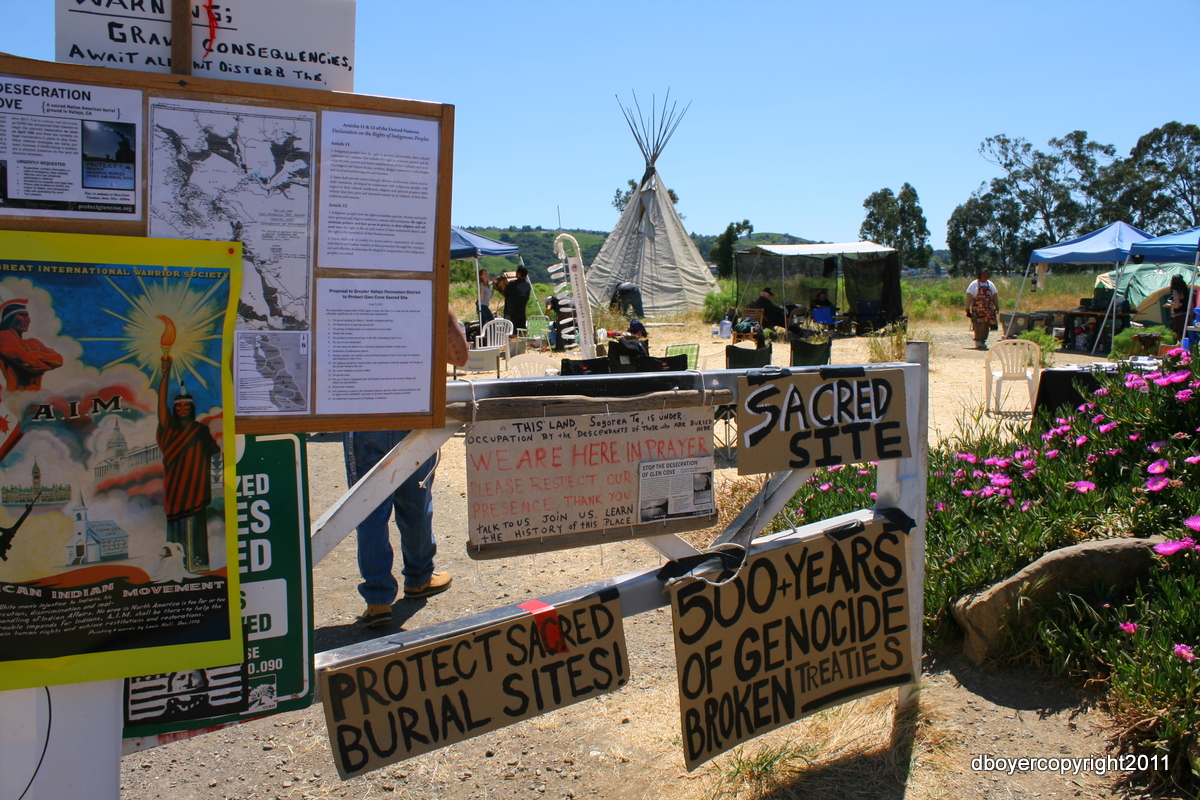
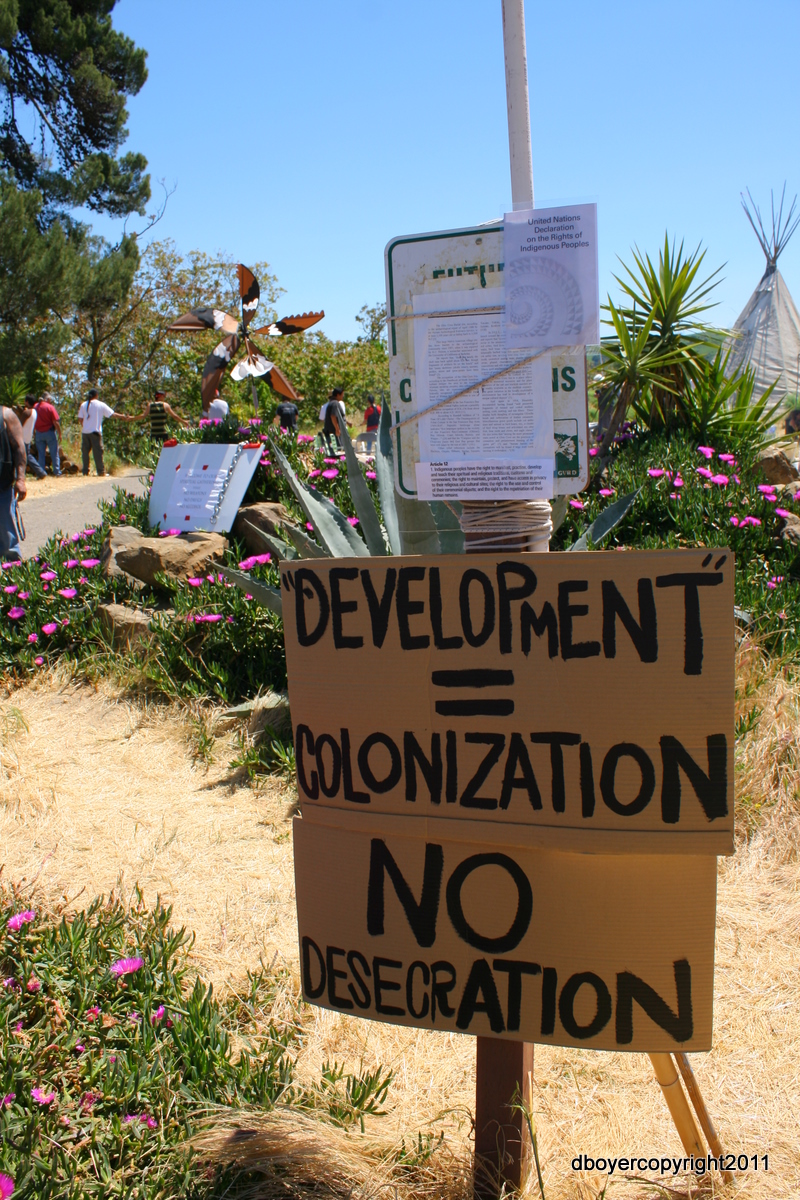
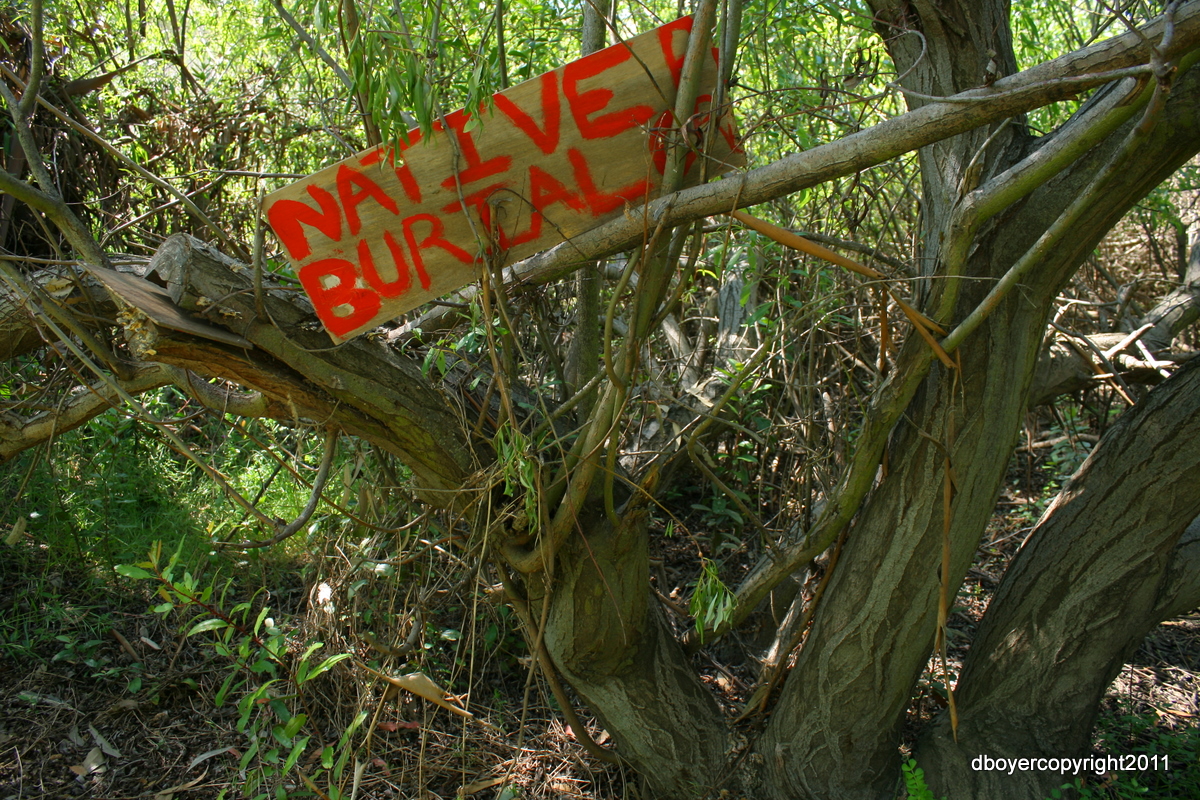
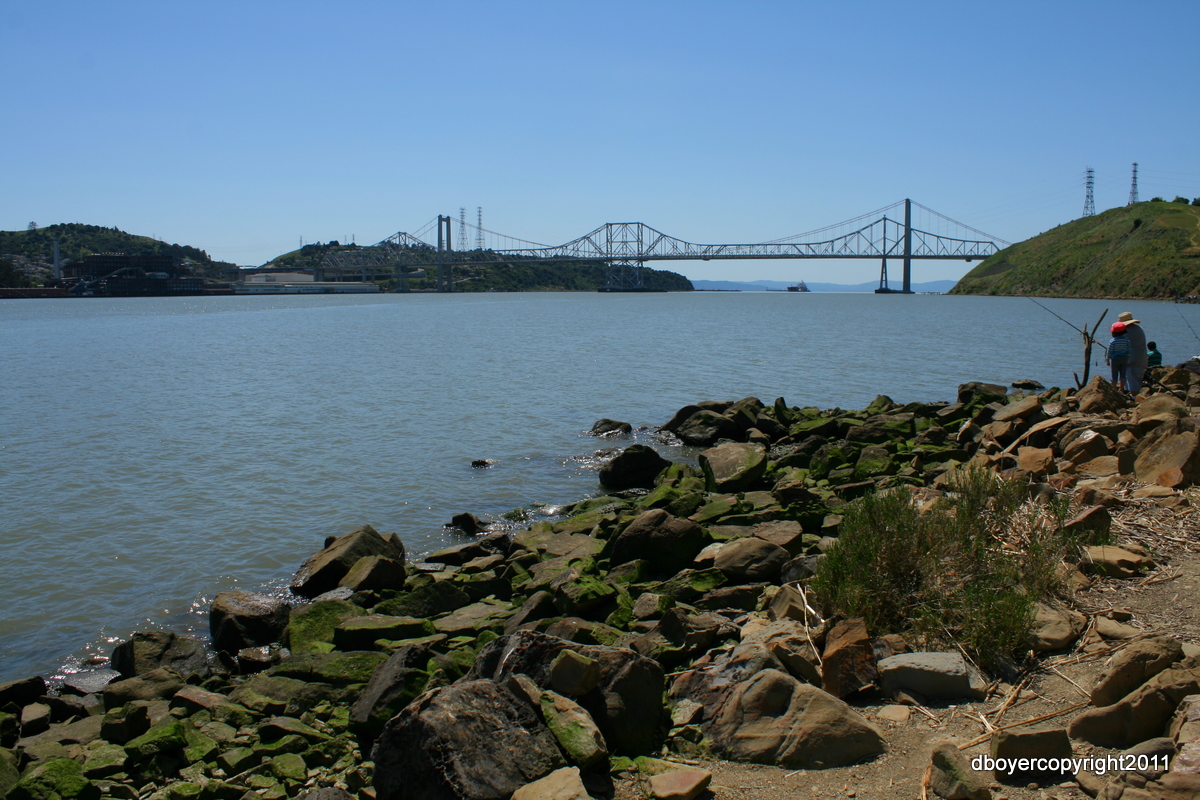
I have been covering the Occupation of Glen Cove California, and yesterday I once again visited the site. Not much has changed. Some teepee's have been constructed and there is a ceremonial fire. Also the Greater Vallejo Recreation District still has not backed out of their plans and they insist on leaving any of the Native American groups out of any talks, so a compromise cannot be met.
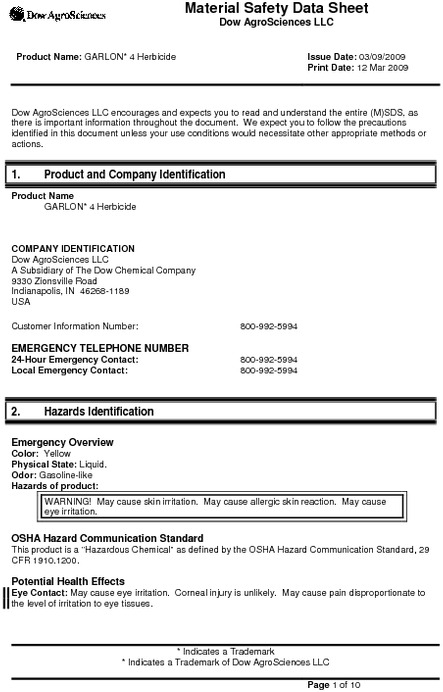
One other fact that is more notable is that they plan to use the herbicide Garlon 4 to kill the non-native plants. That means Garlon 4 will be sprayed near the shoreline, and material safety data sheets say "that during spraying, aspiration into the lungs can occur causing lung damage and or pneumonia."
Garlon 4's ingredients have been known to cause birth defects and tumors.
Everyone in Vallejo California should read the Material Safety Data sheet for Garlon 4 because it will soon be sprayed in large quantities at Glen Cove California.
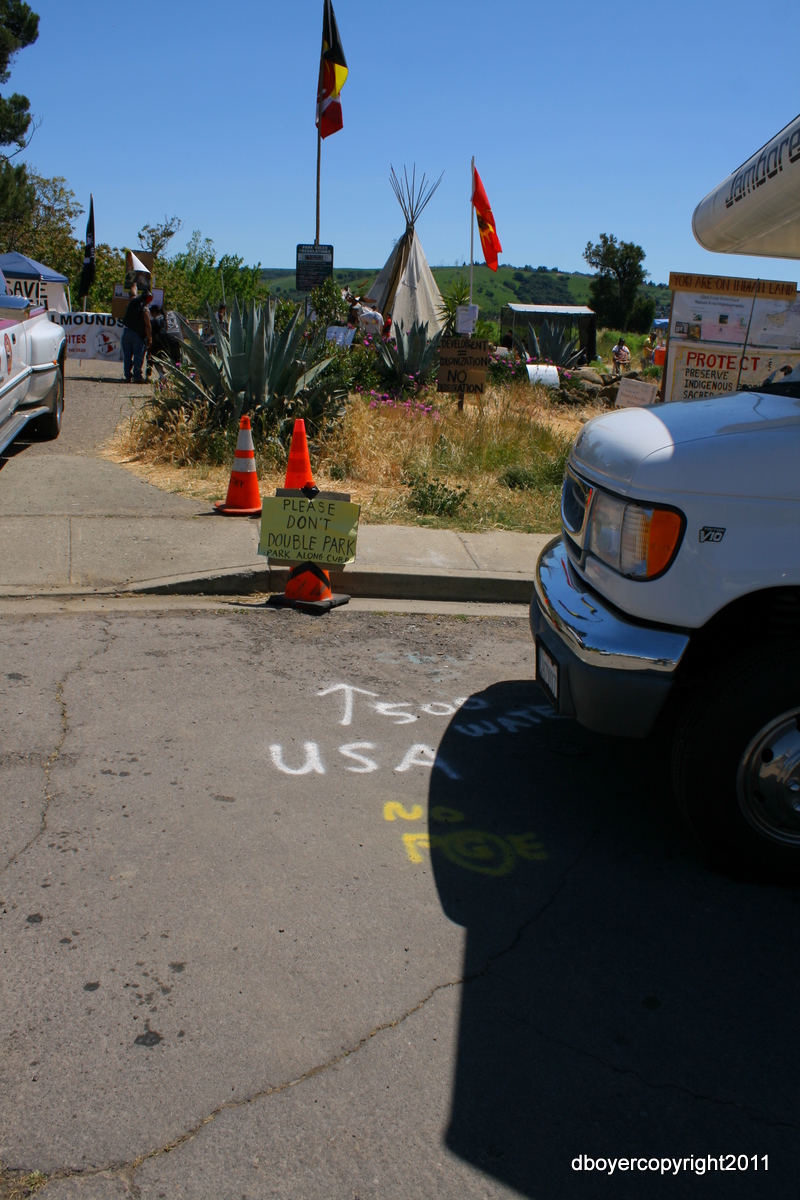
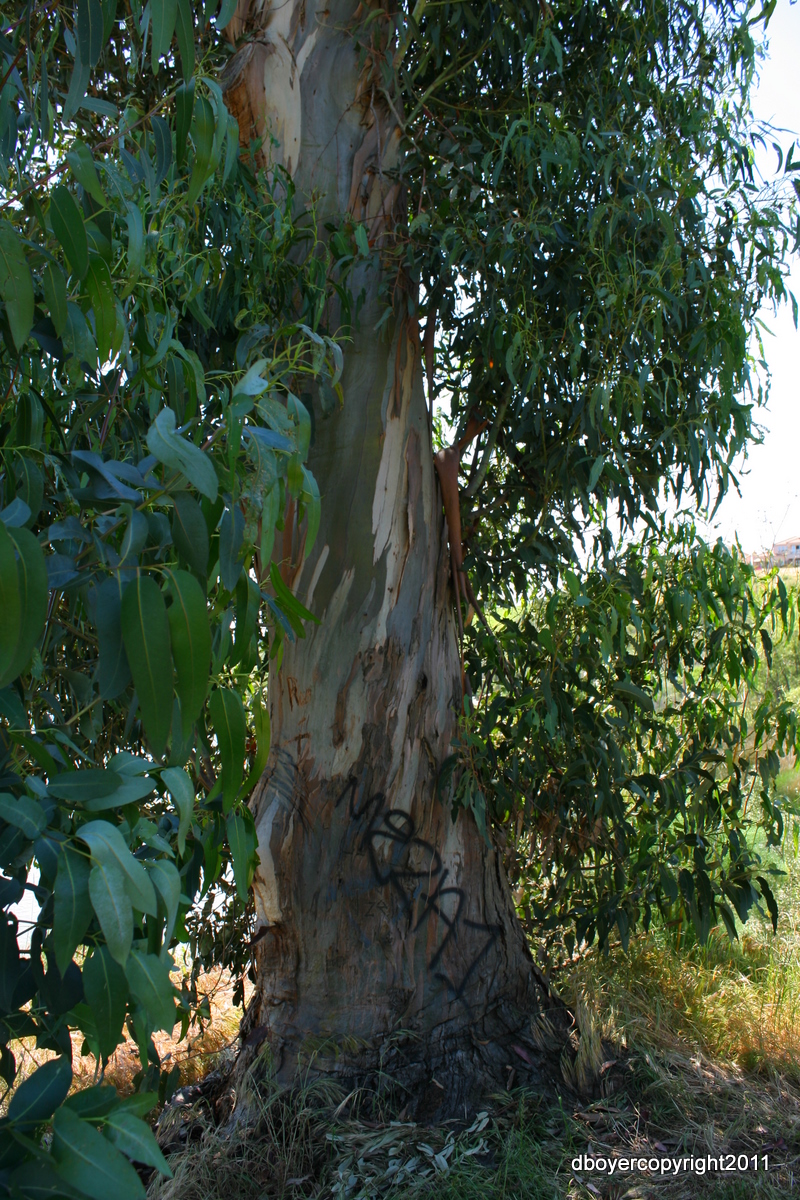
The photos include the newly painted street markings of all sewer and water lines. The markings indicate development is imminent.
One other fact that is more notable is that they plan to use the herbicide Garlon 4 to kill the non-native plants. That means Garlon 4 will be sprayed near the shoreline, and material safety data sheets say "that during spraying, aspiration into the lungs can occur causing lung damage and or pneumonia."
Garlon 4's ingredients have been known to cause birth defects and tumors.
Everyone in Vallejo California should read the Material Safety Data sheet for Garlon 4 because it will soon be sprayed in large quantities at Glen Cove California.
The photos include the newly painted street markings of all sewer and water lines. The markings indicate development is imminent.

Add Your Comments
Comments
(Hide Comments)
ok, so herbicides aren't great, but they're much more dangerous on our food. i'm not saying that i support this use, but i know a thing or two about garlon and herbicide in general.
first, the lung risks are only present during the actual spray. the people at risk are the applicators.
second, most land management agencies require applicators to spray only in no/low wind and to spray in such a way (eg, spot spray) as to avoid run off. i don't know that this is the type of application at glen cove, but i suspect that it is. rarely do you see land managers boom spray an area. however, if there is development planned, i suppose there could be "development goals" that could lead to a larger spray area than say a restoration project would allow.
again, farming applies herbicide much more liberally than do land management agencies. furthermore, they apply actual pesticides, which are much more dangerous as they work on pathways that are also found in the bodies of people and animals. herbicides typically influence biological and chemical pathways specific to plant life.
garlon is typically selected because it is broad-leaf specific. in other words, you can spare monocots such as bunch grasses, irises, lilies, and other bulbs if you are spraying near them. garlon's inert ingredients are less suspect than round up, which is also broad spectrum, meaning it affects all plant life.
i'm putting this out there because so many of us are very afraid of herbicides and pesticides. i think perspective can be helpful, which is why i've learned about herbicides and pesticides.
it would be interesting for someone to post the area to be treated. how large is it? is there target species within that given area? if so, what percent cover is that target species within the total area?
first, the lung risks are only present during the actual spray. the people at risk are the applicators.
second, most land management agencies require applicators to spray only in no/low wind and to spray in such a way (eg, spot spray) as to avoid run off. i don't know that this is the type of application at glen cove, but i suspect that it is. rarely do you see land managers boom spray an area. however, if there is development planned, i suppose there could be "development goals" that could lead to a larger spray area than say a restoration project would allow.
again, farming applies herbicide much more liberally than do land management agencies. furthermore, they apply actual pesticides, which are much more dangerous as they work on pathways that are also found in the bodies of people and animals. herbicides typically influence biological and chemical pathways specific to plant life.
garlon is typically selected because it is broad-leaf specific. in other words, you can spare monocots such as bunch grasses, irises, lilies, and other bulbs if you are spraying near them. garlon's inert ingredients are less suspect than round up, which is also broad spectrum, meaning it affects all plant life.
i'm putting this out there because so many of us are very afraid of herbicides and pesticides. i think perspective can be helpful, which is why i've learned about herbicides and pesticides.
it would be interesting for someone to post the area to be treated. how large is it? is there target species within that given area? if so, what percent cover is that target species within the total area?
Wow. Target species? Percent cover? Are you kidding? What pesticide company do you work for....?
You are wrong to downplay the dangers of Garlon. Learn more about the environmental and human health effects from these links:
* http://www.alternatives2toxics.org/tox_profile-triclopyr.htm
* http://www.pesticide.org/get-the-facts/pesticide-factsheets/factsheets/triclopyr
* http://sutroforest.com/environmental-and-other-effects/
There's nothing "interesting" about looking for "target species" to be "treated" on native burial grounds (seriously, who DO you work for?).
The only "restoration project" at Glen Cove is to return it - NOW! - to the people whose ancestors are buried there: http://protectglencove.org/
**** NO CHEMICALS!! ****
**** NO DEVELOPMENT!!! ****
**** HANDS OFF SOGOREA TE!!!! ****
You are wrong to downplay the dangers of Garlon. Learn more about the environmental and human health effects from these links:
* http://www.alternatives2toxics.org/tox_profile-triclopyr.htm
* http://www.pesticide.org/get-the-facts/pesticide-factsheets/factsheets/triclopyr
* http://sutroforest.com/environmental-and-other-effects/
There's nothing "interesting" about looking for "target species" to be "treated" on native burial grounds (seriously, who DO you work for?).
The only "restoration project" at Glen Cove is to return it - NOW! - to the people whose ancestors are buried there: http://protectglencove.org/
**** NO CHEMICALS!! ****
**** NO DEVELOPMENT!!! ****
**** HANDS OFF SOGOREA TE!!!! ****
i fully support the return of Sogorea Te to the indigenous community. i understand that the people who are occupying the land may be worried about herbicide applications in their space, thus i gave some info on garlon/herbicides in general. i found the tone of the original post to be frantic, which i don't think is helpful for people who have to decide how to protect themselves.
i'm a scientist (never worked for a chemical company), thus the questions about percent cover, etc. it would be useful to know those details so that the people occupying the site know the amount of herbicide that will be applied over what area. having some knowledge and giving a shit about the details doesn't make me an apologist or chem company mole.
again, i support the occupation of Sogorea Te. that doesn't mean i can't disagree with shallow information provided in a shrieking tone.
all that said, i hope that the indigenous communities' wishes are respected on this, regardless of the basis for their concerns. clearly the fundamental issue is the tenure of the land.
i'm a scientist (never worked for a chemical company), thus the questions about percent cover, etc. it would be useful to know those details so that the people occupying the site know the amount of herbicide that will be applied over what area. having some knowledge and giving a shit about the details doesn't make me an apologist or chem company mole.
again, i support the occupation of Sogorea Te. that doesn't mean i can't disagree with shallow information provided in a shrieking tone.
all that said, i hope that the indigenous communities' wishes are respected on this, regardless of the basis for their concerns. clearly the fundamental issue is the tenure of the land.
Panic, the "shrieking" must have been happening in your own head, because the original post was quite balanced.
D. Boyer provided some very basic information about Garlon, from the manufacturer no less. Manufacturer's Material Safety Data Sheets only disclose what little danger they must disclose by law, and leave a lot out. But even the limited information in the MSDS was a lot less shallow than the complete lack of evidence you provided as you were downplaying the dangers.
I have since posted more in-depth information from independent sources about the toxicity of Garlon, which you ignore, all the while continuing to claim that you know that this poison is nothing to worry about. You are at best misinformed, and apparently stubbornly keeping yourself so.
While claiming you support the occupation, you continue to talk about the usefulness of looking at how much Garlon "will" be applied. What you don't seem to be getting is that it's unacceptable for this to happen at all, in any quantity.
Clearly we don't agree about resistance either.
To protect the entire ecosystem of Sogorea Te, including the people who spend time there, these toxic pesticide applications must be prevented. Period. No negotiation. No compromise.
HANDS OF SOGOREA TE!!!!
D. Boyer provided some very basic information about Garlon, from the manufacturer no less. Manufacturer's Material Safety Data Sheets only disclose what little danger they must disclose by law, and leave a lot out. But even the limited information in the MSDS was a lot less shallow than the complete lack of evidence you provided as you were downplaying the dangers.
I have since posted more in-depth information from independent sources about the toxicity of Garlon, which you ignore, all the while continuing to claim that you know that this poison is nothing to worry about. You are at best misinformed, and apparently stubbornly keeping yourself so.
While claiming you support the occupation, you continue to talk about the usefulness of looking at how much Garlon "will" be applied. What you don't seem to be getting is that it's unacceptable for this to happen at all, in any quantity.
Clearly we don't agree about resistance either.
To protect the entire ecosystem of Sogorea Te, including the people who spend time there, these toxic pesticide applications must be prevented. Period. No negotiation. No compromise.
HANDS OF SOGOREA TE!!!!
Garlon is certainly risky. In San Francisco it is considered a "Tier I" (most hazardous) chemical, with a "High priority to find an alternative." This article is based on data from a thorough survey of the literature by the Marin Muncipal Water District.
http://sutroforest.com/2010/04/17/garlon-in-our-watershed/
Garlon is nevertheless being used against "non-native" plants, and in watersheds. Once there's permission to use a pesticide, there's not much incentive to minimize its use. So in the end, it doesn't matter what the target species are, or over what area. If San Francisco's experience is anything to go by, the use in native areas only expands over time. They start to target more species, over a broader area, and use more Garlon.
http://sutroforest.com/2010/04/17/garlon-in-our-watershed/
Garlon is nevertheless being used against "non-native" plants, and in watersheds. Once there's permission to use a pesticide, there's not much incentive to minimize its use. So in the end, it doesn't matter what the target species are, or over what area. If San Francisco's experience is anything to go by, the use in native areas only expands over time. They start to target more species, over a broader area, and use more Garlon.
For more information:
http://www.sutroforest.com
Garlon is the trade name for Triclopyr, a chemical herbicide. Go to http://www.pesticide.org and look it up. It is not very safe around aquatic habitats. It also causes an increase in breast cancer in lab animals. Frog tadpoles exposed to only 1PPM cannot swim right.
The best way to remove non-native plants is to pull them by hand. Grandmother earth will know that you are serious about helping her if you use your own hands. She may even keep you around a little longer if YOU help her. Poison is poison- Grandmother has had too much of it already.
The best way to remove non-native plants is to pull them by hand. Grandmother earth will know that you are serious about helping her if you use your own hands. She may even keep you around a little longer if YOU help her. Poison is poison- Grandmother has had too much of it already.
We are 100% volunteer and depend on your participation to sustain our efforts!
Donate

$125.00 donated
in the past month
Get Involved
If you'd like to help with maintaining or developing the website, contact us.
Publish
Publish your stories and upcoming events on Indybay.
Topics
More
Search Indybay's Archives
Advanced Search
►
▼
IMC Network