







 Publish to Newswire
 Add an Event
From the Open-Publishing Calendar
From the Open-Publishing Newswire
Indybay Feature
Marine Parks Work –-in Honduras--and California with the Marine Life Protection Act (MLPA)
Protecting the ocean makes economic and environmental sense
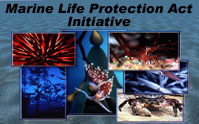
It’s no secret that California’s fisheries are in decline http://www.universityofcalifornia.edu/news/article/19540. That’s why the Marine Life Protection Act (MLPA) was enacted by an overwhelming bipartisan majority and signed by Gov. Gray Davis in 1999. Yet foreign fishing interests are spending millions of dollars trying to unravel the Act http://www.somethingsfishyaboutpso.com as local communities move to define the boundaries of marine protected areas along the coast.
The idea of marine parks http://en.wikipedia.org/wiki/Marine_Protected_Area to enable fisheries to recover is nothing new. Florida, for example, is a stunning example of how successful they are, and other nations around the world have long employed them.
I recently had the opportunity to spend a week in the Cayos Cochinos http://www.cayoscochinos.com/aboutus.html, a handful of small islands off the coast of Honduras in the Caribbean, as well as the larger island of Roatan. These islands are a divers and snorkelers paradise. Magnificent corral reefs surround them, and they’ve become a popular destination for fishermen, divers, and snorklers.
For good reason. During the days we were there, we saw teeming schools of electric-colored fish, sea turtles, squid, barracuda, kingfish, and lobster. It was as if we were dumped into an aquarium.
A key reason for this spectacular abundance of marine life is the designation of these areas as marine parks by the Honduran government five years ago. Controversial at the time, the designation of ocean areas around the island has proven to be boon to the local economy and to marine life.
“The fishermen hated it at first,” says long-time island resident Roger Remington of the Plantation Beach Resort. “They said it was going to put them out of business, ruin the sportfishing industry, and kill tourism.
“But now – five years later – they think it’s the best thing ever. The fish are bigger, we’re drawing more and more tourists both to fish and dive, and it has been the best thing they could have done to help our local economy.”
In California, ocean protection advocates, Indian tribes, and small businesses are making the same argument for Marine Life Protection Act designations in their communities. However, special interests -- backed by foreign fishing equipment manufacturers – are putting up a fight. Unsatisfied with years of stakeholder decision making on area designation, they are making a last-minute attempts to suspend the Marine Life Protection Act.
The state Fish & Game Commission will be making decisions throughout the year about MLPA’s. For more information about the process, visit http://www.dfg.ca.gov/mlpa/
The idea of marine parks http://en.wikipedia.org/wiki/Marine_Protected_Area to enable fisheries to recover is nothing new. Florida, for example, is a stunning example of how successful they are, and other nations around the world have long employed them.
I recently had the opportunity to spend a week in the Cayos Cochinos http://www.cayoscochinos.com/aboutus.html, a handful of small islands off the coast of Honduras in the Caribbean, as well as the larger island of Roatan. These islands are a divers and snorkelers paradise. Magnificent corral reefs surround them, and they’ve become a popular destination for fishermen, divers, and snorklers.
For good reason. During the days we were there, we saw teeming schools of electric-colored fish, sea turtles, squid, barracuda, kingfish, and lobster. It was as if we were dumped into an aquarium.
A key reason for this spectacular abundance of marine life is the designation of these areas as marine parks by the Honduran government five years ago. Controversial at the time, the designation of ocean areas around the island has proven to be boon to the local economy and to marine life.
“The fishermen hated it at first,” says long-time island resident Roger Remington of the Plantation Beach Resort. “They said it was going to put them out of business, ruin the sportfishing industry, and kill tourism.
“But now – five years later – they think it’s the best thing ever. The fish are bigger, we’re drawing more and more tourists both to fish and dive, and it has been the best thing they could have done to help our local economy.”
In California, ocean protection advocates, Indian tribes, and small businesses are making the same argument for Marine Life Protection Act designations in their communities. However, special interests -- backed by foreign fishing equipment manufacturers – are putting up a fight. Unsatisfied with years of stakeholder decision making on area designation, they are making a last-minute attempts to suspend the Marine Life Protection Act.
The state Fish & Game Commission will be making decisions throughout the year about MLPA’s. For more information about the process, visit http://www.dfg.ca.gov/mlpa/
Add Your Comments
Latest Comments
Listed below are the latest comments about this post.
These comments are submitted anonymously by website visitors.
TITLE
AUTHOR
DATE
Isn't Honduras under a military coup?
Tue, Feb 2, 2010 6:13PM
Hey S&M, How'd You Get This Job You Own
Fri, Jan 29, 2010 7:33PM
Are You Out of Your Mind?
Fri, Jan 29, 2010 10:31AM
the process
Fri, Jan 29, 2010 7:16AM
Seriously? The Real Truth?
Thu, Jan 28, 2010 10:55PM
For the Real Truth about the MLPA Initiative
Thu, Jan 28, 2010 3:59PM
We are 100% volunteer and depend on your participation to sustain our efforts!
Donate

$140.00 donated
in the past month
Get Involved
If you'd like to help with maintaining or developing the website, contact us.
Publish
Publish your stories and upcoming events on Indybay.
Topics
More
Search Indybay's Archives
Advanced Search
►
▼
IMC Network