







 Publish to Newswire
 Add an Event
From the Open-Publishing Calendar
From the Open-Publishing Newswire
Indybay Feature
Shakespeare On Animals' Rights
Shakespeare on calves, beetles, flies, deer, vivisection,
hare hunting, animal flesh etc.
hare hunting, animal flesh etc.

Animal Poems
(There are more women than men in the animal rights movement.
Many of them are too busy rescuing, feeding animals and
organizing for their rights to write poetry, but there
are now probably more women than men poets.)
(you are welcome to send these to teachers of English literature and poetry. They are a readymade curriculum.
(Please print on
nontree, rice, cotton, recycled or scrap paper)
WILLIAM SHAKESPEARE ON CALVES, BEETLES, FLIES, DEER,
VIVISECTION, HARE HUNTING AND ANIMAL FLESH
OF CALVES
William Shakespeare, Henry VI, Part Two, Act 3, Scene 1, Lines 202-220
Thou never didst them wrong, nor no man wrong;
And as the butcher takes away the calf,
And binds the wretch, and beats it when it strays,
Bearing it to the bloody slaughter-house,
Even so, remorseless, have they borne him hence;
And as the dam runs lowing up and down,
Looking the way her harmless young one went,
And can do nought but wail her darling’s loss.
ON A FLY
William Shakespeare, Titus Andronicus Act 3, Scene 2, Lines 55-80
Mar. At that that I have kill'd, my lord; a fly.
Tit. Out on thee, murderer! thou kill'st my heart;
Mine eyes are cloy'd with view of tyranny:
A deed of death, done on the innocent,
Becomes not Titus' brother. Get thee gone;
I see, thou art not for my company.
Mar. Alas! my lord, I have but kill'd a fly.
Tit. But how if that fly had a father and a mother?
How would he hang his slender gilded wings
And buzz lamenting doings in the air!
Poor harmless fly,
That, with his pretty buzzing melody,
**
ON DEER
[c1600] | William Shakespeare, As You Like It Act 2, Scene 1, Lines 24-71
Duke S. Come, shall we go and kill us venison?
And yet it irks me, the poor dappled fools,
Being native burghers of this desert city,
Should in their own confines with forked heads
Have their round haunches gor'd.
First Lord. Indeed, my lord,
The melancholy Jaques grieves at that;
And, in that kind, swears you do more usurp
Than doth your brother that hath banish'd you.
To-day my Lord of Amiens and myself
Did steal behind him as he lay along
Under an oak whose antique root peeps out
Upon the brook that brawls along this wood;
To the which place a poor sequester'd stag,
That from the hunters' aim had ta'en a hurt,
Did come to languish; and, indeed, my lord,
The wretched animal heav'd forth such groans
That their discharge did stretch his leathern coat
Almost to bursting, and the big round tears
Cours'd one another down his innocent nose
In piteous chase; and thus the hairy fool,
Much marked of the melancholy Jaques,
Stood on the extremest verge of the swift brook,
Augmenting it with tears.
Duke S. But what said Jaques?
Did he not moralize this spectacle?
First Lord. O, yes, into a thousand similes.
First, for his weeping into the needless stream;
'Poor deer,' quoth he, 'thou mak'st a testament
As worldlings do, giving thy sum of more
To that which had too much: then, being there alone,
Left and abandon'd of his velvet friends;
'Tis right,' quoth he; 'thus misery doth part
The flux of company:' anon, a careless herd,
Full of the pasture, jumps along by him
And never stays to greet him; 'Ay,' quoth Jaques,
'Sweep on, you fat and greasy citizens;
'Tis just the fashion; wherefore do you look
Upon that poor and broken bankrupt there?'
Thus most invectively he pierceth through
The body of the country, city, court, '
Yea, and of this our life; swearing that we
Are mere usurpers, tyrants, and what’s worse,
To fright the animals and to kill them up
In their assign’d and native dwelling-place.
Duke S. And did you leave him in this contemplation?
Sec. Lord. We did, my lord, weeping and commenting
Upon the sobbing deer.
ON ANIMALS TURNED INTO MEAT
William Shakespeare, Twelfth-Night; or, What You Will Act 1, Scene 3, Line 46
I am a great eater of beef, and I believe that does harm to my wit.
ON BEETLES
William Shakespeare, Measure for Measure , Act 3, Scene 1, Lines 85-87 .
Isab.…And the poor beetle, that we tread upon,
In corporal sufferance finds a pang as great
As when a giant dies.
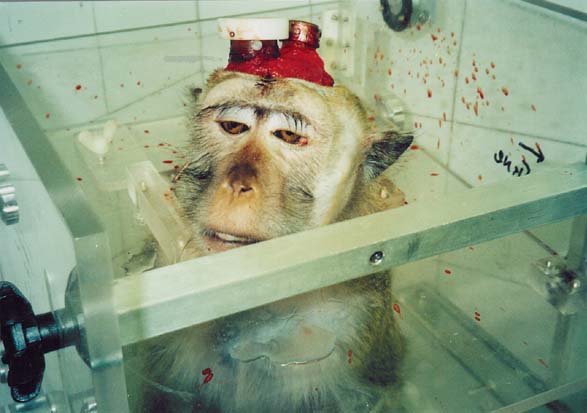
ON VIVISECTION OR ANIMAL RESEARCH HARDENING THE HEART
William Shakespeare, Cymbeline Act 1, Scene 5, Lines 7-32
I will try the forces
Of these thy compounds on such creatures as
We count not worth the hanging,—but none human,—
To try the vigour of them and apply
Allayments to their act, and by them gather
Their several virtues and effects.
Cor. Your highness
Shall from this practice but make hard your heart;
Besides, the seeing these effects will be
Both noisome and infectious.
On Animal Flesh:
What is thy body but a swallowing grave
-Wm Shakespeare-
On Horse Slavery
How like a jade he stood, tied to the tree,
Servilely master'd with a leathern rein!
Boar Hunting
(a) swine to gore,
Whose tushes (tusks) never sheathed he whetteth still,
Like to a mortal butcher bent to kill.
The Hunted Hare... from Venus and Adonis
http://www.william-shakespeare.info/...and-adonis.htm
And when thou hast on foot the purblind hare,
Mark the poor wretch, to overshoot his troubles
How he outruns the wind and with what care
He cranks and crosses with a thousand doubles:
The many musets through the which he goes
Are like a labyrinth to amaze his foes.
Sometime he runs among a flock of sheep,
To make the cunning hounds mistake their smell,
And sometime where earth-delving conies keep,
To stop the loud pursuers in their yell,
And sometime sorteth with a herd of deer:
Danger deviseth shifts; wit waits on fear:
For there his smell with others being mingled,
The hot scent-snuffing hounds are driven to doubt,
Ceasing their clamorous cry till they have singled
With much ado the cold fault cleanly out;
Then do they spend their mouths: Echo replies,
As if another chase were in the skies.
By this, poor Wat, far off upon a hill,
Stands on his hinder legs with listening ear,
To harken if his foes pursue him still:
Anon their loud alarums he doth hear;
And now his grief may be compared well
To one sore sick that hears the passing-bell.
Then shalt thou see the dew-bedabbled wretch
Turn, and return, indenting with the way;
Each envious brier his weary legs doth scratch,
Each shadow makes him stop, each murmur stay:
For misery is trodden on by many,
And being low never relieved by any.
Lie quietly, and hear a little more;
Nay, do not struggle, for thou shalt not rise:
To make thee hate the hunting of the boar,
Unlike myself thou hear'st me moralize,
Applying this to that, and so to so;
For love can comment upon every woe.
For more information:
http://www.postpoems.com/members/animalpoems
We are 100% volunteer and depend on your participation to sustain our efforts!
Donate

$115.00 donated
in the past month
Get Involved
If you'd like to help with maintaining or developing the website, contact us.
Publish
Publish your stories and upcoming events on Indybay.
Topics
More
Search Indybay's Archives
Advanced Search
►
▼
IMC Network
ladies' lips, who straight on kisses dream, Which oft the angry Mab with blisters plagues, Because their breaths with sweetmeats tainted are.