







 Publish to Newswire
 Add an Event
From the Open-Publishing Calendar
From the Open-Publishing Newswire
Indybay Feature
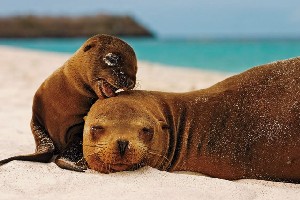
Sea Lion Starvation Event in California July 2009
Sea Lions that live off the coast of California have been starving and dying by the hundreds, because of commercial overfishing. The California Dept of Fish and Wildlife should be overseeing the welfare of the seals for the seals' sake as well as from a general ecological standpoint.

This summer in July, there has been a major starvation event with the sea lions that live along the coast in California. Residents have reported to the Marine Mammal Center and other government agencies that they were finding dying and dead sea lions at the beaches, dead from dehydration and starvation. One sea lion named Fruitvale, was found on a highway, lost and starving. The police picked him up and brought him to the Marine Mammal Center where he was fed and regained his health, and they released him back to the ocean. News people have been contacting the Marine Mammal Center frequently to try to find out what is going on, why is this happening. The Marine Mammal Center itself on its website talks about how there have been hundreds of starving seals brought to their center, where some have been able to be rehabilitated, and many more have succumbed to starvation. Articles on this event have pointed out that at the same beaches where dead sea lions were found, out in the waters, fairly close to shore could be seen several fishing boats, fishing for sardines. A net from one of the sardine boats broke, and thousands of sardines washed ashore.
The news articles also sum up by talking vaguely about El Nino, even though the El Nino has not arrived and so logically would not be responsible for these seals’ deaths. To place the blame on something like El Nino, that scientists know more about than the average citizen, lulls the reader into thinking that this is somehow part of a natural occurrence, and out of the hands of humans to fix or intervene with. There is also talk of the sea lions being overpopulated and that this is a natural occurrence to curb their population size. But this is not true either. The majority of the sea lions that were found starving or dead were yearling sea lions or their mothers, who could not leave their baby’s side. They had to forage for fish close to shore, because they are not developed enough to go farther out to sea. There were simply not enough fish close to the shore for the sea lions to feed on. When a population grows to large for the food supply, there are many adjustments in population growth that take place, not a huge starvation in one season. It is abnormal for this massive a number of sea lions to die from lack of fish. The reason there are not enough fish, is because of commercial overfishing in the area, removing all food stocks from the waters, so that there is literally nothing for the seals to eat. Additionally seals get their water from the fish they eat, so without fish, they also die of thirst.
In one of the news articles, a California Fish and Wildlife representative made some remarks about the starvation, only to divert attention away from concrete explanations. Instead of talking about what fish the sea lions eat that were not there, he only mentioned that it was not because of the sardine fishing, because the sea lions were starving before the sardine season in July. He does not say what fish were taken in the prior seasons of April, May and June, that could have caused an absence of those fish in the coastal waters. The California Department of Fish and Wildlife regulates the seasons for fishing and provides licenses to fish, and so all of this information is available to them, veritably at the tips of their fingers. They are the experts on what fish are being fished and by whom, during what dates. So they should be the ones best able to provide some answers as to what caused this starvation, other than the El Nino that has not come yet.
Also the Marine Mammal Center is getting flooded with calls from concerned citizens along with some donations to try to help the starving sea lions. However there is no mention on their website of trying to get to the bottom of the problem, namely how and when and by whom was their overfishing to such an extent that there were no fish available to the young sea lions and their mothers. Couldn’t there be an investigation, a communication from the Marine Mammal Center to the fish experts at the Department of Fish and Wildlife?
The State of California does care about the seals and sea lions that live along California shores. Recently Governor Arnold Schwarzenegger helped pass legislation protecting the harbor seals that lay on a small beach in La Jolla. The residents of La Jolla appreciate the seals there and want them to have a place to rest. The Ano Nuevo State Reserve in California, south of San Francisco, has been a very popular place for tourists and residents to come and see sea lions and elephant seals laying on the beach. Their beauty and wildness fills visitors with awe and deep feeling of satisfaction to be able to see such enchanting creatures close up and living free. In Santa Cruz, is the large marine aquarium that brings in millions of interested and curious tourists. Couldn’t they also serve the animals they make money from by helping solve this problem of starvation of sea lions? The residents of California feel the distress of the starving sea lions. They have a feeling of responsibility and deep connection to the welfare of these wild creatures.
Most people are unaware of the state of affairs with fish populations in the wild. Due to growing human populations and the use of fish for not only regular meals, but also being used to feed livestock, the populations of all fish are endangered. Their numbers are dropping steeply to a point where they may never recover. Already in California and Oregon, the season has been closed indefinitely for salmon. Very likely the same will apply to Washington soon enough, since it is the next state up the line. Even though it is overfishing and dams causing plummeting of salmon populations, the Oregon and Washington Department of Fish and Wildlife are killing male sea lions who travel up to the Columbia River in search of food in the early spring. So while people are donating money to try to save starving sea lions in California, the sea lions are being killed for searching for some fish in northern waters of Oregon and Washington. The picture clearly emerges of a kind of thievery of the oceans of the fish, and the sea mammals whose lives depend on those fish.
The United States passed the Marine Mammal Protection Act in 1972 to protect seals and whales from being killed by humans. This should also include protecting the animals from starvation, brought about by human hands, because of overfishing.
California Fish and Wildlife, Director Donald Koch
http://www.dfg.ca.gov/about/director.html
http://www.marinemammalcenter.org
Fruitvale’s return to the ocean video
http://www.youtube.com/watch?v=w2sO0K_bnQI
Article on starving Sea Lions from the Santa Cruz Sentinel
http://www.santacruzsentinel.com/ci_12943258
For more information on helping stop seals from being killed at the Columbia River by the Oregon and Washington Department of Fish and Wildlife go to Sea Lion Defense Brigade
http://sealiondefensebrigade.org
Ano Nuevo Seal Cam (not always live, sometimes it is a rerun).
http://www.parks.ca.gov/popup/main.asp
Article on decline of fish in the Pacific from California Wine and Food
Three West Coast Fish Make Top Ten Most Imperiled Marine Fish List
PORTLAND, OR - To mark Seafood Month this October, ocean conservation groups announced the ten fish with the lowest population levels of fish in U.S. ocean waters that have been assessed and managed by the federal government. The National Marine Fisheries Service (NMFS) announced this week that seafood consumption has increased since 2002, yet many popular fish are already, or soon will be, missing from fish markets. Populations of all of the fish on the list have declined 90 percent - or more - from estimated levels prior to directed fishing, according to the federal government. The fact that so many fish are at such very low levels demonstrates the need for better management of our oceans.
http://californiawineandfood.com/articles/60/1/Three-West-Coast-Fish-Make-Top-Ten-Most-Imperiled-Marine-Fish-List/Page1.html
Elk Circle
http://wellsandtrees.angelfire.com/index.html
The news articles also sum up by talking vaguely about El Nino, even though the El Nino has not arrived and so logically would not be responsible for these seals’ deaths. To place the blame on something like El Nino, that scientists know more about than the average citizen, lulls the reader into thinking that this is somehow part of a natural occurrence, and out of the hands of humans to fix or intervene with. There is also talk of the sea lions being overpopulated and that this is a natural occurrence to curb their population size. But this is not true either. The majority of the sea lions that were found starving or dead were yearling sea lions or their mothers, who could not leave their baby’s side. They had to forage for fish close to shore, because they are not developed enough to go farther out to sea. There were simply not enough fish close to the shore for the sea lions to feed on. When a population grows to large for the food supply, there are many adjustments in population growth that take place, not a huge starvation in one season. It is abnormal for this massive a number of sea lions to die from lack of fish. The reason there are not enough fish, is because of commercial overfishing in the area, removing all food stocks from the waters, so that there is literally nothing for the seals to eat. Additionally seals get their water from the fish they eat, so without fish, they also die of thirst.
In one of the news articles, a California Fish and Wildlife representative made some remarks about the starvation, only to divert attention away from concrete explanations. Instead of talking about what fish the sea lions eat that were not there, he only mentioned that it was not because of the sardine fishing, because the sea lions were starving before the sardine season in July. He does not say what fish were taken in the prior seasons of April, May and June, that could have caused an absence of those fish in the coastal waters. The California Department of Fish and Wildlife regulates the seasons for fishing and provides licenses to fish, and so all of this information is available to them, veritably at the tips of their fingers. They are the experts on what fish are being fished and by whom, during what dates. So they should be the ones best able to provide some answers as to what caused this starvation, other than the El Nino that has not come yet.
Also the Marine Mammal Center is getting flooded with calls from concerned citizens along with some donations to try to help the starving sea lions. However there is no mention on their website of trying to get to the bottom of the problem, namely how and when and by whom was their overfishing to such an extent that there were no fish available to the young sea lions and their mothers. Couldn’t there be an investigation, a communication from the Marine Mammal Center to the fish experts at the Department of Fish and Wildlife?
The State of California does care about the seals and sea lions that live along California shores. Recently Governor Arnold Schwarzenegger helped pass legislation protecting the harbor seals that lay on a small beach in La Jolla. The residents of La Jolla appreciate the seals there and want them to have a place to rest. The Ano Nuevo State Reserve in California, south of San Francisco, has been a very popular place for tourists and residents to come and see sea lions and elephant seals laying on the beach. Their beauty and wildness fills visitors with awe and deep feeling of satisfaction to be able to see such enchanting creatures close up and living free. In Santa Cruz, is the large marine aquarium that brings in millions of interested and curious tourists. Couldn’t they also serve the animals they make money from by helping solve this problem of starvation of sea lions? The residents of California feel the distress of the starving sea lions. They have a feeling of responsibility and deep connection to the welfare of these wild creatures.
Most people are unaware of the state of affairs with fish populations in the wild. Due to growing human populations and the use of fish for not only regular meals, but also being used to feed livestock, the populations of all fish are endangered. Their numbers are dropping steeply to a point where they may never recover. Already in California and Oregon, the season has been closed indefinitely for salmon. Very likely the same will apply to Washington soon enough, since it is the next state up the line. Even though it is overfishing and dams causing plummeting of salmon populations, the Oregon and Washington Department of Fish and Wildlife are killing male sea lions who travel up to the Columbia River in search of food in the early spring. So while people are donating money to try to save starving sea lions in California, the sea lions are being killed for searching for some fish in northern waters of Oregon and Washington. The picture clearly emerges of a kind of thievery of the oceans of the fish, and the sea mammals whose lives depend on those fish.
The United States passed the Marine Mammal Protection Act in 1972 to protect seals and whales from being killed by humans. This should also include protecting the animals from starvation, brought about by human hands, because of overfishing.
California Fish and Wildlife, Director Donald Koch
http://www.dfg.ca.gov/about/director.html
http://www.marinemammalcenter.org
Fruitvale’s return to the ocean video
http://www.youtube.com/watch?v=w2sO0K_bnQI
Article on starving Sea Lions from the Santa Cruz Sentinel
http://www.santacruzsentinel.com/ci_12943258
For more information on helping stop seals from being killed at the Columbia River by the Oregon and Washington Department of Fish and Wildlife go to Sea Lion Defense Brigade
http://sealiondefensebrigade.org
Ano Nuevo Seal Cam (not always live, sometimes it is a rerun).
http://www.parks.ca.gov/popup/main.asp
Article on decline of fish in the Pacific from California Wine and Food
Three West Coast Fish Make Top Ten Most Imperiled Marine Fish List
PORTLAND, OR - To mark Seafood Month this October, ocean conservation groups announced the ten fish with the lowest population levels of fish in U.S. ocean waters that have been assessed and managed by the federal government. The National Marine Fisheries Service (NMFS) announced this week that seafood consumption has increased since 2002, yet many popular fish are already, or soon will be, missing from fish markets. Populations of all of the fish on the list have declined 90 percent - or more - from estimated levels prior to directed fishing, according to the federal government. The fact that so many fish are at such very low levels demonstrates the need for better management of our oceans.
http://californiawineandfood.com/articles/60/1/Three-West-Coast-Fish-Make-Top-Ten-Most-Imperiled-Marine-Fish-List/Page1.html
Elk Circle
http://wellsandtrees.angelfire.com/index.html
Add Your Comments
Latest Comments
Listed below are the latest comments about this post.
These comments are submitted anonymously by website visitors.
TITLE
AUTHOR
DATE
Sea Lion Starvation Event in California July 2009
Tue, Oct 20, 2009 11:28PM
Citations?
Sun, Aug 23, 2009 6:31PM
population
Tue, Aug 18, 2009 2:26PM
in monterey
Tue, Aug 18, 2009 1:14PM
We are 100% volunteer and depend on your participation to sustain our efforts!
Donate

$140.00 donated
in the past month
Get Involved
If you'd like to help with maintaining or developing the website, contact us.
Publish
Publish your stories and upcoming events on Indybay.
Topics
More
Search Indybay's Archives
Advanced Search
►
▼
IMC Network