







 Publish to Newswire
 Add an Event
From the Open-Publishing Calendar
From the Open-Publishing Newswire
Indybay Feature
Klamath Settlement Group Releases Proposed Restoration Agreement
All of the representatives of the Klamath Settlement Group today agreed to public release of the Proposed Agreement. The three counties and several irrigation districts will hold public meetings on the Proposed Agreement prior to deciding whether to sign it. Negotiators for two organizations, the Hoopa Valley Tribe and Klamath Off-Project Water Users (KOPWU), do not approve the current draft. Below are two news releases about the release of the proposed agreement.
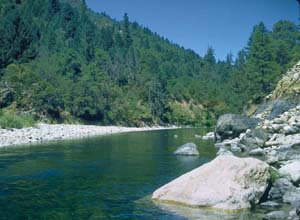
Photo by Klamath Forest Alliance
Photo by Klamath Forest Alliance
Klamath Settlement Group Releases Proposed Klamath Basin Restoration Agreement for Public Review
For release: January 15, 2008, 1 pm PST
Contact: Ed Sheets, Facilitator, 503-222-1700
Greg Addington, Klamath Water Users Association, 541-883-6100
Troy Fletcher, Yurok Tribe, 707-498-8486
Chuck Bonham, Trout Unlimited, 510-528-4164
Representatives of diverse communities in the Klamath Basin, working with federal, state, and
county governments, have developed a Proposed Klamath Basin Restoration Agreement to
rebuild fisheries, sustain agricultural communities, and resolve other longstanding disputes
related to the allocation of water resources. The non-Federal parties released the Proposed
Agreement today to inform the public and to provide public review and comment before taking
final action. This is an important first step in a collaborative effort to seek solutions with the key
stakeholders in the Klamath Basin on an environmental restoration strategy.
The Klamath Settlement Group is presently negotiating with PacifiCorp in an effort to reach
agreement on the removal of the utility’s four lower dams in the Klamath Basin, referenced as
the "Hydropower Agreement." Dam removal is a necessary part of the overall restoration effort,
and the Hydropower Agreement along with the Proposed Agreement released today has the
potential to provide a comprehensive solution for the Basin. The group is working to finalize
both agreements in February.
Key provisions of the Proposed Agreement include:
• A comprehensive program to rebuild fish populations sufficient for sustainable tribal,
recreational, and commercial fisheries. Elements include: Actions to restore fish
populations and habitats, including a program to reintroduce anadromous species in
currently-blocked parts of the Basin; actions to improve fish survival by enhancing the
amount of water available for fish, particularly in drier years; and other efforts to support
tribes in fisheries reintroduction and restoration efforts.
• A reliable and certain allocation of water sufficient for a sustainable agricultural
community and national wildlife refuges.
• A program to stabilize power costs for the Upper Basin’s family farms, ranches, and for
the two national wildlife refuges.
• A program intended to insure mitigation for counties that may be impacted by the
removal of the hydroelectric facilities.
The Klamath Settlement Group has developed the Proposed Agreement over the course of the
last two years. It is still refining some details in the Proposed Agreement. Representatives of the
following parties have been part of the discussions:
Farmers and Ranchers
Klamath Water Users Association
Off-Project Water Users
Tribal
Hoopa Valley Tribe
Karuk Tribe
Klamath Tribes
Yurok Tribe
Federal
U.S. Department of Agriculture, Forest Service
U.S. Department of Commerce’s National Marine Fisheries Service
U.S. Department of the Interior, including Bureau of Indian Affairs, Bureau of Land
Management, Bureau of Reclamation, and Fish and Wildlife Service
State
California Department of Fish and Game
Oregon Department of Environmental Quality
Oregon Department of Fish and Wildlife
Oregon Water Resources Department
County
Humboldt County, California
Klamath County, Oregon
Siskiyou County, California
Conservation and fishing groups
American Rivers
California Trout
Friends of the River
Klamath Forest Alliance
National Center for Conservation Science and Policy
Northcoast Environmental Center
Northern California/Nevada Council Federation of Fly Fishers
Pacific Coast Federation of Fishermen’s Associations
Salmon River Restoration Council
Trout Unlimited.
All of the representatives agreed to public release of the Proposed Agreement. The three
counties and several irrigation districts will hold public meetings on the Proposed Agreement
prior to deciding whether to sign it. Negotiators for two organizations, the Hoopa Valley Tribe
and Klamath Off-Project Water Users (KOPWU), do not approve the current draft.
The Federal
agencies, while at the table during the negotiations, will not be signatories of the Proposed
Agreement. Instead, subsequent Federal review of the Proposed Agreement and legislation will
be needed.
Greg Addington of the Klamath Water Users Association said: “The result of the negotiations is
a series of compromises and proposed commitments between farmers, tribes, conservationists,
counties, and state and federal agencies aimed at keeping all of the Klamath’s rural communities
economically and ecologically viable.”
Troy Fletcher of the Yurok Tribe noted: “This spirit of trust, respect, and compromise is
unprecedented in the Klamath Basin. This agreement will provide a path to restore fish
populations and strengthen our commitment to work with each other.”
Chuck Bonham of Trout Unlimited said “The negotiators have worked through difficult and
complex issues to get broad support for the actions in the Proposed Agreement. We hope others
will share our desire to work for a solution.”
For a summary or a copy of the Proposed Agreement please go to the following website:
http://www.edsheets.com/Klamathdocs.html.
P R E S S R E L E A S E
KARUK TRIBE ● YUROK TRIBE ● KLAMATH TRIBES ● KLAMATH WATER USERS’ ASSOCIATION
● PACIFIC COAST FEDERATION OF FISHERMEN’S ASSOCIATIONS ● TROUT UNLIMITED ● AMERICAN RIVERS
For Immediate Release: January 15, 2008
For more information contact:
Craig Tucker, Klamath Coordinator, Karuk Tribe, 916-207-8294
Greg Addington, Klamath Water Users’ Association, 541-883-6100
Troy Fletcher, Yurok Tribe, 530-625-4015
Chuck Bonham, Trout Unlimited,, 510-917-8572 (cell)
Steve Rothert, American Rivers, (530) 277-0448 (cell)
Glen Spain, Pacific Coast Federation of Fishermen’s Associations 541-689-2000
Former Foes Unite to solve Klamath Crisis
Tribes, Farmers, Conservationists, and Fishermen propose historic river restoration plan; Dam Removal Agreement with PacifiCorp final hurdle
Klamath Basin, CA and OR – After over two years of negotiation among 26 diverse stakeholder groups, the Klamath Settlement Group has produced a draft agreement to settle many of the key issues that have for years divided the Klamath Basin’s diverse communities. If adopted, the agreement would represent the largest river restoration effort in American history. The meetings producing the agreement were convened by the Yurok Tribe, Karuk Tribe, and Klamath Water Users Association
According to Maria Tripp, Yurok Tribal Chair, “This is a historic moment for the Yurok people and all other Klamath Basin communities. For many generations, the Yurok people have witnessed a steady decline in the health of the river and the life that it sustains. Implementation of this agreement, coupled with removal of the four PacifiCorp dams from the Klamath River, turns the tide from degradation to restoration. These agreements will enable our children’s children to have the same cultural experiences and memories of the river and fish that our families enjoyed a hundred years ago.”
The proposal addresses the needs of fish and farms. It provides a reliable and adequate allocation of water to farms and wildlife refuges, addresses the need for affordable power for Klamath Project irrigators who move water between farms, wildlife refuges and to the river. At the same time more water will be made available to the lower river to for the benefit of fisheries and coastal communities. Proponents of the agreement see it as a giant leap forward in the effort to restore the entirety of the Klamath basin.
According to Klamath Irrigation Project farmer Steve Kandra, “The proposed agreement provides stability and security to Klamath Basin communities. It provides for a predictable supply of water for farmers, resources to address times of water shortage, and affordable power for efficient water use. By implementing this agreement we can spare the next generation of family farmers and ranchers from a lifetime of neighbor against neighbor litigation, media wars, and economic uncertainty.”
This sentiment was echoed by Glen Spain of the Pacific Coast Federation of Fishermen’s Associations (PCFFA), a major fishing industry trade association also in the negotiations: “For decades now, the Klamath Basin has been gripped in rotating water crises each year, with many good people, including farmers and fishermen, all too often pitted against one other. While this proposed Agreement is not yet final, we look forward to working with our friends in the farming and tribal communities to finalize and approve the agreement soon.”
The groups are optimistic that a deal to remove PacifiCorp’s lower four Klamath dams is possible. According to Steve Rothert, director of the California office of American Rivers, “we have a plan to put the Klamath Basin back together ecologically as well as economically, but we can’t do it without PacifiCorp as a partner. We are optimistic that we can forge that partnership with the company in coming weeks.”
PacifiCorp is the Portland, OR based utility that owns the Klamath dams. PacifiCorp is a subsidiary of Mid-American Energy Holdings Company which in turn is owned by Warren Buffett’s Berkshire Hathaway.
Since construction of the ladderless dams began in 1918, salmon runs have plummeted in the Klamath River resulting in depressed economies in the Basin and commercial fishery shutdowns along the west coast. River advocates argue that since the dams generate little energy, provide no diversions of water for agriculture and no flood control, they should be removed.
The case for dam removal was strengthened recently by economic reports from state and federal energy agencies that concluded dam removal is cheaper for PacifiCorp’s customers than financing the upgrades needed to comply with federal mandates for fish ladders. Studies by the California Energy Commission show that the energy from the dams can be cost-effectively replaced with renewables and efficiency measures.
"We have a unique opportunity for a business deal that delivers advantage to the fish and benefit to PacifiCorp. We can and should do both,” commented Chuck Bonham of Trout Unlimited.
“We have a real opportunity to solve one of the West’s most complex and bitter water wars, we now look to our communities, the citizens of the Basin and to PacifiCorp for their input and assistance,” concluded Klamath Water Users Director Greg Addington.
The groups have more talks with PacifiCorp planned in coming weeks.
# # #
Then proposed agreement and an executive summary are available online at: http://www.edsheets.com/Klamathdocs.html.
S. Craig Tucker, Ph.D.
Klamath Campaign Coordinator
Karuk Tribe of California
office: 530-627-3446 x3027
cell: 916-207-8294
ctucker [at] karuk.us
http://www.karuk.us
For release: January 15, 2008, 1 pm PST
Contact: Ed Sheets, Facilitator, 503-222-1700
Greg Addington, Klamath Water Users Association, 541-883-6100
Troy Fletcher, Yurok Tribe, 707-498-8486
Chuck Bonham, Trout Unlimited, 510-528-4164
Representatives of diverse communities in the Klamath Basin, working with federal, state, and
county governments, have developed a Proposed Klamath Basin Restoration Agreement to
rebuild fisheries, sustain agricultural communities, and resolve other longstanding disputes
related to the allocation of water resources. The non-Federal parties released the Proposed
Agreement today to inform the public and to provide public review and comment before taking
final action. This is an important first step in a collaborative effort to seek solutions with the key
stakeholders in the Klamath Basin on an environmental restoration strategy.
The Klamath Settlement Group is presently negotiating with PacifiCorp in an effort to reach
agreement on the removal of the utility’s four lower dams in the Klamath Basin, referenced as
the "Hydropower Agreement." Dam removal is a necessary part of the overall restoration effort,
and the Hydropower Agreement along with the Proposed Agreement released today has the
potential to provide a comprehensive solution for the Basin. The group is working to finalize
both agreements in February.
Key provisions of the Proposed Agreement include:
• A comprehensive program to rebuild fish populations sufficient for sustainable tribal,
recreational, and commercial fisheries. Elements include: Actions to restore fish
populations and habitats, including a program to reintroduce anadromous species in
currently-blocked parts of the Basin; actions to improve fish survival by enhancing the
amount of water available for fish, particularly in drier years; and other efforts to support
tribes in fisheries reintroduction and restoration efforts.
• A reliable and certain allocation of water sufficient for a sustainable agricultural
community and national wildlife refuges.
• A program to stabilize power costs for the Upper Basin’s family farms, ranches, and for
the two national wildlife refuges.
• A program intended to insure mitigation for counties that may be impacted by the
removal of the hydroelectric facilities.
The Klamath Settlement Group has developed the Proposed Agreement over the course of the
last two years. It is still refining some details in the Proposed Agreement. Representatives of the
following parties have been part of the discussions:
Farmers and Ranchers
Klamath Water Users Association
Off-Project Water Users
Tribal
Hoopa Valley Tribe
Karuk Tribe
Klamath Tribes
Yurok Tribe
Federal
U.S. Department of Agriculture, Forest Service
U.S. Department of Commerce’s National Marine Fisheries Service
U.S. Department of the Interior, including Bureau of Indian Affairs, Bureau of Land
Management, Bureau of Reclamation, and Fish and Wildlife Service
State
California Department of Fish and Game
Oregon Department of Environmental Quality
Oregon Department of Fish and Wildlife
Oregon Water Resources Department
County
Humboldt County, California
Klamath County, Oregon
Siskiyou County, California
Conservation and fishing groups
American Rivers
California Trout
Friends of the River
Klamath Forest Alliance
National Center for Conservation Science and Policy
Northcoast Environmental Center
Northern California/Nevada Council Federation of Fly Fishers
Pacific Coast Federation of Fishermen’s Associations
Salmon River Restoration Council
Trout Unlimited.
All of the representatives agreed to public release of the Proposed Agreement. The three
counties and several irrigation districts will hold public meetings on the Proposed Agreement
prior to deciding whether to sign it. Negotiators for two organizations, the Hoopa Valley Tribe
and Klamath Off-Project Water Users (KOPWU), do not approve the current draft.
The Federal
agencies, while at the table during the negotiations, will not be signatories of the Proposed
Agreement. Instead, subsequent Federal review of the Proposed Agreement and legislation will
be needed.
Greg Addington of the Klamath Water Users Association said: “The result of the negotiations is
a series of compromises and proposed commitments between farmers, tribes, conservationists,
counties, and state and federal agencies aimed at keeping all of the Klamath’s rural communities
economically and ecologically viable.”
Troy Fletcher of the Yurok Tribe noted: “This spirit of trust, respect, and compromise is
unprecedented in the Klamath Basin. This agreement will provide a path to restore fish
populations and strengthen our commitment to work with each other.”
Chuck Bonham of Trout Unlimited said “The negotiators have worked through difficult and
complex issues to get broad support for the actions in the Proposed Agreement. We hope others
will share our desire to work for a solution.”
For a summary or a copy of the Proposed Agreement please go to the following website:
http://www.edsheets.com/Klamathdocs.html.
P R E S S R E L E A S E
KARUK TRIBE ● YUROK TRIBE ● KLAMATH TRIBES ● KLAMATH WATER USERS’ ASSOCIATION
● PACIFIC COAST FEDERATION OF FISHERMEN’S ASSOCIATIONS ● TROUT UNLIMITED ● AMERICAN RIVERS
For Immediate Release: January 15, 2008
For more information contact:
Craig Tucker, Klamath Coordinator, Karuk Tribe, 916-207-8294
Greg Addington, Klamath Water Users’ Association, 541-883-6100
Troy Fletcher, Yurok Tribe, 530-625-4015
Chuck Bonham, Trout Unlimited,, 510-917-8572 (cell)
Steve Rothert, American Rivers, (530) 277-0448 (cell)
Glen Spain, Pacific Coast Federation of Fishermen’s Associations 541-689-2000
Former Foes Unite to solve Klamath Crisis
Tribes, Farmers, Conservationists, and Fishermen propose historic river restoration plan; Dam Removal Agreement with PacifiCorp final hurdle
Klamath Basin, CA and OR – After over two years of negotiation among 26 diverse stakeholder groups, the Klamath Settlement Group has produced a draft agreement to settle many of the key issues that have for years divided the Klamath Basin’s diverse communities. If adopted, the agreement would represent the largest river restoration effort in American history. The meetings producing the agreement were convened by the Yurok Tribe, Karuk Tribe, and Klamath Water Users Association
According to Maria Tripp, Yurok Tribal Chair, “This is a historic moment for the Yurok people and all other Klamath Basin communities. For many generations, the Yurok people have witnessed a steady decline in the health of the river and the life that it sustains. Implementation of this agreement, coupled with removal of the four PacifiCorp dams from the Klamath River, turns the tide from degradation to restoration. These agreements will enable our children’s children to have the same cultural experiences and memories of the river and fish that our families enjoyed a hundred years ago.”
The proposal addresses the needs of fish and farms. It provides a reliable and adequate allocation of water to farms and wildlife refuges, addresses the need for affordable power for Klamath Project irrigators who move water between farms, wildlife refuges and to the river. At the same time more water will be made available to the lower river to for the benefit of fisheries and coastal communities. Proponents of the agreement see it as a giant leap forward in the effort to restore the entirety of the Klamath basin.
According to Klamath Irrigation Project farmer Steve Kandra, “The proposed agreement provides stability and security to Klamath Basin communities. It provides for a predictable supply of water for farmers, resources to address times of water shortage, and affordable power for efficient water use. By implementing this agreement we can spare the next generation of family farmers and ranchers from a lifetime of neighbor against neighbor litigation, media wars, and economic uncertainty.”
This sentiment was echoed by Glen Spain of the Pacific Coast Federation of Fishermen’s Associations (PCFFA), a major fishing industry trade association also in the negotiations: “For decades now, the Klamath Basin has been gripped in rotating water crises each year, with many good people, including farmers and fishermen, all too often pitted against one other. While this proposed Agreement is not yet final, we look forward to working with our friends in the farming and tribal communities to finalize and approve the agreement soon.”
The groups are optimistic that a deal to remove PacifiCorp’s lower four Klamath dams is possible. According to Steve Rothert, director of the California office of American Rivers, “we have a plan to put the Klamath Basin back together ecologically as well as economically, but we can’t do it without PacifiCorp as a partner. We are optimistic that we can forge that partnership with the company in coming weeks.”
PacifiCorp is the Portland, OR based utility that owns the Klamath dams. PacifiCorp is a subsidiary of Mid-American Energy Holdings Company which in turn is owned by Warren Buffett’s Berkshire Hathaway.
Since construction of the ladderless dams began in 1918, salmon runs have plummeted in the Klamath River resulting in depressed economies in the Basin and commercial fishery shutdowns along the west coast. River advocates argue that since the dams generate little energy, provide no diversions of water for agriculture and no flood control, they should be removed.
The case for dam removal was strengthened recently by economic reports from state and federal energy agencies that concluded dam removal is cheaper for PacifiCorp’s customers than financing the upgrades needed to comply with federal mandates for fish ladders. Studies by the California Energy Commission show that the energy from the dams can be cost-effectively replaced with renewables and efficiency measures.
"We have a unique opportunity for a business deal that delivers advantage to the fish and benefit to PacifiCorp. We can and should do both,” commented Chuck Bonham of Trout Unlimited.
“We have a real opportunity to solve one of the West’s most complex and bitter water wars, we now look to our communities, the citizens of the Basin and to PacifiCorp for their input and assistance,” concluded Klamath Water Users Director Greg Addington.
The groups have more talks with PacifiCorp planned in coming weeks.
# # #
Then proposed agreement and an executive summary are available online at: http://www.edsheets.com/Klamathdocs.html.
S. Craig Tucker, Ph.D.
Klamath Campaign Coordinator
Karuk Tribe of California
office: 530-627-3446 x3027
cell: 916-207-8294
ctucker [at] karuk.us
http://www.karuk.us
Add Your Comments
We are 100% volunteer and depend on your participation to sustain our efforts!
Donate

$90.00 donated
in the past month
Get Involved
If you'd like to help with maintaining or developing the website, contact us.
Publish
Publish your stories and upcoming events on Indybay.
Topics
More
Search Indybay's Archives
Advanced Search
►
▼
IMC Network