







 Publish to Newswire
 Add an Event
From the Open-Publishing Calendar
From the Open-Publishing Newswire
Indybay Feature
Our economic system: is this the end of the world’s economic Pyramid Scheme?
Fractional banking, pyramid scheme economics, fraud and collusion in the world's banking and mortgage industry, together with consumer financial illiteracy are the driving force behind a financial tsunami which may end banking as we know it.
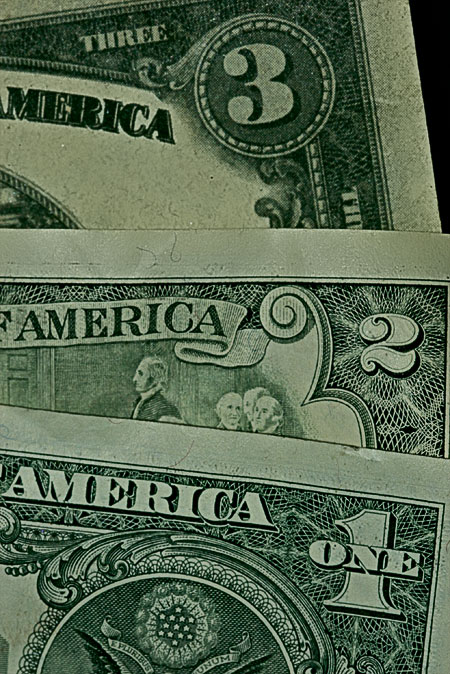
How has this deck of cards stood so long? Is this the end of the world’s economic Pyramid Scheme?
A police officer in full riot gear stands at a corner of Wall Street, while Jesse Jackson and others fuel a protest on foreclosure and mortgage industry fraud in the heart of the American Financial District. His critics call him a “clever stage manager”, but this is one stage that is larger than Jackson, indeed larger than the United States.
As our President and his Wall Street compadres rush to stick their fingers in the economic dike, more cracks crop up all over the place. Foreign banks, which bought bundled mortgages as investment portfolios are twitching faster than a meth head in need of a fix, as their house useless paper trembles before this economic tsunami.
While many of the President’s supporters say he has a handle on the situation, after proposing that the feds buy some of the disastrous loans under the auspices of the Department of Housing and Urban Development (HUD), others say his plan is simply a bailout for investment bankers who bought a pile of investment junk and now want the taxpayers to bail them out. ‘Tis not a help to the desperate people whose adjustable rate mortgages (ARMS) blew the lid off of their budgets, they say. It’s more of a rescue plan to keep banks from losing their shirts and possible going under.
Visions of the Great Depression haunt those who are cognizant enough of history to see parallels. Apocalyptic scenarios of raging homeowners turning into arsonists fuel the insurance industry, as the industry prepares to cope with a possible upturn in arson, as desperate home owners try a little bit of arson as a way to unburden themselves from homes they can no longer afford.
With many cities losing massive amounts of property tax revenues due to foreclosure, decreased property values and vacant home vandalism, the idea of a meltdown in real estate, with a commensurate decrease in property value scares many county officials. If the worse case scenario of massive foreclosure and property devaluation comes to pass, tax revenues will tank, and many cities and communities will have to decrease services—police and fire protection, not to mention close schools and lay off teachers as property tax revenues fall and governments can no longer afford to fund basic services.
Many of the proposals are little more than a bank bailouts, where the “health of the banking system supersedes the comfort of citizens. The rumblings in farm country, in the suburbs, in the inner cities are growing, as people look at the banks and blame this slow moving financial avalanche on banks, real estate agents, mortgage companies and mortgage servicing agencies.
There is a lot of blame to go around; the home buyer who purchased a home he could not afford; the real estate agent who was so desperate for a commission; the mortgage company which was not above a little bit of forgery and creative tinkering to make sure the loan was approved and commissions were earned; the loan servicing company which played games with fees, appraisals and phony charges.
Put the picture together, and we have massive real estate losses created by unsophisticated borrowers who allowed their appetite for home ownership override their common sense, then there’s the mortgage broker who approved loan applications with no stated or verifiable income, the creative forger who made sure the “income” stated would pass inspection, the investment banks who bought “bundles” of these tainted mortgages and sold them as investments to pension plans, investment clients and institutions.
Now, the infection caused by these unhealthy investments is spreading through out the world, as what was once seen as a stable investment—real estate ‘bonds’, now turns into bundles of putrid paper, with of its value no longer worth the paper it is written on.
And now, we see that the banking “emperor” has no clothes. The ‘secure investments’ are shakier than a cat in a room full of rocking chairs, as institutional investors bail out, and those who can not afford to dump all of this now depreciated investment trash are looking to the government to lead them out of investment hell.
The government’s official counterfeiters, oops, currency printers, must be working faster than a one-legged paperhanger in a house building contest these days. The only people working harder are the spin doctors in and out of government who are trying to keep the lid on.
Jesse Jackson’s critics claim he is an excellent stage manager, but they are looking in the wrong place when it comes to staging. The best stagers in town are in the White House, the Treasury Department and on Wall Street.
Writer Stanley Rogouski, speaking of Jackson’s recent March on Wall Street noted:
Jesse Jackson is a clever stage manager. If the New York City government under its multi-billionaire mayor likes to respond to political rallies by ringing them with heavily armed troops and with metal barricades in order to demoralize their participants, to make them feel small and marginal, then Jesse Jackson knows how to make it work to his advantage. As far as rallies in New York City go, the “March on Wall Street Save Our Homes” wasn’t much, but that, in a way, was entirely the point, David come to Goliath. (New York Independent Media Center 12-12-07)
David may have come to Goliath, but Goliath is a multi-faceted, multi-national entity with world-wide tentacles. German banks, Australian banks, Japanese and Chinese banks have either purchased billions in real estate investments from our banks, or have invested in the banks themselves.
This train wreck was not unexpected. More than a year ago, the Mortgage Banker’s Association asked for congressional assistance. According to the Berkeley Daily Planet (5-25-07), the massive increase reported in mortgage fraud in 2006 led the industry to ask for Congress to fund a beefed up Justice Department staff of additional FBI agents and federal prosecutors to deal with the upsurge.
According to the newspaper:
With an industry database showing a 30 percent increase in loans involving suspected mortgage fraud in 2006, the Mortgage Banker’s Association is asking Congress to set aside $31.25 million over five years to hire more FBI investigators and prosecutors. States with the fastest growth in mortgage fraud reports during the first quarter of 2006 were New Jersey (up 250 percent from the same period in 2005), California (214 percent), Arizona (213 percent) and New York (187 percent). (Ibid)
However, that did not stop the banks from continuing their purchase of what many knew were problematic investments, or even out right fraudulent mortgages, some generated by their own sub-prime subsidiaries. As long as the housing market was roaring, the risky investments generated by illegal loans, fraudulent mortgage servicing and collusion remained hidden, but when the market crashed, problems in the industry rose to the surface like dead fish in a poisoned pond.
California, which has enjoyed a low reported fraud rate for several years, climbed from eighth to second on the MARI fraud index in 2006, suggesting that the slowdown in the state’s housing market is revealing previously undiscovered instances of mortgage fraud. (Ibid)
All it takes is one rotten apple to bring an entire mortgage company down, as is evidenced by this 2004 article:
To illustrate the toll fraud can take on innocent lenders, McCall shared the story of one small mortgage company in the Southwest. This small lender with a solid reputation was defrauded by a single crooked loan officer. The loan officer was debarred from Federal Housing Administration (FHA) programs for one year, but is still working in the industry. But the company was debarred from the FHA program four years after the fraud was committed, and forced to close. As McCall said, "Owners who had built up the company lost their investment, and over 30 employees lost their jobs because of the crimes of a single person." (Mortgage Banking, 2004)
What few writers see, is the massive threat to lenders posed by fraudulent mortgages. Simply put:
Lost in many of the news stories about fraud is the fact that fraud's toll falls hardest on lenders. The financial damage produced by fraud isn't shared by the secondary market, because lenders are obligated to repurchase fraudulent loans. Even when the parties who commit fraud are caught, they typically don't have the financial resources to compensate lenders for their losses. (Ibid)
And this is where the President’s bail out comes in. Critics say the bail out is actually a bail out of the banking and mortgage industry, and that the homeowners are secondary.
Writing in Opednews.com, Ellen Brown noted back in September that the investment houses on Wall Street and the Fed were getting jittery.
Panic struck on Wall Street, as the Dow Jones Industrial Average plunged a thousand points between July and August, and commentators warned of a 1929-style crash. To prevent that dire result, the U.S. Federal Reserve, along with the central banks of Europe, Canada, Australia and Japan, extended a 315 billion dollar lifeline to troubled banks and investment firms. The hemorrhage stopped, the markets turned around, and investors breathed a sigh of relief. All was well again in Stepfordville. Or was it? And if it was, at what cost? Three hundred billion dollars is about a third of the total paid by U.S. taxpayers in personal income taxes annually. A mere $188 billion would have been enough to repair all of the 74,000 U.S. bridges known to be defective, preventing another disaster like that in Minneapolis in July. But the central banks’ $300 billion was poured instead into the black hole of rescuing the very banks and hedge funds blamed for the “liquidity” crisis (the dried up well of investment money), encouraging loan sharks and speculators in their profligate ways. (Opednews.com)
Now, the panic has spread beyond Wall Street to the world’s banking systems, where the purchase of tainted American ‘bundled real estate investment products’ is threatening economies around the world. The $315 billion dollar “lifeline” has been broadened, in what, as we stated before, critics say is more of a rescue of bankers than financial first aid to victims of predatory lending and financial illiteracy.
Writing in Opednews.com, Ellen Brown claims the whole banking system is a 300 year old Ponzi Scheme. According to Brown, in what she described as The 300 Year Ponzi Scheme Known as “Fractional-Reserve” Lending:
A Ponzi scheme is a form of pyramid scheme in which earlier players are paid with the money of later players, until no more unwary investors are available to be sucked in at the bottom and the pyramid collapses, leaving the last investors holding the bag. Our economic Ponzi scheme dates back to Oliver Cromwell’s “Glorious Revolution” in seventeenth century England. Before that, the power to issue money was the sovereign right of the King, and for anyone else to do it was considered treason. But Cromwell did not have access to this money-creating power. He had to borrow from foreign moneylenders to fund his revolt; and they agreed to lend only on condition that they be allowed back into England, from which they had been banned centuries earlier. In 1694, the Bank of England was chartered to a group of private moneylenders, who were allowed to print banknotes and lend them to the government at interest; and these private banknotes became the national money supply. They were ostensibly backed by gold; but under the fractional-reserve lending scheme, the amount of gold kept in “reserve” was only a fraction of the value of the notes actually printed and lent. This practice grew out of the discovery of goldsmiths, that customers who left their gold for safekeeping would come for it only about 10 percent of the time. Ten paper banknotes “backed” by a pound of gold could therefore safely be printed and lent for every pound of gold the goldsmiths held in reserve. Nine of the notes were essentially counterfeits. (Ibid)
Cutting right to the chase, then, we have a shaky financial system based on a fractional banking, lenders infested with crooked deals, tainted investment products sold around the world, borrowers borrowing more than they can afford, and then getting taken to the cleaners by fraudsters in the loan servicing industry.
They call Jesse Jackson a great stage manager—he’s a total amateur, when compared with the world’s moneymen. My only question is: how has this deck of cards stood for so long?
A police officer in full riot gear stands at a corner of Wall Street, while Jesse Jackson and others fuel a protest on foreclosure and mortgage industry fraud in the heart of the American Financial District. His critics call him a “clever stage manager”, but this is one stage that is larger than Jackson, indeed larger than the United States.
As our President and his Wall Street compadres rush to stick their fingers in the economic dike, more cracks crop up all over the place. Foreign banks, which bought bundled mortgages as investment portfolios are twitching faster than a meth head in need of a fix, as their house useless paper trembles before this economic tsunami.
While many of the President’s supporters say he has a handle on the situation, after proposing that the feds buy some of the disastrous loans under the auspices of the Department of Housing and Urban Development (HUD), others say his plan is simply a bailout for investment bankers who bought a pile of investment junk and now want the taxpayers to bail them out. ‘Tis not a help to the desperate people whose adjustable rate mortgages (ARMS) blew the lid off of their budgets, they say. It’s more of a rescue plan to keep banks from losing their shirts and possible going under.
Visions of the Great Depression haunt those who are cognizant enough of history to see parallels. Apocalyptic scenarios of raging homeowners turning into arsonists fuel the insurance industry, as the industry prepares to cope with a possible upturn in arson, as desperate home owners try a little bit of arson as a way to unburden themselves from homes they can no longer afford.
With many cities losing massive amounts of property tax revenues due to foreclosure, decreased property values and vacant home vandalism, the idea of a meltdown in real estate, with a commensurate decrease in property value scares many county officials. If the worse case scenario of massive foreclosure and property devaluation comes to pass, tax revenues will tank, and many cities and communities will have to decrease services—police and fire protection, not to mention close schools and lay off teachers as property tax revenues fall and governments can no longer afford to fund basic services.
Many of the proposals are little more than a bank bailouts, where the “health of the banking system supersedes the comfort of citizens. The rumblings in farm country, in the suburbs, in the inner cities are growing, as people look at the banks and blame this slow moving financial avalanche on banks, real estate agents, mortgage companies and mortgage servicing agencies.
There is a lot of blame to go around; the home buyer who purchased a home he could not afford; the real estate agent who was so desperate for a commission; the mortgage company which was not above a little bit of forgery and creative tinkering to make sure the loan was approved and commissions were earned; the loan servicing company which played games with fees, appraisals and phony charges.
Put the picture together, and we have massive real estate losses created by unsophisticated borrowers who allowed their appetite for home ownership override their common sense, then there’s the mortgage broker who approved loan applications with no stated or verifiable income, the creative forger who made sure the “income” stated would pass inspection, the investment banks who bought “bundles” of these tainted mortgages and sold them as investments to pension plans, investment clients and institutions.
Now, the infection caused by these unhealthy investments is spreading through out the world, as what was once seen as a stable investment—real estate ‘bonds’, now turns into bundles of putrid paper, with of its value no longer worth the paper it is written on.
And now, we see that the banking “emperor” has no clothes. The ‘secure investments’ are shakier than a cat in a room full of rocking chairs, as institutional investors bail out, and those who can not afford to dump all of this now depreciated investment trash are looking to the government to lead them out of investment hell.
The government’s official counterfeiters, oops, currency printers, must be working faster than a one-legged paperhanger in a house building contest these days. The only people working harder are the spin doctors in and out of government who are trying to keep the lid on.
Jesse Jackson’s critics claim he is an excellent stage manager, but they are looking in the wrong place when it comes to staging. The best stagers in town are in the White House, the Treasury Department and on Wall Street.
Writer Stanley Rogouski, speaking of Jackson’s recent March on Wall Street noted:
Jesse Jackson is a clever stage manager. If the New York City government under its multi-billionaire mayor likes to respond to political rallies by ringing them with heavily armed troops and with metal barricades in order to demoralize their participants, to make them feel small and marginal, then Jesse Jackson knows how to make it work to his advantage. As far as rallies in New York City go, the “March on Wall Street Save Our Homes” wasn’t much, but that, in a way, was entirely the point, David come to Goliath. (New York Independent Media Center 12-12-07)
David may have come to Goliath, but Goliath is a multi-faceted, multi-national entity with world-wide tentacles. German banks, Australian banks, Japanese and Chinese banks have either purchased billions in real estate investments from our banks, or have invested in the banks themselves.
This train wreck was not unexpected. More than a year ago, the Mortgage Banker’s Association asked for congressional assistance. According to the Berkeley Daily Planet (5-25-07), the massive increase reported in mortgage fraud in 2006 led the industry to ask for Congress to fund a beefed up Justice Department staff of additional FBI agents and federal prosecutors to deal with the upsurge.
According to the newspaper:
With an industry database showing a 30 percent increase in loans involving suspected mortgage fraud in 2006, the Mortgage Banker’s Association is asking Congress to set aside $31.25 million over five years to hire more FBI investigators and prosecutors. States with the fastest growth in mortgage fraud reports during the first quarter of 2006 were New Jersey (up 250 percent from the same period in 2005), California (214 percent), Arizona (213 percent) and New York (187 percent). (Ibid)
However, that did not stop the banks from continuing their purchase of what many knew were problematic investments, or even out right fraudulent mortgages, some generated by their own sub-prime subsidiaries. As long as the housing market was roaring, the risky investments generated by illegal loans, fraudulent mortgage servicing and collusion remained hidden, but when the market crashed, problems in the industry rose to the surface like dead fish in a poisoned pond.
California, which has enjoyed a low reported fraud rate for several years, climbed from eighth to second on the MARI fraud index in 2006, suggesting that the slowdown in the state’s housing market is revealing previously undiscovered instances of mortgage fraud. (Ibid)
All it takes is one rotten apple to bring an entire mortgage company down, as is evidenced by this 2004 article:
To illustrate the toll fraud can take on innocent lenders, McCall shared the story of one small mortgage company in the Southwest. This small lender with a solid reputation was defrauded by a single crooked loan officer. The loan officer was debarred from Federal Housing Administration (FHA) programs for one year, but is still working in the industry. But the company was debarred from the FHA program four years after the fraud was committed, and forced to close. As McCall said, "Owners who had built up the company lost their investment, and over 30 employees lost their jobs because of the crimes of a single person." (Mortgage Banking, 2004)
What few writers see, is the massive threat to lenders posed by fraudulent mortgages. Simply put:
Lost in many of the news stories about fraud is the fact that fraud's toll falls hardest on lenders. The financial damage produced by fraud isn't shared by the secondary market, because lenders are obligated to repurchase fraudulent loans. Even when the parties who commit fraud are caught, they typically don't have the financial resources to compensate lenders for their losses. (Ibid)
And this is where the President’s bail out comes in. Critics say the bail out is actually a bail out of the banking and mortgage industry, and that the homeowners are secondary.
Writing in Opednews.com, Ellen Brown noted back in September that the investment houses on Wall Street and the Fed were getting jittery.
Panic struck on Wall Street, as the Dow Jones Industrial Average plunged a thousand points between July and August, and commentators warned of a 1929-style crash. To prevent that dire result, the U.S. Federal Reserve, along with the central banks of Europe, Canada, Australia and Japan, extended a 315 billion dollar lifeline to troubled banks and investment firms. The hemorrhage stopped, the markets turned around, and investors breathed a sigh of relief. All was well again in Stepfordville. Or was it? And if it was, at what cost? Three hundred billion dollars is about a third of the total paid by U.S. taxpayers in personal income taxes annually. A mere $188 billion would have been enough to repair all of the 74,000 U.S. bridges known to be defective, preventing another disaster like that in Minneapolis in July. But the central banks’ $300 billion was poured instead into the black hole of rescuing the very banks and hedge funds blamed for the “liquidity” crisis (the dried up well of investment money), encouraging loan sharks and speculators in their profligate ways. (Opednews.com)
Now, the panic has spread beyond Wall Street to the world’s banking systems, where the purchase of tainted American ‘bundled real estate investment products’ is threatening economies around the world. The $315 billion dollar “lifeline” has been broadened, in what, as we stated before, critics say is more of a rescue of bankers than financial first aid to victims of predatory lending and financial illiteracy.
Writing in Opednews.com, Ellen Brown claims the whole banking system is a 300 year old Ponzi Scheme. According to Brown, in what she described as The 300 Year Ponzi Scheme Known as “Fractional-Reserve” Lending:
A Ponzi scheme is a form of pyramid scheme in which earlier players are paid with the money of later players, until no more unwary investors are available to be sucked in at the bottom and the pyramid collapses, leaving the last investors holding the bag. Our economic Ponzi scheme dates back to Oliver Cromwell’s “Glorious Revolution” in seventeenth century England. Before that, the power to issue money was the sovereign right of the King, and for anyone else to do it was considered treason. But Cromwell did not have access to this money-creating power. He had to borrow from foreign moneylenders to fund his revolt; and they agreed to lend only on condition that they be allowed back into England, from which they had been banned centuries earlier. In 1694, the Bank of England was chartered to a group of private moneylenders, who were allowed to print banknotes and lend them to the government at interest; and these private banknotes became the national money supply. They were ostensibly backed by gold; but under the fractional-reserve lending scheme, the amount of gold kept in “reserve” was only a fraction of the value of the notes actually printed and lent. This practice grew out of the discovery of goldsmiths, that customers who left their gold for safekeeping would come for it only about 10 percent of the time. Ten paper banknotes “backed” by a pound of gold could therefore safely be printed and lent for every pound of gold the goldsmiths held in reserve. Nine of the notes were essentially counterfeits. (Ibid)
Cutting right to the chase, then, we have a shaky financial system based on a fractional banking, lenders infested with crooked deals, tainted investment products sold around the world, borrowers borrowing more than they can afford, and then getting taken to the cleaners by fraudsters in the loan servicing industry.
They call Jesse Jackson a great stage manager—he’s a total amateur, when compared with the world’s moneymen. My only question is: how has this deck of cards stood for so long?
For more information:
http://www.lulu.com/davis4000_2000
Add Your Comments
Latest Comments
Listed below are the latest comments about this post.
These comments are submitted anonymously by website visitors.
TITLE
AUTHOR
DATE
Americans sticking their heads in the sand over upcoming financial train wreck
Sun, Dec 16, 2007 9:14AM
Hey Buddy, Can You Spare $1,000 Trillion?
Sat, Dec 15, 2007 2:42AM
We are 100% volunteer and depend on your participation to sustain our efforts!
Donate

$140.00 donated
in the past month
Get Involved
If you'd like to help with maintaining or developing the website, contact us.
Publish
Publish your stories and upcoming events on Indybay.
Topics
More
Search Indybay's Archives
Advanced Search
►
▼
IMC Network