







 Publish to Newswire
 Add an Event
Part 3: John Locke, Yellowstone, and the Dogma of the Right to Private Property: Against t
by Jim Macdonald
Read Part 1: Who gave whom the right to create Yellowstone National Park
Read Part 2: John Locke and his defense of a right to private property
Many regard the Greek philosopher Aristotle as among the first to give a philosophical defense of individual property rights, when in Politics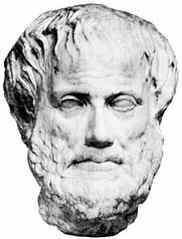 he argued against the idea that the highest degree of community unity comes from the highest degree of common rule. Aristotle's teacher Plato, in Republic, had mockingly -- through the mouth of Socrates -- said that in the just city that the holding of women and children in common was the best policy (though one should note that my interpretation that Plato was not serious is a controversial interpretation). Aristotle took to refuting his own more sober interpretation of Plato. Aristotle writes:
For the word 'all' is ambiguous. If the meaning be that every individual says 'mine' and 'not mine' at the same time, then perhaps the result at which Socrates aims may be in some degree accomplished; each man will call the same person his own son and the same person his wife, and so of his property and of all that falls to his lot. This, however, is not the way in which people would speak who had their wives and children in common; they would say 'all' but not 'each.' In like manner their property would be described as belonging to them, not severally but collectively. There is an obvious fallacy in the term 'all': like some other words, 'both,' 'odd,' 'even,' it is ambiguous, and even in abstract argument becomes a source of logical puzzles. That all persons call the same thing mine in the sense in which each does so may be a fine thing, but it is impracticable; or if the words are taken in the other sense, such a unity in no way conduces to harmony. And there is another objection to the proposal. For that which is common to the greatest number has the least care bestowed upon it. Every one thinks chiefly of his own, hardly at all of the common interest; and only when he is himself concerned as an individual. For besides other considerations, everybody is more inclined to neglect the duty which he expects another to fulfill; as in families many attendants are often less useful than a few. Each citizen will have a thousand sons who will not be his sons individually but anybody will be equally the son of anybody, and will therefore be neglected by all alike. Further, upon this principle, every one will use the word 'mine' of one who is prospering or the reverse, however small a fraction he may himself be of the whole number; the same boy will be 'so and so's son,' the son of each of the thousand, or whatever be the number of the citizens; and even about this he will not be positive; for it is impossible to know who chanced to have a child, or whether, if one came into existence, it has survived. (Politics Book II, Chapter III, 1261-2, at http://www.cavehill.uwi.edu/bnccde/PH19C/tutorial10.html)
Aristotle makes an argument that rests on two objections. The first is that the word "all" is ambiguous. Common rule is rule by "all", but does "all" mean that we would say that each of us has a responsibility for each thing under our rule, or does "all" mean all, where each thing under our rule belongs to all of us in common, not to me or you in particular, but to us all at the same time. Aristotle presumes that by saying that if people are holding their possessions in common, they mean that they belong to us all and not that each thing belongs to each of us at the same time. That being the case, this produces the second objection. Since everyone first chiefly thinks of themselves, people are less likely to take individual responsibility for what they take to be the responsibility of everyone alike. The buck will be passed to the "all", which is an abstract entity, and that will lead to neglect because no one will be responsible. If the forest belongs to us all, who will take care of it? It would more likely be taken care if it were my forest or your forest. From there, you can see why Aristotle suggests that the best political community does not necessarily rest on common ownership of property.
In a part that promises to be a refutation of John Locke's arguments on property rights, why have I started off by giving a brief overview of Aristotle's support of property rights? In Part 1, we looked at the history of the founding of Yellowstone National Park and examined how the debate in Congress depended on certain socially held values about property, and we looked at how that assumption carries through to the issues of today. In Part 2, we examined the defense of property rights by John Locke, and we connected the thinking to the issues considered in Part 1. This part promises to be a refutation of Locke's view on property rights, and so why do I begin by considering an argument by Aristotle? It is interesting to consider Aristotle because we can be confused by the scope of the project I am undertaking. As I have said before, I am not arguing that common ownership of property is better or worse than private ownership of property, which was the kind of argument that Senators Cole and Trumbull were having and the kind of argument that Aristotle here thinks he is having with Plato, but rather that there is simply no right to property. Wherever you draw the line of "private", whether you consider "private" to apply simply to an individual, to a business, to a corporation, to a government agency, to the entire government, to all the people on the planet, or to all the beings on the planet, there is no right to property. I have attached the adjective "private" to "property" in my titles not to specify which type of property one might have a right to but rather to note the ambiguity of scope when one says that one owns "property." Who owns the property? Whether collective or individual, there is an assumption that the property is owned and furthermore that there is a right to it. Aristotle's disagreement with the perceived Plato's calling for holding all women and children in common and Senator Cole's disagreement with Senator Trumbull that Yellowstone National Park should be set aside in the public domain do not speak to the ambition of my own project, which is to claim that the right to property is a dogma. In Part 4, we will see that the word "private" has another significance in our discussion of what ethics in Yellowstone means in a world void of property rights.
John Locke has attempted to convince us that there is a right to property. Property is that which belongs to us after we have mixed our labor with it. When the land just sits there, it belongs to no one (or everyone alike, which amounts to the same thing). When I till the land and grow a crop, the land and its crops belong to me so long as I am not wasting it. Locke argues that the property is ours through our labor because we as humans have been given reason to make the best advantage of our lives, that Earth has been given to humans for that purpose, and that there is no way to make use of the Earth without dividing it in such a way so that its fruits can be useful to particular individuals (see Part 2).
Where Aristotle talked about the problems of ruling "all" individuals, Locke has told us that the "all" is of no use to individuals unless taken by individuals. That individual can be you or me, or it could be a government, but it has to be divided somehow. In that sense all "property" is "private property" in the sense that property is taken from the collective pool of humankind and applied to some particular individual (even if that individual happens to be a collective of other individuals). This seems reasonable in that there is no way that I can possibly eat a fruit unless it's me who eats the fruit. We cannot all possibly do so. This item or that item is of use to me or you, not all items for everyone all at once. A notion of property seems to arise from the simple fact that we are already individual and particular and therefore have individual and particular needs. We can be on a baseball team, but the individual baseball team needs individual outs to get to the next inning of play, not the same outs of all baseball teams in all possible baseball circumstances. Or, if you don't like or know baseball, we can be building a house. Some parts must serve individually as the roof, others as the base, etc. It is appropriate that some parts of the house belong in one place and not another. It would be absurd to say that all parts belong to the entire house in the same way all in common at the same time. Property, based on that understanding, is what identifies are own particular uniqueness.
Let's look more closely at what property means. In the broadest sense, a property is something that belongs to something else. It is "of" that thing. Putting aside John Locke's particular definition of property as that which belongs to us as a result of our labor, in the broadest sense a property is simply that which is of something else. I have two eyes; these are properties of my being. I am human. I live in a home with other people. I live in the United States of America, and I visit Yellowstone National Park. I have two sisters and two brothers. I am shorter than the tallest skyscraper. These are all in some sense properties of me because they can be said "of" me and can be said truly. I could not possibly exist as a being if there was nothing that could be said "of" me. In a broad sense, my property is infinitely broad. You would never run out of things that could be said of me, that make me who I am in any number of particular contexts. In the narrow sense of John Locke's definition, property is not simply that which can truly be said of us, but that which is ours after applying our own labor to it. Yet, what's true of the broad sense should also be true of the narrow. If I planted a field, what is wrong with saying that the planted field is mine? Surely, it could truly be said of me that the field was planted by me, that without me there would be no such field. It is properly speaking mine.
We are about to find ourselves in one of the riddles of ethics, however. While it may be true that almost anything might be said of me, that is, be a property of me, and it might be just as true that a field I plant through my labor might also in the narrow definition of property be said to be mine, it does not therefore follow that it should be mine and that therefore I have a right to it. It is one thing to say that without individual properties there could not be individuals, it is quite something else to say that there is an ironclad right to that reality. By what right do I exist; do I have a right to say that something is exclusively mine, and that this should not be otherwise?
Let's look at it another way. If a community of bees sets up a hive in a tree and produces honey, is the hive and the honey it produces the property of the bees? Based even on the narrow definition of property that Locke gives, that honey would be the property of the bees that they produced through their labor. Yet, John Locke would be the last person to tell us that the bees have an ironclad right to the honey. They would lack that right because Earth has not been given to them for the purpose of making the best advantage of their lives. It was not all bees and humans who have been created equal through the capacity of reason but rather all humans who have been created equal. The right to property for Locke does not simply rest on a definition of property that depends on the use of labor; rather, it also depends on who most deserves the fruits of that labor. The class of humans, those with reason, are considered the most deserving in themselves, over the class of bees or any other being who may also use their labor.
Locke's views on a right to labor, then, first depend on proving that humans are the only beings with a right to property. It also depends, therefore, on proving the argument that those with reason have greater right to the Earth than those without. We shall consider those arguments in time, but let's continue to draw out more implications in Locke's view.
Supposing that the question of human entitlement to the fruits of the Earth could be supported, Locke is also arguing that labor in particular, when mixed with the Earth, is more valuable, so long as there is no waste, than that which has not been touched by labor. Remember in the case of Yellowstone how the Congress needed to be convinced that there was no other value to Yellowstone besides sightseeing before they would assent to it becoming a national park. America the wasteland where Indians leave it alone was not as good as America the beautiful covered in fruited plains. However, why is labor considered so important that it becomes the defining characteristic of what one should call someone else's property? Locke goes to great pains to talk about the value of land that has been cultivated over land that has not because of the general use for the individual in particular and humanity at large. Land that has been mixed with labor can provide more food, clothing, and shelter than land that sits there. Without labor, then, one might argue that there is no life, since labor alone can provide for life. Yet, that is something of a truism. One cannot be unless one does. That is, there is no life without movement, no being without doing. Even the laziest person cannot stay alive without doing something. The question then is not whether labor has something to do with our being alive, but what sort of labor is most valuable. Is it labor which sustains our own material lives? Is it labor which sustains the lives of others?
In short, Locke is not simply saying that labor in itself gives a human being a right to property but must be saying that a particular kind of labor gives humans a right to property. If the former were the case, he would not have said that the land in America used by the Indians was worth so little. So, though being human gave Indians a right to the fruits of their labor, their labor was still inadequate to claim rightful ownership over the entire continent. They were, in Locke's eyes, wasting the land. Yet, this begs the question of what "waste" is and what the "proper" use of land is. Property seen through these eyes is the determination of the "most proper" use of land that has actually been carried out by someone's labor. Think of squatter's rights. If you didn't bother to kick someone out of your land, they have more right to it than you because they are actually using it to some purpose. Yet, who is to say that the squatter's use of the land is therefore just? What is the metric of value? Is it simply that it is being used for more personal benefit than the person who previously laid an ownership claim to the property? If that were the case, then anyone who claimed to have a better idea with what to do with something might make a rightful claim to property. Locke gets around that by talking about commonwealths and political society where laws put a stop to such practices, though such would hold in the state of nature surely. So, either governments will choose the proper use of property, which has yet to be defined by anyone but the governments themselves, or those individuals (governments, collectives, private individuals) in the state of nature will simply fight it out and leave to God who was right and who was wrong. However, all this is to say that determining the value of one being's labor over another's is still essentially an arbitrary practice. Can we really know that a North America with smaller farming and hunting communities, with generally fewer urban centers, was using land more wastefully than the more highly populated Europeans with their more advanced technology? We can say one or the other, but all will depend on what is considered wasteful. And, so far, there is no argument that prevails that says that one way of using and doing and working is fundamentally better than another. Just because one might get more in a market only tells you something about the relative value that those who have power in a particular market place on something, not whether there was some natural ironclad right to the thing in question.
Thus, lacking any meaningful scale on which to determine valuable labor from wasteful labor, using labor as the critical differentiator between what makes something someone's rightful property is simply artificial and therefore dogmatic. It has no grounding in reason because there is never any contradiction in asserting that someone else's use may be just as valuable. That people can and must appropriate things to themselves by use of their labor no one can deny, but that one has a right to anything that one has appropriated to themselves is easily denied. Just because one must do something does not therefore mean that one must therefore do this or that particular thing. This is a bit like turning Aristotle's point on its head. While there can be no "everything" that at the same time applies to "each thing", it does not tell you "what" thing in particular is the right thing that one can and should do in a particular situation. Given that it is not possible to understand the implications of any act as it relates to everything in the universe, it is not possible to determine the best or highest value of a particular act as it relates to all values since one cannot at the same time determine whether something else might have been better. In building a house, one may determine one may need a roof, and some materials will work better than others. However, when talking about natural law, we aren't talking simply about our actions in building a house, we are talking about our actions in terms of everything else that might have been done. Yes, act we must, do something we must, and these things in a broad sense will be properties of our acting, but to say that we have a right to anything we have done just because we have done so or can determine what was better or worse in terms of acting within something as broad as "natural law" is an impossibility. We act, but we do not know whether we act for the best, and so we cannot claim any property right to what we have done. All we can say is that we have done it.
For much the same reason, we cannot hold the life of a human being as being worth more than the life of a bee or even those beings which are not alive. Any being's identity comes from a kind of activity. Even a rock that sits there moves, as any physicist will tell you. When we are holding up the value of human labor, then, we are holding up a particular kind of doing. Locke tells us faintly that it is because of our reason that we are given the Earth, presumably because reason is more valuable than anything else in terms of all things related to truth. This I cannot deny because we could not talk about true or false without reason, and if all things were equally valuable in terms of truth, then we could not even so much as speak with each other since all opposites could just as likely be true. Yet, the value of reason is not in question; what is in question is whether possessing the ability to grasp reason is a value so great that the doing of the person who has reason makes that person's actions more valuable than the being without it. Is a rock's sitting worth less than a rational human's polishing it into a diamond, or a bee's making honey? Yet, just because one has reason does not mean one can always know what one should do with it in a particular situation. As we have already seen, we cannot determine whether it is better to build shopping malls in America or to reintroduce wolves or to leave it to "nature" to run its course -- that is, we cannot determine the absolute value of our labor--our reason is of little use to us in determining whether this person or that person should live, or whether this person should be here and that bee elsewhere, or whether this rock should be polished into a diamond. We simply do not know the answers to these questions and an infinity of other contingent things, and so we cannot determine whether our own doing is worth more than the doing of a rock or the doing of a bee. At times, we will pick up rocks and throw them, but we cannot say whether we had a right to do this simply because we had the capacity to recognize reason. In fact, it's because our capacity to recognize reason that we understand that there is no reason to presume that we have any more reason to live than the rock has to stay still or extracted from a quarry. Maybe, the bee has no right to its honey, but we have no right to it either. We may taste the bee's honey, but any claim to a right to it on the basis of our humanity is arbitrary and therefore dogmatic. The ability to recognize the necessity of a value -- reason -- does not therefore imply the entitlement to the fruits of one's labor. And, even if the property of reason made humans more valuable by simple possession of that quality, it would not in the least tell a human what she or he should do in any given circumstance. It would be a vacuous value without application.
Therefore, when John Locke argues that humans have a right to property, he is greatly mistaken. There is no justification for a right to property. Beings have properties by necessity; they must and will act by necessity and appropriate properties of themselves. In the broad sense, those properties are limitless in number. In the narrow sense of defining property on the basis of our own labor, those properties are also infinite. However, we cannot see from the fact of property, from the necessity of the world being divided and sub-divided for the use of beings, that there is any right to any particular property that any individual (single or group) may appropriate. There is no right because no one could possibly prove that another set of possibilities might not have been better; therefore, there is also no exclusive human right to property either. Perhaps, though it is hard on the ears, Yellowstone might be better as an amusement park run by the Disney Corporation. We cannot really say; there is no exclusive right to say that it is better as a sightseeing location operated by the National Park Service under authorization of the Congress of the United States of America. Perhaps, the Sheepeaters weren't making the best use of Yellowstone by hunting bighorn sheep, fashioning bighorn bows, or that other Indians were wrong (or right) to mine obsidian from the Obsidian Cliffs. How anyone can say absolutely or with any sense of probability is beyond me; it is beyond the realm of our reasoning capacity to consider the infinite possibilities and determine what is appropriate and therefore rightful. We may dearly want all kinds of things for Yellowstone, but we have no right to it, either as a public or as corporations or as individuals. Even if Aristotle is right in saying that without some individual ownership that there would be no ownership at all, we still cannot even say that that state of affairs might not be the best state of affairs.
One reason it is so very tempting to put my harsh conclusion to the side and follow John Locke is because Locke gives a kind of roadmap for ethics that seems easy given the practical reality. Given the way that governments actually govern and the way that individuals actually do appropriate land and things for themselves, it is far easier to manage behavior if we can say that what actually is the case is the way things should be. It is a lot easier to tell someone to pave the road if roads are already being paved. In an America where I type on a computer that makes use of electricity that comes from an electric plant from coal that has been removed from a mountaintop, where my clothes and bedding comes from overseas, where I move freely through political boundaries that have long been established, where I live with innumerable privileges, it can be tempting to say that this is how the world should be and that that is right. However, for others on the other side of the privilege equation, who live at the cost of what's "right for me and my people," that truth is not necessarily so clear. On the homeless benches, among those dying of AIDS, among those in many parts of the Global South, of the Lakota in Pine Ridge, of the livestock caught between a war between environmentalists and ranchers and wolves (who don't even realize they are fighting), the assumptions that this is right seem to ring much more hollow. Locke's version of events has been tempting for those who lived in a society much like Locke's looking to justify the colonization of America, but it has always looked otherwise to those who did not enjoy the fruits of that conquest. If one puts the fruits to the side and considers the justification for those fruits, it falls far short of being rational.
So, though it might be tempting in this world built on property rights to hold up that right for the sake of convenience, we cannot justifiably do so without forsaking the one value that we must acknowledge when it comes to truth, that being reason. There is no right to property, whether exclusively private or held in commons by some collective; that right is dogma. We are now forced to confront what sort of actions we should take in a world where determining the value of the outcomes of such a world is impossible. Many have held up rights as being necessary for a system of ethics. If we cannot determine who and what are more valuable and therefore have rights, property or otherwise, then it is assumed that there is no such thing as a just action. And, if there is no such thing as a just action, then there is no reason not only for Yellowstone National Park but also for anything we do or have ever done. What is ethics in a world without rights? That is the question, of course, of the final part of this series of essays.
***
Please also see relevant essays related to this piece:
Upcoming project: John Locke, Yellowstone, and the Dogma of the Right to Private Property
Part 1: Who gave whom the right to create Yellowstone National Park?
Part 2: John Locke and his defense of a right to private property
The Founding of Yellowstone National Park into Law and into Fact
Yellowstone and class
The company towns of Greater Yellowstone
Projects stalled in Yellowstone - Privatization coming?
Privatize Yellowstone? One capitalist think tank says yes
all from The Magic of Yellowstone
this seems a bit 'wordy' but is leading to a logical conclusion from the premises--------if one refutes empiricism, and instead follows Locke's 'platonicism' and assumes there is somethings called 'property' and 'private' property (as defined by Locke's labor theory of value) which people have rights to----and then deconstructs 'property' and 'private', one is left with rejecting the idea that there is private property and any right to it.
then one is left with the issue of 'rights' and whether there are any of these. such rights typically are associated with systems of ethics and normative concepts like 'justice'.
while many ideas of 'natural rights' exist both platonic and empirical, one likely can do the exact same thing with them as for private property---deny they exist, deconstruct them. some would say this is 'nihilism' or 'postmodernism' or 'ontological anarchy'.
i personally likely disagree with the entire argument, which is guaranteed to produce a 'reductio absurdem' (like alot of philosophy).
scentific accounts provide an alternative. (these however are also in many ways 'nihilistic'>)
That rights are necessary for justice is the abstract wool-over-the-eyes that's been played on us for quite some time. Justice requires us to act, not have something known as a "right" to justify that act. It's the capital of ethics, and like all capitalism, I aim to resist it.
Jim
1. i personally am not convinced that 'babble' will deconstruct hierarchy (or other 'bad' things). babble may just create more, and more profit. the book and speaking tour, etc. weep in public for profit.
one could cut to the quick----what are the 'reasons', 'values', rights, etc. ? 'your fist stops where my face and aquifer begins?' no cutting trees across this line?
but perhaps one wants to confuse the issue, and say while we agree we shouldn't cut trees here, most importantly the issue is calling it a 'property' line. Until a non-hierarchical, ecoanarchofeminist terminology is universally applied, people can cut any trees they want, because that is just a symptom of injustice, given that injustice starts with the state (of our vocabulary).
----------------
One could also decide rather than have a short list (no property, etc.) use shorter words. 'We have a rt to prop', a rt to li, etc.' Iterating one can get to w h a r t... and finally Zerzan's nothingness utopia of saying nothing loud, in a nice college town.
i wonder if your value of 'reason' gives you any tools to determine whether the struggle against injustice is say 'winning'. (A taboo term..) any metrics? 'non-oppressive biodiesel clean fuel trips to miami, etc.'. 50 democrats in congress instead of 45? 44 or 0wolves instead of 40?
the biggest issue in wyoming actually may be the coal and gas leases in the southwest which bush has been giving away (another reason not to vote as a principled position---it cuts down on the possibilities for a cornucopia of protests.) i guess one could let them strip mine while fighting for a minimum wage and recycling in the new yellowstone casino. but i guess that is a 'bioregional' issue, so f-k them.
to be critical one could suspect that 'anti-capitalism' is like the 'new democrat', the only thing 'anti' or 'new' about it being the adjective. i guess one could be innovative, creative, spontaneous, etc. and try say 'post' instead of 'new' for the left. there is justice, and just-us .
of course the same approach might be like early malcolm x, and argue that MLK was an agent of white supremacy. i dont believe that, personally.
but its worth keeping in mind.
anyway, i am not convinced. i do sort of wonder where this is going?
for snowmobiles or against? anyone who wants to can build a house in yellowstone or on Robert Redford's estate and cut trees whether they are a rich software developer, a poor farmer, a poor indian, or a crimethinc slacker? we can or can't vote, from an ethical view, since that de/legitimizes the system? we can or can't legitimize the system of private property by owning any, or environmental abuse, by using a car or computer, etc.? we can or can't use personal connections, class and race hegemony to avoid shitty circumstances and dominate the punditocracy?
the good thing about the articles are that they represent one drop of political philosophy in the amazon size river of media, particularly the 'indy/rad' sort where such philosophy is almost nonexistant (it seems). but for political philsophy i'd say people could just read wikipedia (or anti-state or the mises institute for other views).
unless you have some applicable ideas about property rights, its unclear these have any relevance to yellowstone conservation . (probably a politically incorrect term). but perhaps that is not the goal, as noted above. instead, its a 'principled position' which then gets a paid seat at the table. This is the approach of the 'Washington Times' or 'AEI' or the PhD. There may be a minimal argument, but then it escalates into an Ideology, Cult, and Religious Scam. While 'saving Yellowstone' may be the original goal (a la Jesus) eventually one 'evolves' and settles for having one's own conference center in yellowstone, next to the Bill and melinda gates foundation and the AEI's.
perhaps, the idea would be to turn yellowstone into an anti-capitalist movement center, by first turning it into the largest walmart in the world (with grizzlies stuffed as toys holding little animal rights and US constitutions to be given as christmas presents) and then having the IWW organize it to create a self-managed walmart social ecology utopia.
then using this example one moves on to Yosemite.
sometimes, 'less is more' (voluntary simplicity being a greater value).
there are plenty of articles on the internet on property. it appears there's only 2 or 3 ideas. the devil is in the details, but i guess as religious personhoods, we avoid the devil.
i guess the property industry could have its own IWW section.
2. i suspect you haven't looked at the many definitions of 'nihilism'. (i havent either, not being a hypocrite: i always say '(you should) walk my talk'.) nihilism while commonly used the way 'anarchy' is (its bad eg Somalia or Bhagdad or the congo or a riot) there are other uses of the term, which means it is some sort of 'praxes' (big word!) or continual process of critical thinking. ('dont believe the hype').
bjenboe (sic?) in his 'degrees of freedom' (a collegue of the shallow ecologist arnae naess ) uses the term in this sense. indeed its science.
here's a research topic. look it up.
as for ontological anarchy, i dont really know what it means, but it has an ok connotation, even in this context.
if one is against hierarchy, injustice, etc. then one should remember not to prioritize some particular set of issues, or actions, or values over others. no pre-determined ontological hierarchy. no accepted fight for your righty to party.
i suggest as a hypothetical prioritization, you could take out the trash and run to the store. then further injustices can be worked on.
(for example, i've just been reading some 'cr-p' by some Reed/Harvard/UK educated professor on animal rights, who thinks its terrible that the injuns be killing some fishes and anymals (her term) based on some outdated traditional ideas.
i bet she has some outdated traditional ideas that white, upscale people have a right to cushy academic jobs where they completely ignore many injustices because they have a specialist concern for and knowledge of how the cute lil amynals feel (except the wild ones you pave over and hit in your gas guzzling car on the way to the ALF protest and conference---'f-k the wild animals, i'm saving the baby mice'.).
some of them are so anti-statist and against all sort of complicity in cruelty that they ain't notice they are on a state paycheck and while they may protest the factory farmer or hunter, they didnty notice the person who hired them is eating steak while they dine at the faculty club . oh yeah, don't tip the waiters cuz it just encourages them to get greedy.
i'd say she has a point (i too was horrified when i watched this black snake (note the race) eat some baby birds) , but since 'economic rights' and wilderness rights as much as 'anymal rights' may have some emprical justification, she has no right in my view to prioritize her concern for the fishes, etc. when she is way up in the system of abuse herself. (she could for example give a bored indian her job so they dont go fishing and killing animals. then she could sit around the res and show how you can do that without acting traditionally violent.)
she could also look at her colleges ebndowment and see if its invested in Tyson's foods, etc. But she is too busy crying about injustice.
i guess all these people could be served up to some grizzles for a snack.
3. anyway i am waiting to see what your solution is.
'there's a place for me, up on black country rock'.
i am guessing the 'gift'. Rather than rich people having property rights, it turns out that there are only 'gifts', and some people get more than others because of the Ontological Mystery ('om') (or miser) . These are also called the 'gifted', and at times, even talented.
So yellowstone is a gift, not property, and other than that everything remains the same. (eg rather than 'wage slaves' people just give the gift of their labor in exchange for small gifts in wages, etc. this would be a really free market, since no money is involved just gifts.)
Donate

$140.00 donated
in the past month
Get Involved
If you'd like to help with maintaining or developing the website, contact us.
Publish
Publish your stories and upcoming events on Indybay.