







 Publish to Newswire
 Add an Event
Part 2: John Locke, Yellowstone, and the Dogma of the Right to Private Property
by Jim Macdonald
Read Part 1: Who gave whom the right to create Yellowstone National Park
John Locke wrote The Second Treatise of Civil Government in 1690, a book that 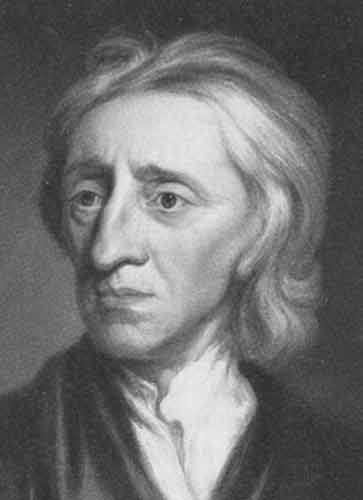 has been celebrated for its influence on the Founding Fathers of the United States, especially on Thomas Jefferson and the Declaration of Independence. As a result of Locke's defense of the right to private property, he has been celebrated by libertarians who hold life, liberty, and property above everything else. At the same time, he has been held up by National Parks advocates (for instance, see this one) as supporting the rationale for a commons approach to protecting life, liberty, and property.
In Part 1 of this essay, I looked at the 1872 congressional debate concerning the founding act creating Yellowstone National Park. What that debate turned on was the appropriate proprietary value of Yellowstone and who should best control that value for the public good. Current debates about user fees, snowmobiles, bison, wolves, elk, bioprospecting, maintenance, and law enforcement all turn on issues of overlapping and competing proprietary values belonging to various federal, state, and local agencies as well as individuals. Like the debate that shaped whether Congress should enact Yellowstone National Park, the debates of today are still generally shaped by defining the most important proprietary value and determining best who should have the right to protect and enhance that value. To that extent, I have suggested that all sides of these debates are to one extent or another still essentially Lockean. Liberal, conservative, libertarian, or pragmatist, all the power brokers alike are followers of John Locke's 1690 work, whether they have even so much as heard of Locke.
As these essays move forward, I will take a stand against John Locke's thought, putting myself far outside the mainstream of the American political debate, but perhaps standing with the large numbers of people who are disillusioned with all the politics that goes on in their names. In this part of the essay, however, let us simply look much more closely at Locke's thought and how it does in fact apply to the discussion about issues related to Yellowstone National Park both as they were and as they are now.
John Locke came from a school of philosophers that have been called the British empiricists. Most famously, this school includes thinkers like George Berkeley and David Hume but also scientists like Isaac Newton as well. Empiricists take it that the basis of knowledge comes from experience. In Locke's case, he taught that people are born with a tabula rasa, a blank slate, and that they don't know anything until it has been imprinted on their minds by experience. Whether that philosophy has any merit is for a very different set of essays, but for the purposes of this essay, it is important to understand that Locke's political philosophy arises from the standpoint of empiricism. That is, though Locke talks about what the world was like in a "state of nature" of which he could have no experience, it nevertheless, he would argue, derives from the experience that is evident in his day and from his senses.
In The Second Treatise of Civil Government, Locke sets out to explain the nature of political power and the rationale for its better forms. He defines political power:
POLITICAL POWER, then, I take to be a RIGHT of making laws with penalties of death, and consequently all less penalties, for the regulating and preserving of property, and of employing the force of the community, in the execution of such laws, and in the defence of the common-wealth from foreign injury; and all this only for the public good (Chap. I, Sec. 3. http://www.constitution.org/jl/2ndtr01.htm).
Political society and therefore political power arises when people, unable to defend their property and enforce justice by themselves, come together and form a commonwealth, giving up some of their rights to the majority of society in order to protect the property, that is the life, liberty, and estate of everyone alike. Locke explains:
Man being born, as has been proved, with a title to perfect freedom, and an uncontrouled enjoyment of all the rights and privileges of the law of nature, equally with any other man, or number of men in the world, hath by nature a power, not only to preserve his property, that is, his life, liberty and estate, against the injuries and attempts of other men; but to judge of, and punish the breaches of that law in others, as he is persuaded the offence deserves, even with death itself, in crimes where the heinousness of the fact, in his opinion, requires it. But because no political society can be, nor subsist, without having in itself the power to preserve the property, and in order thereunto, punish the offences of all those of that society; there, and there only is political society, where every one of the members hath quitted this natural power, resigned it up into the hands of the community in all cases that exclude him not from appealing for protection to the law established by it. And thus all private judgment of every particular member being excluded, the community comes to be umpire, by settled standing rules, indifferent, and the same to all parties; and by men having authority from the community, for the execution of those rules, decides all the differences that may happen between any members of that society concerning any matter of right; and punishes those offences which any member hath committed against the society, with such penalties as the law has established: whereby it is easy to discern, who are, and who are not, in political society together. Those who are united into one body, and have a common established law and judicature to appeal to, with authority to decide controversies between them, and punish offenders, are in civil society one with another: but those who have no such common appeal, I mean on earth, are still in the state of nature, each being, where there is no other, judge for himself, and executioner; which is, as I have before shewed it, the perfect state of nature (Chap. VII, Sec. 87. http://www.constitution.org/jl/2ndtr07.htm).
Locke is telling us that we do have certain natural rights, including the right to property, which for Locke includes and is not distinct from one's life and liberty, but we are not able by ourselves to defend that right without joining with others for our common aid and defense. Those who have accepted Locke's teachings on this therefore can be expected to span the continuum between advocating the minimal amount of government to protect one's property to those who believe that the stronger the government the stronger the common defense. As I have noted in terms of Yellowstone, that is in fact the debate. The National Center for Policy Analysis has advocated selling off public lands and moving toward less and less direct government control of places like Yellowstone. Others have advocated greater government control of resources. Note the current debate this week on President Bush's budget on the national parks, which has at once called for more funding of the national parks and for more private funding of the parks. Those who like the plan, like the National Parks Conservation Association, have celebrated the proposed increase in the government's operations budget. Those opposed to the plan, like Scott Silver at Wild Wilderness, have noted the private funding. Yet, the debate is on the Lockean continuum. There is some assumption in all of this that Yellowstone and other national parks are someone's property and should be managed as such. Perhaps, there is a fear that if someone doesn't claim the property, that someone more pernicious will, but that aside, there is an assumption that there is property, that that property cannot be protected by one person alone, and that some degree of common or governmental control is necessary to protect the common interest of everyone. That is what Senator Trumbull was urging on Senator Cole (see Part 1) as to why the government was in the best position to protect the interest of sightseeing.
A great deal of debate both yesterday and today depends, then, on the view of government, its role relative to individuals and the land, and the proper balance between the two. So much depends on the doctrine that one of the central purposes of government is the protection of property, of which Locke claims people to some extent have a right. As an able thinker, Locke did not leave this most important stone unturned. The entirety of Chapter V of The Second Treatise is devoted to the question of property and the defense of a right to property, not simply from within the confines of political society but as a natural right belonging to all people, not just from the standpoint of divine revelation, but from the standpoint of natural reason itself.
To Chapter V, then, let's turn.
Locke sets out the following premises:
- [Men], being once born, have a right to their preservation, and consequently to meat and drink, and such other things as nature affords for their subsistence (Chap. V, Sec. 25. ).
- [Man has been given] reason to make use of it to the best advantage of life, and convenience (Chap. V, Sec. 26.
The short of the beginning of Locke's defense of a right to private property is that even if one assumes that the world belongs in common to every man (and for the sake of charity to Locke, let's assume he also meant every woman as well), the fruits of the world can be of no use to any particular human unless it can be divided among individuals. If I am hungry and need to eat an apple, it won't do me much good unless I can take that apple for myself. And, by definition, anything that belongs to me is my property.
Locke, then, reaches his first tentative conclusion on property rights, namely that "Though the earth, and all inferior creatures, be common to all men, yet every man has a property in his own person: this no body has any right to but himself" (Chap. V, Sec. 27. ). However, that doesn't tell us the reach of one's property rights or how one can lay claim to property. Locke develops the argument further, though we should pause to note that much of the foundation for Locke's line of thinking has already been laid out. He has made blanket statements about the relative hierarchical position of humanity in respect to the rest of the Earth and how that position justifies human consumption. His argument, which rests on those premises, also suggests that the basis of political society rests foremost on the goods of individual needs first. The values of society as a whole and the Rarth at large rest firmly on the rights that the individual human derives from the right to self preservation. Since self preservation depends on taking ownership in part of some of the fruits of the Earth, protection of that is also necessary. That is, it is impossible to separate the right to property for Locke from the right to self preservation (or one's own life).
Donate

$140.00 donated
in the past month
Get Involved
If you'd like to help with maintaining or developing the website, contact us.
Publish
Publish your stories and upcoming events on Indybay.