







 Publish to Newswire
 Add an Event
From the Open-Publishing Calendar
From the Open-Publishing Newswire
Indybay Feature
Video Surveillance Project Gets Final Approval
The Fresno City Council approved the start of a massive police video surveillance project at their Tuesday, August 22 meeting. The last hurdle to approve this project was the acceptance, by the City Council, of a policy manual to regulate the use of the cameras. While much of the policy manual came from The Constitution Project (see http://www.constitutionproject.org/ ) and was protective of civil liberties, there were several key elements of the manual that community members strenuously objected to.
Video Surveillance Project Gets Final Approval
By Mike Rhodes
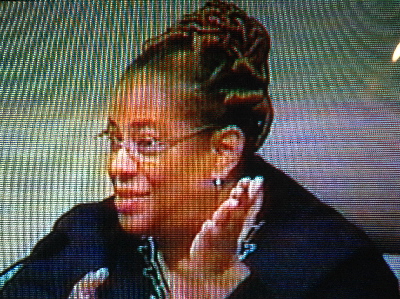
City Council member Cynthia Sterling cast the deciding vote to approve the policy manual, which released the funding for a $1.2 million video surveillance project in Fresno. Saying that her constituents in West Fresno have been calling her to have cameras put up in their neighborhoods, Sterling supported the Fresno Police Department in their effort to start a massive video surveillance project in this community. Sterling had numerous questions for Captain Maroney, who presented the video surveillance project presentation and police chief Jerry Dyer, but asked no questions of the critics of the project.
During the public comment period of the hearing numerous community members spoke out against the proposed project and the lack of civil liberties protections in the policy manual being considered for approval.
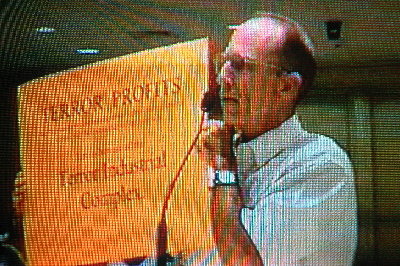
Public concern about the policy manual focused on several issues. The issue that raised the greatest concern was the section that stated the FPD would monitor political demonstrations. The policy manual states that “Demonstrations or rallies of any kind may be actively monitored only for potential criminal activities or crowd management.” Vincent Lavery said “this would have a chilling effect on civic participation.” Other speakers echoed Lavery’s concern. Phil Erro said knowing the police cameras are recording what you are doing at political demonstrations would be intimidating. Erro added that this intimidation is a form of “thought control.”
Another concern about the policy manual, mentioned by several speakers, was that it gives the FPD the ability to follow people (track them) around town with the video cameras without getting a warrant. If the police want to follow you around town now, they need to go to a judge and show probable cause for why they want to follow you. This judicial review is intended to provide protection to citizens from over zealous police. The language in the policy manual provides no judicial oversight. It states that “articulable reasonable suspicion” by the camera operator to follow you around town is all that is needed.
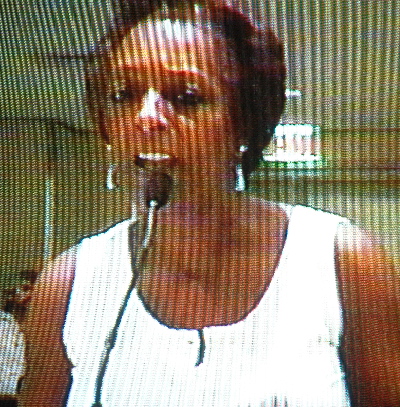
Tracy Pepper, president of the League of Women Voters, said she was concerned about the oversight of this project. “The League has some of the same concerns that have been expressed here today, and there is the issue of accountability. If you have a problem (with this project), how do you know, if you have no oversight?” Peppers complimented the FPD and the City Council for setting up a citizens panel to help draft the policy manual but asked why there has not been more community input into an issue as important as video surveillance. “I have not heard of any community presentations where the public’s input has been solicited,” Peppers said.
In the discussion that followed the public comment period, council member Tom Boyajian repeated many of the concerns mentioned by speakers and said he would not support the policy manual as written. Council member Brian Calhoun, who has opposed the video surveillance project from the beginning, joined Boyajian in his opposition of the manual. Then, Sterling, Westerlund, Perea, and Dages formed a solid block of support. Westerlund made a motion to accept the policy manual and Dages seconded the motion. Westerlund amended the proposal so that a retired federal judge will review the project. A second amendment will bring the project back before the City Council for an annual review. Council member Jerry Duncan asked Dyer about the monitoring of political demonstrations and said he wanted that part removed. Dyer did not oppose the removal of that section. Duncan asked Westerlund if the removal of the section about monitoring political demonstrations could be added to his motion, but Westerlund refused the request. Duncan said he could not accept the manual, as proposed. The policy manual, as amended, passed 4/3, releasing the $1.2 million for the video surveillance project in Fresno.
For background information about this story, see:
http://www.indybay.org/newsitems/2006/08/15/18297663.php
http://www.indybay.org/newsitems/2006/06/22/18282116.php
http://www.indybay.org/newsitems/2006/06/21/18281645.php
http://www.indybay.org/newsitems/2006/06/15/18280912.php
http://www.indybay.org/newsitems/2006/06/15/18280787.php
http://www.indybay.org/news/2006/05/1825069.php
“There was of course, no way of knowing whether you were being watched at any given moment. . . you had to live, did live, from habit that became instinct, in the assumption that every sound you made was overheard, and, except in darkness, every movement scrutinized.”
—George Orwell, 1984
By Mike Rhodes
City Council member Cynthia Sterling cast the deciding vote to approve the policy manual, which released the funding for a $1.2 million video surveillance project in Fresno. Saying that her constituents in West Fresno have been calling her to have cameras put up in their neighborhoods, Sterling supported the Fresno Police Department in their effort to start a massive video surveillance project in this community. Sterling had numerous questions for Captain Maroney, who presented the video surveillance project presentation and police chief Jerry Dyer, but asked no questions of the critics of the project.
During the public comment period of the hearing numerous community members spoke out against the proposed project and the lack of civil liberties protections in the policy manual being considered for approval.
Public concern about the policy manual focused on several issues. The issue that raised the greatest concern was the section that stated the FPD would monitor political demonstrations. The policy manual states that “Demonstrations or rallies of any kind may be actively monitored only for potential criminal activities or crowd management.” Vincent Lavery said “this would have a chilling effect on civic participation.” Other speakers echoed Lavery’s concern. Phil Erro said knowing the police cameras are recording what you are doing at political demonstrations would be intimidating. Erro added that this intimidation is a form of “thought control.”
Another concern about the policy manual, mentioned by several speakers, was that it gives the FPD the ability to follow people (track them) around town with the video cameras without getting a warrant. If the police want to follow you around town now, they need to go to a judge and show probable cause for why they want to follow you. This judicial review is intended to provide protection to citizens from over zealous police. The language in the policy manual provides no judicial oversight. It states that “articulable reasonable suspicion” by the camera operator to follow you around town is all that is needed.
Tracy Pepper, president of the League of Women Voters, said she was concerned about the oversight of this project. “The League has some of the same concerns that have been expressed here today, and there is the issue of accountability. If you have a problem (with this project), how do you know, if you have no oversight?” Peppers complimented the FPD and the City Council for setting up a citizens panel to help draft the policy manual but asked why there has not been more community input into an issue as important as video surveillance. “I have not heard of any community presentations where the public’s input has been solicited,” Peppers said.
In the discussion that followed the public comment period, council member Tom Boyajian repeated many of the concerns mentioned by speakers and said he would not support the policy manual as written. Council member Brian Calhoun, who has opposed the video surveillance project from the beginning, joined Boyajian in his opposition of the manual. Then, Sterling, Westerlund, Perea, and Dages formed a solid block of support. Westerlund made a motion to accept the policy manual and Dages seconded the motion. Westerlund amended the proposal so that a retired federal judge will review the project. A second amendment will bring the project back before the City Council for an annual review. Council member Jerry Duncan asked Dyer about the monitoring of political demonstrations and said he wanted that part removed. Dyer did not oppose the removal of that section. Duncan asked Westerlund if the removal of the section about monitoring political demonstrations could be added to his motion, but Westerlund refused the request. Duncan said he could not accept the manual, as proposed. The policy manual, as amended, passed 4/3, releasing the $1.2 million for the video surveillance project in Fresno.
For background information about this story, see:
http://www.indybay.org/newsitems/2006/08/15/18297663.php
http://www.indybay.org/newsitems/2006/06/22/18282116.php
http://www.indybay.org/newsitems/2006/06/21/18281645.php
http://www.indybay.org/newsitems/2006/06/15/18280912.php
http://www.indybay.org/newsitems/2006/06/15/18280787.php
http://www.indybay.org/news/2006/05/1825069.php
“There was of course, no way of knowing whether you were being watched at any given moment. . . you had to live, did live, from habit that became instinct, in the assumption that every sound you made was overheard, and, except in darkness, every movement scrutinized.”
—George Orwell, 1984
For more information:
http://www.fresnoalliance.com/home
Add Your Comments
Latest Comments
Listed below are the latest comments about this post.
These comments are submitted anonymously by website visitors.
TITLE
AUTHOR
DATE
good luck
Thu, Aug 24, 2006 6:44AM
3 words "Paint Ball Guns"
Thu, Aug 24, 2006 12:48AM
One word --
Wed, Aug 23, 2006 1:53AM
We are 100% volunteer and depend on your participation to sustain our efforts!
Donate

$85.00 donated
in the past month
Get Involved
If you'd like to help with maintaining or developing the website, contact us.
Publish
Publish your stories and upcoming events on Indybay.
Topics
More
Search Indybay's Archives
Advanced Search
►
▼
IMC Network