







 Publish to Newswire
 Add an Event
From the Open-Publishing Calendar
From the Open-Publishing Newswire
Indybay Feature
TWO DIE in Guatemala free trade protests
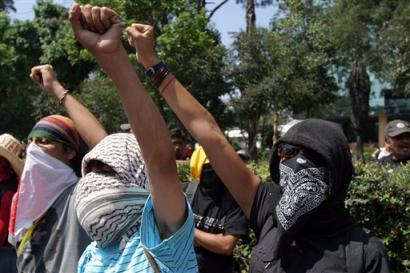
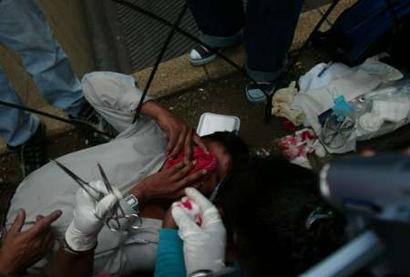
Two people were killed and many injured as violence broke out during protests in Guatemala on Tuesday 15 March when President Oscar Berge ratified the Central America Free Trade Agreement (CAFTA).
Two die in Guatemala free trade protests
17 Mar 2005 16:13:00 GMT
Christian Aid - UK
Website: http://www.christianaid.org.uk/news
Two people were killed and many injured as violence broke out during protests in Guatemala on Tuesday 15 March when President Oscar Berge ratified the Central America Free Trade Agreement (CAFTA).
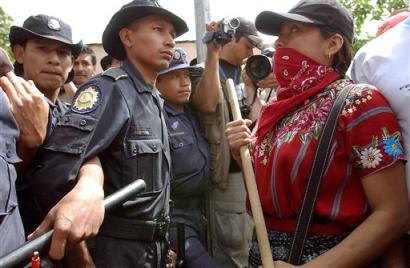
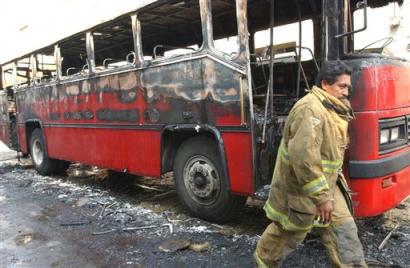
The deaths in Huehuetenango follow days of violence as people across Guatemala joined the biggest demonstrations ever seen in the country. Protestors argue that the CAFTA will make Central American countries more dependent on the US.
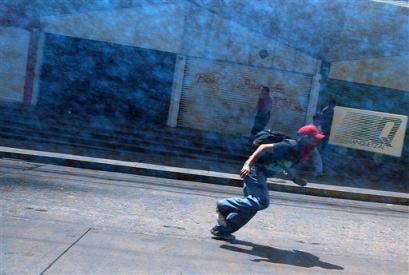
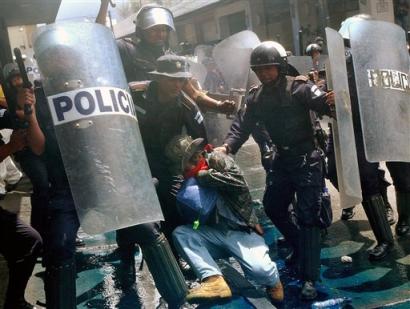
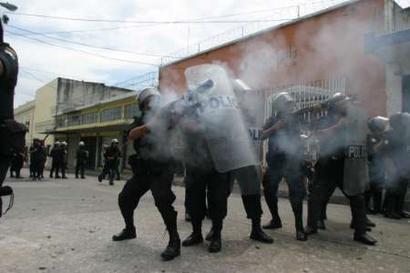
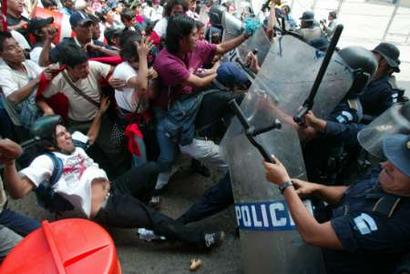
As the anti-CAFTA rally ended, police and soldiers launched a violent attack on the crowd using batons and tear gas. Two protestors were fatally shot.
Police surrounded the headquarters of Guatemala’s trade unions under orders to capture trade union leaders.
The violence followed similar protests in neighbouring Honduras when anti-CAFTA campaigners stormed congress when the government signed CAFTA on 4 March a month ahead of schedule.
Honduras was the second country to sign up to the agreement following El Salvador which signed in December 2004 and now Guatemala is the third. Panama, Costa Rica and Nicaragua are still under negotiation.
Trinidad Sanchez, Director of Comal, a Christian Aid partner in Honduras, said: ‘We have raised our voice to denounce the danger that comes with this free trade agreement.
‘This is going to increase unemployment, it is going to increase the crisis of food security in the country, and it is going to make health and education less accessible for the people in Honduras. And this is not only for Honduras, but for the whole of Central America.’
CAFTA follows the North American Free Trade Agreement signed in 1996 between Canada, US and Mexico
As part of a coalition of organisations campaigning against CAFTA, Comal has logged the impact of NAFTA on Mexico. It has argued that overall NAFTA has increased inequality and reduced incomes for the vast majority of Mexican workers.
Comal argues free trade with the US is going to bring misery to the poor of Central America who will be forced to compete in an unfair market. Agriculture will be the worst hit and peasant farmers are at risk of not being able to grow and sell beans and maize - Central America’s staple diet.
As the world gears up for the Global Week of Action against unfair trade, Central America will continue pressing against CAFTA. Trinidad Sanchez was one of at the World Social Forum in Delhi in 2004 when the idea of a week of solidarity campaigning was born.
Señor Sanchez said: ‘We have been opposing the CAFTA treaty for many years. What we wanted from the international campaign was the linking of movements. We had not predicted though that the Global Week of Action would coincide with the singing of the treat in Central America, it’s a good coincidence.’
17 Mar 2005 16:13:00 GMT
Christian Aid - UK
Website: http://www.christianaid.org.uk/news
Two people were killed and many injured as violence broke out during protests in Guatemala on Tuesday 15 March when President Oscar Berge ratified the Central America Free Trade Agreement (CAFTA).
The deaths in Huehuetenango follow days of violence as people across Guatemala joined the biggest demonstrations ever seen in the country. Protestors argue that the CAFTA will make Central American countries more dependent on the US.
As the anti-CAFTA rally ended, police and soldiers launched a violent attack on the crowd using batons and tear gas. Two protestors were fatally shot.
Police surrounded the headquarters of Guatemala’s trade unions under orders to capture trade union leaders.
The violence followed similar protests in neighbouring Honduras when anti-CAFTA campaigners stormed congress when the government signed CAFTA on 4 March a month ahead of schedule.
Honduras was the second country to sign up to the agreement following El Salvador which signed in December 2004 and now Guatemala is the third. Panama, Costa Rica and Nicaragua are still under negotiation.
Trinidad Sanchez, Director of Comal, a Christian Aid partner in Honduras, said: ‘We have raised our voice to denounce the danger that comes with this free trade agreement.
‘This is going to increase unemployment, it is going to increase the crisis of food security in the country, and it is going to make health and education less accessible for the people in Honduras. And this is not only for Honduras, but for the whole of Central America.’
CAFTA follows the North American Free Trade Agreement signed in 1996 between Canada, US and Mexico
As part of a coalition of organisations campaigning against CAFTA, Comal has logged the impact of NAFTA on Mexico. It has argued that overall NAFTA has increased inequality and reduced incomes for the vast majority of Mexican workers.
Comal argues free trade with the US is going to bring misery to the poor of Central America who will be forced to compete in an unfair market. Agriculture will be the worst hit and peasant farmers are at risk of not being able to grow and sell beans and maize - Central America’s staple diet.
As the world gears up for the Global Week of Action against unfair trade, Central America will continue pressing against CAFTA. Trinidad Sanchez was one of at the World Social Forum in Delhi in 2004 when the idea of a week of solidarity campaigning was born.
Señor Sanchez said: ‘We have been opposing the CAFTA treaty for many years. What we wanted from the international campaign was the linking of movements. We had not predicted though that the Global Week of Action would coincide with the singing of the treat in Central America, it’s a good coincidence.’
Add Your Comments
Latest Comments
Listed below are the latest comments about this post.
These comments are submitted anonymously by website visitors.
TITLE
AUTHOR
DATE
Governments pushing Free Trade directly
Sun, Apr 10, 2005 6:20PM
pic
Thu, Mar 17, 2005 4:55PM
We are 100% volunteer and depend on your participation to sustain our efforts!
Donate

$115.00 donated
in the past month
Get Involved
If you'd like to help with maintaining or developing the website, contact us.
Publish
Publish your stories and upcoming events on Indybay.
Topics
More
Search Indybay's Archives
Advanced Search
►
▼
IMC Network