







 Publish to Newswire
 Add an Event
Feature Archives
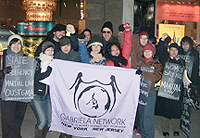
On Friday, March 3rd, and every Friday until the state of emergency ends, the Gabriela Network says, it will hold Emergency Rallies in San Francisco Against the State of Emergency in the Philippines. People will gather at Sutter and Powell in San Francisco from 5pm to 7pm to demand an end to the state of emergency, the ouster of Gloria Macapagal-Arroyo, and freedom for the six party-list congresspeople who were arrested in the last week, and all political prisoners. The Gabriela Network is an organization of women in the US and the Philippines.
There will be weekly picket lines on Mondays in Washington DC; on Tuesdays in Seattle; Wednesdays in New York; Thursdays in Chicago; Fridays in Los Angeles and San Francisco; Saturdays at Irvine; and Sundays in San Diego. The date on which President Arroyo declared a State of Emergency/Martial Law was the 20th anniversary of the "People Power" movement to oust dictator Ferdinand Marcos. Rallies that have been held since then have been violently dispersed, and warrants have been issued for activists from grassroots organizations. Read more about Arroyo's actions and the San Francisco rallies
It is believed that "no Philippine president would dare undertake such a drastic grab for power without the approval of its colonial master." The Gabriela Network says that it is "no coincidence that this comes while 5,500 US troops are in the Philippines... the largest number of US troops to be in the country in a decade. The US sees the Philippines as the second front in the war on terror and views Arroyo as one of its closest allies. It also intends to open new bases territories close to the region's vast oil and natural gas reserves."
Gabriela Network | Bulatlat website | 2/28: Arroyo Widens Purge of Suspected Coup Plotters | 2/27: AKBAYAN: to bury the truth, GMA killed Philippine democracy | 2/27 article: Philippine president imposes state of emergency after alleged coup attempt | 2/24: STATE of EMERGENCY has been imposed in the PHILIPPINES! | 2/24: Gabriela's Protest Announcement
There will be weekly picket lines on Mondays in Washington DC; on Tuesdays in Seattle; Wednesdays in New York; Thursdays in Chicago; Fridays in Los Angeles and San Francisco; Saturdays at Irvine; and Sundays in San Diego. The date on which President Arroyo declared a State of Emergency/Martial Law was the 20th anniversary of the "People Power" movement to oust dictator Ferdinand Marcos. Rallies that have been held since then have been violently dispersed, and warrants have been issued for activists from grassroots organizations. Read more about Arroyo's actions and the San Francisco rallies
It is believed that "no Philippine president would dare undertake such a drastic grab for power without the approval of its colonial master." The Gabriela Network says that it is "no coincidence that this comes while 5,500 US troops are in the Philippines... the largest number of US troops to be in the country in a decade. The US sees the Philippines as the second front in the war on terror and views Arroyo as one of its closest allies. It also intends to open new bases territories close to the region's vast oil and natural gas reserves."
Gabriela Network | Bulatlat website | 2/28: Arroyo Widens Purge of Suspected Coup Plotters | 2/27: AKBAYAN: to bury the truth, GMA killed Philippine democracy | 2/27 article: Philippine president imposes state of emergency after alleged coup attempt | 2/24: STATE of EMERGENCY has been imposed in the PHILIPPINES! | 2/24: Gabriela's Protest Announcement
Tue Feb 28 2006
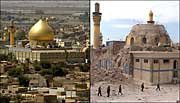
Al Askari Mosque Destroyed, Sparking Sectarian Violence
On February 22nd, 2006, a bomb destroyed the dome of the Al Askari Mosque in the northern Iraqi city of Samarra. The destruction of the mosque brought tens of thousands of Shiite youth onto the streets, vowing to exact retribution on Sunnis and the US-led occupation forces. Shia militias took over entire suburbs of Baghdad, Basra, Amarra, Najaf, Karbala, Nasiriya and other southern Iraqi cities.
By February 28th, As many as 1,300 people had died in the wave of sectarian violence that swept Iraq.
Read More On Indybay's Iraq Page
Read More On Indybay's Iraq Page
Sun Feb 19 2006
More Evidence Of Atrocities In Iraq
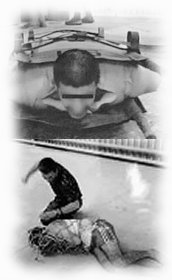
Pictures of Iraqi prisoners—naked, wounded, covered with blood, women’s underwear draped over their heads, bound in painful and degrading “stress positions”—were broadcast on Australian television Wednesday February 16th, further exposing the horrors inflicted at the US military’s prison camp at Abu Ghraib and similar facilities across the globe.
New Abu Ghuraib Photos Published | The Abu Ghraib files (links to all photos) | Children raped at Abu Ghraib | Iraq Seethes over Abu Ghraib | Previous Coverage Of Iraqi Prisoner Abuse: 1 | 2 | 3
Video images of British soldiers brutally beating a group of Iraqi teenagers have also recently come to light. Soldiers are shown chasing youths, dragging four of them into a compound and beating them with batons and kicking various parts of their bodies — with at least one blow to the genitals. The attack went on for a minute, with 42 blows inflicted in that time. The News of the World said there was also one of a soldier kicking a dead Iraqi in the face. Shielded from public gaze by the camp wall, the soldiers are seen beating their captives, whilst another provides commentary: “Oh yes! Oh yes! You’re gonna get it. Yes, naughty little boys! You little f***ers, you little f***ers. DIE! Ha, ha!” All but one of the captives are barefoot, and all are unarmed, dressed only in pants and t-shirts. One prisoner is seen pleading “No! Please!” as he tries to stop the assault, whilst the unseen commentator ridicules his cries and his accent, “No, pleeese—don’t hurt me.”
This is the real outrage | NPR Audio | Video fallout hits UK Iraq troops
Meanwhile Iraq has launched an investigation into claims that an Iraqi interior ministry "death squad" has been targeting Sunni Arab Iraqis. The Association of Muslim Scholars (AMS), the largest religious Sunni body in Iraq, said the death squad discovery was not an isolated incident. "It's not just one death squad. There are many," an AMS spokesman told AFP, declining to be named because of fear for his life. "In the northern Baghdad district of Hurriyah alone, some 70 young men from our community have been killed by these units, and the overall toll figure is likely to be more than 1,000 and includes 20 imams," he asserted.
From Jan 2005: US Military Considering Modelling War In Iraq After Reagan's War In El Salvador
New Abu Ghuraib Photos Published | The Abu Ghraib files (links to all photos) | Children raped at Abu Ghraib | Iraq Seethes over Abu Ghraib | Previous Coverage Of Iraqi Prisoner Abuse: 1 | 2 | 3
Video images of British soldiers brutally beating a group of Iraqi teenagers have also recently come to light. Soldiers are shown chasing youths, dragging four of them into a compound and beating them with batons and kicking various parts of their bodies — with at least one blow to the genitals. The attack went on for a minute, with 42 blows inflicted in that time. The News of the World said there was also one of a soldier kicking a dead Iraqi in the face. Shielded from public gaze by the camp wall, the soldiers are seen beating their captives, whilst another provides commentary: “Oh yes! Oh yes! You’re gonna get it. Yes, naughty little boys! You little f***ers, you little f***ers. DIE! Ha, ha!” All but one of the captives are barefoot, and all are unarmed, dressed only in pants and t-shirts. One prisoner is seen pleading “No! Please!” as he tries to stop the assault, whilst the unseen commentator ridicules his cries and his accent, “No, pleeese—don’t hurt me.”
This is the real outrage | NPR Audio | Video fallout hits UK Iraq troops
Meanwhile Iraq has launched an investigation into claims that an Iraqi interior ministry "death squad" has been targeting Sunni Arab Iraqis. The Association of Muslim Scholars (AMS), the largest religious Sunni body in Iraq, said the death squad discovery was not an isolated incident. "It's not just one death squad. There are many," an AMS spokesman told AFP, declining to be named because of fear for his life. "In the northern Baghdad district of Hurriyah alone, some 70 young men from our community have been killed by these units, and the overall toll figure is likely to be more than 1,000 and includes 20 imams," he asserted.
From Jan 2005: US Military Considering Modelling War In Iraq After Reagan's War In El Salvador
Sat Feb 18 2006
Preval Becomes President In "Election Deal"
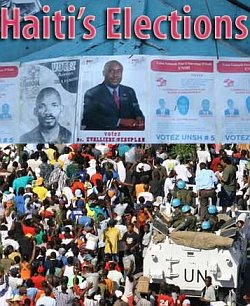
On February 16th, Haiti’s interim government and election officials reached an agreement to declare Rene Preval the winner of the country’s presidential election. With 90% of ballots counted, it was claimed that Preval had been just shy of the 50% margin needed for a first-round election win, but under the agreement, some of the blank votes - representing 4% of the estimated 2.2 million ballots cast - were subtracted from the total number of votes counted, giving Preval the majority. 129 seats in parliament are also up for grab and it is those who control legislature that will approve Haiti's prime minister. So far the media have neglected to inform the public on the outcome of the parliamentary election. Some fear the parliamentary election was also tainted by fraud since the same burnt ballots with Preval's name on them would have contained votes for pro-Aristide parliamentary members whose votes are now lost.
Brian Concannon writes:
On February 7, Haitian voters went to the polls to elect a President for the fourth time since 1990. Through great patience and determination they overcame official disorganization, incompetence and discrimination, and for the fourth time since 1990 handed their chosen candidate a landslide victory. And for the fourth time Haitian elites, with support from the International Community, started immediately to undercut the victory, seeking at the negotiation table what they could not win at the voting booth.
...[Rene Preval] won the 50% of the vote necessary to avoid a runoff election against his nearest competitor. Although early official results and the unofficial tallies by the Preval campaign, international observers and journalists all showed Mr. Preval comfortably above the 50% bar, after 5 days of counting his official results crept 1.3% below it. Negotiations resulted in a deal that changes the way that the Electoral Council treats blank ballots, which, according to the Council's calculation, puts Mr. Preval back above 50%. ...The election deal gives a little something to everyone, and that's the problem. Elections are not supposed to make everyone happy; they are supposed to apportion political power according to majority vote, on the basis of set rules. In all likelihood, a correct tabulation of the votes would have given Mr. Preval a first round victory, as exit polls and unofficial tabulations had predicted. Although the negotiated agreement reaches the same result as a correct tabulation would have reached, it does so by changing the rules instead of correcting the violations of the rules. The deal provides leverage for those seeking to delegitimize Preval's presidency and block the progressive social and economic policies that he was elected to implement.
Read More
Préval is President but what about the vote-rigging charges? | US Propaganda in Haiti: NPR reporter Amelia Shaw is wearing two hats | Bring Aristide back to Haiti, enough is enough! | Max Mathurin and Jose Miguel Insulza contradict each other on charges of elections fraud
More Haiti Coverage On Indybay's Haiti Page
Brian Concannon writes:
On February 7, Haitian voters went to the polls to elect a President for the fourth time since 1990. Through great patience and determination they overcame official disorganization, incompetence and discrimination, and for the fourth time since 1990 handed their chosen candidate a landslide victory. And for the fourth time Haitian elites, with support from the International Community, started immediately to undercut the victory, seeking at the negotiation table what they could not win at the voting booth.
...[Rene Preval] won the 50% of the vote necessary to avoid a runoff election against his nearest competitor. Although early official results and the unofficial tallies by the Preval campaign, international observers and journalists all showed Mr. Preval comfortably above the 50% bar, after 5 days of counting his official results crept 1.3% below it. Negotiations resulted in a deal that changes the way that the Electoral Council treats blank ballots, which, according to the Council's calculation, puts Mr. Preval back above 50%. ...The election deal gives a little something to everyone, and that's the problem. Elections are not supposed to make everyone happy; they are supposed to apportion political power according to majority vote, on the basis of set rules. In all likelihood, a correct tabulation of the votes would have given Mr. Preval a first round victory, as exit polls and unofficial tabulations had predicted. Although the negotiated agreement reaches the same result as a correct tabulation would have reached, it does so by changing the rules instead of correcting the violations of the rules. The deal provides leverage for those seeking to delegitimize Preval's presidency and block the progressive social and economic policies that he was elected to implement.
Read More
Préval is President but what about the vote-rigging charges? | US Propaganda in Haiti: NPR reporter Amelia Shaw is wearing two hats | Bring Aristide back to Haiti, enough is enough! | Max Mathurin and Jose Miguel Insulza contradict each other on charges of elections fraud
More Haiti Coverage On Indybay's Haiti Page
Sat Feb 11 2006
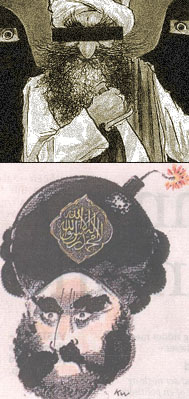
Racist Cartoons In Europe Spark Protests Worldwide
On September 30th, 2005,
Denmark's most widely read newspaper, Jyallands Posten,
published a set of cartoons depicting
Muhammad. The editor of Jyallands Posten claimed to have commissioned the cartoons after a children's book illustrator refused
to use his real name out of concern that any depiction of Muhammad might offend some Muslims.
While the children's book was
meant to teach Dutch children respect for other religions (and received no complaints from Muslim readers), the cartoons
Jyallands Posten published were full of racist stereotypes associating all Muslims with violence and misogyny.
Muslim leaders in Denmark sent letters to Jyallands Posten complaining about the racist cartoons. Not only did the newspaper refuse to apologize, but many of those who sent letters received threats and more racist cartoons via email. Anti-immigrant, and specifically anti-Muslim, sentiments in Denmark have been on the rise for years with right-leaning political parties using immigration as the main issue in the election of February 2005 (with the current government relying on the rabidly anti-immigrant Danish People's Party as a key coalition partner). As Muslims in Denmark complained about racism in the media they were mainly met with anti-immigrant rhetoric in the press arguing that the Muslim population in Denmark was restricting the freedom for a newspaper to print racist cartoons without complaint.
Eleven Arab ambassadors asked for a meeting with Danish prime minister Anders Fogh Rasmussen on October 12th to register their protest, but the government declined. On October 27th, a number of Muslim organizations submitted complaints to the Danish police claiming that Jyllands-Posten had committed an offence under section 140 and 266b of the Danish Criminal Code. Section 140 of the Criminal Code prohibits any person from publicly ridiculing or insulting the dogmas of worship of any lawfully existing religious community in Denmark. Section 266b criminalizes the dissemination of statements or other information by which a group of people are threatened, insulted or degraded on account of their religion. On January 6th 2006, the Regional Public Prosecutor in Viborg discontinued the investigation as he found no basis for concluding that the cartoons constituted a criminal offence.
As the Danish Muslim community felt increasingly isolated and under attack, a group of religious leaders toured the Middle East with a dossier containing the racist cartoons to make the broader Muslim community aware of the plight of Danish Muslims. On January 10th 2006, a small Norwegian Christian magazine, Magazinet, printed the drawings after getting authorization from Jyllands-Posten. While a protest of several thousand people had taken place in Denmark in September, until the end of January 2006, all other protests were formal complaints by religious and government officials. On January 29th, the Danish flag was burned at a protest in the West Bank and Danish NGO workers were threatened in Gaza. On January 31st a German newspaper republished several of the cartoons and as did many papers across Europe on February 1st and 2nd. Most of the newspapers displayed the images with a message that it was the right of newspapers to display such racist images rather than because they related to a breaking news story (a strange assertion when Indymedias have been legally threatened and even shut down in Europe over cartoons). On February 2nd protests continued in Gaza and also took place in Morocco. On February 3rd, protests took place in Jakarta and London. On February 4th, the Danish embassy was set on fire in Damascus and on February 5th the Danish consulate was set on fire in Beirut. On February 5th two protesters were shot to death protesting in Kabul and on February 6th two more demonstrators were shot to death in front of the main US base at Bagram with the death toll reaching 10 worldwide. World Socialist Website writes "It is noteworthy that those who have rallied to the defense of the right-wing anti-immigrant newspaper in Denmark that first published the racist cartoons have had little to say about the violence of repressive governments across the Middle East against their own people registering outrage over the widely disseminated insult to their religion."
Much of the mainstream media (and even networks like Air America) have commented on the riots with statements asking why Muslims would riot over something like this while "we have have learned to discuss religion civilly in the West". Juan Cole has responded by listing some recent religious riots in Europe and Ali Abunimah from Electronic Intifada has pointed out that it has only been a decade since a European genocide against Muslims in Bosnia. In the past five years there have been riots in India where 2000 muslims were killed by Hindu fundamentalists, arson attacks on mosques in Holland, thousands killed by the Russian military in Chechnya, and in the last month riots against Muslims in Australia. Yet, while extreme fundamentalists are constantly pointed to in order to justify European and American racism against Muslims, extremist neo-Nazi, fundamentralist Hindu, Jewish fundamentalist and Christian fundamentalist groups which attack Muslims don't result in a similar level of collective guilt even when the attacks occur during elections where anti-immigration rhetoric takes an overtly racist form.
Islam bashing part of racist war for empire | Danes Finally Apologize to Muslims | Freedom of Speech or Incitement to Violence? A Debate Over the Publication of Cartoons | Death toll mounts in worldwide protests against anti-Muslim cartoons | Questions of Rights vs. Responsibilities | Danish Newspaper At Heart of Controversy Rejected Drawings Lampooning Jesus Christ | Robert Fisk: Now Lebanon is Burning | More outrage over Prophet cartoons | Anti-Islamic Racism In The American Media | Do You Support Religious Intolerance As Long As It's Against Muslims? | Muslims 'R' us, not them | Islamophobia Rears Its Ugly Head | Danish Imams Fume at Cartoon Punishment | Cartoons and Bombs: Was Rice Right for Once? | New York Times columnist David Brooks proposes the ‘good crusade’

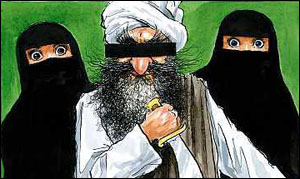
Muslim leaders in Denmark sent letters to Jyallands Posten complaining about the racist cartoons. Not only did the newspaper refuse to apologize, but many of those who sent letters received threats and more racist cartoons via email. Anti-immigrant, and specifically anti-Muslim, sentiments in Denmark have been on the rise for years with right-leaning political parties using immigration as the main issue in the election of February 2005 (with the current government relying on the rabidly anti-immigrant Danish People's Party as a key coalition partner). As Muslims in Denmark complained about racism in the media they were mainly met with anti-immigrant rhetoric in the press arguing that the Muslim population in Denmark was restricting the freedom for a newspaper to print racist cartoons without complaint.
Eleven Arab ambassadors asked for a meeting with Danish prime minister Anders Fogh Rasmussen on October 12th to register their protest, but the government declined. On October 27th, a number of Muslim organizations submitted complaints to the Danish police claiming that Jyllands-Posten had committed an offence under section 140 and 266b of the Danish Criminal Code. Section 140 of the Criminal Code prohibits any person from publicly ridiculing or insulting the dogmas of worship of any lawfully existing religious community in Denmark. Section 266b criminalizes the dissemination of statements or other information by which a group of people are threatened, insulted or degraded on account of their religion. On January 6th 2006, the Regional Public Prosecutor in Viborg discontinued the investigation as he found no basis for concluding that the cartoons constituted a criminal offence.
As the Danish Muslim community felt increasingly isolated and under attack, a group of religious leaders toured the Middle East with a dossier containing the racist cartoons to make the broader Muslim community aware of the plight of Danish Muslims. On January 10th 2006, a small Norwegian Christian magazine, Magazinet, printed the drawings after getting authorization from Jyllands-Posten. While a protest of several thousand people had taken place in Denmark in September, until the end of January 2006, all other protests were formal complaints by religious and government officials. On January 29th, the Danish flag was burned at a protest in the West Bank and Danish NGO workers were threatened in Gaza. On January 31st a German newspaper republished several of the cartoons and as did many papers across Europe on February 1st and 2nd. Most of the newspapers displayed the images with a message that it was the right of newspapers to display such racist images rather than because they related to a breaking news story (a strange assertion when Indymedias have been legally threatened and even shut down in Europe over cartoons). On February 2nd protests continued in Gaza and also took place in Morocco. On February 3rd, protests took place in Jakarta and London. On February 4th, the Danish embassy was set on fire in Damascus and on February 5th the Danish consulate was set on fire in Beirut. On February 5th two protesters were shot to death protesting in Kabul and on February 6th two more demonstrators were shot to death in front of the main US base at Bagram with the death toll reaching 10 worldwide. World Socialist Website writes "It is noteworthy that those who have rallied to the defense of the right-wing anti-immigrant newspaper in Denmark that first published the racist cartoons have had little to say about the violence of repressive governments across the Middle East against their own people registering outrage over the widely disseminated insult to their religion."
Much of the mainstream media (and even networks like Air America) have commented on the riots with statements asking why Muslims would riot over something like this while "we have have learned to discuss religion civilly in the West". Juan Cole has responded by listing some recent religious riots in Europe and Ali Abunimah from Electronic Intifada has pointed out that it has only been a decade since a European genocide against Muslims in Bosnia. In the past five years there have been riots in India where 2000 muslims were killed by Hindu fundamentalists, arson attacks on mosques in Holland, thousands killed by the Russian military in Chechnya, and in the last month riots against Muslims in Australia. Yet, while extreme fundamentalists are constantly pointed to in order to justify European and American racism against Muslims, extremist neo-Nazi, fundamentralist Hindu, Jewish fundamentalist and Christian fundamentalist groups which attack Muslims don't result in a similar level of collective guilt even when the attacks occur during elections where anti-immigration rhetoric takes an overtly racist form.
Islam bashing part of racist war for empire | Danes Finally Apologize to Muslims | Freedom of Speech or Incitement to Violence? A Debate Over the Publication of Cartoons | Death toll mounts in worldwide protests against anti-Muslim cartoons | Questions of Rights vs. Responsibilities | Danish Newspaper At Heart of Controversy Rejected Drawings Lampooning Jesus Christ | Robert Fisk: Now Lebanon is Burning | More outrage over Prophet cartoons | Anti-Islamic Racism In The American Media | Do You Support Religious Intolerance As Long As It's Against Muslims? | Muslims 'R' us, not them | Islamophobia Rears Its Ugly Head | Danish Imams Fume at Cartoon Punishment | Cartoons and Bombs: Was Rice Right for Once? | New York Times columnist David Brooks proposes the ‘good crusade’

Tue Feb 7 2006
Haiti: Election Day and Beyond
2/7/2006: Counting of ballots has started in Haiti after elections marked by stampedes that left four dead ended.. A CID-Gallup poll taken in Haiti last December showed Rene Preval leading with 37%. The political forces that banded together to oust Aristide in February of 2004 have been organizing to contest the expected results.
February 7th will close the book on questions that will never be answered, such as how much a third consecutive peaceful transfer of power from an elected President to an elected successor would have consolidated Haiti’s fragile democracy.
Read More On Indybay's Haiti Page
Read More On Indybay's Haiti Page
Fri Jan 27 2006
"Elections" And Violence In Nepal On Anniversary Of Royal Coup
2/10/2006:
Elections called by Nepal's King Gyanendra to convince his people that he is moving towards democracy have backfired, with a low turnout signalling a rejection of his seizure of power and more protests in the streets. The turnout of voters was only 18 percent in Kathmandu, 12 percent in Pokhara and 36 percent in Biratnagar. The last time polls were held turnout averaged 60% nationwide.
There were nationwide protests February 9th against the killing of Umesh Chandra Thapa, a local leader of the Communist Party of Nepal-CPN. He was shot dead Feb. 8 by the Royal Nepalese Army (RNA) in the eastern city of Dang, while protesting against municipal elections. Thousands of opposition protesters flooded the streets of Nepal's capital as early results showed pro-government candidates sweeping local elections.
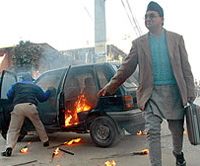
On the heels of the municipal elections, fresh violence erupted with the Maoists ambushing a security convoy and triggering a clash killed at least six people. The insurgents triggered an explosion that set at least three security vehicles ablaze and brought retaliatory fire by security forces.
Meanwhile, Maoist supremo Pushpa Kamal Dahal aka Prachanda made a surprise appearance in Nepal, with the two biggest dailies, Kantipur and its sister publication, the Kathmandu Post, carrying an extensive interview with the underground leader .
“We have an army, we have guns,” Prachanda said. “Let’s sit together with all including the seven parties. Let’s decide together who should be commanders, commissars, chief of the army. Let’s make a national army.” The army, he said, would support a constituent assembly — an electoral college that would write a new constitution for Nepal, turning it into a republic from a constitutional monarchy. “Let’s form a parallel government of the parties and the Maoists,” the rebel supremo said. “We will accept it if the people want an active monarch. If the people say republic, all should accept that.” He said King Gyanendra closed the doors for talks when he seized power by force last year and his motives would be suspect if he called a ceasefire now. “If the ceasefire comes with the intention of defusing the movement, we won’t accept it. We will reciprocate positively if the ceasefire seems to be leading to meaningful dialogue. But we don’t see that possibility.” More
12- Point understanding between parties and Maoists | Nepal News | Latest Posts To Indybay On Nepal
2/2/2006: Street protests continued across Nepal on Thursday even after the previous day’s ‘Black Day’ march by Nepalese citizen on the first anniversary of King Gyanendra’s power seizure was met by force and brutality. Hundreds of activists carried out protest in Nepal’s Rupandehi district, shouting slogans, throwing stones and bricks at riot police before they were caned and chased away. Journalists and activists who have been protesting against curbs on media freedom were detained.
Three dozen journalists were arrested in Nepal Wednesday as they held demonstrations to protest against the curbs imposed on media after King Gyanendra's assumption of absolute power a year ago.
On Thursday January 26th, 2006, police opened fire on a group protesting against King Gyanendra in a resort town in western Nepal. Clashs between police and pro-democracy protesters started on January 20th, with Nepali riot police firing tear gas, using water cannons and beating back demonstrators in baton charges. The Federation of Nepalese Journalists also reports that security forces in Kathmandu manhandled journalists, took them into control, seized communication equipment from them, prohibited their movement and threatened some journalists who were trying to cover the recent conflict.
Nepal's main political parties have announced that they will hold nationwide protests and hoist black flags on February 1st, the day King Gyanendra seized absolute power last year. In Nepal, waving black flags or wearing a black armband or headband is a way of registering protest. The announcement of the "Black Day" followed a one-day general strike called by the seven-party alliance on Thursday that paralysed the nation, shutting down offices and shops along with businesses and schools.
King Gyanendra, as part of a promise to restore democracy, announced municipal polls for February 8th followed by national elections before April 2007. A coalition of the seven top political parties and Maoists rebels oppose thegovernment's plans arguing they will legitimize King Gyanendra's seizure of direct control over the central government. The Municipal polls look set to fail, opposition parties said on Friday. “The number of candidates registering for the polls didn’t even match the total seats available for contesting,” said Pradeep Nepal, spokesman of the Nepal Communist Party .
Nepali Diaspora in United States is preparing a massive rally in Washington DC on January 29th. “The rally is being taken out to send a clear message to King Gyanendra that ignoring the mainstream political parties is not in his best interest,”
Previous Indybay Coverage Of The Crisis In Nepal
There were nationwide protests February 9th against the killing of Umesh Chandra Thapa, a local leader of the Communist Party of Nepal-CPN. He was shot dead Feb. 8 by the Royal Nepalese Army (RNA) in the eastern city of Dang, while protesting against municipal elections. Thousands of opposition protesters flooded the streets of Nepal's capital as early results showed pro-government candidates sweeping local elections.
On the heels of the municipal elections, fresh violence erupted with the Maoists ambushing a security convoy and triggering a clash killed at least six people. The insurgents triggered an explosion that set at least three security vehicles ablaze and brought retaliatory fire by security forces.
Meanwhile, Maoist supremo Pushpa Kamal Dahal aka Prachanda made a surprise appearance in Nepal, with the two biggest dailies, Kantipur and its sister publication, the Kathmandu Post, carrying an extensive interview with the underground leader .
“We have an army, we have guns,” Prachanda said. “Let’s sit together with all including the seven parties. Let’s decide together who should be commanders, commissars, chief of the army. Let’s make a national army.” The army, he said, would support a constituent assembly — an electoral college that would write a new constitution for Nepal, turning it into a republic from a constitutional monarchy. “Let’s form a parallel government of the parties and the Maoists,” the rebel supremo said. “We will accept it if the people want an active monarch. If the people say republic, all should accept that.” He said King Gyanendra closed the doors for talks when he seized power by force last year and his motives would be suspect if he called a ceasefire now. “If the ceasefire comes with the intention of defusing the movement, we won’t accept it. We will reciprocate positively if the ceasefire seems to be leading to meaningful dialogue. But we don’t see that possibility.” More
12- Point understanding between parties and Maoists | Nepal News | Latest Posts To Indybay On Nepal
2/2/2006: Street protests continued across Nepal on Thursday even after the previous day’s ‘Black Day’ march by Nepalese citizen on the first anniversary of King Gyanendra’s power seizure was met by force and brutality. Hundreds of activists carried out protest in Nepal’s Rupandehi district, shouting slogans, throwing stones and bricks at riot police before they were caned and chased away. Journalists and activists who have been protesting against curbs on media freedom were detained.
Three dozen journalists were arrested in Nepal Wednesday as they held demonstrations to protest against the curbs imposed on media after King Gyanendra's assumption of absolute power a year ago.
On Thursday January 26th, 2006, police opened fire on a group protesting against King Gyanendra in a resort town in western Nepal. Clashs between police and pro-democracy protesters started on January 20th, with Nepali riot police firing tear gas, using water cannons and beating back demonstrators in baton charges. The Federation of Nepalese Journalists also reports that security forces in Kathmandu manhandled journalists, took them into control, seized communication equipment from them, prohibited their movement and threatened some journalists who were trying to cover the recent conflict.
Nepal's main political parties have announced that they will hold nationwide protests and hoist black flags on February 1st, the day King Gyanendra seized absolute power last year. In Nepal, waving black flags or wearing a black armband or headband is a way of registering protest. The announcement of the "Black Day" followed a one-day general strike called by the seven-party alliance on Thursday that paralysed the nation, shutting down offices and shops along with businesses and schools.
King Gyanendra, as part of a promise to restore democracy, announced municipal polls for February 8th followed by national elections before April 2007. A coalition of the seven top political parties and Maoists rebels oppose thegovernment's plans arguing they will legitimize King Gyanendra's seizure of direct control over the central government. The Municipal polls look set to fail, opposition parties said on Friday. “The number of candidates registering for the polls didn’t even match the total seats available for contesting,” said Pradeep Nepal, spokesman of the Nepal Communist Party .
Nepali Diaspora in United States is preparing a massive rally in Washington DC on January 29th. “The rally is being taken out to send a clear message to King Gyanendra that ignoring the mainstream political parties is not in his best interest,”
Previous Indybay Coverage Of The Crisis In Nepal
International:
 60
60

60