







 Publish to Newswire
 Add an Event
Feature Archives
Fri Apr 28 2006
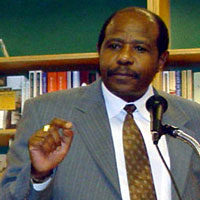
Paul Rusesabagina Speaks on the Genocides in Rwanda and Darfur
Paul Rusesabagina, general manager of the Hotel des Mille Collines during the genocide in Rwanda in 1994, spoke in San Francisco on Friday, April 21, 2006. He helped shelter over 1,200 people from slaughter by using his influence as general manager of the Hotel des Mille Collines in Kigali, Rwanda. Almost a million others were killed in about 100 days. His heroic and resourceful actions inspired the 2004 film "Hotel Rwanda." Paul Rusesabagina spoke and took questions from the public. His talk ranged from his experiences in Rwanda, some of the similarities and differences between what happened in 1994 and depictions of them in the film, the relationship between Tutsis and Hutus in Rwanda then and now; the current genocide in Darfur; the failures of the UN, the United States, and the rest of the world to take action; the state of democracy in a number of African nations; and prospects for the future.
There will be rallies across the nation on Sunday April 30th to demand action from US political leaders to bring pressure on those responsible for the genocide in Darfur to stop the killing. There will be a rally locally in San Francisco. The largest will be held in Washington, DC.



Fri Apr 21 2006
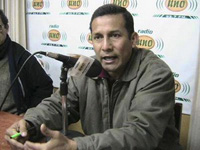
Ollanta Humala Leads Peruvian Election
The leader in the April 9 election for president of Peru was Ollanta Humala, a former army colonel who was backed by leaders Hugo Chávez of Venezuela and Evo Morales of Bolivia. Humala led an unsuccessful coup attempt in 2000 against President Alberto Fujimori, who was later impeached. He is a populist who promises to help the poor, and a nationalist who wants to expropriate businesses that were privatized under the previous regime of Alejandro Toledo. As of April 15, with 88% of the vote counted, second place was still too close to call between former president Alan Garcia and conservative Lourdes Flores. Because no one got over 50%, there will be a runoff between the two top vote-getters in mid-May. A commentator on Indymedia Peru said: "The old practice of corruption which is the fruit of the centralization of power will not be changed by any president, despite how the illustrious orators paint themselves as messiahs to the beat of reggaeton."
Peru Indymedia Commentary (In Spanish) | Election Coverage | Narco News Coverage | People's Weekly World Analysis
Peru Indymedia Commentary (In Spanish) | Election Coverage | Narco News Coverage | People's Weekly World Analysis
Fri Apr 21 2006
Nepal King Agrees to Reinstate Parliament, But Future Is Unclear
4/25/2006:
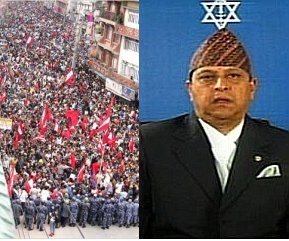
Nepal King Gyanendra made a short televised statement on Monday 4/24 conceding one of the main demands of the seven-party opposition alliance—the immediate recall of parliament, which was dissolved in May 2002.
The announcement came just hours before a huge protest rally planned for Tuesday with demonstrators preparing to encircle the city center. Instead, Nepal's seven-party alliance called off protests and impromptu celebrations broke out almost immediately on the streets of Katmandu. People took to the streets of the capital in their thousands shouting "Long live democracy!" and dancing within a few hundred yards of the King's palace.
Gyanendra made no direct reference to a major opposition demand for the convening of a constituent assembly to rewrite the country’s constitution.
Nepal's Maoist rebels have rejected the king's move, saying that it was a conspiracy to hold on to power and have caled for protests against his rule to continue.
The Maoists said in agreeing the deal with the king, the opposition had betrayed an agreement it made with them in November, which called for fresh elections and an end to an "autocratic monarchy".
"The proclamation is a sham and a conspiracy against the Nepali people," Maoist leader Prachanda said in a statement in the Nepali language. "Our party firmly rejects this."
The Maoist leader also called for a blockade of Kathmandu and other Nepali towns.
Part victory, part protest on Nepal streets | Tariq Ali: This is no rah-rah revolt | NPR Audio | Fall of the mountain king
4/23/2006: The seven-party alliance has decided to try to bring more than two million people along the 27-km long Ring Road on Tuesday April 25th for a massive demonstration in Nepal's capital.
Read More | Nepal's key ministers do a disappearing act | India backs Nepal opposition in blow for king | US orders Nepal staff withdrawal | Maoist rebels storm Nepalese town | Nepal protesters continue to challenge curfew
On April 20th and 21st, tens of thousands of people took to the streets in Nepal's capital for a mass protests, despite a shoot-on-sight curfew. In a desperate attempt to save his throne, the king appeared on television promising to restore democracy and hold elections. "Opposition parties say the king's offer is 'too little, too late.' On the streets, people vowed to continue their rallies. 'Death to the monarchy!'they chanted as they marched. And as they walked, the people of Kathmandu lined the streets to cheer them on. This was a nation on the march. Several police lines fell back before them. Soldiers guarding the airport grinned and gave them signs of support."
Bloody end to Nepal protest | Protests continue after Nepal's opposition rejects king's offer | Protesters killed as Nepal police shoot at crowd | Nepal and Venezuela | Children Among Victims of Police Attacks | 'Shoot-to-kill' curfew in Nepal | Human rights organisations call for targeted sanctions | Democracy Now Report | Widespread protests erupt | Nepalis Say, "Ya Basta!"
Earlier Indybay Coverage Of Unrest In Nepal:
"Elections" And Violence In Nepal On Anniversary Of Royal Coup
Nepalese King Sacks And Arrests Government, Cuts Phone Service And Rounds Up Human Rights Activists
Part victory, part protest on Nepal streets | Tariq Ali: This is no rah-rah revolt | NPR Audio | Fall of the mountain king
4/23/2006: The seven-party alliance has decided to try to bring more than two million people along the 27-km long Ring Road on Tuesday April 25th for a massive demonstration in Nepal's capital.
Read More | Nepal's key ministers do a disappearing act | India backs Nepal opposition in blow for king | US orders Nepal staff withdrawal | Maoist rebels storm Nepalese town | Nepal protesters continue to challenge curfew
On April 20th and 21st, tens of thousands of people took to the streets in Nepal's capital for a mass protests, despite a shoot-on-sight curfew. In a desperate attempt to save his throne, the king appeared on television promising to restore democracy and hold elections. "Opposition parties say the king's offer is 'too little, too late.' On the streets, people vowed to continue their rallies. 'Death to the monarchy!'they chanted as they marched. And as they walked, the people of Kathmandu lined the streets to cheer them on. This was a nation on the march. Several police lines fell back before them. Soldiers guarding the airport grinned and gave them signs of support."
Bloody end to Nepal protest | Protests continue after Nepal's opposition rejects king's offer | Protesters killed as Nepal police shoot at crowd | Nepal and Venezuela | Children Among Victims of Police Attacks | 'Shoot-to-kill' curfew in Nepal | Human rights organisations call for targeted sanctions | Democracy Now Report | Widespread protests erupt | Nepalis Say, "Ya Basta!"
Earlier Indybay Coverage Of Unrest In Nepal:
"Elections" And Violence In Nepal On Anniversary Of Royal Coup
Nepalese King Sacks And Arrests Government, Cuts Phone Service And Rounds Up Human Rights Activists
Thu Apr 13 2006
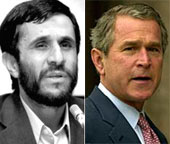
US Threatens Iran As Iraq War Threatens To Spread
In the latest issue of the New Yorker, Seymour Hersh reports that the Bush administration has increased
clandestine activities inside Iran and intensified planning for a possible major air attack. Sources told Hersh that Air
Force planning groups are drawing up lists of targets, and teams of American combat troops have
been ordered into Iran, under cover, to collect targeting data and to establish contact with
anti-government ethnic-minority groups.One of the military's initial option plans calls for the
use of a bunker-buster tactical nuclear weapon against
suspected underground nuclear sites.
Retired Air Force Colonel Sam Gardiner says a military operation has already begun inside Iran. Gardiner says, "It's a very serious question about the constitutional framework under which we are now conducting military operations in Iran."
Listen To Interview With Hersh On Democracy Now | So how close is a showdown over Iran? | US threats against Iran—the specter of nuclear barbarism | Risking the Ultimate Blowback: Don't Blitz Iran | Another 9/11 to legitimize attack on Iran? | Britain took part in mock Iran invasion
Meanwhile on April 11th, Iran's President Mahmoud Ahmadinejad announced that the country had succeeded for the first time in enriching uranium on a small scale. Juan Cole writes:
Despite all the sloppy and inaccurate headlines about Iran "going nuclear," the fact is that all President Mahmoud Ahmadinejad said on Tuesday was that it had enriched uranium to a measely 3.5 percent, using a bank of 180 centrifuges hooked up so that they "cascade."
The ability to slightly enrich uranium is not the same as the ability to build a bomb. For the latter, you need at least 80% enrichment, which in turn would require about 16,000 small centrifuges hooked up to cascade. Iran does not have 16,000 centrifuges. It seems to have 180. Iran is a good ten years away from having a bomb...
The crisis is not one of nuclear enrichment, a low-level attainment that does not necessarily lead to having a bomb.... What is really going on here is a ratcheting war of rhetoric. The Iranian hard liners are down to a popularity rating in Iran of about 15%. They are using their challenge to the Bush administration over their perfectly legal civilian nuclear energy research program as a way of enhancing their nationalist credentials in Iran.
No plan B - so could the US ever learn to live with Iran in the nuclear club? | Inside the real Iran | Iran Rejects Calls for Halt to Nuclear Enrichment | Iran rejects UN ultimatum | UN Issues Ultimatum, Iran Offers "Regional Consortium" | UN Security Council bows to US pressure for a statement against Iran
In January, Muqtada al-Sadr pledged the support of his militia, the Mahdi Army, to Iran in case that country were attacked by the United States. Juan Cole writes: "SCIRI's Badr Corps militia, it was alleged by Newsweek, is still on the Iranian payroll. Any attack by the US or Israel on Iran's nuclear energy facilities would certainly bring massive crowds into the streets in protest in neihboring Iraq. The resulting violence and the attacks on US troops are not important demographically, but they could cost the Republican Party its majority in Congress, if the American public becomes alarmed that the US is losing (even more) control."
Unexpected gifts: Iran's regional influence has never been stronger | The demonisation of Shia is on the rise | Chinese or Russian Nukes in Iran? | Venezuela, Iran Vs. U.S. | Die of anger, defiant Iran tells the West
Listen To Interview With Hersh On Democracy Now | So how close is a showdown over Iran? | US threats against Iran—the specter of nuclear barbarism | Risking the Ultimate Blowback: Don't Blitz Iran | Another 9/11 to legitimize attack on Iran? | Britain took part in mock Iran invasion
Meanwhile on April 11th, Iran's President Mahmoud Ahmadinejad announced that the country had succeeded for the first time in enriching uranium on a small scale. Juan Cole writes:
Despite all the sloppy and inaccurate headlines about Iran "going nuclear," the fact is that all President Mahmoud Ahmadinejad said on Tuesday was that it had enriched uranium to a measely 3.5 percent, using a bank of 180 centrifuges hooked up so that they "cascade."
The ability to slightly enrich uranium is not the same as the ability to build a bomb. For the latter, you need at least 80% enrichment, which in turn would require about 16,000 small centrifuges hooked up to cascade. Iran does not have 16,000 centrifuges. It seems to have 180. Iran is a good ten years away from having a bomb...
The crisis is not one of nuclear enrichment, a low-level attainment that does not necessarily lead to having a bomb.... What is really going on here is a ratcheting war of rhetoric. The Iranian hard liners are down to a popularity rating in Iran of about 15%. They are using their challenge to the Bush administration over their perfectly legal civilian nuclear energy research program as a way of enhancing their nationalist credentials in Iran.
No plan B - so could the US ever learn to live with Iran in the nuclear club? | Inside the real Iran | Iran Rejects Calls for Halt to Nuclear Enrichment | Iran rejects UN ultimatum | UN Issues Ultimatum, Iran Offers "Regional Consortium" | UN Security Council bows to US pressure for a statement against Iran
In January, Muqtada al-Sadr pledged the support of his militia, the Mahdi Army, to Iran in case that country were attacked by the United States. Juan Cole writes: "SCIRI's Badr Corps militia, it was alleged by Newsweek, is still on the Iranian payroll. Any attack by the US or Israel on Iran's nuclear energy facilities would certainly bring massive crowds into the streets in protest in neihboring Iraq. The resulting violence and the attacks on US troops are not important demographically, but they could cost the Republican Party its majority in Congress, if the American public becomes alarmed that the US is losing (even more) control."
Unexpected gifts: Iran's regional influence has never been stronger | The demonisation of Shia is on the rise | Chinese or Russian Nukes in Iran? | Venezuela, Iran Vs. U.S. | Die of anger, defiant Iran tells the West

On March 16th 2006,
the University of California's Board of Regents voted to divest from companies tied to the government of Sudan.
On April 30th, the San Francisco Bay Area Darfur Coalition sponsored a silent vigil for Sudan on the Golden Gate Bridge, followed by a rally in Presidio Park.
 Photos: 1 | 2
|
3
|
4
|
Stanford STAND
|
Bay Area Darfur Coalition
|
Campus Divestment Campaign Targets Sudan
|
A strategy for divestment from Sudan
Photos: 1 | 2
|
3
|
4
|
Stanford STAND
|
Bay Area Darfur Coalition
|
Campus Divestment Campaign Targets Sudan
|
A strategy for divestment from Sudan
Five members of Congress, including Rep. Tom Lantos (D-San Mateo) were arrested on April 28th for engaging in civil disobedience in front of the Embassy of Sudan in Washington, DC. On March 16th, tens of thousands gathered for a demonstration in D.C. against the ongoing genocide in Sudan. At the last minute, organizers had to scramble to find someone who was either Sudanese or Muslim to speak at the rally when Sudanese immigrants realized that the announced speakers included no Muslims and no one from Darfur The Council on American Islamic Relations (CAIR) and other American Muslim groups, including the Islamic Society of North America, the Islamic Circle of North America, the Muslim Public Affairs Council, and the Muslim American Society Freedom Foundation, are members of the coalition. But no representative from these, or any Muslim coalition member, was allowed to speak. There were also very few African Americans who attended the rallies. While everyone aknowledges that attrocities are being comitted, some fear the US is pressing for a war with Sudan for purely economic reasons. Others fear that the right-wing interest in Sudan may be driven by a desire to demonize Arabs and Muslims, even though both the victims and perpetrators of attrocities in Sudan are frequently of the same religion and ethnic background.
Join Our H.O.P.E. for Darfur Campaign | Million Voices for Darfur Campaign | Africa Speaks
History Of The Conflict:
The conflict in Darfur began in February 2003 when JEM and SLM/SLA rebels attacked government forces and installations, accusing Sudan of oppressing non-Arabs in favor of Arabs. The government's response was aerial bombardment supporting ground attacks by a local tribal militia, the Janjaweed. Most observers believe that the Janjaweed are armed by the government of Sudan, but the government denies this. A long-running political battle between Sudanese President Omar Hassan Bashir and radical Islamic cleric (and former protector of Osama bin Laden) Hassan al-Turabi may have been one of the root causes of the conflict." Al-Turabi and Bashir are political rivals. Al-Turabi, though sequestered in his villa, has actively stimulated anti-government uprisings and is thought to have been one of the major backers of the JEM.
In 2004, Chad brokered negotiations, leading to the April 8 Humanitarian Ceasefire Agreement between the Sudanese government and the JEM and SLM. On November 9, 2004, the Sudanese government and the rebels signed two new accords; the first accord established a no-fly zone over rebel-controlled areas and the second granted international humanitarian aid agencies unrestricted access to the Darfur region. Despite the November 9 accords, violence in Sudan continued. In 2005, peace again looked close when on July 10th, SPLA founder John Garang was sworn in as Sudan's vice-president, but less than a month later Garang died in a helicopter crash. (The SPLA was the major rebel group in Sudan demanding democracy and an end to oppression but was not one of the groups fighting the Janjaweed)
On April 30th, 2006, the Sudanese government officially notified the African Union of accepting its proposed Darfur peace deal; part of the deal includes the disarming of the Janjaweed but it's not clear if this new agreement will have any more impact than previous ones and it has already been rejected by the rebels.
Wikipedia History | Pressure grows for Darfur peace | US Steps up Pressure on Khartoum Over Darfur | Main Darfur rebels accept deal | Darfur Peace in Jeopardy Over Rebels Split | Interpreter dies in Darfur camp protest | One-sided reporting that is delaying an end to the killing | Darfur: Inside the Crisis
Genocide And Humanitarian Crisis:
While the conflict has a political basis, and almost everyone on both sides have dark skin and are Muslims, it has also acquired ethnic and economic dimensions. Civilians are deliberately targeted on the basis of their ethnicity and much of the violence is also related to the competition between pastoralists (generally Arabic speaking) and farmers (non-Arabic speaking) for land and water. Both sides have been accused of committing serious human rights violations, including mass killing, looting, and rapes of the civilian population. However, the better-armed Janjaweed clearly have the upper hand. The conflict has been described as "ethnic cleansing" and "genocide." More than 1.8 million people had been displaced from their homes., and a recent British Parliamentary Report ( pdf ) estimates that over 300,000
people have died as a result of the conflict.
pdf ) estimates that over 300,000
people have died as a result of the conflict.
On April 28th 2006, it was announced that the UN is cutting in half its daily rations in Sudan's Darfur region due to a severe funding shortfall. More than 6.1 million people across Sudan require food aid - more than any other country in the world.
Experts Discuss the Sudan Crisis | There is hope in Darfur | Clooney urges action as Sudanese aircraft attack villages in Darfur | UN Sounds Alarm Over Malnutrition in Darfur | U.N.: Darfur Needs Strong Protection Force | BBC: Darfur crisis is 'as bad as ever' | Stunning photographs show the horror of genocide in Darfur | Rwandan nightmare is relived in Sudan | Democracy Now: Darfur Refugee and Top UN Envoy Discuss Crisis in Sudan | Sudan Government Pays Close to $1 Million for New York Times Supplement | Bankrupt peacekeeping mission leaves Darfur civilians exposed | Blood, Ink, and Oil: the Case of Darfur | DAFUR: the open sore of a continent
Regional Implications:
Since 2004, Janjaweed militants involved in the Darfur conflict have been attacking villages and towns in eastern Chad. Several rebel groups have emerged in the Chad-Sudan border region; the groups claim to be fighting against the corrupt and totalitarian government of Chad, but Chad claims they are linked to the government of Sudan. On December 18th, 2005, rebels attacked Chadian troops in the town of Adré, near the Sudanese border. Chad responded by declaring a 'state of belligerency' with Sudan. On January 6, 2006, Janjaweed militants crossed the border from Sudan into Chad and attacked the cities of Borota, Ade, and Moudaina.
On April 13th, 2006, rebels fought there way into N'Djamena, the capital of Chad. Accusing Sudan of backing a failed rebel assault on his capital, Chad's President Idriss Déby broke diplomatic ties with Khartoum, and warned the international community that 200,000 Darfur refugees would soon have to leave the country. UN Special Representative to Sudan, Jan Pronk issued a warning stating that Chad should "abide by its international obligations to secure the full protection and well-being of all refugees on its territories... Forcing refugees, who are the victims of previous conflicts, to flee again in the course of the current conflict, which is not of their making, would result in great additional suffering for them". Chad appears to have backed down from its initial threat, but the situation in Chad is still unstable.
Wikipedia: Chadian-Sudanese conflict | Chaos and killing spread to Sudan's neighbours | Chad threatens to halt oil export | Darfur: New Attacks in Chad Documented | Wikipedia: Battle of N'Djamena | Egypt massacres Sudanese demonstrators in Cairo
SaveDarfur.org | Wikipedia: Darfur conflict | Operation Sudan | The Crisis in Darfur | Darfur Information Center | CBC: Crisis Zone: Darfur, Sudan
Photos: 1 | 2
|
3
|
4
|
Stanford STAND
|
Bay Area Darfur Coalition
|
Campus Divestment Campaign Targets Sudan
|
A strategy for divestment from Sudan
Five members of Congress, including Rep. Tom Lantos (D-San Mateo) were arrested on April 28th for engaging in civil disobedience in front of the Embassy of Sudan in Washington, DC. On March 16th, tens of thousands gathered for a demonstration in D.C. against the ongoing genocide in Sudan. At the last minute, organizers had to scramble to find someone who was either Sudanese or Muslim to speak at the rally when Sudanese immigrants realized that the announced speakers included no Muslims and no one from Darfur The Council on American Islamic Relations (CAIR) and other American Muslim groups, including the Islamic Society of North America, the Islamic Circle of North America, the Muslim Public Affairs Council, and the Muslim American Society Freedom Foundation, are members of the coalition. But no representative from these, or any Muslim coalition member, was allowed to speak. There were also very few African Americans who attended the rallies. While everyone aknowledges that attrocities are being comitted, some fear the US is pressing for a war with Sudan for purely economic reasons. Others fear that the right-wing interest in Sudan may be driven by a desire to demonize Arabs and Muslims, even though both the victims and perpetrators of attrocities in Sudan are frequently of the same religion and ethnic background.
Join Our H.O.P.E. for Darfur Campaign | Million Voices for Darfur Campaign | Africa Speaks
History Of The Conflict:
The conflict in Darfur began in February 2003 when JEM and SLM/SLA rebels attacked government forces and installations, accusing Sudan of oppressing non-Arabs in favor of Arabs. The government's response was aerial bombardment supporting ground attacks by a local tribal militia, the Janjaweed. Most observers believe that the Janjaweed are armed by the government of Sudan, but the government denies this. A long-running political battle between Sudanese President Omar Hassan Bashir and radical Islamic cleric (and former protector of Osama bin Laden) Hassan al-Turabi may have been one of the root causes of the conflict." Al-Turabi and Bashir are political rivals. Al-Turabi, though sequestered in his villa, has actively stimulated anti-government uprisings and is thought to have been one of the major backers of the JEM.
In 2004, Chad brokered negotiations, leading to the April 8 Humanitarian Ceasefire Agreement between the Sudanese government and the JEM and SLM. On November 9, 2004, the Sudanese government and the rebels signed two new accords; the first accord established a no-fly zone over rebel-controlled areas and the second granted international humanitarian aid agencies unrestricted access to the Darfur region. Despite the November 9 accords, violence in Sudan continued. In 2005, peace again looked close when on July 10th, SPLA founder John Garang was sworn in as Sudan's vice-president, but less than a month later Garang died in a helicopter crash. (The SPLA was the major rebel group in Sudan demanding democracy and an end to oppression but was not one of the groups fighting the Janjaweed)
On April 30th, 2006, the Sudanese government officially notified the African Union of accepting its proposed Darfur peace deal; part of the deal includes the disarming of the Janjaweed but it's not clear if this new agreement will have any more impact than previous ones and it has already been rejected by the rebels.
Wikipedia History | Pressure grows for Darfur peace | US Steps up Pressure on Khartoum Over Darfur | Main Darfur rebels accept deal | Darfur Peace in Jeopardy Over Rebels Split | Interpreter dies in Darfur camp protest | One-sided reporting that is delaying an end to the killing | Darfur: Inside the Crisis
Genocide And Humanitarian Crisis:
While the conflict has a political basis, and almost everyone on both sides have dark skin and are Muslims, it has also acquired ethnic and economic dimensions. Civilians are deliberately targeted on the basis of their ethnicity and much of the violence is also related to the competition between pastoralists (generally Arabic speaking) and farmers (non-Arabic speaking) for land and water. Both sides have been accused of committing serious human rights violations, including mass killing, looting, and rapes of the civilian population. However, the better-armed Janjaweed clearly have the upper hand. The conflict has been described as "ethnic cleansing" and "genocide." More than 1.8 million people had been displaced from their homes., and a recent British Parliamentary Report (
pdf ) estimates that over 300,000
people have died as a result of the conflict.
On April 28th 2006, it was announced that the UN is cutting in half its daily rations in Sudan's Darfur region due to a severe funding shortfall. More than 6.1 million people across Sudan require food aid - more than any other country in the world.
Experts Discuss the Sudan Crisis | There is hope in Darfur | Clooney urges action as Sudanese aircraft attack villages in Darfur | UN Sounds Alarm Over Malnutrition in Darfur | U.N.: Darfur Needs Strong Protection Force | BBC: Darfur crisis is 'as bad as ever' | Stunning photographs show the horror of genocide in Darfur | Rwandan nightmare is relived in Sudan | Democracy Now: Darfur Refugee and Top UN Envoy Discuss Crisis in Sudan | Sudan Government Pays Close to $1 Million for New York Times Supplement | Bankrupt peacekeeping mission leaves Darfur civilians exposed | Blood, Ink, and Oil: the Case of Darfur | DAFUR: the open sore of a continent
Regional Implications:
Since 2004, Janjaweed militants involved in the Darfur conflict have been attacking villages and towns in eastern Chad. Several rebel groups have emerged in the Chad-Sudan border region; the groups claim to be fighting against the corrupt and totalitarian government of Chad, but Chad claims they are linked to the government of Sudan. On December 18th, 2005, rebels attacked Chadian troops in the town of Adré, near the Sudanese border. Chad responded by declaring a 'state of belligerency' with Sudan. On January 6, 2006, Janjaweed militants crossed the border from Sudan into Chad and attacked the cities of Borota, Ade, and Moudaina.
On April 13th, 2006, rebels fought there way into N'Djamena, the capital of Chad. Accusing Sudan of backing a failed rebel assault on his capital, Chad's President Idriss Déby broke diplomatic ties with Khartoum, and warned the international community that 200,000 Darfur refugees would soon have to leave the country. UN Special Representative to Sudan, Jan Pronk issued a warning stating that Chad should "abide by its international obligations to secure the full protection and well-being of all refugees on its territories... Forcing refugees, who are the victims of previous conflicts, to flee again in the course of the current conflict, which is not of their making, would result in great additional suffering for them". Chad appears to have backed down from its initial threat, but the situation in Chad is still unstable.
Wikipedia: Chadian-Sudanese conflict | Chaos and killing spread to Sudan's neighbours | Chad threatens to halt oil export | Darfur: New Attacks in Chad Documented | Wikipedia: Battle of N'Djamena | Egypt massacres Sudanese demonstrators in Cairo
SaveDarfur.org | Wikipedia: Darfur conflict | Operation Sudan | The Crisis in Darfur | Darfur Information Center | CBC: Crisis Zone: Darfur, Sudan


On March 14th, Israeli troops raided a prison in Jericho in the West Bank in an effort to arrest or assassinate Ahmed Sa'adat, Secretary General of the Popular Front for the Liberation of Palestine (PFLP), and a number of other prisoners.
From The Egyptian Newspaper Al-Ahram Weekly:
Saadat's capture concluded an extraordinarily violent day, even by the standards of the Israeli-Palestinian conflict. It had begun soon after dawn when British security officials monitoring the prison abandoned their post. Within 20 minutes Israeli army soldiers, tanks, bulldozers and helicopters had encircled the compound. For the next 10 hours they shot, strafed, pounded and bulldozed the prison in a graduated assault intended to extract Saadat and his co-detainees. Two Palestinian police officers and a prisoner were killed: 18 Palestinians were injured. Speaking to Al-Jazeera television by mobile phone, Saadat said he was "ready to meet [his] destiny". At around 6.30pm a Palestinian Authority Brigade commander mediating between him and the army told him what it was. Fifteen minutes later Saadat surrendered.
PA President Mahmoud Abbas -- then in Europe prevailing on EU countries to maintain aid to the PA -- slammed the British monitors' abandonment as a gross violation of the agreement made between them, the PA, the US and Israel in May 2002. This had been a basic trade in which Saadat and the five other prisoners would be detained in a Palestinian jail under British and American supervision in return for their and Yasser Arafat's release from an Israeli siege in Ramallah.
Amnesty Holds Israel Responsible for Prisoners Safety | Israel's attack on Jericho: Palestinians remain without protection | PFLP Statement re the Jericho Prison assault | ISM: testimony from the Jericho prison attack
As news leaked out of Israel's actions and the US and British cooperation in the action, the British Council offices in Gaza were set on fire and several Western aid workers were briefly taken hostage. The Organization of the Islamic Conference (OIC) also heaped blame on the US and Britain, warning this would escalate "violence and extremism" throughout the world. "The governments of Britain and the United States bear direct and serious responsibility for what happened in the prison and escalating what took place later," the OIC said in a statement cited by Reuters.
Palestinians went on strike across the Gaza Strip and the West Bank on Wednesday but in Israel sentiments were very different; images of Palestinian police and prisoners being paraded in their underwear after their surrender resulted in a major boost to the ruling Kadima party, which is up for election on March 28th. Rifat Odeh Kassis writes for The Electronic Intifada, "Palestinians know from experience that before every election Israel becomes more brutal", but another reason for the raid was to send Hamas the message that "they will not be accepted and the agreements between Israel and the previous PA are no longer valid".
While the British government is facing possible legal action over its decision to withdraw monitors from the Jericho prison, Abbas has also taken some of the blame. Fatah officials have asked the Palestinian president to resign, dissolve the Palestinian Authority and return responsibility for the occupied territories to Israel in protest against Tel Aviv's actions.
Democracy Now: Israeli Raid on Palestinian Prison Ignites Crisis in Occupied Territories | Israeli attack on Jericho jail sparks uprising in Gaza and West Bank | Britain and US complicit in Jericho raid, says Abbas | Abbas rushes home after jail raid
From The Egyptian Newspaper Al-Ahram Weekly:
Saadat's capture concluded an extraordinarily violent day, even by the standards of the Israeli-Palestinian conflict. It had begun soon after dawn when British security officials monitoring the prison abandoned their post. Within 20 minutes Israeli army soldiers, tanks, bulldozers and helicopters had encircled the compound. For the next 10 hours they shot, strafed, pounded and bulldozed the prison in a graduated assault intended to extract Saadat and his co-detainees. Two Palestinian police officers and a prisoner were killed: 18 Palestinians were injured. Speaking to Al-Jazeera television by mobile phone, Saadat said he was "ready to meet [his] destiny". At around 6.30pm a Palestinian Authority Brigade commander mediating between him and the army told him what it was. Fifteen minutes later Saadat surrendered.
PA President Mahmoud Abbas -- then in Europe prevailing on EU countries to maintain aid to the PA -- slammed the British monitors' abandonment as a gross violation of the agreement made between them, the PA, the US and Israel in May 2002. This had been a basic trade in which Saadat and the five other prisoners would be detained in a Palestinian jail under British and American supervision in return for their and Yasser Arafat's release from an Israeli siege in Ramallah.
Amnesty Holds Israel Responsible for Prisoners Safety | Israel's attack on Jericho: Palestinians remain without protection | PFLP Statement re the Jericho Prison assault | ISM: testimony from the Jericho prison attack
As news leaked out of Israel's actions and the US and British cooperation in the action, the British Council offices in Gaza were set on fire and several Western aid workers were briefly taken hostage. The Organization of the Islamic Conference (OIC) also heaped blame on the US and Britain, warning this would escalate "violence and extremism" throughout the world. "The governments of Britain and the United States bear direct and serious responsibility for what happened in the prison and escalating what took place later," the OIC said in a statement cited by Reuters.
Palestinians went on strike across the Gaza Strip and the West Bank on Wednesday but in Israel sentiments were very different; images of Palestinian police and prisoners being paraded in their underwear after their surrender resulted in a major boost to the ruling Kadima party, which is up for election on March 28th. Rifat Odeh Kassis writes for The Electronic Intifada, "Palestinians know from experience that before every election Israel becomes more brutal", but another reason for the raid was to send Hamas the message that "they will not be accepted and the agreements between Israel and the previous PA are no longer valid".
While the British government is facing possible legal action over its decision to withdraw monitors from the Jericho prison, Abbas has also taken some of the blame. Fatah officials have asked the Palestinian president to resign, dissolve the Palestinian Authority and return responsibility for the occupied territories to Israel in protest against Tel Aviv's actions.
Democracy Now: Israeli Raid on Palestinian Prison Ignites Crisis in Occupied Territories | Israeli attack on Jericho jail sparks uprising in Gaza and West Bank | Britain and US complicit in Jericho raid, says Abbas | Abbas rushes home after jail raid
Fri Mar 17 2006
American Peacemaker's Body Found in Iraq
A dead body found in Iraq has been identified as that of missing US hostage Tom Fox, the US State Department has said. Fox, who had been an activist with the Christian Peacemaker Teams, was abducted along with three colleagues in late 2005. A video of British citizen Norman Kember and Canadians James Loney and Harmeet Singh Sooden was shown on Al-Jazeera last week, with a superimposed date of February 28th. Although the three hostages were alive in the video, their current condition is not known. Tom Fox was 54 years old. Before his abduction, he had been blogging about his experiences in Iraq.
"Waiting in the Light," Tom Fox's blog | Free the Captives website
CPT's statement about the death of Tom Fox | Why are we here? was Tom Fox's last Iraq Diary entry | 12/12 story about the abductees | Palestine demonstrations in solidarity with the CPT four: 1 | 2 | Article questioning Iraqi death squads | UFPJ's appeal to save the CPT Four | Electronic Intifada's coverage
"Waiting in the Light," Tom Fox's blog | Free the Captives website
CPT's statement about the death of Tom Fox | Why are we here? was Tom Fox's last Iraq Diary entry | 12/12 story about the abductees | Palestine demonstrations in solidarity with the CPT four: 1 | 2 | Article questioning Iraqi death squads | UFPJ's appeal to save the CPT Four | Electronic Intifada's coverage
International:
 59
59

59