







 Publish to Newswire
 Add an Event
Feature Archives
Sat Dec 27 2003
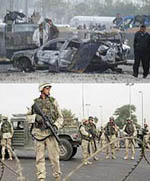
A Bloody Day in Iraq
Iraq 12/27/03: One of the biggest rebel attacks occurred today, injuring at least 172 mostly civilians, and killing 13 people. The occupation gets messier by the day as Iraqi homes continue to be searched by U.S. soldiers, thousands of civilians are in detention centers, entire neighborhoods are sealed off with barbed wire, and bombs rock Baghdad continuously. Civilian casualties are mounting as the U.S. claims it is going after insurgents that are continuing to kill U.S. troops.When the U.S. invaded Iraq amid protests worldwide and disregarding the popular dissent from US citizens, we must wonder how long the occupation will continue and what will be the consequences.
Activist Dispatch From Iraq | DASW Assembly | Electronic Iraq | Baghdad Blogger | Occupation Watch | Wildfire Iraq Updates
Activist Dispatch From Iraq | DASW Assembly | Electronic Iraq | Baghdad Blogger | Occupation Watch | Wildfire Iraq Updates
Sat Apr 10 2004
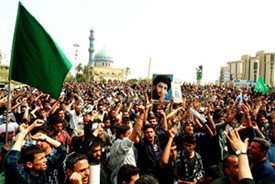
Iraqi Intifada: Shia and Sunni Unite
4/9/2004:
The first major uprising against the US occupation of Iraq has begun. The revolt was sparked by the closure of a paper tied to Al-Sadr, a Shiite fundamentalist cleric, but it has now spread across Iraq.
"Al-Sadr
is NOT reflecting a minority of Iraqis ... Al-Sadr has 5 to 7 million supporters.
[P]eople feel that their personality, history and culture are being attacked. Everyone is defensive now...All of these military steps that Bremer is taking now remind Iraqis of the Palestinian crisis... And the thing happening in Iraq right now, killing hundreds of Iraqis and dozens of coalition soldiers, is NOT just another mob. It is an uprising."
-Raed in the Middle
Photos & Reports from Andrew Stern/Naomi Klein: 1 | 2
David Martinez Back In Iraq - Dispatch 1 and 2
Democracy Now Reports: 1 | 2 | KCSB Interview with James Longley
Report from Dahr Jamail
On Sunday March 28th, US troops shut down the Southern Baghdad offices of the newspaper al-Hawza. The closure resulted from a direct order of CPA head Paul Bremer. Al-Hawza was owned by popular Shi'ite cleric Muqtada Al-Sadr. Iraqi anger at the US attack on Al-Sadr was immediate, and protests continued all week with crowds Friday April 2nd estimated at 20,000. On Saturday, massive crowds of Al-Sadr's supporters again marched through the streets of Bagdad and were met by US tanks which ran over and killed at least two protesters.
On Sunday April 4th, Shia protesters marched on a coalition base near Najaf. Spanish-led troops and Iraqi police fired on the protesters and clashed with armed members of Sadr's Mehdi Army militia leaving at least 25 people dead and more than 100 wounded. Later in the day in the Sadr City section of Baghdad, an ambush on US troops by Al-Sadr's supporters resulted in 7 American troops dead . By days end, there had been riots and bloodshed in cities all over southern Iraq including Amara, Basra, and Nassiriya.
On Monday April 5th, the US threatened to arrest Al-Sadr who had taken over Kufa with his supporters. The US threat to arrest the son of one of Iraq's most prominent Shi'ite clerics, was met by outrage from people across Iraq and protests spread. Even the Grand Ayatollah Sistani, who was believed to not be on speaking terms with Al-Sadr, issued a statement condemning the US attacks on the Shi'ite community.
In the US, Democrats and Republicans responded to the Iraqi uprising by calling for more troops and a delayed "handover" of power to the governing council, stating that a US pullout could spark a civil war. But there were few signs of splits among Iraqis as even many police and Sunni fundamentalists joined the Shia uprising in a show of unity. Only the US backed governing council refused to denounce the deaths of dozens of Iraqi civilians at US hands.
On Tuesday April 6th, Iraqis attacked a US Marine position near the governor's palace in Ramadi killing a dozen US troops. In Diwaniya Spanish soldiers were forced out of town as Iraqis loyal to al-Sadr seized buildings. In Nasiriya, Italian and Bulgarian soldiers fought for much of the day and Polish soldiers hid in their base south of Baghdad as angry Iraqis surrounded them. In Basra, Al-Sadr's militia occupied the governor's office and briefly drove British forces away. Al-Sadr himself moved to the holy city of Najaf and now controls much of the city.
Over one hundred Iraqis were killed and hundreds more wounded just in the fighting Monday and Tuesday alone. Saturday April 10 at Noon -- Emergency Protest - U.S. Out Of Iraq!
On Wednesday April 7th, the US closed off Fallujah in attempt to round up those responsible for the killing and mutilation of 4 US contractors on March 30th. By weeks end, hundreds of Iraqi civilians were dead, with new battles breaking out every day in cities across the country.
Shi'ite and Sunni militias appear to be joining forces.
On Friday April 9th, 200,000 Iraqis, many of them Shias, gathered near Baghdad's largest Sunni mosque to oppose the US occupation; "For the first time Iraqis have both Shia and Sunni speeches at the same mosque." Millions of pilgrims are expected to gather in the city of Karbala this weekend to mark the Shi'ite holy day of al-Arbaeen. As battles continue to rage across Southern and Central Iraq, a strike has been called for Saturday, Sunday and Monday.
Photos & Reports from Andrew Stern/Naomi Klein: 1 | 2
David Martinez Back In Iraq - Dispatch 1 and 2
Democracy Now Reports: 1 | 2 | KCSB Interview with James Longley
Report from Dahr Jamail
On Sunday March 28th, US troops shut down the Southern Baghdad offices of the newspaper al-Hawza. The closure resulted from a direct order of CPA head Paul Bremer. Al-Hawza was owned by popular Shi'ite cleric Muqtada Al-Sadr. Iraqi anger at the US attack on Al-Sadr was immediate, and protests continued all week with crowds Friday April 2nd estimated at 20,000. On Saturday, massive crowds of Al-Sadr's supporters again marched through the streets of Bagdad and were met by US tanks which ran over and killed at least two protesters.
On Sunday April 4th, Shia protesters marched on a coalition base near Najaf. Spanish-led troops and Iraqi police fired on the protesters and clashed with armed members of Sadr's Mehdi Army militia leaving at least 25 people dead and more than 100 wounded. Later in the day in the Sadr City section of Baghdad, an ambush on US troops by Al-Sadr's supporters resulted in 7 American troops dead . By days end, there had been riots and bloodshed in cities all over southern Iraq including Amara, Basra, and Nassiriya.
On Monday April 5th, the US threatened to arrest Al-Sadr who had taken over Kufa with his supporters. The US threat to arrest the son of one of Iraq's most prominent Shi'ite clerics, was met by outrage from people across Iraq and protests spread. Even the Grand Ayatollah Sistani, who was believed to not be on speaking terms with Al-Sadr, issued a statement condemning the US attacks on the Shi'ite community.
In the US, Democrats and Republicans responded to the Iraqi uprising by calling for more troops and a delayed "handover" of power to the governing council, stating that a US pullout could spark a civil war. But there were few signs of splits among Iraqis as even many police and Sunni fundamentalists joined the Shia uprising in a show of unity. Only the US backed governing council refused to denounce the deaths of dozens of Iraqi civilians at US hands.

On Tuesday April 6th, Iraqis attacked a US Marine position near the governor's palace in Ramadi killing a dozen US troops. In Diwaniya Spanish soldiers were forced out of town as Iraqis loyal to al-Sadr seized buildings. In Nasiriya, Italian and Bulgarian soldiers fought for much of the day and Polish soldiers hid in their base south of Baghdad as angry Iraqis surrounded them. In Basra, Al-Sadr's militia occupied the governor's office and briefly drove British forces away. Al-Sadr himself moved to the holy city of Najaf and now controls much of the city.
Over one hundred Iraqis were killed and hundreds more wounded just in the fighting Monday and Tuesday alone. Saturday April 10 at Noon -- Emergency Protest - U.S. Out Of Iraq!
On Wednesday April 7th, the US closed off Fallujah in attempt to round up those responsible for the killing and mutilation of 4 US contractors on March 30th. By weeks end, hundreds of Iraqi civilians were dead, with new battles breaking out every day in cities across the country.
Shi'ite and Sunni militias appear to be joining forces.
On Friday April 9th, 200,000 Iraqis, many of them Shias, gathered near Baghdad's largest Sunni mosque to oppose the US occupation; "For the first time Iraqis have both Shia and Sunni speeches at the same mosque." Millions of pilgrims are expected to gather in the city of Karbala this weekend to mark the Shi'ite holy day of al-Arbaeen. As battles continue to rage across Southern and Central Iraq, a strike has been called for Saturday, Sunday and Monday.
Fri Apr 2 2004
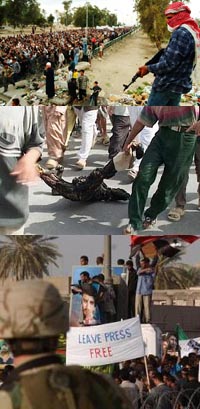
Iraqi Anger Over US Occupation
4/1/2004:
Over 600 members of the US armed forces have died as a result of the
invasion of Iraq with deaths effecting families in every US state.
The Pentagon now says that in the first year of war in Iraq, the military made over 18,000 medical evacuations - representing 11,700 casualties.
But even this number could be low since the military is increasingly outsourcing jobs and using private contractors as
mercenaries.
The exact number of Iraqis who have died as a result of the US occupation is not known, but Iraqi Body Count has documented 7,350 deaths which resulted directly
from coalition military actions just "during the "major-combat" phase prior to May 1st 2003".
On Wednesday March 31st, four American contractors in Iraq were burned alive and had their bodies dragged through the streets of Fallujah before being hung from a bridge as a large crowd consisting largely of young children chanted that Fallujah would be America's graveyard. "The Group of Sheikh Ahmad Yassin" claimed responsibility for the attack, "saying it was retribution for the controversial Israeli assassination last month of the spiritual leader of Hamas".
Although some corporate media sources are trying to pretend that the situation in Fallujah is unique, anti-American sentiments are growing in all parts of Iraq. In the North, Kurds have been calling for their own state and many are not happy with the idea of a future where they have less autonomy than they did before the US invasion. In addition, Turkey is pressuring the US to attack remnants of the PKK who have setup camps in Northern Iraq and have widespread support among the Iraqi Kurds. In the South, there is growing anger among the Shi'as against the US due to high unemployment rates and dislike for the US imposed constitution. In central Iraq, many Sunnis are worried that they will be marginalized under any future government.
Iraqis News Updates: Electronic Iraq | Lunaville News | Iraq Today | MEMRI | Iraq Daily | AlterNet | US Crusade
Iraqi Blogs: Salam Pax | Baghdad Burning | Raed | A Family In Baghdad | Back To Iraq | Wildfire
Reports From Bay Area Journalists and Activists Who Have Visited Iraq: 1 | 2
On Wednesday March 31st, four American contractors in Iraq were burned alive and had their bodies dragged through the streets of Fallujah before being hung from a bridge as a large crowd consisting largely of young children chanted that Fallujah would be America's graveyard. "The Group of Sheikh Ahmad Yassin" claimed responsibility for the attack, "saying it was retribution for the controversial Israeli assassination last month of the spiritual leader of Hamas".
Although some corporate media sources are trying to pretend that the situation in Fallujah is unique, anti-American sentiments are growing in all parts of Iraq. In the North, Kurds have been calling for their own state and many are not happy with the idea of a future where they have less autonomy than they did before the US invasion. In addition, Turkey is pressuring the US to attack remnants of the PKK who have setup camps in Northern Iraq and have widespread support among the Iraqi Kurds. In the South, there is growing anger among the Shi'as against the US due to high unemployment rates and dislike for the US imposed constitution. In central Iraq, many Sunnis are worried that they will be marginalized under any future government.
Iraqis News Updates: Electronic Iraq | Lunaville News | Iraq Today | MEMRI | Iraq Daily | AlterNet | US Crusade
Iraqi Blogs: Salam Pax | Baghdad Burning | Raed | A Family In Baghdad | Back To Iraq | Wildfire
Reports From Bay Area Journalists and Activists Who Have Visited Iraq: 1 | 2
Fri Feb 6 2004
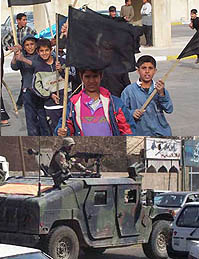
Local Reporters in Iraq: Dispatches from the Ground
Upcoming event: 3/12: From Iraq to Palestine: Making the Connections in San Francisco.
Author and peace activist Dana Visalli gave a reportback on March 5th about his trip to Iraq.
Local Bay Area independent reporters Rob Eshelman, David Martinez, and Tristan have recently been in Iraq and have been sending home dispatches of life on the ground in that ravaged country. With the climate in US-occupied Iraq becoming increasingly hostile for journalists and restrictions tightening on media access, it is more and more important that independent journalists be allowed to report on what they see and experience. Especially when it comes to accounts from soldiers overseas who are growing weary of a war they do not understand and risking their lives for freedoms they don't necessarily have.
Read Martinez's dispatches: 1 | 2 | 3 | 4 | 5 | 6 | 7
Read Eshelman's dispatches: 1 | 2 | 3 | 4 | 5
Read Tristan's dispatches: 1 | 2 | 3 Photos: 1 | 2 | 3 | 4 | 5 | 6 | 7 | 8 | 9 | 10 | 11 | 12
Author and peace activist Dana Visalli gave a reportback on March 5th about his trip to Iraq.
Local Bay Area independent reporters Rob Eshelman, David Martinez, and Tristan have recently been in Iraq and have been sending home dispatches of life on the ground in that ravaged country. With the climate in US-occupied Iraq becoming increasingly hostile for journalists and restrictions tightening on media access, it is more and more important that independent journalists be allowed to report on what they see and experience. Especially when it comes to accounts from soldiers overseas who are growing weary of a war they do not understand and risking their lives for freedoms they don't necessarily have.
Read Martinez's dispatches: 1 | 2 | 3 | 4 | 5 | 6 | 7
Read Eshelman's dispatches: 1 | 2 | 3 | 4 | 5
Read Tristan's dispatches: 1 | 2 | 3 Photos: 1 | 2 | 3 | 4 | 5 | 6 | 7 | 8 | 9 | 10 | 11 | 12
Iraq:
 14
14
14