







 Publish to Newswire
 Add an Event
Feature Archives
Sat Feb 4 2006
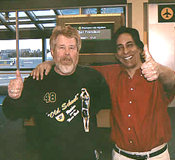
Steve Kubby's Health Has Improved
Steve Kubby was released from jail on March 6th. He faces a March 14th court date on a charge that he violated his
probation when he did not return from Canada. He had not returned because he feared being
jailed without any form of cannabis by Placer County.
By the end of a week in the Placer County Jail, Steve Kubby's medical condition stabilized. Reports say that his blood pressure appears to be under control, and he is being well attended to by the medical staff. Kubby has asked for people to stop calling the jail on his behalf. He said, "I want everyone to know that I'm alive today because of their calls."
Steve Kubby's reports from 1/31-2/2 An Interfaith Prayer/Meditation Circle of Healing was held before Kubby's February 3rd court date. At that appearance, his attorney withdrew his request to use edible forms of cannabis in jail. It was reported that day that Kubby could be released to house arrest within days. The next hearing in his case will be February 15th.
Read ASA's post about other medical marijuana prisoners|| Indybay's Past coverage: 1/31 Court Date | 1/29-30 Health Update | Kubby arrives in US, detained | 1/12: Kubby Family in Canada
By the end of a week in the Placer County Jail, Steve Kubby's medical condition stabilized. Reports say that his blood pressure appears to be under control, and he is being well attended to by the medical staff. Kubby has asked for people to stop calling the jail on his behalf. He said, "I want everyone to know that I'm alive today because of their calls."
Steve Kubby's reports from 1/31-2/2 An Interfaith Prayer/Meditation Circle of Healing was held before Kubby's February 3rd court date. At that appearance, his attorney withdrew his request to use edible forms of cannabis in jail. It was reported that day that Kubby could be released to house arrest within days. The next hearing in his case will be February 15th.
Read ASA's post about other medical marijuana prisoners|| Indybay's Past coverage: 1/31 Court Date | 1/29-30 Health Update | Kubby arrives in US, detained | 1/12: Kubby Family in Canada

Fri Feb 3 2006
Auburn Eco-Defense Arrestee Eric McDavid On Hunger Strike
After 3 weeks of being denied vegan meals, Eric McDavid is now on a hunger strike. Since January 13th, he has been held in the Sacramento County Main Jail and denied vegan food. His family has reported that his health is failing from three weeks of malnourishment. Eric began the hunger strike on January 31st. Despite the efforts of his family, friends, and lawyer he has not been given food he can eat. Supporters are asking that people call the county jail and politely but firmly request that he be given vegan food (food without animal products such as meat, dairy, or eggs) before his health deteriorates further. They say that people should point out that being able to eat is Eric’s human right and vital to his physical and mental well being. Read more
Read more about the Three Auburn Eco-Defense Arrestees
Read more about the Three Auburn Eco-Defense Arrestees

Tue Jan 31 2006
Report from Steve Kubby's January 31st Court Date
2/3: See Indybay's Drug War Page for updates
Two vanloads of patients drove from San Francisco to Auburn for Steve Kubby's hearing at the Placer County Jail today. Bill McPike, Steve's attorney, said Steve was hanging on and that the supportive presence was encouraging to him and gave him strength, although Steve has lost fifteen to twenty pounds. In a packed courtroom, Steve pled not guilty to violating the terms of his probation, and his next court appearance was scheduled for Friday, February 3rd, 2006 at 8:30 AM.
Read more of this story on Indybay's DrugWar News Page | Hemp Evolution's Photos from Court Support and the Press Conference
Two vanloads of patients drove from San Francisco to Auburn for Steve Kubby's hearing at the Placer County Jail today. Bill McPike, Steve's attorney, said Steve was hanging on and that the supportive presence was encouraging to him and gave him strength, although Steve has lost fifteen to twenty pounds. In a packed courtroom, Steve pled not guilty to violating the terms of his probation, and his next court appearance was scheduled for Friday, February 3rd, 2006 at 8:30 AM.
Read more of this story on Indybay's DrugWar News Page | Hemp Evolution's Photos from Court Support and the Press Conference
Mon Jan 30 2006
One Auburn Eco-Defense Arrestee Allowed Bail
2/1 Update: Zachary Jenson is in need of funds to pay attorney's fees. Sacramento Prisoner Support is encouraging people to organize benefits.
Recent eco-defense arrestee Lauren Weiner was granted bail on January 26th, but as of January 28th she was still in jail waiting for paperwork to be completed. She will be confined to the counties in New York where she lives and works, her attorney's office in Florida, and the federal court in Sacramento. Codefendants Zachary Jenson and Eric McDavid were denied bail.
The "CS" (confidential source or "confidential snitch") in this case has been identified by her former friends and acquaintances as a young woman named Anna.
Support needed: Zachary Jenson and Eric McDavid follow vegetarian and vegan diets, respectively, but need phone calls to the jail to demand that they be given food that they can eat. They also want better treatment in terms of access to showers and exercise. They would both like to receive letters and books. Read more In addition, Sacramento Prisoner Support is asking for people who have met the CS to contact them at sacprisonersupport[at]riseup[dot]net.
Read more about court dates up to January 26th | More of this story on Indybay's Police and Prisons News Page
Recent eco-defense arrestee Lauren Weiner was granted bail on January 26th, but as of January 28th she was still in jail waiting for paperwork to be completed. She will be confined to the counties in New York where she lives and works, her attorney's office in Florida, and the federal court in Sacramento. Codefendants Zachary Jenson and Eric McDavid were denied bail.
The "CS" (confidential source or "confidential snitch") in this case has been identified by her former friends and acquaintances as a young woman named Anna.
Support needed: Zachary Jenson and Eric McDavid follow vegetarian and vegan diets, respectively, but need phone calls to the jail to demand that they be given food that they can eat. They also want better treatment in terms of access to showers and exercise. They would both like to receive letters and books. Read more In addition, Sacramento Prisoner Support is asking for people who have met the CS to contact them at sacprisonersupport[at]riseup[dot]net.
Read more about court dates up to January 26th | More of this story on Indybay's Police and Prisons News Page
Sun Jan 29 2006
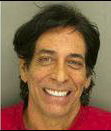
Steve Kubby Says He Needs Better Medical Care in Jail
2/3: See Indybay's Drug War Page or California News Page for updates
January 30th update: Steve Kubby said today that he is in excruciating pain, vomiting, weak from inability to eat for the last several days, has blood in his urine, and has been without a blanket or even Tylenol. Read more
Medical cannabis patient Steve Kubby, who sufferes from a rare form of adrenal cancer, is still being held in Placer County Jail. After many calls to the jail from supporters, Steve Kubby has been given a blanket and pillow. Kubby feels that he is not receiving adequate medical care. He was moved from the infirmary to solitary confinement.
Michele Kubby is very disappointed by the treatment that her husband has received- the Canadian government had told the family that they would not send Kubby back to the US unless they were sure that he would receive proper medical care. The Marinol that Kubby is being given is helping to control some of his medical symptoms. Because Marinol does not contain the cannabinoids present in the whole cannabis plant, the medication will not inhibit a protein necessary for blood vessel development (this would result in the cancer tissue being denied nutrients and possibly dying). He is not being given his special diet, and his blood pressure is not being monitored as regularly as is necessary.
Steve has said that Placer deputies coerced him into signing a waiver that states that he absolves Placer County of any responsibility if he dies in their care, because he has refused to take "conventional" alpha and beta blocker blood pressure medication. Medical marijuana activist Cris Ericson suggests that officials in Placer County are violating several laws in their neglect of Kubby.
Steve is scheduled to have an arraignment hearing in Placer at 1 pm on Tuesday, January 31st. This hearing is going to address Steve's alleged misdemeanor violation of probation. A press conference and rally in support of Steve will be held on Tuesday, January 31st at 12pm at the Placer Co. Superior Court in support of Steve Kubby. In the meantime, San Francisco city supervisor Ross Mirkarimi says he is looking into why Kubby was taken off the plane by SFPD officers at San Francisco International Airport, when the city is supposed to be a haven for medical marijuana patients.
January 30th update: Steve Kubby said today that he is in excruciating pain, vomiting, weak from inability to eat for the last several days, has blood in his urine, and has been without a blanket or even Tylenol. Read more
Medical cannabis patient Steve Kubby, who sufferes from a rare form of adrenal cancer, is still being held in Placer County Jail. After many calls to the jail from supporters, Steve Kubby has been given a blanket and pillow. Kubby feels that he is not receiving adequate medical care. He was moved from the infirmary to solitary confinement.
Michele Kubby is very disappointed by the treatment that her husband has received- the Canadian government had told the family that they would not send Kubby back to the US unless they were sure that he would receive proper medical care. The Marinol that Kubby is being given is helping to control some of his medical symptoms. Because Marinol does not contain the cannabinoids present in the whole cannabis plant, the medication will not inhibit a protein necessary for blood vessel development (this would result in the cancer tissue being denied nutrients and possibly dying). He is not being given his special diet, and his blood pressure is not being monitored as regularly as is necessary.
Steve has said that Placer deputies coerced him into signing a waiver that states that he absolves Placer County of any responsibility if he dies in their care, because he has refused to take "conventional" alpha and beta blocker blood pressure medication. Medical marijuana activist Cris Ericson suggests that officials in Placer County are violating several laws in their neglect of Kubby.
Steve is scheduled to have an arraignment hearing in Placer at 1 pm on Tuesday, January 31st. This hearing is going to address Steve's alleged misdemeanor violation of probation. A press conference and rally in support of Steve will be held on Tuesday, January 31st at 12pm at the Placer Co. Superior Court in support of Steve Kubby. In the meantime, San Francisco city supervisor Ross Mirkarimi says he is looking into why Kubby was taken off the plane by SFPD officers at San Francisco International Airport, when the city is supposed to be a haven for medical marijuana patients.

Tue Jan 24 2006
Steve Kubby Held in Placer County Jail
2/3: See Indybay's Drug War Page or California News Page for updates
Steve Kubby's attorney reported today that Kubby has been moved to the Placer County Jail, where he will be given Marinol. An arraignment and/or hearings will be held on Tuesday at the Placer County Courthouse in Auburn. Marinol is a synthetic form of THC.
Steve Kubby arrived in San Francisco on Thursday evening and was immediately arrested. He was held overnight in a Redwood City jail, and was mocked when he requested Marinol.
American cancer patient and medical marijuana refugee Steve Kubby and his family were ordered to leave Canada on or before Thursday, January 26th. The Immigration Ministry apparently claimed that its departure orders are not subject to appeal. Steve Kubby is a medical marijuana patient who has taken cannabis for some 20 years to treat adrenal cancer.
The Placer County, California Assistant District Attorney has stated that Kubby would be arrested and jailed for at least 120 days, and possibly much longer, but the Canadian government's attorney has said that Kubby would face no risk of arrest if he is forced to return. If he is forced to leave, Steve Kubby will fly directly to San Francisco, where he will be greeted by both US law enforcement and California medical marijuana activists. If he is held in jail, he could be denied access to marijuana. Michele Kubby and their two daughters would drive to California, so they don't have to witness his likely arrest. Michele Kubby has asked for medical marijuana supporters to call Canadian Ministers to ask them to allow Steve Kubby to remain in Canada. Read more
Steve Kubby's Blog | The Kubby Chronicles Website | Past Indybay Coverage of the Case of Steve Kubby
Steve Kubby's attorney reported today that Kubby has been moved to the Placer County Jail, where he will be given Marinol. An arraignment and/or hearings will be held on Tuesday at the Placer County Courthouse in Auburn. Marinol is a synthetic form of THC.
Steve Kubby arrived in San Francisco on Thursday evening and was immediately arrested. He was held overnight in a Redwood City jail, and was mocked when he requested Marinol.
American cancer patient and medical marijuana refugee Steve Kubby and his family were ordered to leave Canada on or before Thursday, January 26th. The Immigration Ministry apparently claimed that its departure orders are not subject to appeal. Steve Kubby is a medical marijuana patient who has taken cannabis for some 20 years to treat adrenal cancer.
The Placer County, California Assistant District Attorney has stated that Kubby would be arrested and jailed for at least 120 days, and possibly much longer, but the Canadian government's attorney has said that Kubby would face no risk of arrest if he is forced to return. If he is forced to leave, Steve Kubby will fly directly to San Francisco, where he will be greeted by both US law enforcement and California medical marijuana activists. If he is held in jail, he could be denied access to marijuana. Michele Kubby and their two daughters would drive to California, so they don't have to witness his likely arrest. Michele Kubby has asked for medical marijuana supporters to call Canadian Ministers to ask them to allow Steve Kubby to remain in Canada. Read more
Steve Kubby's Blog | The Kubby Chronicles Website | Past Indybay Coverage of the Case of Steve Kubby
Wed Jan 18 2006
Three Arrested in Auburn and Accused of Planning ELF Actions
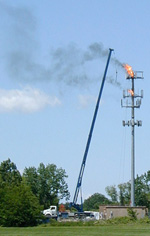
Eric McDavid, Zachary Jenson, and Lauren Weiner were arrested on Friday, January 13th in Auburn, California and accused of "conspiring to damage or destroy by explosive or fire" cell phone towers, power plants, and US Forest Service facilities. They are accused of being members of an Earth Liberation Front cell and are currently being held in the Sacramento County Main Jail. All three have requested prisoner support, including: letters, books, and assistance in obtaining legal counsel. Letter writers should familiarize themselves with guidelines for writing to prisoners before sending mail.
Support organizers are asking that people wait until the prisoners and their lawyers have had an opportunity to develop defense strategies before organizing any activities on their behalf other than letter writing. Lauren is lactose intolerant has requested nutritious vegan meals, but thus far has not been given enough vegan protein. She would like people to call or write the jail and request that she be given nutritious vegan meals and be given access to the commissary. She is currently in isolation and has only been allowed to leave her cell for visits and court. Zachary is vegetarian and would like people to call and/or write the jail and request that he be given vegetarian meals.
The charges that the three face currently consist of a charge of conspiracy to damage or destroy public and private infrastructure by explosives or fire- they face potential sentences of five to twenty years in prison. The charges will be more clear when the indictment (a rubber stamp from a grand jury for the government to prosecute the case) is delivered and the charges become official. Criminal complaint against the three indicates that the case is primarily based upon the testimony of a confidential informant who was paid by the FBI and "embedded" within the alleged ELF cell. According to the criminal complaint this person has been an informant in 12 other "anarchist cases" and has agreed to testify in open court.
Detention hearings have been set for Friday, January 20th for Lauren, and Tuesday, January 24th for both Eric and Zachary. These hearings will determine whether or not they will be eligible for bail. The US Attorney who is prosecuting the case, Ellen Endrizzi, has thus far tried to create the illusion that if they are bailed out, they would flee and put the public at risk. Lauren, Zachary and Eric are facing serious charges, their families and concerned supporters believe that their assertion of their rights are helping to give their cases a promising start. Read more
Read more about political prisoners on Indybay's Police and Prisons News page
Support organizers are asking that people wait until the prisoners and their lawyers have had an opportunity to develop defense strategies before organizing any activities on their behalf other than letter writing. Lauren is lactose intolerant has requested nutritious vegan meals, but thus far has not been given enough vegan protein. She would like people to call or write the jail and request that she be given nutritious vegan meals and be given access to the commissary. She is currently in isolation and has only been allowed to leave her cell for visits and court. Zachary is vegetarian and would like people to call and/or write the jail and request that he be given vegetarian meals.
The charges that the three face currently consist of a charge of conspiracy to damage or destroy public and private infrastructure by explosives or fire- they face potential sentences of five to twenty years in prison. The charges will be more clear when the indictment (a rubber stamp from a grand jury for the government to prosecute the case) is delivered and the charges become official. Criminal complaint against the three indicates that the case is primarily based upon the testimony of a confidential informant who was paid by the FBI and "embedded" within the alleged ELF cell. According to the criminal complaint this person has been an informant in 12 other "anarchist cases" and has agreed to testify in open court.
Detention hearings have been set for Friday, January 20th for Lauren, and Tuesday, January 24th for both Eric and Zachary. These hearings will determine whether or not they will be eligible for bail. The US Attorney who is prosecuting the case, Ellen Endrizzi, has thus far tried to create the illusion that if they are bailed out, they would flee and put the public at risk. Lauren, Zachary and Eric are facing serious charges, their families and concerned supporters believe that their assertion of their rights are helping to give their cases a promising start. Read more
Read more about political prisoners on Indybay's Police and Prisons News page
California:
 95
95

95