







 Publish to Newswire
 Add an Event
Feature Archives

Thu Jan 10 2008
Sen. Migden Introduces Legislation to Stand Up to DEA Raids
State Senator Carole Migden has introduced a California Senate
Joint Resolution calling on Congress, the President, and federal law
enforcement to stop raiding legal medical cannabis collectives and respect
California’s law. Senator Migden’s resolution follows an escalation in Drug
Enforcement Administration (DEA) attacks on medical cannabis providers and
threats against property owners who rent to hundreds of collectives all over
California. Senator Midgen represents the 3rd District: Marin County and portions of San Francisco and Sonoma Counties.
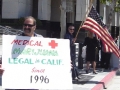
On January 9th, three San Francisco Medical Cannabis Dispensaries received provisional permits from the City‘s Health Department. Divinity Tree, Compassion and Care Center, and Market Street Cooperative (aka Act-Up) have just a few more steps to go through until they will receive their operating permits. Many dispensaries are attempting to complete the permitting process, as San Francisco law requires permits by March 1st, 2008. On Thursday Jan. 10th a land use
hearing for CannaMed Care Center (CMC) will be held at 1:30pm in City Hall.
Tue Dec 18 2007 (Updated 12/19/07)
Medical Cannabis Patients Seek Support of SF Mayor
The DEA has raided over 50 medical cannabis dispensaries in California this year -- more than three times last year's figure. In early December, the San Francisco DEA office "leaked" to the SF Chronicle that they would send forfeiture threat letters to the landlords of all the medical cannabis dispensaries (MCDs) in Northern California. In Southern California, dozens of MCDs closed over the summer after the DEA threatened their landlords with the loss of their property or jail time. Nine San Francisco dispensaries have reported receiving the letters. Local patients and their supporters are asking SF Mayor Gavin Newsom to take a public stand supporting medical cannabis and Representative Conyers's recent statement condemning the landlord letters, and opposing the DEA's intimidation tactics.

Fri Nov 2 2007
Compassionate Collective of Alameda County is Raided by DEA
On October 30th, the DEA raided Compassionate Collective of Alameda County, a medical cannabis dispensary located on the 21000 block of Mission Boulevard in Hayward. According to California NORML, "CCAC was by far the largest and most conspicuous dispensary in the East Bay, due in large part to the suppression of its competitors by local regulations, raids and bans." CCAC had operated as a legal business in full compliance with Alameda County regulations.

On September 26th, the DEA raided five locations that it claimed were connected to Tainted, Inc., which is a supplier of medical cannabis "edibles" that can be found in dozens of medical marijuana dispensaries in California. Heavily armed
federal agents seized cannabis plants and medicinal edibles, arrested
three people and killed at least one employee's dog. Edible cannabis products provide an
alternative to smoking cannabis and are preferred by many patients. The
products made by Tainted, Inc. are available only through medical cannabis
dispensaries and carry prominent warning labels.
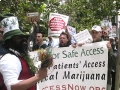
On Thursday, August 23rd, California's Fourth Appellate District in Santa Ana will hear oral arguments in a contentious case related to the return of medical cannabis patients' medicine following interactions with the police. Garden Grove patient Felix
Kha may finally see the return of his wrongfully confiscated 8 grams of
medical marijuana; an Orange County Superior Court judge in 2005 ordered the return of Kha's medicine after the case against him was dismissed. Kha's case will be heard alongside the case
of Jim Spray, a Huntington Beach patient.
Thu Aug 2 2007 (Updated 08/04/07)
Patients and Supporters Rally for Sanctuary City in Berkeley
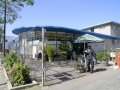
On July 31st, medical marijuana patients and supporters rallied at a Berkeley City Council meeting to urge the City Council to adopt a Sanctuary Resolution to help protect medical cannabis dispensaries within the city. Supporters were mobilized because the LAPD had just seized the bank account of the Berkeley
Patients' Group, which is a local dispensary. Local activists spoke about the need to
protect patients and providers from federal interference both in
Berkeley and across the state. City Council members assured the patients and their supporters that this issue will be taken up when the City Council reconvenes in September.
Drug War:
 11
11

11