







 Publish to Newswire
 Add an Event
Feature Archives



Fri May 12 2006
Bike to Work Day is Thursday, May 18th
Over 100,000 Californians are expected to participate in Bike to Work week, which is May 15th through 19th. On Thursday, May 18th, which is Bike to Work Day (BTWD), people in some places will join together to ride to work. In cities such as San Francisco and Berkeley, local organizations will sponsor energizer stations with refreshments and other bicycle-related goodies. In Modesto, riders will have the option of riding with bicycle police officers (?) or riding by themselves. 511.org's Bike to Work Day
Some local events:
On Saturday, May 13th, Bike Day at the Berkeley Farmer's Market will include bicycle outreach, education and safety from 10:30am to 2:30pm.
On May 18th, BTWD in Berkeley will include energizer stations. Read more In Oakland, there will be a Bike to Work Day celebration at City Hall from 7:00am to 9:00am. More Oakland energizer stations BTWD in San Francisco includes a 6pm Bike Away From Work party at 111 Minna Gallery. Energizer stations in SF Contra Costa County energizer stations The Sacramento Bike Commute Month will include a BikeFest on the west steps of the Capitol from 11am to 1pm.
A California Bicycling Information website recommends that people prepare themselves in advance for a bike commute. Steps to take include: planning the safest (and least traffic) route to work; informing supervisors about bike commute plans and asking where the bicycle can be parked during working hours; making sure that the bicycle is in proper working order; dressing to cycle (this includes planning to wear everything from a helmet to comfortable bicycling clothes); and inflating tires before starting the commute. Bicycle safety activists also warn that riders should stay out of the range of doors of cars that are parked along the bike route (approximately 5 feet) to avoid getting "doored." California's bike-related laws
California Bicycle Coalition | Placer County | Bike to Work Day Sacramento | Sacramento Region Bike Commute Month | Solano Napa | Sonoma County | Marin County | Oakland Bike to Work Day | Bike to Work Day in the Silicon Valley | Bike to Work Week in Santa Cruz | Bike to Work for the Monterey Bay Area | Fresno County Bicycle Coalition | Bicycling in Modesto | League of American Bicyclists CA Bike Month list | East Bay Bicycle Coalition | California Bike Commute | National Center for Bicycling and Walking
Some local events:
On Saturday, May 13th, Bike Day at the Berkeley Farmer's Market will include bicycle outreach, education and safety from 10:30am to 2:30pm.
On May 18th, BTWD in Berkeley will include energizer stations. Read more In Oakland, there will be a Bike to Work Day celebration at City Hall from 7:00am to 9:00am. More Oakland energizer stations BTWD in San Francisco includes a 6pm Bike Away From Work party at 111 Minna Gallery. Energizer stations in SF Contra Costa County energizer stations The Sacramento Bike Commute Month will include a BikeFest on the west steps of the Capitol from 11am to 1pm.
A California Bicycling Information website recommends that people prepare themselves in advance for a bike commute. Steps to take include: planning the safest (and least traffic) route to work; informing supervisors about bike commute plans and asking where the bicycle can be parked during working hours; making sure that the bicycle is in proper working order; dressing to cycle (this includes planning to wear everything from a helmet to comfortable bicycling clothes); and inflating tires before starting the commute. Bicycle safety activists also warn that riders should stay out of the range of doors of cars that are parked along the bike route (approximately 5 feet) to avoid getting "doored." California's bike-related laws
California Bicycle Coalition | Placer County | Bike to Work Day Sacramento | Sacramento Region Bike Commute Month | Solano Napa | Sonoma County | Marin County | Oakland Bike to Work Day | Bike to Work Day in the Silicon Valley | Bike to Work Week in Santa Cruz | Bike to Work for the Monterey Bay Area | Fresno County Bicycle Coalition | Bicycling in Modesto | League of American Bicyclists CA Bike Month list | East Bay Bicycle Coalition | California Bike Commute | National Center for Bicycling and Walking

Fri May 12 2006
San Francisco Demands Community Choice for Clean Energy
A clean power rally was held on Monday, May 15th at 12:00pm outside of San Francisco City Hall. The city and county is on the verge of building the largest municipal clean energy network in the world. Every home in the city would be powered by safe, renewable energy. Greenpeace and the Community Energy Alliance will gather
to show Mayor Newsom that they support clean power.
In 2001 San Franciscans voted to support a ballot initiative that allows the city to build the largest municipal solar system in the world. Five years later, the city has yet to install a single solar panel as part of the program. This plan, if it is approved, will pool the buying power of San Francisco’s electricity customers to build the largest municipal clean energy network in the world. Proponents believe that clean energy would help to clear the air, create jobs, stabilize energy prices, curb global warming, and break PG&E’s grip on ratepayers. Read more
Community Choice Energy
In 2001 San Franciscans voted to support a ballot initiative that allows the city to build the largest municipal solar system in the world. Five years later, the city has yet to install a single solar panel as part of the program. This plan, if it is approved, will pool the buying power of San Francisco’s electricity customers to build the largest municipal clean energy network in the world. Proponents believe that clean energy would help to clear the air, create jobs, stabilize energy prices, curb global warming, and break PG&E’s grip on ratepayers. Read more
Community Choice Energy

Mon May 8 2006
Lessons from COINTELPRO
Claude Marks & Kelah Bott, in Fault Lines #16, write:
Recent crackdowns on the animal rights and environmental justice movements have left many activists feeling that their communities are under siege. From the prosecution of the SHAC 7 to the arrests of thirteen individuals for arsons committed over a ten-year span, a war is being waged against these movements by the U.S. government. While all of this may seem terrifying in its unfamiliarity to younger activists, the tactics being employed by the FBI and Joint Terrorism Task Force are anything but new. Whisperings of ‘COINTELPRO’ have appeared in various articles about the backlash against eco-activism, but what does this generation really know about the Counter-Intelligence Program aimed at groups such as the Black Panther Party (BPP) and the American Indian Movement (AIM)? Today’s activists are heirs to a history of social and political battles from wars that are not yet over. Without seeing today’s struggles for animal rights and environmental justice in a broader historical and social context, we run the risk not only of repeating painful lessons of the past, but of isolating ourselves and weakening our movements.
Recent crackdowns on the animal rights and environmental justice movements have left many activists feeling that their communities are under siege. From the prosecution of the SHAC 7 to the arrests of thirteen individuals for arsons committed over a ten-year span, a war is being waged against these movements by the U.S. government. While all of this may seem terrifying in its unfamiliarity to younger activists, the tactics being employed by the FBI and Joint Terrorism Task Force are anything but new. Whisperings of ‘COINTELPRO’ have appeared in various articles about the backlash against eco-activism, but what does this generation really know about the Counter-Intelligence Program aimed at groups such as the Black Panther Party (BPP) and the American Indian Movement (AIM)? Today’s activists are heirs to a history of social and political battles from wars that are not yet over. Without seeing today’s struggles for animal rights and environmental justice in a broader historical and social context, we run the risk not only of repeating painful lessons of the past, but of isolating ourselves and weakening our movements.
Read More in the April-May 2006 issue of Fault Lines
Recent Indybay Coverage of Grand Juries, Arrests, and Other Anti-Activist Actions: SF Grand Jury Targets G8 Protest | SHAC7 Convicted | Government's "Case" Against Rod Coronado | 11 Indicted in Latest Round of FBI Environmental Witch Hunt | Three Arrested in Auburn, Accused of Planning ELF Actions | Animal Activists Subpoenaed to Appear in San Francisco | Grand Jury in San Diego

The long fight by Bayview Hunters Point residents, Greenaction for Health and Environmental Justice, and allies to close the "dirty, outdated, and unnecessary" PG&E Hunters Point power plant is over, as state and PG&E officials have confirmed that the plant has stopped generating electricity. Residents have also confirmed that the stacks that emitted unacceptable levels of pollution for decades are now quiet and are not in operation.
Julie Gill of the California Independent Systems Operator, the state agency in charge of the power grid, and Robert Harris, PG&E Vice President for Environmental Affairs, have both confirmed to Greenaction that the plant is no longer generating electricity. The plant will officially close when the “Reliability Must Run” contract is terminated by the Cal ISO on May 15th. As one of California’s dirtiest and oldest power plants, it had polluted the community for over 77 years. The closure is seen as a victory by people who have conducted years of protests, including direct actions at the plant. Marie Harrison, a community organizer with Greenaction, says that new struggles must be waged to encourage industry and government organizations to support cleaner, renewable energy.
On Friday, May 12, the Huntersview Mothers Committee and Greenaction celebrated the shutdown of the PG&E plant. Photos
see also: Black Out: The City Sponsored Gentrification of Bayview Hunters Point
Indybay's Past Coverage of the struggle to close the power plant | Greenaction
Julie Gill of the California Independent Systems Operator, the state agency in charge of the power grid, and Robert Harris, PG&E Vice President for Environmental Affairs, have both confirmed to Greenaction that the plant is no longer generating electricity. The plant will officially close when the “Reliability Must Run” contract is terminated by the Cal ISO on May 15th. As one of California’s dirtiest and oldest power plants, it had polluted the community for over 77 years. The closure is seen as a victory by people who have conducted years of protests, including direct actions at the plant. Marie Harrison, a community organizer with Greenaction, says that new struggles must be waged to encourage industry and government organizations to support cleaner, renewable energy.
On Friday, May 12, the Huntersview Mothers Committee and Greenaction celebrated the shutdown of the PG&E plant. Photos
see also: Black Out: The City Sponsored Gentrification of Bayview Hunters Point
Indybay's Past Coverage of the struggle to close the power plant | Greenaction


Thu Apr 27 2006
Dr. Vandana Shiva Speaks at UC Santa Cruz
On April 24th, Dr. Vandana Shiva, a physicist, ecologist, activist, editor, and author, spoke at UC Santa Cruz. Vandana was born in Dehra Dun, Uttaranchal State, which was formerly a part of the Indian state of Uttar Pradesh. She participated in the Chipko movement during the 1970s. The movement, whose main participants were women, adopted the tactic of hugging trees to prevent their felling. Read more
Vandana Shiva spoke at UCSC as part of The Education for Sustainable Living Program's Spring 2006 Lecture series.
 audio (mp3): Vandana Shiva at UCSC (time: 1:05:24)
Vandana Shiva spoke at UCSC as part of The Education for Sustainable Living Program's Spring 2006 Lecture series.
audio (mp3): Vandana Shiva at UCSC (time: 1:05:24)


Sat Apr 15 2006
Prison Letter Writing Café in Berkeley
The Grand Jury Resistance Project and the Prison Literature Project will hold an event to send letters to those imprisoned in the current “Green Scare.” The Prison Letter Writing Café will be Tuesday April 25th 2006 at 7:00pm in Berkeley. Paper, envelopes and stamps will be provided, as well as prisoner bios. Help on how to write letters to prisoners, including specific prison regulations, tips and suggestions will also be available.
“Mail time is often the brightest part of a prisoner's day," organizers of the event said. "Letters help show that there is a whole movement of support outside the prison walls - and that they are not alone.”
READ MORE.
“Mail time is often the brightest part of a prisoner's day," organizers of the event said. "Letters help show that there is a whole movement of support outside the prison walls - and that they are not alone.”
READ MORE.
Wed Apr 12 2006
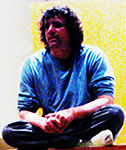
Derrick Jensen Speaking in Santa Cruz
Derrick Jensen spoke at the Vet's Hall in downtown Santa Cruz on March 29th, 2006, as a benefit for the legal fees of EcoPrisoners arrested in the recent 'Green Scare'. Jensen emphasizes the hate, dishonesty, and destructiveness in contemporary industrialized culture. He argues that this culture will soon collapse because of the damage being done to the planet.
Jensen proposes that a different way of life is possible, and it can be seen in many past societies including many Native American cultures. This different way of life is characterized by honesty, appreciation of beauty, and connection with the natural world. Politically Jensen's work is in favor of a revolution in values, the self, and society. His ideas are often in line with eco-anarchism, anarcho-primitivism and neo-Tribalism. Read more
Audio (mp3): Part 1 and Part 2
Jensen proposes that a different way of life is possible, and it can be seen in many past societies including many Native American cultures. This different way of life is characterized by honesty, appreciation of beauty, and connection with the natural world. Politically Jensen's work is in favor of a revolution in values, the self, and society. His ideas are often in line with eco-anarchism, anarcho-primitivism and neo-Tribalism. Read more
Audio (mp3): Part 1 and Part 2