







 Publish to Newswire
 Add an Event
Feature Archives
Sat Nov 13 2004
Israel Re-Arrests Nuclear Whistleblower Mordechai Vanunu
11/11/2004
Nuclear whistleblower Mordechai Vanunu, released in April after 18 years in jail, has been re-arrested.
His supporters said that the police had used the death of Yassir Arafat as cover to make the arrest, in the hope that it would be ignored. Mr Vanunu was seized by some 30 armed police officers who stormed the Anglican Cathedral in East Jerusalem to make the arrest.
"Analysts said the arrest of Vanunu -- who has repeatedly defied orders not to give interviews -- may be an Israeli attempt to suppress discussion of its nuclear program at a time of increasing international efforts to block Iran from going nuclear."
Past Indybay Coverage Of Vanunu | Letter from the Bishop in Jerusalem on Vanunu's Arrest | International Journalists Protest Vanunu Arrest
Past Indybay Coverage Of Vanunu | Letter from the Bishop in Jerusalem on Vanunu's Arrest | International Journalists Protest Vanunu Arrest
Wed Nov 10 2004
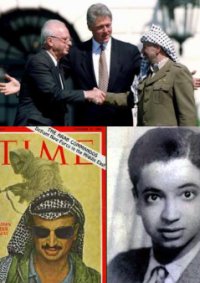
Yasser Arafat buried in Ram Allah As World Mourns
11/12/2004
On Friday November 12th 2004, Yasir Arafat was laid to rest at his battered Muqata compound in the West Bank town of Ram Allah.
As Israel continues attacks on the Occupied Palestinian Territories and the US and Israeli press continue to demonize Arafat and the Palestinians struggle, many around the world mourn the loss of a man who devoted most of his life fighting for Palestinian freedom.
Mandela called Arafat "an icon in the proper sense of the word...He was not only concerned about the liberation of the Arab people, but of all the oppressed people throughout the world".
The Cuban government has declared a three-day official mourning for Arafat. The Vatican offered its condolences calling Arafat "a leader of great charisma who loved his people and sought to guide them toward national independence" Namibian President Nujoma stated in a message sent to Palestinian Prime Minister Ahmed Qureia, "In his passing, the people of Palestine have lost a great leader, who has also inspired millions of struggling masses around the world including the people of Africa in their fight against colonialism and foreign occupation.."
Others remain less inspired about the legacy Arafat has left, "finding disfavor with his political strategies and even charging that he was corrupt", but Akbar Muhammad, international representative for the Nation of Islam points out that Arafat "started when he was 17 years old in this struggle, helping to smuggle weapons out of Israel to the people in Gaza, and at the close of his life, I feel strongly that it should not be the controversy over whether he was a bad man, he was this, he was that, he was corrupt.... He is a major player in the world."
11/10/2004 Yasser Arafat has died. Arafat had been in a coma and on life-support equipment for the past few days but the cause of his illness is unknown. Arafat's longtime physician Ashraf al-Kurdy has called for a full autopsy amid rumors that he was poisoned. Was an autopsy carried out? Apparently not. So, we cannot rule anything out, say some doctors.
Yasser Arafat was born in August 1929 and first became active in Palestinian politics while an engineering student in Cairo in the early 1950s. In 1957, Arafat helped found Fatah, an organization dedicated to the establishment of an independent Palestinian state. in 1969 Arafat was named chairman of the Palestine Liberation Organization, a political organization that had been founded in 1964 to unify all the Palestinian resistance groups.
In late 1960s, tensions had arisen between Palestinian resistance groups and the Jordanian government and open fighting between Jordan and Palestinian resistance groups erupted in June of 1970. In the ensuing civil war, the PLO had the active support of Syria, which invaded Jordan with around 200 tanks. By September (known to Palestinians as Black September) the Jordanian army achieved dominance, and the PLO agreed to a series of ceasefires. Following the defeat in Jordan, Arafat relocated the PLO to Lebanon, where it was able to operate virtually as an independent state. In 1974, Arab heads of states declared the PLO the sole legitimate representative of all Palestinians. The PLO was admitted to full membership in the Arab League in 1976.
In September 1982, during the Israeli invasion of Lebanon, the Americans brokered a cease-fire deal in which Arafat and the PLO were forced to leave Lebanon; Arafat and his leadership eventually arrived in Tunisia, which remained his center of operations up until 1993.
In a December 13, 1988 address, Arafat accepted UN Security Council Resolution 242, promised future recognition of Israel, and renounced "terrorism in all its forms, including state terrorism". During the 1991 Madrid Conference, Israel conducted open negotiations with the PLO for the first time. Negotiations lead to the 1993 Oslo Accords, which called for the implementation of Palestinian self rule in the West Bank and Gaza Strip over a five year period. The following year Arafat was awarded the Nobel Peace Prize along with Shimon Peres and Yitzhak Rabin. In 1994, Arafat moved to the Palestinian Authority (PA) - the provisional entity created by the Oslo Accords. On January 20, 1996, Arafat was elected president of the PA, with an overwhelming 87% majority.
Al Jazeera Arafat Profile | Wikipedia | NobelPrize.org | EIectronic Intifada | Yasir Arafat - A Symbol of Freedom | Reflections on the Man of Palestinian Destiny | Arafat's potential successors | Jailed leader Marwan Barghouti may stand for president
11/10/2004 Yasser Arafat has died. Arafat had been in a coma and on life-support equipment for the past few days but the cause of his illness is unknown. Arafat's longtime physician Ashraf al-Kurdy has called for a full autopsy amid rumors that he was poisoned. Was an autopsy carried out? Apparently not. So, we cannot rule anything out, say some doctors.
Yasser Arafat was born in August 1929 and first became active in Palestinian politics while an engineering student in Cairo in the early 1950s. In 1957, Arafat helped found Fatah, an organization dedicated to the establishment of an independent Palestinian state. in 1969 Arafat was named chairman of the Palestine Liberation Organization, a political organization that had been founded in 1964 to unify all the Palestinian resistance groups.
In late 1960s, tensions had arisen between Palestinian resistance groups and the Jordanian government and open fighting between Jordan and Palestinian resistance groups erupted in June of 1970. In the ensuing civil war, the PLO had the active support of Syria, which invaded Jordan with around 200 tanks. By September (known to Palestinians as Black September) the Jordanian army achieved dominance, and the PLO agreed to a series of ceasefires. Following the defeat in Jordan, Arafat relocated the PLO to Lebanon, where it was able to operate virtually as an independent state. In 1974, Arab heads of states declared the PLO the sole legitimate representative of all Palestinians. The PLO was admitted to full membership in the Arab League in 1976.
In September 1982, during the Israeli invasion of Lebanon, the Americans brokered a cease-fire deal in which Arafat and the PLO were forced to leave Lebanon; Arafat and his leadership eventually arrived in Tunisia, which remained his center of operations up until 1993.
In a December 13, 1988 address, Arafat accepted UN Security Council Resolution 242, promised future recognition of Israel, and renounced "terrorism in all its forms, including state terrorism". During the 1991 Madrid Conference, Israel conducted open negotiations with the PLO for the first time. Negotiations lead to the 1993 Oslo Accords, which called for the implementation of Palestinian self rule in the West Bank and Gaza Strip over a five year period. The following year Arafat was awarded the Nobel Peace Prize along with Shimon Peres and Yitzhak Rabin. In 1994, Arafat moved to the Palestinian Authority (PA) - the provisional entity created by the Oslo Accords. On January 20, 1996, Arafat was elected president of the PA, with an overwhelming 87% majority.
Al Jazeera Arafat Profile | Wikipedia | NobelPrize.org | EIectronic Intifada | Yasir Arafat - A Symbol of Freedom | Reflections on the Man of Palestinian Destiny | Arafat's potential successors | Jailed leader Marwan Barghouti may stand for president
Wed Oct 13 2004
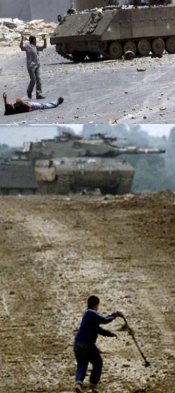
Widescale Military Offensive In Northern Gaza
10/16/2004
On Saturday, the Israeli Army began pulling troops out of northern Gaza.
As Palestinians sift through the ruins of their homes after the 18 -day onslaught, there are reports of a new Israeli
incursion into Rafah in the Southern Gaza Strip.
10/13/2004 The death toll of the invasion into Jabaliya Refugee Camp of 113,000 residents in the Northern Gaza Strip continues to rise as 2,000 troops and hundreds of tanks continue their two-week old operation in this densely populated area. At least 118 Palestinians have been killed so far, 30 of whom were children under the age of 18. This morning, a 9-year-old Palestinian schoolgirl who was shot in the stomach by Israeli army gunfire while sitting at her desk in a UN-run school died. Additionally, the Israeli army said today it had suspended a officer under investigation for shooting repeatedly at close range into the body of a 13-year-old Palestinian schoolgirl who had already been gunned down on her way to class in southern Gaza last week.
A total closure of the camp is now being enforced, cutting electricity and water supplies. For a week now, residents have been without access to food supplies and hospitals are without medical and blood supplies. The Israeli military has been denying emergency medical crews access to besieged areas and in several cases targeting medical teams and ambulances. Yesterday, the Union of Health Work Committees in Gaza City reported that local area hospitals and clinics are full and are unable to adequately attend to the injured and dying due to the siege and closure.
10/5/2004 The US has vetoed a UN resolution condemning Israel's actions in Gaza. Israel's attacks on Gaza have gotten worse in recent days. 50,000 Palestinians are trapped in areas seized by the Israeli troops and many areas now are without electricity or water. Many of the dead in the past few days have been civilians. While Israel's actions have been drawing widespread condemnation worldwide, former Republican Presidential candidate Pat Robertson is in Israel with thousands of his supporters to show support for Israel and demand that no land be given back to Muslims.
10/1/2004 A widescale Israeli military offensive is currently underway in the Northern Gaza Strip. On Thursday, thirty one people were killed in the deadliest day of the Israeli-Palestinian conflict in more than two years. On Friday, Israel sent up to 100 tanks into Gaza in a military operation approved by Sharon's cabinet. The European Union has denounced this latest attack by Israel as a "disproportionate" response. In recent days members of Israel's elite Air Force unit "Shaldag" have come forward to denounce aspect collective punishment used by the military during past incursions by the IDF into Gaza.
UN criticizes Israel for human rights violations in territories | Weekly Report On Israeli Human Rights Violations | Electronic Intifada | Union of Health Work Committees | Middle East Children's Alliance | Berkeley Press Conference
10/13/2004 The death toll of the invasion into Jabaliya Refugee Camp of 113,000 residents in the Northern Gaza Strip continues to rise as 2,000 troops and hundreds of tanks continue their two-week old operation in this densely populated area. At least 118 Palestinians have been killed so far, 30 of whom were children under the age of 18. This morning, a 9-year-old Palestinian schoolgirl who was shot in the stomach by Israeli army gunfire while sitting at her desk in a UN-run school died. Additionally, the Israeli army said today it had suspended a officer under investigation for shooting repeatedly at close range into the body of a 13-year-old Palestinian schoolgirl who had already been gunned down on her way to class in southern Gaza last week.
A total closure of the camp is now being enforced, cutting electricity and water supplies. For a week now, residents have been without access to food supplies and hospitals are without medical and blood supplies. The Israeli military has been denying emergency medical crews access to besieged areas and in several cases targeting medical teams and ambulances. Yesterday, the Union of Health Work Committees in Gaza City reported that local area hospitals and clinics are full and are unable to adequately attend to the injured and dying due to the siege and closure.
10/5/2004 The US has vetoed a UN resolution condemning Israel's actions in Gaza. Israel's attacks on Gaza have gotten worse in recent days. 50,000 Palestinians are trapped in areas seized by the Israeli troops and many areas now are without electricity or water. Many of the dead in the past few days have been civilians. While Israel's actions have been drawing widespread condemnation worldwide, former Republican Presidential candidate Pat Robertson is in Israel with thousands of his supporters to show support for Israel and demand that no land be given back to Muslims.
10/1/2004 A widescale Israeli military offensive is currently underway in the Northern Gaza Strip. On Thursday, thirty one people were killed in the deadliest day of the Israeli-Palestinian conflict in more than two years. On Friday, Israel sent up to 100 tanks into Gaza in a military operation approved by Sharon's cabinet. The European Union has denounced this latest attack by Israel as a "disproportionate" response. In recent days members of Israel's elite Air Force unit "Shaldag" have come forward to denounce aspect collective punishment used by the military during past incursions by the IDF into Gaza.
UN criticizes Israel for human rights violations in territories | Weekly Report On Israeli Human Rights Violations | Electronic Intifada | Union of Health Work Committees | Middle East Children's Alliance | Berkeley Press Conference
Fri Jul 9 2004
International Court of Justice Rules Wall Illegal
On July 9th 2004 the International Court of Justice (ICJ) ruled that the "construction by Israel of a wall in the Occupied Palestinian
Territory" was "contrary to international law."
Palestinians hailed the decision,
but the US
and Israeli governments quickly denounced the court's ruling.
On July 21, "the General Assembly of the UN overwhelmingly agreed with the ICJ opinion, by a vote of 150-6 with ten abstentions." Despite the clear legal argument against construction of a wall that will divide Palestinian communities and create great hardship for many, Israel's immediate response was to scold the EU for its vote and even center-left US newspapers weighed in with the opinion that 150 countries all had some sort of anti-Israel bias.
While public opinion in Israel has not changed much as a result of the ICJ's ruling, the Israeli Surpreme Court had already looked into the legality of the wall and concluded on June 30th that the route of the wall had to change since it "injures the local inhabitants in a severe and acute way while violating their rights under humanitarian and international law."
On August 19th, the Israeli Supreme Court ordered the government to respond to the ICJ ruling amid fear of sanctions.
Text Of The Ruling | Implications of Wall and ICJ's Ruling | More On The Apartheid Wall
On July 21, "the General Assembly of the UN overwhelmingly agreed with the ICJ opinion, by a vote of 150-6 with ten abstentions." Despite the clear legal argument against construction of a wall that will divide Palestinian communities and create great hardship for many, Israel's immediate response was to scold the EU for its vote and even center-left US newspapers weighed in with the opinion that 150 countries all had some sort of anti-Israel bias.
While public opinion in Israel has not changed much as a result of the ICJ's ruling, the Israeli Surpreme Court had already looked into the legality of the wall and concluded on June 30th that the route of the wall had to change since it "injures the local inhabitants in a severe and acute way while violating their rights under humanitarian and international law."
On August 19th, the Israeli Supreme Court ordered the government to respond to the ICJ ruling amid fear of sanctions.
Text Of The Ruling | Implications of Wall and ICJ's Ruling | More On The Apartheid Wall
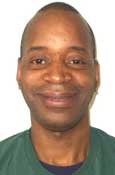
 9/29/2004: Chris Brown of Oakland and Kim Lamberty of Washington DC, two activists with the Christian Peacemaker Teams, were brutally attacked early this morning, presumably by Israeli settlers, who were dressed in black with black scarves across their faces. They were escorting Palestinian children to school in the West Bank town of
Hebron, to protect them from attacks by Israelis. Christian Peacemaker teams are present in the area of the attack at the request of Palestinians, who are the target of repeated harassment from Israeli settlers while
Israeli authorities have failed to intervene.
9/29/2004: Chris Brown of Oakland and Kim Lamberty of Washington DC, two activists with the Christian Peacemaker Teams, were brutally attacked early this morning, presumably by Israeli settlers, who were dressed in black with black scarves across their faces. They were escorting Palestinian children to school in the West Bank town of
Hebron, to protect them from attacks by Israelis. Christian Peacemaker teams are present in the area of the attack at the request of Palestinians, who are the target of repeated harassment from Israeli settlers while
Israeli authorities have failed to intervene.
Israeli settlers frequently attack the nonviolent Christian Peacemaker members, throwing them to the ground, kicking them, cursing them, using obscenities against their religion etc., while Israeli soldiers look on. This incident, however, is the most brutal to date. If Americans Knew claims that so far, the AP has refused to cover this incident.
Injuries: Brown sustained broken ribs, one of which punctured his lung. He has undergone a surgical procedure to fix his collapsed lung. Brown also suffered a contusion on his head at his temple, but does not appear to have any brain injury. He will be recovering in the hospital for an unspecified amount of time. Lamberty suffered a broken arm and knee. She has now been released from the hospital and is recovering in Jerusalem. Christian Peacemaker members plan to accompany Palestinian school children again tomorrow. The children who, witnessed this incident, are terrified about returning to school. The Americans planning to accompany them are terrified, as well.
Christian Peacemaker Teams | 9/29 Flashpoints interview with Chris Brown (7 minutes into show) | Palestine Information Center | 9/20 ISM Report about Hebron | If Americans Knew

Thu May 20 2004
Israel Defense Forces Committing Massacre in Rafah
Read Rafah Today, a frequently updated photo journal by Mohammed, a student in Rafah. Audio interview with Mohammed. | ECR reports on local reaction to killings - audio
May 20th While hundreds marched in Tel Aviv, the UN Security council passed a resolution condemning the "killing of Palestinian civilians". In an act of arrogance Israel continued it's operation into the Rafah refugee camp, killing 9 more and rounding up Palestinian men. The events of the past day have also caused a stir within the Israeli Knesset.
May 19th A peaceful demonstration against the incursion into Rafah was attacked by Israeli soldiers leaving at least 23 dead, most of whom are children, when a tank shell exploded in the midst of the crowd. Pictures. Read Israeli news paper Haaretz's op-ed piece on the attacks.
May 17th, "a massive deployment" of IDF troops launched a major operation in the southern Gaza Strip, aimed at isolating the town of Rafah from the rest of Gaza and neighboring Egypt". Amnesty international has issued an appeal against the house demolitions.
May 14th, "the Israel Defense Forces launched a mass demolition of buildings" in the Rafah refugee camp leaving over 1,000 homeless. According to a UN report from before these demolitions, "Since Oct.1, 2000, 2,018 houses were destroyed or damaged beyond repair in the Gaza Strip, making 18,382 people homeless. Of those, more than half were in the Rafah camp, where 1,309 houses were razed or irreparably damaged, and 12,600 people made homeless." Amnesty International has released a new report condemning the collective punishment of Palestinians as a war crime and the European Union has called for an immediate stop to the Rafah demolitions. Despite the increased worldwide condemnation of what many see as ethnic cleansing, Israel announced on May 16th that it plans to "step up demolitions".
May 20th While hundreds marched in Tel Aviv, the UN Security council passed a resolution condemning the "killing of Palestinian civilians". In an act of arrogance Israel continued it's operation into the Rafah refugee camp, killing 9 more and rounding up Palestinian men. The events of the past day have also caused a stir within the Israeli Knesset.
May 19th A peaceful demonstration against the incursion into Rafah was attacked by Israeli soldiers leaving at least 23 dead, most of whom are children, when a tank shell exploded in the midst of the crowd. Pictures. Read Israeli news paper Haaretz's op-ed piece on the attacks.
May 17th, "a massive deployment" of IDF troops launched a major operation in the southern Gaza Strip, aimed at isolating the town of Rafah from the rest of Gaza and neighboring Egypt". Amnesty international has issued an appeal against the house demolitions.
May 14th, "the Israel Defense Forces launched a mass demolition of buildings" in the Rafah refugee camp leaving over 1,000 homeless. According to a UN report from before these demolitions, "Since Oct.1, 2000, 2,018 houses were destroyed or damaged beyond repair in the Gaza Strip, making 18,382 people homeless. Of those, more than half were in the Rafah camp, where 1,309 houses were razed or irreparably damaged, and 12,600 people made homeless." Amnesty International has released a new report condemning the collective punishment of Palestinians as a war crime and the European Union has called for an immediate stop to the Rafah demolitions. Despite the increased worldwide condemnation of what many see as ethnic cleansing, Israel announced on May 16th that it plans to "step up demolitions".
Tue May 11 2004
Palestinian Resistance In Gaza
On May 11th, an armored personel carrier was destroyed and six IDF troops were killed during an incursion by the Israeli military into the Gaza City neighborhood of Zeitoun.
The Israeli army sent in more troops and on May 12th a second military transport vehicle was destroyed killing five more IDF soldiers and on May 14th two more IDF troops were killed by Palestinian snipers. The deaths of 13 IDF soldiers in less than a week marked the largest number of Israeli military personel killed in conflict with Palestinians in several years.
Some commentators think that this could indicate a shift in tactics for Palestinian militants from "isolated bombings and incidents to systematic and coordinated guerrilla warfare throughout the Gaza Strip"
Eyeless in Gaza | Israel storms Gaza for troops' remains
Eyeless in Gaza | Israel storms Gaza for troops' remains
Palestine:
 38
38

38