







 Publish to Newswire
 Add an Event
Feature Archives

On November 7th, dozens of Bay Area activists stood in solidarity with the people of Beit Hanoun and protested the Israeli aggression against the people of Palestine and the siege of Gaza. The group started out at the Israeli Consulate in San Francisco where many police and a handful of Israel supporters waited for the vigil to begin. The demonstration progressed to Montgomery and Market to bring the atrocities in Gaza to the attention of the people of San Francisco.
Photos
|
Video
On November 10th a vigil was held in front of the Israeli Consulate. Photos


Sun Sep 17 2006
Die-In at the Ferry Building
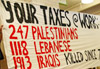
On Saturday, September 16th, the anniversary of the 1982 Sabra and Shatila massacre in Lebanon, over 40 Bay Area activists staged a "die-in" at the Ferry Building in San Francisco to highlight the fact that US tax money has been used to fund the attacks on and killings of civilians in Palestine, Lebanon and Iraq.  Photos
Photos
Sat Aug 19 2006 (Updated 09/01/06)
As Lebanon War Waged, Life Became Harder In Occupied Territories
On the back of Israel's military defeat in Lebanon, Palestinians fear that their blood will be used to bolster public confidence in Olmert's government.
The Israeli military offensive in Gaza continued unabated during the conflict in Lebanon but was practically unmonitored by the world's media. With the exception of the United Nations registering grave concerns over the deteriorating humanitarian conditions and the continued violence against Palestinian civilians and infrastructure, it seems that the Palestinians have been forgotten. 170 Palestinians including, 138 civilians, 14 security officers and 15 militants, were killed in Israeli attacks from June 27th until August 8th 2006. During that same period,
Israeli F-16s and helicopters launched 190 air strikes, the Israeli military fired over 3,500 artillery shells, the Israeli Air Force carried out 380 air patrols and 506 Palestinians were injured.
UN Warns of Gaza "Time Bomb" | War Overshadows Palestinian Killings: UN | Year on, Gazans See No End to Occupation | Unilateral action by Israel spawns violence in Gaza | Two killed in Gaza air strike | Israel extends Hamas MP's detention | Palestinians discuss unity government | Rafah crossing closed after being open less than 7 hours in 2 days | Time to Reopen the Palestine File at the UN? Not Yet! | Israeli Army Causes Two Serious Head Injuries to Protestors in Bil'in | 3 Palestinian Civilians Killed by IOF in the West Bank
UN Warns of Gaza "Time Bomb" | War Overshadows Palestinian Killings: UN | Year on, Gazans See No End to Occupation | Unilateral action by Israel spawns violence in Gaza | Two killed in Gaza air strike | Israel extends Hamas MP's detention | Palestinians discuss unity government | Rafah crossing closed after being open less than 7 hours in 2 days | Time to Reopen the Palestine File at the UN? Not Yet! | Israeli Army Causes Two Serious Head Injuries to Protestors in Bil'in | 3 Palestinian Civilians Killed by IOF in the West Bank
Sat Aug 19 2006 (Updated 09/01/06)
Rebuilding, Unexploded Bombs & Environmental Destruction
Hundreds of thousands of Lebanese have returned to
the remains
of their homes in the South of the country. Rebuilding started
the day the ceasefire started with Hizbullah playing a major role,
clearing roads and helping to dig out survivors and the dead from
collapsed buildings. Hizbullah's leader, Hassan Nasrallah has
promised
a year's rent and a set of new furniture for every family whose house
has been destroyed in the fighting. With billions of dollars
worth of damages, NGOs and Western governments have been much slower
in their response; the US has only promised $50 million and an
international donors' conference in Stockholm isn't scheduled until
August 31st.
US Counters Hizbullah Rebuilding | Hizbullah revs up Aid to Victims
One major challenge facing returning Lebanese are unexploded bombs. During the month of hostilities, Israel dropped thousands of US made munitions including many cluster bombs. Cluster bombs are air-dropped or ground launched shells that eject multiple small submunitions. Submunitions are classified as either bomblets, grenades, or mines. They are small explosive-filled or chemical-filled items designed for saturation coverage of a large area. ...Each of these delivery systems disperses its payload of submunitions while still in flight, and the submunitions drop over the target. Human Rights Watch opposes all use of cluster munitions with high initial failure rates, including the weapons that Israel used in Lebanon, because of the prolonged danger they pose to civilians. In Southern Lebanon, thousands of unexploded bomblets have turned some areas into virtual minefields, and there are already reports of death from cluster bombs among returning refugees.
Israel asks U.S. to ship cluster bombs quickly | HRW Urges No Cluster Bombs to Israel | Robert Fisk: Lebanon's pain grows by the hour as death toll hits 1,300 | Israeli Ambassador Grilled on Use of Cluster Bombs
In Beirut and along the Lebanese coast, the war has left both the water and air in poor shape. Chemicals and dust from the buildings hit during Israeli air strikes have badly polluted the air and land in S Beirut. Along the coast Lebanese volunteers have started to clean oil-stained beaches. Nearly 15,000 tons of heavy fuel oil spilled onto Lebanon's coast after Israel bombed Jiyyeh power station,50 kilometers south of Beirut, causing the biggest ecological crisis in the country's history.
Lebanon Facing its Worst Environmental Disaster Ever: Oil Spill From Israeli Strike | Oil Spill Reaches Syrian Coastline | Lebanon: Environmental catastrophe threatens Mediterranean
US Counters Hizbullah Rebuilding | Hizbullah revs up Aid to Victims
One major challenge facing returning Lebanese are unexploded bombs. During the month of hostilities, Israel dropped thousands of US made munitions including many cluster bombs. Cluster bombs are air-dropped or ground launched shells that eject multiple small submunitions. Submunitions are classified as either bomblets, grenades, or mines. They are small explosive-filled or chemical-filled items designed for saturation coverage of a large area. ...Each of these delivery systems disperses its payload of submunitions while still in flight, and the submunitions drop over the target. Human Rights Watch opposes all use of cluster munitions with high initial failure rates, including the weapons that Israel used in Lebanon, because of the prolonged danger they pose to civilians. In Southern Lebanon, thousands of unexploded bomblets have turned some areas into virtual minefields, and there are already reports of death from cluster bombs among returning refugees.
Israel asks U.S. to ship cluster bombs quickly | HRW Urges No Cluster Bombs to Israel | Robert Fisk: Lebanon's pain grows by the hour as death toll hits 1,300 | Israeli Ambassador Grilled on Use of Cluster Bombs
In Beirut and along the Lebanese coast, the war has left both the water and air in poor shape. Chemicals and dust from the buildings hit during Israeli air strikes have badly polluted the air and land in S Beirut. Along the coast Lebanese volunteers have started to clean oil-stained beaches. Nearly 15,000 tons of heavy fuel oil spilled onto Lebanon's coast after Israel bombed Jiyyeh power station,50 kilometers south of Beirut, causing the biggest ecological crisis in the country's history.
Lebanon Facing its Worst Environmental Disaster Ever: Oil Spill From Israeli Strike | Oil Spill Reaches Syrian Coastline | Lebanon: Environmental catastrophe threatens Mediterranean
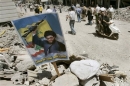
Guns fell silent across southern Lebanon on Monday morning as a United Nations ceasefire came into effect.
Thousands of Lebanese civilians, displaced by the Israeli bombardment, have started heading home to Southern Lebanon.
It is not clear if the refugees will be able to make it home since Israel's military has "said traffic restrictions south of the Litani River had not been lifted"
Israeli Prime Minister Ehud Olmert has also said that despite the ceasefire (and the demand that Hezbollah disarm), Israel will continue to try to assassinate Hezbollah leaders.
Sat Aug 12 2006 (Updated 08/30/06)
Independent Journalists in Lebanon-the War and Post-ceasefire Struggle
In Lebanon families still struggle to rebuild homes, schools, and communities destroyed by Israeli agression during the month long war. Clusterbombs and undetonated ordinates injure and kill families returning home on a daily basis.
Lebanon struggles to put the pieces back together. Audio, photos, writing, interviews.

Fri Aug 11 2006 (Updated 08/12/06)
UN Passes Resolution And Israel Escalates Attacks
On August 11th, the United Nations Security Council passed resolution 1701 (read text). While presented as a call for a ceasefire the resolution actually only calls for the "cessation by Hezbollah of all attacks and the immediate cessation by Israel of all offensive military operations", without actually calling for the halt in Israel's attacks on Lebanon, which both the US and Israel claim to be defensive. The resolution also calls for the disarming of Hezbollah and demands that Lebanon and UNIFIL to deploy forces to South Lebanon.
While both Israel and the government of Lebanon have said they agree to the resolution, Israel has escalated its movement of ground troops into Southern Lebanon and wont oficially agree to the resolution until Olmert to presents resolution to his cabinet on Sunday.
While both Israel and the government of Lebanon have said they agree to the resolution, Israel has escalated its movement of ground troops into Southern Lebanon and wont oficially agree to the resolution until Olmert to presents resolution to his cabinet on Sunday.
Palestine:
 32
32

32