







 Publish to Newswire
 Add an Event
Feature Archives



Tue Apr 8 2014 (Updated 04/25/14)
Call Out to Defend Redwood Grove from Jacobs Institute
UPDATE: On April 23, UC Berkeley removed all of the redwoods behind Soda Hall, despite assurances some would stay.
On April 6, University of California Berkeley cut down the support foliage at the redwood grove behind Soda Hall. Larger redwoods have been severely pruned and smaller redwoods have been removed entirely. Paul Jacobs of Qualcomm wants the lot for a $20,000,000 privatized tech design institute, named after himself. The UC intends to cut down all the trees in the grove. Save the Ridge Redwoods has called for a "wave of action" protest to defend the trees at Ridge Road and Le Roy Avenue in Berkeley. A groundbreaking ceremony was held on April 12.
On April 6, University of California Berkeley cut down the support foliage at the redwood grove behind Soda Hall. Larger redwoods have been severely pruned and smaller redwoods have been removed entirely. Paul Jacobs of Qualcomm wants the lot for a $20,000,000 privatized tech design institute, named after himself. The UC intends to cut down all the trees in the grove. Save the Ridge Redwoods has called for a "wave of action" protest to defend the trees at Ridge Road and Le Roy Avenue in Berkeley. A groundbreaking ceremony was held on April 12.


The Intergovernmental Panel on Climate Change’s latest report on March 31 highlights the increasing threat from rising global meat and dairy consumption to limiting global warming, especially as the world population continues to grow. By 2050, estimates indicate, beef and lamb will account for half of all agricultural greenhouse gas emissions. Cheese and other dairy products will account for about one quarter of total agricultural climate pollution.

Sat Mar 29 2014 (Updated 03/31/14)
Needle Litter Is the Problem; Needle Exchange Is the Solution
Steve Pleich writes: There has been much discussion over the last several months concerning the wisdom of having a fully functional Needle Exchange Program in our community. Many have expressed doubts about the public health benefits of such a program, but a clear-eyed and dispassionate analysis of those benefits has been subsumed by an overriding public safety concern.

Fri Mar 21 2014 (Updated 03/23/14)
Thousands Protest Fracking at State Capitol
Hundreds of indigenous people from California and across the country gathered with a crowd of over 4,000 activists at the State Capitol in Sacramento on March 15th. They demanded that Governor Brown ban fracking, the environmentally destructive oil extraction practice that pollutes groundwater, rivers and oceans.

Tue Mar 18 2014 (Updated 03/20/14)
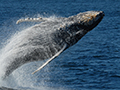
Whales and Sea Turtles Win One: No Driftnet Expansion in California
In a victory for ocean wildlife, federal fishery managers in Sacramento on March 13 decided not to expand driftnet fishing into protected sea turtle habitat along the California coast because it would significantly raise the risk of capture and drowning of endangered whales, sea turtles and dolphins. But the Pacific Fishery Management Council failed to take direct action to remove driftnets from the California coast, though the gear is banned in Oregon and Washington.

Tue Mar 18 2014
Pi(e) Day Pajama Ride with the Santa Cruz Bike Party
This month's Bike Party theme in Santa Cruz was pie and pajamas. A colorful group gathered for pie at the Bike Church and then rode off into the sunset together on March 14 for Pi Day (3.14). Unlike the world-famous critical-mass bicycle rides, which are more political in focus and sometimes confrontational, Bike Party aims for a festive and friendly ride. The Santa Cruz Bike Party is gaining popularity and part of a larger movement, with the San José Bike Party being the most famous.
Fri Mar 14 2014 (Updated 04/13/14)
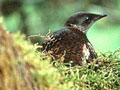
Protections Increased for Endangered Seabird in Santa Cruz Mountains State Parks
The Center for Biological Diversity reached a settlement agreement on March 11 with the California Department of Parks and Recreation that will substantially increase protections in the Santa Cruz Mountains for the marbled murrelet, an endangered seabird that nests in old-growth forests. The settlement requires the agency to reduce dangers posed by visitor trash, which harms murrelets by unnaturally increasing the abundance of predators that eat eggs and chicks.