







 Publish to Newswire
 Add an Event
Feature Archives

Thu Oct 22 2015 (Updated 10/24/15)
Kettle Falls Patients Get Federal Prison Sentences
Federal prison sentences were handed down October 2 for the three remaining defendants in the Kettle Falls Five case in Washington State. They were charged with multiple federal felonies after a 2012 raid on the family’s personal cannabis garden. The case has received national attention as an example of federal interference with state-qualified medical cannabis patients. Lobbying by Larry Harvey, a defendant in the case who died last month from cancer, was instrumental in getting Congress to restrict Department of Justice enforcement in states with medical cannabis laws.
Mon Oct 19 2015 (Updated 10/21/15)
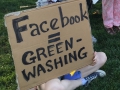
Young and Old Say We Don't Need Silicon Valley Firms Greenwashing
Students, union members and the Raging Grannies all questioned the role of the hi-tech industry in the climate movement at a rally held next door to Google headquarters on October 14. The Raging Grannies specifically called out firms Google and Facebook since both companies joined with climate change deniers when they became members of the climate denying lobbying group ALEC.

Thu Oct 15 2015
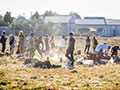
Indigenous Land Access Committee Holds Ongoing Ceremony on Gill Tract to Reclaim Land
On October 11, a group of indigenous people held a sacred ceremony and observance on the historic Gill Tract Farm to honor the land and the ancestors who lived on the land for over 10,000 years. The gathering was convened by the Indigenous Land Access Committee (ILAC) — a group of Ohlone and other native people who envision reclaiming land stolen from them, and restoring spiritual and cultural lifeways in solidarity with indigenous people on every continent harmed by colonization.

As advocates of Senate Bill 350 were celebrating the signing of the amended renewable energy bill by Governor Jerry Brown, a major appointment to a regulatory post in the Brown administration went largely unnoticed. In a classic example of how Big Oil has captured the regulatory apparatus in California, Governor Jerry Brown announced the appointment of Bill Bartling who has worked as an oil industry executive and consultant, as district deputy in the Division of Oil, Gas and Geothermal Resources at the embattled California Department of Conservation.

Sun Oct 11 2015 (Updated 10/16/15)
Alameda County DA Wants to Spy on You – Without Any Oversight
A "Stingray" is a device that simulates a cellphone tower and intercepts all phone traffic in its range. A new California law set to go into effect this January requires most state and local agencies to conduct a public hearing and to create a privacy policy before acquiring a Stingray or equivalent device. But on Tuesday, October 13, the Alameda County Board of Supervisors is scheduled to consider whether to approve a request by the Alameda County District Attorney to accept money from the state to acquire an upgraded Stingray known as a "Hailstorm." If approved, and if the purchase is consummated before the new year, the new Stingray law would not apply.
UPDATE: The decision on approving the grant money for a Stingray upgrade was postponed to an indefinite date, probably December.
UPDATE: The decision on approving the grant money for a Stingray upgrade was postponed to an indefinite date, probably December.
Thu Oct 8 2015
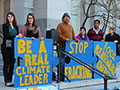
California Governor Signs Climate Bill Gutted by Big Oil
As Jerry Brown continues to support the expansion of environmentally destructive fracking in California, the Governor on October 7 signed renewable energy legislation, SB 350, by Senate President pro Tempore Kevin de León. The bill was amended under heavy political pressure by the Western States Petroleum Association, the most powerful corporate lobbying group in Sacramento. Before being amended, Senate Bill 350 called for a 50 percent reduction in petroleum use in cars and trucks by 2030.
Tue Oct 6 2015 (Updated 10/08/15)
Ohio Voters to Choose Between Cannabis Oligopoly or Continued Prohibition
Receiving scant attention from marijuana legalization advocates and just about zero attention in the national media, voters in Ohio will be deciding on a controversial marijuana legalization initiative this November that “Grants a monopoly for the commercial production and sale of marijuana." It is a cautionary tale to which the backers of California’s multiple marijuana legalization initiatives might want to pay close attention.
Front Page:
 114
114

114