







 Publish to Newswire
 Add an Event
Feature Archives

Tue Aug 29 2006 (Updated 10/01/06)
Attacks on Oaxacan People's Movement Continue With Silencing of Radio La Ley
 Radio APPO relay
Santa Cruz IMC reporter Bradley wrote on August 29th: "Oaxaca City is almost entirely closed today... I am the only tourist staying at my hostel today... even the Zocalo is eerily quiet... The radio transmissions for Radio La Ley were cut-off sometime during the (early morning hours). Radio La Ley, a corporate radio station owned by ... Clear Channel, was recently taken over in solidarity with Asamblea Popular del Pueblo de Oaxaca (APPO). Approximately three radio stations are still in the hands of APPO and its supporters. A "MegaMarcha" will be held on September 1st."
Photos: 1 | 2 | 3 | 4 | 5 | 6 | 7 | Slideshow


Thu Aug 24 2006
Darfuris Make Their Demands
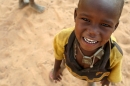
Sixteen year old “Moro” is reputed to be one of the fiercest fighters from the rebel battalion based in Muzbat, a North Darfuri village now transformed into a Sudanese Liberation Army (SLA) base. Unlike his jovial comrades, Moro has the stern look of a hardened soldier. He shows me a bullet casing tightly wrapped in leather and dangling from his necklace. “As long as I wear this [the military and Janjaweed] can’t kill me,” he said last June. What has made him so fierce? “Circumstances,” he says bluntly. “Because they burned our homes and stole our property.”

Thu Aug 24 2006
The Dark Side of Post-Soviet Development in Kazakhstan
The sounds of construction are ubiquitous in Almaty. Pounding jackhammers, whining saws, and lumbering bulldozers are at work on almost every block of this green, mountain-rimmed Central Asian city. This breakneck development takes place alongside the expensive bistros and Mercedes dealerships that cater to a new generation reveling in the riches of recently discovered oil and gas reserves, giving this city—once considered a sleepy Soviet outpost—a powerfully wealthy and cosmopolitan veneer.
But all is not well in this city lauded as an economic giant in the region, a model of expedient privatization and post-Soviet development. Kazakhstan’s reality check lies only a few miles outside the city center where a growing movement of discontent among those left behind by the recent boom tells a very different story and reveals a country developing on the shaky foundations of corruption and disparity.
But all is not well in this city lauded as an economic giant in the region, a model of expedient privatization and post-Soviet development. Kazakhstan’s reality check lies only a few miles outside the city center where a growing movement of discontent among those left behind by the recent boom tells a very different story and reveals a country developing on the shaky foundations of corruption and disparity.

Wed Aug 23 2006 (Updated 08/24/06)
People of Oaxaca Under Attack as Their TV Station is Destroyed
Paramilitaries and police in Oaxaca have begun a violent campaign to shut down all media operations that are in opposition to PRI governor Ulises Ruiz Ortiz, and to silence the people's movement, APPO, which has taken over governing the state. The television station that several hundred women had taken over on August 1st was invaded by police forces on August 21st and damaged beyond use. Radio station towers have also been attacked. Protesters have been shot in the streets by police or military forces who refuse to identify themselves. People in Oaxaca are calling for international solidarity: "Organize a protest at your local Mexican consulate or contact the... responsible individuals and let them know the whole world is watching."
Tue Aug 22 2006 (Updated 08/23/06)
Violence in Sri Lanka Escalating
Ongoing fighting between the Sri Lankan military and the Liberation Tigers of Tamil Eelam (LTTE) is creating a humanitarian catastrophe. More than 160,000 people have been displaced since the army launched a military operation on July 26th to seize the Mavilaru irrigation sluice gate inside LTTE territory.
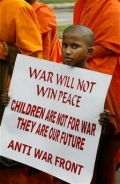
On August 14th, the Sri Lankan air force bombed a school in an LTTE controlled district, killing 61 students and injuring more than 100. Controversy and international concern followed when Sri Lankan government officials and military generals openly declared that children were legitimate targets of the Sri Lankan armed forces, regardless of "age or gender" as the government claimed the victims were all "child soldiers". The government claims were rejected by the UN and SLMM officials. Unicef and other international bodies condemned the massacre as "shocking".
Violence in Sri Lanka has been escalating since Mahinda Rajapakse won the country’s presidency last November. For months, the military and associated paramilitary groups have waged a covert war, aimed at undermining the 2002 ceasefire and provoking the LTTE into responding. Amid the worsening conflict, over fifty thousand people were displaced between April and July and another 7,439 have fled to the nearby southern Indian state of Tamil Nadu.
Despite president’s denials, Sri Lankan military continues offensive war | War spreads to the north of Sri Lanka | Sri Lankan government intensifies military offensive against LTTE | Sri Lankan businessman dies after being arrested and tortured | Bomb blast kills 64 villagers and catapults Sri Lanka toward war
On August 14th, the Sri Lankan air force bombed a school in an LTTE controlled district, killing 61 students and injuring more than 100. Controversy and international concern followed when Sri Lankan government officials and military generals openly declared that children were legitimate targets of the Sri Lankan armed forces, regardless of "age or gender" as the government claimed the victims were all "child soldiers". The government claims were rejected by the UN and SLMM officials. Unicef and other international bodies condemned the massacre as "shocking".
Violence in Sri Lanka has been escalating since Mahinda Rajapakse won the country’s presidency last November. For months, the military and associated paramilitary groups have waged a covert war, aimed at undermining the 2002 ceasefire and provoking the LTTE into responding. Amid the worsening conflict, over fifty thousand people were displaced between April and July and another 7,439 have fled to the nearby southern Indian state of Tamil Nadu.
Despite president’s denials, Sri Lankan military continues offensive war | War spreads to the north of Sri Lanka | Sri Lankan government intensifies military offensive against LTTE | Sri Lankan businessman dies after being arrested and tortured | Bomb blast kills 64 villagers and catapults Sri Lanka toward war

Sun Aug 20 2006 (Updated 12/28/06)
Ethiopia Sends Troops Into Somalia As US Backed Government Nears Collapse
The current war in Somalia is a portion of the US global "War on Terror" that has gotten very little coverage in the US media.
A regional war looks likely in East Africa as Ethiopia is sending more troops into Somalia to back the Somali Transitional Government in Baidoa while Eritrea appears to be supplying arms to the Islamic Courts Unions which controls Mogadishu and much of the rest of the country (outside of the independent regions of Somaliland and Puntland). The Somali Transitional Government and the Islamic Courts had agreed to recognize each other under a deal brokered by the Arab League, but the Courts withdrew from talks on July 22nd in protest at Ethiopian intervention.
Tensions have risen between the two sides since the Islamic Courts defeated the US-led warlord Alliance for the Restoration of Peace and Counter-Terrorism and seized full control of the capital Mogadishu in June.
Many cabinet ministers in the Somali Transitional Government have resigned amid mounting criticism over the deployment of Ethiopian troops inside Somalia.
Sat Aug 19 2006 (Updated 09/01/06)
As Lebanon War Waged, Life Became Harder In Occupied Territories
On the back of Israel's military defeat in Lebanon, Palestinians fear that their blood will be used to bolster public confidence in Olmert's government.
The Israeli military offensive in Gaza continued unabated during the conflict in Lebanon but was practically unmonitored by the world's media. With the exception of the United Nations registering grave concerns over the deteriorating humanitarian conditions and the continued violence against Palestinian civilians and infrastructure, it seems that the Palestinians have been forgotten. 170 Palestinians including, 138 civilians, 14 security officers and 15 militants, were killed in Israeli attacks from June 27th until August 8th 2006. During that same period,
Israeli F-16s and helicopters launched 190 air strikes, the Israeli military fired over 3,500 artillery shells, the Israeli Air Force carried out 380 air patrols and 506 Palestinians were injured.
UN Warns of Gaza "Time Bomb" | War Overshadows Palestinian Killings: UN | Year on, Gazans See No End to Occupation | Unilateral action by Israel spawns violence in Gaza | Two killed in Gaza air strike | Israel extends Hamas MP's detention | Palestinians discuss unity government | Rafah crossing closed after being open less than 7 hours in 2 days | Time to Reopen the Palestine File at the UN? Not Yet! | Israeli Army Causes Two Serious Head Injuries to Protestors in Bil'in | 3 Palestinian Civilians Killed by IOF in the West Bank
UN Warns of Gaza "Time Bomb" | War Overshadows Palestinian Killings: UN | Year on, Gazans See No End to Occupation | Unilateral action by Israel spawns violence in Gaza | Two killed in Gaza air strike | Israel extends Hamas MP's detention | Palestinians discuss unity government | Rafah crossing closed after being open less than 7 hours in 2 days | Time to Reopen the Palestine File at the UN? Not Yet! | Israeli Army Causes Two Serious Head Injuries to Protestors in Bil'in | 3 Palestinian Civilians Killed by IOF in the West Bank
International:
 55
55

55