







 Publish to Newswire
 Add an Event
Feature Archives
Sat May 6 2006
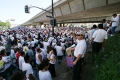
May 1st San Jose Immigrants' Rights March Draws 100,000
Demonstrators for immigrants' rights in San Jose made up the largest May Day demonstration in the Bay Area. They filled Santa Clara Street for two miles as they marched. At the end of the march, a portion of the huge crowd filled Guadalupe River Park for a rally, while many more dispersed across the downtown area. It is estimated there are 100,000 undocumented immigrants in Santa Clara County. The crowd carried Mexican and American flags, and held aloft a mile-long cloth which was signed with felt pens by thousands. Spanish language radio heavily promoted the event, and many employers, especially in the predominantly Latino East Side, closed up shop. These stations and businesses are aware they will lose money if draconian immigration laws are passed. The mood of the crowd was festive, and many wore white in a gesture of solidarity. A youth-oriented demonstration took place in the morning and later joined the march.
 Video: 1
|
2
|
3
|
4
|
5
|
Video: 1
|
2
|
3
|
4
|
5
|
 Photos: 1
|
2
|
3
|
4
|
5
|
6
|
Photos: 1
|
2
|
3
|
4
|
5
|
6
|
 News Reports: 1
|
2
|
Critique of the Mass March
News Reports: 1
|
2
|
Critique of the Mass March
Read more on Indybay's Immigrant Rights News Page
Video: 1
|
2
|
3
|
4
|
5
|
Photos: 1
|
2
|
3
|
4
|
5
|
6
|
News Reports: 1
|
2
|
Critique of the Mass March
Read more on Indybay's Immigrant Rights News Page



Wed May 3 2006
Cinco de Mayo Anti-Immigrant Rallies in Santa Clara
According to Illegal Immigrant Protest dot com, May 5th and 6th were a "National Illegal Immigrant Protest Rally Days." Destroy the Border Coalition called for people to go out and counter the racist message of the rallies, saying , "The people who do the work in a community are entitled to live with dignity and without fear of violence and deportation. Undocumented workers are economic refugees from the countries that the U.S. has been exploiting for hundreds of years."
Read more | Photos: 1 | 2 | 3 | Audio | More about these protests
May 5th, or Cinco de Mayo, is the date on which the Mexican people celebrate the Battle of Puebla, in which the military and local people fought off the French.
Read more | Photos: 1 | 2 | 3 | Audio | More about these protests
May 5th, or Cinco de Mayo, is the date on which the Mexican people celebrate the Battle of Puebla, in which the military and local people fought off the French.

Wed Apr 5 2006
April 10th Day Without an Immigrant
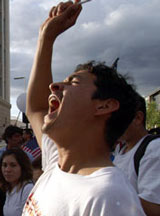
On Monday April 10th, 2006, immigrants and their allies continued their recent historic mobilizations in cities all over the US to oppose HR 4437. They have been demanding real immigration reform that is comprehensive, respects civil rights, reunites families, protects workers, and offers a path to citizenship for the current undocumented and future immigrants to the US. In California, organizations in cities across the state showed what California would look like if immigrants did not work in positions such as dishwashers, cooks, housecleaners, nannies, gardeners, office workers, and in dozens of other jobs.
In San Jose, marchers filled two lanes of traffic for 15 blocks of Santa Clara Street. Marchers included many families, workers still in uniform from construction trades, office jobs, service jobs, and many students - a very predominantly Latino crowd, though immigrants from many nationalities were represented, from Latin America to Southeast Asia to India and other places. Energy was high as the march neared City Hall, with the throngs of marchers spilling into the closed-off blocks near the new buildings and cheering and shouting, "si se puede," in anticipation.
Photos from San Jose: 1
|
2
|
3
·
Report
Read more on Indybay's Immigrant Rights News Page
In San Jose, marchers filled two lanes of traffic for 15 blocks of Santa Clara Street. Marchers included many families, workers still in uniform from construction trades, office jobs, service jobs, and many students - a very predominantly Latino crowd, though immigrants from many nationalities were represented, from Latin America to Southeast Asia to India and other places. Energy was high as the march neared City Hall, with the throngs of marchers spilling into the closed-off blocks near the new buildings and cheering and shouting, "si se puede," in anticipation.
Photos from San Jose: 1
|
2
|
3
·
Report
Read more on Indybay's Immigrant Rights News Page
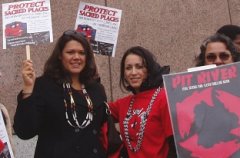
On January 27th, Native Americans and their supporters from across the country gathered at the Calpine energy company headquarters in San Jose to protest the company’s proposed plans to build power plants and drill for geothermal energy in the culturally important Medicine Lake Highlands, located in Northeastern California. The tribal members and supporters demand that Calpine immediately cease and desist from its proposed energy extraction plans as this would devastate the Native cultural and natural environmental landscape around Medicine Lake.
Photos
The Highlands comprises the largest shield volcano on this continent and is home to many rare birds and animals that live in the lava tubes, obsidian flows, old-growth forests and craters. The spring waters in this area are some of the clearest and cleanest in the country. This area, used since time immemorial for healing, ceremony and other cultural purposes by Native peoples, is sacred to the tribes of the Pit River, Modoc, Shasta, Karuk, Wintu and many others. Calpine has federal energy development leases that cover eight square miles, and if built a nine-story high power plant complex would annually produce tons of toxic hydrogen sulfide gas and other heavy metals such as arsenic and mercury. The sacred and natural area would be clearcut to make space to build toxic slump ponds, roads, pipelines, cooling towers, and the tallest building in northeastern California, which would be fully lit around the clock. This project threatens the underlying aquifer which is California’s largest spring system. Native peoples, homeowners, environmentalists and other concerned citizens have been opposing this project since it was first proposed. Ironically, the geothermal energy extracted from the area would be bought and sold as “green energy”
International Indian Treaty Council Statement | SacredLand.org | CalWild.org
Photos
The Highlands comprises the largest shield volcano on this continent and is home to many rare birds and animals that live in the lava tubes, obsidian flows, old-growth forests and craters. The spring waters in this area are some of the clearest and cleanest in the country. This area, used since time immemorial for healing, ceremony and other cultural purposes by Native peoples, is sacred to the tribes of the Pit River, Modoc, Shasta, Karuk, Wintu and many others. Calpine has federal energy development leases that cover eight square miles, and if built a nine-story high power plant complex would annually produce tons of toxic hydrogen sulfide gas and other heavy metals such as arsenic and mercury. The sacred and natural area would be clearcut to make space to build toxic slump ponds, roads, pipelines, cooling towers, and the tallest building in northeastern California, which would be fully lit around the clock. This project threatens the underlying aquifer which is California’s largest spring system. Native peoples, homeowners, environmentalists and other concerned citizens have been opposing this project since it was first proposed. Ironically, the geothermal energy extracted from the area would be bought and sold as “green energy”
International Indian Treaty Council Statement | SacredLand.org | CalWild.org
Tue Jan 10 2006
Justice Denied: A History of the Walker Trial
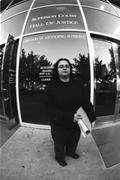
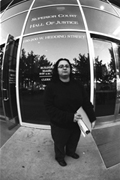
The manslaughter trial of State Bureau of Narcotics Enforcement Agent Michael Walker for the February, 2004 killing of Rudy Cardenas was a sensation in San Jose. After a high-speed chase through downtown, Walker shot Cardenas, a father of five, in the back, in what many thought was a clear case of criminal police violence. Walker thought at the time that Cardenas was another man who was wanted for a parole violation. Law enforcement that day made a series of critically flawed decisions. The Deputy District Attorney who prosecuted Walker, Lane Liroff, became kind of a hero to activists and community members who attended the trial, but he was unable to win a conviction. The day of the verdict Rudy's daughter Regina Cardenas said she was "Completely appalled. We didn’t think [acquittal] was a possibility at all." Indybay writer-photographer Peter Maiden covered the trial after reporting on police issues in San Jose for over a year. You can read his story: Justice Denied: A History of the Walker Trial | Also see: Photos of Vigil for Rudy after the Verdict | Indybay's Previous Coverage of the trial | Past Indybay Coverage of the Cardenas Case | Coverage by Pacific News Service | Coverage from the November Coalition
Tue Dec 13 2005
Justice Denied: A History of the Walker Trial
The manslaughter trial of State Bureau of Narcotics Enforcement Agent Michael Walker for the February, 2004 killing of Rudy Cardenas was a sensation in San Jose. After a high-speed chase through downtown, Walker shot Cardenas, a father of five, in the back, in what many thought was a clear case of criminal police violence. Walker thought at the time that Cardenas was another man who was wanted for a parole violation. Law enforcement that day made a series of critically flawed decisions. The Deputy District Attorney who prosecuted Walker, Lane Liroff, became kind of a hero to activists and community members who attended the trial, but he was unable to win a conviction. The day of the verdict Rudy's daughter Regina Cardenas said she was "Completely appalled. We didn’t think [acquittal] was a possibility at all." Indybay writer-photographer Peter Maiden covered the trial after reporting on police issues in San Jose for over a year. You can read his story: Justice Denied: A History of the Walker Trial | Photos of Vigil for Rudy after the Verdict | Indybay's Previous Coverage of the trial | Past Indybay Coverage of the Cardenas Case | Coverage by Pacific News Service | Coverage from the November Coalition
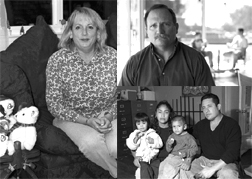
San Jose has the highest rate of police killings relative to the overall murder rate of any of the 50 largest cities in the U.S. Three mentally ill people have been killed by the SJPD since the summer of 2003. Indybay reporter Peter Maiden spent the last eight months on the beat of police issues in San Jose. This is the second of two installments of the article that is the culmination of his efforts, an in-depth investigative report on how police and corrections officers in San Jose deal with the mentally ill. Peter went from being embedded with the SJPD for a day to attending many meetings of the activist Coalition for Justice and Accountability. He exposes the reality of life for the mentally ill inside the Jail. And he writes that the situation cannot be fixed without change that is essentially revolutionary. Previous Indybay stories by Peter on police issues in San Jose include: A Meeting on Police Killings, Commission Meets on Police Violence, A Nurse’s Story, A Prisoner’s Story, Trial in the Killing of Rudy Cardenas, March for Rudy Cardenas, San Jose Copwatch, and A Call to Ban Tasers.
Read Part One | Read Part Two
Read Part One | Read Part Two
South Bay:
 27
27

27